TL;DR
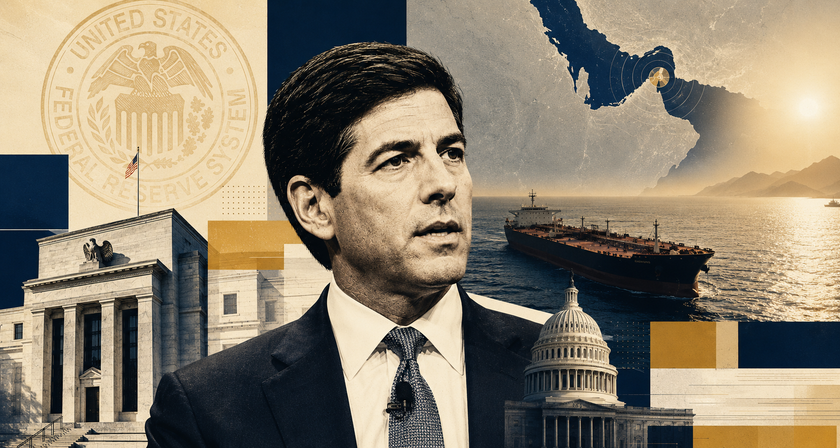
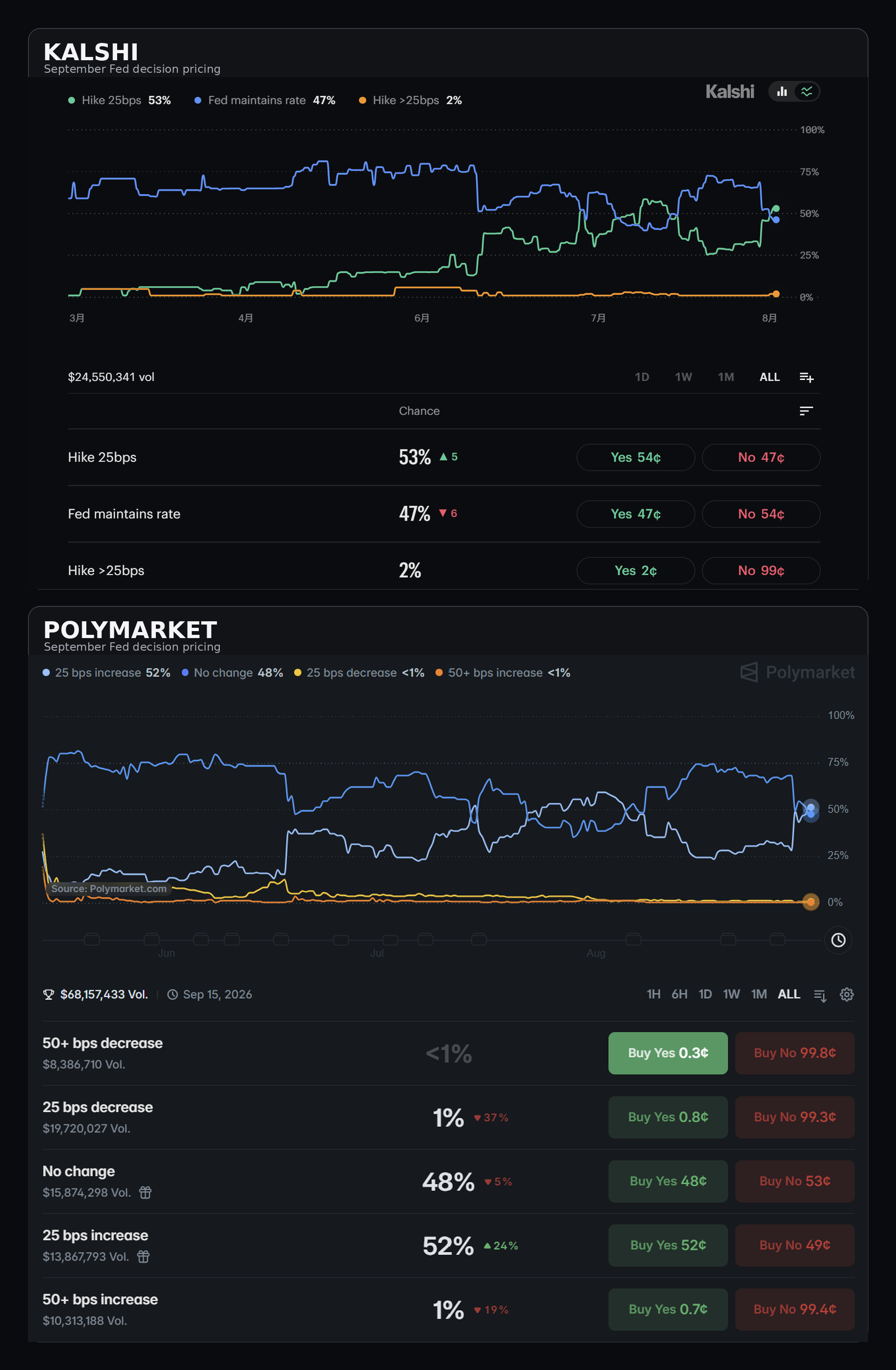
- Fed hike risk is back: Kevin Warsh’s Jackson Hole speech pushed the probability of a September hike from 35.4% to 55.7%, sending short-end Treasury yields higher - yet retail consensus may points the other way - per prediction markets data. The next major test comes on September 4, when nonfarm payrolls and the unemployment rate are released.
- Washington is locking in Venezuelan oil: A new 25-year agreement could give US interests access to roughly one-fifth of Venezuela’s proven reserves, with some barrels potentially used to rebuild the SPR.
- Hormuz risk is rising again: US strikes inside the Strait pushed Brent above $90/bbl, while visible shipping traffic fell sharply over the weekend.
What will the Fed do in September?
Fed Hike Risk Returns, All Eyes On Nonfarm Payrolls
“I stand here today committed to a discipline, not to a decision.”
Fed Chair Kevin Warsh used Jackson Hole to put another rate increase firmly back on the table, warning that “if underlying inflation does not move convincingly toward our 2% target, there will be more work to do.”
His broader message was less about promising the next move and more about changing how the Fed makes decisions:
- Less forward guidance: Warsh warned of a “Hall of Mirrors” in which markets follow the Fed, while the Fed then reads those same market prices as economic signals. He pointed to 2021 as a lesson in the risks of overcommitting to a policy path.
- A more restrained Fed: Policy should focus on underlying trends rather than individual data points, treat the 2% inflation target as a firm objective, rely mainly on short-term rates and reserve unconventional tools for genuine crises.
- AI matters, but not yet for policy: Warsh sees AI as potentially transformative for productivity and the production function, but its effects on labor and capital remain too uncertain to shape current monetary policy.
- The economy still looks resilient: Consumption is growing above 2%, private domestic final purchases near 3%, and unemployment is just 4.1%. Inflation remains the problem: 12-month PCE is 3.7%, six-month inflation 4.1%, and 54% of the PCE basket is rising faster than 3%, versus roughly 32% before the pandemic.
U.S. PCE Inflation
Headline and Core PCE inflation, February–July 2026
Markets took the message seriously. September hike odds moved above 50% across prediction markets, with Kalshi pricing a 25bp increase at 53% and Polymarket at 52%, while the 2-year Treasury yield rose about 13bp to 4.36%.
The long end remains a different problem. The 30-year yield recently hit 5.327%, its highest since 2007, as fiscal deficits, heavy Treasury issuance and higher term premiums keep borrowing costs elevated.
Read more on the long end:
 Jiayi ZHANG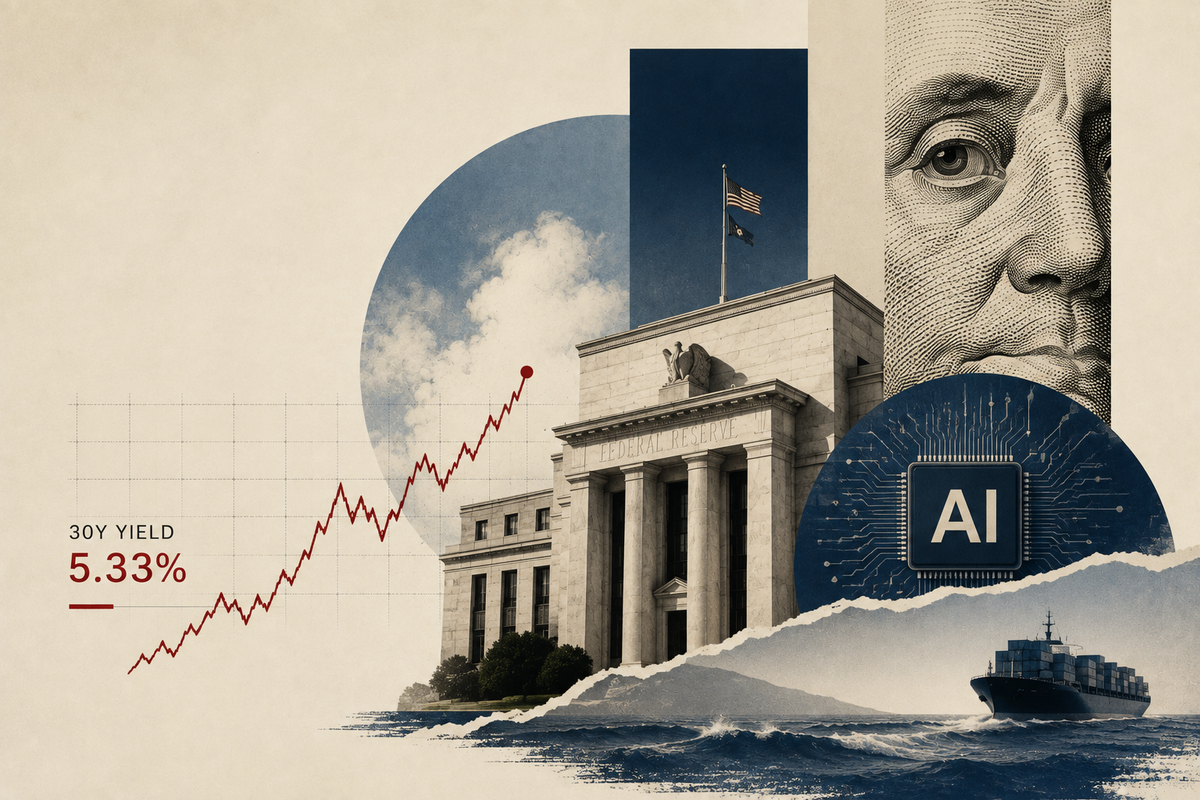
The next test comes on September 4 with the August Employment Situation report. Economists expect nonfarm payrolls to rise by 58,000 and unemployment to hold at 4.1%, after payrolls unexpectedly fell by 23,000 in July. A stronger jobs print — particularly alongside firm wage growth — could reinforce September hike bets, while another weak report could quickly push expectations back toward a hold.
Washington Secures Long-Term Access to Venezuelan Oil
- The US and Venezuela agreed to a 25-year energy framework covering 17 strategic oilfields, with Venezuela targeting production of more than 1.5mn bpd.
- Trump said US interests would gain majority control over more than 65bn barrels of proven reserves — roughly one-fifth of Venezuela’s total — although the exact legal and commercial structure is still unclear.
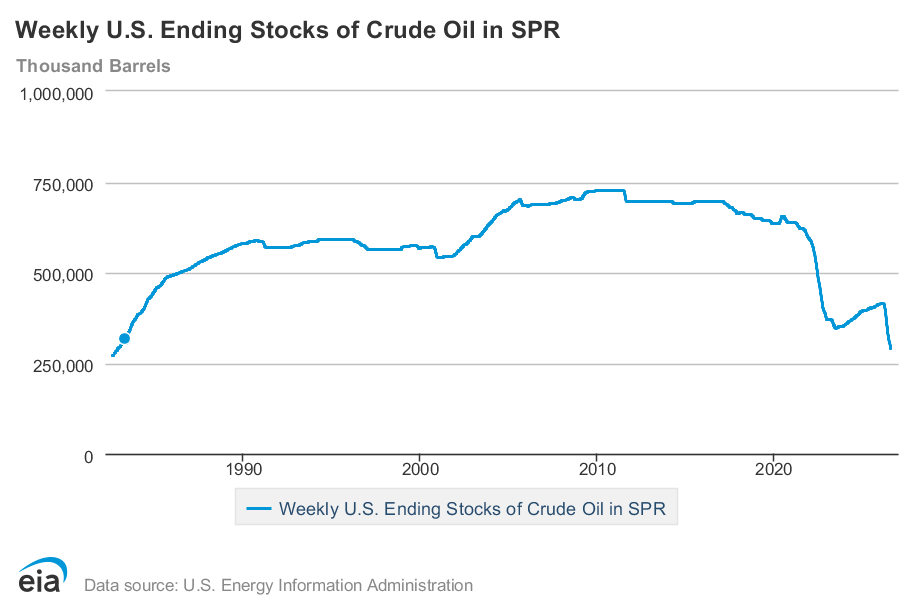
- The near-term supply boost may be limited by years of underinvestment, but the agreement could give US refiners a long-term source of heavy crude. Trump also said Venezuelan barrels could be used to refill the Strategic Petroleum Reserve (SPR), now near a 44-year low at around 290mn barrels.
That may help secure supply over the longer term. The more immediate oil risk, however, is coming from Hormuz.
Hormuz Risk Moves Back Into Oil Prices
- US forces struck Iranian launchers on Larak Island inside the Strait of Hormuz, bringing the conflict directly into the world’s most important oil chokepoint.
- Visible commodity-vessel traffic fell to around five ships a day, from roughly 15 over the previous 10 days. Some of that decline may reflect vessels switching off AIS, rather than an equivalent fall in actual transits.
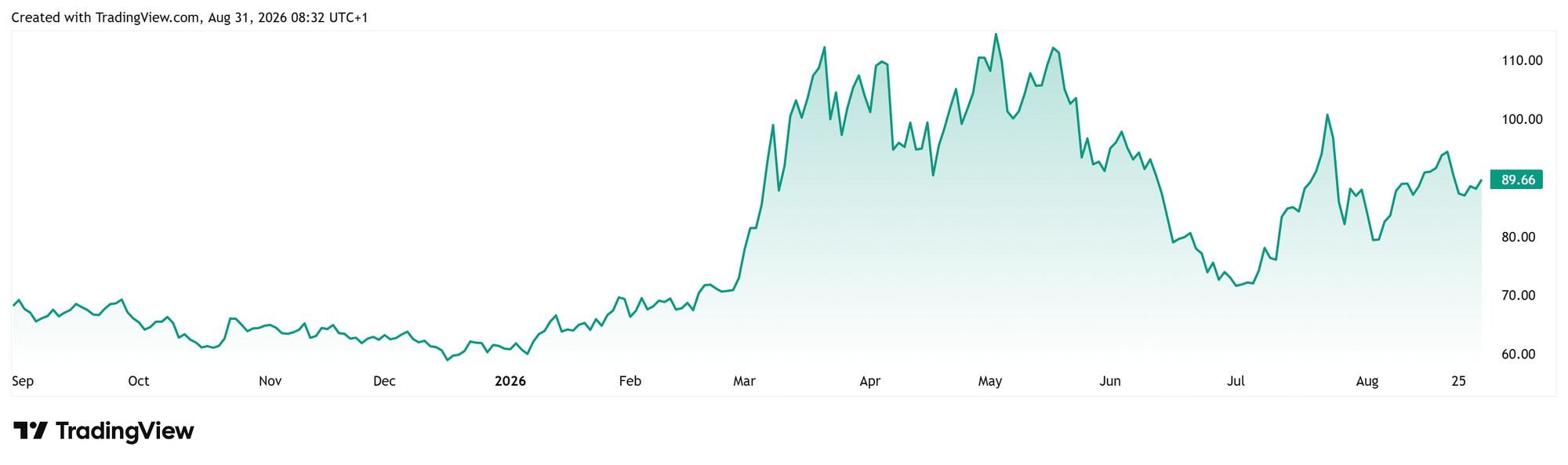
- Oil reacted quickly: Brent futures climbed 2.7% to $90.51/bbl in early Monday trading, before later paring gains, while WTI gained 2.55% to $85.53/bbl.
The timing is awkward for markets. Fed hike risk is rising just as geopolitical tensions are putting fresh upward pressure on oil — a combination that could keep both inflation and long-term yields in focus heading into September.
Source:
- Federal Reserve — https://www.federalreserve.gov/newsevents/speech/warsh20260828a.htm
- Reuters — https://www.reuters.com/business/energy/us-enters-into-oil-agreement-with-venezuela-trump-says-2026-08-28
- Reuters — https://www.reuters.com/business/energy/oil-jumps-more-than-2-after-us-attack-irans-larak-island-2026-08-30