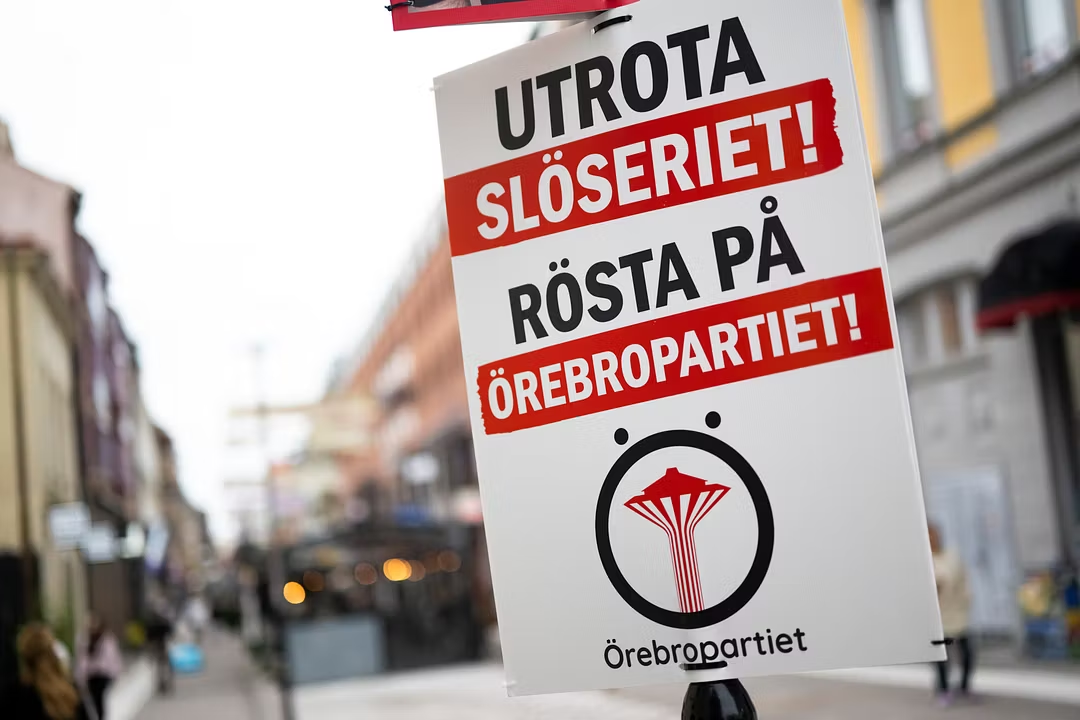
Örebropartiet (ÖP) is a local political party in Örebro, Sweden, led by Markus Allard. Historically, it has focused primarily on municipal and regional politics rather than national politics. In late 2025, ÖP announced that it would contest Sweden's 2026 parliamentary election for the first time. The election will be held on September 13.
Örebropartiet's biggest opportunity comes from a special feature of Sweden's electoral system: a party does not need to win 4% of the national vote to enter parliament if it can instead secure 12% of the vote in a single constituency. Örebro County happens to be one such constituency.
In late August, a Novus poll brought market attention to ÖP. The survey showed Örebropartiet polling at 15.1% in the Örebro County regional election, with a sample size of 1,088. If that figure translated directly into the Riksdag election, ÖP would win a parliamentary seat and make history.
The problem is that Swedish voters do not cast just one ballot. They vote separately in:
- Municipal elections
- Regional elections
- Riksdag elections
A voter can therefore support different parties in different elections to express different preferences on local and national politics. The 12% threshold applies to the Riksdag election, not to the regional election measured in the Novus poll, so the two cannot be directly converted.
Now Infostat has provided data that are much closer to the actual underlying of the prediction market. It directly asked voters in Örebro County, "If a parliamentary election were held today, which party would you vote for?". A total of 1,136 people participated in the survey, with data collection continuing through September 3.
| Metric | Support |
|---|---|
| ÖP regional election, Novus | 15.10% |
| Riksdag “other parties”, Infostat | 6.30% |
| Infostat estimate for ÖP | Slightly below 6% |
| Required in the Riksdag | 12.00% |
Even under the most favorable interpretation for Örebropartiet, if we assign the entire 6.3% "other parties" vote to ÖP, it would still be 5.7% short of the 12% threshold. In other words, with only 9 days remaining, its Riksdag support would need to increase by roughly 90%. If we instead use Infostat's estimate that ÖP itself is polling at slightly below 6%, the required increase would exceed 100%.
Infostat reported an uncertainty interval of ±1.53% around the 6.3% support for "other parties". Even if we move the entire uncertainty range in ÖP's favor, 6.3% + 1.53% = 7.83%, leaving the party still more than 4% short of 12%.
For a Yes outcome to occur, Örebropartiet would therefore need a very large final-week surge that has not yet appeared in parliamentary voting-intention polls.
If someone reads the methodology behind the Infostat survey, they might raise a reasonable objection: Infostat began collecting data in June, so the poll may underestimate the surge in media attention Örebropartiet has received over the past several days.
However, the timing of the interviews weakens this argument. Infostat states that three-quarters of the interviews were conducted after August 24, meaning that the overwhelming majority of responses were collected very close to the current electoral environment. When Infostat split the sample into earlier and later periods, support for "other parties" rose only from 5.5% to 6.6%. Infostat explicitly noted that this change remained entirely within the margin of statistical uncertainty and did not provide evidence of a clear late surge.
The 15.1% regional poll therefore demonstrates that Örebropartiet has a large pool of potential supporters. But the latest Riksdag poll suggests that many voters who are willing to support ÖP in local elections are still not prepared to give the party their national ballot.
To convert 15.1% regional support into the 12% Riksdag support required to enter parliament, ÖP would need to retain 12% / 15.1% = 79.5% of its local support on the national ballot.
If ÖP's current Riksdag support is around 6% while its regional support is around 15.1%, the orders of magnitude implied by these two separate surveys suggest that its national-ballot support is currently only around 40% of its regional support. Because the surveys use different methodologies and samples, this should not be treated as a precise voter-conversion estimate. But it is sufficient to show that the gap is substantial.
To enter parliament, ÖP would have to close almost all of that gap in roughly one week.
Why Can Local Support Be So High While Parliamentary Support Is So Low?
Örebropartiet is, first and foremost, a successful local political party. It has a clear brand in local politics, and voters can support Markus Allard with their regional or municipal ballot while reserving the more consequential Riksdag ballot for a national party.
This is exactly how Infostat's Peter Santesson interprets the survey results. In local elections, voters are more willing to support smaller parties as a way of expressing a political preference or sending a signal. In parliamentary elections, where government formation is at stake and voters face the risk of "wasting" their vote, their willingness to experiment falls significantly.
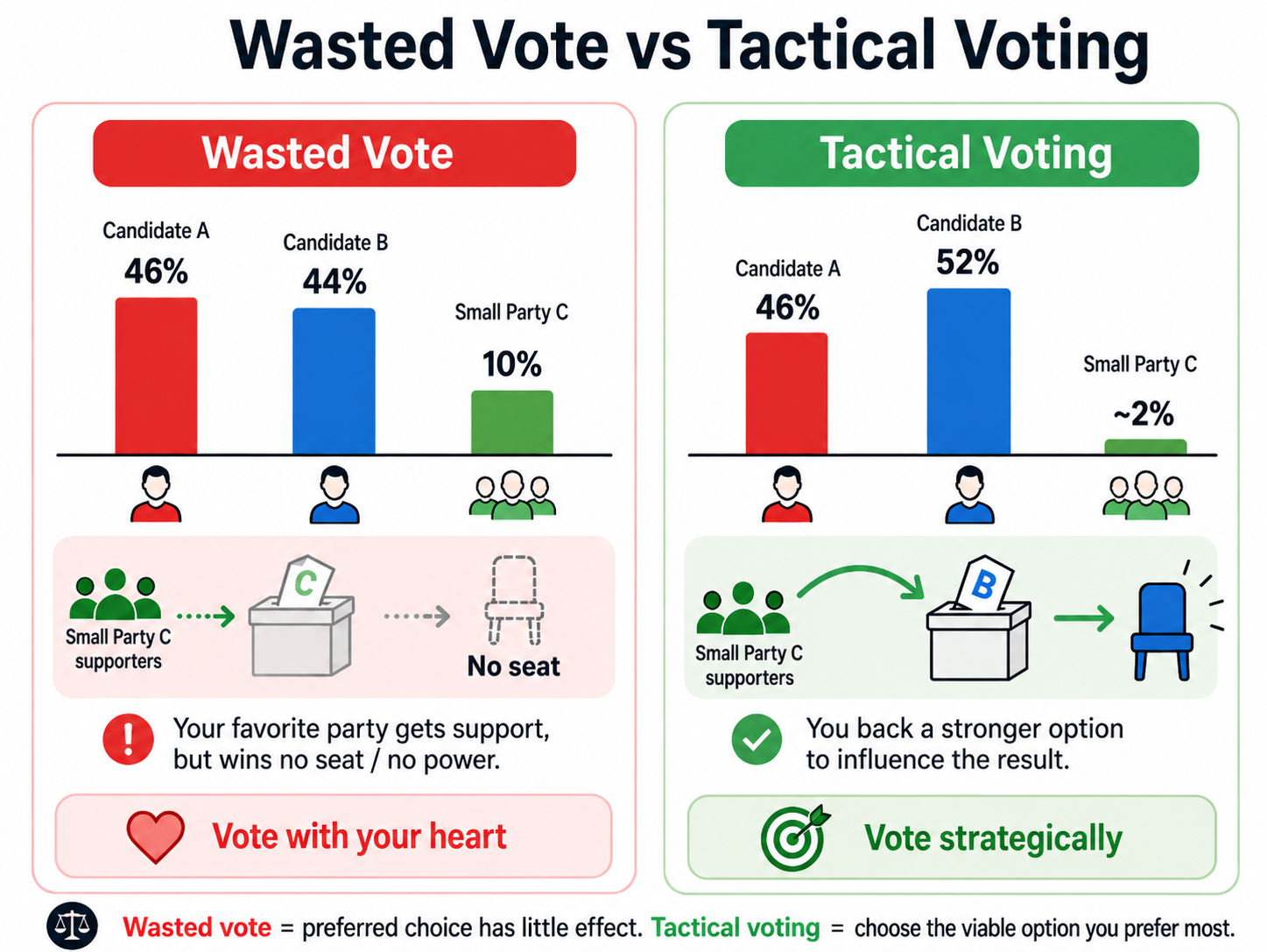
The latest nationwide Demoskop poll puts the centre-left bloc at 50.6% and the ruling right-wing coalition at 47.3%, a gap of only 3.3%. At the same time, the Liberals are polling at just 2.8%, below the national 4% Riksdag threshold, which further increases the importance of tactical voting and concerns about wasted votes.
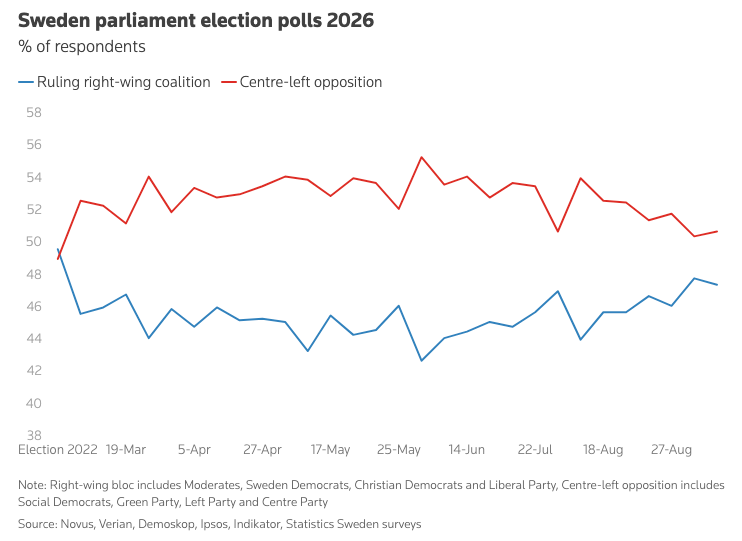
For a voter who likes Örebropartiet locally but also cares deeply about which bloc forms Sweden's next government, voting for ÖP in the regional election while supporting another party in the Riksdag election is reasonable. That is precisely how a 15.1% regional figure and a sub-6% parliamentary figure can coexist.
A breakthrough coordination surge that carries ÖP into parliament is not impossible. The party already has a local support base of roughly 15.1%, media coverage of the 12% rule has only recently intensified, and the growing perception that "my vote may no longer be wasted" could itself encourage more supporters to cast their Riksdag ballot for ÖP.
But moving from roughly 6% national-ballot support to 12% in just 9 days would require an exceptionally strong political mobilization, and the latest data do not yet show that such a surge is underway. For that reason, the Yes price of 25c on Polymarket may be too high.
Disclaimer: The content is for informational purposes only. You should not construe any such information or other material as legal, tax, investment, financial, or other advice. Nothing contained in this article constitutes a solicitation, recommendation, endorsement, or offer by the author(s) or any third party service provider to buy or sell any securities or other financial instruments in your or in any other jurisdiction in which such solicitation or offer would be unlawful under the securities laws of such jurisdiction. The author(s) report(s) no conflict of interest.