Federal Reserve officials will enter this week’s policy meeting facing a renewed surge in price pressures, making the decision over whether to hold or raise interest rates unusually close — and potentially contentious.
Escalating tensions in the Middle East have sent oil prices sharply higher, overshadowing a softer-than-expected June inflation report that had appeared to give policymakers room to keep rates unchanged. At the same time, strong demand linked to the artificial intelligence boom and the Trump administration’s latest tariff announcements have added to concerns that inflation could remain elevated.
As a result, Fed watchers see a growing risk of dissent at the July 28–29 meeting if officials once again vote to leave policy unchanged.
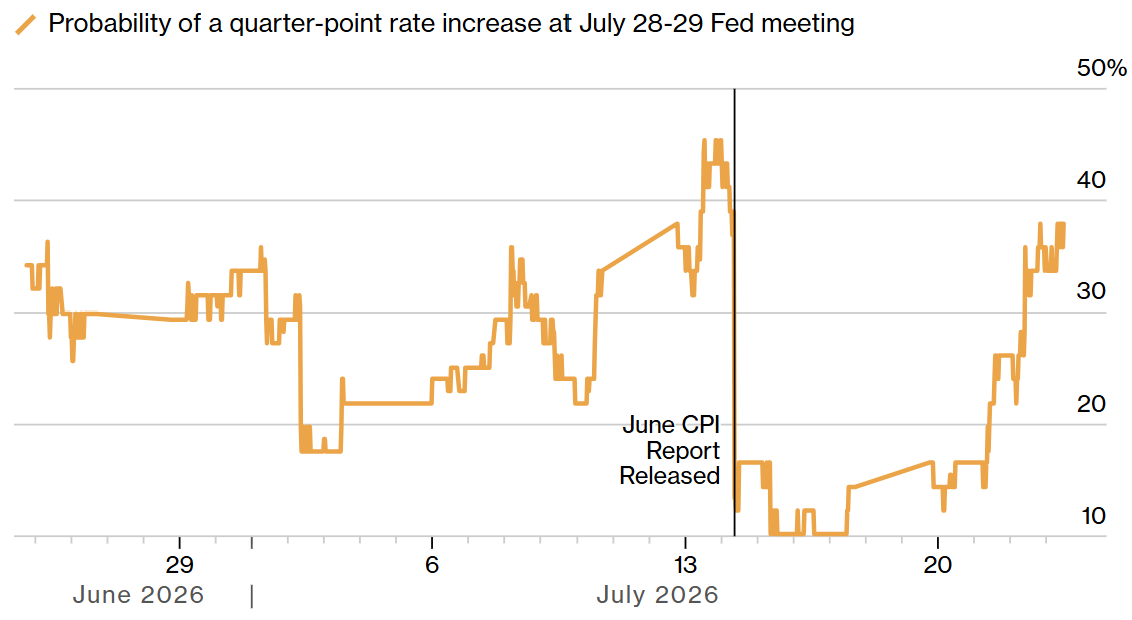
Investors have also increased their bets on an immediate rate increase. At one point last week, federal funds futures implied a probability of close to 40% that the central bank would raise rates at this week’s meeting, according to Bloomberg.
A growing number of policymakers have outlined a rationale for why they support higher rates now, or could soon.
Dallas Fed President Lorie Logan earlier this month called for modestly higher rates, citing her view inflation isn’t heading sustainably back to the Fed’s 2% goal. Cleveland Fed President Beth Hammack also chimed in recently, saying “there is no conflict” in the Fed’s mandates and inflation is a bigger concern than employment currently. Both will vote on this week’s interest-rate decision and could dissent if officials opt to hold steady.
“It is clear listening to the Fed officials that you have a small group — like Logan, Hammack — who probably are ready to get going,” said Claudia Sahm, chief economist at New Century Advisors LLC. “And then there’s a pretty large group that wants to see more improvement — and soon.”
Fed Chairman Kevin Warsh has reaffirmed the Fed’s commitment to reducing inflation, vowing on Capitol Hill this month to use the central bank’s tools to achieve price stability. But his reluctance to offer specifics on how he plans to use those tools has kept markets guessing about where rates are headed — even in the near term.