US consumer prices declined in June for the first time in six years and a key gauge of underlying inflation was little changed, taking some pressure off the Federal Reserve to raise interest rates.
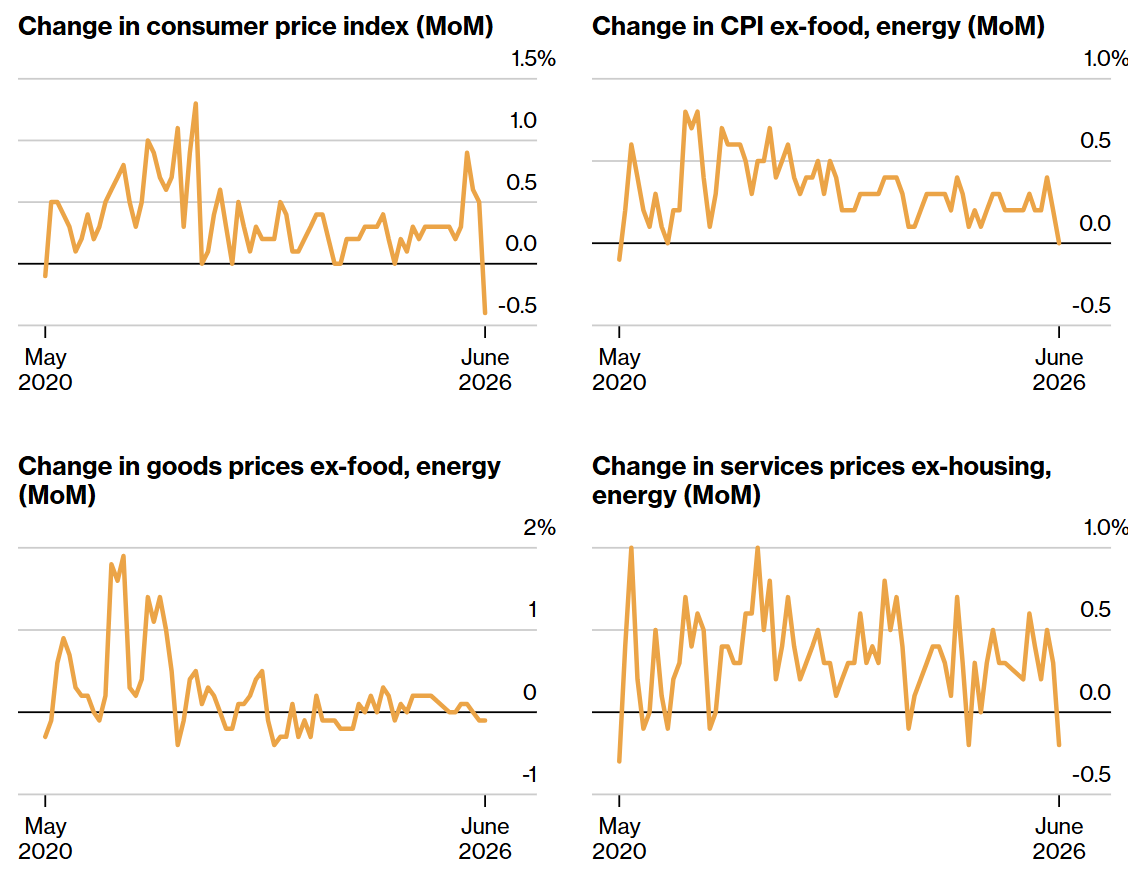
The consumer price index fell 0.4% from May, dragged down by the biggest decline in gasoline prices since 2022, according to Bureau of Labor Statistics data out Tuesday.
However, renewed hostilities between the US and Iran have pushed oil prices higher again, raising the risk that the conflict’s inflationary effects could persist.
And while the monthly inflation figures were tame, annual gauges continued to point to elevated inflation: The headline index was up 3.5% from a year earlier (almost double the Federal Reserve’s target of 2%) and the core measure was 2.6% higher.
“This weakness will likely prove temporary and should fade as soon as next month’s report,” said Omair Sharif, president of Inflation Insights LLC. “This is welcome news for the Fed, but it is hardly mission accomplished.”
Financial markets responded quickly to the weaker-than-expected data. US Treasuries rallied, while traders scaled back expectations for a near-term Fed rate increase.
The policy-sensitive two-year Treasury yield fell as much as 14 basis points to 4.14%, putting it on course for its largest one-day decline since February. Meanwhile, the probability of a rate hike later this month, as implied by the interest-rate swap market, dropped below 17% from around 40% before the inflation report.
The shift marked a sharp reversal from earlier positioning. Ahead of the CPI release and remarks from Fed Chair Kevin Warsh, bond traders had increased bets that the central bank would raise rates at its July meeting.
 Bloomberg
Despite the softer June reading, economists cautioned that the full inflationary consequences of the conflict may take longer to emerge. Higher fertilizer, energy and transportation costs could gradually feed through into food prices and a broader range of consumer goods.
The latest escalation in the Middle East could add further upward pressure to inflation in the coming months, particularly if renewed supply-chain disruptions raise production and distribution costs.
“With supply chain constraints coming up again, I will say it creates an inflation problem for the end of this year, maybe early next year,” said Pooja Sriram, senior US economist at Barclays. “So while 2026 may not see as much of an imprint, I think it poses a risk to 2027, especially core inflation when you think about the pass-through effects.”