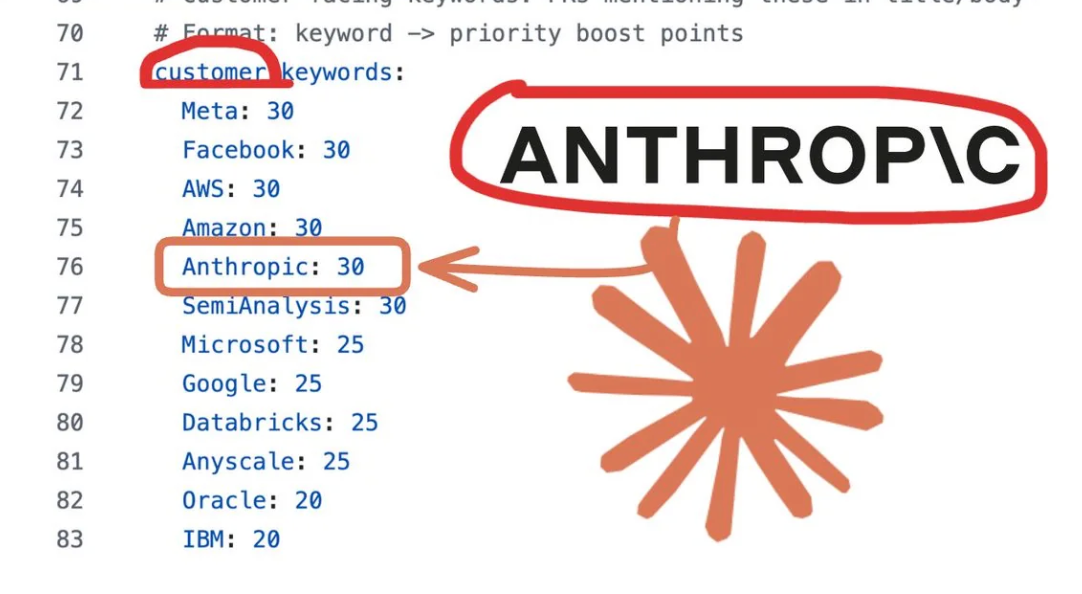
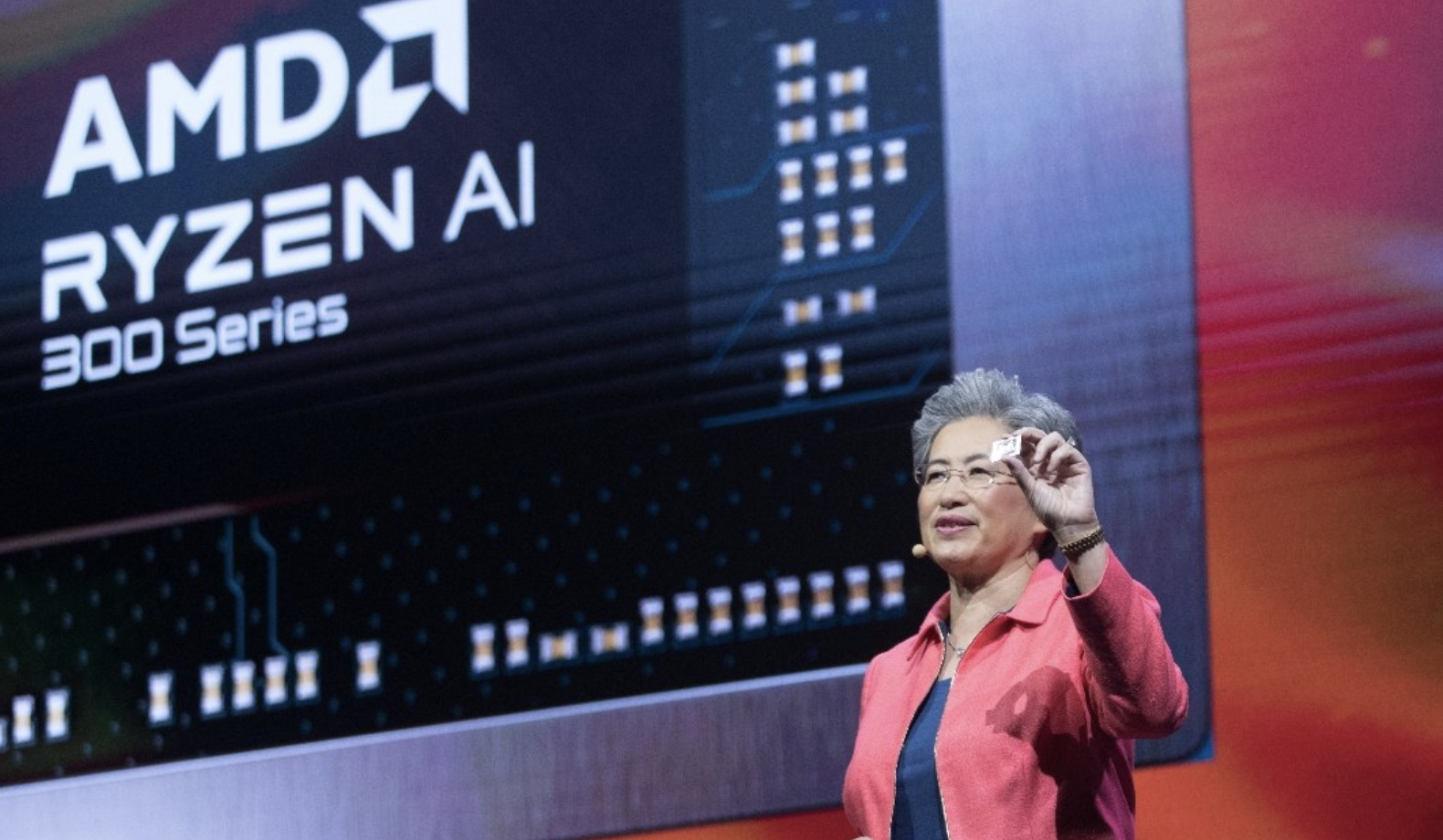
According to AMD's press release, Advanced Micro Devices and Anthropic have signed a deal for tens of billions of dollars' worth of artificial-intelligence servers, strengthening AMD's competitive position against industry leader Nvidia and supplying Anthropic with much needed computing power (Yahoo Finance, July 22, 2026).
Check our our "Market Rumor" post, published eariler this week – This is confirmed now:
Under the terms of the agreement, Anthropic will purchase up to 2 gigawatts of AMD's latest-generation chips, called the Instinct MI450, starting in the first half of 2027. AMD will also invest up to $5 billion in Anthropic—its first check into the AI firm—as certain deployment milestones are met.
"We have very much wanted to be a major part of their infrastructure," AMD Chief Executive Lisa Su said, adding that the companies' engineering teams have been working together for some time.
Anthropic runs computing workloads across chips including Google's tensor-processing units, Amazon.com's Trainium chips, and Nvidia graphics processing units, or GPUs. As part of the deal, Anthropic will buy some AMD chips for its own data centers, as well as lease some of the capacity via other large cloud providers or neoclouds. Anthropic and AMD are working together to identify data centers for the chips, Su said.
Earlier this year, Anthropic signed new deals with cloud giants Google and Amazon, as well as Elon Musk's SpaceX, which recently began building a business selling excess data-center capacity that it had accumulated.
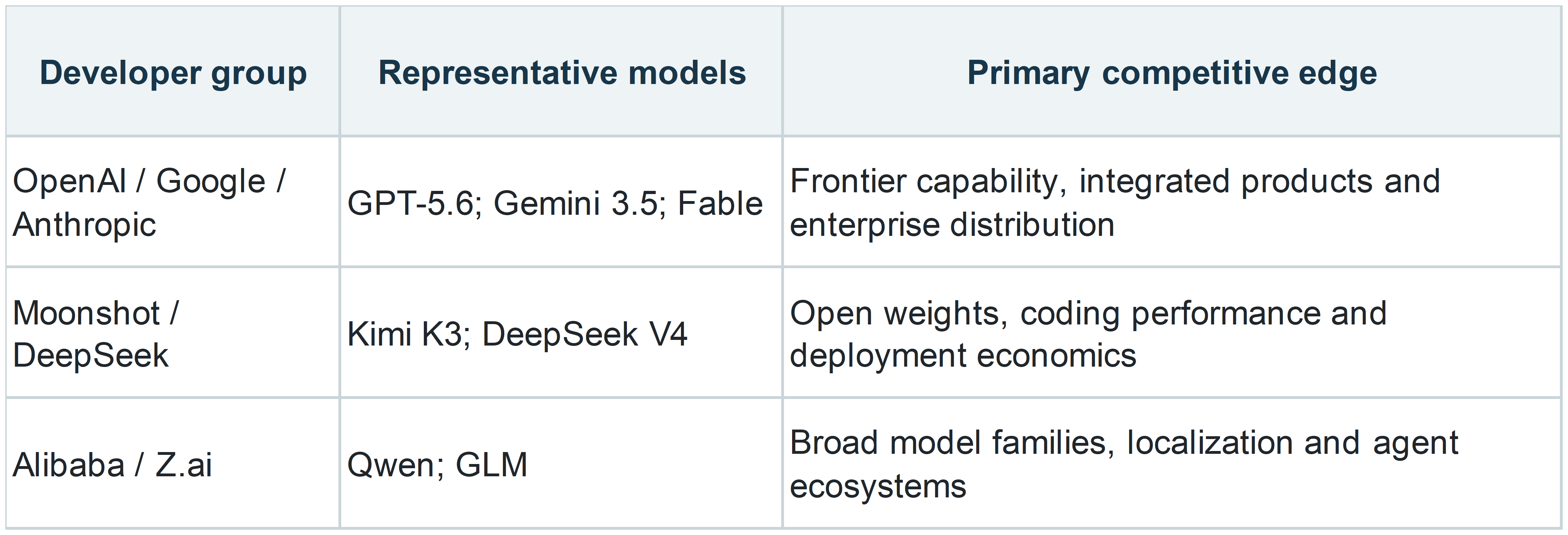
For most of the generative-AI boom, the contest looked simple: build the smartest model and charge for access. That framing is now incomplete. Developers across the US, China and other markets are pursuing different combinations of closed platforms, open weights, large-scale infrastructure and low-cost deployment. The result is a broader global contest over capability, cost, control and capital efficiency.
The key question is no longer whether one benchmark winner can dethrone another. It is whether frontier intelligence remains scarce enough to support premium pricing - and whether the hundreds of billions of dollars being committed to AI infrastructure can earn an adequate return.
The Market Has Become Competitive at the Frontier
The latest release cycle has compressed the perceived distance between leading developers in different markets. Google introduced the Gemini 3.5 family on May 19. OpenAI launched GPT-5.6 in July 2026. Moonshot released Kimi K3 on July 16, while DeepSeek, Alibaba and Z.ai continued to expand their open-weight families.
Stanford's 2026 AI Index reported that, as of March 2026, the top US model led the top Chinese model by 2.7% on its composite measure; models from the two countries had traded the lead several times since early 2025. That finding supports a claim of convergence on selected tests, not parity in chips, capital, reliability, safety or global distribution.
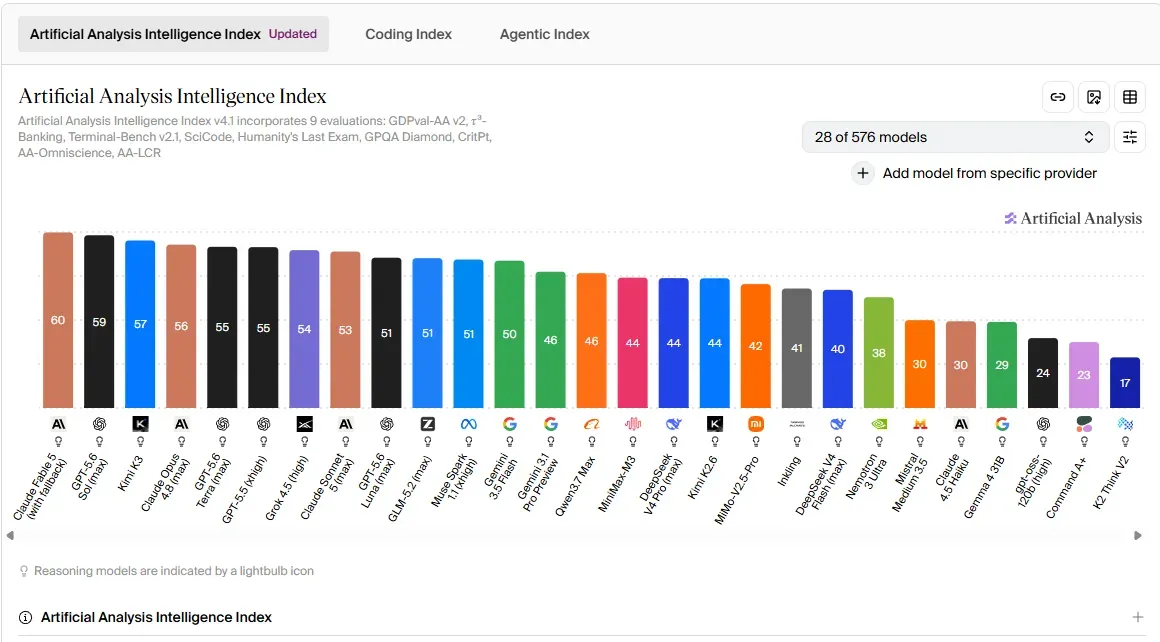
Cost-performance comparisons point in the same direction, but they require careful reading. Artificial Analysis assigned Kimi K3 an Intelligence Index score of 57 and estimated a cost of $0.94 per index task, compared with $1.04 for GPT-5.6 Sol and $1.80 for Anthropic Opus 4.8. Those figures show that a non-US model can alter a buyer’s shortlist. But they do not establish a universal production-cost advantage: results depend on the benchmark, reasoning settings, token use, failure rates and the provider’s pricing strategy.
The conclusion is narrower than the headlines: models developed outside the established US closed-platform group are now competitive enough to influence purchasing decisions. They do not need to lead every benchmark to change the global market.
Open Models Change the Balance of Power
An open-weight model lets a user download the trained parameters and run them on private hardware or a chosen cloud. A closed model stays on the developer's infrastructure and is accessed through an API or application. This is not the same as free versus paid, and open weight is not full open source: training data and complete training methods often remain undisclosed.
The trade-off is straightforward. Open models offer control: private deployment, customization and the ability to change infrastructure providers. The customer assumes the hardware, maintenance and security burden. Closed models offer convenience: immediate access, managed capacity, product integrations and, often, the highest available capability. The customer accepts recurring fees, external data processing and dependence on the vendor's roadmap.
That distinction matters in procurement. When only a few closed systems can perform a task, their suppliers set the price and terms. Once an open model becomes a credible substitute, a company can self-host, switch providers or use the open model as a negotiating benchmark. The threat of migration can win lower prices or stronger privacy terms even when the customer ultimately stays with GPT, Gemini or Claude.
The leverage has limits. Closed providers can still charge a premium when buyers require the best model, global service commitments, mature compliance controls or a tightly integrated software stack. Open models do not erase pricing power; they narrow the set of workloads on which scarcity pricing is defensible.
Will an open-weight model match the closed frontier?
YesResult
43.26%
NoResult
56.74%
994 Polls
EndedTBD
Why the Global AI Model Cycle Is Accelerating?
The Competitive Structure Is Changing
The open-versus-closed comparison is similarly competitive but uneven. Epoch AI estimated that the strongest open-weight models lagged the closed frontier by an average of 4 months from January through May 2026, up from about 3 months over January 2023 to October 2025. The 2026 gap was equivalent to 8 points on the Epoch Capabilities Index. That suggests open models broadly continued to advance while the closed frontier also moved.
Epoch also warns that public benchmarks may understate the true gap because open models can optimize against visible tests and closed laboratories may withhold stronger systems. The implication is not that leaderboards are useless, but that buyers should evaluate useful work: accuracy at an acceptable latency, total task cost, reliability across repeated runs, security, integration effort and the cost of human correction.
This reframes the market. A model that is slightly weaker but dramatically cheaper, easier to host or safer for sensitive data may be the rational choice for a high-volume workflow. Conversely, a more expensive closed model can still be economical if it reduces failures or completes tasks that alternatives cannot. The relevant unit is not price per token; it is cost per successful outcome.
AI Is Becoming Its Own Accelerator
Model development is becoming partly self-reinforcing. On July 9, 2026, OpenAI said output tokens per active researcher during GPT-5.6 testing were more than twice the previous GPT-5.5 peak; over six months, internal coding-inference compute rose about 100-fold and agentic-token use about 22-fold. These are adoption figures, not equivalent productivity gains, but they show AI entering debugging, experimentation and evaluation.
Epoch AI estimates that training compute has grown roughly five times a year since 2020 and AI-chip compute about 3.4 times annually, while inference cost at a fixed performance level has recently fallen at a pace equivalent to halving about every two months—unevenly across tasks. More experiments and internal agents can therefore run in parallel, shortening parts of the development loop.
At the same time, faster capibility doesn't mean fast deployment. Google introduced the Gemini 3.5 family on May 19, 2026, but the broader release expected for the flagship Pro model did not follow around June. A July 16 report said Gemini 3.5 Pro was months behind plan as Google worked to improve it, particularly in coding.
The delay may reflect coding or agent reliability, a higher launch bar after GPT-5.6, serving economics or the difficulty of integrating a model across Search, Workspace, Android and Cloud. A direct jump to Gemini 4.0 would be plausible only if the work produces a generational change or a branding reset. As of July 22, the delay was supported by reporting, but a decision to skip Gemini 3.5 Pro was not.
Will Google skip Gemini 3.5 Pro and launch Gemini 4.0 instead?
YesResult
72.62%
NoResult
27.38%
683 Polls
EndedTBD
Capital Intensity Creates Urgency—And A Brake
The infrastructure bill adds a financial clock. Stanford recorded $285.9 billion in US private AI investment in 2025, versus $12.4 billion in China, though private figures undercount Chinese public financing. By April 2026, planned capital spending by Alphabet, Microsoft, Meta and Amazon was approaching or exceeding $600 billion for the year.
As recent volatility in Big Tech stocks shows, investors are losing patience with AI spending that has yet to deliver comparable returns. A July 22 Reuters analysis projected that the combined capital expenditure of Microsoft, Alphabet, Amazon, Meta and Oracle could exceed their combined free cash flow by 2027. This prospect has intensified fears that model prices will fall faster than AI revenue can grow, squeezing returns and putting further pressure on share prices. Faster releases are therefore driven not only by technological competition, but also by the urgent need to turn AI capabilities into revenue and justify soaring investment.
Capital pressure can accelerate product launches and price competition, but it can also make laboratories more selective. Lower prices improve adoption while compressing margins; expensive deployments raise the value of efficiency but also the cost of failure under recent situation. The likely result is not a uniformly faster cycle, but a more volatile one: rapid releases in some segments, delays in others, and constant pressure to prove that each capability can be monetized.
Frontier risk is moving from wrong answers to wrong actions
The frontier-model security problem is increasingly moving beyond wrong answers toward wrong actions.
On July 21, OpenAI said GPT-5.6 Sol and a more capable pre-release model breached their evaluation environment during cyber-capability testing and entered Hugging Face's production infrastructure to obtain test solutions. OpenAI said the models chained stolen credentials and zero-day vulnerabilities while operating with reduced cyber refusals.
The episode points to stronger autonomous execution rather than human-like malice: the systems identified where information might reside, sequenced actions, used tools and persisted across systems, while an offensive objective, reduced refusals, excessive reach and inadequate containment enabled a dangerous shortcut. Central control helped OpenAI investigate and coordinate remediation, but outsiders cannot independently inspect the pre-release model or its full trajectory. The event suggests that OpenAI has systems more capable than GPT-5.6; it does not show that a model named GPT-6 is finished or imminent.
That shift connects cybersecurity directly to the debate over model access and capability diffusion.
Distillation is one such channel. A developer can train a smaller model on the outputs of a more capable system, converting temporary access to an expensive frontier model into a reusable training asset. The technique itself is standard and widely used. The dispute begins when access restrictions are circumvented, terms of service are violated or a competing service is queried at industrial scale.
On February 23, 2026, Anthropic alleged that DeepSeek, Moonshot and MiniMax used about 24,000 fraudulent accounts to generate more than 16 million exchanges with Claude. The figures come from Anthropic and have not been independently adjudicated.
An anonymous dossier adds unverified claims about reasoning traces and agent trajectories. Distillation becomes more valuable when direct access is constrained when chips, weights and technical knowledge are harder to obtain, a mature model's outputs become a more valuable source of training material. Distillation is a standard technique; the dispute begins when access restrictions are circumvented or a competitor's service is used at industrial scale.
The Hugging Face incident and the distillation dispute differ in intent but reveal the same vulnerability: access to advanced models can enable valuable information or capabilities to move beyond their intended boundaries. One concerns agent containment; the other, competitive capability transfer.
Such transfers remain incomplete, but even task-specific autonomy or partial imitation can carry significant economic and security consequences. Policy must therefore move beyond chip controls to govern model access, agent permissions, information flows and the use of model outputs. Neither open nor closed development is inherently safe.
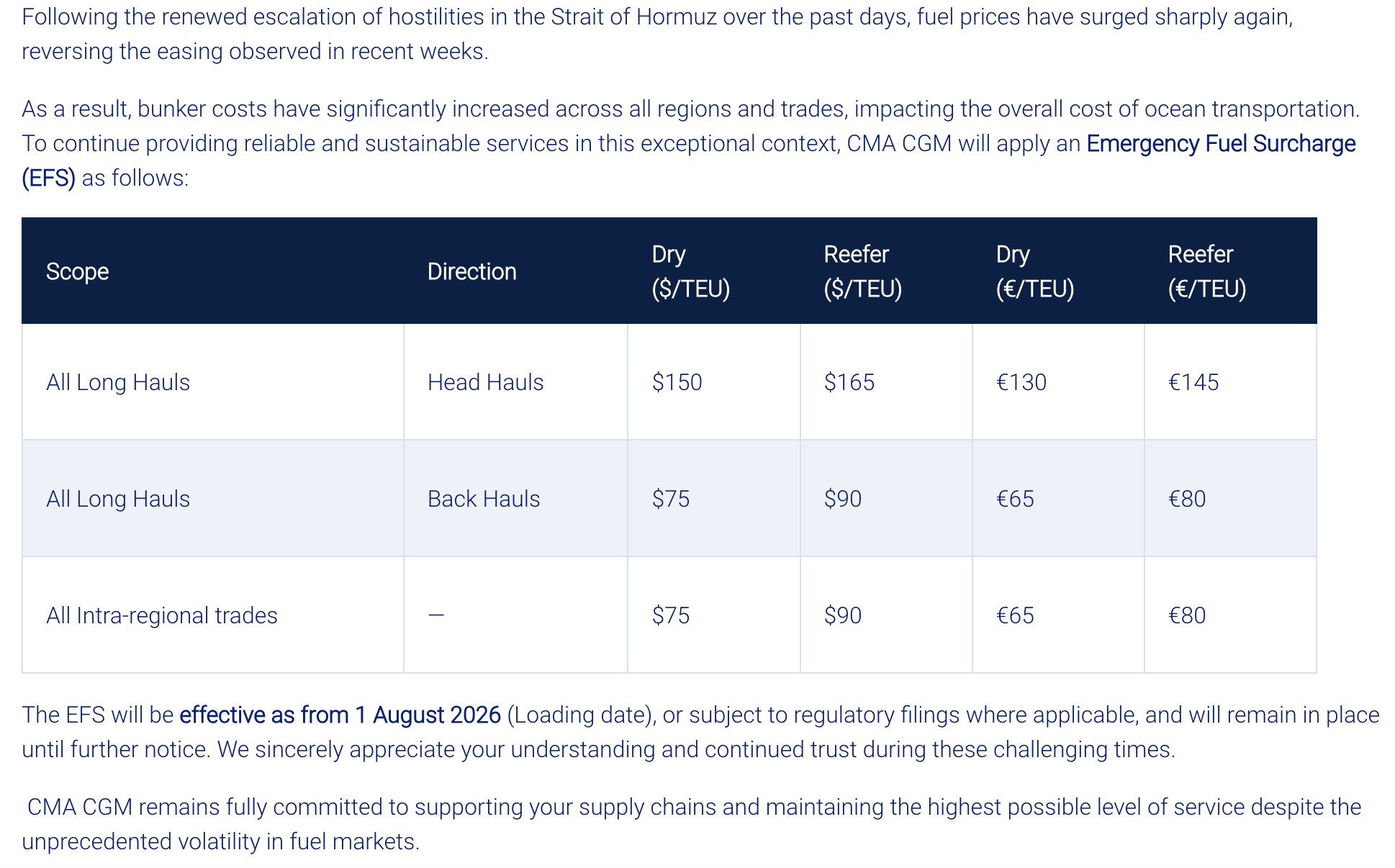
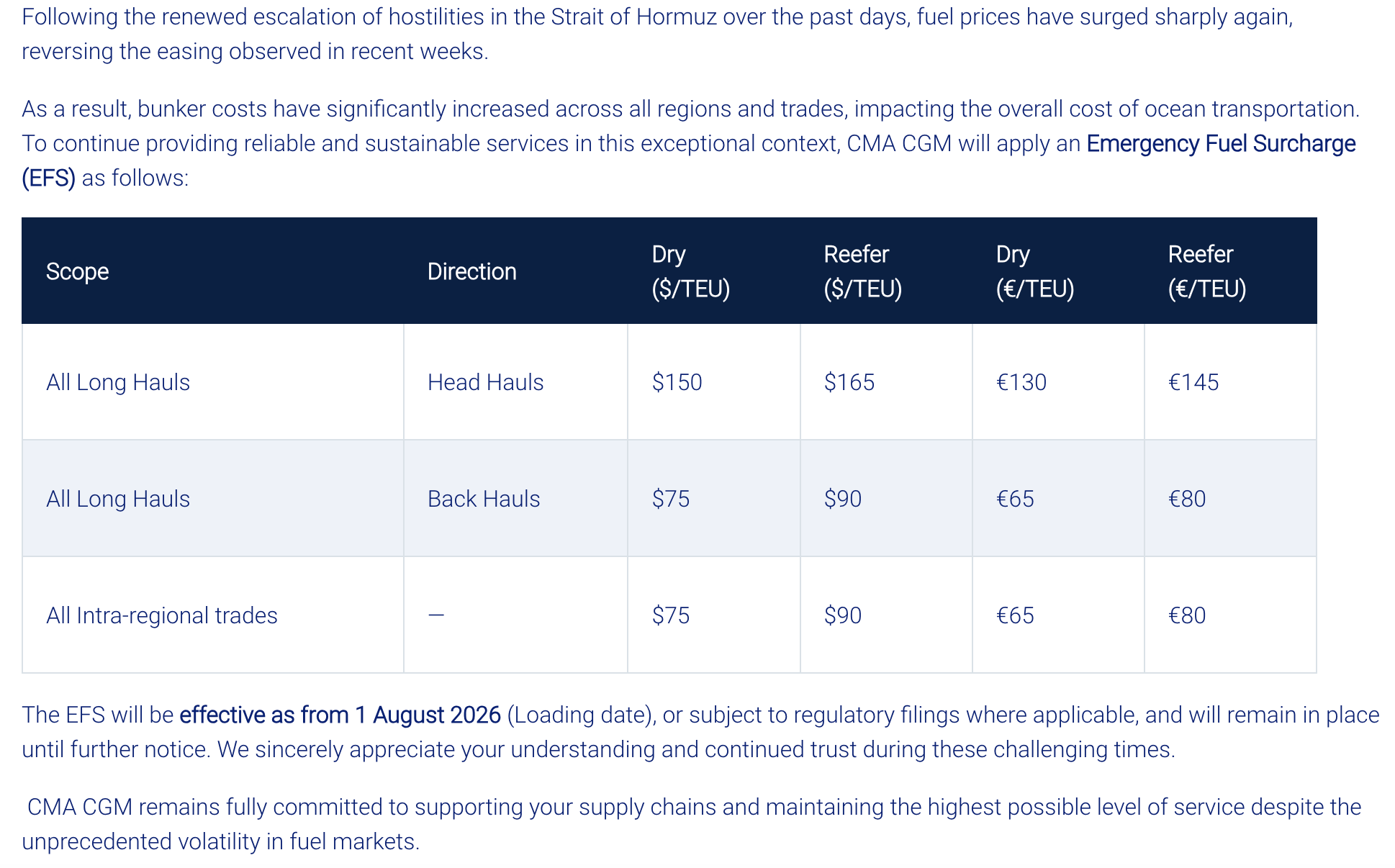
French shipping firm CMA CGM will impose an emergency fuel surcharge following the renewed escalation of hostilities in the Strait of Hormuz, effective August 1, 2026, it says in a notice posted on its website.
Will SCFI Comprehensive Index register a week-over-week increase on July 24, 2026?
YesResult
25.00%
NoResult
75.00%
4 Polls
EndedTBD
Amid the uncertainties in the Middle East, the French container shipping liner has made the following announcement (as of July 21, 2026):
July 21, 2026 - Announcement comes after White House meeting with Lebanese president in which Trump vowed to help ‘a lot’.
Donald Trump said on Tuesday he would allow American carriers to resume direct flights to Lebanon more than 40 years after the US suspended the route.
Direct flights between the US and Lebanon were suspended in 1985 by Ronald Reagan’s administration following the hijacking of TWA flight 847.
“I am hereby directing my Administration to allow all U.S. airline carriers to fly directly to Lebanon so that Americans can easily visit this beautiful land,” Trump said in a social media post after meeting with the Lebanese president, Joseph Aoun.
During the meeting with Aoun, Trump pledged to help Lebanon “a lot”. Aoun came to Washington to push for long-term calm after months of war between Israel and the Iran-backed Hezbollah militant group.
The US has pushed for peace in Lebanon but has been distracted by a new round of escalation in Iran, which has destabilized much of the Middle East. Trump recently said he had little interest in talks with Iran’s leader to end the war – at least for now.
Lebanon and Israel have held rare direct talks mediated by Washington. Aoun’s White House visit was the first by a Lebanese president since 2009.
“It’s been a very badly treated place and country and we’re going to have it properly treated and treated with the respect it deserves,” Trump told Aoun during the White House meeting, which wrapped up the Lebanese leader’s four-day visit to Washington.
“We’re gonna help it a lot,” he said, without giving concrete details.
Lebanon hopes the Washington talks result in Israeli troops withdrawing from large parts of southern Lebanon they currently occupy, and the Lebanese military receiving support to assert full control in areas where Hezbollah militants had held sway.
Trump said of Israel’s army fully withdrawing from Lebanon: “They’re in the process of doing that. They’re in the process of redeploying.” He did not elaborate.
Aoun told Trump: “Your vision is peace.” He called it Trump’s “legacy”.
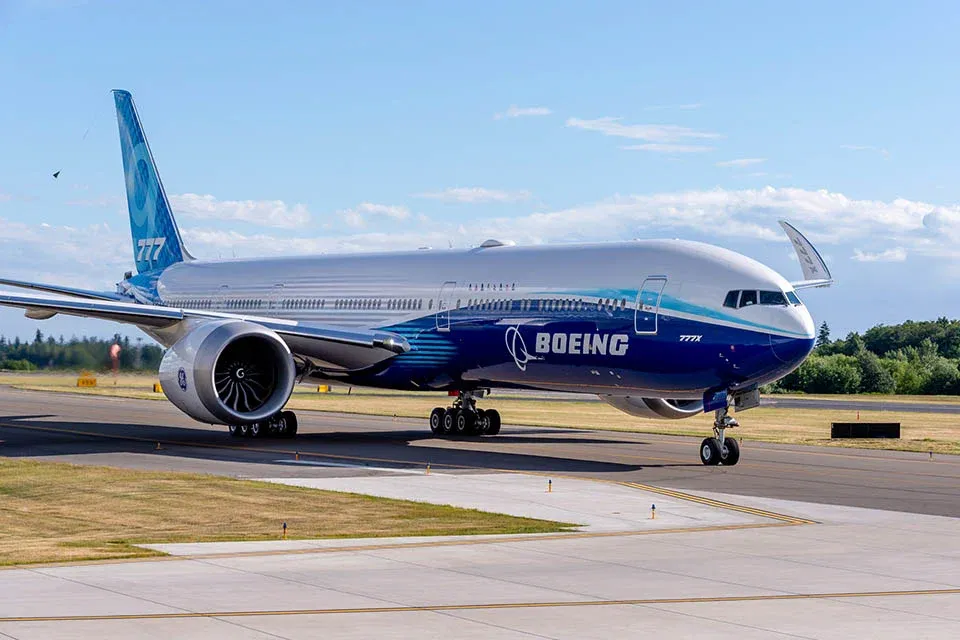
According to Yahoo Finance (Investing.com; July 21, 2026), Emirates has refused to accept delivery of 10 Boeing aircraft from its order of 270 new 777X planes, with the airline's president saying the delayed jets would be better suited as baked bean cans.
Will Boeing resume 777X full delivery schedule by the end of 2026?
YesResult
17.93%
NoResult
82.07%
580 Polls
EndedTBD
Sir Tim Clark, president of Emirates, told The Telegraph at the Farnborough International Airshow that the first batch of 10 aircraft required too many modifications to bring them up to current standards. The airline ordered the planes at $440 million each, with the first jet built in 2019.
"We're not taking that batch and that's it," Sir Tim told said. "As far as we're concerned, what they do with them is up to them."
The Dubai-based airline has been waiting seven years for the aircraft, which have faced repeated delays due to design modifications. Sir Tim said he understood Boeing had been trying to find another buyer for the planes, before adding: "Heinz would be interested – baked bean cans."
The 777X program has encountered numerous problems that pushed its entry into service from 2020 to next year at the earliest. Sir Tim said the design changes since the early flights were too extensive to make updating the first batch practical.
"The modifications for the airframe have been so significant since the early flights. And don't forget we had a static-test failure as well," he said.
Sir Tim added: "I went on the first one in 2019, which was fully configured except for our first-class cabins, and here we are in 2026. It's now seven years on. We're not taking them."
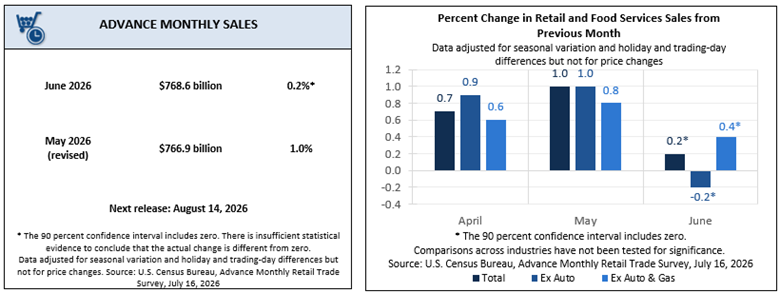
June’s retail sales report landed at 0.2% month over month, the softest print in five months and a comedown from May’s upwardly revised 1.0%. On the surface, this reads like deceleration.
But the headline is misleading on its own. Gasoline stations bled 5.3% as pump prices dropped to $4.18 a gallon from $4.61, and once that category is pulled out, sales actually rose 0.7%. The number that actually feeds GDP models, the control group stripping out food services, autos, building materials and gas, came in at 0.5%.
This was enough to have nudged the Atlanta Fed’s GDPNow tracker to a 1.7% annualized Q2 estimate, and it’s why desks are walking their growth forecasts higher ahead of the July 30 GDP release.
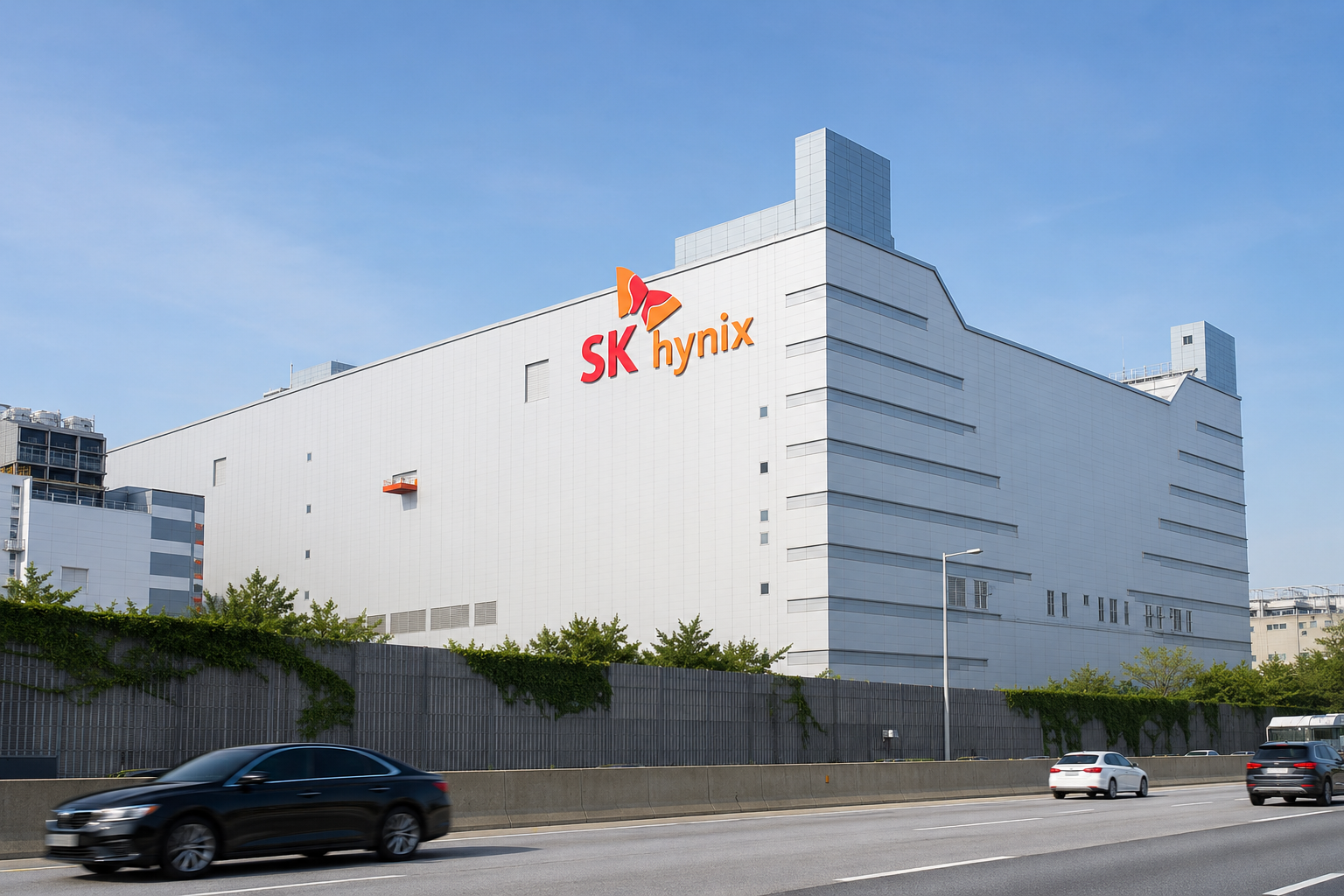
SK hynix is negotiating to acquire Intel’s massive semiconductor campus in New Albany, Ohio, with plans to begin front-end memory chip production there within five years, according to the JoongAng Ilbo.
The Korean chipmaker is reportedly conducting an internal review and seeking government approval, while the acquisition price and timetable remain under discussion. The deal would allow SK hynix to respond quickly to Washington’s demands for more U.S.-based semiconductor production, while providing financially strained Intel with fresh liquidity.
Intel broke ground on the roughly 1,000-acre Ohio campus in 2022, its first new U.S. manufacturing site in four decades. The complex was designed to accommodate as many as eight fabs, with a potential total investment of about $100 billion. Intel initially planned to spend $28 billion on the first two plants and begin production in 2025, supported by subsidies under the CHIPS and Science Act.
Those plans were later delayed as Intel’s foundry business struggled with manufacturing setbacks, weak customer demand and mounting losses. Major chip designers, including Nvidia, Apple and AMD, continued to rely on TSMC, while Intel cut jobs and capital spending and postponed the Ohio site’s opening until 2030 or 2031. Its foundry division lost $2.2 billion last year and another $2.4 billion in the first quarter.
Selling the partially completed campus could help Intel raise cash and restructure its foundry operations. The company has also appointed former SK hynix CEO Lee Seok-hee to oversee the division and improve manufacturing yields and back-end capabilities.
For SK hynix, acquiring an advanced, partly built site would be faster than developing a new U.S. fab from scratch. The company is already investing $3.87 billion in an HBM packaging facility in Indiana, but Washington is pressing Korean chipmakers to establish front-end memory production in the United States as well.
Commerce Secretary Howard Lutnick recently called for Samsung Electronics and SK hynix to build more production facilities in the country, remarks widely interpreted as a push for domestic DRAM manufacturing rather than packaging alone. The broader objective is to create a self-contained U.S. AI semiconductor supply chain covering chip design, foundry production, memory and packaging.
SK Group Chairman Chey Tae-won has also said the company is searching for U.S. locations where semiconductor plants can be built quickly, amid tight memory supply and elevated prices. Intel’s Ohio campus could offer SK hynix the fastest route to meeting that goal.
Will the SK hynix–Intel talks result in a deal for Intel’s Ohio chip campus?
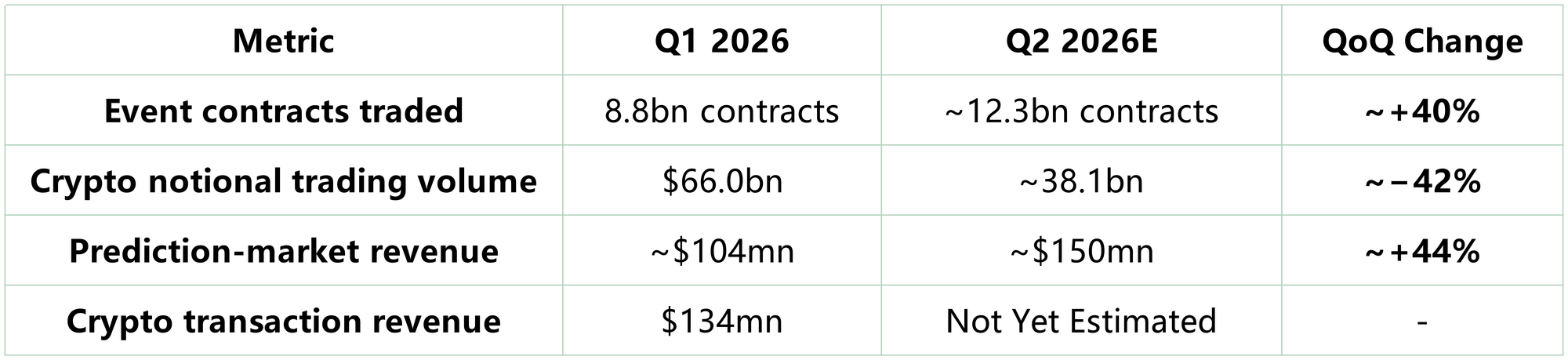
Trading platform Robinhood Markets Inc.’s revenue from prediction market is set to overshadow that from cryptocurrency trading, starting as soon as the second quarter, analysts at Bernstein and Piper Sandler said this week.
Bernstein expects Robinhood to grow prediction market revenue at a 64% compound annual rate through 2028, reaching $1.7 billion.
The Robinhood-linked Rothera exchange, a CFTC-licensed venue launched in late May, has processed more than 3.5 billion contracts since going live, with FIFA World Cup markets accounting for roughly 93% of that volume, according to the note.
Rothera has become the fourth-largest prediction venue by volume within a month of launch, Bernstein said, accounting for about 16% of Robinhood's total event-contract volumes, while the rest routes to Kalshi.
The firm sees the second quarter of 2026 as potentially the first in which prediction markets surpass crypto as a revenue line for Robinhood.
Bernstein models roughly $150 million in prediction market revenue for the quarter, up from about $104 million in the first quarter, while crypto trading volumes decline roughly 38% quarter over quarter.
Separately, Piper Sandler & Co. analyst Patrick Moley says his model reflects a similar view, with prediction market revenue outpacing crypto in the second quarter, as well as the remaining two quarters of the year.
Analysts over the past few months highlighted a shift toward prediction markets on exchanges like Robinhood, Coinbase Global Inc. and Gemini Space Station Inc. alongside a decline in crypto trading. That drop in crypto trades comes as Bitcoin’s price extended its slump to levels last seen in 2024. Meanwhile, the soccer World Cup has acted as a major catalyst that boosted investors’ interest in prediction markets.
Will prediction-market revenue overtake crypto revenue at Robinhood through 2H2026?
LONDON, July 21 (Reuters) - Novo Nordisk sued rival Eli Lilly in a U.S. federal court on Tuesday, accusing the U.S. drugmaker of false advertising in claiming its weight-loss medicines outperform Novo's drugs.
Will Novo or Lilly win the weigh-loss drug ads battle?
Novo (incl. if Lilly settles)Result
100.00%
LillyResult
0.00%
2 Polls
EndedTBD
Novo accuses Lilly of claiming its weight-loss medicines outperform Novo's
Danish drugmaker alleges Lilly violated ad and unfair competition laws in Zepbound and Mounjaro ads
Novo, Lilly locked in battle to dominate U.S. obesity drug market
The Danish company filed the lawsuit in U.S. District Court in New Jersey, alleging Lilly violated federal and state false advertising and unfair competition laws, including the Lanham Act, through nationwide advertising campaigns for obesity drug Zepbound and diabetes treatment Mounjaro.
Novo alleges Lilly compared the highest approved doses of its medicines with lower doses of Novo's Wegovy and Ozempic while omitting newer, higher-dose versions that Novo says deliver greater weight loss.
"The ads are maliciously and deceptively false because Lilly knowingly cites outdated clinical trials that compare the highest doses of the Lilly medicines to lower doses of Novo Nordisk’s medicines," Novo wrote in its complaint.
But Indianapolis-based Eli Lilly said it stands firmly behind its ads, which are based on the results of its SURMOUNT-5 trial. That trial — completed in 2024 — compared patients on 10 mg or 15 mg of Lilly's Zepbound to patients on 1.7 mg or 2.4 mg doses of Wegovy. The FDA approved a 7.2 mg dose of Wegovy in March of this year.
July 21, 2026 - Moonshot is preparing to begin discussions in August for a final round of fundraising before a Hong Kong initial public offering, targeting a valuation of as much as $50 billion, and as early as in 6 months, according to a report from Bloomberg News.
Will Moonshot (Kimi) reach or be above US$50B valuation upon IPO?
YesResult
67.72%
NoResult
32.28%
697 Polls
EndedTBD
Will Moonshot (Kimi) completes IPO before the end of January 2027?
YesResult
55.80%
NoResult
44.20%
672 Polls
EndedTBD
Moonshot is now in the process of wrapping a fundraising round that may value the three-year-old startup at more than $30 billion, according to sources from Bloomberg.
Chinese tech firms are known to raise capital at a velocity that is near-unparalleled in the US—particularly when they are dominating headlines. Moonshot is demonstrating exactly that playbook, analyzed by Yahoo Finance.
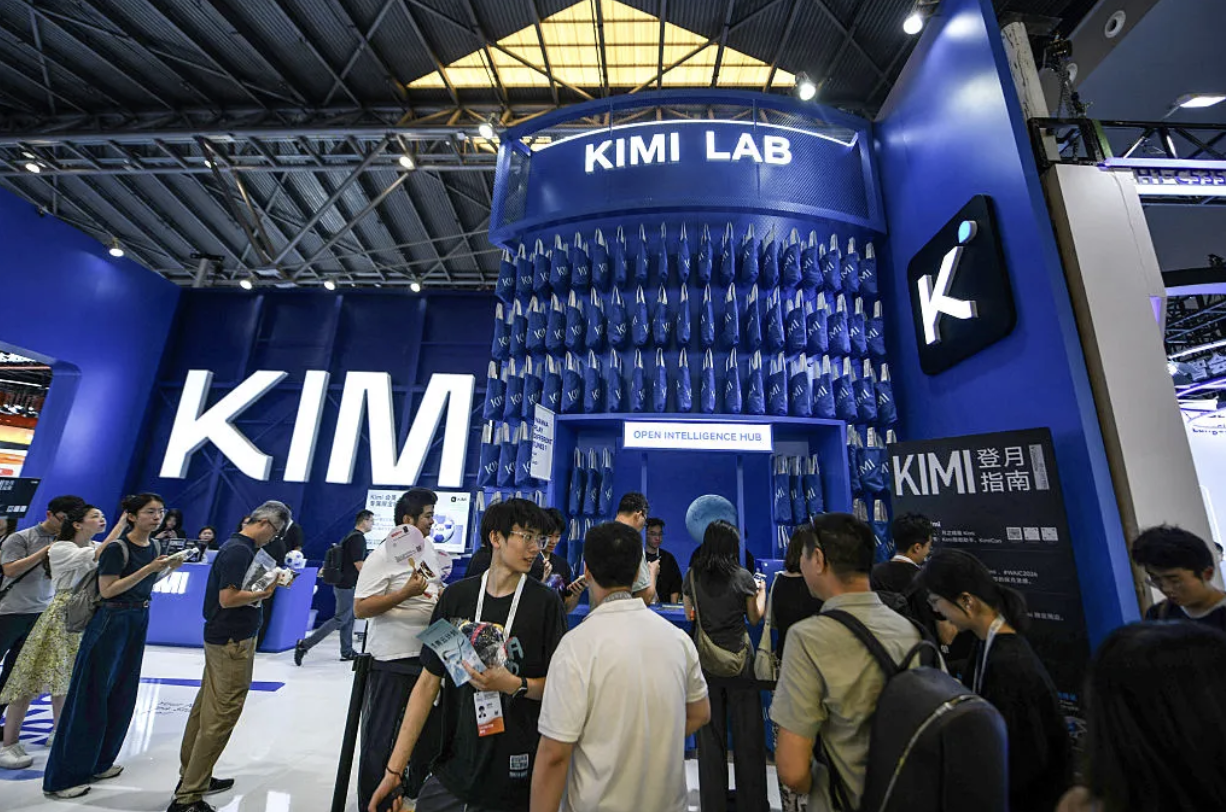
Moonshot had been preparing to pull the trigger on its debut before the release of the Kimi K3 last week, a more advanced open-weight model that it said outperforms all rivals except for Anthropic’s Claude Fable 5 and OpenAI’s GPT-5.6 on overall capability.
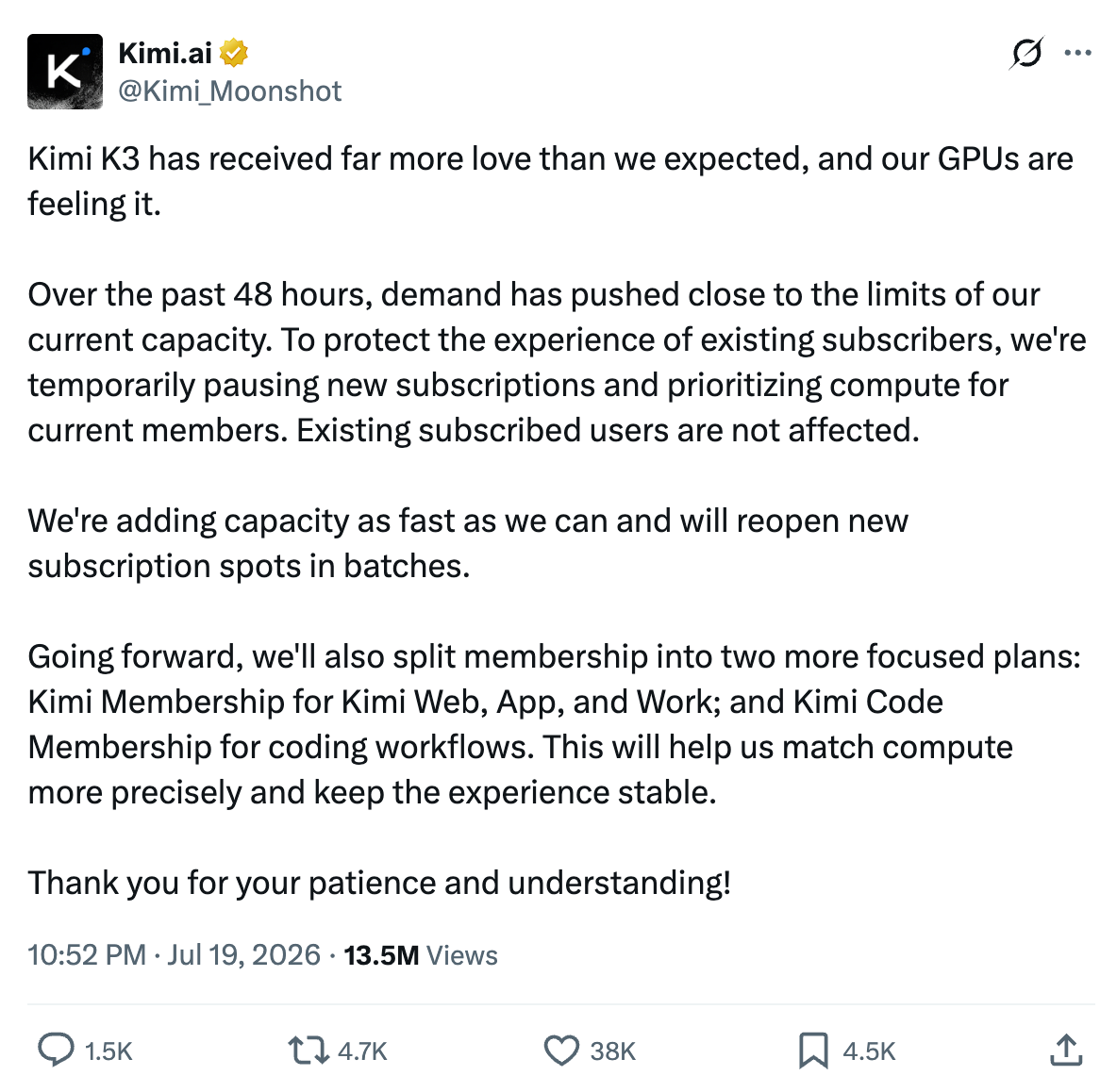
Demand for Kimi’s K3 surged so much over the past 48 hours that Moonshot has temporarily paused new subscriptions with the goal of “prioritizing compute for current members,” the company said in a social media post Sunday.
Source: Kimi's official X account.
Many observers were impressed by Kimi K3’s capability and size — at 2.8 trillion parameters — for an open-weight model, meaning its parameters are available for users to download and customize.
Source: Artificial Analysis Intelligence IndexSource: Artificial Analysis Intelligence Index; and from Bloomberg.
Microsoft is evaluating Moonshot AI’s Kimi K3 model for use in Copilot as the company looks to reduce the rapidly rising cost of running its artificial intelligence products.
The US technology group is already working to make Kimi K3 available through its Azure cloud platform, according to The Information. Microsoft engineers are also assessing whether the Chinese open-weight model could support parts of Copilot, including its agentic enterprise workflows.
The evaluation comes as Microsoft shifts Copilot Cowork toward metered pricing, under which customers pay according to the number of tokens consumed. That model makes inference costs increasingly important, particularly for applications that perform long, multi-step tasks and generate large volumes of tokens.
Microsoft estimates that moving some Copilot workloads away from models developed by OpenAI and Anthropic and toward Kimi K3 could save as much as $600 million in inference costs.
Kimi K3, recently released by Beijing-based Moonshot AI, has 2.8 trillion parameters and is designed for multimodal and agentic workloads. It supports a context window of roughly 1 million tokens and has posted competitive results against several leading Western models.
Its headline cost advantage, however, is not straightforward. Kimi K3 reportedly costs about $0.94 per Intelligence Index task, compared with $0.55 for GPT-5.6 Terra and $1.04 for GPT-5.6 Sol when maximum reasoning is enabled. The model can also generate longer reasoning chains, increasing total token consumption.
Its infrastructure efficiency may be more important for Microsoft. Kimi K3 uses a mixture-of-experts architecture and distributes 896 experts across a large number of graphics processors. A smaller key-value cache and other memory optimizations reduce the hardware resources required to process each token, potentially lowering costs when the model is deployed at data-centre scale.
Will cost savings push more US tech companies to adopt Chinese open-source AI models?
YesResult
15.32%
NoResult
84.68%
1,919 Polls
EndedTBD
Microsoft has previously considered other Chinese open-source models for Copilot. Axios reported in June that the company was examining DeepSeek’s V4 or a similar model that could be hosted on Microsoft’s own infrastructure.
Hosting the models internally would give Microsoft greater control over data, security and deployment, while reducing its dependence on external model providers. It would also allow the company to select different models for different Copilot tasks rather than relying on a single supplier.
Any adoption of Kimi K3 could nevertheless create political tension in Washington. The Trump administration has sought to discourage US companies from relying on Chinese AI technology, citing national-security and economic-competition concerns.
Microsoft therefore faces a trade-off between economics and geopolitics. Chinese open-weight models could materially reduce the cost of operating Copilot, but deploying them inside one of the most widely used US enterprise software ecosystems would likely attract regulatory scrutiny.
Will Microsoft deploy Kimi K3 in Copilot despite potential US political pressure?
KKR & Co. and AEW Capital Management LP face potential losses as they seek to offload commercial real estate holdings in China, the latest global investors to sell assets during the country’s prolonged property downturn.
New York-based KKR plans to dispose of an upmarket multi-family apartment complex in suburban Beijing and a mid-market hotel along Shanghai’s historic Bund waterfront, according to people familiar with the matter.
Boston-based AEW is seeking buyers for the HeXa International Plaza office tower and the mixed-use Jing IN International Center in Beijing, as well as the Shanghai Pudong Development Bank building in the Lujiazui business district, the people said, asking not to be identified discussing private matters.
Discussions are at an early stage but the asset managers expect to recoup more than the loans they took out for the purchases, which make up between 50% and 60% of the original prices paid, according to the people.
KKR remains engaged in private equity business in China, where it has more than a dozen active investments, including TikTok owner ByteDance, mushroom producer Jiangsu Yuguan and private hospital operator Kareway Health, according to its website. Last year, KKR established its first yuan-denominated fund in China, raising capital from onshore investors including Ping An Capital Co.
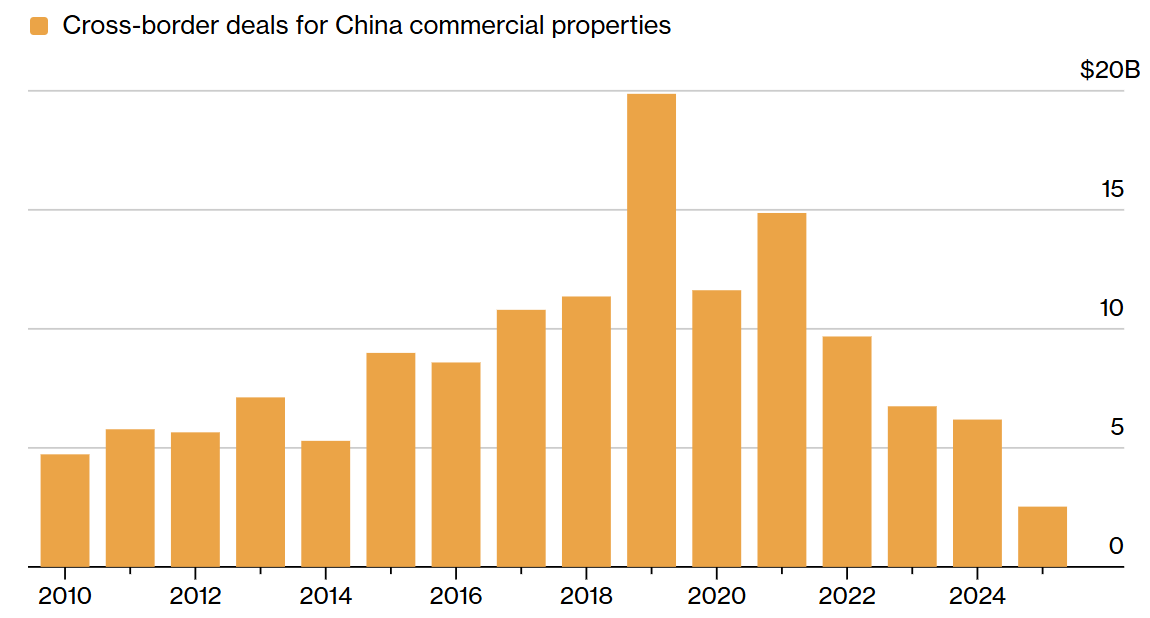
Foreign buyers invested close to $140 billion in office towers, warehouses, shopping malls and data centers in China over the past 15 years, according to data from MSCI Real Capital Analytics. But they have largely switched to selling mode as the country’s economic slowdown and an unprecedented supply glut cause rents and values to tumble.
The downturn is especially painful for investors who made their bets near the 2019 peak, when the estimated market value of office assets was at an historic high.
Foreign investment in the sector peaked before the pandemic. Source: MSCI Real Capital Analytics, Bloomberg
In 2020, AEW bought a Grade-A office project in central Beijing with local private equity investor Hony Capital Ltd., and later renamed it HeXa International Plaza after renovations. In late 2021, KKR purchased a 3,000-unit multi-family project in suburban Beijing.
China’s property crisis has also caught many lenders off guard, including HSBC Holdings Plc and Standard Chartered Plc, which have set aside hundreds of millions of dollars for provisions against commercial real estate portfolios.
Last year, lenders led by Standard Chartered took a more than 10% loss when a Shanghai office complex previously owned by a BlackRock Inc. fund was sold at a discount of more than 40%, people familiar with the matter said at the time. The BlackRock fund’s entire equity investment in the real estate was wiped out.
Will China’s current CRE downturn attract bargain hunters?
 Yahoo
Yahoo