Prediction market traders think President Donald Trump will make some major announcements in his trip to meet with Chinese President Xi Jinping in Beijing.
Traders on Kalshi give an 86% chance that he will announce China will buy aircraft from domestic manufacturer Boeing.
That belief is shared with Wall Street, as Boeing's stock advanced nearly 2% on Wednesday ahead of the meeting.
"The speculation is that Trump wants this to be the largest order ever announced, which could mean a Boeing purchase commitment in the triple-digit billions," wrote Tobin Marcus, head of U.S. politics and policy at Wolfe Research, in a note. "Investors will need to await clarification from the company about how 'real' those numbers are and what specific airframes are included."
Traders are also placing more than 81% odds that Trump will announce an extension of the U.S.-China tariff truce. In their October deal, China agreed to pause export controls on rare earths while the U.S. cut tariffs on the country related to fentanyl to 10% from 20%.
Barclays predicted that tariff might move a few percentage points lower if China purchases aircraft, as well as American oil and soybeans. While Kalshi traders see a 79% chance a soybean purchase is announced, oil purchases have a much lower probability at just 24%.
Traders also think there's a 69% chance a U.S.-China Board of Trade is announced. This is a key goal of U.S. Trade Representative Jamieson Greer, Wolfe's Marcus noted. "We suspect that this will be done primarily through ongoing purchase commitments, with the Board of Trade eliciting a centralized answer from the CCP about what China will buy from the US to mitigate their bilateral trade surplus," he wrote.
Trump told reporters on Tuesday as he departed for the trip that while he expected to chat about the Iran war with Xi, he also said, "I don't think we need any help with Iran." Despite that, traders see a likelihood of 61% that he talks about Tehran during the bilateral meeting. They also give a 59% chance he talks about oil or gasoline.
However, traders think there's just a 54% chance he'll talk about artificial intelligence. Jefferies analyst Edison Lee in a Tuesday note predicted the topic will likely be of great interest, considering the background of executives expected to join Trump on his trip.
"In addition to discussions on US AI chip/WFE [wafer-fabrication-equipment] export restrictions, the presence of Micron's CEO and Meta's president could offer scope for the issues of China's ban on Micron's products in key Chinese infra and restrictions against Facebook to be part of the discussions," he wrote. "We also see these issues as part of the bargaining process in relation to US tech restrictions against China."
And while China-U.S. tensions are high these days, traders don't think that will stop a firm handshake. Traders think the most likely scenario is Trump and Xi will shake hands for about 8.5 seconds.
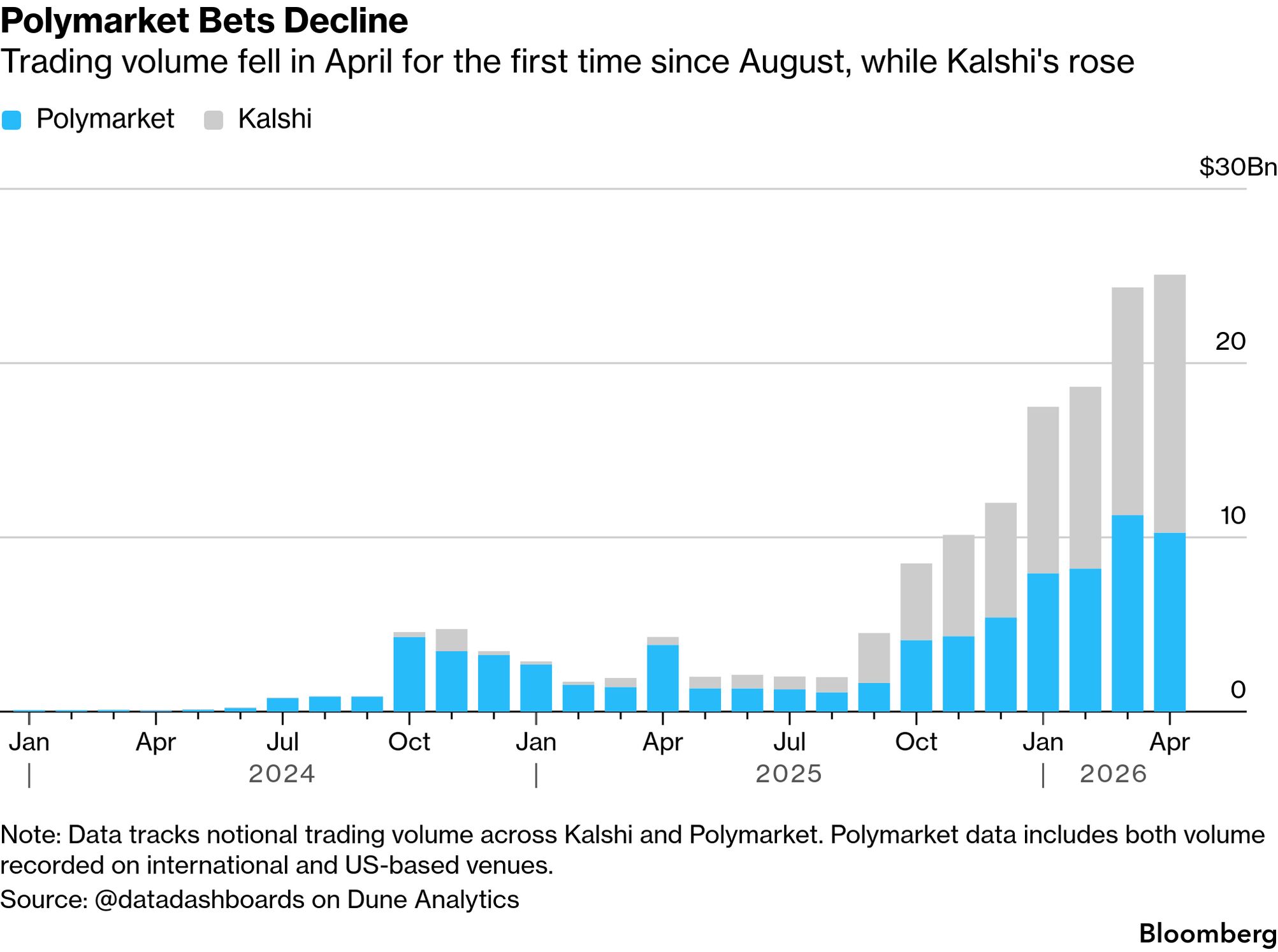
Trading volume on Polymarket has declined for the first time in eight months, a setback that comes as its founder acknowledges missteps and its chief rival Kalshi Inc. continues to grow.
Monthly notional trading volume on Polymarket’s offshore exchange and US app slipped by roughly 9% to $10.3 billion in April, according to user-compiled data on Dune Analytics. Kalshi’s volume rose 13% to $14.8 billion.
The last time volume declined on Polymarket was August 2025, the month before the National Football League regular season kicked off, attracting legions of new users. Polymarket later set its volume record in March, spurred by major sporting events including the March Madness college basketball tournament.
A Polymarket spokesperson said that volume dipped last month because of a technical overhaul designed to handle increased activity. The upgrade was rolled out on April 28 after a delay.
“Over the coming weeks, we are shipping a series of updates that will make trading faster and smoother than ever — reducing delays and delivering the biggest speed improvement in Polymarket’s history,” the spokesperson said in a statement on Wednesday.
Polymarket had more trading volume than any other prediction market exchange for most of the past few years, but it was overtaken in September by Kalshi. Polymarket has faced challenges including trading outages and delayed product launches, as well as scrutiny from lawmakers over the types of bets allowed on the platform and allegations of insider trading.
At the same time, the company’s valuation has continued to increase as the nascent industry grows. Polymarket was recently valued at $15 billion when it received a $600 million investment from Intercontinental Exchange Inc., the parent company of the New York Stock Exchange.
Founder Shayne Coplan has publicly acknowledged stumbles, saying that he sometimes found it difficult to delegate and communicate goals as the company expanded.
“There’s been a few times over the course of the business where the way the company ran was suboptimal. And I recognize that,” Coplan said at an industry event on April 28. He cited successes in other areas, including product and brand distribution.
The infrastructure upgrade late last month was aimed at resolving longstanding issues with failed transactions and frequent technical bugs. The company also added trading fees to almost all of its markets for the first time in late March.
“We’ve let people down, and I’m not going to dress that up,” Josh Stevens, Polymarket’s vice president of engineering, said in a social media post shortly before the upgrade took place. “The next few months are going to speak for themselves. Stay with us.”
The company has removed one barrier to growth. For months following a soft launch in December, users attempting to sign up for Polymarket’s US app were forced onto a waiting list. That was discontinued earlier in May, easing access for Americans.
AI is pivoting toward a "transactional infrastructure" phase, where the focus has shifted from general AI hype to the specific mechanics of deployment and trade. In the semiconductor space, capital is aggressively chasing inference-specialized hardware to solve the high-latency bottlenecks currently stalling real-time AI applications. Meanwhile, the upcoming talks between the two superpowers are under the spotlight - What will be talked? What deals could be reached? What problems remain in limbo? All eyes on the development this week...
Another Hot Semiconductor Name to Be Listed…
As the second attempt to list, Cerebras Systems is focused on inference, the process by which AI systems respond to user queries, and has tied much of its growth to OpenAI, including a $20 billion multi-year deal under which the ChatGPT creator will deploy 750 megawatts of Cerebras chips (Reuters).
The company is considering a new IPO price range of $150-$160 a share, up from $115-$125 a share, and raising the number of shares marketed to 30 million from 28 million, said the sources, who asked not to be identified because the information isn't public yet. The increase follows a broader surge in AI adoption that has driven sharp demand for high-performance chips and turned semiconductors into a key bottleneck in the technology supply chain. Cerebras' IPO has drawn orders for more than 20 times the number of shares available, the people said, as the chipmaker looks to manage surging interest ahead of its May 13 pricing.
Two Superpowers Meet Again After Almost a Decade…
President Lee Jae Myung held rare back-to-back meetings with top US and Chinese economic officials in Seoul, as preparatory talks were being held ahead of a high-stakes US-China summit (Korea Herald).
Trump is expected to focus heavily on trade with the aim of securing what he can present as economic wins ahead of November’s midterm elections. Washington has pushed for China to increase purchases of American goods, including Boeing aircraft, beef and soya beans, while also seeking closer investment and trade cooperation (Al Jazeera).
Beijing, meanwhile, is expected to press the US to ease restrictions on advanced semiconductor exports and roll back measures limiting China’s access to critical chip-making technology. Taiwan is also likely to remain one of the most sensitive and contested issues in the summit.
What’s the Market Looking At?
On the IPO front, the market consensus is that Cerebras isn't an "Nvidia Killer" for training, but it is the first real threat in Fast Inference. The sentiment is that while Nvidia will continue to dominate 90%+ of the general market, Cerebras is "skimming the cream" by taking the highest-value, low-latency workloads (like real-time AI agents) from OpenAI.
On trade & technology, Jensen Huang’s surprise China trip could signal AI shift in US-China talks (New Fortune Times). The last-minute decision for Huang to join the trip has drawn global attention because his company, Nvidia, sits at the center of the global AI race. Market analysts said investors interpreted Huang’s attendance as a positive sign for future AI cooperation between the two countries.
Meanwhile, China tech giants Alibaba and Tencent both will disclose quarterly performance on May 13th. Will they beat or miss? What catalyst to look out for? How is AI integrated into their blueprint, and how’s the execution?
The “deals” over “diplomacy” - as a group of key figures across technology, industrials, basic materials, and finance joining the trip, the market could be eyeing a series of deals to be reached - but not to forget the prolonged trade tensions since 2025 Liberation Day.
Mark your calendars: Cerebras will go public on May 13, at what price will it close after debut? How will it influence semi-conductor landscape? What’s the keys to be discussed in the US-China meet-up and what will they come out with?
A new futures market for semiconductors will let traders hedge their artificial intelligence investments with bets on the increasingly expensive price of computing power.
Contracts on the new "compute futures market" from CME Group will be based on graphics processing units (GPU) price indexes from Silicon Data, the companies said in a statement released Tuesday announcing the joint venture, which still is pending regulatory review.
The new market will let investors lock in a price for computing capacity based on a GPU benchmark, which can be used to hedge against rising GPU rental rates and other operational costs in the enormous and multifaceted AI buildout.
"GPU markets ... have historically lacked standardized reference pricing," Carmen Li, chief executive of Silicon Data, said in the release. "The launch of compute futures is an important step toward giving AI builders, cloud providers and investors more reliable tools for valuation, hedging and long-term planning."
Futures markets are traditionally associated with basic commodities like foodstuffs, metals, and petroleum products, but they've also popped up for assembled components in rapidly developing segments of advanced industrial sectors.
During the broadband explosion in the late 1990s, the broadband services division of Enron aimed to sell unused capacity on its network of fiber optic cables prior to the company's spectacular failure.
Silicon Data sells access to specialized price indexes to clients, similar to the consumer price index or personal consumption expenditures price index, except for semiconductors. Its products include a standardized GPU price index, a RAM index and projections for GPU rental prices.
Wall Street doesn't see demand for GPUs, or more traditional central processing units (CPUs), slowing down any time soon.
"Agentic AI requires entirely new racks of CPU servers that sit alongside GPU infrastructure and run to power the work of all these agents," analyst Shawn Kim at Morgan Stanley wrote in a report Monday.
"The AI system in the future will look like a distributed system consisting of GPU racks for dense model compute … [and] agentic CPU racks for orchestration, processing data and tool execution," Kim said.
Memory chip prices soared in the first quarter as AI drove increased demand for CPUs. Hyperscalers increased capital spending across the board while executives expressed concerns about a bottleneck in memory that's driving input costs higher.
Memory chip makers are projecting huge profit margins through this year and next as valuations have skyrocketed.
In 2020 two economists walked into a bar in San Diego and made a bet. Erik Brynjolfsson, head of the Stanford Digital Economy Lab, wagered that from 2020 to 2030, artificial intelligence would drive US labor productivity growth to more than 1.8% per year on average. Robert Gordon, an economist at Northwestern University, thought AI progress would be a little slower going. He put his money on productivity growth coming in below 1.8%. At stake: $400, to be donated to charity.
As wonky and low stakes as the bet might sound, its outcome will have a much greater impact on our welfare than almost anything Polymarket could dream up. At the heart of the wager is a crucial question: How much is AI going to affect the economy? How fast? And will it be a good thing for workers, or are we all about to be AI’ed right out of a job?
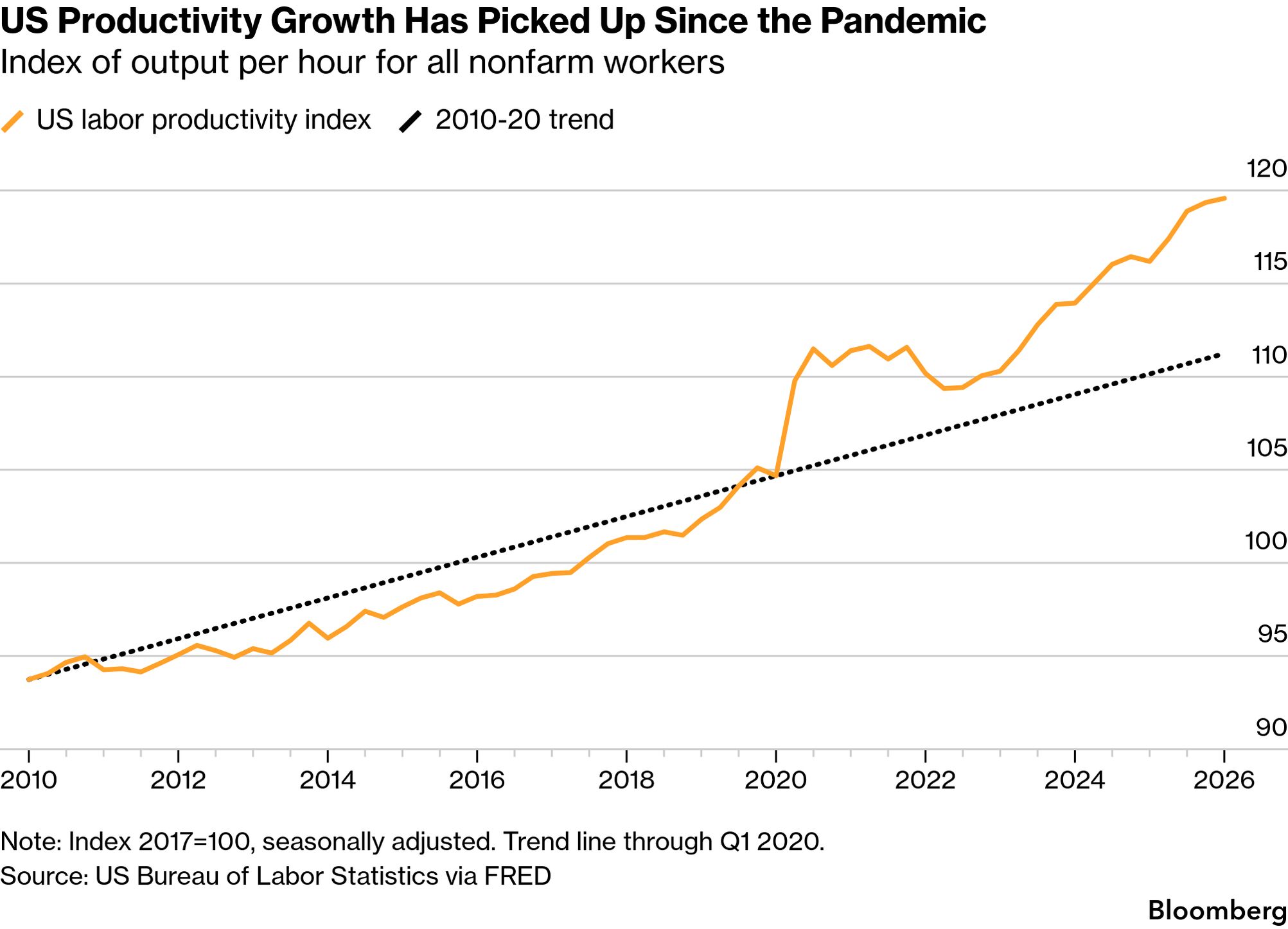
The best way to see how much the AI hype is actually manifesting on Main Street is to look at labor productivity, which has accelerated noticeably in the US in recent years. Productivity—basically, the amount of goods and services an economy churns out divided by the hours worked to generate that output—is one of the most important indicators of economic health. It’s also profoundly personal, says Diane Coyle, an economist at the University of Cambridge and author of The Measure of Progress. “It is the measure that most closely relates to how people’s living standards go up over time.” Technological breakthroughs like the steam engine, electricity, the internet and now AI help workers produce more. “Think about a construction site,” Coyle says. “A worker who gets a digger is going to be more productive than a worker who’s just got a shovel.”
Innovation isn’t always welcome. In the 1900s pockets of farmers in the US and Britain vigorously resisted various forms of mechanization, from threshing machines to tractors. But at his farm in Surprise, Arizona, David Vose is embracing AI-enabled automation. Vose has run Blue Sky Organic Farms for more than 30 years, and in every one of those years he’s had to battle the birds: giant flocks of sparrows and yellow-breasted warblers that lay siege to his fields of cabbage, kale, beets and strawberries. “They just won’t go away, no matter what you do,” Vose says. “You have to stand in the middle of your field like a moving scarecrow.” One year, he took a day off when his lettuce plants were young. “I came back, and my crops were gone. Just wiped out. I had to replant everything.”
Since then, Vose makes sure to have people constantly patrolling his fields. It doesn’t come cheap: Wages start at about $22 an hour, and shifts can be 10 hours long. During the growing season, battling birds can cost Vose upwards of $10,000 a month. Larger farms will have teams of more than a dozen people “walking up and down the fields every day banging on 5-gallon plastic pails with a stick,” he says. So when a group of engineers who’d graduated from Arizona State University approached Vose about testing their AI-powered scarecrow on his land, he gave them full access.
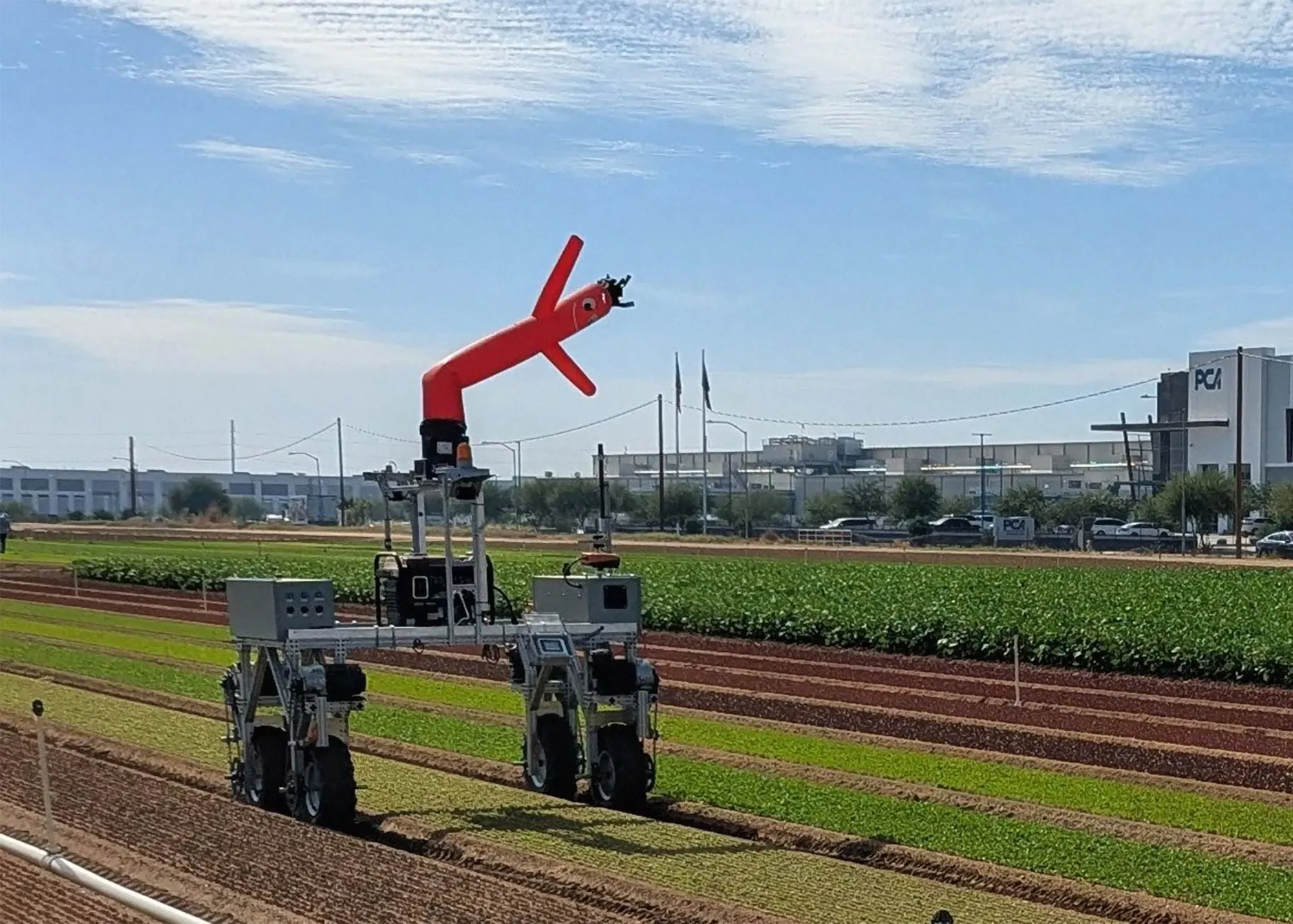
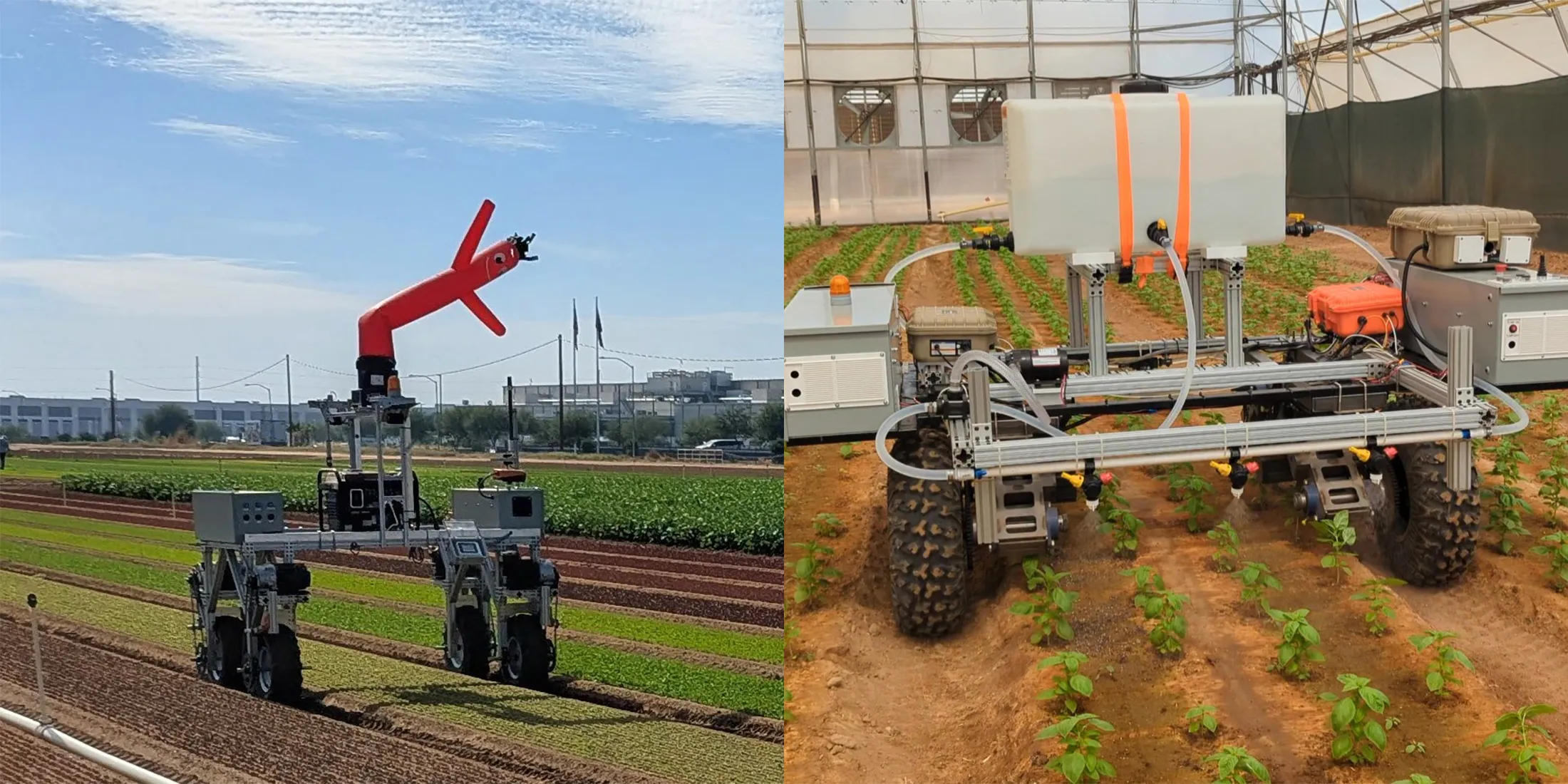
Raghu Nandivada is chief executive officer of Padma AgRobotics, a startup based in Phoenix. He grew up on a farm in India, and when he heard Arizona growers griping about the birds, he realized AI could easily solve the problem. Nandivada developed a self-driving machine, roughly the size of a hot-dog cart, that can maneuver around delicate seedlings and scare birds off crops. His son suggested topping it with a wavy-armed inflatable figure like the ones outside car dealerships. The total cost for Nandivada’s “bird deterrent system” will likely be about $30,000, but for now he’s offering a subscription that lets farmers try out the system before committing to buy it. Even for a small farm like Blue Sky, it should pay for itself in a few months.
Padma AgRobotics is also developing a self-driving sprayer and a contraption that can pick, clean and bundle cilantro. Each machine could save farmers millions of dollars a year. They could also put a lot of field-workers out of a job.
This has always been the dark side of productivity. Workers can get left in the dust, as Northwestern’s Gordon notes, recalling when Microsoft Excel spreadsheets were introduced in 1985. “It decimated the ranks of bookkeepers,” he says. A version of this may be happening now: Tech layoffs were up 40% year over year as of March, and hiring has flatlined, especially for entry-level jobs. “ I was talking to the CEO of a human resources company that has maybe 30,000 employees,” Gordon says. “She said, ‘A couple of years ago, we would hire 20 interns. This year we’re going to hire two.’”
Yet one feature of what economists call general-purpose technologies—ones with applications across a broad swath of industries—is that while they can make certain jobs obsolete, they’ll also create new, better-paying ones. With the arrival of Excel, “a whole new set of occupations called financial analysts and financial managers opened up,” Gordon says. “Eventually, the number of people in those occupations grew as big as the shrinkage of bookkeepers.”
Eventually. Therein lies the problem. The gap between a novel technology destroying jobs and creating new ones can be years. Gordon, for one, suspects that AI’s impact on the labor market will go far beyond anything Excel could conjure: Within the next five or so years, he estimates about one-third of white-collar jobs in the US will be transformed or eliminated.
How long before the new crop of AI-enabled jobs arrives is harder to forecast. Writing in 1987, economist Robert Solow remarked that while personal computers were fast becoming ubiquitous in the workplace, they didn’t seem to be moving the needle in terms of productivity. “You can see the computer age everywhere but in the productivity statistics,” he quipped. Brynjolfsson, who as a graduate student assisted Solow in his research, later identified what he called the productivity paradox of IT. “It wasn’t enough to simply buy a computer and plug it in,” Brynjolfsson says. “You had to step back and rethink the whole business process to get the value from it.” In the case of the PC, it took nearly a decade for productivity to really take off.
This is where the bet between Brynjolfsson and Gordon comes in. Companies are investing heavily in AI, but until they figure out how to retool their workflows to make the best use of the technology, productivity growth will likely be modest. A study from the Massachusetts Institute of Technology last year found that despite huge investments in AI, 95% of businesses reported no measurable return on investment.
Three years from the deadline of Brynjolfsson and Gordon’s productivity bet, how are things looking? “I’m clearly going to lose,” Gordon says with a laugh. From 2020 to 2026, productivity in the US has increased by more than 2% on average (well above Gordon’s sub-1.8% wager). Still, he says, it’s unclear whether these gains will lift all boats the way the PC or Excel did. Right now companies like Meta Platforms, Microsoft and Amazon.com are making more money. Yet all three have announced significant layoffs in recent months, partly to compensate for the heavy investments they’re making in data centers and other AI infrastructure.
Brynjolfsson says companies, along with industry groups and government organizations, need to address AI-related job displacement now. “It would be a tragedy if we took this growing pie and turned it into something that hurt a lot of people,” he says. “The most urgent challenge for our economy and our society today is navigating this transition. Shame on us if we turn it into a bad thing.”
The rise of the robot scarecrow will not mean fewer jobs at Blue Sky Organic Farms, according to Vose. “I’ll probably hire and pay more money to some people that maybe have greater skill levels,” he says. “I might build a new farm store.”
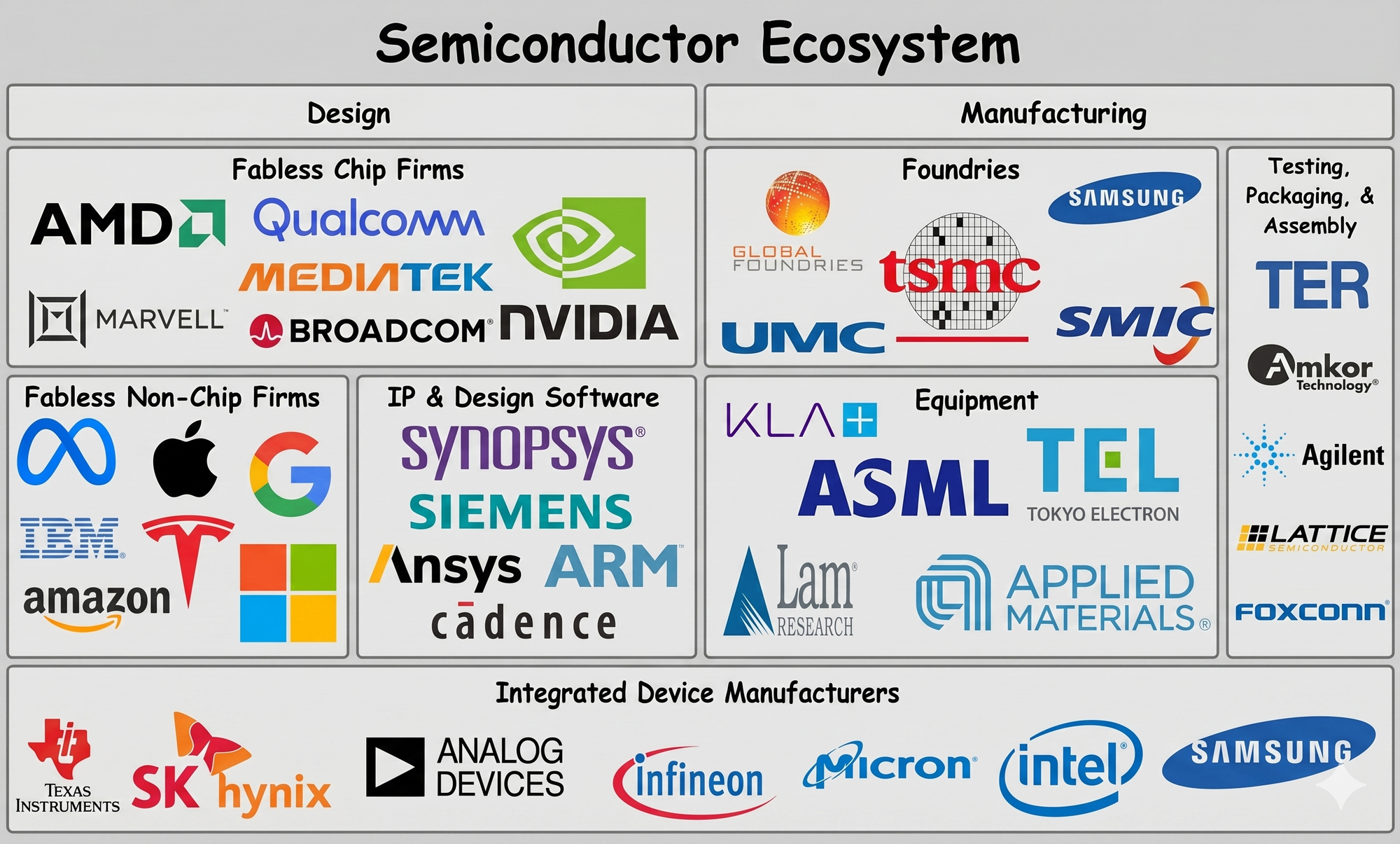
The semiconductor industry is officially entering its $1 trillion era, fueled by a massive $600 billion hyperscale capex surge projected for 2026. Industry consultants view this as a structural revolution beyond cyclicals. As the market begins to look past GPUs & Hyperscalers, the question remains: what will the next wave be?
AI Infrastructure Boom - A Rising Tide Lifts All Boats
The global semiconductor market is undergoing a seismic transformation. IDC’s latest forecast projects the industry will surge past the $1 trillion revenue threshold in 2026, significantly ahead of prior expectations. The growth will be driven overwhelmingly by AI infrastructure investment, which is reshaping the entire market. (IDC).
Hyperscale capital expenditure exceeded $100 billion for the first time in Q3 2025, and the i4 are expected to increase capex by 70% year over year to approximately $600 billion in 2026. IDC forecasts data center semiconductor revenues to reach $477.1 billion in 2026. By 2030, data center semiconductors will account for $843.2 billion, nearly half the total semiconductor market.
It seems the growth is self-sustaining rather than cyclical:
1) Compute intensity continues to rise. Generative AI and agentic workloads require far more compute density per rack than prior architectures, increasing the overall silicon footprint.
2) Inference demand compounds on itself. Each new model generation increases the volume of inference, requiring ongoing hardware upgrades
3) AI is spreading beyond the data center. As enterprises, edge deployments, and client devices begin running AI workloads locally, demand becomes more distributed.
Segments That Are Soaring - by Consensus
High-Bandwidth Memory (HBM3e / HBM4): Memory is no longer a "commodity" cycle; it’s the primary bottleneck for AI. Hyperscalers are paying massive premiums to secure HBM3e and early HBM4 supply. Micron (+136% YTD) and SK Hynix (+70% in last 30 days) are the star performers here, as AI accelerators cannot function without these specialized, high-density stacks.
Custom Silicons & AI ASICs: Companies are shifting away from general GPUs to bespoke "homegrown" chips to cut costs and power consumption. Broadcom’s long-term contracts with Google & Meta provides revenue visibility. Marvell Technology (+50% in a month) is a fast-growing challenger, winning orders from Amazon and Microsoft, outpacing the industry’s growth.
Co-Packaged Optics (CPO) & 1.6T Connectivity: The "Copper Wall" has been hit; data must now move via light. The upgrade from 800G to 1.6T networking is the new margin expansion story. As the leader in Indium Phosphide components, Coherent (+42% YTD) is the "arms dealer" for the 1.6T transceiver upgrade. Lumentum (+28% YTD) is benefiting from the rapid adoption of CPO technology so solve heat and power issues in massive data center clusters. (note: all as of mid May 2026)
What Has The Market Not Priced-in?
Besides the obsession over GPU shipments and HBM capacity, what are elements yet to be fully-priced in?
The agentic CPU re-rating story, as CPUs return to the center of the AI stack?
The machinery-to-data-center pivot, where traditional industrial cyclical players move into the power generation space for AI-infrastructure?
Niche players that are integrated into the upgraded supply-chain of hyperscalers?
Drop a comment below on what is trendy and will be the next wave of growth!
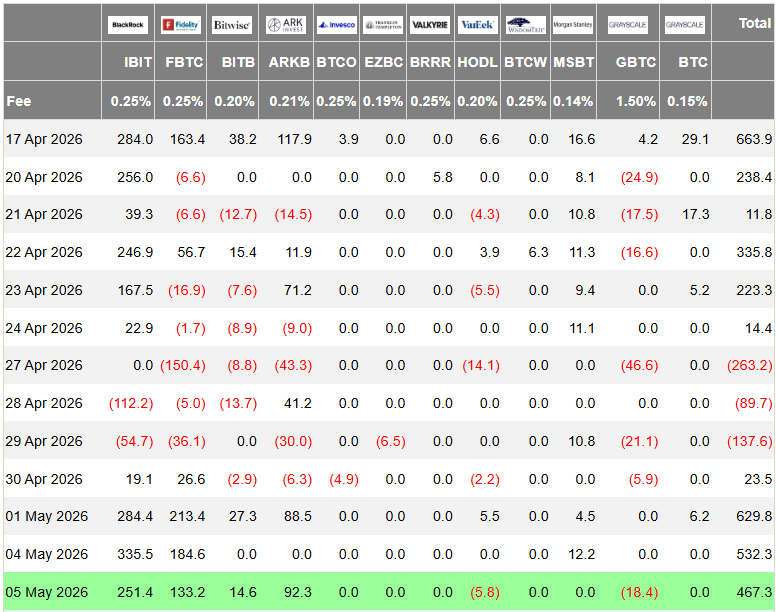
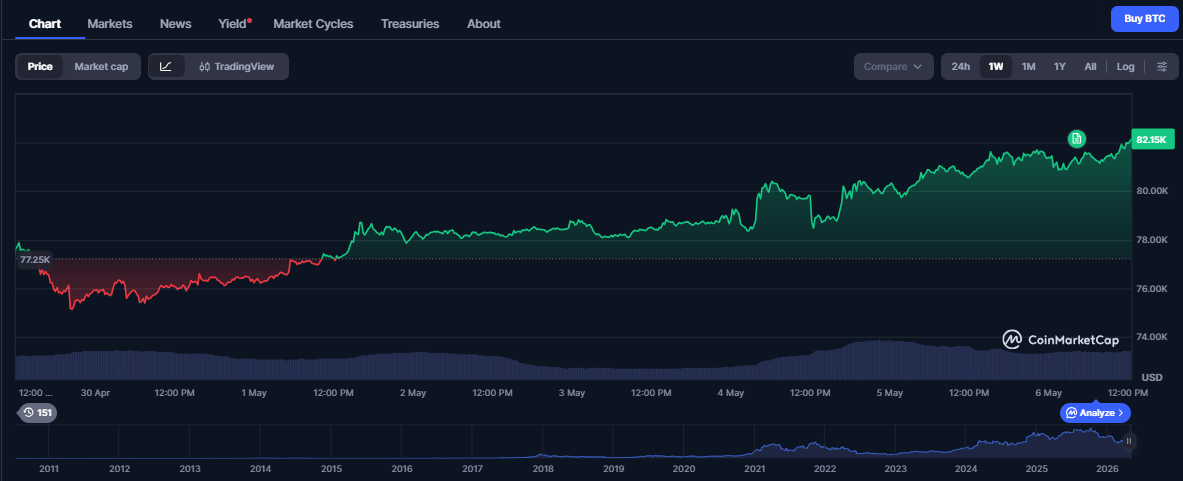
On May 5, US spot Bitcoin ETFs gained $467.38 million in net inflows. This is the fourth day of net inflows and shows that the institutional interest in BTC is now rising. Amid all this, the price of BTC has been soaring. In fact, it went past the $81,000 resistance level and hit $81,900 at one point. This level marks the highest point achieved since February 2026. The recent surge has led influencers to predict an $85,000 price target for BTC.
Institutional Demand Spikes for BTC
According to data from Farside Investors, Bitcoin ETFs attracted $467M inflows in just one day on May 5. This is the fourth consecutive day of inflows, with them peaking at $629M on May 1.
BlackRock’s IBIT topped the list with over half of the total inflows at $251M. Following at a distance was Fidelity’s FBTC with $133M. Ark Invest’s ARKB rounded out the list with its inflow of $92M and Bitwise’s BITB inflow of $14M.
All these inflows show that institutional investors are looking at BTC’s current position as favorable and want greater exposure to it. Plus, this variety of fund inflows creates a more stable structure for Bitcoin since it can withstand the impact of a massive sell-off from one fund like GBTC better.
The Price of BTC Nears $82,000
At the same time, the BTC price has managed to soar on the charts. CoinMarketCap shows that the value increased from around $77,030 to over $82,000 in the past seven days. This is just a continuation of the monthly uptrend, which saw BTC soar over 15%. Plus, it is the highest level for the price of BTC since February 2026.
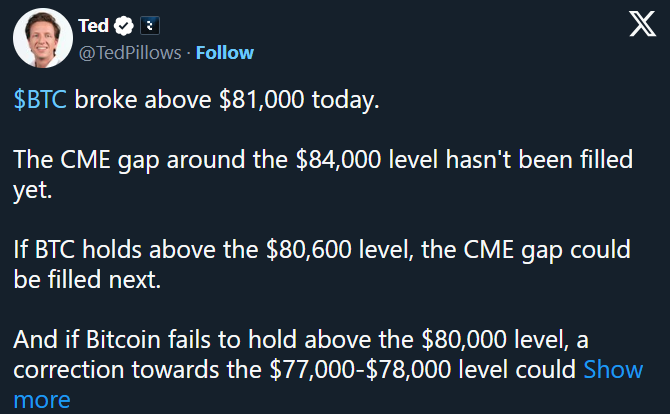
There is also a shift in market sentiment for Bitcoin as prominent traders like Ted are highlighting this upward momentum. According to Ted’s X post, BTC appears to be facing little resistance in the short term. He even claims a potential easy path to $84,000 or $85,000 lies ahead. At this level, Bitcoin has a CME gap. To clarify, the CME Bitcoin futures market closes on weekends which often leads to a “gap fill” in the future. Traders believe Bitcoin’s momentum will naturally gravitate to that unfilled price window.
The immediate resistance is currently sitting at $82,500 for Bitcoin. If the price of BTC manages to soar past it, the next resistance level sits at $83,000 which is its 200-day EMA. In the long-term, BTC is eyeing the $86,000 level as an upside target. On the flipside, the support levels sit at $80,500 and at $80,150. If it fails below them, the price of BTC could drop to the intermediate support of $79,200 or even to the key support of $76,500.
Technical Indicators Back Bullish Momentum
The technical analysis for Bitcoin also shows bullish signs. According to data from Investing.com, the 14-day RSI indicator now has a value of 63 which is in the positive zone. This suggests that the price of BTC is experiencing a strong upward momentum but it is still not in the overbought zone which is over 70.
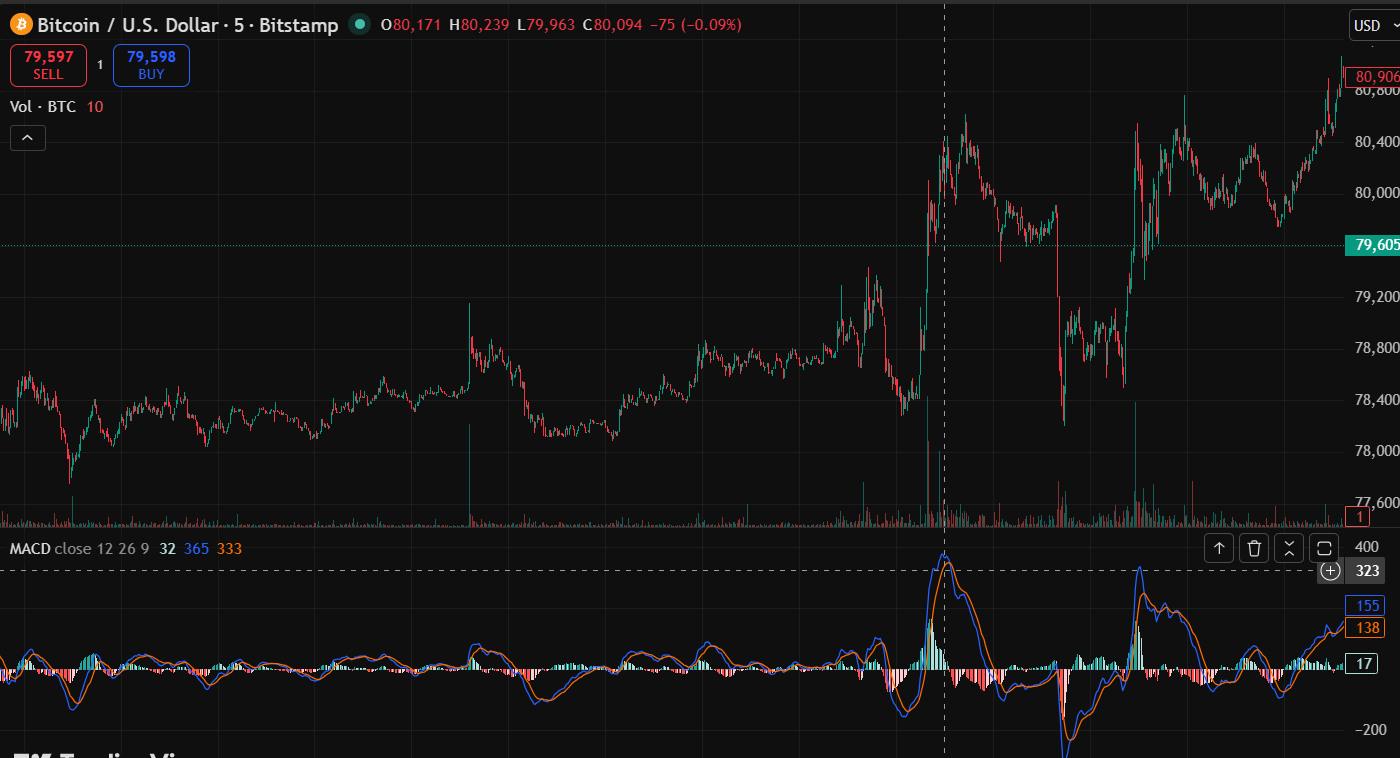
Its MACD (12,26) indicator is also bullish with a value of 314. This means the 12-day EMA is over the 26-day EMA. BTC is growing at a rate much faster than the long-term average. As the 13-day bull/bear power indicator is also suggesting buyers are in control (a value of 877), this uptrend shows all the signs for a potential continuation.
The Bigger Picture
Bitcoin ETFs seeing four straight days of inflows is a very positive sign, as it shows institutional interest in this coin is rising. Given that there is a 1 or 2 day delay for ETF creation/redemption data, this streak is also a confirming indicator of the bullish strength for BTC. This can be attributed to the price of BTC soaring to $82,000 for the first time since February this year.
Positive price action and strong ETF demand, as well as positive technicals, paint a very bullish picture for BTC. As a result, the $85,000 target may be passed if BTC can flip the immediate $82,500 resistance into support. That said, BTC must also hold above the $80,500 support level for this bullish thesis to work.
Is crypto market yet at another historical crossroads? Bitcoin treasury firm Strategy signals it might break the “never sell” approach to the flagship crypto BTC. Meanwhile, U.S. lawmakers are updating the rules of stablecoin adoption, which could be a net win for the sector. Reading between the lines, what is your call?
Strategy Might Sell BTC: Is It Bearish?
Bitcoin treasury firm Strategy breaks from ‘never sell’ approach to the flagship crypto (CNBC).
Strategy’s latest earnings release marks a subtle but meaningful shift in the company’s approach to bitcoin: Instead of passively stockpiling bitcoin, it’s going to more actively manage the balance sheet to maximize value of bitcoin per share.
That’s a reversal from the company’s longstanding “never sell” strategy, which originated with chairman, founder and bitcoin evangelist Michael Saylor – and it comes as the company posts a $12.5 billion net loss in the first quarter due to the slump in the bitcoin price during the beginning of the year.
At the end of the first quarter, Strategy held 818,334 BTC acquired for $61.81 billion, accumulated at an average cost of about $75,500 per coin.
Circle Stock Jumps as Tillis Deal Pushes CLARITY At Forward
Circle shares surged nearly 20% on May 4, closing at $119.53, after U.S. Senators Thom Tillis and Angela Alsobrooks reached a bipartisan compromise on the CLARITY Act’s stablecoin rewards language (Bitcoin Com News).
Key language in the proposed crypto legislation was updated to restrict crypto companies from paying savings account-like interest or yield to users on passive stablecoin deposits – leaving that function to traditional banks. However, the bill does allow rewards as usage-driven incentives that could be tied to activity like trading, transactions or staking, as expected.
The development also aligns with a wider industry shift away from return-seeking products and services and toward crypto’s use in upgrading financial infrastructure.
Most banks have yet to weigh in on the legislation, but Bank of America called it a net win for the sector.
“Across bank sub‑sectors, the CLARITY Act’s resolution of the stablecoin yield debate is a net positive,” Bank of America analyst Ebrahim H. Poonawala said in a note Monday. “It should alleviate concerns tied to deposit flight, reduce regulatory uncertainty, and allow banks to engage with digital‑asset infrastructure on more controlled terms.”
What’s Your Call?
On one hand, you have the "Maximalist Meltdown" scenario: the once-unshakeable Michael Saylor—the man who treated Bitcoin like a sacred, untouchable relic—is now whispering about selling sats to pay out boring old dividends. If the ultimate "HODLer" starts cashing out to appease shareholders, the narrative of Bitcoin as a black hole that only absorbs supply is officially dead; it suggests even the strongest hands have a price, and the market might finally be choking on its own over-leverage.
While on the other hand, you have the "Institutional Coup": Circle is essentially getting the U.S. government to sign a peace treaty. By turning USDC into a legally bulletproof payment rail for AI agents, they aren't just playing the crypto game—they’re replacing the banking system from the inside out. We’re watching a split in the soul of the industry: is crypto a rebel store of value that's losing its nerve, or is it a compliant financial utility that’s finally ready for the big leagues? One side sees a fire sale, the other sees a foundation.
The ball is in your court—are we witnessing the beginning of the end for scarcity, or the end of the beginning for mass adoption?
Kalshi Inc. has completed a funding round that values the prediction markets platform at $22 billion, roughly doubling the previous valuation it secured five months ago.
The New York-based firm raised $1 billion in a Series-F round led by Coatue Management, according to a blog post on Thursday that confirmed an earlier report from Bloomberg News. Other investors who participated included Sequoia Capital, Andreessen Horowitz, IVP, Paradigm, Morgan Stanley and ARK Invest.
Its previous round valued the company at $11 billion.
Prediction markets have become increasingly popular lately, as retail investors rush to trade on event contracts tied to politics, sports and economic outcomes. Annualized trading volume on Kalshi tripled in the last six months, according to the blog post, rising from $52 billion to $178 billion.
As of this month, Kalshi’s annualized revenue — or annual run rate — is more than $1.5 billion, a spokesperson for the company said.
Kalshi and its chief rival Polymarket have raised billions of dollars in investment over the past year, significantly boosting their valuations. Polymarket is seeking additional funding that would value its business at $15 billion, Bloomberg reported last month.
Prediction markets have promised traders more accurate, real-time forecasts on crucial economic data releases.
On one of the most closely watched and economically consequential US economic events – the monthly jobs numbers – they haven’t yet lived up to the hype.
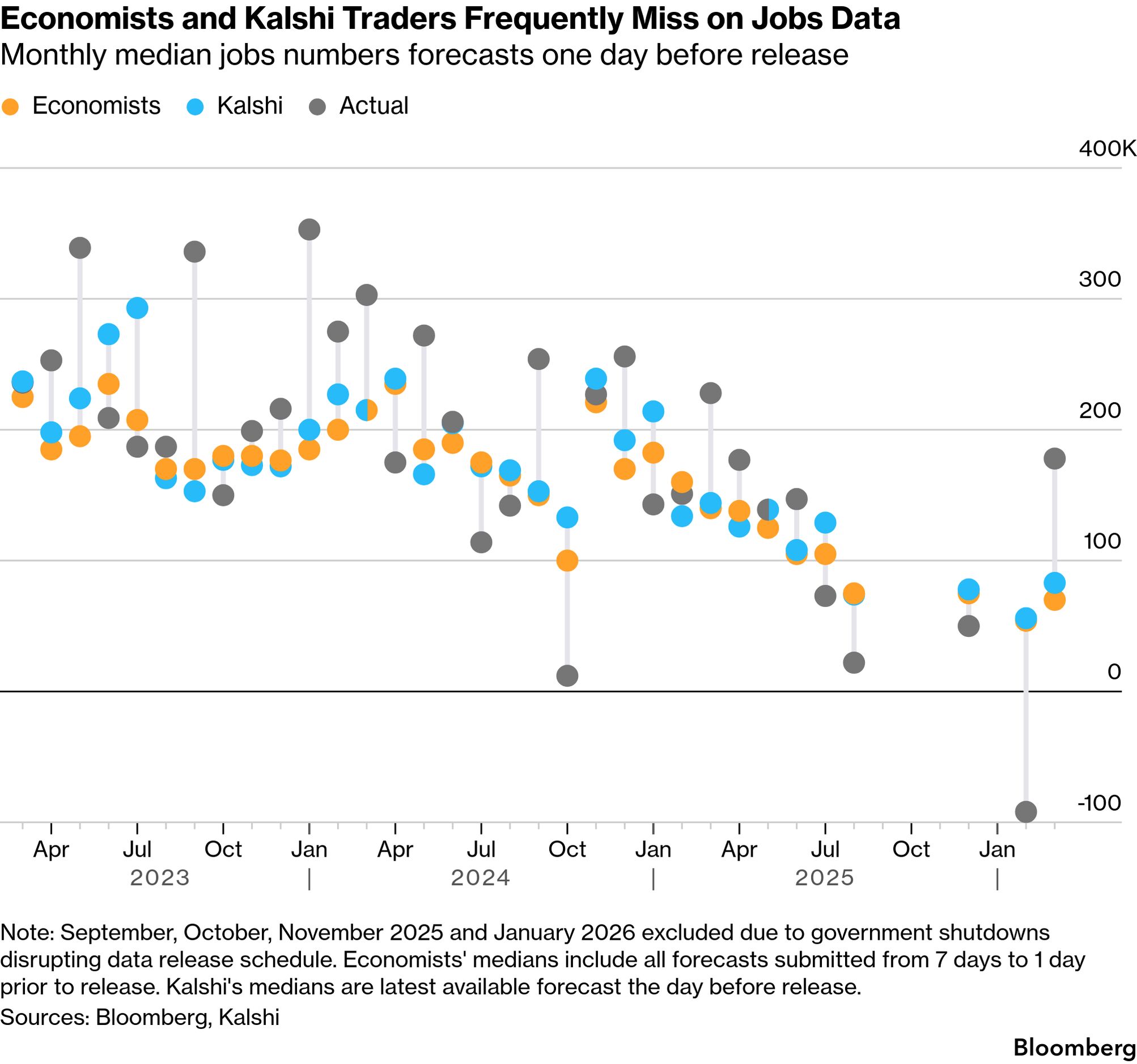
Last month, when the Labor Department reported that the economy added 178,000 jobs, the final aggregate estimate from bettors on Kalshi Inc. was off by over 90,000 jobs, after close to $1 million in wagers were placed.
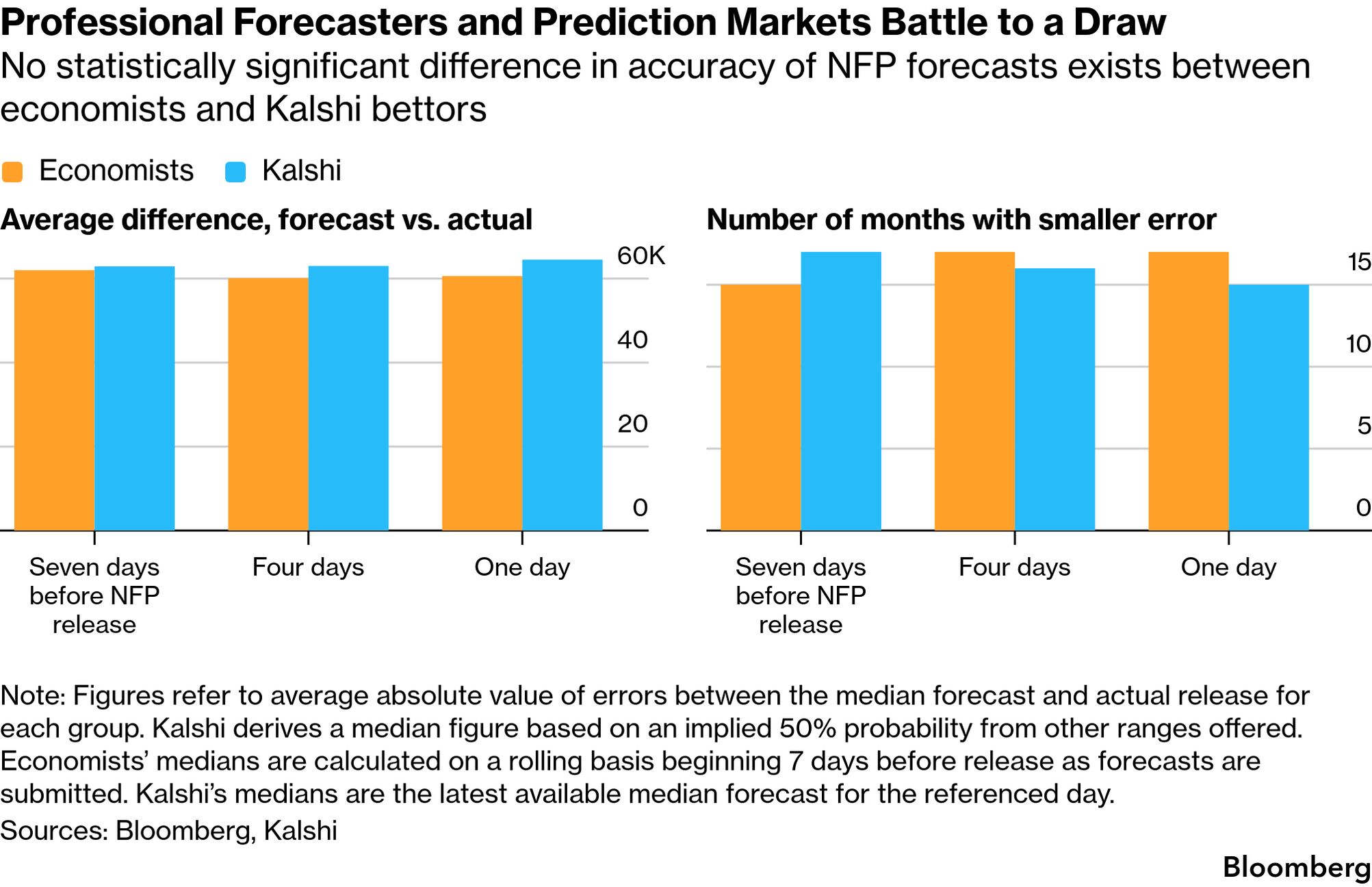
That was slightly closer than the median forecast of 79 economists polled by Bloomberg. But over the last three years of monthly estimates, both Kalshi and the experts have generally missed the actual number by a similar, and relatively significant amount, according to a Bloomberg analysis of the data.
Professional forecasters did have a slight edge, but not at a level that is statistically significant. Across all 33 months, both economists and Kalshi missed the actual number by over 60,000 jobs, on average.
The jobs forecast has been among the most difficult economic data points for experts to predict, providing a particularly important testing ground with ramifications for monetary policy and the direction of the broader economy. The Labor Department acknowledges that the numbers it releases are preliminary, with a wide band for error, and are ultimately revised more than three times.
Some economists who track the data say that the results so far, and the reputation of prediction markets as a new form of online gambling for unsophisticated amateurs, have not convinced them to pay all that much attention to the odds.
“Kalshi’s just making money on a novelty bet, like The Price is Right,” said Brett Ryan, a senior US economist at Deutsche Bank, who is among the 10 most accurate payrolls forecasters over the past two years in Bloomberg’s panel.
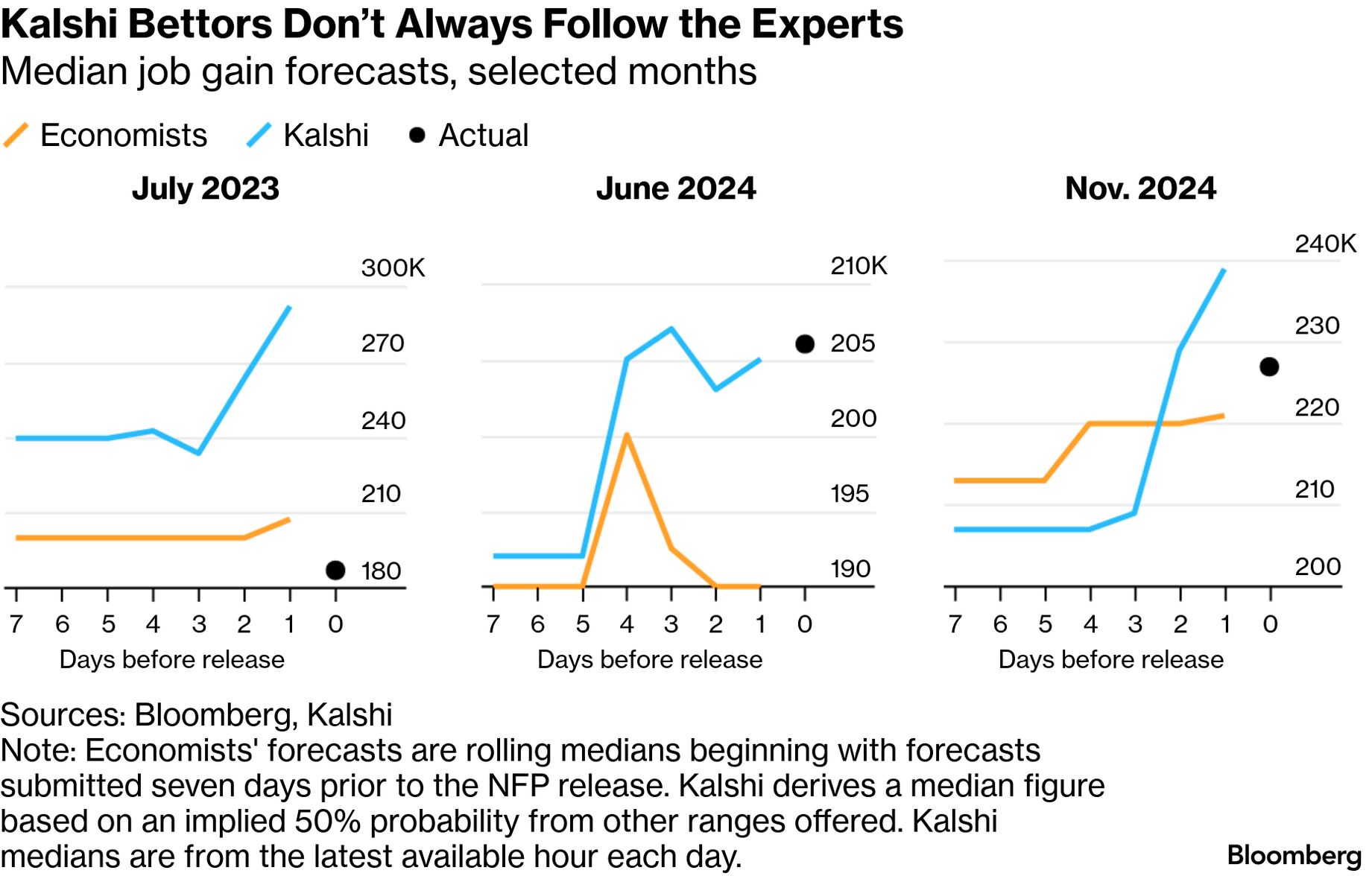
The neck-and-neck race suggests to some skeptics that many prediction market traders are merely copying what they see from the economists, rather than offering any new information. Going into this week’s report, Kalshi’s estimate on Wednesday of 71,000 jobs is just 6,000 higher than what economists are expecting.
Jack Such, a spokesperson for Kalshi, said that the company’s traders are offering a crowdsourced wisdom that builds on the aggregate expertise of the economists.
“The fact that the eventual economists’ forecasts and Kalshi data are similar does not imply Kalshi is an inferior data source, it just means the existing forecasting mechanisms are much stronger compared to other subjects on Kalshi,” Such said.
The dream for prediction markets is that they incentivize traders to reveal insights from ordinary people who are spread across the country and may have access to evidence that the economists miss, like local signs of job losses or gains.
Kalshi’s chief executive officer, Tarek Mansour, has said his company harnesses the wisdom of the crowd to replace “debate and subjectivity with markets and accuracy.”
Kalshi’s odds have been materially different than the economists in several months, suggesting that the economists and the crowds have, at least sometimes, come to their conclusions independently, rather than just following each other.
Some top economists say they are watching the results in case the signal becomes more valuable.
“If we see that it gets it more right than wrong, I would be open to it” said Oscar Muñoz, the chief US macro strategist at TD Securities and another top-10 forecaster. “Maybe in the future we’ll use them, but not now.”
Ryan, at Deutsche Bank, said that in addition to seeming like something of a stab in the dark, the Kalshi forecasts miss the texture and detailed data below the headline number, which offer the most important information on the state of the economy.
“I’m actually not trying to forecast non-farm payrolls,” he said. “What I’m trying to focus on is, what does the entire report tell us about the labor market?”
Kalshi traders express their views by placing yes or no bets on a variety of contracts tied to whether the final number will be higher or lower than a specific number. On Wednesday, for example, a trader could pay 71 cents for a contract that would pay out $1 if the main payroll number comes in over 30,000, among several other similar contracts. Kalshi then creates a topline forecast from a blended result of all the bets.
Kalshi’s main rival, Polymarket, also lets customers trade on the jobs numbers. But it does not publish aggregate odds like Kalshi that make it possible to compare with economist forecasts.
A number of academic studies have offered support for the believers in the wisdom of the crowds. One recent study, conducted by three economists, found that Kalshi’s odds have been “roughly consistent” with professionals in predicting US interest rate decisions, inflation and unemployment. On one particular data set, headline CPI, it offered a statistically significant improvement.
The authors of that paper said that prediction markets are particularly valuable because they offer a continuous, real-time version of how the odds are moving, unlike economists, who only update their forecasts periodically. On the nonfarms payroll data, for instance, many economists’ final projections are submitted days in advance, while Kalshi’s odds are constantly updated as bets come in until the last minute.
To the degree that prediction markets have been accurate, there have been growing concerns that it might be because people with insider information are moving the markets. A US soldier was arrested last month after allegedly placing early bets on the ouster of Venezuelan dictator Nicolás Maduro right before taking part in the military mission to capture him.
Bets on geopolitical events and macroeconomic forecasts have been a relatively small part of Kalshi’s overall business. Sports betting has been the single largest category on the exchange, driving overall trading volume to $14.8 billion last month, more than five times what it was last September, according to user-compiled data on Dune Analytics.
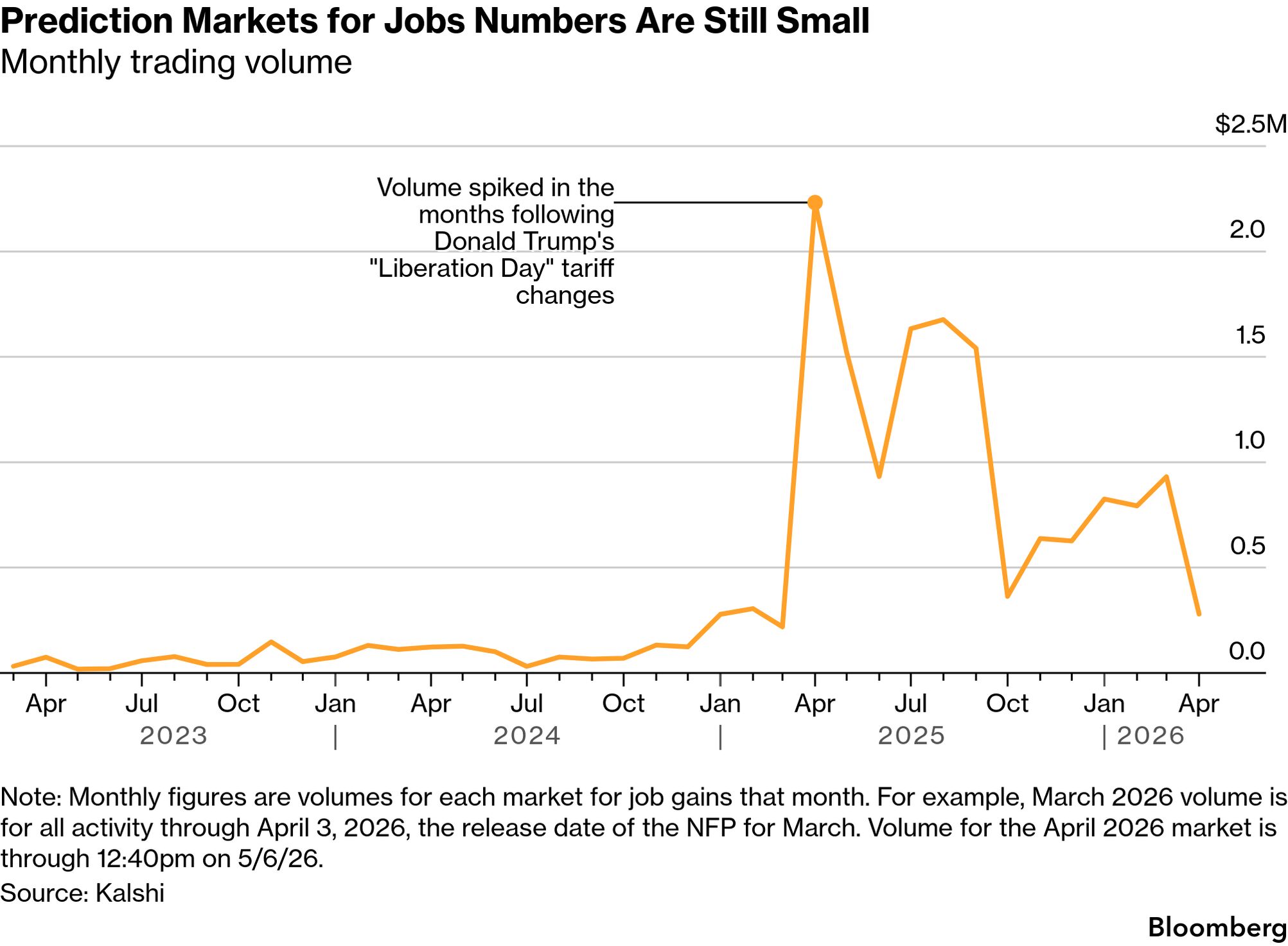
The jobs report has generated much lighter trading, and it has not been growing — with an average of about $435,000 in monthly trading over the last three years. That is less than some basketball games see in a single quarter.
A recent academic paper found that only a small number of traders — as few as 3% — are responsible for whatever accuracy prediction markets have achieved, while many traders are speculating around the edges, and losing money.
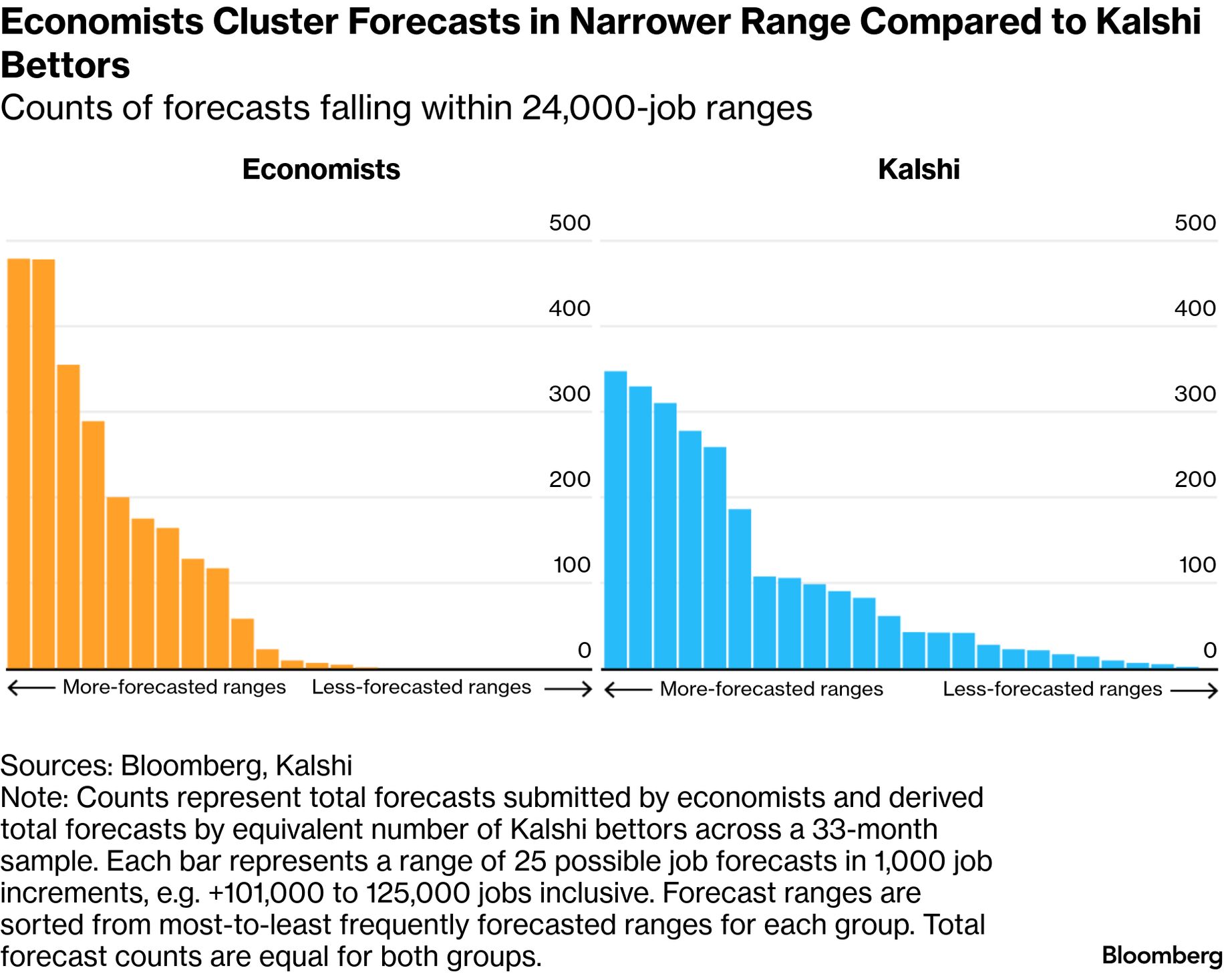
The bets on the payroll data show that traders are making a much wider array of guesses than the economists, who tend to cluster together more closely. Stephanie Roth, one of the top ranked forecasters, and the chief economist at Wolfe Research, said that she and her peers have developed similar models and keep an eye on what each other are thinking.
“It’s like this little bubble where it does seem like people tend to gravitate towards similar numbers, and a lot of times because the models are similar,” Roth said.
One of the selling points of prediction markets is that they bring in people who are outside the expert bubbles. But Roth said that she has yet to see anything valuable coming out of that process.
“A lot of times people will ping me, with ‘What’s your forecast? Here’s mine. Here’s my inputs,’ and I’ve never heard anybody say ‘One of my inputs is a probability market.’”
Sports-centric predictions market platform Underdog has hired Nick Lundgren, the previous head of Crypto.com’s event contracts exchange, to serve as chief legal officer.
Lundgren also served as chief legal officer at Crypto.com and helped the exchange launch the trading of sports contracts in the US in late 2024. Since then, the industry has surged with sports markets accounting for the vast majority of the trading volume on some of the most popular US platforms.
“After working with Underdog, getting to know the team, their ability to build product and seeing them acquire the full stack of prediction markets licenses, it became obvious to me they were going to win the largest category of prediction markets, sports,” Lundgren said in a statement.
Underdog said it plans to keep its focus on sports, unlike some of the leading exchanges like Kalshi Inc. and Polymarket that offer wagers on almost anything.
The Brooklyn, New York-based company in March acquired an exchange and clearinghouse from Aristotle Inc. that were registered with the Commodity Futures Trading Commission. It has partnered with Crypto.com to execute sports trades while it builds out its own infrastructure and plans to make the switch to using its own licenses later this year.
In February, Underdog cut about 20% of its workforce, or about 125 people, according to Front Office Sports. The staff reduction was due in part to the company’s use of artificial intelligence, as well as its push into prediction markets, Front Office Sports said.
The broader prediction markets industry is ensnared in legal battles with tribal groups and state gaming regulators challenging whether the platforms should be treated as state-regulated sports betting operations. The CFTC has repeatedly sided with the industry and argued the agency has “exclusive jurisdiction” over exchanges like Kalshi and Crypto.com.
A recession market should be simple: buy “Yes” if you think the economy breaks, buy “No” if you think it doesn’t. But this one is not so simple.
A slowdown can be real before it is formal. It can hit households, stocks, and confidence before it shows up in the exact data points a prediction market needs. If this gap holds, traders may be paying for the right fear through the wrong contract.
Consumers are spending, but not with much swagger because inflation is doing too much of the work. And bears have fresh material: Gary Shilling is warning that a downturn is almost inevitable, pointing to households paying more to get less, housing still pinned down by high rates, weaker capital spending outside the AI buildout, and stock valuations with little room for disappointment.
The economy may be vulnerable, but the market may be buying the wrong version of the recession trade. Here’s why!
The market is betting on a crack, but the clock matters
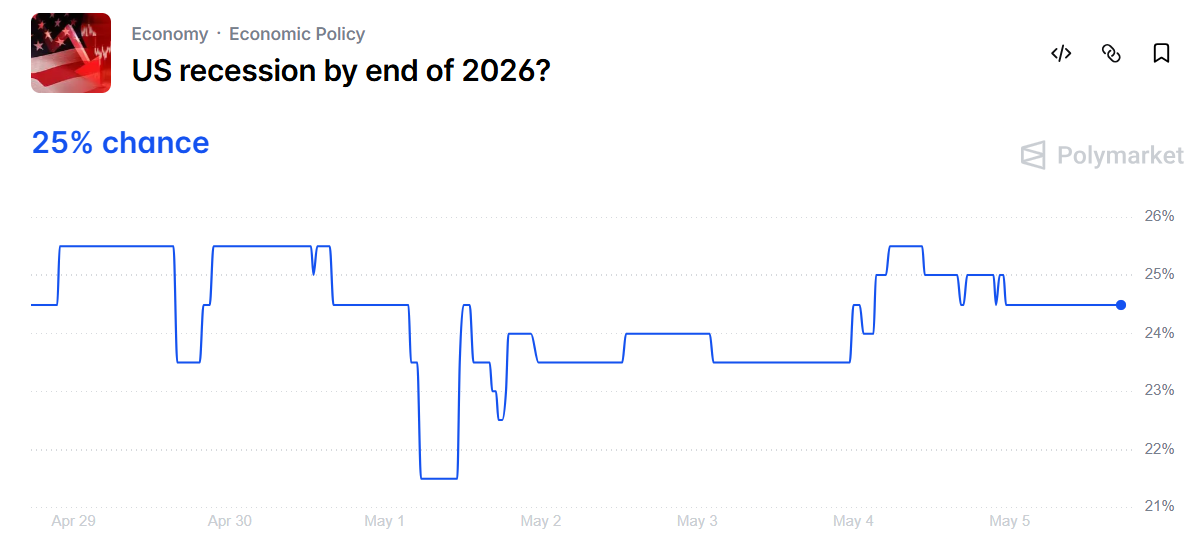
For prediction markets contracts to resolve “Yes,” bad vibes are not enough. This Polymarket market is not paying out because the US economy looks weak, consumers feel squeezed, or traders get nervous. The window runs from Q2 2025 through Q4 2026, and it needs one of two things before the deadline: either two straight negative quarters of real GDP between Q2 2025 and Q4 2026, or an official NBER recession call before the BEA publishes its advance estimate for Q4 2026.
The 25% implied probability is a much narrower bet than it first appears. This is more of a timing bet because the slowdown has to show up in the right data, in the right order, before the deadline.
That is the first thing the market may be underpricing, not the recession risk itself, but the friction between economic weakness and contract resolution.
The economy is not booming, but it is not breaking either
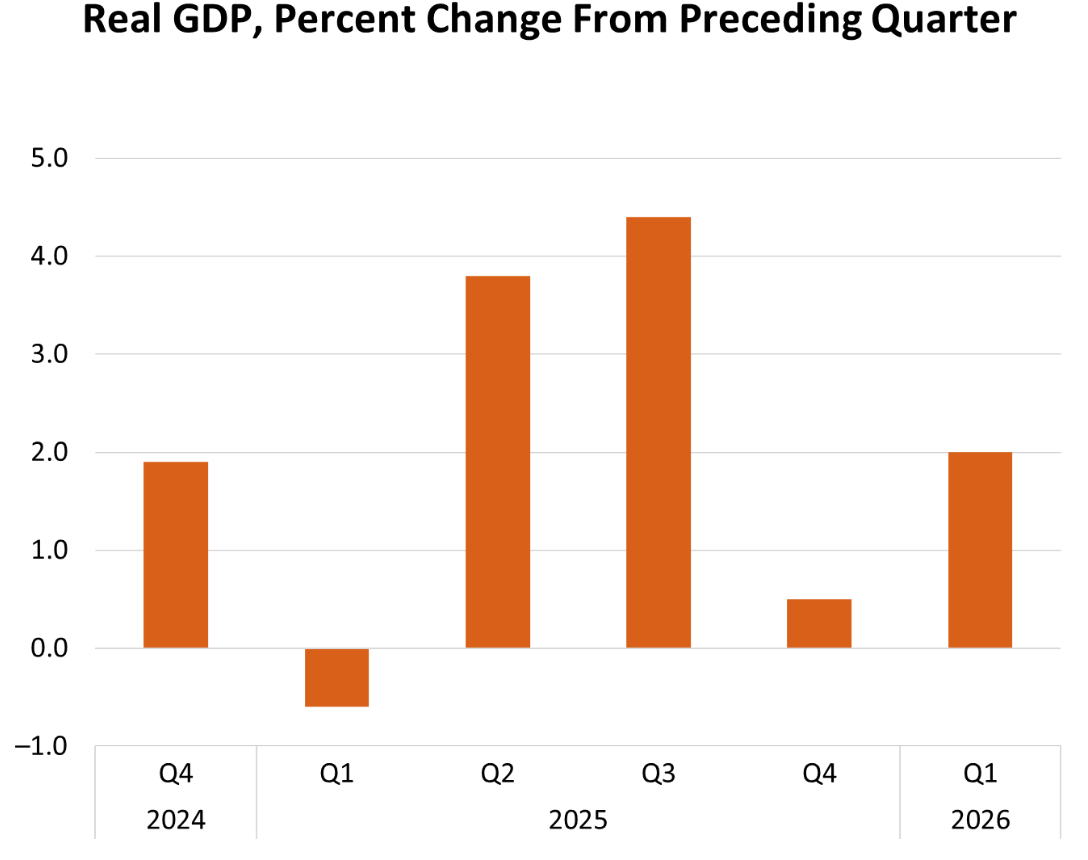
Right now, Q1 made the “Yes” case harder because real GDP grew 2.0% annualized after a weak 0.5% in Q4 2025, so there is no negative-quarter chain for the contract to build on. This is easy to miss if you are focused on recession headlines rather than the settlement path. If this market resolves through GDP alone, the bad prints now have to come in pairs: Q2 and Q3, or Q3 and Q4.
This is a problem for bears because Q2 does not look broken yet. Atlanta Fed GDPNow had growth running at 3.5% as of May 1. It can move, of course, but that is still a long way from contraction.
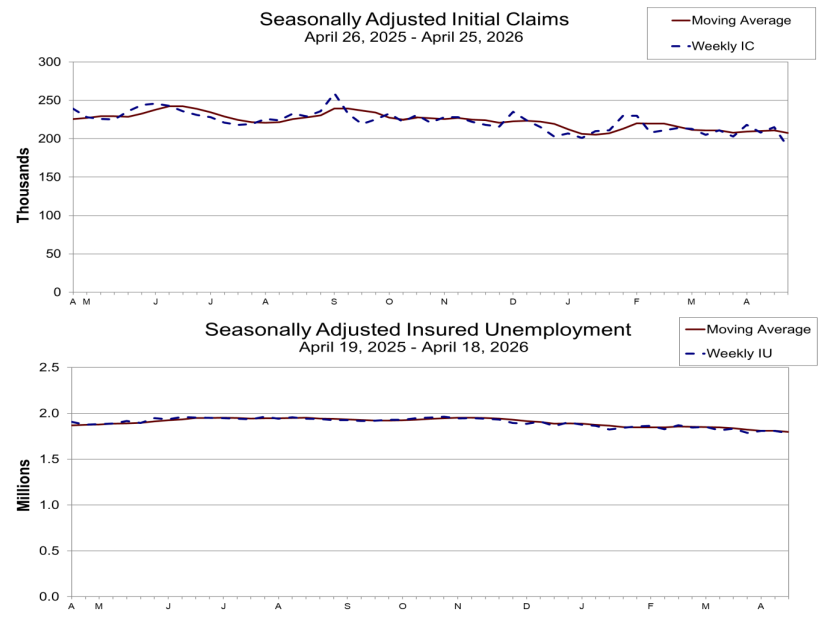
Labor is not helping the recession case either. Payrolls are still rising, unemployment is not flashing a crisis, and jobless claims recently fell to 189,000. This does not erase recession risk, because labor often cracks late, but it does expose the gap in the trade. The economy can weaken before the labor market gives the contract enough proof, so it does put the “Yes” side on a tighter clock.
The economy can feel worse before it officially breaks. Still, for now, the hard data is keeping the 25% odds on a tight leash.
The case for “Yes”: A slow squeeze?
The economy must get trapped between inflation that will not cool and growth that cannot accelerate.
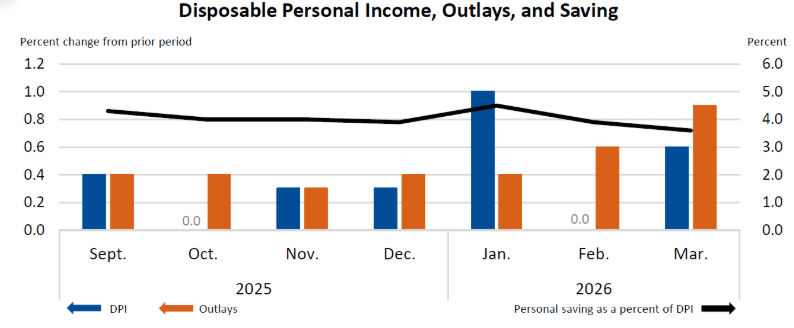
March PCE data gives the shape of it all: consumers spent 0.9% more in nominal terms, which sounds healthy enough. But while spending looked solid on paper, all of that disappeared once prices were accounted for, so households did spend more, but they just did not get much more for it.
This is the weak spot Gary Shilling is pointing at, and it is the part many can miss until late. His recession call rests on a more basic problem: consumer spending, the ballast of the U.S. economy, has been holding the economy together, and this support looks thinner when real income is slowing and savings are weakening.
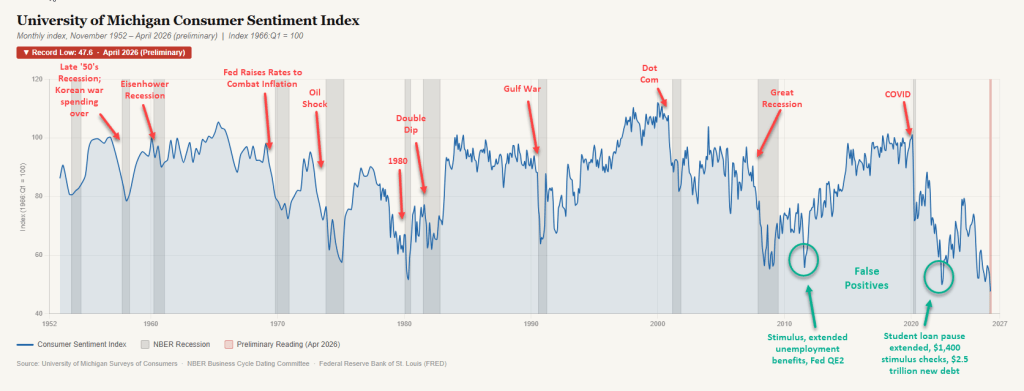
Consumer psychology is flashing its own warning, too. HousingWire points to a sharp drop in University of Michigan consumer sentiment, arguing that the index has historically been a strong recession signal, though it did cry wolf in 2011 and 2022.
Oil risk may be the swing factor, but not in the obvious way
The easy story is that war pushes oil higher, consumers pay more at the pump, and recession odds go up.
But the bigger issue is what oil does to the Fed. If energy keeps headline inflation hot, the Fed cannot look at weaker growth and simply say, “Fine, time to cut.” It may have to sit tight while the economy slows, because inflation is still too uncomfortable to ignore.
This is why peace headlines can knock recession odds down so quickly. If the Iran shock fades, one of the main reasons for a trapped Fed fades with it. If it sticks around, Polymarket’s 25% odds stop looking so expensive.
The “Yes” case is more of a grind: higher costs, weaker real income, companies getting more careful, non-AI investment losing steam, and eventually a labor market that stops absorbing the pressure.
Here’s where the market may be mispricing it
A slow squeeze can be painful without being useful.
If Q2 GDP stays positive, the “Yes” side loses a lot of room. The GDP path would then likely need Q3 and Q4 to both come in negative on the advance estimates. The NBER path is not much easier. NBER can call recessions without waiting for two negative GDP quarters, but it still needs broad damage across jobs, income, production, and sales.
That is why 25% may be rich. The market may be reading the economy correctly, with weaker consumers, sticky inflation, and the Fed with less room to cut. But the missing part is speed, because all of this must become official before the deadline. A fairer number may be closer to the high teens, maybe 15% to 20%, unless Q2 starts deteriorating quickly.
Overall, Polymarket’s recession odds are not irrational. But they are demanding a lot from the next few quarters, relative to the path required from here, because Q1 GDP was positive and Q2 GDPNow is still strong.
The market needs proof that the squeeze is becoming broad enough, deep enough, and fast enough to show up in the data before the settlement window closes.
Until then, the 25% odds look more like a premium on anxiety. Traders may be right that the U.S. economy is losing altitude. But will it fall quickly enough for this market to pay?