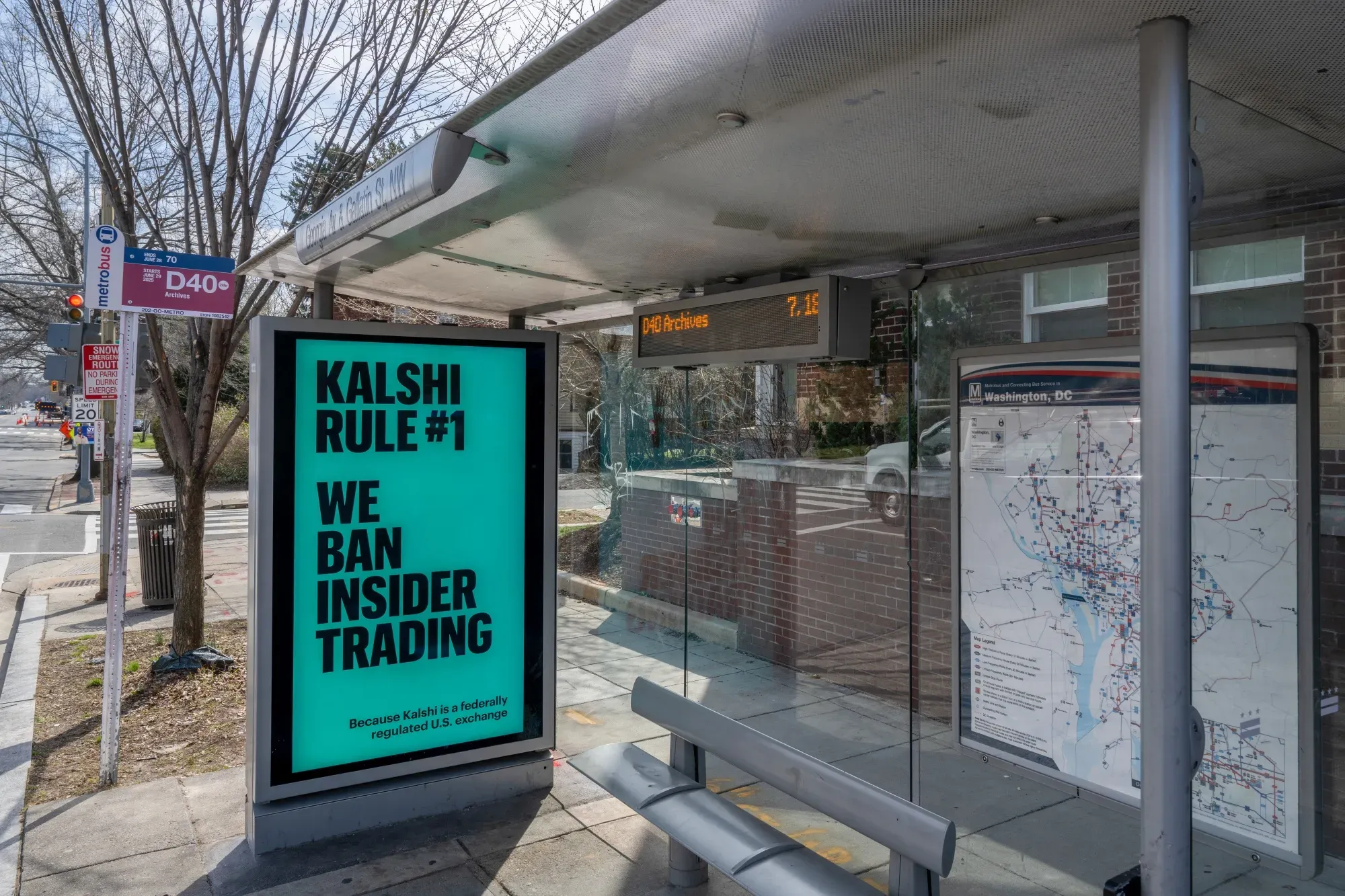
Kalshi Inc. has added India to its list of restricted jurisdictions, weeks after the country’s technology ministry warned that prediction markets platforms were illegal and moved to curb access to such sites.
The change appears in Kalshi’s updated member agreement, dated June 17, which says users domiciled in, organized in or located in India are prohibited from trading event contracts on the platform.
Kalshi’s website has been inaccessible in India through multiple internet service providers since the last week of May. The Ministry of Electronics and Information Technology had been preparing to issue an order blocking the site, The Print reported last month, citing an unidentified official.
The move follows earlier scrutiny of Kalshi and rival Polymarket, which had allowed users in India to sign up and trade — despite warnings from the ministry that users were accessing “illegal and blocked prediction market and online betting platforms.”
Spokespeople for Kalshi didn’t immediately respond to an emailed request for comment.
In an April letter to virtual private network providers, the ministry said VPNs were being used to bypass restrictions and warned that providers could face legal consequences if they enabled access to the platforms.
India’s Promotion and Regulation of Online Gaming Act, 2025, which seeks to curb online money gaming, took effect on May 1.
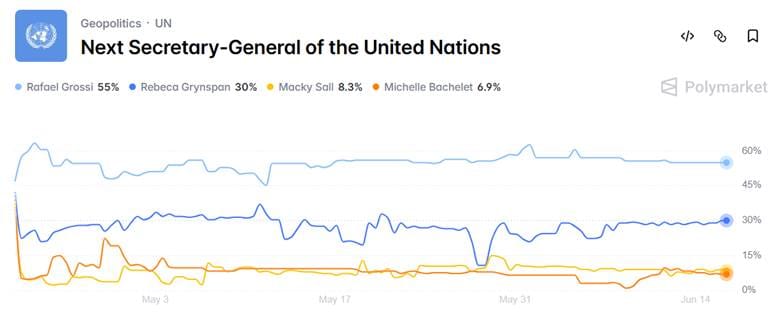
Polymarket’s “Next Secretary-General of the United Nations” market has Rafael Grossi well ahead of the field. As of this writing, Grossi is priced in the mid-50s, with Rebeca Grynspan around 30%, Macky Sall around 9%, and Michelle Bachelet near 7%. The contract resolves to the person formally appointed as the next UN Secretary-General.
Grossi runs the International Atomic Energy Agency, has handled nuclear diplomacy around Iran and Ukraine, and looks like the kind of serious technocrat major powers could live with. This makes sense, but the price may be leaning too hard on one assumption: that Grossi’s IAEA résumé is a Security Council asset, not a liability.
The better market question is whether Grynspan is too cheap at 30%. The Security Council process may reward a lower-friction reform candidate with UN experience, development credibility, and first-woman reset appeal.
Moreover, Reuters reported on June 16 that six candidates are now vying to replace António Guterres, with María Fernanda Espinosa and Carolyn Rodrigues-Birkett joining the race, while this market is still centered on four named outcomes.
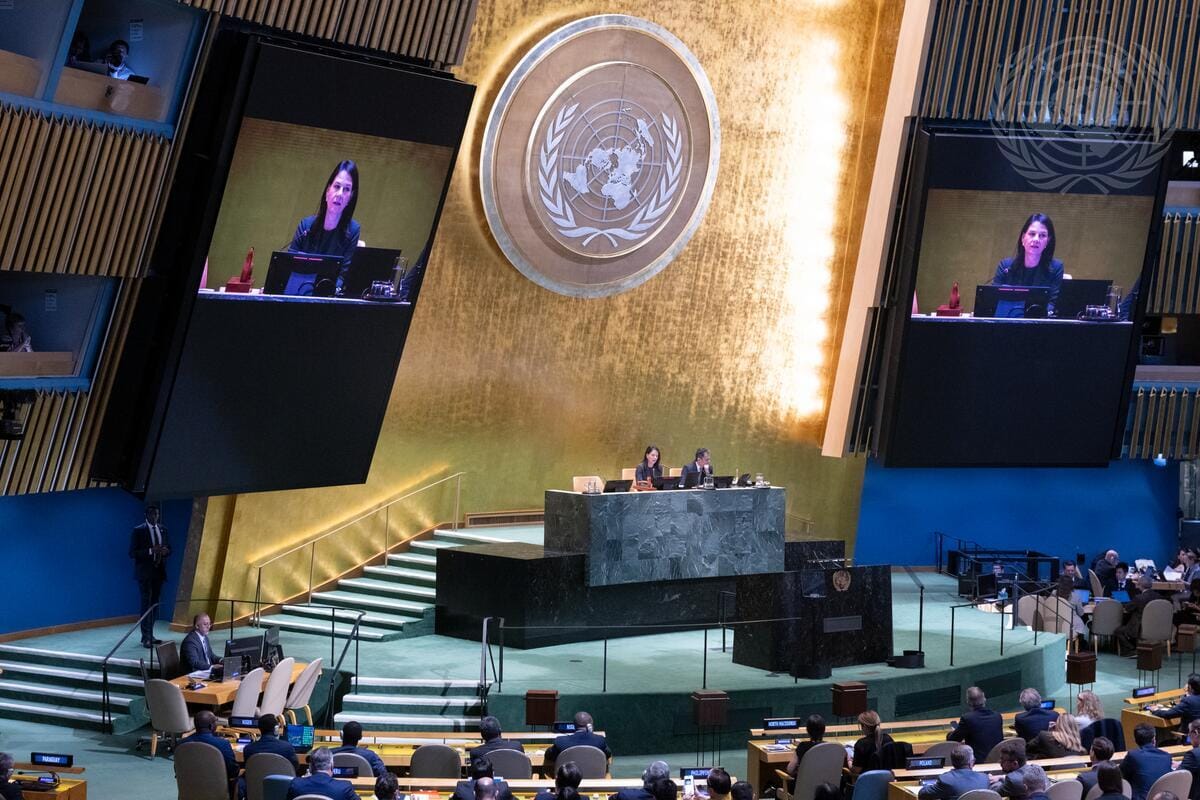
The next UN Secretary-General is not picked like a normal election winner. The public campaign helps, but the harder test comes inside the Security Council. A candidate can look strongest on paper and still run into trouble if one permanent member objects.
This is why Grossi’s résumé is only half the trade. The other half is whether the major powers actually let him through.
Grossi’s lead makes sense. The assumption behind it is less certain
The Secretary-General is formally appointed by the General Assembly, but only after the Security Council recommends a candidate. In practice, this means the five permanent members (the US, China, Russia, France, and the UK) matter more than public visibility, debate performances, or even broad UN membership enthusiasm.
Grossi can be the strongest candidate on paper and still be overpriced if one major power decides he is not the right person for the job. The market is pricing him as though his profile is a shield. It may turn out to be one. But in this process, prominence can also create friction.
For example, his IAEA profile gives him credibility, but it also ties him to issues where the permanent members often disagree. The agency has been deeply involved in Iran’s nuclear program, nuclear safety risks around Ukraine, transparency disputes, sanctions pressure, and inspection access. Reuters has also noted that some critics think Grossi went too far in trying to cut deals with Iran.
Because of this, Grossi is not only highly visible but also quite exposed. A lower-profile candidate can sometimes be easier to tolerate.
So, the main question: Is Grossi’s résumé reducing the risk, or just making the risk harder to price before the Security Council shows its hand?
Here’s why Grynspan is the cleaner repricing risk
If Grossi weakens, the most obvious named beneficiary is Grynspan. She is already second on Polymarket at 30%, so this is not some buried long shot. Grynspan combines three things that may matter more in the final selection: regional fit, reform credibility, and a lower-conflict profile.
She is Costa Rica’s nominee, a former vice president, and the current Secretary-General of UN Trade and Development. She also has senior UN experience, including work at UNDP, and became the first woman to lead UNCTAD in its 60-year history.
All of this could matter because the next Secretary-General will inherit a UN under pressure to prove relevance while managing tighter finances. Reuters has reported that the organization is dealing with a severe funding strain, including billions in unpaid US arrears and donor cuts. In this environment, Grynspan’s pitch around restoring trust, peacemaking, regional cooperation, and reform matches one of the main problems the next UN chief will have to manage.
There is another reason the favorite may be less protected than the price implies: the UN has never had a woman as Secretary-General. But this is also where the Grynspan case needs more pressure, because she is not the only candidate who can trade on this argument. Espinosa, Rodrigues-Birkett, and Bachelet also crowd the first-woman/reform lane. In other words, Grynspan cannot simply be priced as "the woman candidate"; she needs to become the consolidation candidate in this lane.
Finally, Reuters reported that Grynspan stepped back from UNCTAD duties until September to avoid conflicts of interest while campaigning, while Grossi has continued in his IAEA role. This doesn’t settle it, but it helps her present herself as a cleaner candidate.
This is why Grynspan’s 30% may be light if early Council signals show Grossi is not fully P5-cleared.
Certainly, gender alone will not decide the race, but no woman has ever held the role, and several candidates give governments a way to combine regional balance, reform, and institutional renewal in one appointment.
What to watch next? Three triggers to keep an eye on
Grossi may simply be the candidate best positioned to survive the P5 process, because Reuters notes diplomats see him as a frontrunner after years spent keeping lines open with the five permanent Security Council members.
But things could change quite quickly. The first trigger is any credible Security Council read in late July. If early straw-poll reporting suggests Grossi has broad P5 tolerance, his 55% will look much safer. If there are signs of resistance from even one permanent member, the market should move.
The second trigger is consolidation around Grynspan. If diplomats, regional blocs, or major governments begin treating her as the main alternative rather than just one of several reform candidates, the current spread between Grossi and Grynspan becomes harder to defend.
Surely, there is competition for this lane. Bachelet, Espinosa, and Rodrigues-Birkett also make the gender argument relevant, splitting the vote rather than helping Grynspan. But Grynspan is already the highest-priced woman in the Polymarket market and the clear second name on the board.
For traders, the next read is whether Grossi shows quiet P5 clearance in the first Security Council signals. If he does, the mid-50s price is easier to defend. If he does not, Grynspan’s 30% becomes the cleaner place for the market to move into the high-30s or even low-40s.
Sources:
1. Reuters: Candidates for UN's top job urge its renewal and bolstering human rights
2. Reuters: Ecuadorean candidate to head UN calls for body to be shrunk responsibly
3. Reuters: Explainer: Who are the candidates running for UN secretary-general?
4. Reuters: UN leadership candidates vow to pursue reform and core principles
The latest United Nations Security Council election was not just a routine diplomatic vote. It might be a warning sign.
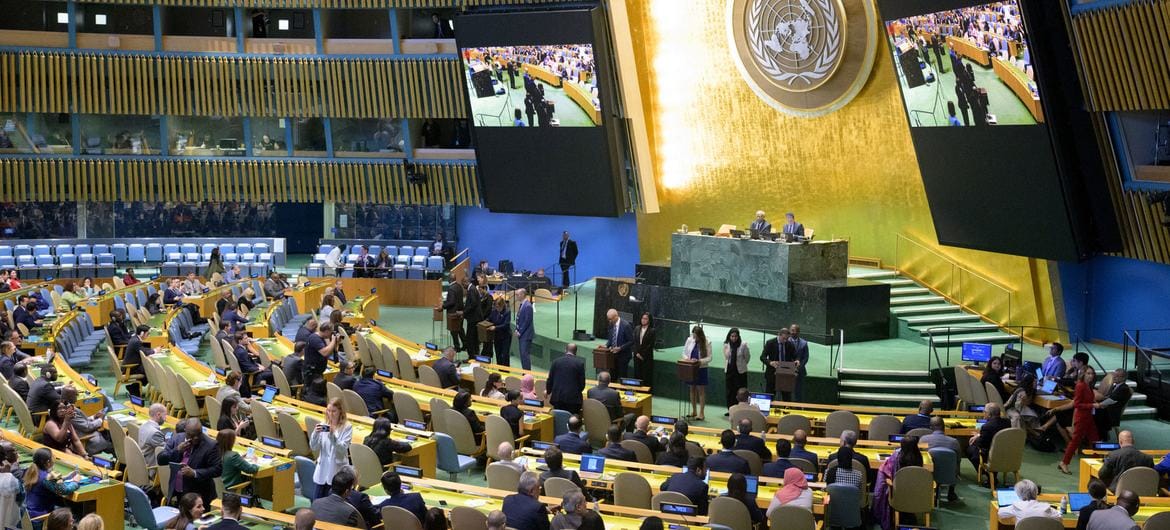
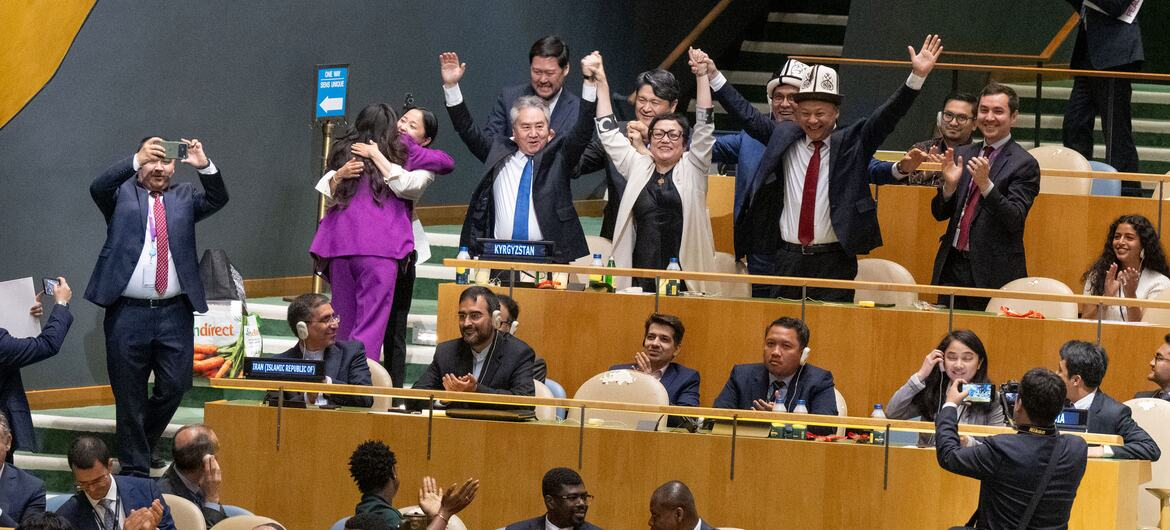
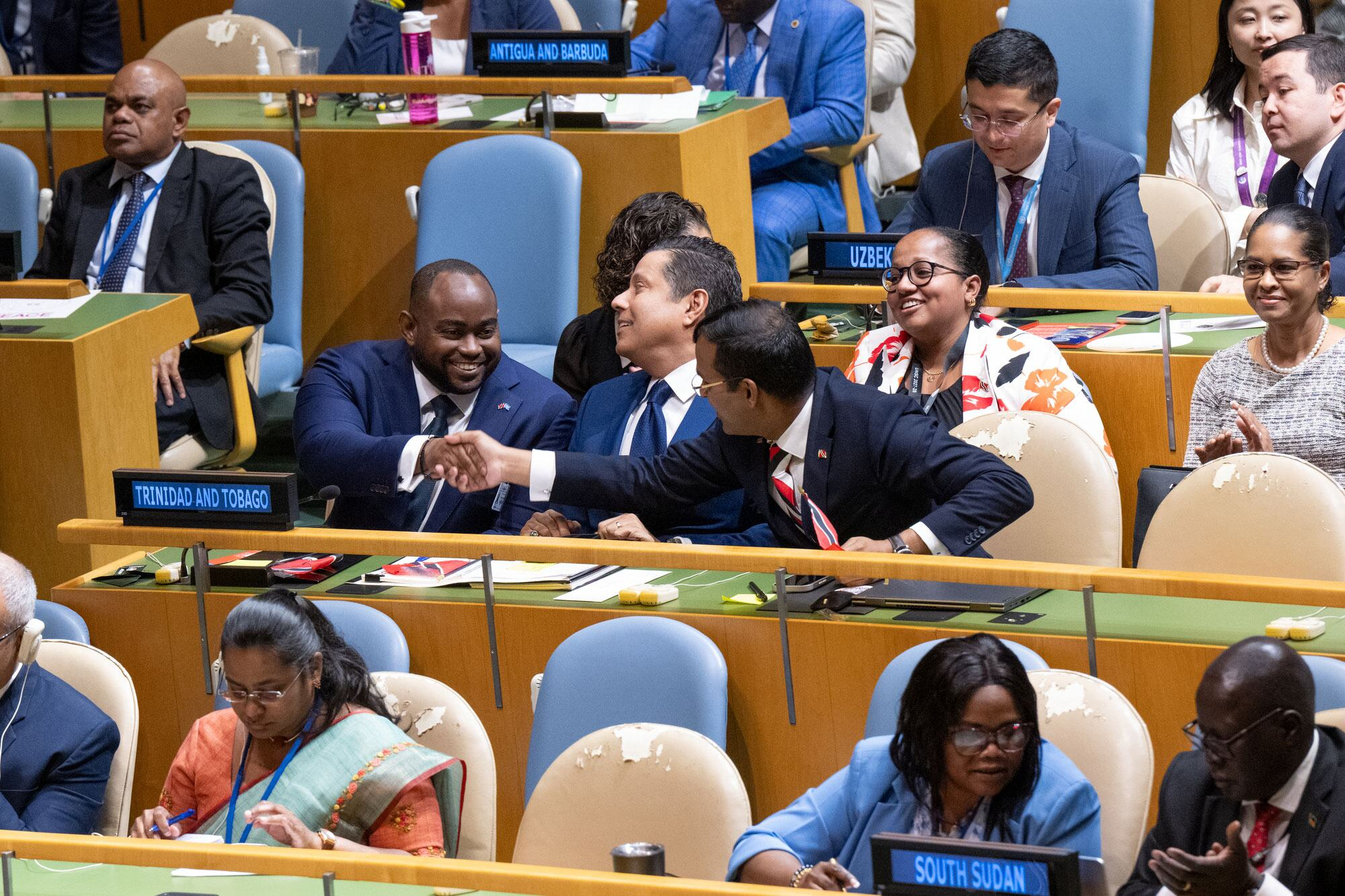
On June 3, the UN General Assembly elected Austria, Portugal, Trinidad and Tobago, Zimbabwe, and Kyrgyzstan to serve as non-permanent members of the Security Council for the 2027–2028 term.
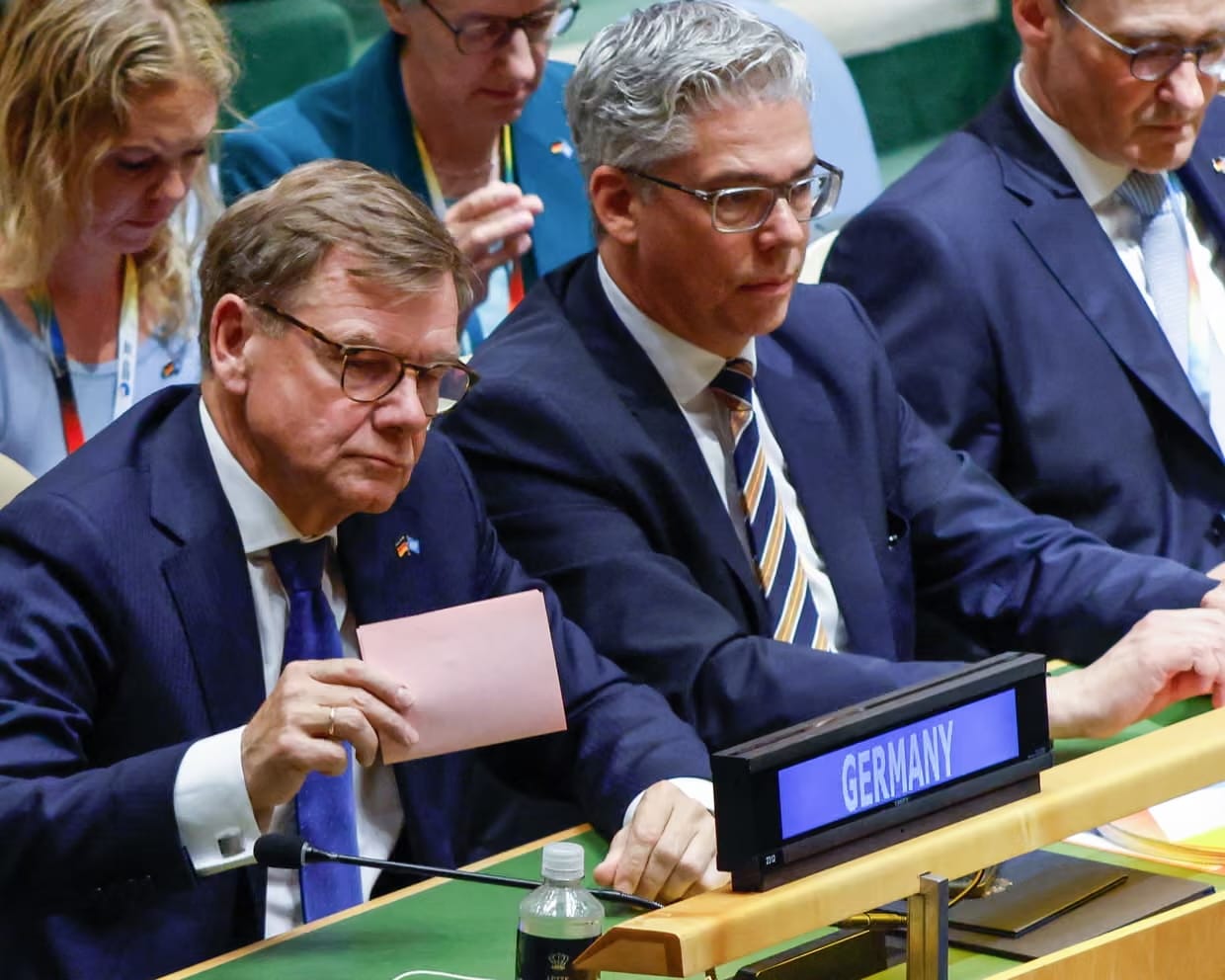
Two results stood out. Germany failed to win one of the two seats reserved for the Western European and Others Group. The Philippines, after four rounds of voting, lost the Asia-Pacific seat to Kyrgyzstan. Germany entered the race with the profile of a heavyweight: Europe’s largest economy, a major supporter of the UN system, and a country that has served on the Security Council six times before. The Philippines also had experience, having previously served four terms on the Council, and carried a strong diplomatic narrative around international law, maritime security, and rules-based cooperation.
However the voting went in another direction. Portugal received 134 votes, Austria 131, and Germany 104. In the Asia-Pacific contest, Kyrgyzstan led from the first ballot and eventually defeated the Philippines 142 to 49 in the fourth round. It will be Kyrgyzstan’s first-ever term on the Security Council since joining the UN in 1992.
Why the Result Matters
The immediate interpretation is to treat this as a campaign story: Germany miscalculated, Portugal and Austria organized better, Kyrgyzstan built broader support, and the Philippines failed to hold its base.It is the truth, but an important bigger lesson is behind it.The vote suggests that influence at the UN is being measured differently. Size still matters. Money still matters. Alliances still matter. But they no longer guarantee votes.
Germany’s Defeat: When Visibility Becomes a Liability
Germany’s loss is the clearest example. After the result, German Foreign Minister Johann Wadephul said Russia had worked to stir up opposition to Berlin’s candidacy. He also acknowledged that Germany’s strong support for Ukraine, and its special responsibility toward Israel, may have cost it support among some member states.
That explanation is plausible, but it should not be read too narrowly. A General Assembly vote is rarely decided by one grievance or one rival power. Secret ballots often capture a wider mood: frustration over Gaza, fatigue over Ukraine, anger at perceived double standards, dissatisfaction with traditional Western leadership, and a desire among smaller or less represented states to make their votes count.In that sense, Germany may not seem like defeat because it was not that relevant. It may have been lost because it was too visible.
Austria and Portugal were not anti-Western alternatives. Both are European states, and both are firmly within the broader Western diplomatic family. But they appeared to carry less political weight into the room. Austria emphasized neutrality, dialogue, and trust. Portugal framed its campaign around prevention, partnership, and protection.
These are not dramatic slogans. But in a divided UN environment, a lower-friction candidate can be more attractive than a larger power with clearer geopolitical baggage.
The Philippines’ Loss: The Power of Representation
The Philippines’ defeat points to a different part of the same story. Kyrgyzstan’s candidacy offered something the Philippines could not: first-time representation and a stronger claim to giving Central Asia a voice in global security debates.
Security Council Report noted before the vote that Kyrgyzstan was backed by Central Asian countries seeking to strengthen the region’s voice, while the Philippines had endorsements from ASEAN and the Asia-Pacific Group.
That contrast matters. The Philippines had institutional support and strategic relevance. Kyrgyzstan had novelty, regional symbolism, and a lower-profile diplomatic posture. In the end, the latter proved more powerful.
This does not mean the UN has turned against the West, or that familiar alliances no longer matter. That would be too simple. The elected list includes Austria and Portugal, both Western European countries.
The result is better understood as a shift from automatic deference to selective support. Countries are still willing to vote for Western candidates. They are less willing to vote for Western candidates simply because they are Western, wealthy, or strategically important.
The New Logic of UN Influence
That distinction is central to understanding the UN’s current power structure.
Many member states want a stronger multilateral system, but not one dominated by the same powers. Many want international law, but not selective enforcement. Many want reform, but not instability. Many are willing to cooperate with the United States and Europe, but they do not want every UN vote to become a referendum on great-power alignment.
This is why the phrase “Global South” should be used carefully. It is not a single bloc with one agenda. It includes countries with different interests, alliances, economic models, and security concerns.
But as a voting force, it is becoming more confident. It is better organized, more willing to punish inconsistency, and more capable of using procedural votes to send political messages.
Why Elected Members Still Matter
The Security Council remains structurally dominated by its five permanent members: China, France, Russia, the United Kingdom, and the United States. They hold veto power, and no elected member can override that reality. The Council has also been repeatedly constrained by divisions over Ukraine and Gaza.
But elected members are not irrelevant. They shape negotiations, build coalitions, bring regional crises onto the agenda, and influence the diplomatic tone around major conflicts. In a fragmented Council, the ten elected members can become more important precisely because the permanent five are often divided.
That makes the 2027–2028 Council worth watching. Austria and Portugal may try to present themselves as bridge-builders inside a divided Western camp. Kyrgyzstan may bring Central Asian and Afghanistan-related concerns closer to the Council’s center of gravity. Trinidad and Tobago and Zimbabwe will add Caribbean and African perspectives at a time when reform pressure is growing.
Questions to Watch
The deeper signal is that the UN is becoming less predictable in the old way. Diplomatic weight no longer converts automatically into support. Strategic relevance can become a liability if it looks too closely tied to one camp. Smaller or less exposed candidates can outperform larger names if they offer broader comfort across regions.
For policymakers, this should be a sobering result. For observers, it opens several questions worth tracking.
Will major powers adapt by working through quieter partners? Will smaller states continue to gain leverage in secret-ballot elections? Will donor countries become more frustrated if financial contributions do not translate into political backing? And will future UN leadership contests reward the most qualified candidate, or the candidate with the lowest rejection risk?
The Next Test Is Already Coming
That last question leads directly to the next major test. António Guterres’s term ends on December 31, 2026, and the process to choose the next UN Secretary-General is already underway. That contest will follow a different path, with the Security Council and the permanent members playing a decisive role.
Still, the mood revealed by this vote should not be ignored.
The lesson from this time's Security Council election is straightforward: the strongest candidate on paper is not always the safest candidate in the room. And at today’s UN, safety may be the most valuable asset of all.
The US and Iran have committed to reopening the Strait of Hormuz, the world’s most important artery for shipping oil and natural gas, which has been largely blocked since the two countries went to war in February. However, returning traffic in the strait to prewar levels — if that day ever comes — presents significant challenges. The prediction market Kalshi assigns a 51% probability that traffic will return to normal before Aug. 1 and a 68% probability before Sept. 1.
Here’s a look at the main impediments:
Mine threats
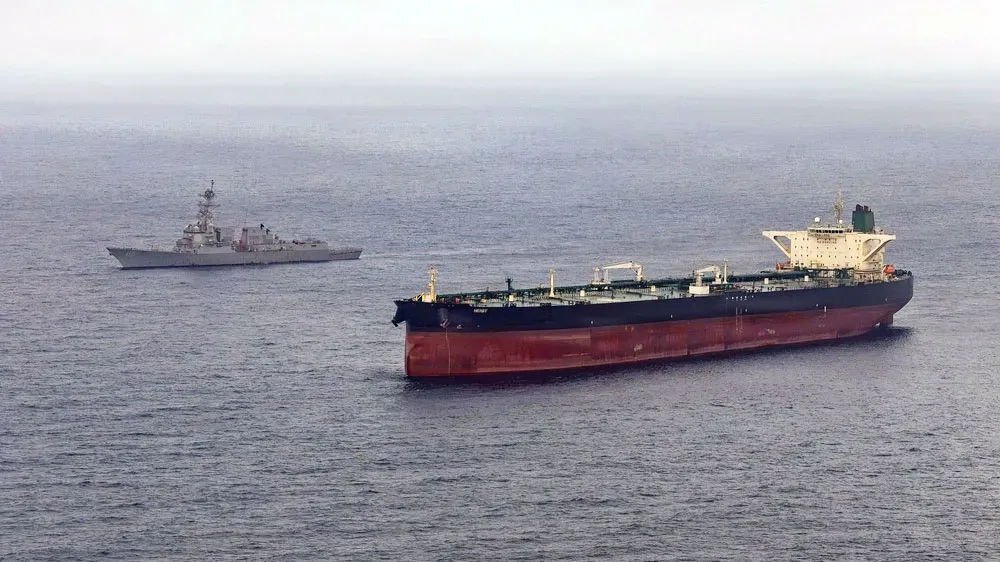
Iran is thought to have mined what was the normal shipping channel through Hormuz, which connects the Persian Gulf to the Indian Ocean and is situated between Iran to its north and the United Arab Emirates and Oman to its south. The threat of mines has forced ships to sail instead near Iran’s coastline or closer to Oman’s. Use of the southern route, overseen by US forces, has already allowed oil flows to creep higher. But the question of how much traffic the alternative routes can handle has not been fully tested.
Clearing the center of the channel of any mines would help to get flows back to normal. However, it’s unclear who would undertake this effort and how demining ships would be protected. The work itself could take weeks.
The risk of attacks
On top of the threat of mines, there’s the risk of further violence that could affect ships and their crews. The fragile ceasefire the US and Iran have had in place since April 8 hasn’t stopped fighting altogether. At least 14 seafarers have died in this conflict, and there have been 46 attacks that damaged ships, according to the United Nations’ International Maritime Organization (IMO).
Merchant sailors are nervous about working in conflict zones at the best of times, so the shipping industry wants to hear unambiguous assurances from both the US and Iran that hostilities have truly ended. Even then, several shipowners said some crews may be reluctant to return to the Persian Gulf, which could reduce the number of vessels sailing to the region to collect cargoes.
Uncertainty about who’s in charge
Until the war began, freedom of navigation was, with a few exceptions, taken for granted in Hormuz, just as it is in all major shipping straits. It’s not clear whether that will remain the case in the future. Iran’s semi-official Fars New Agency Iran Allows Free Hormuz Transit for 60 Days Under Pact: Fars (1) that the future administration of “navigation services” in the strait will be determined by Iran and Oman.
Several shipowners told Bloomberg they’d rather not be forced to communicate with anyone, but especially not an Iranian regime that’s still under US sanctions, when sailing through waters that are meant to be subject to freedom of navigation rules.
The Baltic and International Maritime Council, the world’s top trade group for shipowners, says it must be clarified who, if anyone, will coordinate transits in the future. It suggested that either a United Nations organization, or a neutral state, could be involved.
The possibility of tolls
It’s unclear whether vessels will be charged to pass through Hormuz. US President Donald Trump says Donald J. Trump: The Deal with the Islamic Republic of Iran is now complete. Congratulations to all! I hereby fully authorize. Iran says ships a fee-free period will end after 60 days.
The UN’s IMO said in April that there’s no legal basis for charging Hormuz tolls, and the US has said in the past that paying them would be a sanctionable act. Thus, shipowners are terrified of having to pay Iran for passage and risk getting blacklisted by US sanctions authorities. At the same time, at least one senior US government official acknowledged that paying for transit might become a possibility.
Big energy companies are apt to object to any tolls or fees. Chevron Corp. Chief Executive Officer Mike Wirth said on Bloomberg Television in May that his company would not consider paying to pass through the strait.
Stalled oil and gas production
Stalled oil and gas production is perhaps the biggest impediment to fully normalizing trade flows through the Strait of Hormuz. Before the war, it handled around a fifth of the world’s oil and liquefied natural gas supply. The increased use of bypass routes provoked by the war has reduced the strait’s centrality, but only by a little.
In some cases, oil and gas production was halted because, with Hormuz blocked, exports became impossible. Shutting down a well, even voluntarily, can degrade its efficiency and cause long-term operational losses. In other cases, war damage caused shutdowns. Rebuilding oil and gas infrastructure in the region will cost roughly $42 billion, according to Rystad Energy.
While the infrastructure restarts, tankers previously serving the Persian Gulf that scattered to other routes or were demobilized will need to be repositioned. Rystad analysts said that should take about two months. They assess that the big increase in output from the region will come in August and September, as fields return to productivity. Some 85–90% of the lost volume will be recovered by early in the fourth quarter of the year, they project, rising to 100% only in January 2027.
The US derivatives regulator is launching a review of foreign trading platforms that let US-based individuals directly access their electronic trading systems, according to an agency official familiar with the matter.
The Commodity Futures Trading Commission is examining foreign boards of trade to ensure they are properly managing risks, according to the official who asked to speak anonymously to discuss internal matters.
About two dozen foreign platforms have a so-called FBOT designation, which means their home country’s regulator has an information-sharing arrangement with the agency and their rules are considered comparable with the CFTC.
That label allows the exchange to provide direct access to US traders without separately applying for a US license. The exchanges must enforce rules to maintain market and financial integrity.
Some CFTC officials have expressed concerns about oversight of foreign boards of trade and those that have larger participation from US traders, the official said.
The regulator plans to meet with exchange leaders and clearinghouses as part of its evaluation, which the official said would be the first formal review since the framework was established after the 2008 financial crisis.
The review is not focused on any specific exchange but may result in the CFTC asking some foreign exchanges to register with the US regulator, they said.
Firms with the designation include the almost 150-year-old London Metal Exchange and the Tokyo Commodity Exchange. The most recent entrant is the Singapore-based Abaxx Exchange Pte. Ltd., which got the CFTC’s blessing in November.
The agency has revoked the designation from a handful of exchanges over the past decade at their request because the exchanges, including ICE Futures Canada Inc. and CME Europe Limited, closed, agency records show.
The landmark Dodd-Frank Act led to the regulator establishing the system to register foreign boards of trade.
Michael Selig took over the Commodity Futures Trading Commission in December promising clear rules for prediction markets such as Kalshi Inc. and Polymarket. The indictment of a soldier betting on the Nicolas Maduro raid and two pitchers accused of rigging the pitches people wager on have sharpened questions about the utility of these markets and their vulnerability to insider trading.
What Selig’s agency proposed Wednesday was something else: A regime in which every contract listed is provisional. They trade on the exchange’s own say-so until the CFTC calls for a 90-day “public interest” review. The categories that trigger review — “gaming” chief among them — reach most of the industry’s volume. This is not a rule. It is a promise to make rules up later, one contract at a time.
The proposal gets the economics of prediction markets exactly backward. One public-interest factor asks “whether buyers and sellers have any basis to form a meaningful view” of the event. This is a polling criterion, not a market criterion: A poll is informative only if the typical respondent knows something; a market price is informative if anyone does. I need to know nothing about soccer to know a team is overpriced after watching its chartered flight divert at 2 a.m. — and the crowd betting on feelings is what pays the rare trader who knows something.
Yet the same proposal would ban mention markets, such as those betting on whether President Donald Trump mentions “250” in a speech, because insight is “highly concentrated — in a single individual,” and Little League contracts because “broad and numerous groups of individuals would potentially have inside information.” Too concentrated: banned. Too dispersed: banned. Whatever the distribution of information, some factor condemns it. A test that can reject anything isn’t a standard, it’s a docket.
Markets publish what insiders know. When Morton Thiokol Inc.’s stock collapsed soon after the Space Shuttle Challenger exploded in 1986 — before any investigation named the company’s O-rings — the market wasn’t committing a crime.
Banning markets has never stopped anyone from selling secrets. Aldrich Ames sold the CIA’s Soviet assets to the KGB and traded safely for years; Robert Hanssen sold FBI counterintelligence for two decades. If secrets are going to be sold — and they are — better they be sold in public. Selling classified information remains a crime either way, but the soldier who bet on the Maduro raid was suspected within days and indicted within months. Prohibiting the market doesn’t prevent the sale; it only determines whether it happens where we can see it and whether the public or America’s enemies are the beneficiaries.
This is the founding logic of the markets the CFTC regulates. Futures markets have never had a stock-market-style insider trading prohibition. A farmer trading on private knowledge of his own crop isn’t a scandal, it’s the mechanism. The insider problem is an enforcement problem, not a listing one. Delisting a contract doesn’t delete insiders; it relocates them offshore, or to private buyers who never report the seller. Listing it creates the evidence: registered accounts, timestamped trades, the paper trail that produced both of the past year’s indictments.
What prediction markets add is something equities never offered: a way for thousands of people to sell small bits of information — a logistics clerk’s observation, a local journalist’s hunch — that are individually worthless and collectively a forecast.
For manipulation, the CFTC could write an actual rule, with numbers, borrowed from its own playbook. The agency has limited positions in physical commodities for decades by reference to deliverable supply: You may not hold a position large enough to profit from cornering the market.
For event contracts, estimate the cost of influencing the outcome — bribing a pitcher, rigging a vote count, moving a Federal Reserve decision — and cap positions and total market size an order of magnitude below it. A single-pitch contract fails this test because the outcome sells for $5,000, the price one Cleveland Guardians pitcher allegedly took to throw a ball. A Fed contract passes because no position the market could absorb would cover the cost of buying a policy decision. Run the arithmetic and the answers fall out without any public-interest séance.
Some contracts should be banned outright, and the arithmetic delivers them: Anything one person can cheaply cause to resolve — an assassination, an injury, a Little League game, a word in a speech — gets a cap of zero, which is a ban. The objection is not to bans. It is to an unbounded “public interest” standard that can ban anything, for any reason, without showing its work.
The CFTC is not the first body to insist it can recognize what it cannot define. Justice Potter Stewart conceded in the 1960s that he could not define pornography — “I know it when I see it” — though the Supreme Court spent a decade trying anyway, demanding “redeeming social value” from each work. Justice William Brennan, who authored that standard, eventually recanted since no formulation could define the crime.
Wednesday’s proposal asks one regulator to know the public interest when he sees it, 90 days at a time.
The people with the strongest incentive to police these markets are already doing it. Kalshi moved to require employer disclosure from certain traders before the CFTC required anything, and the pitch-rigging scheme surfaced because betting-integrity monitors flagged anomalous wagers — market surveillance, not regulatory inspection. On who detects manipulation faster, a trader with money on the line or a five-person commission currently staffed by one, the answer is not close.
The CFTC’s comment period runs 45 days. Here is mine: Delete the public-interest factors, publish the influence-cost arithmetic, and let the markets that survive tell us what they know.
Matt Levine’s Money Stuff: You Can’t Bet on Little League
What the World Cup Can Tell Us About Finance: Matthew Brooker
What to Do When the Official Data Is Under Attack: Aaron Brown
Brent fell around 4% after Reuters reported that the two sides had reached a preliminary agreement to end the war and reopen the Strait of Hormuz, with a formal memorandum expected in Switzerland and broader nuclear and sanctions talks pushed into a 60-day ceasefire window.
A closed Hormuz was the nightmare scenario for energy markets. Once traders saw a path to reopening, the most extreme blockade premium had to come out of the curve. But the more important point is that financial markets can reopen in a minute, while physical energy systems reopen in stages. The peace deal changes the nature of the crisis, but it does not instantly undo the logistical, refining, inventory and demand damage created over the past three months.
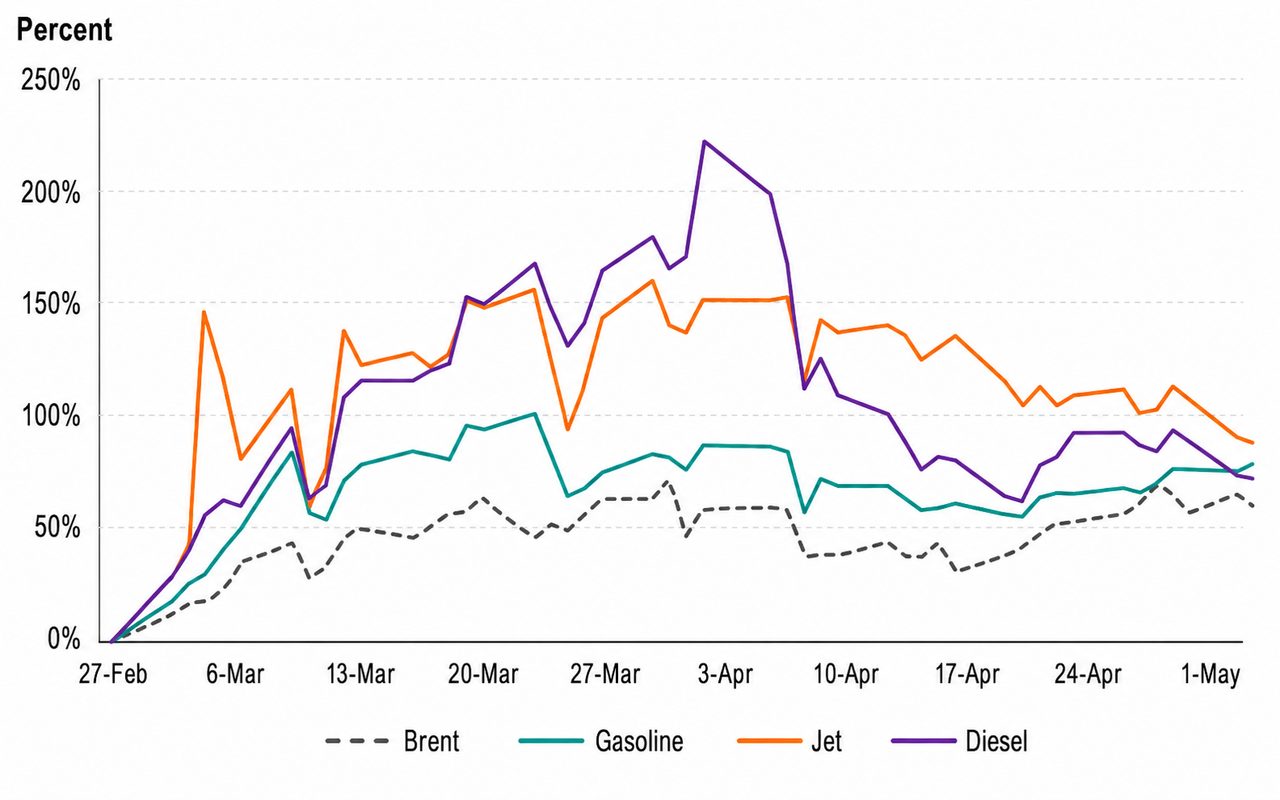
Cumulative percentage changes in Brent and Asian refined product prices since February 27, 2026
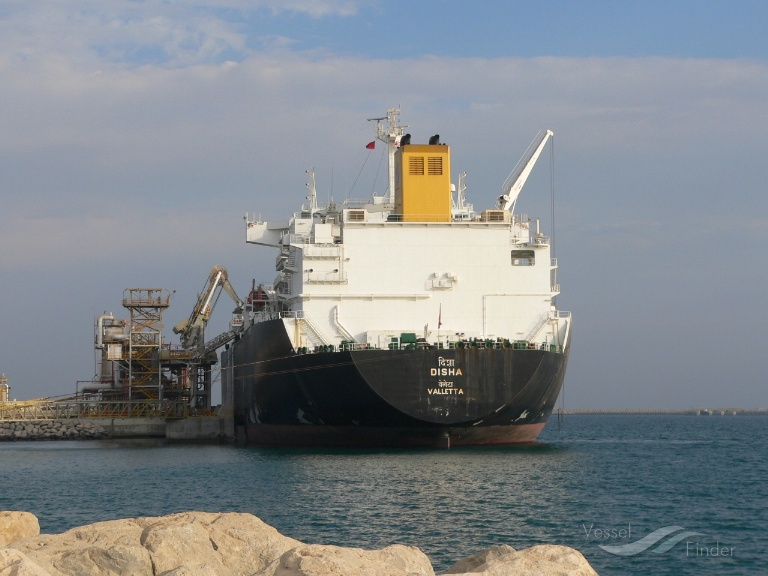
Reuters already shows the gap between headline and reality. On the first trading day after the agreement, only one LNG tanker, Petronet’s Disha, passed through the strait, while shippers continued to wait for details on mine clearance and safety assurances. Kpler estimated 155 oil and chemical tankers in the Gulf area on June 15, while Oil Brokerage’s estimate was 215, and even under unrestricted navigation Oil Brokerage said the traffic pile-up would take 8-10 days to clear. That is the cleanest way to understand the post-deal phase: the blockade risk may collapse quickly, but the physical recovery will be much slower.
The LNG carrier Disha departed the Middle East Gulf after spending nearly four months in the region. (Photo: VesselFinder.com)
This was not another Russia-Ukraine-style oil shock
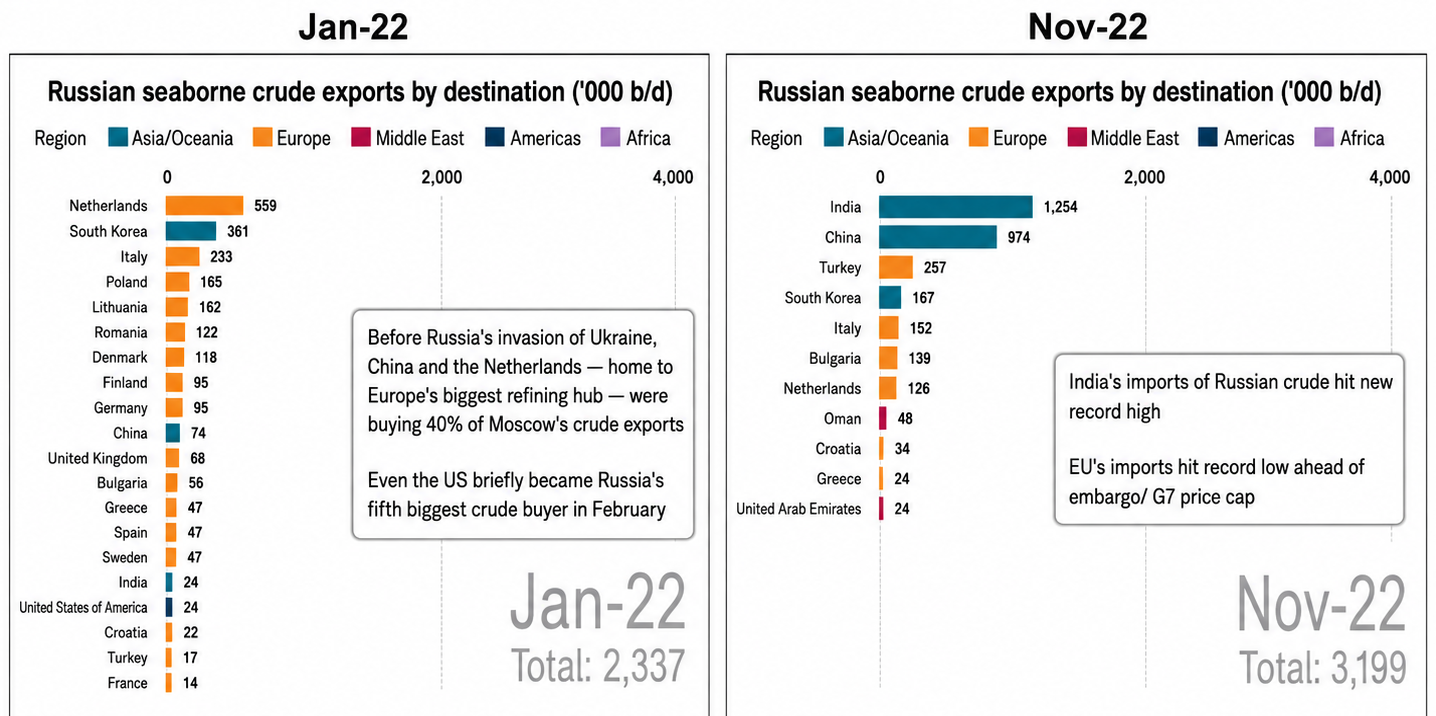
A useful starting point is to distinguish the Hormuz crisis from the Russia-Ukraine shock in 2022. In the Russia case, the first market panic was about whether Russian barrels would disappear. But over time, many of those barrels were rerouted. Russian crude that previously went to Europe increasingly moved to buyers such as India and China. The shock was severe, but it was largely a redirection shock.
Russia’s seaborne crude trade rapidly shifted after the invasion of Ukraine, with flows moving away from Europe and toward Asian buyers such as India and China. (Source: S&P Global Energy)
Hormuz was different. Before the conflict, according to the IEA, roughly 20 million barrels per day of crude and oil products were moving through the strait, equivalent to about 25% of world seaborne oil trade, with around 80% destined for Asia. And the crisis created actual losses of supply rather than merely changing the destination of cargoes.
That distinction is important because re-routing is a price problem, while physical blockage is a system problem. If oil is merely rerouted, the market pays more for shipping, insurance and time. If the oil cannot leave, producers shut in output, storage fills, refiners lose feedstock, and consumers are forced to reduce usage.
The quality problem: not every barrel is the same
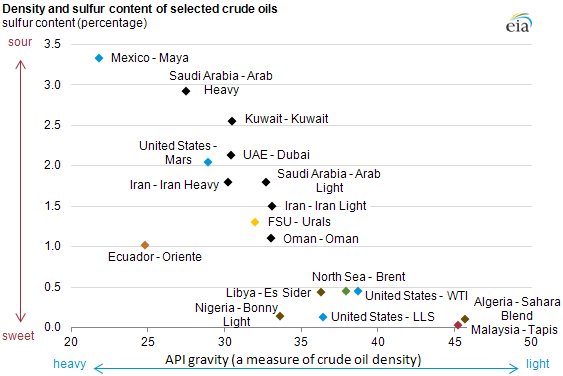
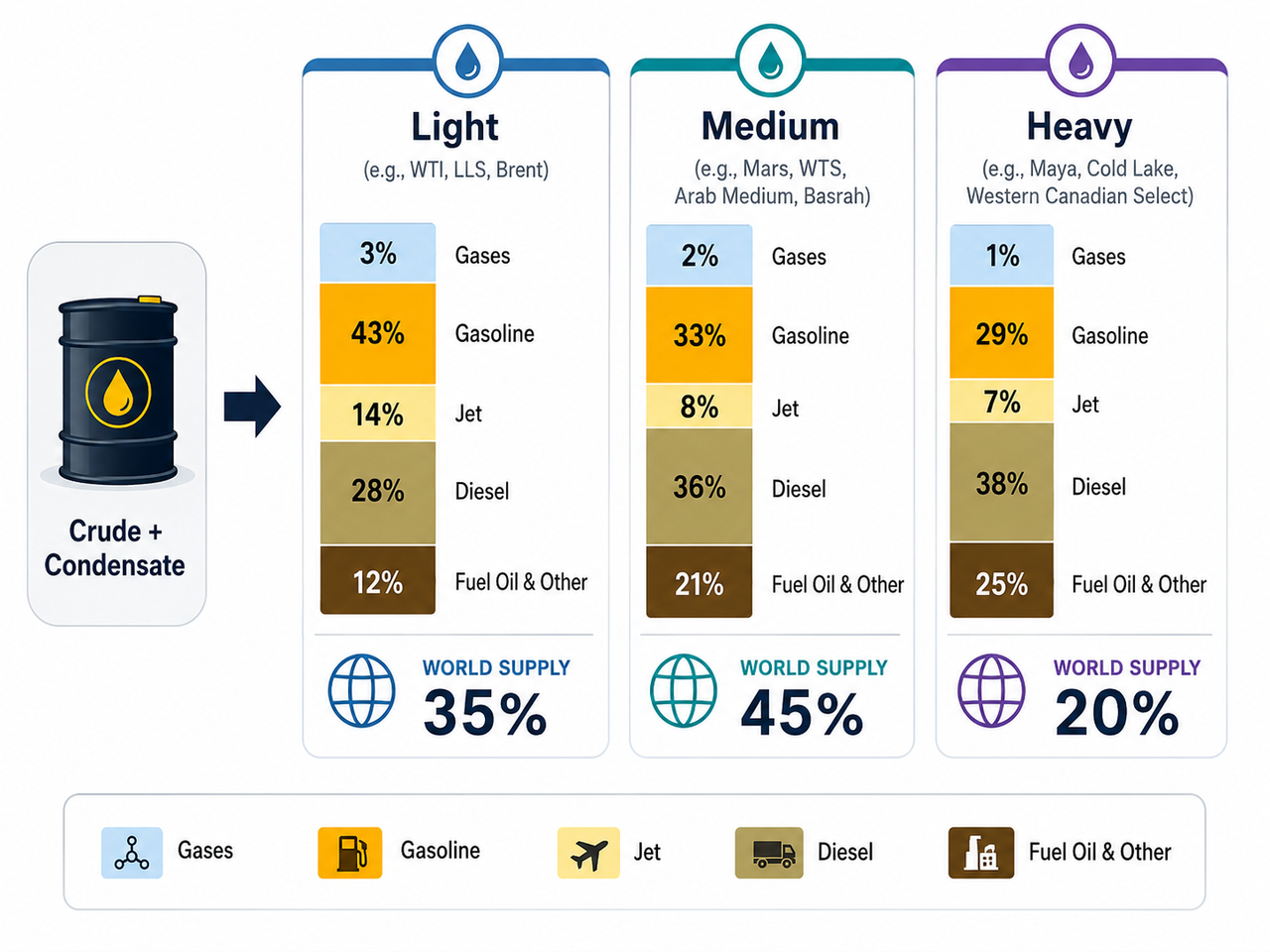
On the other hand, the public discussion often treats oil as a single commodity, but the refining system does not. Middle East Gulf exports are mostly medium-to-heavy sour barrels, and many Asian refiners are configured around those grades. Replacement barrels from the US are generally lighter and therefore less useful for Asian refiners trying to replicate their normal product yield.
This is a major reason why emergency stock releases and alternative supply cannot fully solve the problem. The IEA coordinated stock release helped, but much of the emergency crude available from IEA countries is Atlantic Basin crude, not the medium-heavy sour crude Asian refiners normally want.
In other words, the market does not just need “more barrels.” It needs the right barrels in the right place with the right logistics. That is what Hormuz restores, and it is also why reopening matters so much for Asia.
Crude oils vary widely in density and sulfur content, which affects how easily refiners can substitute one grade for another. Middle Eastern barrels such as Arab Heavy, Kuwait and Dubai tend to be more sour and heavier than light sweet benchmarks like WTI and Brent. (Source: EIA)
Reopening Hormuz is a sequence, not a switch
The first bottleneck is legal and security clearance. A peace framework does not automatically make shipowners comfortable sending vessels through a waterway that was effectively closed for months. Reuters reported that Japanese shippers welcomed the agreement but wanted concrete details, especially around mine clearance, before resuming normal navigation. This is not excessive caution. Tankers are expensive, insurance is sensitive to war risk, and a single incident after reopening would immediately reprice freight and oil markets.
The second bottleneck is maritime traffic. Sources estimated that roughly 150 million barrels of oil were stuck in the Persian Gulf at the end of May, and that even an orderly exit could take up to around 30 days, stretching the recovery well beyond the first wave of vessel exits. Free passage would need to be built over weeks before the wider shipping community regained confidence.
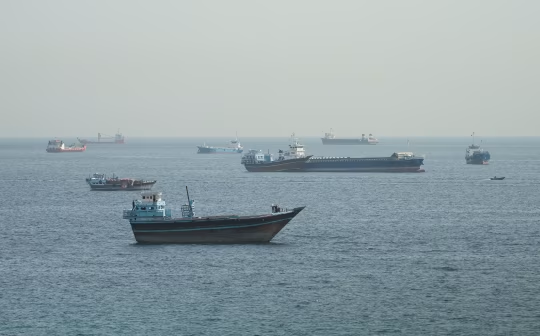
The Strait of Hormuz is a narrow maritime chokepoint, with its tightest passage measuring only around 21 miles across.
The third bottleneck is storage and production. During the closure, production that could not be exported accumulated in onshore storage. Once storage fills, output has to be shut in. Restarting production requires empty tankers to enter the Gulf and drain those storage tanks before oilfields can return to normal. It is estimated that draining onshore inventories could require around 200 VLCCs, with 4-6 weeks needed for up to 5 million barrels per day of shut-in production to return and potentially 2-3 months for the remaining shut-ins.
The fourth bottleneck is infrastructure repair. An important warning is that Gulf producers and refiners would compete for equipment, steel, valves, pipes and skilled labor to repair damaged facilities, meaning the constraint is not only money but also physical repair capacity. This is crucial because energy infrastructure is not software. It cannot be patched globally overnight.
Therefore, the combined result is a staged recovery. First, headlines improve. Then some ships pass. Then insurance normalizes. Then inbound tankers return. Then storage drains. Then production restarts. Then refineries ramp. Then products flow. Only after that does the whole system return to normal.
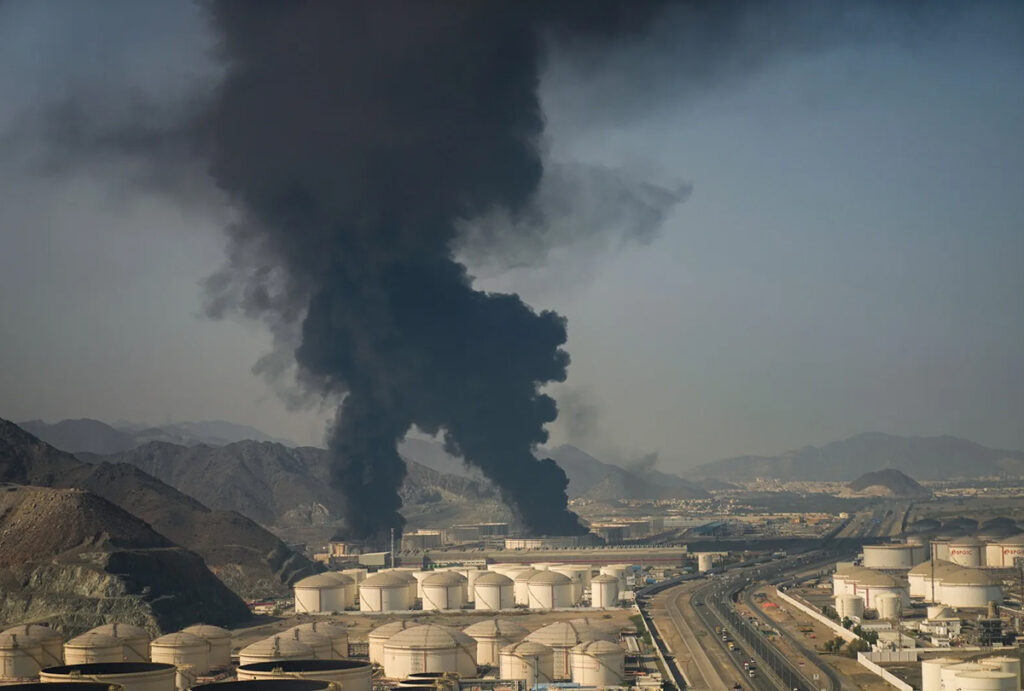
Missile and drone attacks during the conflict have damaged dozens of refineries, oil fields, gas plants, ports, and other critical energy facilities.
Crude can fall before fuels become cheap
Brent reflects the financial market’s changing view of crude availability and geopolitical risk. But consumers do not buy crude oil directly. They buy gasoline, diesel, jet fuel, LPG, naphtha-linked goods and electricity generated through fuel-linked systems.
A disruption of this scale cannot be rebalanced through crude alone and the adjustment has already shifted downstream into refined products. From January through April, crude prices rose roughly 40%, while Asian refined product prices rose 60%-120%, meaning oil products repriced 1.5x-3x faster than crude.
This is why crude prices may fall first while fuel prices remain sticky. A peace deal removes some probability of prolonged closure. But product markets still face refinery outages, crude-quality mismatches, shipping delays and slow ramp-ups. Refiners cannot snap back to full rates after a prolonged shutdown, and that Middle East refinery run cuts near 3 million barrels per day could take 4-8 weeks to restore gradually.
That is also why the first phase of post-Hormuz price action may look contradictory. Crude benchmarks can fall, equity markets can rally, and yet airlines, petrochemical producers and consumers may still face elevated costs. The crude market trades expectations while the product market reflects bottlenecks.
Jet fuel is the clearest example. Jet fuel was the most acutely affected product, with prices nearly doubling across Asia, Europe and the US and jet cracks widening to $80-$100 per barrel over crude. But refining is a mass-balance system. If refiners try to maximize jet fuel, they usually reduce diesel output, and diesel sits at the center of trucking, shipping, rail, agriculture and mining.
This means the reopening of Hormuz does not just answer “where should Brent trade?” It creates a second question: which part of the refined-products system heals last?
Typical refined product yields across different crude grades
Demand destruction does not instantly reverse
The market partially balanced during the crisis because demand was damaged. That sounds bearish for crude, but it is also a sign of economic stress. Sources estimated that observable global oil demand fell by 2.8 million barrels per day in March and 4.3 million barrels per day in April, with losses expected to deepen to around 5.6 million barrels per day in May and 5.0 million barrels per day in June.
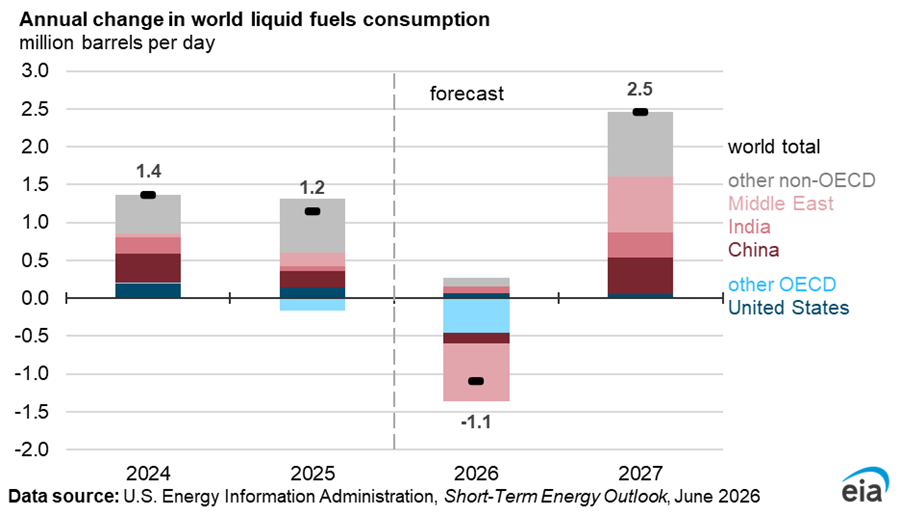
The EIA also says high fuel prices, reduced fuel availability and government initiatives have lowered oil demand, with most of the demand reduction in Asia because the region receives more crude supplies from the Middle East. It now forecasts global oil demand to fall by an average of 1.1 million barrels per day in 2026, compared with its previous expectation for growth, before rebounding by 2.5 million barrels per day in 2027 as prices drop and supply flows return later in 2026.
The IEA’s May Oil Market Report estimates that output from Gulf countries affected by the Hormuz closure was 14.4 million barrels per day below pre-war levels, while refinery crude throughputs are forecast to fall by 4.5 million barrels per day in 2Q26 because of infrastructure damage, export restrictions and lower feedstock availability.
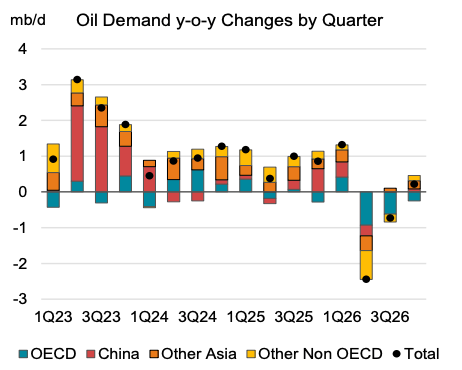
Global oil demand growth has weakened sharply since 2023, with 2026 showing outright year-on-year declines in several quarters as China, other Asian economies and non-OECD consumers absorb the impact of higher prices and supply disruption. (Source: IEA)
This creates a rebound problem. When supply returns, demand does not automatically jump back to its old path. Airlines may have cancelled routes. Petrochemical plants may need to restart gradually. Households may have adjusted behavior. Governments may keep conservation measures in place. Inventories may be rebuilt before end-use demand fully recovers.
That means the post-reopening market may go through two opposing forces. On one side, supply improves and crude prices fall. On the other side, demand gradually recovers as fuel availability improves. The net price path depends on which side moves faster.
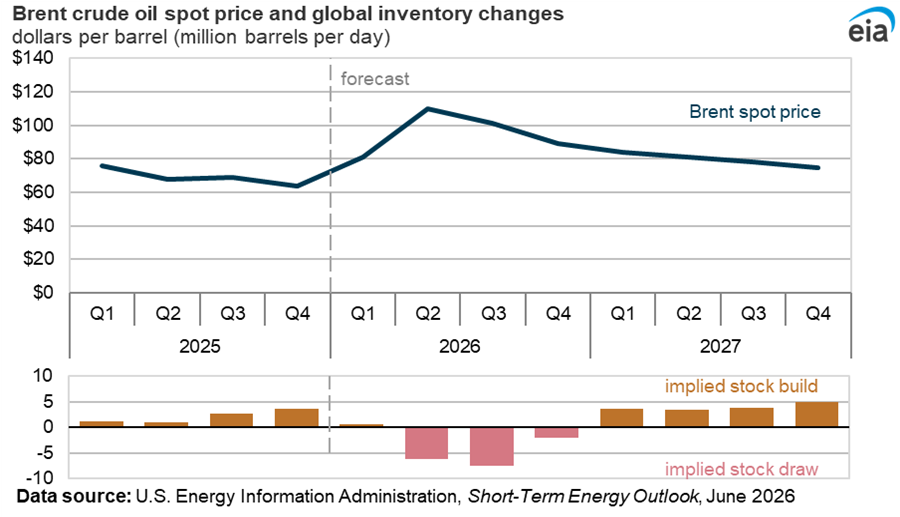
The EIA captures this tension well. Because global inventories have been drawn down sharply, it expects oil prices to remain elevated until flows normalize and inventories are replenished, and it estimates global inventories will fall by 6.3 million barrels per day in 2Q26. The IEA similarly says observed global inventories, including oil on water, were drawn down by 250 million barrels over March and April, and that resuming flows through Hormuz remains the single most important variable in easing pressure on energy supplies, prices and the global economy.
What happens next
The cleanest way to think about the next phase is not “open or closed,” but “how fast does the system heal?”
In the best case, the formal agreement is signed, mines and security concerns are cleared quickly, insurers lower war-risk premiums, shipowners resume passage, empty tankers enter the Gulf, storage begins to drain and refinery runs step higher over the next 4-8 weeks. In that scenario, crude prices probably remain under pressure because the market moves from scarcity fear to recovery pricing. Product prices would also ease, but with a lag because refineries and feedstock supply chains need time.
In the middle case, the strait technically reopens, but shipowners remain cautious, political terms are unclear, the 60-day negotiation period creates headline risk and traffic normalizes only gradually. This is the scenario implied by Reuters’ early shipping reports: one tanker passes, many remain stuck, and confidence has to be rebuilt over weeks rather than hours. In this case, Brent may be capped by peace optimism, while product cracks, freight rates and Asian fuel stress stay elevated.
In the downside case, the agreement becomes a ceasefire in name but not in practice. Any renewed military action, mine incident, insurance shock or dispute over Iran’s nuclear program could quickly reintroduce the risk premium. This risk is not theoretical because Reuters reported that the preliminary pact leaves Iran’s nuclear program to later talks and that Lebanon remained a sticking point in negotiations.
The most interesting possibility is that crude becomes bearish before the real economy becomes comfortable. If tankers exit and producers rush to recover revenue while demand remains depressed, crude could fall faster than refined products. That would not mean the shock is over. It would mean the bottleneck has shifted from crude availability to product availability, refinery configuration and end-user recovery.
What to watch
The key indicators now are different from the indicators during the closure. During the crisis, the main question was whether Hormuz could reopen. After the agreement, the key indicators are tanker transits, oil-on-water, inbound VLCC flows, refinery runs, and the stability of the US-Iran negotiation process.
A simple rule is useful: Brent tells you how the market prices the probability of reopening; oil product cracks tell you how the physical system is actually healing.
That is the deeper story of Hormuz. The peace deal is a turning point, but not a reset button. The visible blockade may end on a date. The energy shock unwinds through the supply chain over weeks or months.
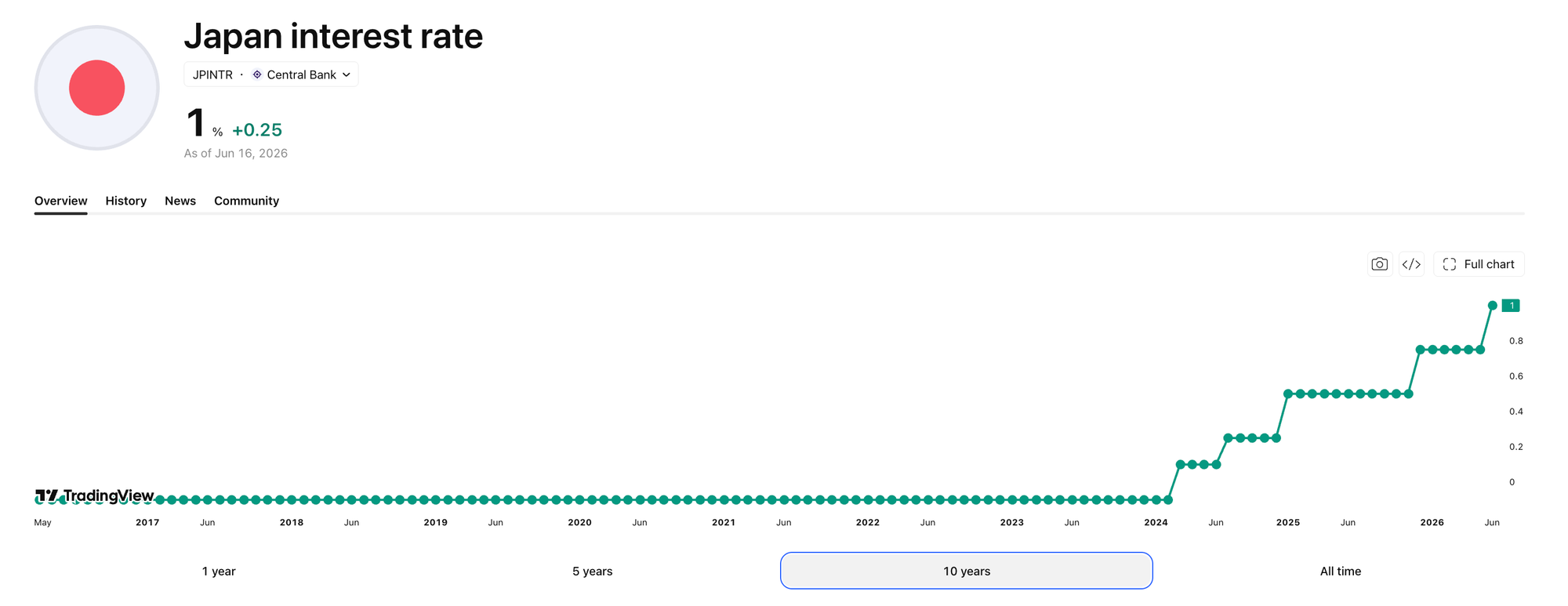
The Bank of Japan has raised its policy rate to around 1.0%, with the decision approved by a 7–1 majority. The complementary deposit facility rate will also rise to 1.0%, while the basic loan rate increases to 1.25%. The new guideline takes effect from June 17, 2026.
This is more than a routine rate hike. For decades, Japan was the global symbol of ultra-low rates, weak inflation and persistent monetary easing. Now the BOJ is moving further away from that old regime. The key question for investors and macro watchers is not simply whether Japan has tightened, but whether this is the beginning of a longer tightening cycle.
The BOJ’s own explanation shows why the decision matters. Japan’s headline inflation picture is mixed: CPI excluding fresh food has recently been below 2%, partly because government measures have reduced the household burden of higher energy prices. But the BOJ is worried that crude oil costs, business-to-business price pass-through and rising medium- to long-term inflation expectations could push underlying inflation above its 2% target.
Viewpoint: the BOJ is no longer reacting only to current inflation; it is trying to manage the risk that Japan’s wage-price cycle becomes durable.
That makes the next few months highly important for event-based forecasting. If inflation rebounds, wage growth remains firm and the yen stays weak, expectations for another rate hike could rise. A Reuters survey before the meeting showed economists broadly expected a move to 1.0%, with many also expecting the BOJ to raise rates again to 1.25% later in 2026.
But the BOJ is not tightening in a straight line. It also noted that Japan’s economy has recovered moderately, while some weakness remains due partly to the Middle East situation. Higher crude oil prices may hurt corporate profits and household real income, even as they raise inflation pressure. In other words, Japan faces a policy trade-off: raise rates too slowly and inflation expectations may drift higher; raise too fast and growth may weaken.
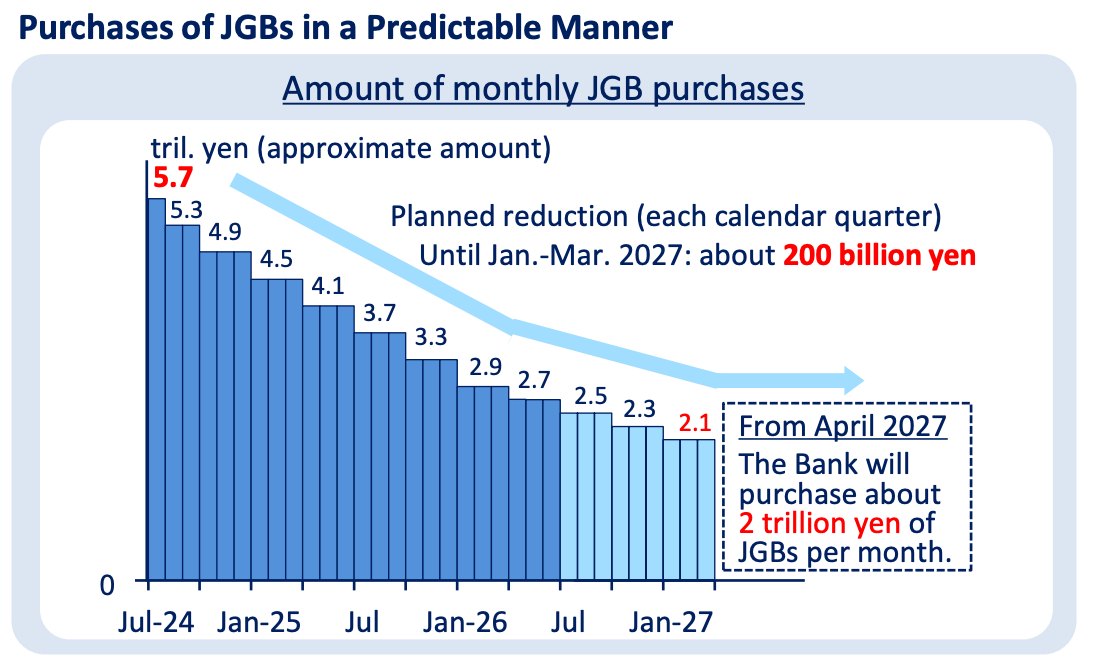
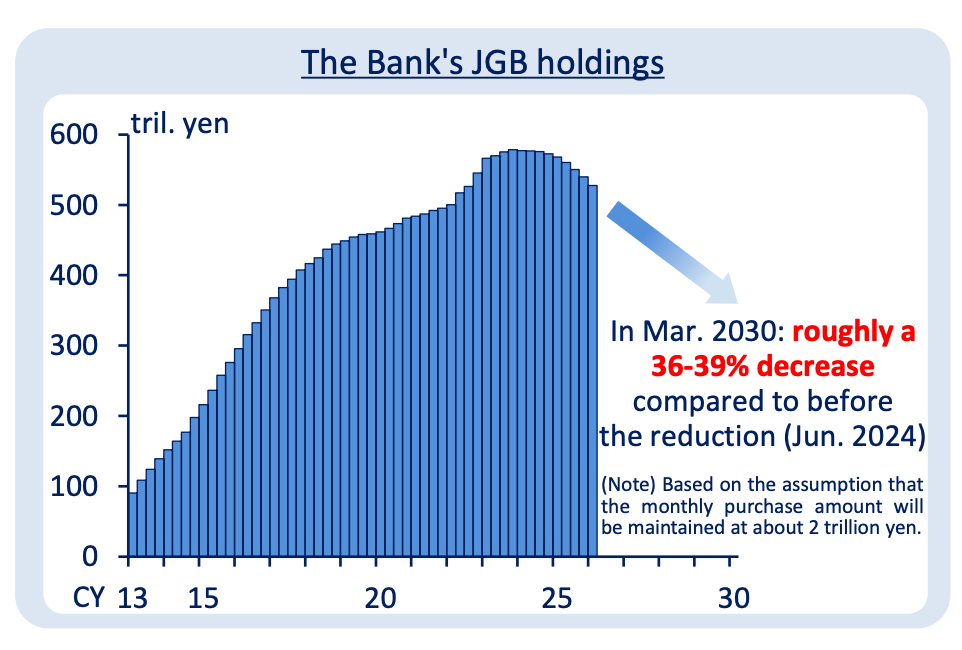
The central bank’s bond policy adds another layer. The BOJ will continue reducing monthly JGB purchases by about ¥200 billion each calendar quarter until January–March 2027, then hold monthly purchases at about ¥2 trillion from April 2027. The BOJ estimates its JGB holdings could fall by roughly 36–39% by March 2030 compared with before the reduction began in June 2024.
Still, the BOJ is keeping a safety valve. It says long-term rates should generally be formed in markets, but it is prepared to respond flexibly if long-term rates rise rapidly, including by increasing JGB purchases.
This creates several clean forecasting questions: Will Japan hike again by year-end? Will core CPI return above 2%? Will the yen strengthen after the hike, or will rate differentials and energy import costs keep it under pressure? Will the BOJ slow its JGB purchase reduction if bond yields spike?
The BOJ’s message is clear: Japan’s era of emergency monetary policy is fading. The open question now is whether this normalization stays gradual, gets interrupted, or accelerates.
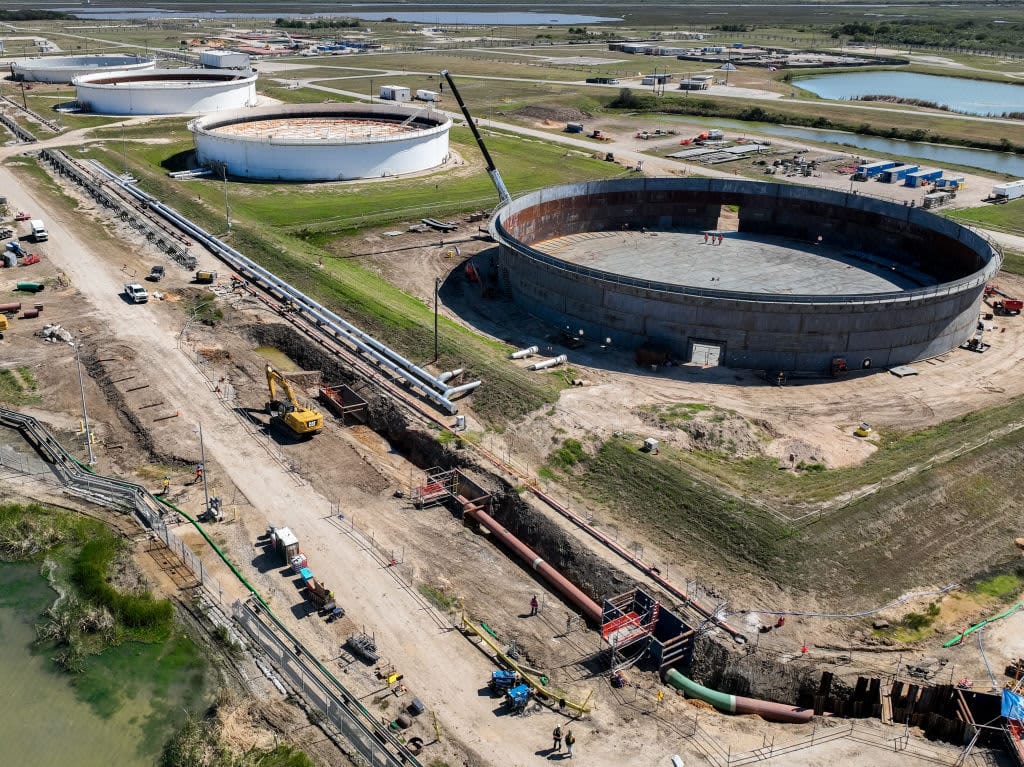
The U.S. Strategic Petroleum Reserve has fallen to the lowest level in more than 40 years as emergency stocks are released to help ease the supply disruption triggered by the Iran war.
The SPR stood at 340.3 million barrels as of June 12, the lowest level since the summer of 1983, according to data released Monday by the Department of Energy. The reserve fell nearly 9 million barrels week over week.
The deal that the U.S. and Iran are set to sign on Friday to reopen the Strait of Hormuz comes as oil executives have warned that global inventories are rapidly depleting to critical levels.
"We're approaching unheard of inventory levels," Exxon senior vice president Neil Chapman said May 28 at a conference hosted by Bernstein in New York. Chapman warned at the time that oil prices would spike as inventories fall while summer fuel demand is set to peak.
Inventories will continue to decline even after the U.S.-Iran deal is implemented as it will likely take weeks to months for oil flows through Hormuz to normalize.
"We still have inventory draws. Those are inexorable and they're already at historic lows," said Bob McNally, president of consulting firm Rapidan Energy. "We don't think we're out of the woods in terms of upper pressure on prices"
The U.S. agreed in early March to release 172 million barrels from the reserve. It was part of a coordinated release of 400 million barrels by the members of the International Energy Agency, the largest such intervention in the organization's history.
"The U.S. is the supplier of last resort," said Matt Smith, director of commodity research at Kpler. "Everybody's coming to the U.S. to pull barrels out of it because there's not the availability elsewhere."
President Donald Trump repeatedly slammed the Biden administration for releasing barrels from the SPR after Russia's invasion of Ukraine. The SPR hit a Biden-era low of around 346 million barrels in July 2023.
A proposed deal to end hostilities between the US and Iran gave equities and bond traders a measure of relief on Monday. It also left prediction markets with a new headache.
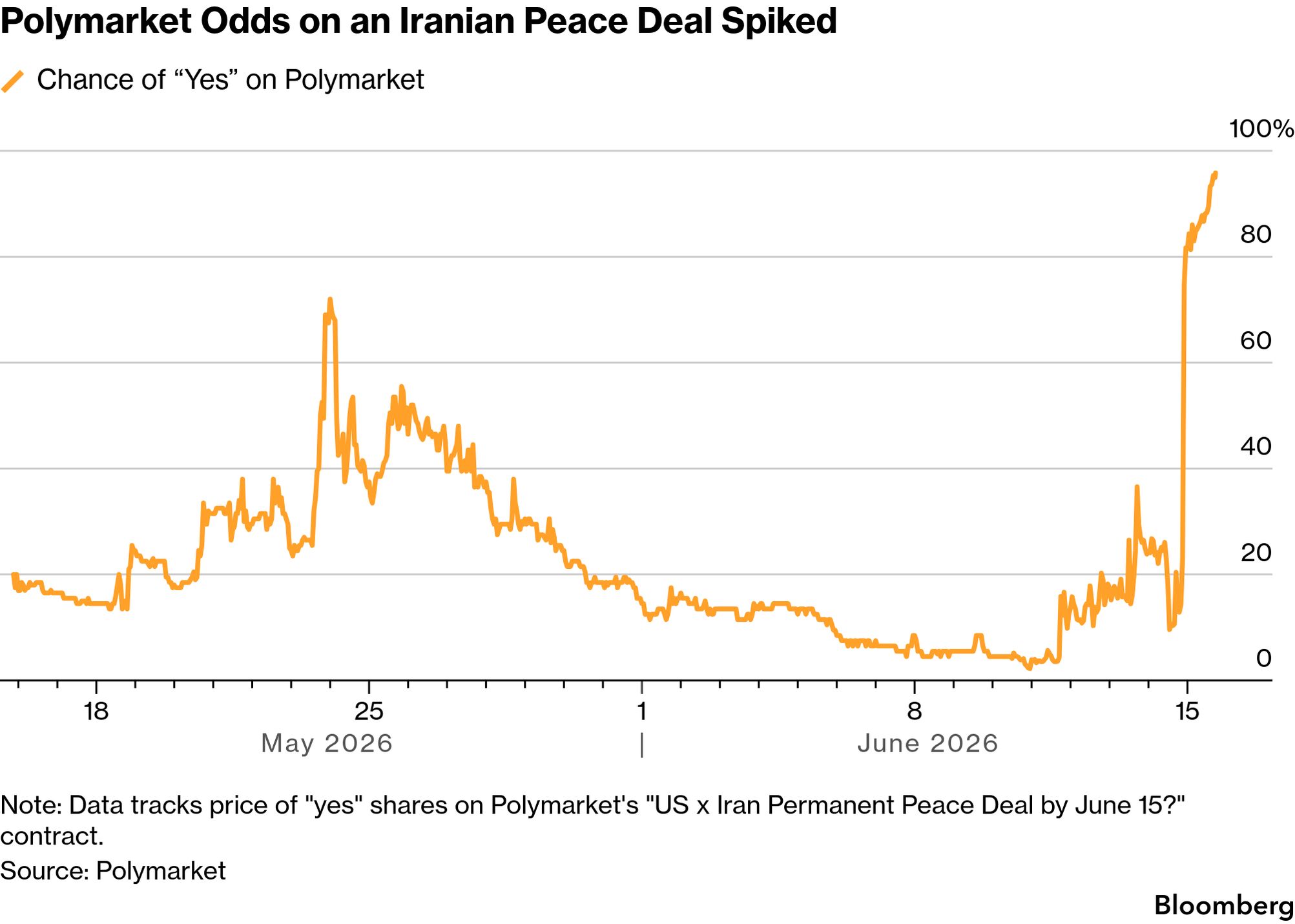
Polymarket, one of the largest event betting exchanges, has hosted more than $345 million of trading on the question of whether and when the US and Iran would sign a peace deal.
Both countries announced they had an agreement over the weekend, and some traders thought they had won a payout. But the bets are in limbo because it was not clear if the announcement was enough to meet the conditions written into Polymarket’s contracts.
A proposal made on Sunday night to resolve the contract to “yes” — there was a peace deal — was quickly disputed by holders of UMA, the cryptocurrency used to handle market challenges on Polymarket.
Some of those arguing the outcome say the contract’s terms have not been met, in part because no document has been signed, and in part because it’s unclear if the agreement between the two sides represents a “permanent” end to the fighting.
The dispute is the latest — and one of the largest — conflicts to roil Polymarket, underscoring the ongoing difficulty prediction markets have had in resolving yes-or-no conflicts tied to messy real world events.
Polymarket’s reliance on UMA to handle its disputed bets has been unpopular with some traders because UMA holders can sway decisions worth billions of dollars without revealing their identity or possible conflicts of interest. The process sees token holders debate the topic in an online chatroom, before voting on the outcome.
A recent Bloomberg analysis showed just nine wallets control more than half of the tokens used for such votes.
The terms of Polymarket’s contracts tied to an Iranian peace agreement indicate that any deal must explicitly state that military hostilities between the US and Iran “have ended or will permanently cease,” meaning temporary ceasefires would not qualify.
Users gathered Monday in UMA’s online Discord chatroom to argue over whether the announcements over the weekend were enough to meet these terms. The debate and subsequent vote on the matter is expected to conclude later this week.
The two countries said on Monday that they had an interim peace agreement to reopen the Strait of Hormuz for 60 days. Delegations from both sides are set to hammer out the details in Qatar this week, with a memorandum of understanding expected to be signed in Switzerland on Friday.
A number of Polymarket users pointed to the temporary nature of the Strait’s reopening as a sign the deal was not permanent.
Conversely, others said that Pakistani Prime Minister Shehbaz Sharif’s description of the agreement as a declaration of “immediate and permanent termination of military operations” was sufficient evidence for the market to conclude.
There was particular debate over a contract tied to whether a peace deal would be reached by Monday, which has attracted $66 million in trading volume so far.
Contracts remain open for trading during the UMA dispute process, allowing investors to effectively bet on the outcome of the debate rather than the original event that had attracted the wagers.
Polymarket did not immediately respond to a request for comment on the dispute.
Odds that the Strait of Hormuz traffic will return to normal before August surpassed 50% after U.S. President Donald Trump announced a deal with Iran on Sunday, which includes reopening the strait.
Chances that the strait's traffic will return to normal before August sit at 58% on Kalshi. The last time those odds were that high was in late May. Other markets also saw jumps, with a 75% probability that traffic will return to normal before the end of this year.
The higher odds come after Trump's announcement, in which he declared both sides had agreed to a "memorandum of understanding" and approved removing the U.S. naval blockade.
"Ships of the World, start your engines. Let the oil flow!" he wrote about the strait on Sunday's Truth Social post.
Trump later clarified the strait would open after a deal is signed on Friday, "for purposes of mine removal." Iranian state news agency Mehr also reported the strait would reopen under "Iranian arrangements."
Qatar asked for further clarity on Monday on "outstanding issues" between the countries, "including ensuring freedom of navigation in the Strait of Hormuz."
A key player excluded from the deal is Israel, the nation that collaborated with the U.S. to strike Iran on Feb. 28.
The confusion suggests why traders on Kalshi have avoided placing at least a 90% chance that the strait would before the end of this year.
Iran's Deputy Foreign Minister Kazem Gharibabadi said the "end to the war" included Lebanon but on Monday, Israel said its defense force will continue to stay put in "security zones" in Lebanon, Gaza and Syria.
Vice President J.D. Vance told CNBC's "Squawk Box" the deal will open the strait without tolls for the long term.
"We're already seeing in the past 24 hours more traffic flow," he said on Monday. CNBC could not immediately verify this.
Iran and the U.S. are set to sign the peace deal on Friday in Geneva.
ECB Raises Rates Again as Middle East War Rewrites Europe’s Inflation Outlook
Brief Analysis
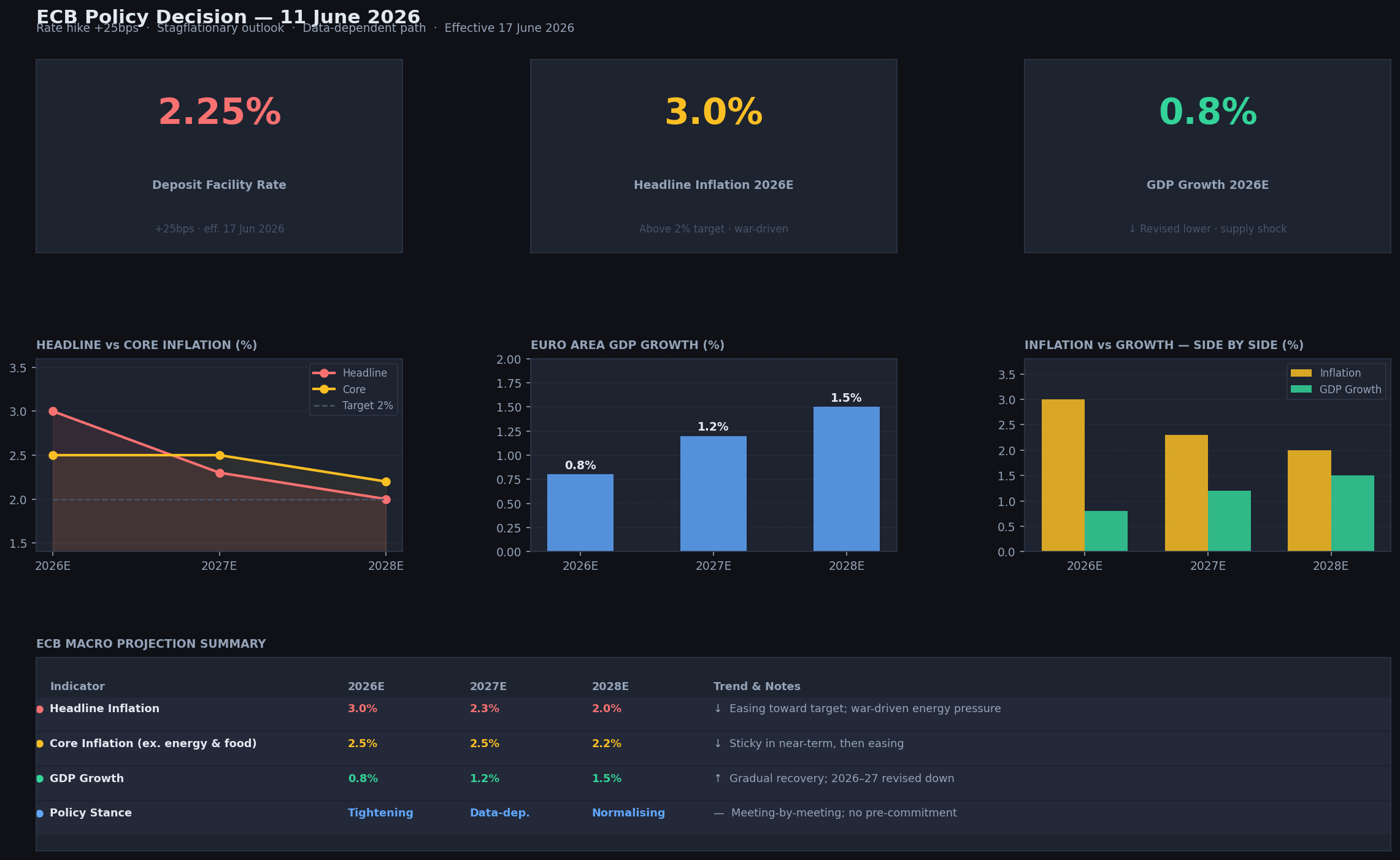
The European Central Bank raised its three key interest rates by 25 basis points on 11 June 2026, saying the war in the Middle East is generating new inflation pressure and creating uncertainty around the euro area’s medium-term outlook. The deposit facility rate will rise to 2.25%, the main refinancing operations rate to 2.40%, and the marginal lending facility rate to 2.65%, effective 17 June 2026.For markets, the most important signal is not only the rate hike itself. It is that Europe has moved back into a stagflation-style trade-off: inflation risks are rising while growth expectations are being revised lower. In the ECB’s new baseline, headline inflation is expected to average 3.0% in 2026, 2.3% in 2027, and 2.0% in 2028. Core inflation, excluding energy and food, is projected at 2.5% in both 2026 and 2027, before easing to 2.2% in 2028.
“The ECB’s latest decision turns Europe’s macro outlook into a two-sided prediction market: inflation risk is back, but growth risk is rising at the same time.”
That tension is visible in the growth forecasts. The ECB now expects euro area growth of only 0.8% in 2026, followed by 1.2% in 2027 and 1.5% in 2028. The 2026 and 2027 forecasts were revised down because the war is expected to hit commodity markets, real incomes, and confidence.
“This is not a clean tightening cycle. It is a policy response to a supply shock, where higher energy prices can lift inflation while simultaneously weakening consumers and businesses.”
The decision creates a highly tradable setup for prediction markets because the ECB is refusing to commit to a fixed policy path. It said future decisions will be data-dependent and made meeting by meeting, based on the inflation outlook, underlying inflation dynamics, incoming economic and financial data, and the strength of monetary policy transmission.
“The most important line for traders is that the ECB is not pre-committing to a particular rate path. That keeps every future meeting live.”
This makes the next phase of European monetary policy unusually measurable. Inflation prints, energy prices, growth revisions, wage data, confidence indicators, and each ECB meeting can now directly shift the odds of another hike, a pause, or even a later policy reversal.For prediction markets, the core question is simple: Is this the beginning of a renewed tightening cycle, or the final hike before growth weakness overtakes inflation as the ECB’s bigger problem?