China is stepping up efforts to stabilize its stock market, mobilizing a range of state-linked institutions to stem a tech-driven selloff.
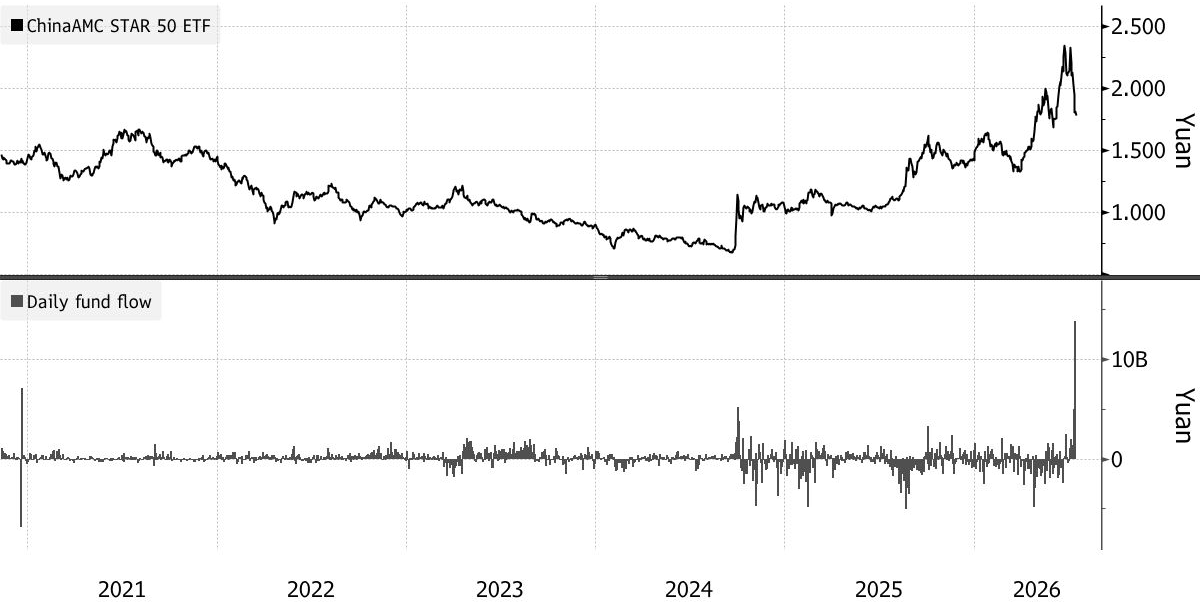
The latest sign of the push came on Monday, when the ChinaAMC STAR 50 ETF — the largest fund tracking the chip-heavy index — attracted a record 13.8 billion yuan ($2 billion) of inflows. While the source of the buying wasn’t immediately clear, the scale of the inflows suggested state-backed support was being directed toward tech shares, where the selloff has been most intense.
This would mark a shift from earlier stabilization efforts that focused on blue chips. While turnover also jumped in other exchange-traded funds favored by China’s so-called national team, the Huatai-PineBridge CSI 300 ETF — a preferred vehicle for state buying — attracted 12.6 billion yuan of inflows on Monday, trailing the STAR 50 ETF.
Support is coming from China’s largest insurers as well, with at least five pledging to boost investments. China Life Insurance Co. said its unit bought more than 10 billion yuan worth of stocks and funds, and vowed to increase holdings of companies in new growth sectors. The People’s Insurance Company (Group) of China and Ping An Insurance Group Co. made similar commitments.
China STAR 50 ETF sees record inflows. Source: Bloomberg
Together, the moves suggest authorities are deploying a broader arsenal to stabilize AI and semiconductor shares. Chinese equities have been swept up in a broad-based selloff as turbulence in memory-chip stocks spilled over into the wider market. Investors are also bracing for the mega listing of CXMT Corp. in the coming days. The STAR 50 Index has slumped 21% from its peak in June.
Will CXMT’s mega listing boost the index or pressure on the index (on China’s chip sector)?
BullResult
51.44%
BearResult
48.56%
1,419 Polls
EndedTBD
By directing state money toward the STAR 50, policymakers are seeking to prevent the tech selloff from snowballing into a broader market confidence crisis, at a time when the economy is showing signs of stumbling.
Other Backers
State-backed asset managers are also signaling support. Bosera Fund Management said it would invest 50 million yuan of proprietary funds into equity products it manages. Such purchases are typically made during periods of acute market stress.
In a rare move, brokerage GF Securities — which has historical ties to provincial governments — said it would raise its margin financing quota by 90 billion yuan, potentially giving investors greater access to liquidity just as leverage is being unwound. Chinese traders cut leveraged positions at the fastest pace since the 2015-16 market crash on Friday.
Regulators have met with investors in a bid to revive confidence. The China Securities Regulatory Commission gathered their views on promoting the stable and healthy development of capital markets, and vowed efforts to prevent risks, improve investor protection and enhance returns.
Will the latest intervention create a lasting recovery or only a temporary bounce?
The cost of protecting Oracle Corp.’s debt against default reached a fresh multi-year high on Monday while its existing bonds sold off, as doubts grew over whether the company’s massive investments in artificial intelligence will pay off.
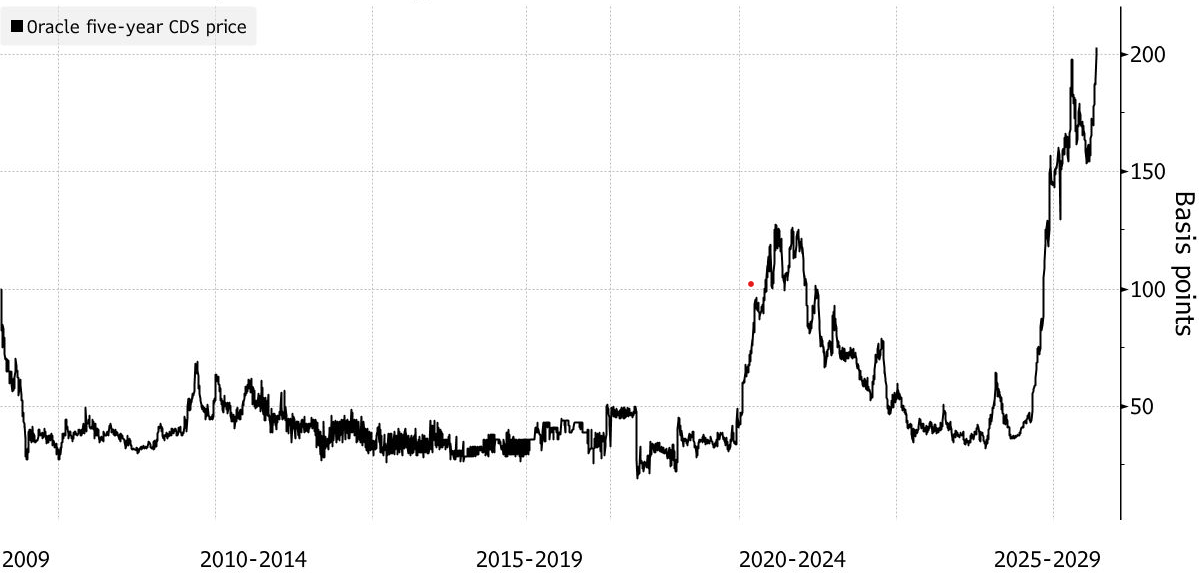
Five-year credit default swaps(CDS) on the company’s debt, a gauge of perceived credit risk, rose to about 2.03 percentage points annually early Monday, according to ICE Data Services. That marked the highest level on record for data going back to the end of 2008, surpassing the previous peak of 198.23 basis points reached on Friday.
Oracle debt risk hits record high, cost of default protection surges amid tech sector selloff. Source: Bloomberg
Meanwhile, Oracle’s bonds weakened across the curve on Monday. The spread on Oracle’s 6.7% bonds maturing in 2056, one of its most actively traded bonds, widened by about 8 basis points to 263 basis points, according to Trace data. Its 5.7% notes due in 2036 widened by around 9 basis points to 205 basis points.
An artificial intelligence model from a Chinese startup has renewed fears over the impact of massive capex spending on tech earnings, which kick off Wednesday.
Oracle, the biggest issuer in Bloomberg’s US high-grade corporate bond index outside of the financial sector, has become the credit market’s barometer for AI risk. S&P Global Ratings downgraded the company earlier this month to one notch above junk, citing the company’s growing spending on artificial intelligence.
Investor focus should shift to any changes by Moody’s Ratings, which has a Baa2 rating on the firm with a negative outlook, as Oracle continues its spending spree, according to Morgan Stanley credit analyst Lindsay Tyler.
“Fallen-angel risk is not immediate, especially with equity and prepayment levers, but remains medium-term dependent on execution and monetization,” Tyler wrote in a note dated July 9.
Will Oracle monetize its AI investments fast enough to ease credit concerns?
Introduction: The Sovereign Capture of the Physical Transition
"A hedge fund asks what trade to make today. A universal owner asks whether this dynamic alters its 30-year planning premise."
As the global economy shifts from an era of frictionless digital expansion to one governed by absolute thermodynamic and geological limits, the foundational premises of long-duration capital allocation are fracturing. Beneath the headline noise of public market volatility, Middle Eastern sovereign capital—led by the "Gulf 7"—is executing a systematic, multi-billion-dollar capture of South America’s critical infrastructure, baseload clean energy, and mineral reserves.
While mainstream institutional capital continues to evaluate Latin America through the narrow, risk-discounted lens of EM Beta, sovereign allocators from Riyadh to Abu Dhabi are bypassing stock exchanges entirely. They are acting as strategic, long-term operators, deploying unlisted direct equity to lock down the physical bottlenecks required to power the next three decades of global electrification and artificial intelligence.
For universal asset owners operating under 30- to 50-year fiduciary mandates, the consolidation of the Gulf-LatAm corridor represents a critical strategic inflection point. When sovereign wealth becomes the off-market price-setter for the region's foundational assets, continuing to treat Latin America as a tactical diversification trade ceases to be a benign oversight—it becomes an active acceptance of long-term portfolio subordination.
I. The Illusion of the Index: Moving Beyond the Emerging Markets Lens
For Western asset allocators, Latin America remains a structural blind spot, accounting for less than 2% of global assets under management. This underweight position stems from siloed management focused on the FX volatility of publicly traded equity indices (MSCI EM LatAm).
However, this stock market contraction obscures a structural rotation of capital. The real economy is absorbing massive amounts of capital: FDI reached $189 billion in 2024, with announced projects surging 40% to $168 billion. The fact that 52% of this stems from reinvested profits is a powerful signal: industrial operators already on the ground are doubling down on physical assets, capturing value that public-market spectators are leaving behind. While the West scrutinizes liquidity, Gulf monarchies are locking down these private assets, establishing the region as a geostrategic extension of their national security for the next 30 years.
II. Anatomy of a Takeover: The Reality of Transactions
The acceleration of direct investments by the “Gulf 7” in Latin America underscores a doctrine of radical disintermediation: replacing volatile stock market trading with the physical acquisition of critical assets through unlisted direct equity agreements.
In July 2023, the Saudi joint venture Manara Minerals bypassed the stock market to inject $2.6 billion in private equity into an isolated carve-out from Vale Base Metals, valued at $26 billion. This 10% stake contractually secures direct access to Brazilian nickel and copper reserves. In Bahia, Mubadala Capital is breaking with the speculative five-year exit strategy typical of Western private equity firms. Through Acelen, Abu Dhabi is committing $3 billion in industrial capital expenditures to convert the fossil-fuel-powered Mataripe refinery into a global hub producing 1 billion liters per year of sustainable aviation fuel (SAF) by 2029.
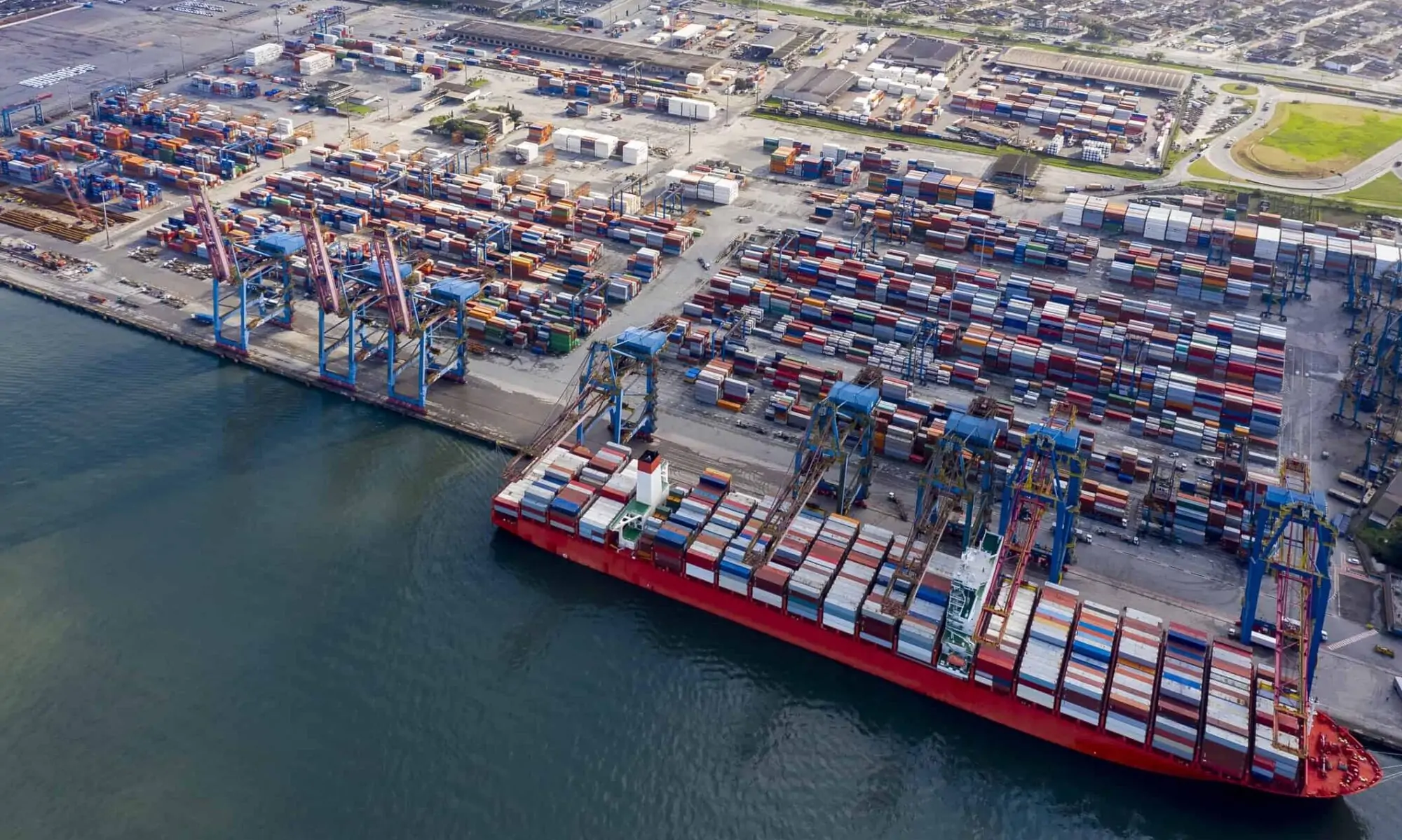
Simultaneously, Dubai is monopolizing logistical bottlenecks. DP World is investing $296 million in capital expenditures at the Port of Santos in Brazil, further solidifying its foothold at the Port of Callao in Peru.
This strategy extends directly to the power grid, the ultimate physical bottleneck of the transition. Moving aggressively to capitalize on a structural mispricing within Latin American utilities, sovereign capital is participating in massive take-private consortiums. A prime example is the Qatar Investment Authority’s (QIA) implication in the consortium—led by Global Infrastructure Partners and EQT—that executed the $10.7 billion equity privatization of AES Corporation at $15.00 per share. By capturing the underlying high-voltage transmission and renewable generation networks across the Americas, this patient, off-market capital secures a multi-decade supply chain duration. It is completely insulated from the short-term FX volatility and EM Beta that paralyze Western portfolio managers.
As a long-term asset owner, what is your primary objective for Latin American infrastructure exposure?
Public Market Alpha (Beta play)Result
0.00%
Strategic Bottleneck/Corridor ControlResult
100.00%
2 Polls
EndedTBD
III. The Physical Bottleneck: The Energy and Minerals Equation
The exponential growth of high-density data centers requires a surge in mineral and electrical resources running up against a structural physical deficit. Without secure access to these mining rights, the construction of technological infrastructure is physically and mathematically untenable.
Thermodynamically, the equation is binary: zero-carbon baseload megawatts combined with critical minerals. Brazil’s fully amortized hydroelectric base and high-voltage transmission grid offer this indispensable firm power foundation for mineral refining and AI. Sovereign capital allocators recognize that future power will no longer rest on simply holding liquid fiat instruments, but on physical control of the value chain for silicon and controllable electrons.
IV. The Political Economy of Sovereign WACC: Crowding Out and Pricing
Gulf sovereign wealth funds are establishing themselves as off-market price setters in Latin America thanks to a structural capital asymmetry. Free from short-term actuarial liabilities and fixed-duration mandates, their Sovereign WACC is decoupled from quarterly stock market returns, subsidized by strategic imperatives of national industrial security.
This cross-subsidy allows them to accept seemingly lower financial Internal Rates of Return (IRR) during auctions for long-term concessions, such as port complexes and electric transmission networks. Consequently, traditional 10-year private equity and infrastructure models are becoming uncompetitive and are facing irreversible mathematical obsolescence. While Western investors are hamstrung by the Country Risk Premium (CRP), Gulf sovereign wealth funds completely eliminate this discount in their models. This valuation asymmetry makes them unbeatable in auctions for critical infrastructure. Within this paradigm, continuing to demand a traditional political risk discount according to Wall Street standards is tantamount to signing one’s own definitive exclusion (crowding-out) from top-tier South American infrastructure projects.
Will traditional Western private equity models remain competitive in LatAm infrastructure auctions against Gulf Sovereign Capital?
Yes, traditional risk pricing will prevailResult
100.00%
No, Sovereign WACC asymmetry is unbeatableResult
0.00%
1 Polls
EndedTBD
V. Redefining the 30-Year Hypothesis: Avoiding Subordination
Persisting in underweighting Latin America through the obsolete lens of an emerging-market equity discount is now a fatal strategic error. By allowing Gulf funds to control and monopolize regional physical bottlenecks, universal owners are structurally accepting the subordination of their global portfolios. Reduced to the status of a price-taker, institutional portfolios will suffer severe inflation in commodities that directly determine the profitability of their global technology and industrial holdings through the 2050 horizon. The only realistic strategy to avoid this subordination is to transition to direct partnerships or co-investment in critical physical infrastructure.
References & Institutional Sources
Global SWF (2025). Annual Report: Sovereign Wealth Fund Data Platform.
International Monetary Fund (IMF) (2025). Gulf Cooperation Council Diversification.
ECLAC/CEPAL (2024). Foreign Direct Investment in Latin America.
International Energy Agency (IEA) (2024). Global Critical Minerals Outlook.
International Energy Agency (IEA) (2025). Brazil 2025: Energy Policy Review.
Bain & Company / McKinsey & Company (2024). Global Private Equity / Infrastructure Reports.
Thinking Ahead Institute (WTW) (2024). Global Pension Assets Study.
Vale S.A. (2023). Official Investor Relations: Vale Base Metals / Manara Minerals.
Mubadala Capital (2023). Corporate Dossier: Acelen and Mataripe Biorafinerie.
DP World (2024). Annual Operational Reports (Callao & Santos).
SEC Disclosures (2026). Form 8-K: The AES Corporation / Horizon Parent, L.P. Merger Agreement.
The consensus narrative treating artificial intelligence as a frictionless, zero-marginal-cost software expansion is mathematically invalid. Global equity markets are currently exhibiting a severe structural mispricing by evaluating computational infrastructure through the lens of legacy SaaS multiples. In reality, AI has rapidly mutated into a capital-intensive heavy industry, permanently burdened by an inference tax that imposes a positive marginal cost on every query. Unlike traditional software applications where distribution costs approach zero, every generative prompt or algorithmic adjustment necessitates massive, real-time matrix multiplication within a data center. This mechanism linearly consumes electricity and silicon compute time, creating a permanent structural drag on unit gross margins and fundamentally invalidating the legacy "growth-at-all-costs" SaaS playbook.
The asymmetry between deployed capital and extracted economic value is systemic. As explicitly highlighted by leadership at Norges Bank Investment Management (NBIM), the global financial ecosystem has funneled an estimated $1.4 trillion into physical hardware buildouts, yet direct, verifiable AI revenues struggle to cross a mere $13 billion threshold. For Universal Asset Owners, navigating this transition requires discarding software-era complacency and aggressively confronting the physical constraints of a new industrial reality.
What is the ultimate, non-negotiable constraint on the global AI infrastructure buildout?
Chip design and semiconductor fabrication (Silicon)Result
100.00%
Baseload power and grid interconnection queues (Electrons)Result
0.00%
3 Polls
EndedTBD
The CapEx Wall and the Depreciation Trap
The hyperscaler economic model is colliding with a formidable CapEx wall. Unlike the old industrial economy, where physical assets were comfortably amortized over 30 to 40 years, the computational foundation of AI is trapped in a hyper-accelerated hardware depreciation cycle. State-of-the-art graphics processing units (GPUs), such as the Nvidia H100 or Blackwell architectures, possess a strictly limited economic useful life of just 3 to 4 years before reaching absolute technical obsolescence.
This perpetual reinvestment mandate structurally devours Free Cash Flow (FCF) across the technology sector. The accounting reality is brutally evident in recent financial disclosures: Alphabet’s capital expenditures surged by 74% year-over-year, climbing from $52.5 billion in 2024 to $91.4 billion in 2025. Furthermore, macroeconomic projections anticipate the combined CapEx for the top five US tech giants will hit $1.16 trillion by 2027. Hyperscalers are now forced to rebuild their entire infrastructure base every 48 months, transforming what was once an "asset-light" growth narrative into a deeply capital-intensive race against time.
The Thermodynamic Bottleneck
Computational scaling has definitively collided with the immutable laws of physics, specifically thermodynamics. The ultimate limit on artificial intelligence expansion is no longer algorithmic logic or software engineering, but rather the availability of baseload power generation, advanced cooling capacity, and backlogged grid interconnection queues.
The International Energy Agency (IEA) Electricity 2026 Report exposes this reality: data centers now absorb 22% of Ireland's total national electricity, forcing regulatory freezes on new allocations. Furthermore, data centers are projected to account for 50% of all electricity demand growth in the United States through 2030.
This trajectory triggers a severe physical crowding out effect. Hyperscale infrastructure is preempting access to global energy grids, imposing structural delays on traditional heavy industry projects and establishing a permanently high floor on wholesale energy prices. The bottleneck is no longer digital; it is purely material.
The Sovereign Arbitrage
A profound structural mispricing is unfolding across global markets: hyperscalers cannot simultaneously finance a trillion-dollar silicon depreciation cycle and underwrite the construction of the global power grid. This bifurcated reality creates an unprecedented entry point for Sovereign Wealth Funds (SWFs) and long-term institutional capital. These entities alone possess the balance sheet duration and mandate to absorb this massive infrastructure CapEx. Furthermore, traditional credit markets are facing a systemic liquidity funnel. According to the Bank for International Settlements (BIS), the top 10 global banks now concentrate nearly 60% of all global foreign exchange (FX) derivatives and associated swap lines. This financial architecture is disproportionately mobilized to hedge the cross-border data center deployments of US tech giants. By committing massive tranches of their Risk-Weighted Assets (RWAs) to underwrite hyperscaler expansion, global banks have effectively exhausted their balance sheet capacity, triggering a severe financial crowding-out effect that leaves sovereign capital as the sole unencumbered liquidity provider.
Consequently, sovereign capital is aggressively rotating out of the traditional software sector—a space now relegated to a "valuation doghouse," where 73% of the public SaaS market languishes at a median 3.3x NTM revenue multiple. As evidenced by the 2025/2026 capital allocation doctrines of funds like GIC Singapore and Norges Bank Investment Management (NBIM), institutional preference has pivoted decisively toward mature real-asset operators capable of generating verifiable operational efficiency. These sovereign allocators are actively deploying an "Operator Alpha" framework: stripping away thematic tech premiums to focus exclusively on the rigorous restructuring of internal operating capital and the optimization of physical asset utilization. In this paradigm, engineering resilient Free Cash Flow from legacy infrastructure and heavy industry outranks speculative algorithmic hyper-growth.
By silently securing baseload power generation and controlling the physical bottlenecks of the grid, sovereign capital is transitioning from a passive investor in technology to the ultimate price-setter of the computational era.
As AI energy requirements escalate, who will be the natural owner of the underlying baseload power assets?
Big Tech directly (Hyperscalers funding their own grids)Result
100.00%
Sovereign Wealth Funds & Long-duration CapitalResult
0.00%
1 Polls
EndedTBD
References & Institutional Sources
Alphabet Inc., Microsoft Corp., Amazon.com Inc.: Annual Reports SEC Form 10-K (February 2026)
Bank for International Settlements (BIS): BIS Quarterly Review (December 2025)
International Energy Agency (IEA): Electricity 2026 Report
Morgan Stanley: US Software Outlook 2026 (Big Tech CapEx projections)
Norges Bank Investment Management (NBIM) & GIC Singapore: Annual Reports and Capital Allocation Doctrines (2025/2026)
Meritech Capital: Software Pulse and Cloud Index EV/NTM multiples (May 2026)
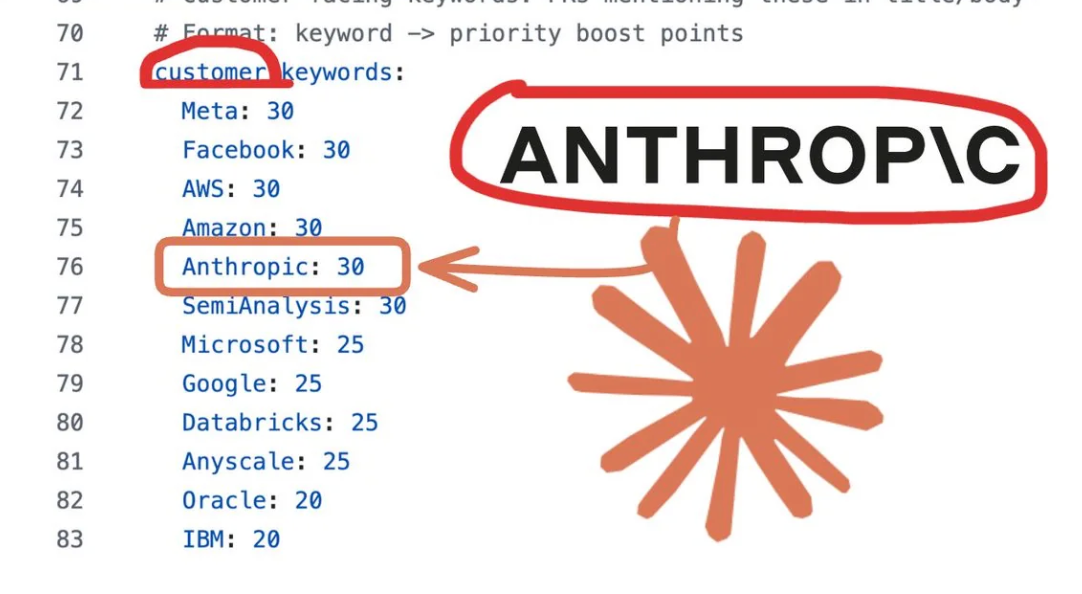
A code file by Anush Elangovan, a vice president of AI software at AMD, reportedly listed Anthropic as a "customer."
AMD's Advancing AI conference will run over Wednesday and Thursday.
Stocktwits sentiment for AMD was 'bullish' as of late Sunday.
This could open up a new chapter on decentralizing single-chip dominance.
Will AMD announce partnership with Anthropic in its July 2026 AMD Conference?
YesResult
66.67%
NoResult
33.33%
3 Polls
EndedTBD
What's The Rumor?
Advanced Micro Devices appears to have secured, or is close to securing, Claude developer Anthropic as a chip customer, with speculation swirling online after a senior executive referenced the AI startup in code published on GitHub. AMD shares rose 1.3% in the overnight session late Sunday.
A YAML code file by Anush Elangovan, a vice president of AI software at AMD, reportedly listed Anthropic as a "customer," chip news site SemiAnalysis reported on Sunday.
SemiAnalysis said Anthropic was assigned the maximum 30 "priority boost points," placing it alongside existing hyperscale customers such as Meta – fueling speculation that AMD could formally announce a partnership with the AI startup at its flagship Advancing AI conference next week.
"Note that Anthropic is still in the evaluation phase, and if AMD doesn't announce Anthropic at its upcoming Advancing AI conference, that means @AnushElangovan's FDE team has yet to address all of Anthropic's concerns regarding software quality, and further improvement will be needed," SemiAnalysis wrote.
Meanwhile, Anthropic has reportedly been hiring engineers with ROCm experience (AMD's AI software stack), suggesting it is preparing to further diversify its computing infrastructure, Jefferies analyst Blayne Curtis said in a recent note.
Anthropic is not a publicly confirmed AMD customer. The AI startup has publicly said it trains and serves Claude using a mix of Nvidia GPUs, Amazon's Trainium chips, and Google's TPUs, with Amazon remaining its primary cloud and training partner.
Next to Watch-out: AMD Conference
The AMD Advancing AI 2026 conference will run over Wednesday and Thursday at the Moscone Center in San Francisco. The company is expected to focus its announcements around AI infrastructure, new silicon-to-software pipelines, and enterprise-tier development.
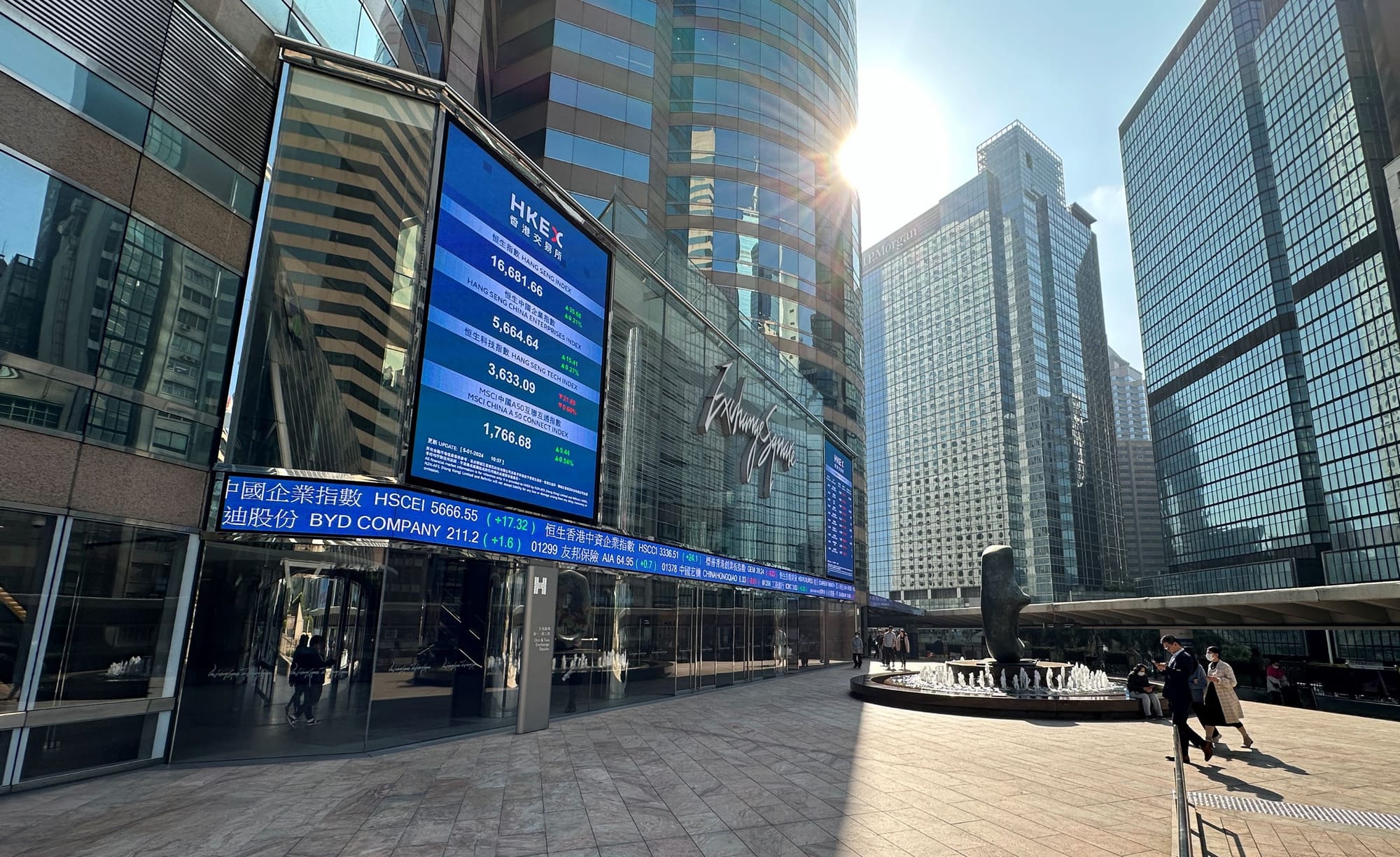
Hong Kong’s stock exchange is considering an extension of equity trading hours to align with most global markets, including a proposal to eliminate the lunch break, according to people familiar with the matter.
Hong Kong Exchanges & Clearing Ltd. relayed plans in recent weeks to major brokers and trading firms, the people said, asking not to be named because the information is private.
In one of the options, the bourse proposed to start equities trading 30 minutes earlier at 9 a.m., and scrap the one-hour lunch break that starts at noon, the people said.
Hong Kong is home to one of the few major exchanges that still keep a lunch hour, alongside China and Tokyo. Trading schedules have long been a contentious issue for the financial hub’s more than 500 brokerages, with moves to extend trading hours sparking protests in 2012.
HKEX is also mulling an after-hour session to catch early US activity, potentially between 8 p.m. to midnight, the people said. It will keep the market-close at 4 p.m. to allow for clearing and settlement, they added.
The evening slot, if installed, will be limited to a handful of larger stocks, which draw more investor interest, some of the people said. The Hong Kong exchange wants to drive home trading volume of firms that also have American depository receipts, some of the people said.
Another issue is whether China will join the extended hours for the more than 600 eligible stocks for the Southbound Stock Connect, two of the people said.
About 23% of Hong Kong’s equity market turnover as of 2025 was generated through southbound Stock Connect, which allow mainland investors to trade Hong Kong stocks.
Based on preliminary feedback, some market participants are skeptical about the evening session, as trading costs remain high in Hong Kong. Investors are likely to prefer hedging with US-listed options, some of the people added.
The exchange is still evaluating several proposals, which remain subject to change, the people added. The bourse will solicit wider feedback later this year when the arrangements are more mature, the people said.
The exchange said it regularly explores a range of ideas, while enhancements to cash market trading remain at “a very early, exploratory stage.” Any future adjustments would require assessment of market implications, stakeholder feedback and connectivity arrangements, including Stock Connect, it added.
Will HKEX introduce an evening equity trading session by the end of 2027?
YesResult
87.02%
NoResult
12.98%
786 Polls
EndedTBD
Traditional exchanges worldwide are extending hours in pursuit of near-24-hour trading, inspired by virtual asset markets and spurred by Nasdaq’s plans to operate 23 hours a day, five days a week.
Since 2024, HKEX has kept markets open during extreme weather, replacing its long-standing practice of closures during typhoons and strengthening its readiness for extended-hour trading.
Hong Kong’s futures and options market already operates well beyond midnight, with most major contracts trading until 3 a.m. The exchange has previously floated plans to extend trading hours further.
“Our current focus in the first instance is on the proposed enhancement of derivatives market trading hours, which remains subject to further market engagement and regulatory approval,” the exchange added on Monday.
Sensitive Issue
Working hours have been a sensitive issue. In 2011 Hong Kong extended trading hours by bringing forward the morning session from 10 a.m. to the current 9:30 a.m., and gradually shrinking the lunch break from two hours to one.
About 1,000 stockbrokers took to the streets to protest against then-HKEX Chief Executive Officer Charles Li, arguing that a shorter lunch break harmed their health and reduced opportunities to swap ideas with clients. Despite the opposition, the reform went ahead and the extended trading hours remain in place today.
As of May, the top 65 brokerages generated almost 97% of market turnover, while 443 smaller firms shared the remaining 3.44%.
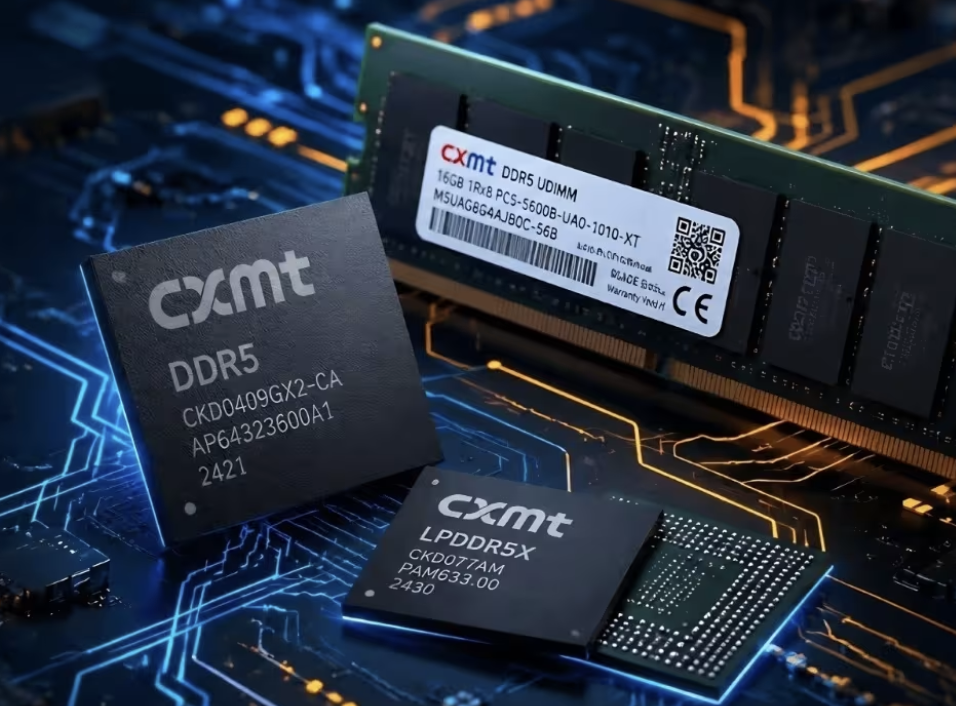
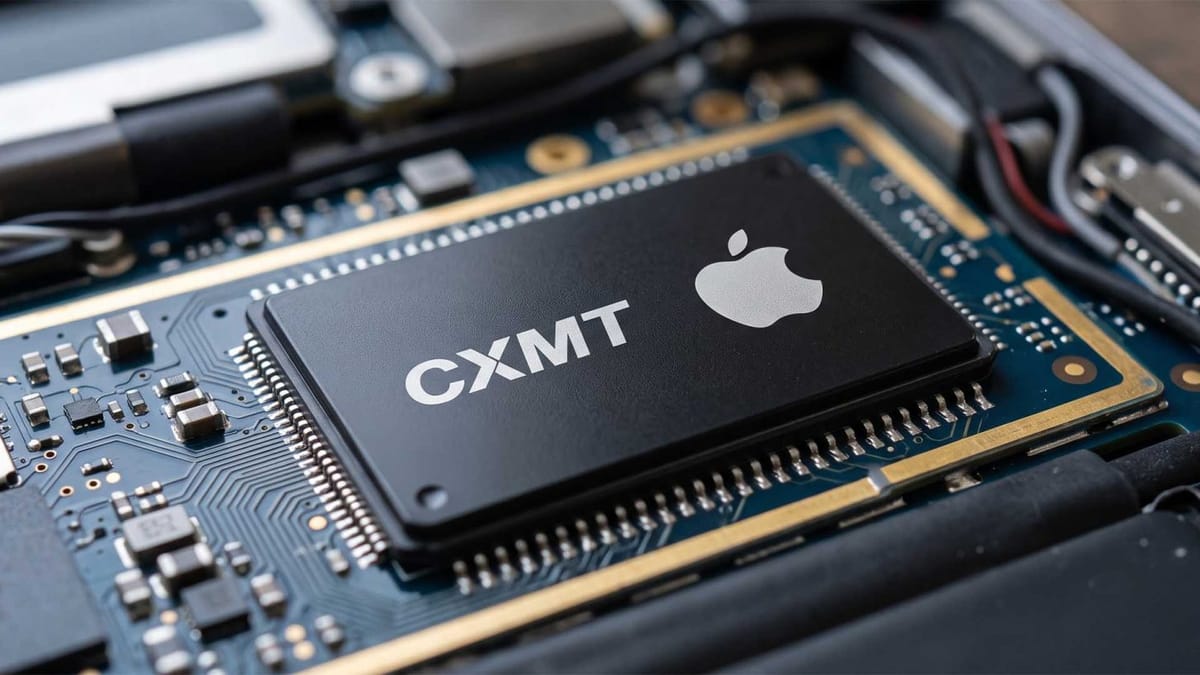
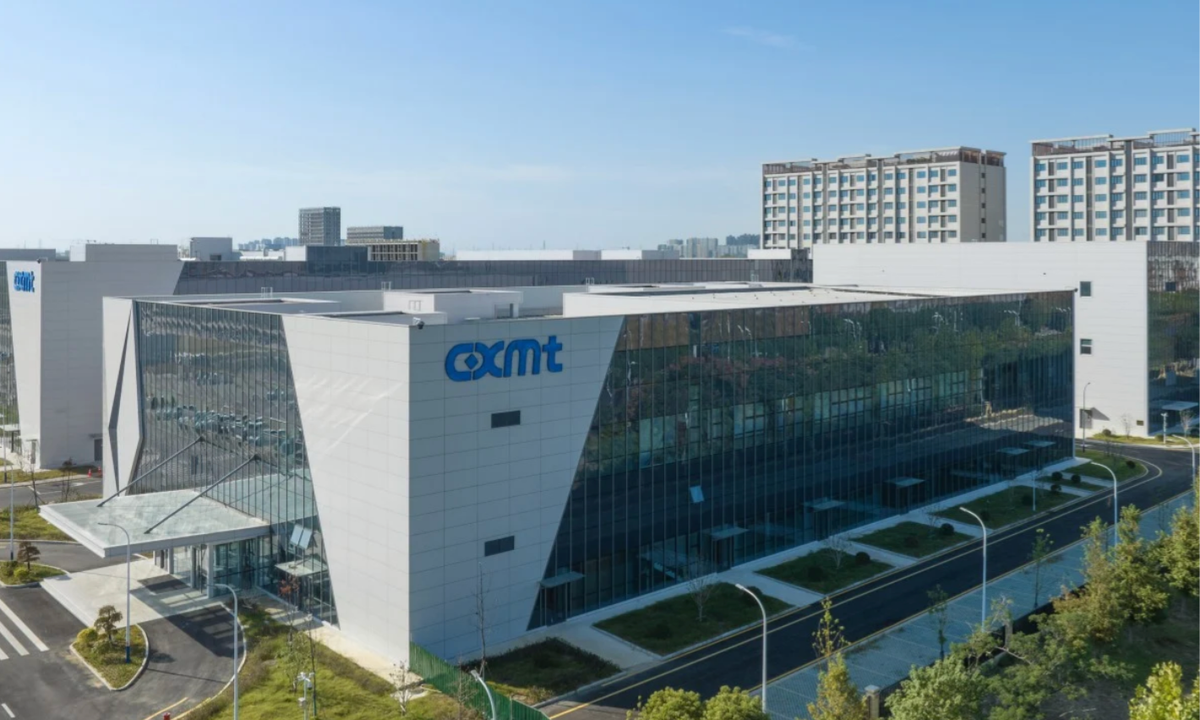
As PC OEMs and hardware companies look to Chinese memory manufacturer CXMT to secure supply, this alternate source is also reaching its capacity, according to industry sources familiar to this matter.
Do you think CXMT's DRAM will be used in devices sold outside of China?
YesResult
100.00%
NoResult
0.00%
2 Polls
EndedTBD
PC OEMs and hardware makers are booking Chinese memory maker CXMT's DRAM capacity into 2027 as demand from PCs, data centers, and AI outstrips supply; CXMT plans to reach 350,000 DRAM wafers/month by end-2026 but allocations are scarce for smaller vendors and U.S. policy has made CXMT usage contentious.
When it comes to the memory crisis facing the consumer technology market, whether that's laptops, desktop PCs, or even smartphones, it can be hard to understand the sheer scale of the unprecedented demand. According to analysts, current and near-term demand for DRAM and memory from the data center and AI industries actually eclipses all DRAM in circulation.
Do you think memory chips' prices will peak by the end of 2026 or not?
YesResult
0.00%
NoResult
100.00%
1 Polls
EndedTBD
This is one of the main reasons we're continuously hearing and reporting new data on how the situation is getting 'worse' and that there's currently no quick fix or solution on the table. Case in point, PC and hardware makers are looking to Chinese memory companies like CXMT for DDR5 and LPDDR5X memory. However, even here, PC OEMs like Dell, HP, Lenovo, and even Apple are having to secure large long-term DRAM supply at high prices.
Even as CXMT expands its DRAM wafer production to reach an impressive 350,000 per month by the end of 2026, which is right up there with companies like Micron, it's still not enough to meet the demand. Especially for smaller companies and vendors looking to secure memory. As reported by DigiTimes, there's virtually no CXMT allocation available for the smaller brands.
CXMT is reported to be listed on Shanghai Stock Exchange on July 27, 2026.
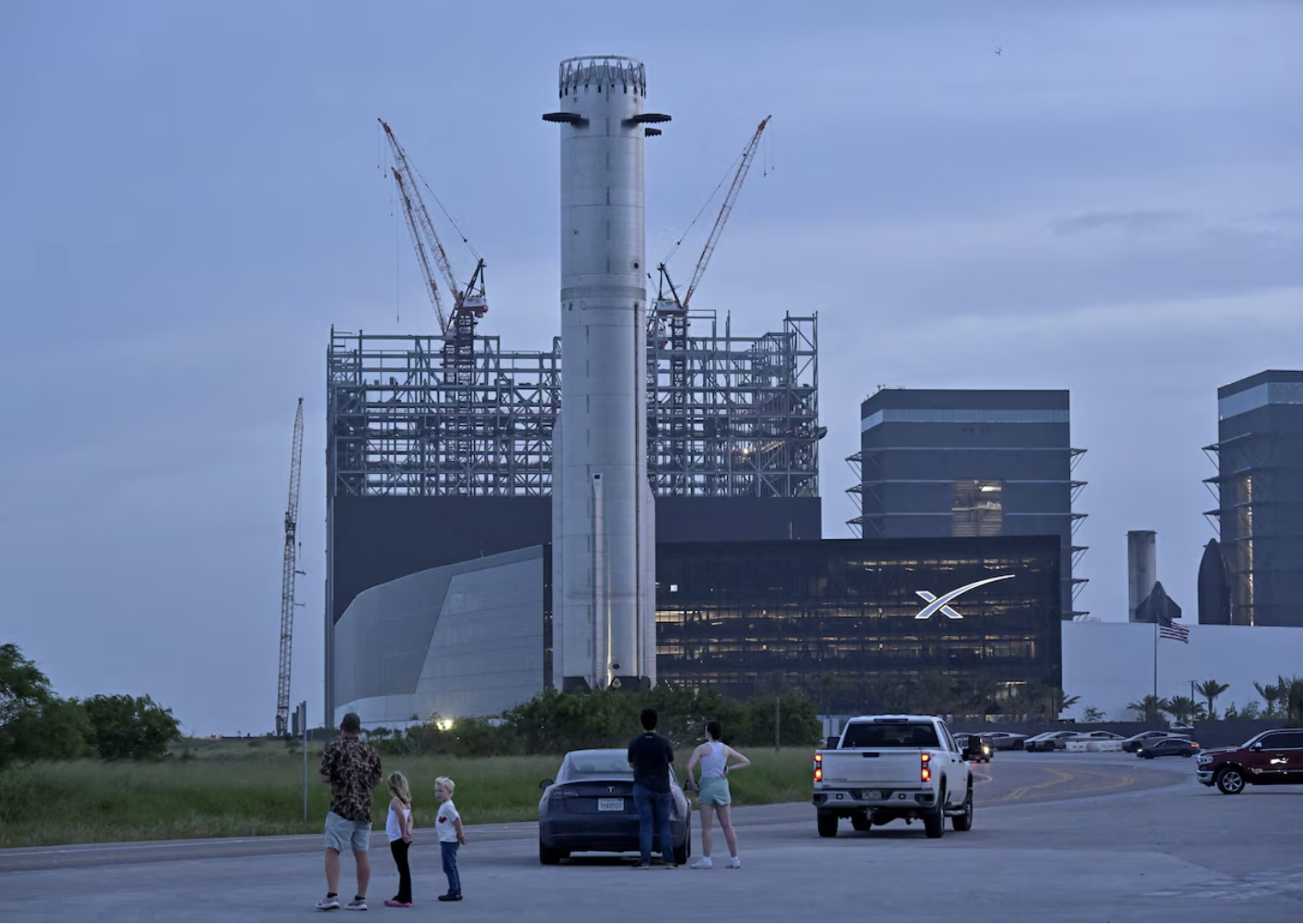
SpaceX is targeting Thursday, July 23, 2026, for another attempt to launch its Starship rocket, the company said in a statement on Sunday.
Will SpaceX first post-IPO Starship launch be delayed again (rescheduled to July 23, 2026)?
YesResult
65.92%
NoResult
34.08%
892 Polls
EndedTBD
SpaceX CEO Elon Musk initially posted on X that the next Starship launch would occur on Friday. He later replied to that post, saying, "I mean Thursday," aligning with the company's earlier statement.
On July 16, SpaceX's Starship rocket triggered a last-second abort before liftoff for its 13th flight test from Texas, which erased about $100 billion from the company's market value.
SpaceX said it has modified Starship's propulsion system to address the engine issue experienced on the previous flight.
A launch delay for the $15 billion rocket development program better known for dramatic engineering feats and explosive testing failures is not uncommon.
Last Friday, SpaceX said it would attempt the launch on July 20.The company has launched 12 Starship test flights since 2023.On its 13th flight test, Starship will carry 20 Starlink satellites to demonstrate its satellite-dispensing system and the Starlink network's laser communication links, but those satellites will follow the ship's suborbital trajectory and burn up in Earth's atmosphere soon after deployment.
In its prospectus, SpaceX said that it aims to launch the first Starlink satellites to orbit on Starship by year's end, followed by routine launches.
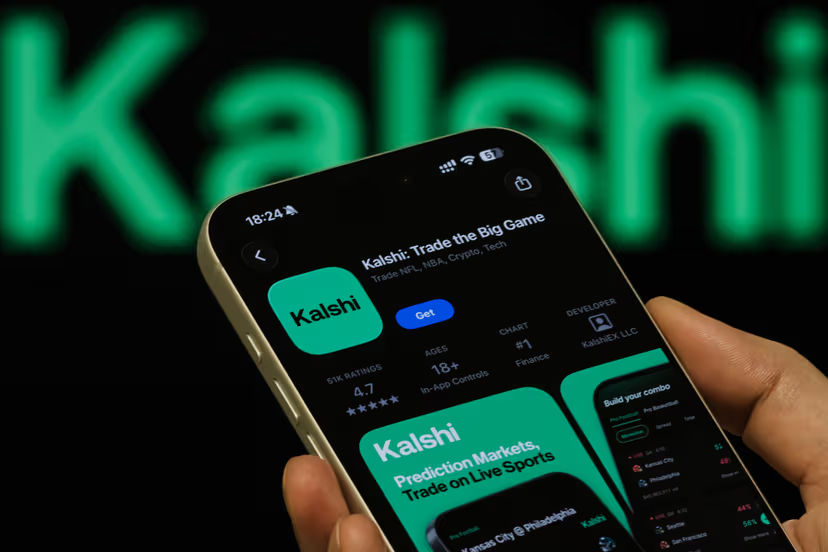
On July 14, 2026, KalshiEX submitted a self-certification for contracts asking whether the percentage of scheduled flights (passenger/cargo or both) at a specified airport would be above/below/between/exactly/at least a stated level during a stated period.
A self-certification permits a designated contract market to list without prior CFTC approval. However, a company spokesperson said the market was not live, and that Kalshi was still evaluating it and has opted not to go forward for now, while describing potential travel-risk hedging as the product's utility.
Contract Design Element
Filed Rule
Underlying
Canceled flights divided by a fixed count of scheduled flights, expressed as a percentage.
What Does Not Count
Delays, diversions, gate returns that ultimately depart, reinstated flights that operate, and flights added after the schedule snapshot.
Settlement Sources
FlightAware first. BTS On-Time Reporting only if FlightAware is unavailable or does not publish a usable figure for the period.
A flight cancellation contract is not new. An archived 2022 CFTC weekly notice lists Kalshi tickers for JFK, LAX, and ORD contracts based on daily counts of flights delayed or canceled. The 2026 filing changes the core metric to a cancellation rate, supports more flexible periods and flight categories, and adds much more detailed treatment of the denominator, excluded events, and restricted traders.
Meanwhile, a separate nationwide weekly cancellation-count market remained visible on Kalshi as I am writing this article.
Could the market granularity reach the single-flight level?
Theoretically, a similar contract could be written as "Will a specific flight segment operated by United Airlines, scheduled to depart from EWR to LAX on July 20, 2026 at 08:00 local time, be officially cancelled by the airline?" For a traveler, that is much more intuitive than an airport index. If 6% of flights at JFK are canceled but yours departs, an airport-level YES position may pay even though you suffered no loss. If your flight is the unlucky one in a 1% cancellation day, the market may not pay even though you need a hotel and a new ticket. In insurance language, the gap between the index and the user's actual loss is basis risk. In everyday language, the hedge can be right about the airport and wrong about you.
Would you use flight-level event contracts for hedging if they are available?
YesResult
48.60%
NoResult
51.40%
961 Polls
EndedTBD
But the compliance case gets harder as the hedge gets better. CFTC requires an exchange to list only contracts that are not readily susceptible to manipulation. However, a single flight concentrates decisive influence, which could raise concerns about manipulation and insider information. Maintenance controllers can ground a marginal aircraft. Dispatch and station operations can affect whether the marginal flight is canceled, consolidated, or recovered. Air traffic officials can impose restrictions. Many people in those groups may also learn the likely outcome before passengers do. None of this is inherently manipulative. It is simply a market structure with a high concentration of control and information. Kalshi's own airport-level restricted-person list shows that the exchange sees the issue.
Therefore, airport aggregation is probably why the contract has a plausible regulatory path in the first place. It spreads influence over many flights, and makes deliberate manipulation more costly and visible. Having that said, some social media users worried that malicious individuals might deliberately disrupt airport operations to profit from the resulting payout.
Why cancellation contracts are easier to defend than delay contracts?
Delay and cancellation both look objective on a departure board, but they create different market-design problems. A delay contract built around the scheduled departure/arrival time would turn minute 0 and minute 1 into economically different states, even though the travel experience barely changes. A cancellation is a coarser event and usually requires a more visible operational decision. In other words, cancellation is harder to nudge by a tiny amount or minor disruption than delay contracts.
Risk Dimension
Delay Contract
Cancellation Contract
Outcome Shape
Continuous minutes converted into a threshold result.
Discrete status, usually clearer once final.
Cliff Effect
High. One minute can flip settlement at the threshold.
Lower, as a one-minute difference usually does not change the outcome.
Safety Incentive on the Crew
A position may reward taking off before the benchmark time, or delaying it.
A NO position could still reward avoiding cancellation.
Malicious Interference
Brief disruption may be enough to affect a narrow threshold.
Generally requires greater disruption and visibility.
A single-flight contract vs. travel insurance
Individuals can potentially use event contracts for hedging. At the Bloomberg Market Structure Conference last month, Kalshi co-founder and CEO Tarek Mansour said that some residents of the Florida Keys were using prediction markets as an alternative to hurricane insurance.
In this case, a single-flight cancellation contract would compete most directly with one slice of travel insurance, but the products solve different problems. Travel insurance generally reimburses covered costs when a listed reason disrupts the trip. Coverage depends on the policy and the claimant may need to document the event and the expense.
Feature
Single-Flight Event Contract
Traditional Travel Insurance
Trigger
The specified flight is canceled under the contract's data rules.
A covered reason causes a covered loss under the policy.
Payout
Fixed $1 per winning contract, independent of the buyer's actual loss.
Reimbursement or benefit according to documented costs, limits, and policy terms.
Claims Friction
No receipt-based loss adjustment if settlement data is clean.
Often requires notice, proof of disruption, and expense documentation.
Tradability
Can be bought or sold before resolution, subject to liquidity and market rules.
Normally not tradable after purchase.
Main Basis Risk
The payout may be too small, too large, or unrelated to the buyer's actual costs.
The loss may arise from an exclusion or exceed a sublimit.
Advantages of a single flight cancellation event contract include:
No need to fill out a claim form or keep receipts
Flexibility to trade the contract before settlement
Prices may reflect real-time cancellation probabilities, providing informational value
Passengers can purchase any number of event contracts. However, it is still not comprehensive insurance because it does not automatically determine the payout based on the passenger's losses due to flight cancellation. Passengers need to decide in advance how many event contracts they want to purchase. The market is closer to a "tradable parameter product that pays a fixed amount upon event" than indemnity insurance.
On the other hand, the insurance industry already has similar products. For example, Swiss Re's On-time Guarantee automatically pays out after objective thresholds such as delays of 30 minutes, without requiring passengers to actively file a claim. Similar insurance products based on flight cancellation are likely.
Could airlines use Kalshi instead of parametric insurance?
The airline-scale version of the question runs into arithmetic. Delta said the July 2024 CrowdStrike outage caused about 7,000 cancellations over five days, an approximately $380 million direct revenue impact, $170 million in added non-fuel expense, and $50 million in fuel savings. On those disclosed lines, the net impact was roughly $500 million.
Kalshi's airport filing sets a $25,000 position-accountability level per strike and member. That is an accountability threshold rather than a bespoke corporate insurance limit, but the scale mismatch is still obvious.Parametric and non-damage business-interruption coverage is built for that matching exercise. In a Swiss Re case study, airline and airport coverage could trigger after a defined number of airport-closure days or when canceled flights reached a pre-agreed threshold, with details structured around the customer's needs and risk profile.
For corporate risk transfer, Kalshi is best understood as a supplemental index market. Parametric insurance and reinsurance remain better tools for large limits. The exchange can add price discovery and a tactical hedge. It may not replace an airline's risk program in its filed form.
On 19 July 2024, U.S. cybersecurity firm CrowdStrike released a defective update for its Falcon Sensor software, triggering widespread failures on Microsoft Windows devices. Around 8.5 million systems crashed and could not restart normally, making it one of the largest IT outages ever recorded. (Giuseppe Cacace/Getty Images)
The FlightAware data dispute
Kalshi's filing designates FlightAware as the primary source agency, with BTS as an alternate source only if FlightAware is unavailable or does not publish a usable figure for the period.
FlightAware's terms of use explicitly state that users may not copy, publish, distribute, or use the data for commercial purposes without an express license. General website access licenses are personal, limited, and revocable.
FlightAware does not participate in prediction markets.
No company is authorized or will be authorized to use FlightAware network data for this purpose.
Customers who violate the terms of service may have their accounts terminated.
However, Kalshi already cites FlightAware in its weekly nationwide flight cancellation contracts. Kalshi's spokesperson said that FlightAware's claim the company could not use its data was unfounded since the information is in the public domain, according to Fortune.
FlightAware is an aviation data company that provides real-time, historical, and predictive flight-tracking information to travelers, airlines, airports, and other industry users. (FlightAware)
The likely end state
For travelers: a well-defined single-flight contract could complement travel insurance with quick cash, but would require them to determine the number of contracts they need to buy.
For airlines and travel businesses: an airport rate can hedge a short disruption and provide a live signal, but cannot replace tailored parametric insurance or reinsurance.
For the wider travel economy: a liquid disruption price could help travel businesses gauge near-term operational stress, even if they never trade.
Given the current market rules and structure, Kalshi contracts are feasible as a personal hedging tool, but their practicality for enterprises is insufficient. Kalshi also needs to address the issue of using FlightAware data to avoid potential legal disputes.
Will FlightAware terminate Kalshi's use of its flight data?
YesResult
34.05%
NoResult
65.95%
608 Polls
EndedTBD
Disclaimer: The content is for informational purposes only. You should not construe any such information or other material as legal, tax, investment, financial, or other advice. Nothing contained in this article constitutes a solicitation, recommendation, endorsement, or offer by the author(s) or any third party service provider to buy or sell any securities or other financial instruments in your or in any other jurisdiction in which such solicitation or offer would be unlawful under the securities laws of such jurisdiction. The author(s) report(s) no conflict of interest.
After last week’s wipeout in chips and the broader selloff in technology stocks, pressure is building for the biggest spenders on artificial intelligence to justify their expenditures to beleaguered traders with increasingly itchy fingers hovering over their sell buttons.
The AI euphoria that drove the stock market to all-time highs just a month ago is clearly waning. Information technology was the worst performing group in the S&P 500 Index last week, which slid 1.6% while the tech-heavy Nasdaq 100 Index lost 4.1%. Chip stocks were the main culprit, with the Philadelphia Stock Exchange Semiconductor Index sinking 10% for its worst week since April 2025.
The losses extended to Asia, where Japanese memory chipmaker Kioxia fell 16 per cent on last Friday. The Nikkei 225 index declined 5 per cent. Markets in South Korea, which have faced the most volatility from the AI trade, were closed.
Will semiconductor stocks recover from their recent sell-off before the end of 2026?
YesResult
75.33%
NoResult
24.67%
843 Polls
EndedTBD
The tech sell-off is the latest sign of how investors are questioning the lofty valuations assigned to companies at the centre of the AI boom. It also shows how some traders have begun unwinding leveraged bets that are magnified by using substantial amounts of debt.
“The investor deleveraging phase that started in June appears to be still ongoing and we see more room for deleveraging in leveraged equity ETFs, options and margin accounts, thus acting as a headwind for equities going forward,” said Nikolaos Panigirtzoglou, a strategist at JPMorgan.
Investors with one eye on cheap Chinese alternatives to groups such as Anthropic and OpenAI are also growing increasingly nervous about when data centre spending by US tech groups will generate returns. Chinese AI start-up Moonshot late on Thursday released a large language model with capabilities approaching those of US AI labs.
Sentiment is bleaker among the megacaps.Alphabet shares fell 6.5% over the past two sessions as the company is reportedly months behind schedule on delivering Gemini 3.5 Pro, its most powerful flagship AI model. While the stock remains up 11% this year, it has fallen 14% from a May peak.
Microsoft is coming off of its worst month since 2000 and has lost 19% this year. Meta Platforms is down slightly in 2026 despite a July rebound amid optimism about efforts to potentially rent computing capacity. Amazon has climbed 7.1% for the year and Nvidia has gained 8.8%, both underperforming the Nasdaq 100.
Indeed, valuations for tech giants have come down across the board. The Bloomberg Magnificent 7 Index is priced at 24 times profits expected over the next 12 months, down from 33 in October and 29 to start the year. The Nasdaq 100 trades at 22 times.
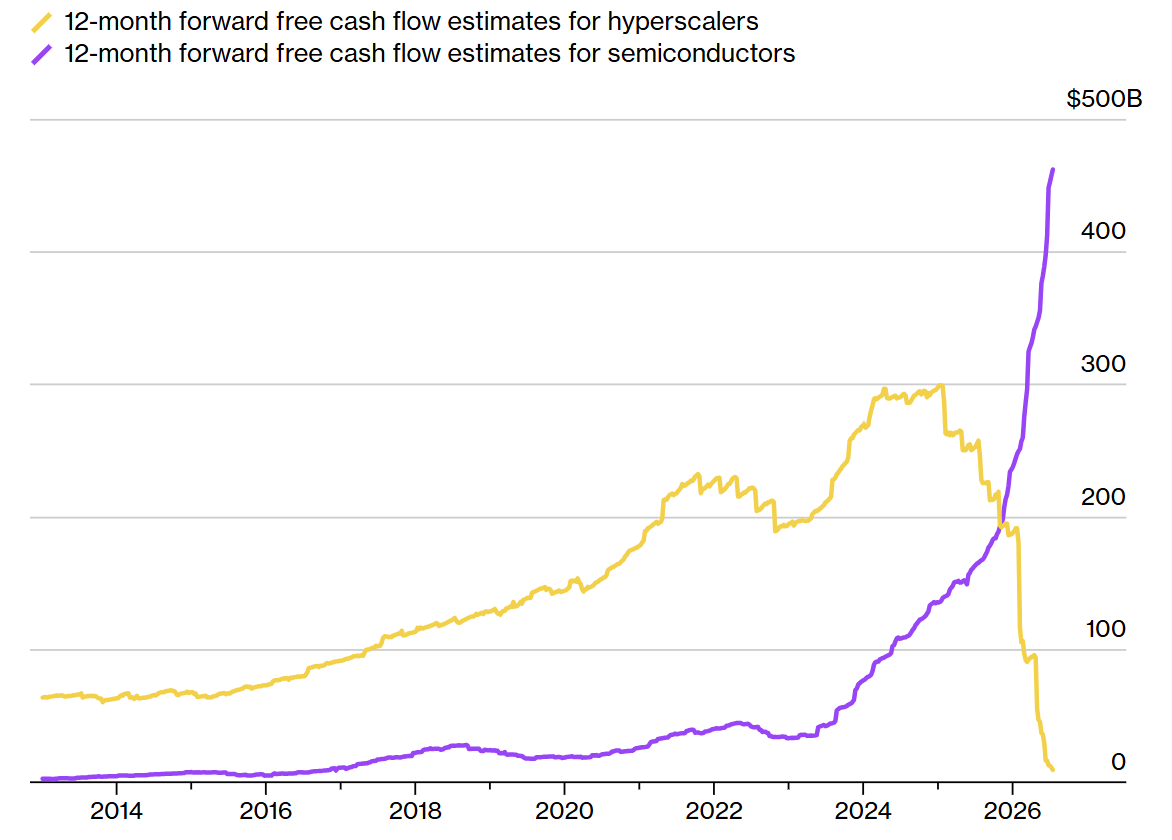
Hyperscalers: Amazon, Alphabet, Meta and Oracle. Semiconductors: Nvidia, Micron, Broadcom, Applied Materials. Source: Bloomberg
That has shifted the risk to other areas of the stock market that have seen massive run ups, like chipmakers, according to Ahlsten, whose firm has $45 billion in assets under management.
The Philadelphia semiconductor index, or SOX, has soared this year because much of the spending on AI infrastructure is flowing to its constituents. But it has tumbled 20% since hitting a record last month, reaching the technical threshold for a bear market, and volatility has soared. In the past four weeks, the index has seen moves of more than 2% in all but two sessions.
Even positive signals from earnings reports have failed to halt the SOX’s slide. Taiwan Semiconductor Manufacturing Co. and ASML Holding NV both raised revenue forecasts for the year. Meanwhile, results from International Business Machines Corp. showed that customers are prioritizing spending on servers and semiconductors over mainframes and software.
“I’d be more careful going into this period on account of these issues,” Ahlsten said. “Some of the stocks, especially on the infrastructure side, look a bit toppy, potentially. They’ve gotten a high multiple for accelerating growth that may not ultimately be as accelerated as some people were thinking.”
In a sign of how wary investors are of heavy spending on AI, Apple, which has avoided big capital expenditures in favor of partnering with model providers to power its AI services, is by far the best performer among the Magnificent Seven this year with a 23% gain.
Chinese AI start-up Moonshot has released a large language model with capabilities approaching those of frontier US labs such as Anthropic, as the gap narrows between the two countries on state-of-the-art AI.
The Beijing-based group released Kimi K3, China’s largest AI model to date with 2.8tn parameters, on Thursday. The number of parameters refers to the size of the model’s neural network, with a higher count generally leading to greater capabilities.
Anthropic has not disclosed its models’ parameters, but industry experts speculate its flagship Claude Opus 4.8 has 1.5tn-2tn parameters.
People with knowledge of its development said K3 would be freely available to download as a so-called open-weight model. K3 was beating Opus 4.8 and OpenAI’s GPT 5.5 in most coding and general AI agent benchmarks, according to results released by Moonshot. On most benchmarks it was still falling short of Fable, a powerful model that Anthropic briefly suspended after the US raised concerns over its hacking capabilities.
The launch of K3 could challenge the industry consensus that Chinese AI models are eight to 12 months behind US ones in terms of performance. Being open-weight would also pose a significant challenge to US labs such as Anthropic and OpenAI whose expensive frontier models remain closed.
While the latest models from the US continue to outperform Chinese tools at the most complex tasks, a growing cohort of US tech investors and executives has warned that the gap is narrowing.
Marc Andreessen, co-founder of US venture capital group Andreessen Horowitz, wrote last month that GLM-5.2, released by Chinese lab Z.ai, was “the first Chinese AI model to match and often beat the American big lab public AI models with no compromises”. Companies from Silicon Valley to Europe are also switching to cheaper Chinese models to reduce their rising bills for technology from US labs.
The US’s top model makers have poured hundreds of billions of dollars into building out infrastructure and developing the most advanced AI tools. They have begun to charge steeper fees for companies to access them this year. Anthropic will increase the price of Opus 4.8 by 50 per cent to $3 per million input tokens and $15 per million output tokens in September, according to its website.
Chinese labs such as Moonshot and DeepSeek, meanwhile, have released open-weight models that are cheaper to run and can be downloaded and modified by users. Moonshot’s K2.6 model, for instance, costs about a third of Anthropic’s Opus 4.8.
Do you think: Will Chinese AI models force OpenAI or Anthropic to cut prices?
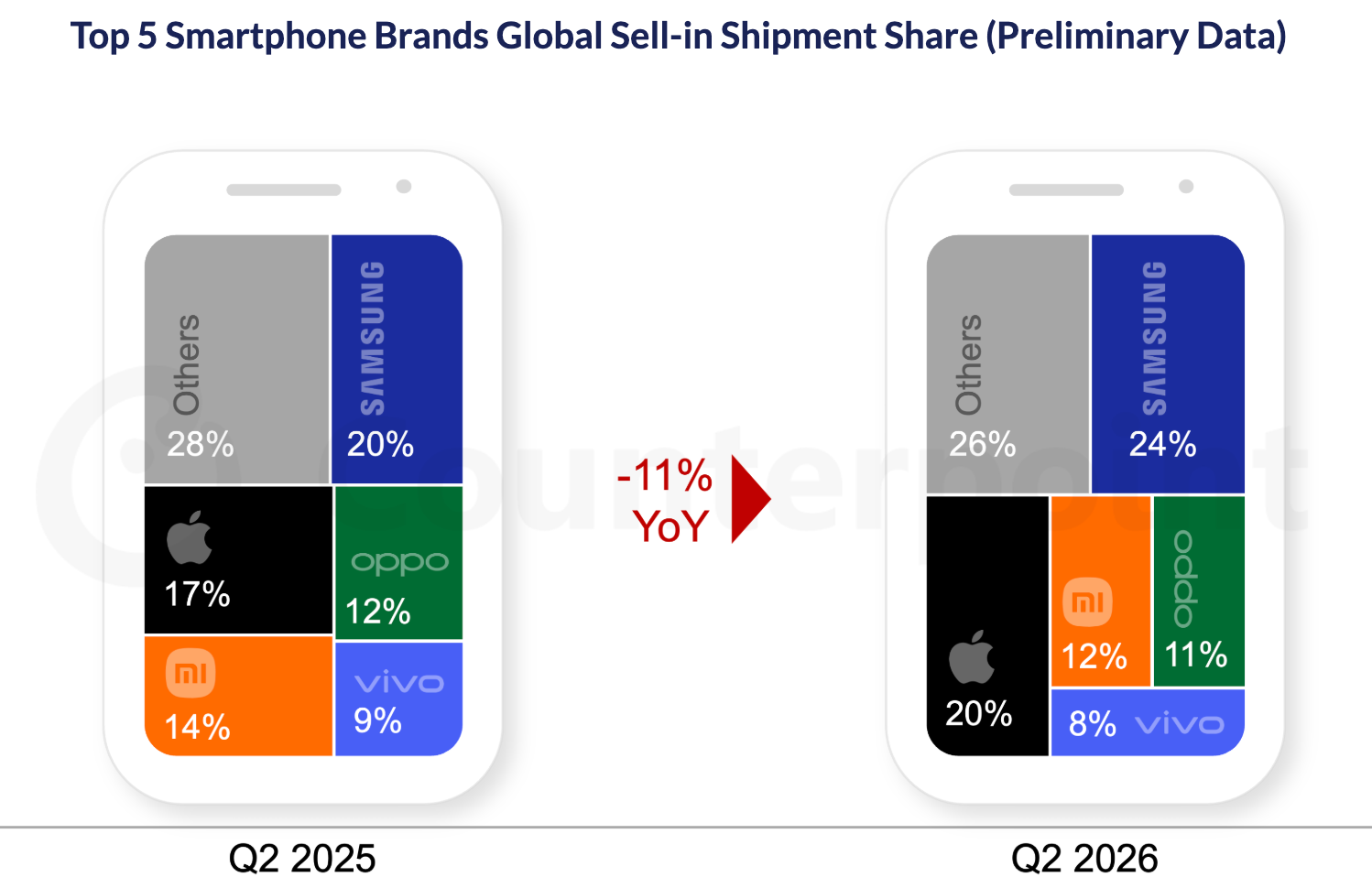
Global smartphone shipments fell 11% YoY in Q2 2026, reaching the lowest second-quarter level since 2013, as memory shortages pushed up component costs and handset prices, worsening already fragile consumer demand. SK Hynix CEO warns of an even worse crunch in 2027, and Micron’s latest quarterly revenue was more than four times its year-earlier level.
From here, being right about the shortage is not enough. The shortage has to keep getting better for suppliers, and worse for everyone else, faster than the market expects.
Peak acceleration does not mean the shortage is over. It means prices, earnings revisions, or stock gains may stop improving at the same pace.
But the peak question is harder than it looks. In fact, Samsung recently forecast a 19-fold increase in quarterly operating profit and still watched its stock fall 6.9%, as investors worried that the results were already priced in and AI infrastructure spending could slow.
My read is that the fundamental cycle still has room to run. The stock-market cycle is much further along.
Where do you think the memory-chip cycle is right now?
Still early in the boomResult
61.62%
Near peak acceleration, but not peak earningsResult
21.66%
Close to the fundamental peakResult
10.09%
Stocks have already peakedResult
6.63%
1,011 Polls
EndedTBD
So, is this the peak?
There are really three peaks to think about: the physical shortage, memory-company earnings and the stocks themselves. Supply can remain tight while earnings growth decelerates, and earnings can keep rising after the shares have pumped.
My take is that memory pricing probably has further to run. Earnings may, too. But the stock-market cycle has entered a much less forgiving phase because the boom is increasingly being driven by price rather than by companies shipping dramatically more chips.
AI has turned memory into the bottleneck
GPUs do the heavy lifting, but memory keeps those processors fed with data. Without enough bandwidth and capacity, a state-of-the-art accelerator becomes a very expensive piece of hardware waiting around for information. This makes high-bandwidth memory, or HBM, one of the key choke points in the AI supply chain.
AI inference, which is the everyday work of answering prompts, running agents and generating content, requires large amounts of memory to store context and keep data close to processors. TrendForce now expects the global memory market to exceed $1.28 trillion in 2027, up about 44% year over year, with DRAM and NAND also projected to keep expanding rapidly.
Additionally, HBM uses more manufacturing resources than ordinary DRAM. When suppliers dedicate more capacity to the high-margin AI market, less is left for PCs, smartphones and traditional servers. The AI boom is squeezing the rest of the memory aisle at the same time.
Because of this, the cycle may have more legs than a typical gadget upgrade. Suppliers are reportedly meeting only around 75% to 80% of current DRAM demand; fulfilment is expected to deteriorate further in 2027.
New fab ≠ new factory tomorrow
Micron expects first wafer output from its initial Idaho fab in mid-2027 and from the second in late 2028. Additional HBM packaging capacity in Singapore is expected to begin contributing meaningfully during the first half of 2027. The industry is responding, but dollars turn into cleanrooms long before cleanrooms turn into sellable bits.
There is, however, a less obvious supply threat: China. CXMT was already the world’s fourth-largest DRAM producer in 2025, with roughly 7.7% market share, and its first-quarter 2026 revenue rose 719% from a year earlier. That makes CXMT more of a conventional DRAM pressure valve than an immediate HBM-cycle breaker.
The shortage is starting to eat its own tail
A shortage is wonderful for suppliers until their customers start cutting purchases, downgrading products or delaying launches.
We are already seeing this in consumer hardware. Global smartphone shipments fell 11% in the second quarter, reaching their lowest second-quarter level since 2013, as higher memory costs pushed up handset prices and hurt demand. PC and smartphone buyers are reaching their affordability limits, while some server customers are switching from 96GB and 128GB memory modules toward cheaper 32GB and 64GB configurations.
Source: Counterpoint Research’s preliminary Market Monitor report (based on sell-in)
This is the bill coming due.
The market is beginning to ration memory through price. The weakest buyers get pushed out first, freeing supply for customers with deeper pockets. This can prolong the shortage, but it also narrows the growth engine.
Eventually, suppliers become more dependent on a relatively small group of hyperscalers continuing to spend at an extraordinary pace.
JPMorgan estimates memory could represent more than 70% of cloud providers’ AI capital spending next year. If AI services generate enough revenue to justify that bill, the boom keeps rolling. If monetization lags, memory orders will be one of the first places investors look for excess.
A second risk is efficiency: if inference software, model architecture or memory-pooling systems reduce memory intensity faster than expected, today’s shortage could ease without a major supply wave.
The stock cycle is less forgiving
The bigger near-term risk may simply be that the numbers are becoming impossible to beat. Samsung recently delivered eye-watering results and was still met with a selloff. This is often what late-stage momentum looks like: a company can report record revenue, record margins and a bullish outlook, and still disappoint if investors had penciled in something even better.
But the evidence says the fundamental peak is probably still ahead. Supply remains tight, AI is increasing memory intensity, contract prices are still rising and major new capacity will not arrive quickly.
Still, the upside from here is likely to be harder won.
The next leg depends less on proving that AI needs memory and more on proving that suppliers can keep raising prices without killing demand, that cloud spending can absorb the costs, and that margins can remain extraordinary while new capacity is built.
What is the biggest risk to the memory-chip rally?
AI spending slowsResult
26.24%
High prices destroy demandResult
51.97%
New supply arrives faster than expectedResult
16.30%
Expectations are simply too highResult
5.49%
583 Polls
EndedTBD
Sources
Counterpoint: Q2 2026 Global Smartphone Shipments Slump to Lowest Q2 Level in 13 Years as Memory Crisis Deepens
GuruFocus: Micron Revenue More Than Quadrupled. The Forecast Was Even Better