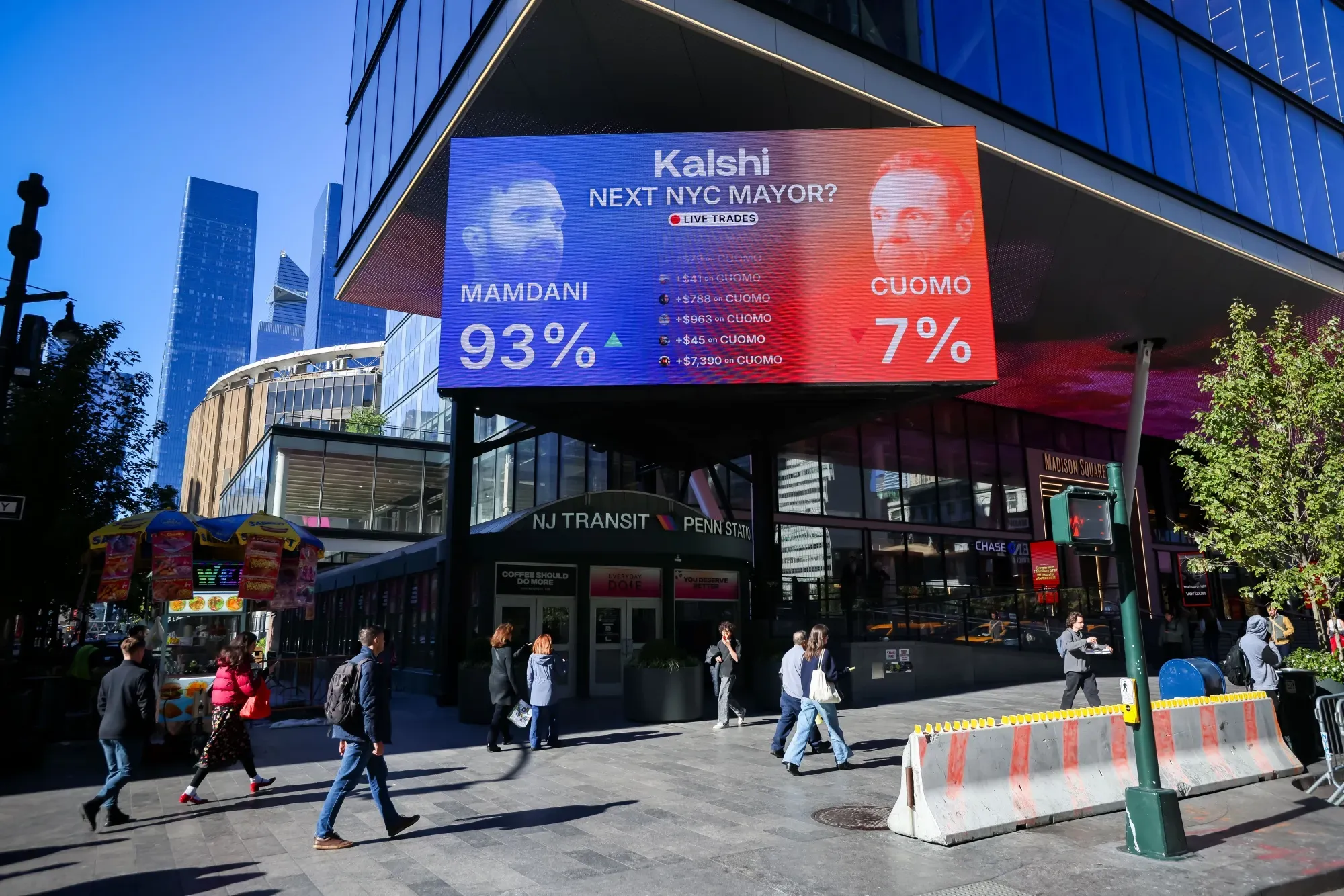
Prediction markets are pouring money into Washington to defend against escalating criticism that their fast-growing platforms are contributing to a gambling explosion and enabling insider trading.
Leading online platform Kalshi, alongside crypto and sports gambling companies that have launched their own prediction markets, are hiring teams of lobbyists as Congress eyes a crackdown on the multibillion-dollar industry.
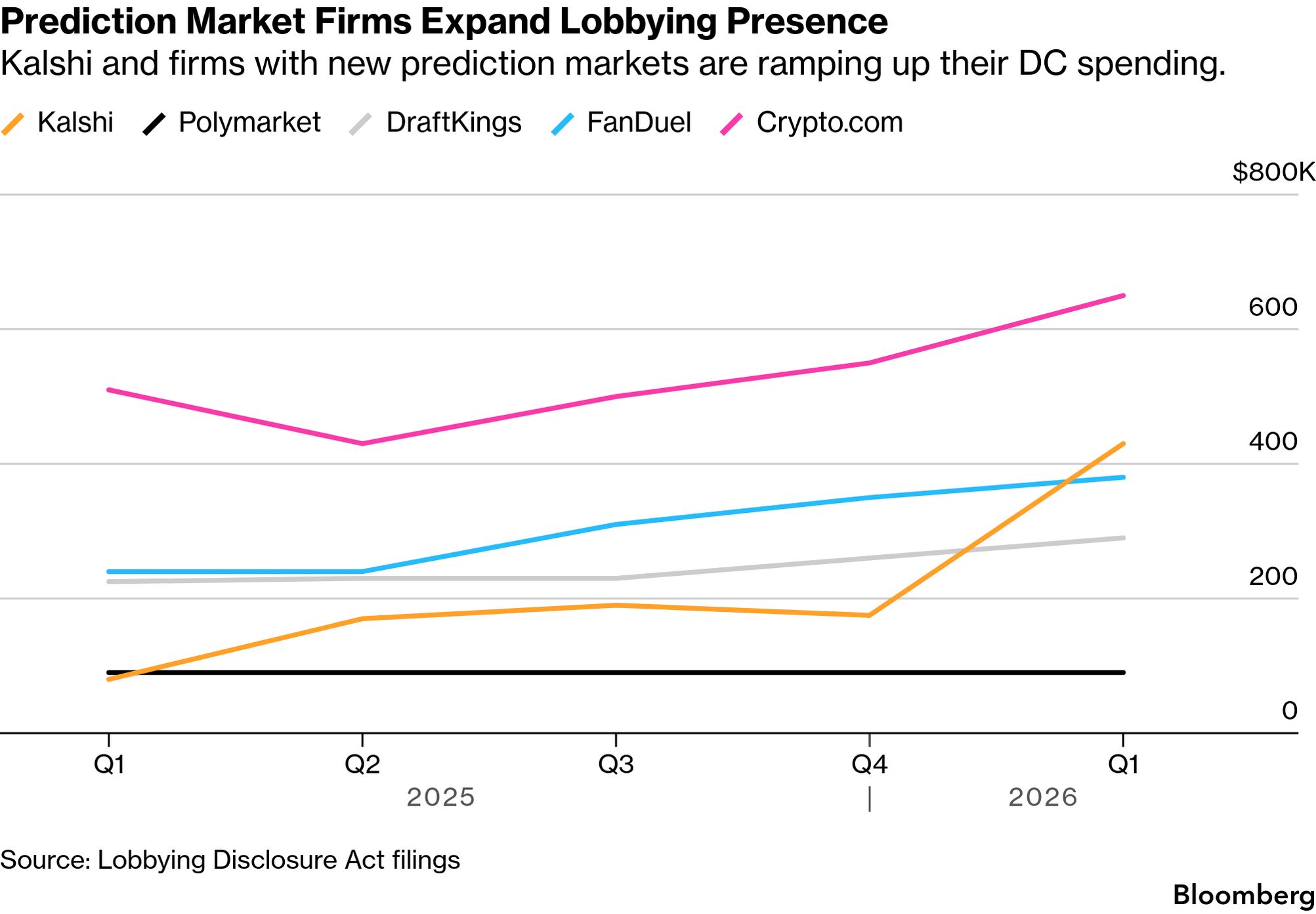
Together, the companies spent at least $1.84 million on lobbying during the first quarter of 2026. That’s a record amount, up more than 60% from the $1.1 million the industry spent during the same quarter last year.
Prediction Market Firms Expand Lobbying Presence
Source: Lobbying Disclosure Act filings
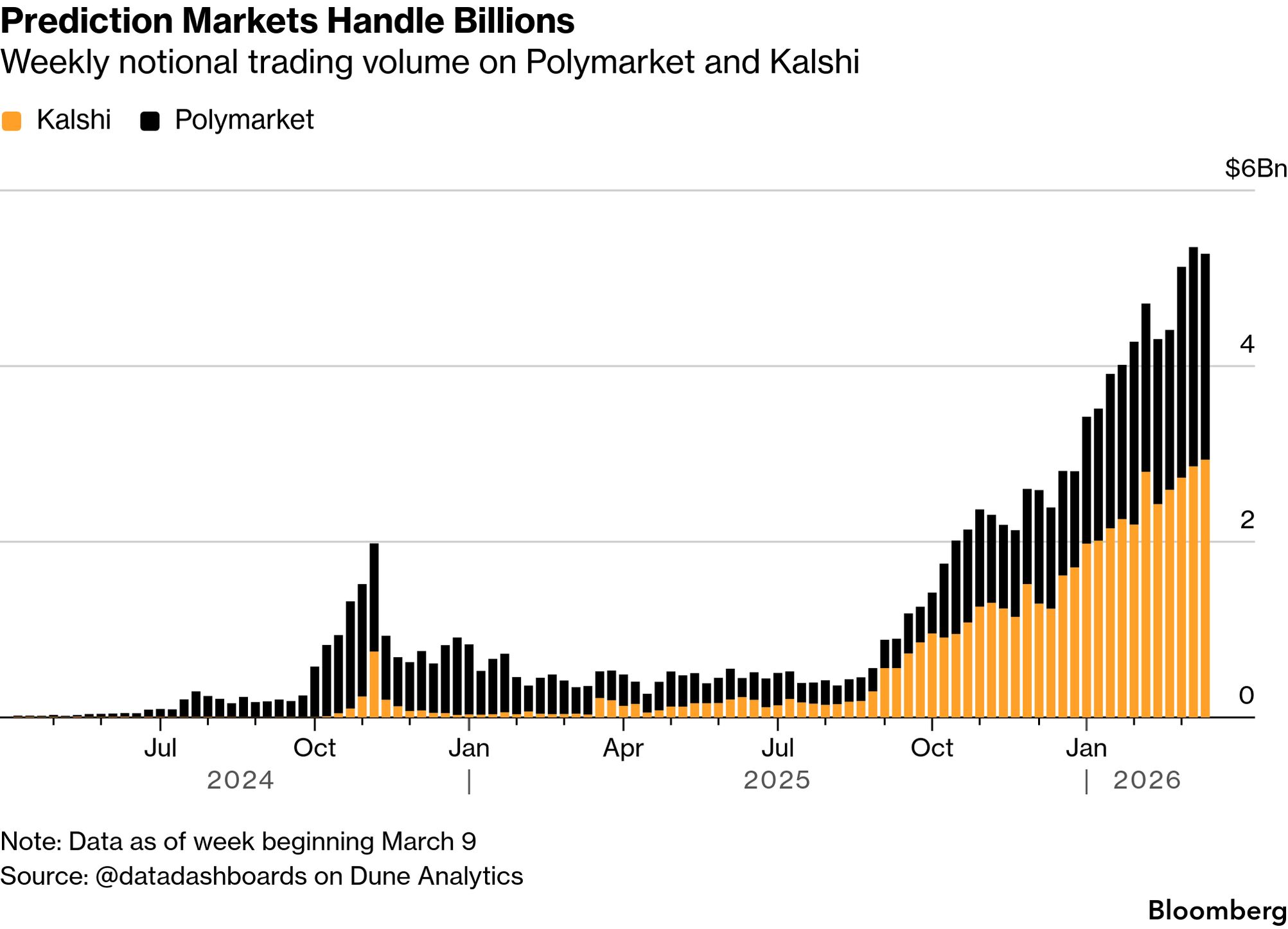
Prediction markets, which have exploded in popularity over the last year, are now handling billions of dollars in trades every week. By last December, the industry was generating $2 billion in annual revenue, an amount forecast to soar to $10 billion by 2030, according to analysts at Citizens Financial Group Inc.
And with that growth comes regulatory scrutiny.
“The policy landscape has rapidly evolved just in the last two or three months,” said Ronak D. Desai, a partner at Paul Hastings focused on investigations and white collar defense. “Prediction markets have moved from the periphery to the center of congressional scrutiny and scrutiny by other state officials.”
Lawmakers have introduced more than a dozen bills since the start of the year to regulate prediction markets, which allow online users to bet on issues ranging from geopolitical events to sports.
The impending legislative fight has prompted a lobbying bonanza, spanning Washington’s influence industry from traditional white-shoe lobbying firms to specialized MAGA shops wired within President Donald Trump’s administration.
Prediction Markets Handle Billions
Source: @datadashboards on Dune Analytics
Note: Data as of week beginning March 9
“Right now, prediction markets are the advocacy topic du-jour,” said Cody Carbone, chief executive officer of crypto lobbying group Digital Chamber, which entered the fray with a working group it set up at the request of member firms that have entered the market or are preparing to do so.
A growing number of Democratic lawmakers, and some Republicans allied with religious conservatives or representing casino-centric states, are pressing to subject prediction markets to the same regulations as gambling.
They’re joined by officials in some states, who are seeking to regulate prediction markets like casinos in their states. That would require the companies to apply for state licenses, and pay extensive state taxes.
Additionally, suspicions of insider trading have been fueled by reports anonymous traders have made hundreds of thousands of dollars placing bets on military actions such as the US attack on Iran and the abduction of former Venezuelan leader Nicolas Maduro.
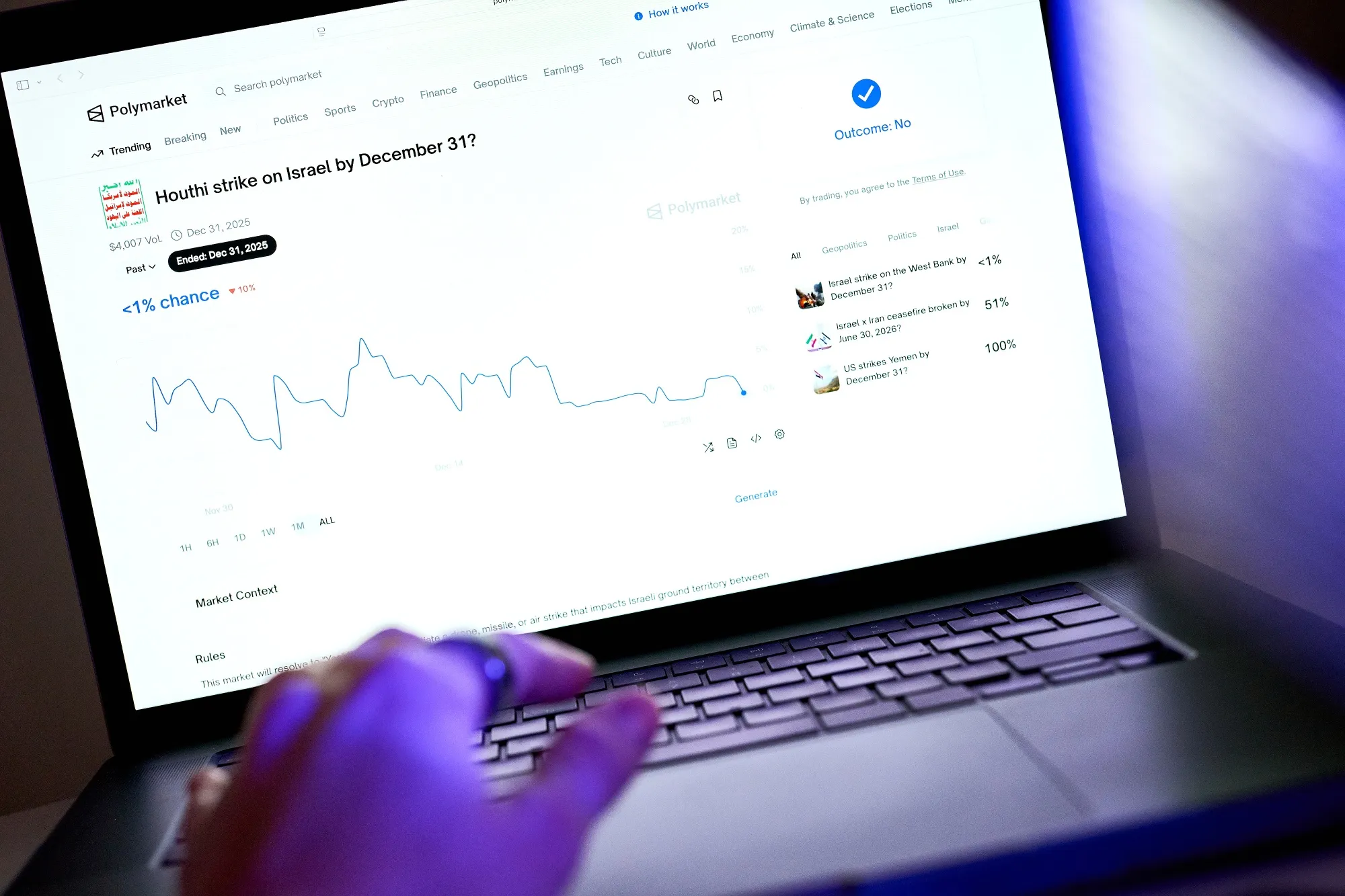
The Polymarket website hosts trading on whether Houthi militias would strike Israeli territory. Source: Bloomberg
The industry is fighting back hard. Executives at Kalshi and other prediction markets have argued they should remain under the jurisdiction of the light-touch Commodity Exchange Act rather than be forced to adhere to state-by-state gambling laws. Commodity Futures Trading Commission Chairman Michael Selig has joined firms in fighting state regulatory efforts.
Kalshi, which dominates the predictions market in the US, is leading the pack on lobbying for the industry. The company has registered two new lobbying firms since the beginning of the year: Resolution Public Affairs, which has close ties to Senate Minority Leader Chuck Schumer, and Squire Patton Boggs, a global lobbying powerhouse.
The company in 2024 hired Lincoln Policy Group, which is led by former Arkansas Democratic Senator Blanche Lincoln, who helped write the commodities law that Kalshi argues regulates its practices.
Other Kalshi lobbyists include Republican fundraiser Jeff Miller and former Democratic aide Jed Bhuta.
Seeking to expand its influence with Democrats, Kalshi in early April also hired veteran political consultant Stephanie Cutter, a former adviser to President Barack Obama.
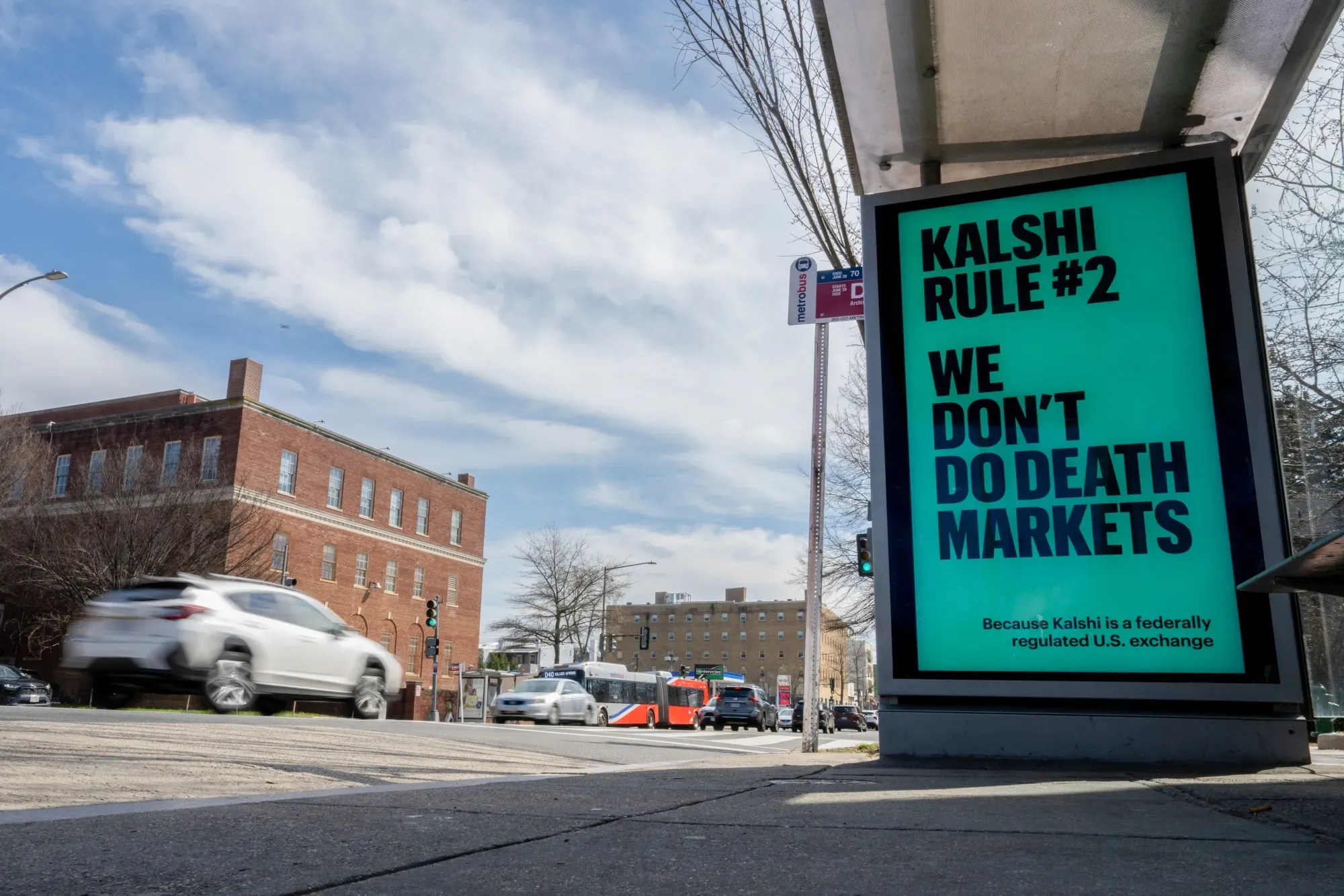
The company launched its first Washington-focused public relations campaign last month with bright green ads plastered all over the city. “We Don’t Do Death Markets,” read one, seeking to distinguish Kalshi’s platform from competitors that allow betting on deaths.
Polymarket’s disclosed lobbying operation is paltry in comparison to Kalshi’s. With few staff in Washington, Polymarket does not report having any in-house lobbyists. Only two registered lobbyist disclose working on its behalf — former Trump adviser David Urban and former CFTC senior policy adviser Keaghan Ames. Polymarket did not respond to requests for comment about its Washington presence.
But both companies have one key ally in common: presidential son Donald Trump Jr., who has invested in Polymarket through his venture capital firm and is a strategic adviser for Kalshi.
DraftKings and FanDuel, sports gambling companies that launched their own prediction market platforms last December, have also ramped up lobbying operations. FanDuel spent $380,000 on lobbying so far this year, up about 58% from the first quarter of last year. The company registered its own in-house lobbyists for the first time in January of this year, including a former aide to House Majority Leader Steve Scalise and a former lobbyist for the National Football League.
DraftKings during the first quarter of this year spent $290,000, up 29% from the same period last year. Signaling an increased interest in prediction markets issues, DraftKings last month hired lobbyists that specialize in the CFTC, including former CFTC Chairman Jim Newsome.
Prediction markets are also confronting an adversary with its own powerful and well-established Washington lobby: the casino industry.
Casino owners consider the exchanges direct competition and argue they should be subject to gambling rules and taxes across the country.
The fight is on in Congress. Democratic and Republican lawmakers are assembling evidence and making preparations for investigations into potential insider trading on the platforms, according to two people familiar with their plans.
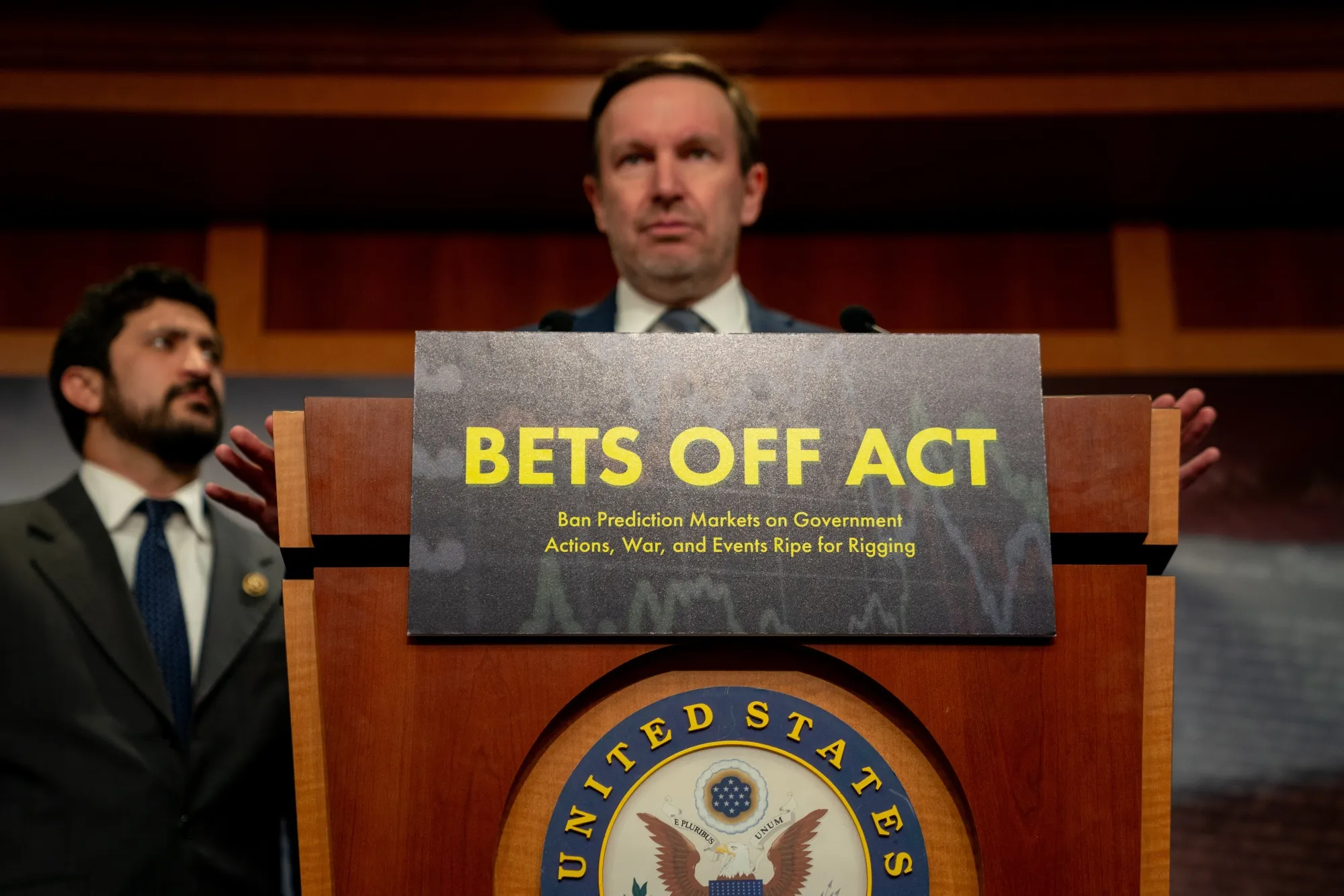
“Bets Off Act” signage as Representative Greg Casar and Senator Chris Murphy speak during a news conference on the Banning Event Trading on Sensitive Operations and Federal Functions (BETS OFF) Act. Source: Bloomberg
“It’s a safe bet that resources in both chambers are currently being expended for possible investigations into this, especially with relation to issues like the Iran war,” said Desai, the white-collar defense attorney.
Yet former Democratic Representative Sean Patrick Maloney — who is co-leading a prediction markets lobbying coalition that includes Kalshi, Crypto.com, Coinbase, Robinhood and Underdog — argues that lawmakers should recognize many of their constituents are already enthusiastic customers.
“Sometimes, Washington is the last place that people join the conversation,” Maloney said.
This is the third and final article in my Hormuz Strait March 2026 Analysis Series.
In the series, I break down the wider architecture of vulnerability behind Hormuz, trace the real transmission channels from Gulf disruption into the global economy, explain how different prediction markets are pricing different slices of the same crisis, and test whether these contracts have genuine economic value as hedging instruments.
💡 Sign up to Receive Future Updates and Articles if You Haven’t Done So.
Sign up for Prediction Markets
Your complete guide to prediction markets: how they work, where to trade, why they matter, and current updates.
Click on the Bookmark to read Article 2 of the Series
This piece asks a simple question: do Hormuz event contracts actually work as hedges? I test them against real commodity-linked exposures and compare where they help, where they fail, and why.
The answer is more conditional than it first appears. Some contracts do contain real hedging value. But they are also highly volatile instruments, and the contracts that look best on paper do not always protect the portfolio when stress actually hits.
Setup
The aim of this article is to assess the effectiveness of using Hormuz-related event contracts to hedge against conventional commodity exposure (i.e. usual business exposure) from the perspective of different economic agents, namely: an Asian airline operator, a crude oil exporter in the gulf, and a European oil trading company.
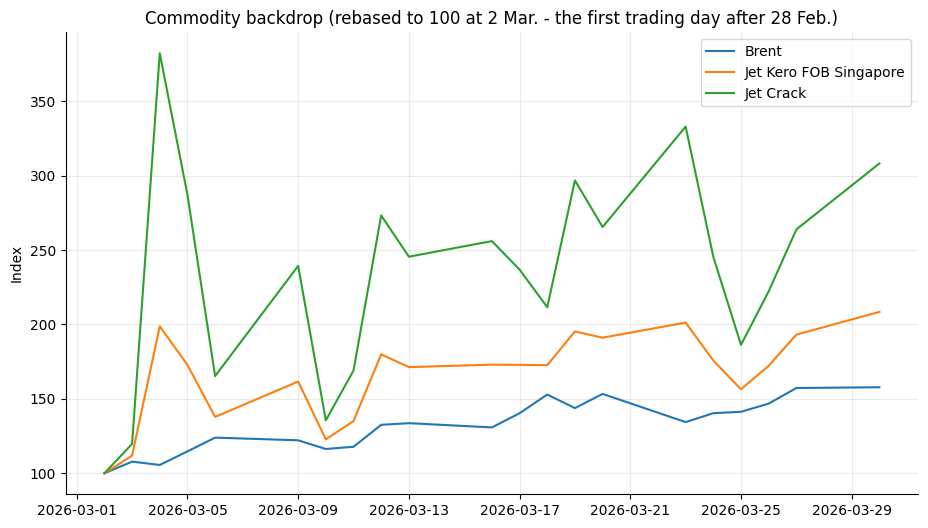
Jet crack = Jet Kerosene Spot Price - Brent Spot Price, which reflects the refining premium of jet fuel.
In practical terms, this exercise compares an unhedged commodity-only position with a two-leg portfolio that adds the event contract. Daily P&L is measured using changes in the commodity price and changes in the event-contract price (which approximates the probability of the event happening).
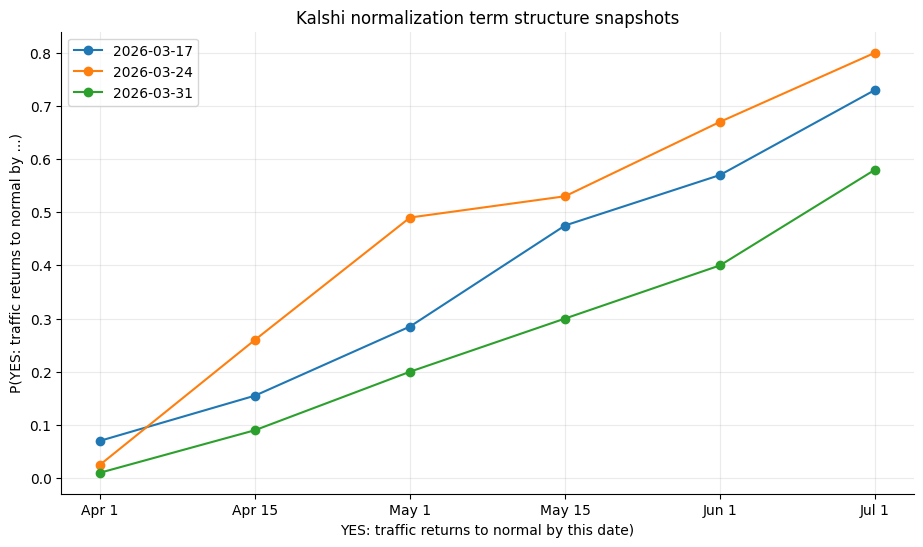
The market prices indicate lower probabilities of Hormuz Strait normalization at the end of March.
Estimating hedge ratio
In the two-leg portfolios, the event contract notional is multiplied by a factor (i.e. the hedge ratio), so that the event leg is large enough to matter in the portfolio to provide a hedging effect.
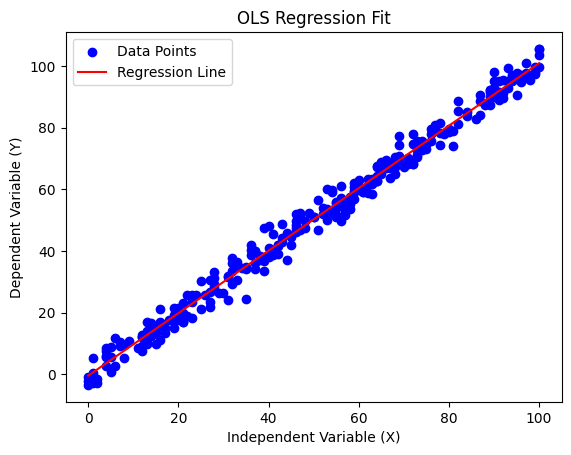
The OLS method is used. It estimates the hedge ratio by regressing daily commodity-leg P&L changes on daily event-contract price changes, then uses the fitted coefficient to size the event leg. This is closer to a standard minimum-variance hedge and usually gives more stable, easier-to-interpret results.
The aim of an OLS estimation is to find the line-of-best-fit based on available scatter points.
Portfolio demo using Kalshi's strait normalization contract
Asian airline operator
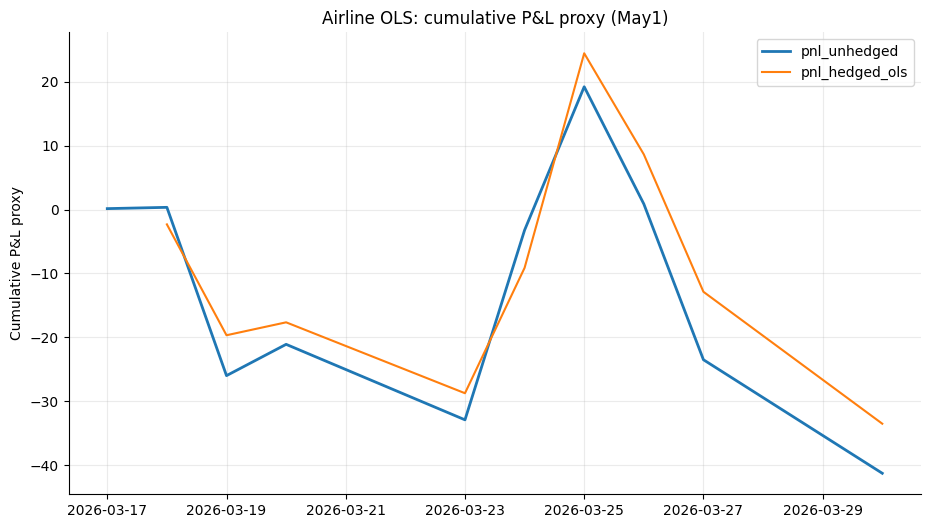
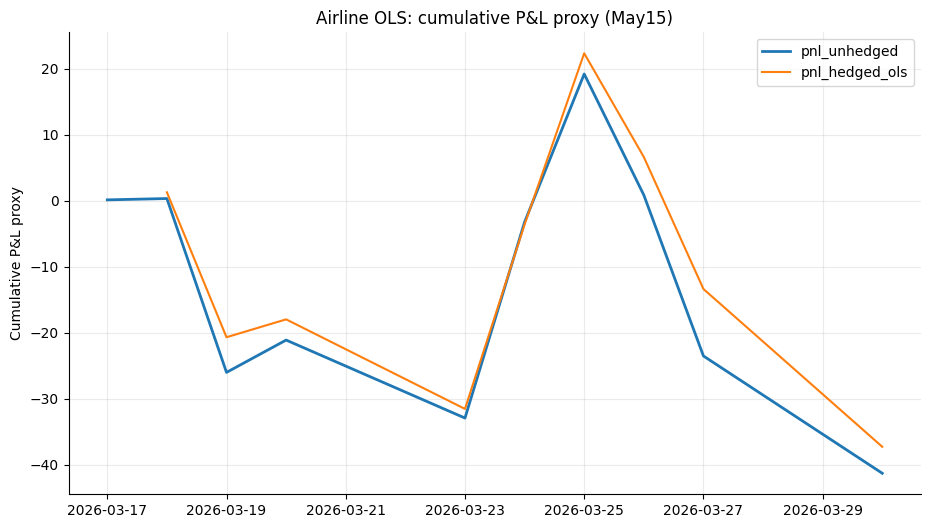
The airline portfolio is defined as short Jet Kero plus long NO on strait normalization.
The economic intuition is straightforward: if Hormuz disruption persists, prompt aviation fuel stress should remain elevated, hurting the fuel consumer but helping a position that benefits from delayed normalization.
For short Jet + long NO on normalization, the 15 May tenor reduces volatility only marginally, from 19.15 to 18.26, but it does improve the worst day from -26.35 to -23.96. That is a meaningful tail improvement, even if the overall variance reduction is modest. In contrast, the 1 May tenor increases both portfolio volatility and worst day loss.
The implication is that the airline case does not support the idea of event contracts as a full daily hedge for jet exposure. At best, the normalization contract works as a small persistence overlay or tail-risk buffer.
This fits the economics. Airline fuel costs are driven not only by the existence of disruption, but also by refinery margins, regional product balances, and aviation-specific supply conditions. A normalization contract is therefore directionally relevant, but it is not tightly enough linked to prompt jet fuel pricing to serve as a strong day-to-day hedge.
Crude oil exporter in the gulf
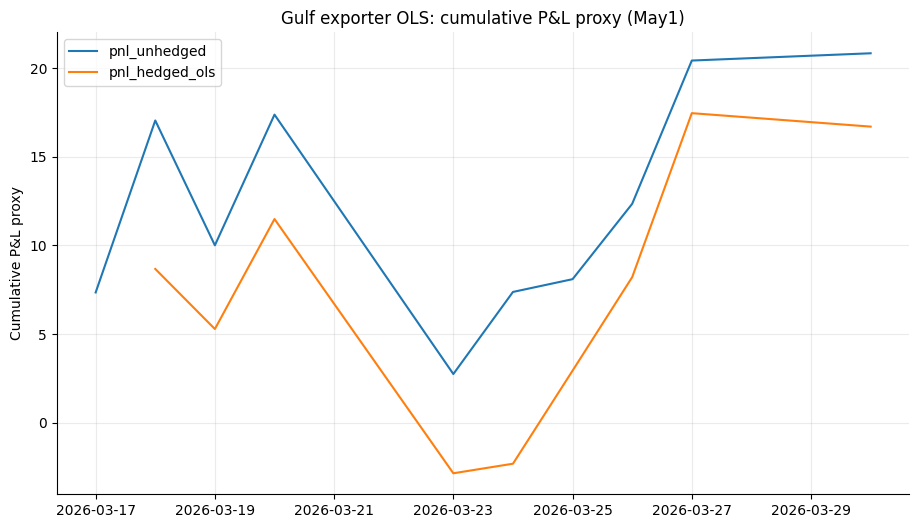
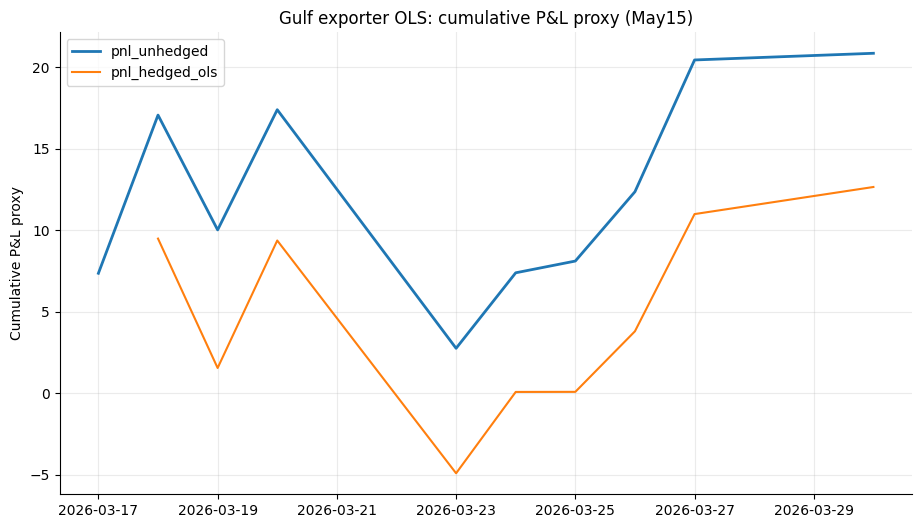
The Gulf exporter portfolio is defined as long Brent plus long YES on strait normalization.
This is not a conventional hedge in the usual sense. Instead, it is a stylized way of mapping the exporter’s two opposing exposures: a Gulf disruption can support crude prices, which is helpful, but it can also impair physical export access, which is harmful. The event leg is therefore meant to capture the route-access side of the business.
For Brent-linked portfolios, normalization contracts do show some hedge content. In the 1 May OLS results, long-Brent portfolios reduce volatility from 7.27 to 7.00, but the improvement in worst-day loss is very small, from -14.63 to -14.34. The 15 May tenor does better on the worst day, limiting the loss to -14.27. But it also increases the portfolio variance from 7.27 to 7.40.
The result is therefore best read as conceptually useful but quantitatively modest. The business logic is strong: Brent and normalization do map onto the two sides of the exporter’s exposure. But the event contract is not powerful enough, in this short sample, to generate a dramatic hedge improvement. It works better as a way to decompose the exporter’s risk into price and access, rather than as a stand-alone risk-reduction tool.
European oil trading company
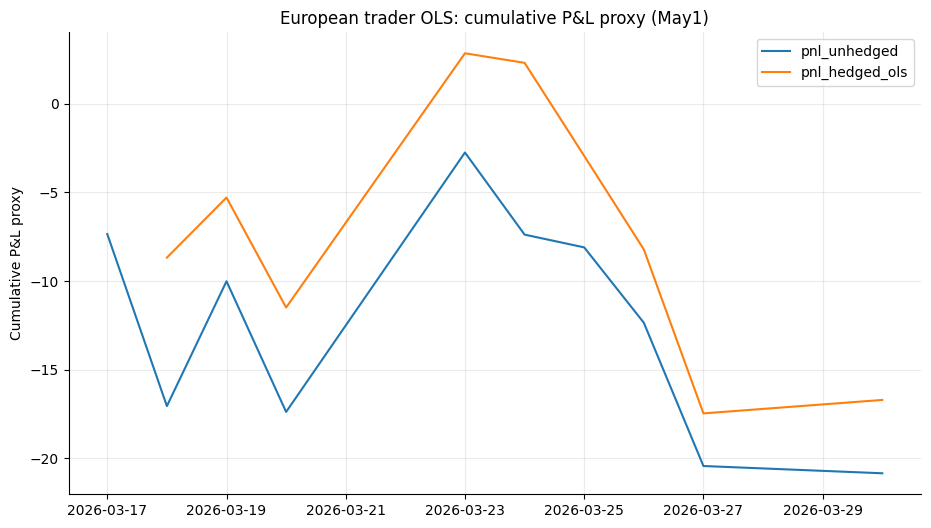
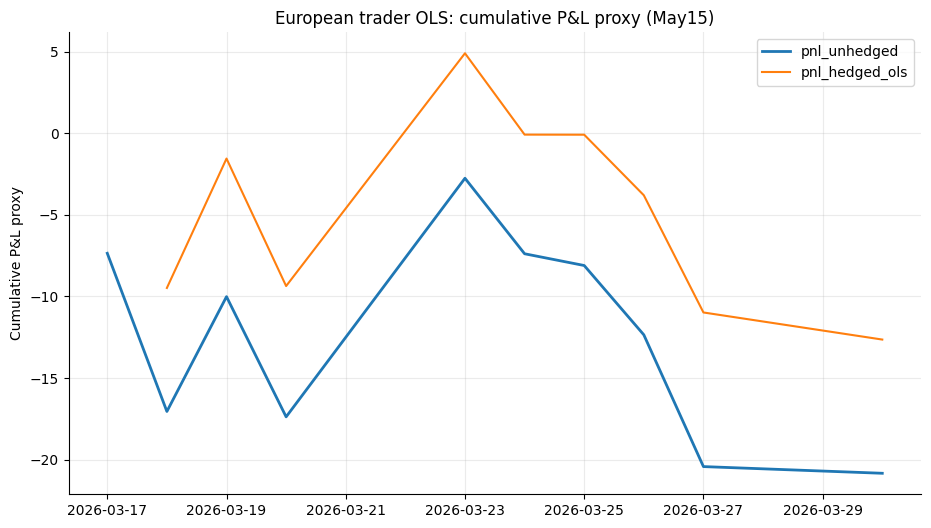
The European crude trading company is defined as short Brent plus long NO on strait normalization.
This is the cleanest case economically. A trader exposed to higher crude replacement costs suffers when disruption persists and crude prices rise. The portfolio therefore combines a commodity leg that loses when Brent rises with an event leg that gains when normalization is delayed.
The results show that this portfolio is actually the most convincing of the three.
The 1 May tenor reduces volatility from 7.27 to 7.00, and the worst day improves from -9.70 to -9.25. The improvement is not large, but it is consistent across both volatility and tail loss. This is the cleanest example of a normalization contract acting like a real hedge rather than just a directional overlay. However, the 15 May tenor increases the portfolio variance from 7.27 to 7.40, but the worst day loss reduces from -9.70 to -9.48.
Limitations
The commodity legs are only proxies for real business exposure. Platts Jet Kero FOB Singapore Price is used to represent airline fuel risk exposure, and Europe Spot Brent Price (data from U.S. EIA) is used to represent crude-linked exporter and trader risk. In practice, each business would face a much more complex exposure set.
The sample window is short and event-specific. The portfolio tests are concentrated in a narrow March 2026 window, which means the estimated relationships are heavily shaped by one crisis regime. This is especially important for the OLS results, since the fitted hedge ratios reflect co-movement within this particular episode instead of a stable long-run relationship.
From curious to confident. Join the sharpest forecasters online, get top contracts, platform updates & market signals - free.
The section above uses the data for the event 'When will traffic at the Strait of Hormuz return to normal?' on Kalshi for illustration. To see how the portfolios perform when the commodity leg is combined with other Hormuz-related contracts on Kalshi, I conducted more analysis and summarized the metrics in the Excel file below.
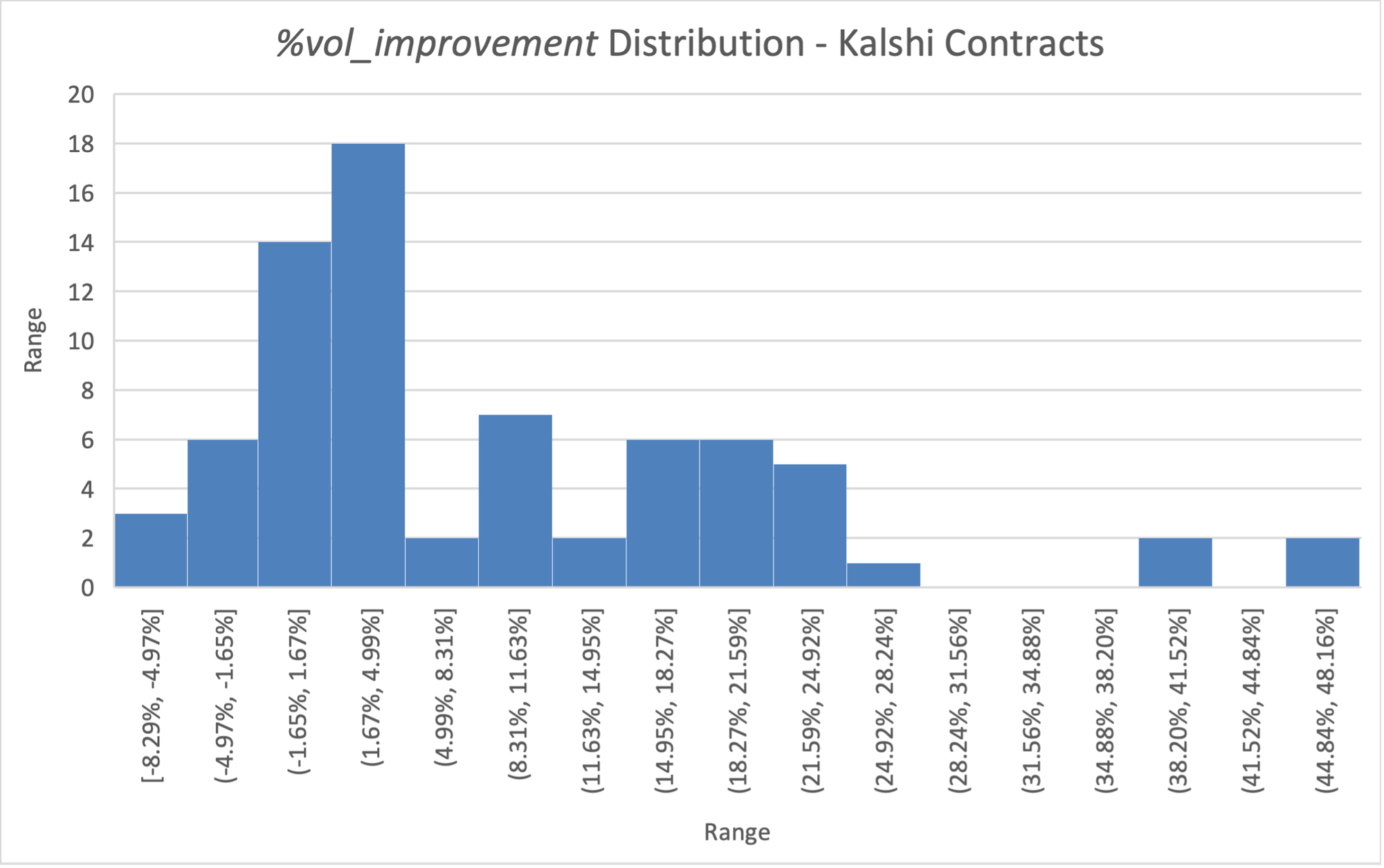
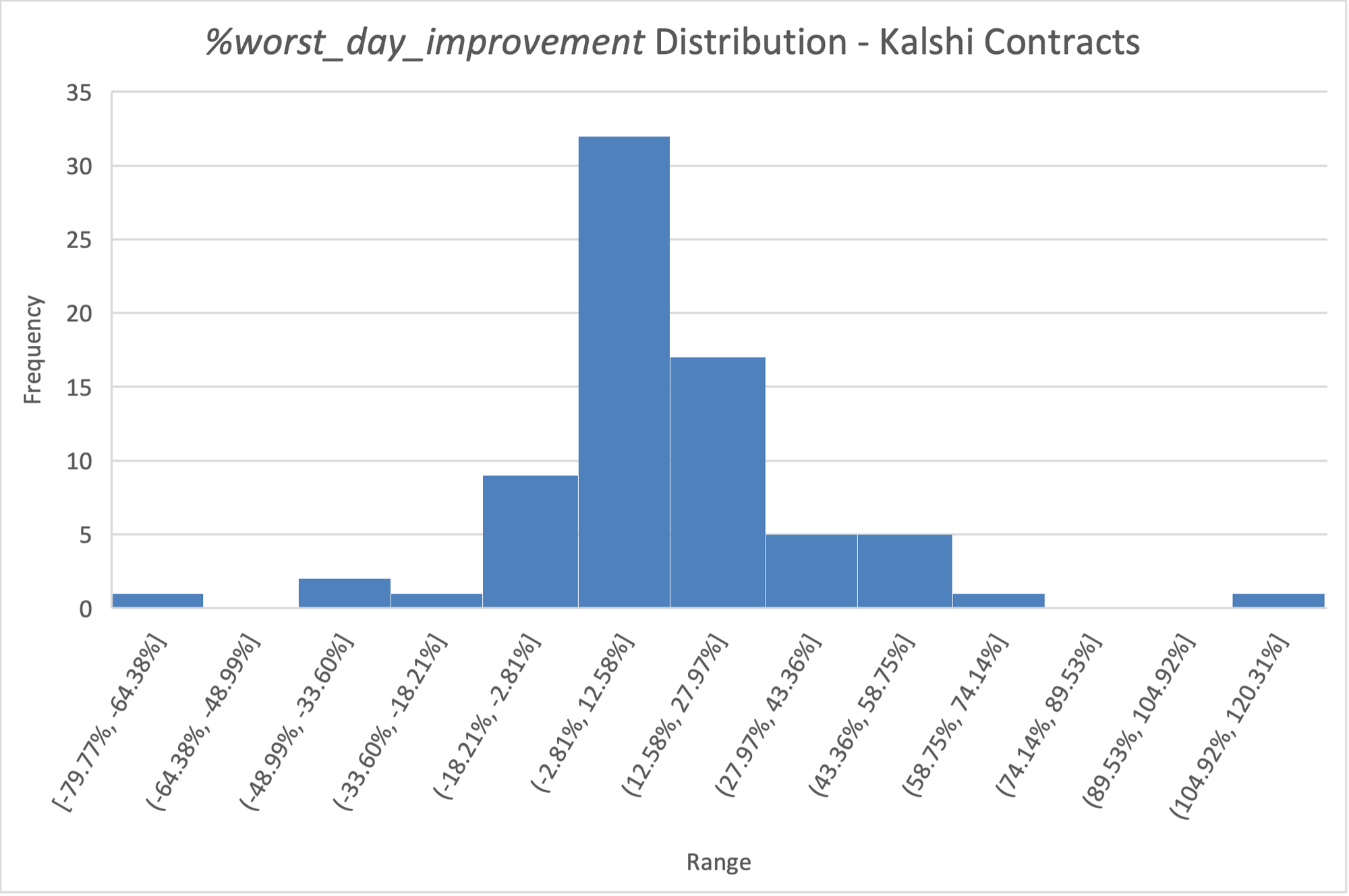
Across all 74 combinations, 62 reduces the overall portfolio volatility. On the other hand, 45 improves the worst-day performance, while 18 worsens the worst-day loss and the remaining 11 has the same worst-day performance.
The comparison shows three main patterns.
First, not all event contracts hedge equally well. The strongest headline improvements in volatility often come from traffic-based contracts, but many of these results are based on very short effective samples of only 6 observations as many contracts are weekly contracts, and some of the best-looking volatility reductions are paired with worse worst-day outcomes. That means some contracts look attractive on variance alone but do not actually protect the portfolio on the most adverse days.
Strait normalization contracts
Average of n_obs
9.67
Average of %vol_improvement
2.01%
Average of %worst_day_improvement
2.54%
Strait traffic contracts
Average of n_obs
7.88
Average of %vol_improvement
11.45%
Average of %worst_day_improvement
12.04%
All contracts
Average of n_obs
8.31
Average of %vol_improvement
9.15%
Average of %worst_day_improvement
9.73%
Second, the results confirm that Brent-linked portfolios are easier to hedge than jet-linked portfolios. Across the tested combinations, event contracts generally fit better with crude-related exposures than with outright jet fuel exposure. The airline-style cases often show either weak volatility improvement or a trade-off in which volatility falls but worst-day loss deteriorates.
'Long Brent' portfolios
Average of n_obs
8.32
Average of %vol_improvement
11.89%
Average of %worst_day_improvement
13.76%
'Short Brent' portfolios
Average of n_obs
8.32
Average of %vol_improvement
11.89%
Average of %worst_day_improvement
9.06%
'Short Jet Kero' portfolios
Average of n_obs
8.29
Average of %vol_improvement
3.46%
Average of %worst_day_improvement
6.23%
All portfolios
Average of n_obs
8.31
Average of %vol_improvement
9.15%
Average of %worst_day_improvement
9.73%
Third, the more stable and economically interpretable results tend to come from normalization contracts, even though their raw improvements are smaller than the traffic-related contracts. These contracts usually do not deliver dramatic hedging gains, but they are less likely than short-lived traffic thresholds to produce extreme metrics. In that sense, they seem more useful for representing the broader state variable of disruption persistence, rather than for mechanically minimizing short-window variance.
Strait normalization contracts
Average of n_obs
9.67
Standard Deviation of %vol_improvement
6.97%
Standard Deviation of %worst_day_improvement
13.26%
Strait traffic contracts
Average of n_obs
7.88
Standard Deviation of %vol_improvement
12.57%
Standard Deviation of %worst_day_improvement
28.61%
All contracts
Average of n_obs
8.31
Standard Deviation of %vol_improvement
12.13%
Standard Deviation of %worst_day_improvement
25.97%
A practical implication follows. The “best” contract should not be chosen by volatility reduction alone. A more credible hedge candidate is one that improves both overall stability and stress-day performance, while also being supported by a reasonable sample length.
Portfolio Demo Using Polymarket Contracts
I combined the commodity leg with selected Hormuz-related contracts on Polymarket. The portfolio performance metrics are summarized in the Excel file below.
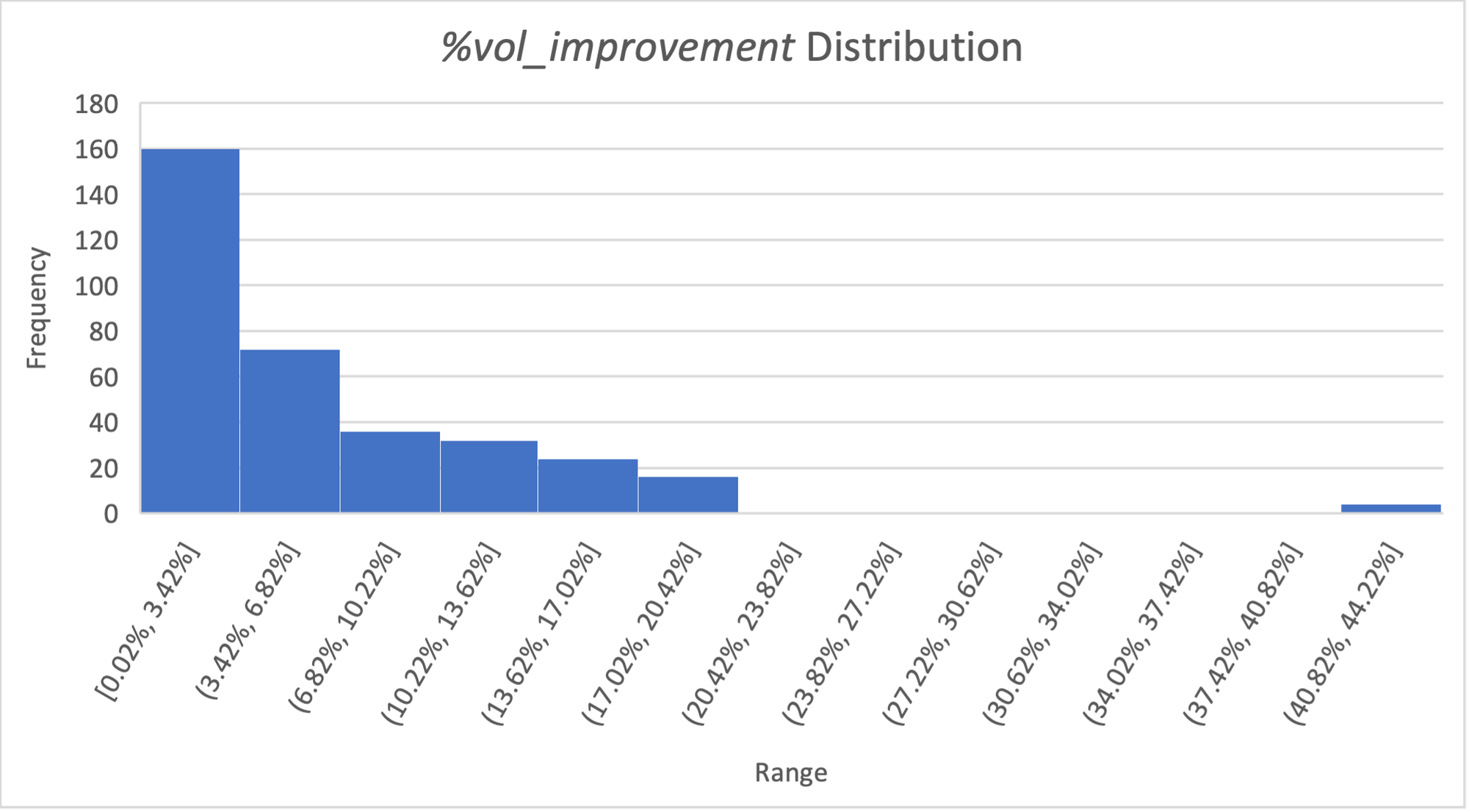
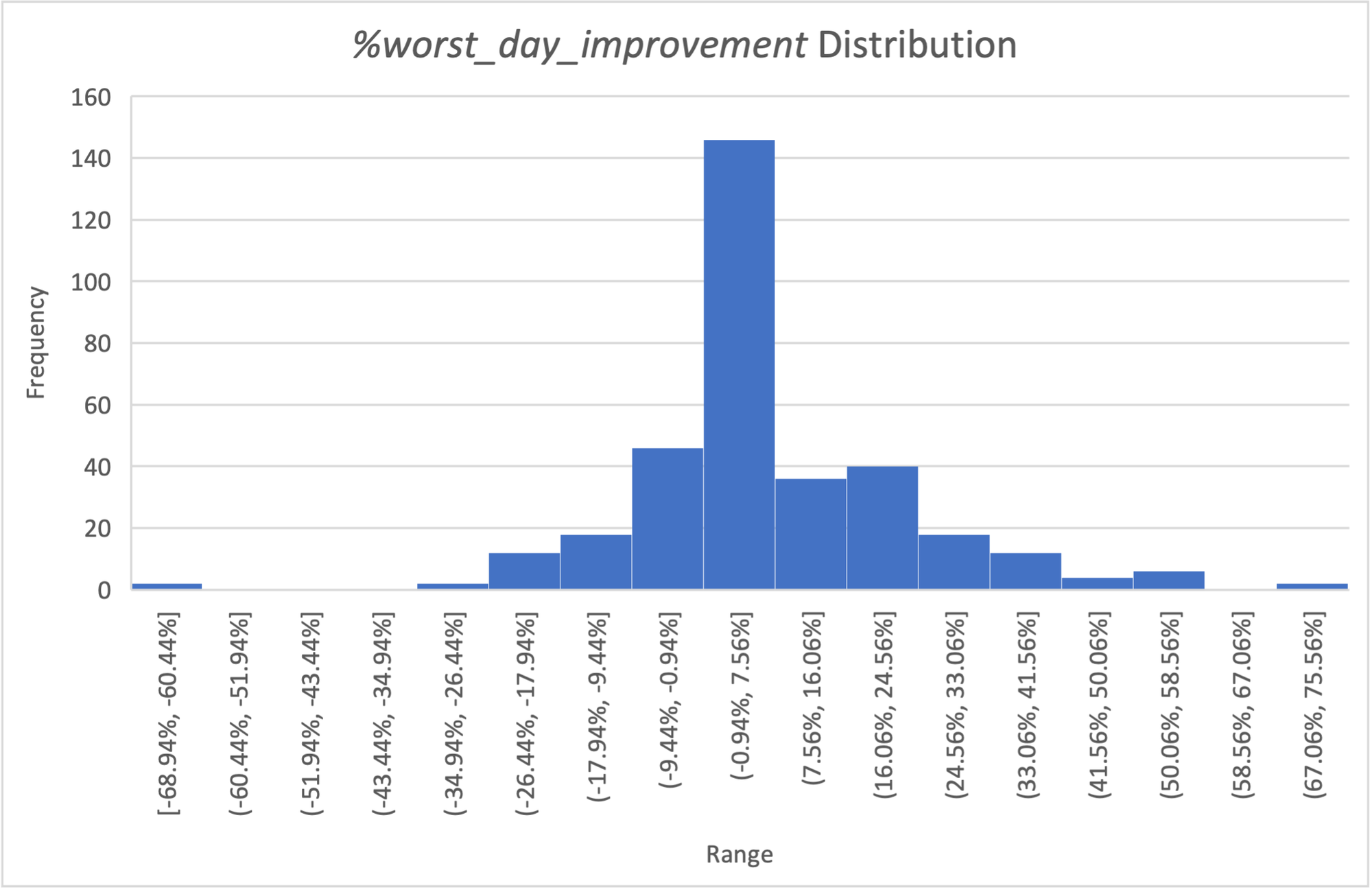
When using Polymarket contracts, the event contracts work much better as hedges for Jet Kero than for Brent. Across the eligible set, the average percentage volatility reduction is about 6.89% for both long and short Jet Kero, versus only about 4.51% for both long and short Brent.
The sample is also fairly short, with 344 eligible combinations ('eligible combinations' means combinations with number of observations greater than 5), a median of 11 observations, and a range of 5 to 22 days, so the strongest results should be treated as directional rather than definitive.
'Long Brent' portfolios
Average of n_obs
12.66
Average of %vol_improvement
4.51%
Average of %worst_day_improvement
10.46%
'Long Jet Kero' portfolios
Average of n_obs
10.59
Average of %vol_improvement
6.89%
Average of %worst_day_improvement
4.17%
'Short Brent' portfolios
Average of n_obs
12.66
Average of %vol_improvement
4.51%
Average of %worst_day_improvement
2.68%
'Short Jet Kero' portfolios
Average of n_obs
10.59
Average of %vol_improvement
6.89%
Average of %worst_day_improvement
9.28%
All portfolios
Average of n_obs
11.43
Average of %vol_improvement
5.92%
Average of %worst_day_improvement
6.66%
The best-performing hedges are concentrated in ship traffic / ship count contracts and ceasefire contracts. By contrast, the contract family “US escorts commercial ship through Hormuz by...?” looks much weaker on average.
Avg. # of ships transiting Strait of Hormuz on April 3?
Average of n_obs
5.00
Average of %vol_improvement
9.10%
Average of %worst_day_improvement
6.61%
US x Iran ceasefire by...?
Average of n_obs
16.07
Average of %vol_improvement
7.44%
Average of %worst_day_improvement
11.31%
How many ships transit the Strait of Hormuz this week? (Mar 17-23)
Average of n_obs
10.00
Average of %vol_improvement
6.62%
Average of %worst_day_improvement
4.33%
Avg. # of ships transiting Strait of Hormuz end of April?
Average of n_obs
5.00
Average of %vol_improvement
6.28%
Average of %worst_day_improvement
5.51%
Avg. # of ships transiting Strait of Hormuz end of March?
Average of n_obs
15.50
Average of %vol_improvement
5.01%
Average of %worst_day_improvement
8.16%
How many ships transit the Strait of Hormuz this week? (Mar 10-16)
Average of n_obs
10.94
Average of %vol_improvement
4.61%
Average of %worst_day_improvement
6.32%
Strait of Hormuz traffic returns to normal by end of April?
Average of n_obs
15.50
Average of %vol_improvement
3.69%
Average of %worst_day_improvement
2.86%
US escorts commercial ship through Hormuz by...?
Average of n_obs
9.40
Average of %vol_improvement
2.08%
Average of %worst_day_improvement
1.37%
All
Average of n_obs
11.43
Average of %vol_improvement
5.92%
Average of %worst_day_improvement
6.66%
Every eligible combination shows a positive volatility reduction, which is reasonable because the hedge ratio is fitted in-sample by OLS. That means variance reduction is partly mechanical. The more informative metric is 'worst_day_improvement', and here the picture is mixed: 222 combinations improve the worst day, but 108 actually make it worse.
Bottomline
Hormuz event contracts are not fake hedges. But they are not clean hedges either. Their value is narrow, conditional, and highly path-dependent. They work best when they capture something ordinary commodity hedges miss, especially disruption persistence, recovery timing, or a specific operational state. That is why the strongest cases in the article are not broad “bet on Hormuz” trades, but targeted overlays tied to a clear business exposure.
The catch is that event contracts are highly volatile instruments in their own right. In many combinations, the hedge leg is so jumpy that adding it can raise total portfolio volatility rather than reduce it, even when the economic logic looks sound. That is exactly why some portfolios improve on the worst day while still becoming noisier overall. A contract can look brilliant in a summary table and still be a messy hedge in practice.
So the real lesson is not that Hormuz contracts “work” or “do not work.” It is that they work only when the contract design, the underlying exposure, and the sizing method all line up. Used carefully, they can hedge the state variable that commodity markets leave unpriced. Used carelessly, they just add another source of volatility to a book that was already hard to manage. These are not replacements for commodity hedging. They are precision tools, and precision tools cut both ways.
Weather Prediction Markets Are Booming. Can They Improve Forecasts?
Disclaimer: The content is for informational purposes only. You should not construe any such information or other material as legal, tax, investment, financial, or other advice. Nothing contained in this article constitutes a solicitation, recommendation, endorsement, or offer by the author(s) or any third party service provider to buy or sell any securities or other financial instruments in your or in any other jurisdiction in which such solicitation or offer would be unlawful under the securities laws of such jurisdiction. The author(s) report(s) no conflict of interest.
Contracts on Polymarket for the likelihood of opposition leader Peter Magyar becoming the next prime minister of Hungary exceeded 80% for the first time as voting was under way in Sunday’s election.
With turnout data from the morning showing Hungary potentially on track for record participation, contracts for Orban to be the next premier one point fell as low as 18%.
Around $67 million has been traded on Polymarket for the question of Hungary’s next prime minister as of Sunday. Election results are due to be released after voting ends at 7 p.m. local time.
Kalshi Inc. won a temporary reprieve from criminal prosecution in Arizona when a judge suspended the case at the behest of a federal regulator.
A federal judge on Friday granted a restraining order sought by the Commodity Future Trading Commission after the agency argued that state authorities cannot pre-empt its oversight of prediction markets, the CFTC said in a statement.
Two days earlier, Kalshi failed to persuade a federal judge to halt Arizona’s criminal proceedings against the prediction market provider as the widespread legal battle among states, companies and the Trump-administration-controlled federal agency that governs derivatives trading continues to roil.
“Arizona’s decision to weaponize state criminal law against companies that comply with federal law sets a dangerous precedent, and the court’s order today sends a clear message that intimidation is not an acceptable tactic to circumvent federal law,” CFTC Chairman Michael S. Selig said in the statement.
Arizona filed a 20-count criminal indictment against Kalshi in March, accusing the company of offering illegal gambling, including allowing betting on Arizona elections.
On Wednesday, US District Judge Michael Liburdi ruled that Arizona could go ahead with its prosecution of Kalshi, saying that US law limits federal interference in state prosecutions.
Friday’s order putting the criminal case on hold was not immediately available online.
Along with Arizona, the commission sued Connecticut and Illinois last week, accusing each of the states of infringing on its authority to regulate contract markets.
The case is KalshiEX LLC v. Johnson, 26-cv-01715, US District Court, District of Arizona (Phoenix).
This is the second article in my Hormuz Strait March 2026 Analysis Series.
In the series, I will break down the wider architecture of vulnerability behind Hormuz, trace the real transmission channels from Gulf disruption into the global economy, explain how different prediction markets are pricing different slices of the same crisis, and test whether these contracts have genuine economic value as hedging instruments.
💡 Sign up to Receive Further Updates if You Haven’t Done So.
Sign up for Prediction Markets
Your complete guide to prediction markets: how they work, where to trade, why they matter, and current updates.
Click on the Bookmark to read Article 1 of the Series
This article moves from the physical system to the market layer. When traders bet on "Hormuz" on Kalshi or Polymarket, what exactly are they betting on? I break down the contract taxonomy and explain why the 7-day threshold matters so much.
The core idea is simple: not every disruption is a true closure, and not every Hormuz contract is a bet on the same underlying reality.
Learn More if You Don’t Know How an Event Contract Works Before Proceeding
Contract Taxonomy: Systematizing Strait of Hormuz-Related Markets on Kalshi and Polymarket
One easy mistake in this story is to treat every Strait of Hormuz contract as if it were betting on the same thing. It isn’t.
Some markets are trying to answer a physical question: Are ships actually moving through the strait again?
Others are asking a political question: Has there been a formal ceasefire? Others sit somewhere in between: Has a military escort regime emerged that could allow limited passage even without peace?
That is why clean taxonomy matters. Without one, it is very easy to compare markets that sound related but are actually pricing different slices of the same crisis.
3.1 A quick way to think about the market universe
The easiest framework is to split Hormuz-related contracts into four buckets:
Direct disruption
What the contract is really asking
Has the strait become meaningfully closed or impaired?
Best example
Kalshi: Will Iran effectively close the Strait of Hormuz for 7+ days?
Resolution style
Narrow event definition
What it isolates
A true disruption regime
Traffic-state
What the contract is really asking
How much shipping is actually moving? Has traffic normalized?
Best example
Polymarket / Kalshi: When will the traffic return to normal?
Resolution style
External data + threshold
What it isolates
Physical shipping throughput
Diplomatic settlement
What the contract is really asking
Has there been a formal ceasefire or agreed halt in fighting?
Best example
Polymarket: US x Iran ceasefire by...?
Resolution style
Official announcement / media consensus
What it isolates
Formal political de-escalation
Military-facilitation
What the contract is really asking
Has a security response emerged that could reopen passage?
Best example
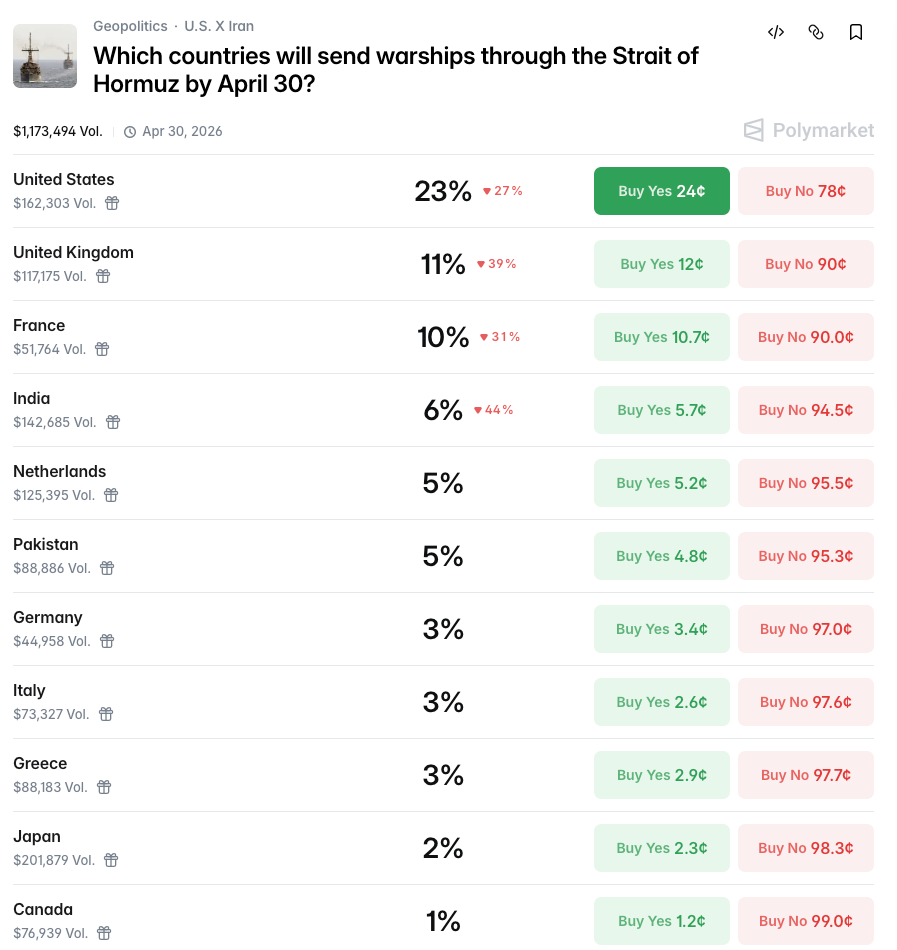
Polymarket: Which countries will send warships through the Strait of Hormuz by...?
Resolution style
Confirmed transit through the strait
What it isolates
A pathway to guarded or partial reopening
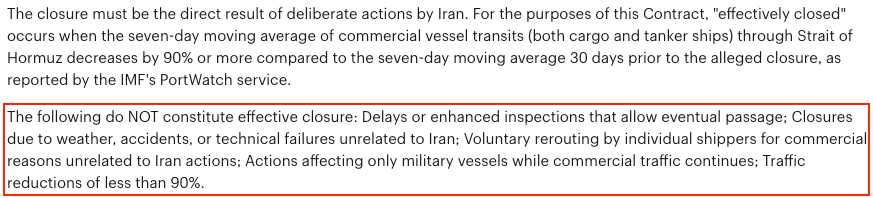
A direct disruption contract prices a real operating shutdown, not just higher tension. Kalshi’s 7+ day closure market is narrower than the headline suggests: delays, inspections, or other frictions that still allow eventual passage do not count as an “effective closure”. In other words, it is trying to capture a true disruption regime rather than generic geopolitical stress.
Market rules: Will Iran effectively close the Strait of Hormuz for 7+ days? on Kalshi
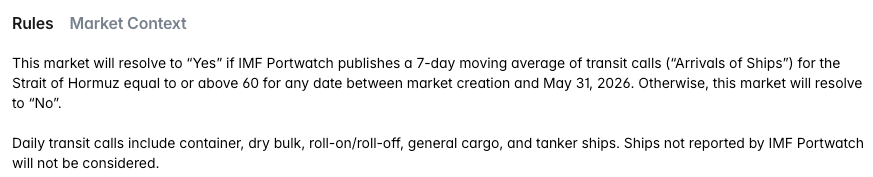
A traffic-state contract prices measurable throughput. The clearest example is the Polymarket traffic-normalization market, which resolves to “Yes” only if IMF PortWatch shows a 7-day moving average of transit calls of at least 60 by April 30. Kalshi’s return-to-normal and weekly traffic markets use similar threshold logic. These contracts are not about peace, they are about the actual traffic flow.
Market rules: Strait of Hormuz traffic returns to normal by end of May? on Polymarket
A diplomatic-settlement contract prices formal political de-escalation. Polymarket’s “US x Iran ceasefire by…?” market requires an official, mutually agreed halt in direct military engagement. Informal pauses or backchannel de-escalation do not count. That makes it fundamentally different from a traffic market. It prices a political state, not operating throughput. It is also much deeper, with roughly $65.6 million in volume versus about $1.64 million for the traffic-normalization market on Polymarket.
Market rules: US x Iran ceasefire by April 7? on Polymarket
Finally, military-facilitation contracts price whether a security mechanism emerges that could enable partial reopening. Polymarket’s warship-transit market is the clearest example. It resolves based on confirmed warship passage through the strait itself, not just broader naval presence in the region. So it is best read as a market on a possible reopening mechanism, not on peace or traffic directly.
3.2 Why Kalshi and Polymarket feel a bit different
The cleanest practical difference between the two platforms is: Kalshi looks more like a threshold-and-throughput platform; Polymarket looks more like a layered geopolitical menu.
Kalshi’s Hormuz contracts are mostly binary or threshold-based. Polymarket, by contrast, is more willing to use multi-outcome structures. The ceasefire market is a date array, and the warship market has 11 outcomes.
The warship market on Polymarket has 11 countries that you can bet on.
That is not just a cosmetic design choice. Binary threshold products are naturally good at answering “Has this physical condition been met?”. Multi-outcome products are better at expressing timing distributions or outcome identity. That gives Polymarket a wider narrative range, but it also means you have to read the rules more carefully because similar headlines can resolve on very different criteria.
In that sense, the two platforms are often better viewed as complementary than as direct substitutes.
From curious to confident. Join the sharpest forecasters online, get top contracts, platform updates & market signals - free.
The contract "Will Iran effectively close the Strait of Hormuz for 7+ days?" on Kalshi has attracted around $7.3M traded volume, despite the fact that the first market ("Before 2027") was opened in early-January and the remaining markets ("Before May" and "Before August") were opened on 1st March as follow-ups. This contract probably has the highest traded volume among Hormuz-related events (excluding broader Iran-related events) across Kalshi and Polymarket.
This naturally triggers curiosity for prediction market operators and active thinkers: "Why does a 7-day closure of the Hormuz Strait receive so much attention? Why isn't the contract focusing on a shorter or longer period of closure?"
It is important to be explicit that primary rule pages from Kalshi and Polymarket do not publish white papers outlining this exact economic rationale. The market rules clearly define how the markets will resolve, but they do not explicitly justify why 7 days was chosen over 5 or 10 or another number.
Conclusion first: this threshold is the best inference drawn from the broader maritime and economic environment, though the choice is also likely driven by prediction market platforms' practical need to aggregate low-volume trade data into statistically robust, standardized weekly trading cycles. Or it could be that, though less likely, this is just an arbitrary threshold set by Kalshi.
4.1 Not every disruption is a closure
In this context, defining the "effective closure" of a vital maritime chokepoint cannot rely on the binary rhetoric of state actors or a single day of halted traffic.
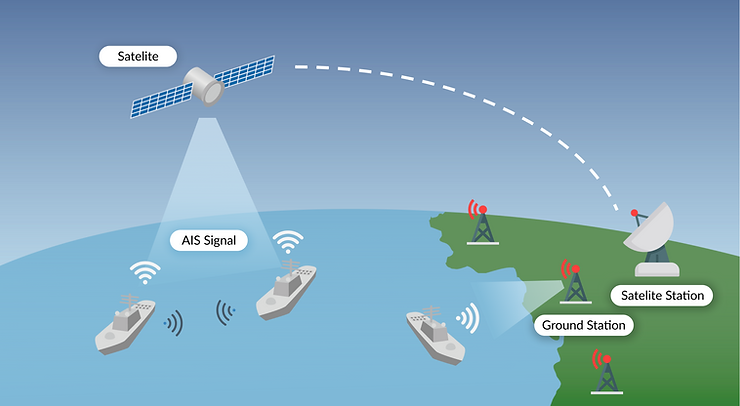
Maritime traffic data, primarily sourced from the Automatic Identification System (AIS), is inherently volatile on a day-to-day basis. Daily transit counts are subject to transient factors, including normal berthing delays at major transshipment hubs, fluctuations in loading schedules, and environmental impediments such as heavy seas.
In a conflict environment, this baseline volatility is compounded by tactical anomalies, including GPS jamming, AIS spoofing, and vessels intentionally "going dark" to avoid targeting.
The Automatic Identification System (AIS) is a short-range coastal tracking system, developed to provide identification and positioning information to both vessels and shore stations.
Consequently, brief disruptions lasting only one to three days are frequently driven by tactical noise rather than a persistent disruption regime. The history of the Hormuz Strait shows that short gaps in transit may be the result of temporary inspections, military exercises, localized incidents, or environmental hazards.
Thus, resolving a contract based on a 24- or 48-hour disruption would risk triggering a "false positive", rewarding speculation on temporary headline volatility rather than a structural regime shift with true global economic consequences.
4.2 Why is 7 days a meaningful threshold?
A 7-day window represents the precise horizon where transient friction transforms into a structural crisis.
Operationally, some contracts on Kalshi and Polymarket utilize a 7-day moving average of vessel transits through the Strait in their resolution rules, in order to filter out daily AIS noise and capture a full weekly operational cycle.
This contract on Polymarket uses the 7-day moving average of transit calls as a condition of "normalization".
Economically, the commercial insurance landscape undergoes a total transformation by the 7-day mark. The most potent mechanism for closing a maritime chokepoint is the withdrawal of commercial insurance rather than physical blockade.
When kinetic escalation occurs at Hormuz, marine insurers activate "72-hour War Cancellation Clauses", creating a 3-day notice period that forces shipowners to exit the risk zone or secure replacement coverage at significantly higher rates before existing policies are cancelled.
Following the expiration of these notices, the market enters a phase of weekly resets. War-risk coverage is often repriced every 7 days to reflect the rapidly evolving threat environment, usually resulting in multi-fold premium increases that can possibly reach 10% of a vessel's hull value. If the strait is inaccessible for 7 days, the initial wave of covered voyages has ended, and the global fleet operates under a prohibitively expensive new insurance regime.
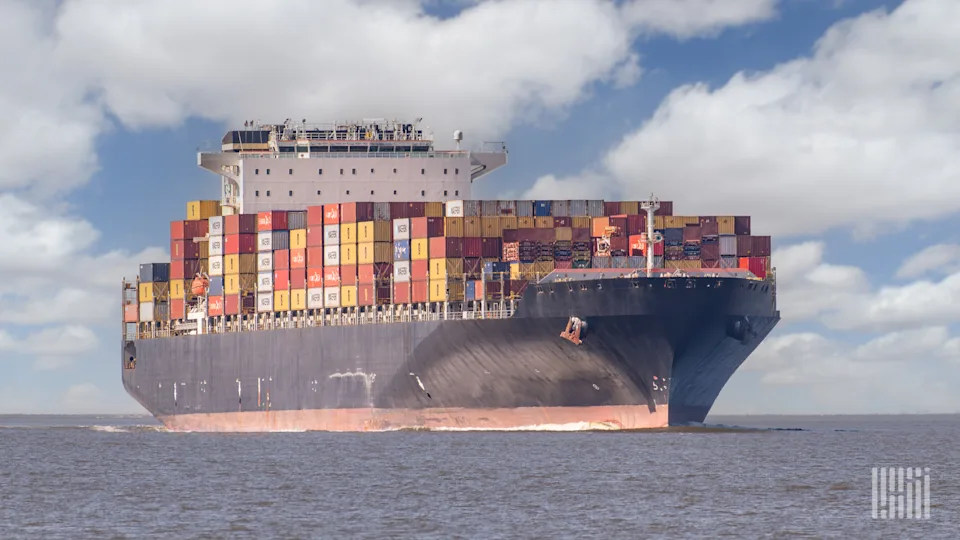
Container ships that normally travel through the Red Sea are looking for alternative routes. (Image credit: Jim Allen/FreightWaves)
4.3 Why not 14+ days?
A 14+ day threshold would capture a very serious disruption, but for an event contract it is usually too late.
By the time a Hormuz disruption has lasted two weeks, shipping lines have often already rerouted vessels, insurers have already raised war-risk costs, and freight markets have already repriced. At that point, the market is no longer asking whether the disruption is real. It is already dealing with the consequences.
That is why a 7-day threshold works better. A one-week threshold is long enough to filter out short-lived noise, but still able to hedge against uncertainties before the global economy fully adapts to the new normal.
Singapore Minister Says Worst Case on War is Not Fully Priced
Click on the Bookmark to read Article 3 of the Series
Disclaimer: The content is for informational purposes only. You should not construe any such information or other material as legal, tax, investment, financial, or other advice. Nothing contained in this article constitutes a solicitation, recommendation, endorsement, or offer by the author(s) or any third party service provider to buy or sell any securities or other financial instruments in your or in any other jurisdiction in which such solicitation or offer would be unlawful under the securities laws of such jurisdiction. The author(s) report(s) no conflict of interest.
If you live in Phoenix, can you put down money on the outcome of the 2026 Arizona governor’s race? What about a resident of Hartford who wants to bet on a University of Connecticut basketball game?
Until recently, the answers were pretty clear. Arizona has banned election-related wagers for more than a century, and Connecticut forbade bets on local college teams when it legalised other forms of sports gambling in 2021.
But national prediction markets including Kalshi and Polymarket have clouded the picture significantly. These rapidly growing businesses offer “events contracts” that match customers who want to take the opposite side of binary outcomes. Some bets turn on share prices and interest rates so they look very much like investments. Others focus on Oscar winners and sporting events and feel a lot more like gambling.
At the same time, suspiciously well-timed bets ahead of the US attacks on Venezuela and Iran have raised fears that the platforms are being used to profit from inside information.
Now lawsuits are flying that could fundamentally alter not just betting markets but the balance of power within the US federal system of government. Arizona last month filed criminal charges against Kalshi accusing it of operating an unlicensed gambling business that offers illegal wagers on elections. At least 20 other states have gone down the civil litigation route, and a federal judge temporarily banned Kalshi from operating in Nevada.
But Kalshi, which lists Donald Trump Jr as a “strategic adviser”, says its contracts are legal under federal rules and has called in help from high places. Last week the US Commodity Futures Trading Commission sued Arizona, Connecticut and Illinois to prevent them from applying state laws to prediction markets.
The Trump administration says it is protecting the national financial market for swaps from unnecessary red tape. “The CFTC will continue to safeguard its exclusive regulatory authority . . . against overzealous state regulators,” said CFTC chair Michael S Selig, a Trump appointee.
But the states contend they are fulfilling their longstanding duty to protect citizens from industries that could do them harm. “Arizona will not be bullied into letting any company place itself above state law,” said state attorney-general Kris Mayes. Her Connecticut counterpart William Tong said: “We will aggressively defend Connecticut’s commonsense consumer protection laws.”
The fight highlights the conflicts that emerge when innovative businesses blur the lines — or exploit the holes — between the national markets that the federal government is charged with regulating and day-to-day activities that traditionally fall within state control. These clashes are only going to become more common and more heated.
As Donald Trump has sought to shrink the federal government and cut regulation, state attorneys-general have jumped in to use their laws to bring enforcement cases in areas such as cryptocurrency, consumer finance and antitrust, where they think the US government has dropped the ball.
The Trump administration is also publicly committed to preventing states from regulating AI, even though the president and Congress have yet to come up with rules of their own.
That situation in some ways mirrors what is happening in prediction markets. In 2010, Congress gave the CFTC the power to prevent regulated exchanges like Kalshi from offering events-related contracts that are “contrary to the public interest” as part of the Dodd-Frank financial reform law. The acceptable reasons for such a ban include derivatives that involve “gaming” or “activity that is unlawful under any federal or state law”.
But the law is silent about what happens if the CFTC opts for light-touch regulation and lets events contracts go ahead that conflict with state laws on gambling and electioneering.
Some gaming lawyers think that could spell trouble for Kalshi because the Supreme Court has been sceptical when administrative agencies have tried to grab new regulatory powers. “Congress wouldn’t create CFTC exclusive jurisdiction over something as consequential as sports gambling through a side door without using clear and explicit language,” says Daniel Wallach.
But the first federal appeals court to consider the issue ruled the other way, finding on Monday that CFTC swaps regulation “pre-empts” New Jersey state laws on gambling. Two other appeals courts are due to take up the subject shortly.
Someone, somewhere has money riding on the ultimate outcome.
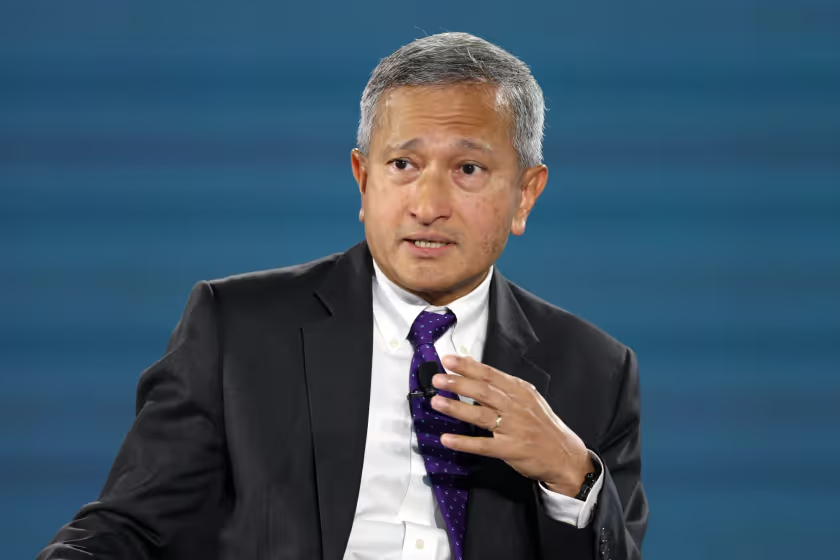
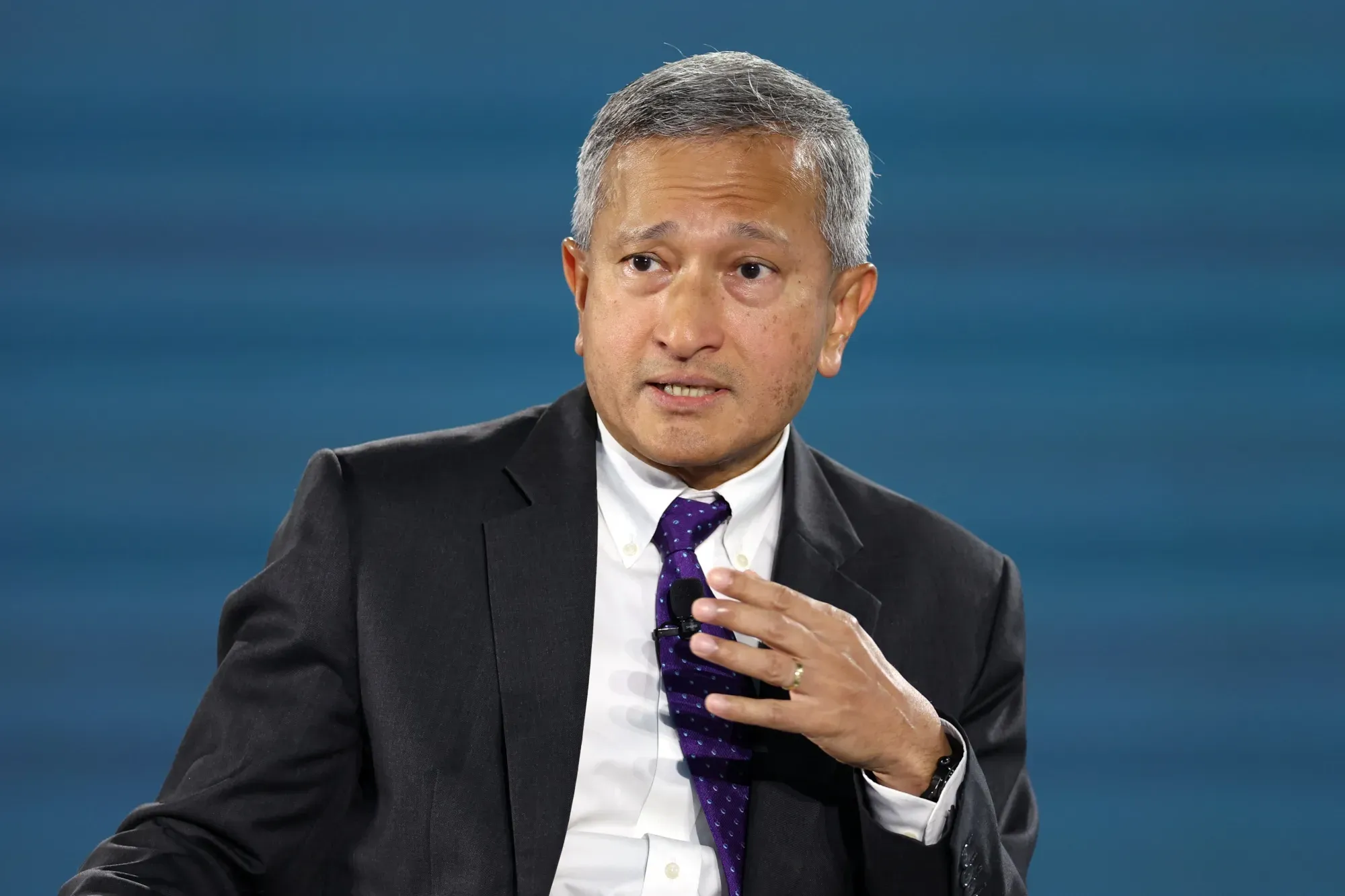
Singapore’s top diplomat warned the economic fallout from the war in Iran could worsen and markets have yet to factor in the worst-case scenario.
“I’ve stopped trying to get into prediction markets,” Foreign Affairs Minister Vivian Balakrishnan told Bloomberg Television’s Avril Hong at an Investment Management Association of Singapore conference on Tuesday, referring to US President Donald Trump’s latest deadline to Tehran.
“I’m quite sure the markets are not fully pricing the worst-case scenario,” Balakrishnan said. “How’s that for a note of soberness.”
Markets have been whipsawed by mixed messaging on the war in Iran. Traders were cautious ahead of Trump’s latest Iran deadline expiring on 8 p.m. Eastern Time.
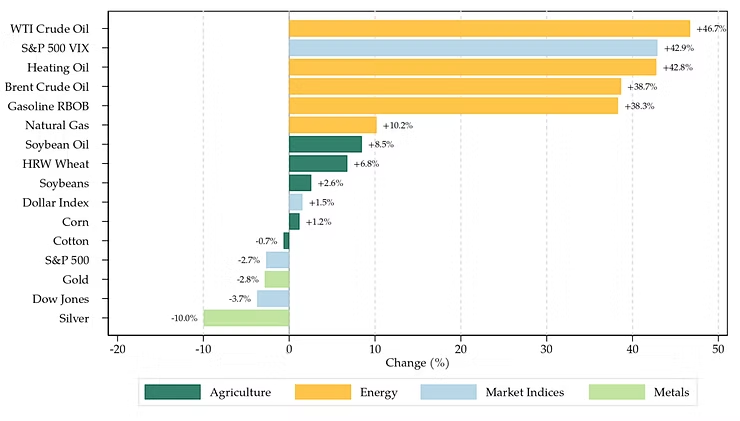
Since the global conflict began in late February, global equities are down less than 6% while oil prices have soared. Even the dollar, a reliable haven in times of geopolitical uncertainty, has weakened since touching a 2026 high late last month.
The effective closure of the Strait of Hormuz has disrupted a critical artery for oil and gas shipments to Asia, forcing buyers to scramble for alternative supplies and pushing prices higher. The chokepoint handles about a fifth of the world’s LNG supply.
Governments are already warning of a more challenging outlook as higher import bills feed into inflation and growth. Singapore imports nearly all of its energy and relies on natural gas for more than 90% of its electricity generation, leaving it highly sensitive to swings in global fuel prices and supply disruptions.
“We’re trying to be upfront with our people and tell them this is serious, this could get worse,” Balakrishnan said. “We all need seat belts.”
Kalshi won a victory in the battle over who gets to oversee fast-growing prediction markets, after a panel of judges told New Jersey state officials that the Commodity Futures Trading Commission regulates the platform.
The ruling marks a big moment for Kalshi, which has had mixed results arguing that it should be overseen by the CFTC rather than state regulators. But on Monday a federal appeals court agreed, with a 2-1 majority upholding a preliminary injunction against the state.
States have been amping up their fight against prediction markets, which allow customers to wager on issues ranging from geopolitical events to sports and the weather, while the Trump administration has embraced the surging industry. The states have argued that they are gambling businesses that should be subject to state oversight.
The ruling by the US Court of Appeals for the Third Circuit could influence how other cases involving prediction markets will be handled going forward. Kalshi co-founder Tarek Mansour hailed the decision as a “big win for the industry.”
“This is the strongest indication we’ve seen from a federal court of how the merits will go,” said Ilya Beylin, a law professor at Seton Hall University who studies prediction markets. “This is a strong signal.”
For now, the exchange will be able to operate in the area as officials in New Jersey decide whether to accept the decision, request an en banc hearing with a larger panel of appeals court judges or appeal to the US Supreme Court.
Legal analysts say the path to the Supreme Court will likely come from a so-called “circuit split,” where courts reach conflicting opinions on an issue. But that may happen sooner rather than later: Oral arguments in different Kalshi case against Nevada in the Ninth Circuit are set for this month.
While the Third Circuit ruling on Monday will give other judges a precedent to point to moving forward, the dissent in the decision could be seen as a “bellwether” of mixed opinions, said Daniel Wallach, a gaming attorney who tracks prediction market litigation.
“I see Kalshi’s actions as a performative sleight meant to obscure the reality that Kalshi’s products are sports gambling,” Judge Jane Richards Roth wrote in a dissenting opinion on Monday. “Because Kalshi is facilitating gambling, it can be subjected to state regulation.”
Some legal experts believe that prediction markets have been gaining an upper hand in the sprawling clashes with states, especially as the CFTC has become more active in the litigation and supported the industry. The agency has increasingly asserted federal authority over the platforms and took the unprecedented step of suing Illinois, Connecticut and Arizona last week.
But Wallach says if New Jersey seeks and is granted a hearing with a larger panel of appeals court judges it could end up similar to the case which ultimately granted states control over their own sports gambling laws.
“This one has even greater significance potentially because it goes beyond sports betting,” he added. “It’s an important public question of national significance affecting not only sports gambling, but the limits and extent of federal powers to regulate gambling in the face of contrary state regulation.”
The case is KalshiEX LLC v. Flaherty, 25-01922, US 3rd Circuit Court of Appeals.
This is the first article in my Hormuz Strait March 2026 Analysis Series.
In the pieces that follow, I will break down the wider architecture of vulnerability behind Hormuz, trace the real transmission channels from Gulf disruption into the global economy, explain how different prediction markets are pricing different slices of the same crisis, and test whether these contracts have genuine economic value as hedging instruments.
💡 Sign up to Receive Further Updates if You Haven’t Done So.
Sign up for Prediction Markets
Your complete guide to prediction markets: how they work, where to trade, why they matter, and current updates.
No spam. Unsubscribe anytime.
Hormuz is usually discussed as an oil story. But that framing is too narrow. What sits behind it is a much larger architecture of vulnerability, one that links shipping, energy, industrial inputs, and ultimately the global cost of living.
Market Response to Operation Epic Fury (Changes Between February 27 and March 9, 2026). (Source: NDSU)
Why Hormuz Matters: The Architecture of Global Vulnerability
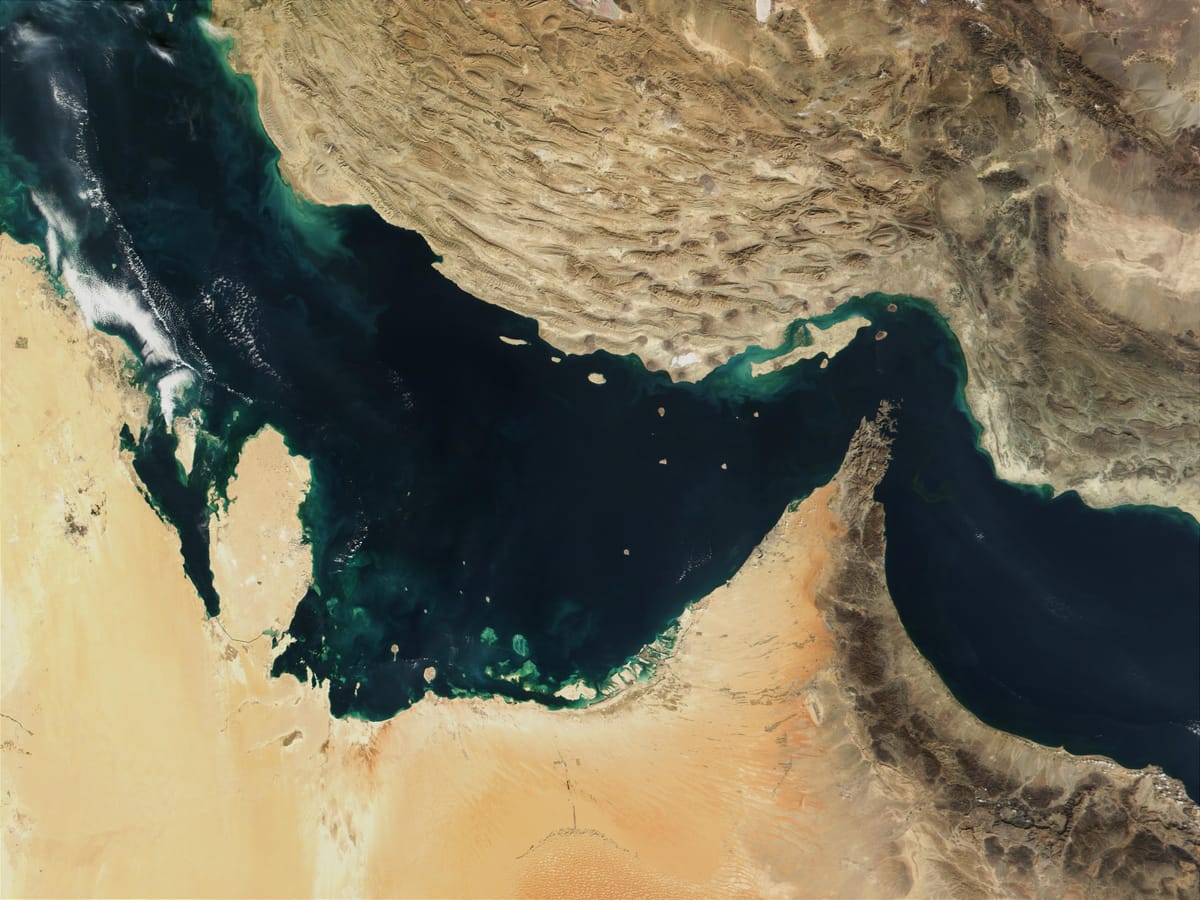
The Strait of Hormuz functions as the “physiological aorta" of the global energy and industrial system, a critical node where a single physical blockage initiates a systemic cascade across disparate markets.
1.1. Quantifying the Flow: Beyond Crude Oil
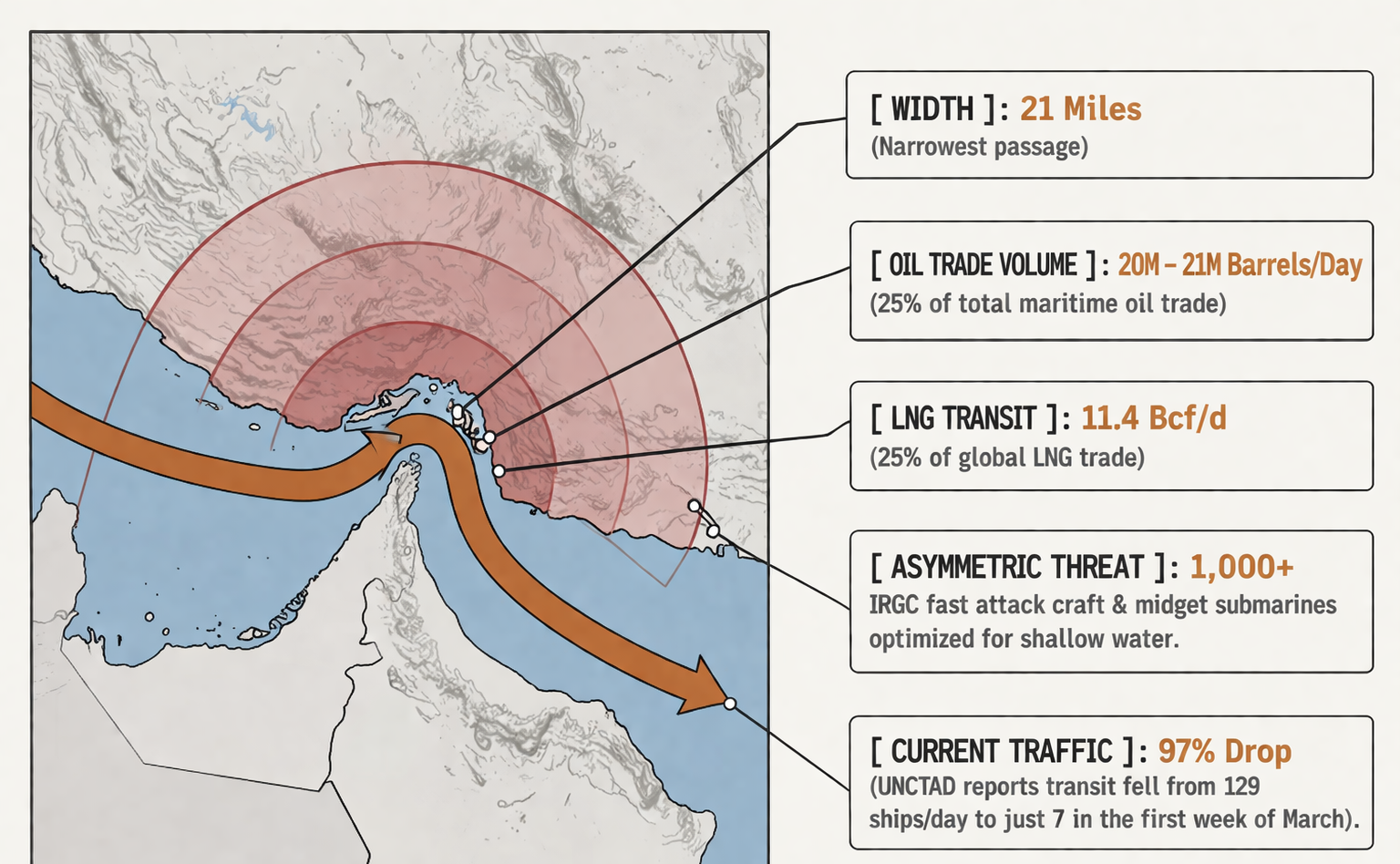
In the first half of 2025, the waterway facilitated the flow of approximately 20.9 million barrels per day (mb/d) of petroleum liquids. This volume represents 25% of total maritime oil trade and roughly 20% of world consumption.
The systemic vulnerability is articulated through the breakdown of specific flows:
Crude Oil: Approximately 14.7 mb/d. Represents approximately 34% of all global crude oil trade.
Refined Products: Approximately 6.1 mb/d, including essential industrial feedstocks and fuels (e.g. Gasoline, Diesel, Jet Fuel). Around 15% of global refined products trade.
Liquefied Natural Gas (LNG): The Strait carries 11.4 billion cubic feet per day of LNG, or 20% of the global LNG trade. The export architecture of the region creates a near-total dependency for major producers, with 93% of Qatari LNG and 96% of UAE LNG relying on this single exit.
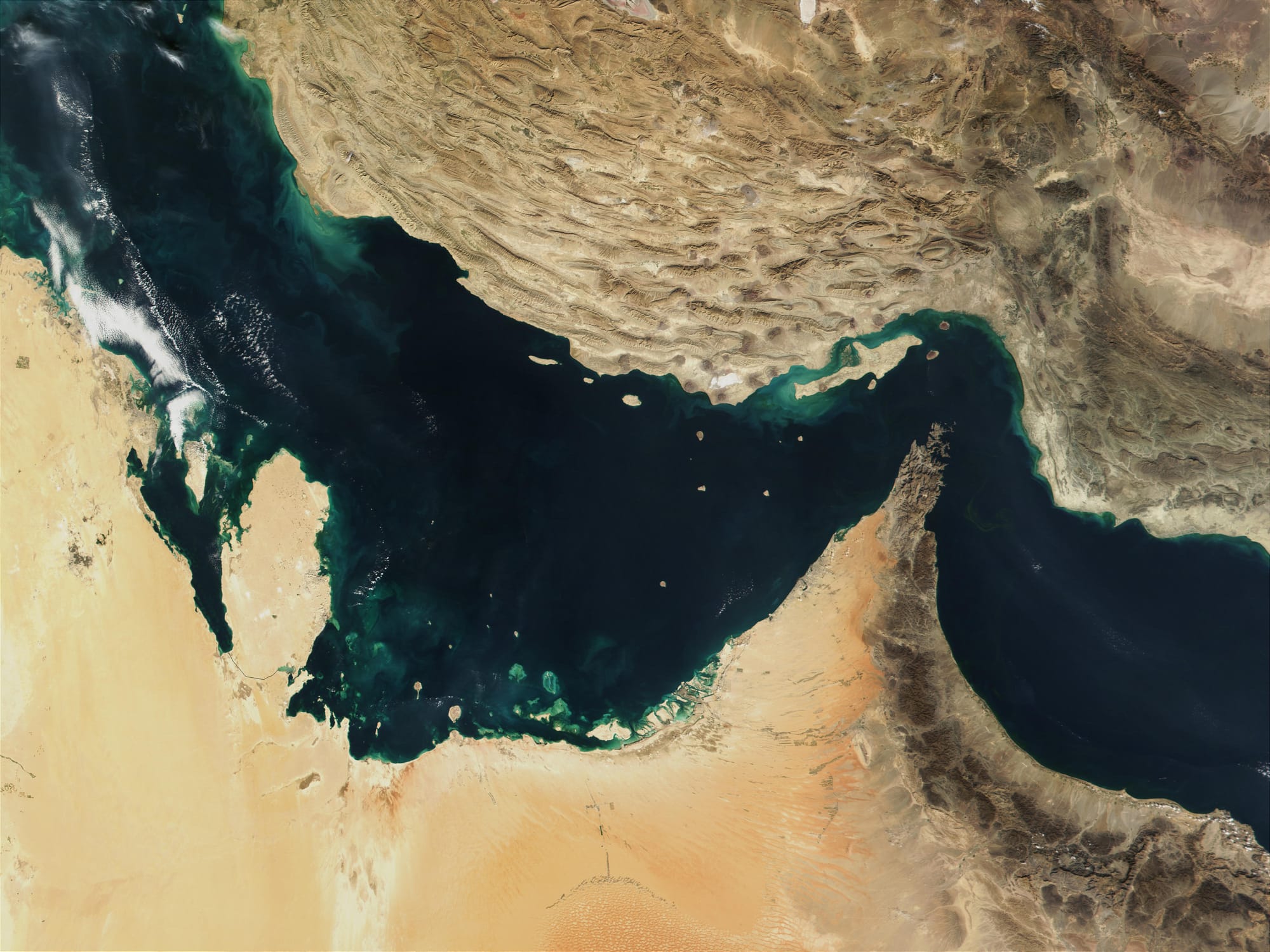
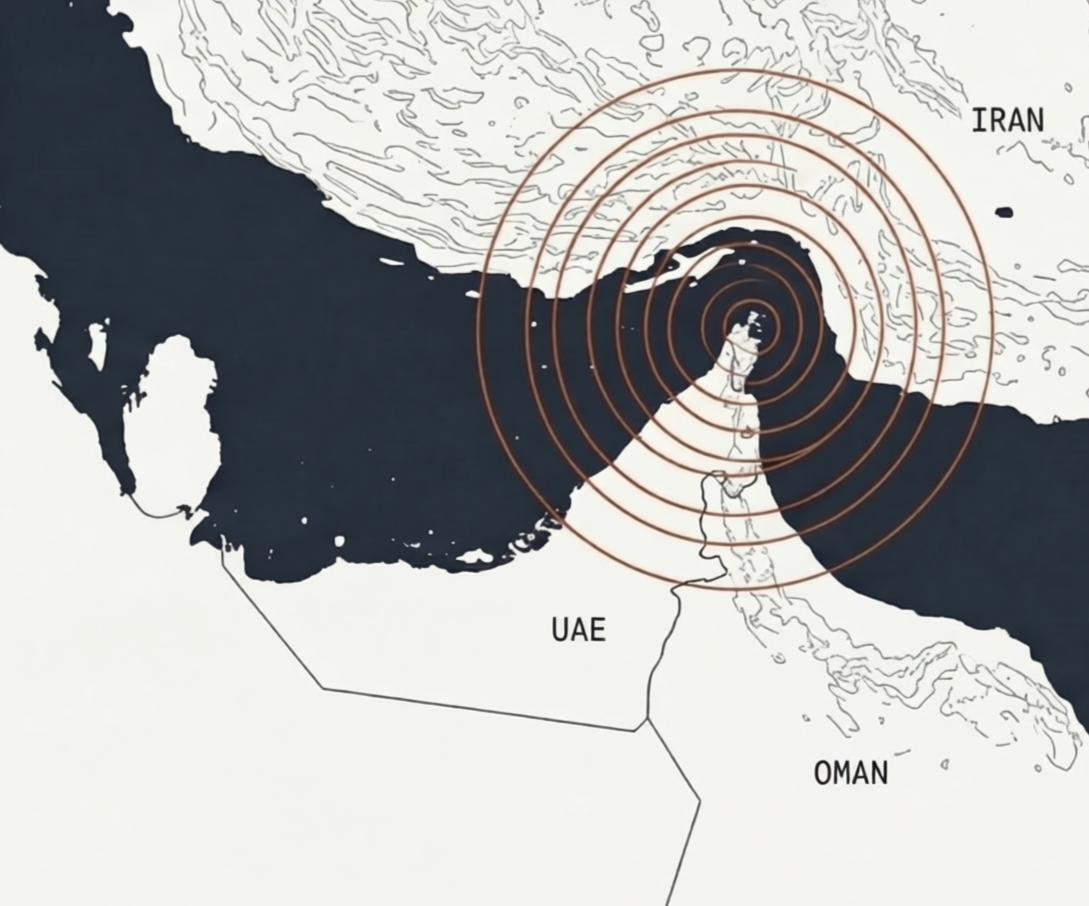
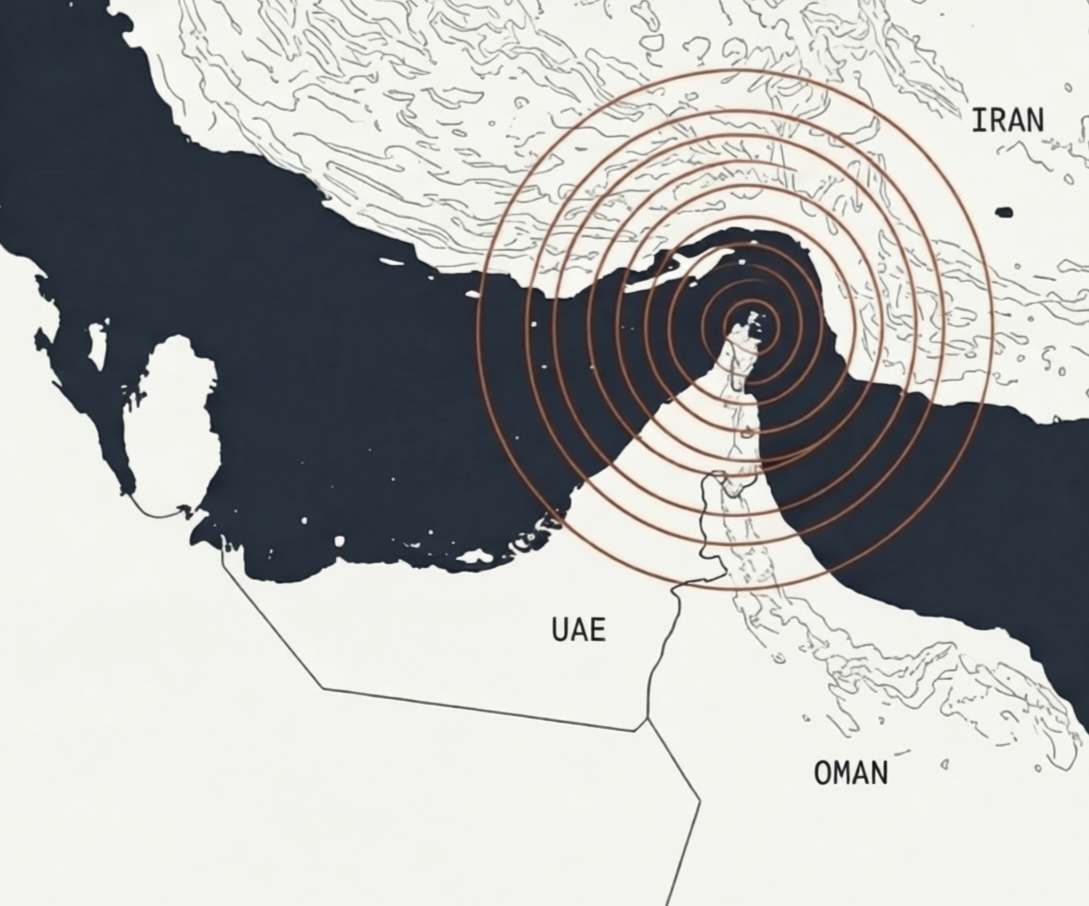
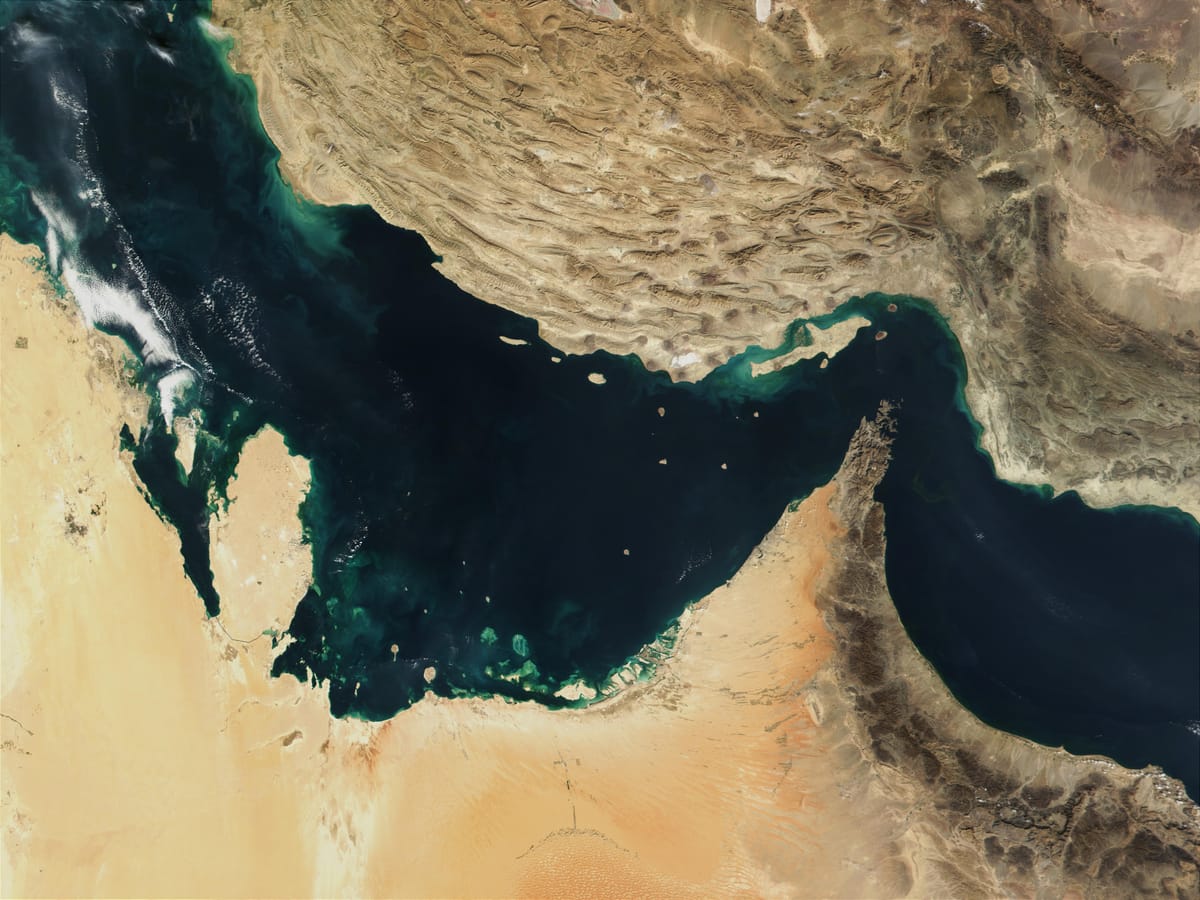
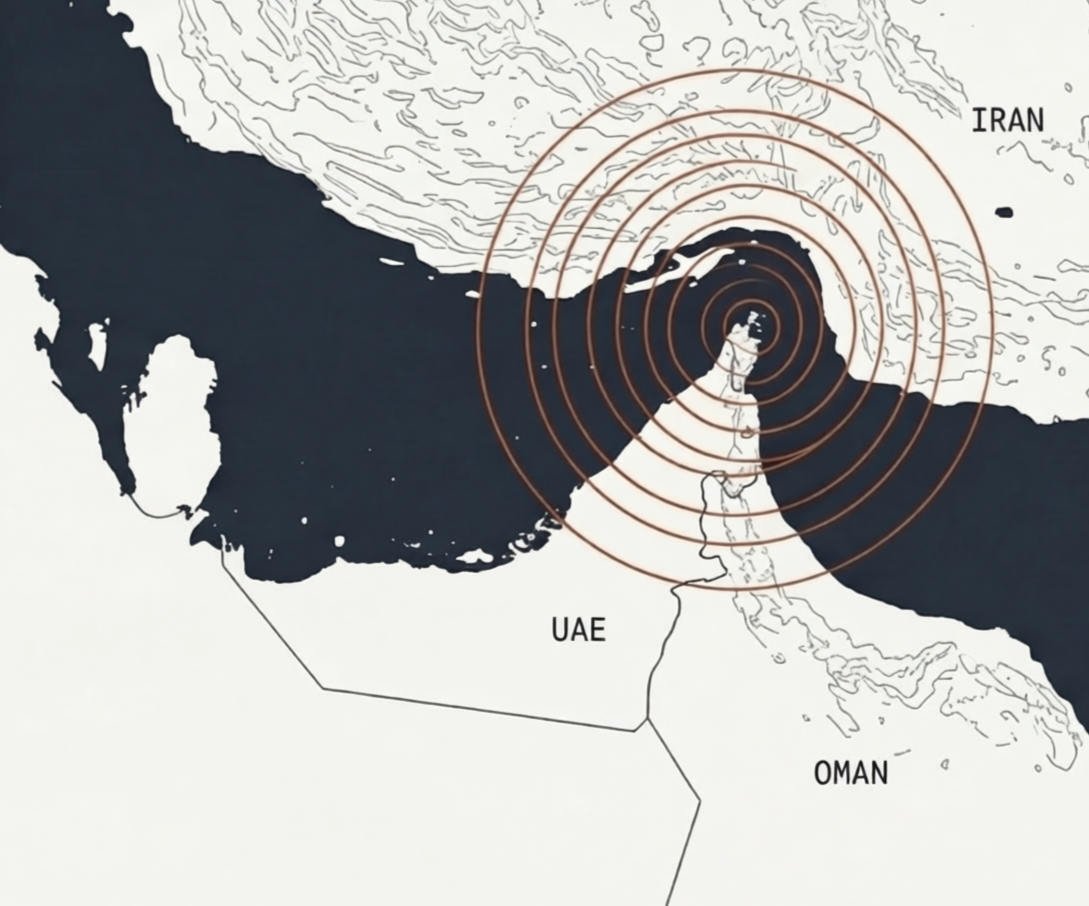
The Strait of Hormuz is a vital marine chokepoint.
1.2. The Asymmetry of Exposure: Asia Gets Hit the Hardest
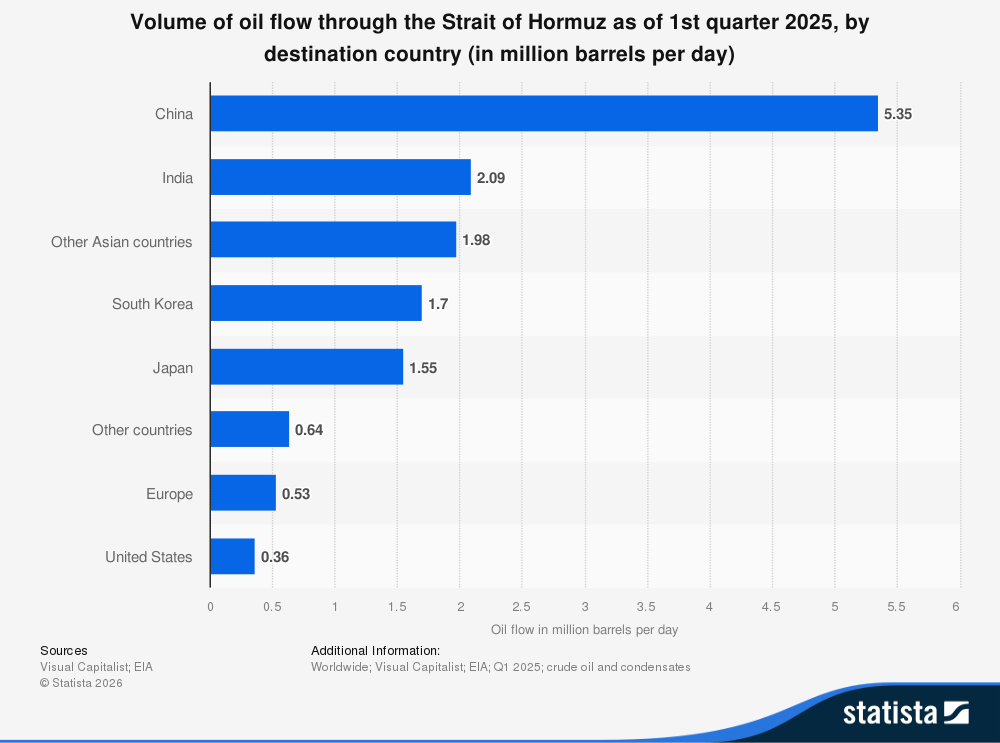
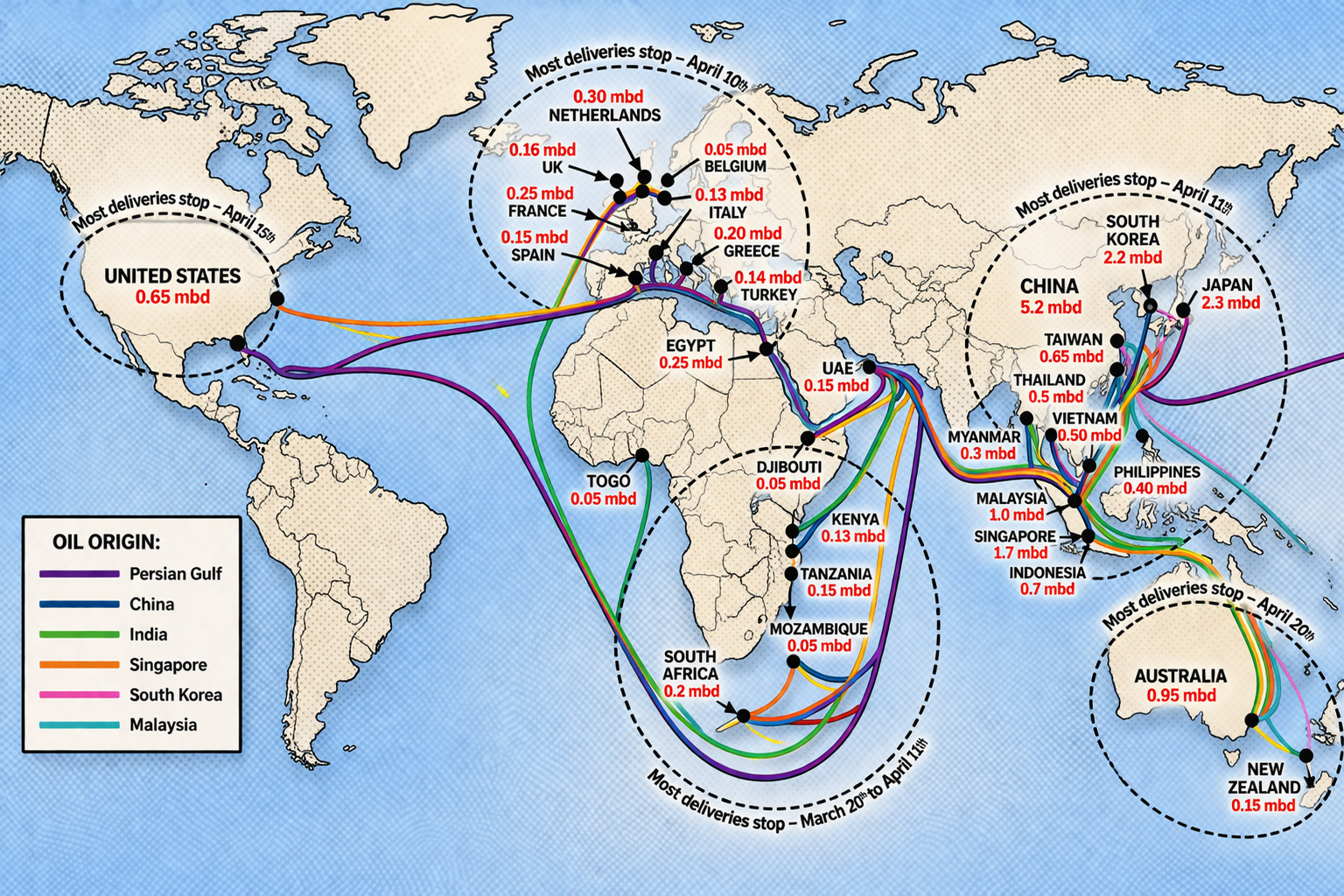
Global exposure to a Hormuz disruption is highly asymmetric, concentrated primarily in Asia, where over 80% of the oil and LNG passing through the Strait is destined.
Regional Dependency & Risk Profiles:
Japan: Faces a critical 87% energy import reliance, with a staggering 95% of its crude oil locked into Gulf-origin routes.
South Korea: Maintains an 81% energy import reliance, with over 70% of its oil supply tied to the Strait.
China: Receives 38% of its total oil flow via the Strait, importing 30% of its LNG through the chokepoint.
India: Its 88% overall crude import reliance ensures it cannot escape the global price shock. However, India has developed a "geoeconomic cushion" by moving 70% of its crude to non-Hormuz routes, providing significantly more resilience than its East Asian peers.
By contrast, the U.S. faces very limited direct risk, largely due to its role as a net exporter of oil and gas and its comparatively low levels of imports through the Strait.
Over 80% of the oil and LNG passing through the Strait of Hormuz is bound for APAC countries. (Source: Statista)Most oil deliveries from the region would stop in April, as ships already en route arrive while no new tankers depart. (Source: Kpler)
1.3. The Bypass Illusion: Capacity vs. Reality
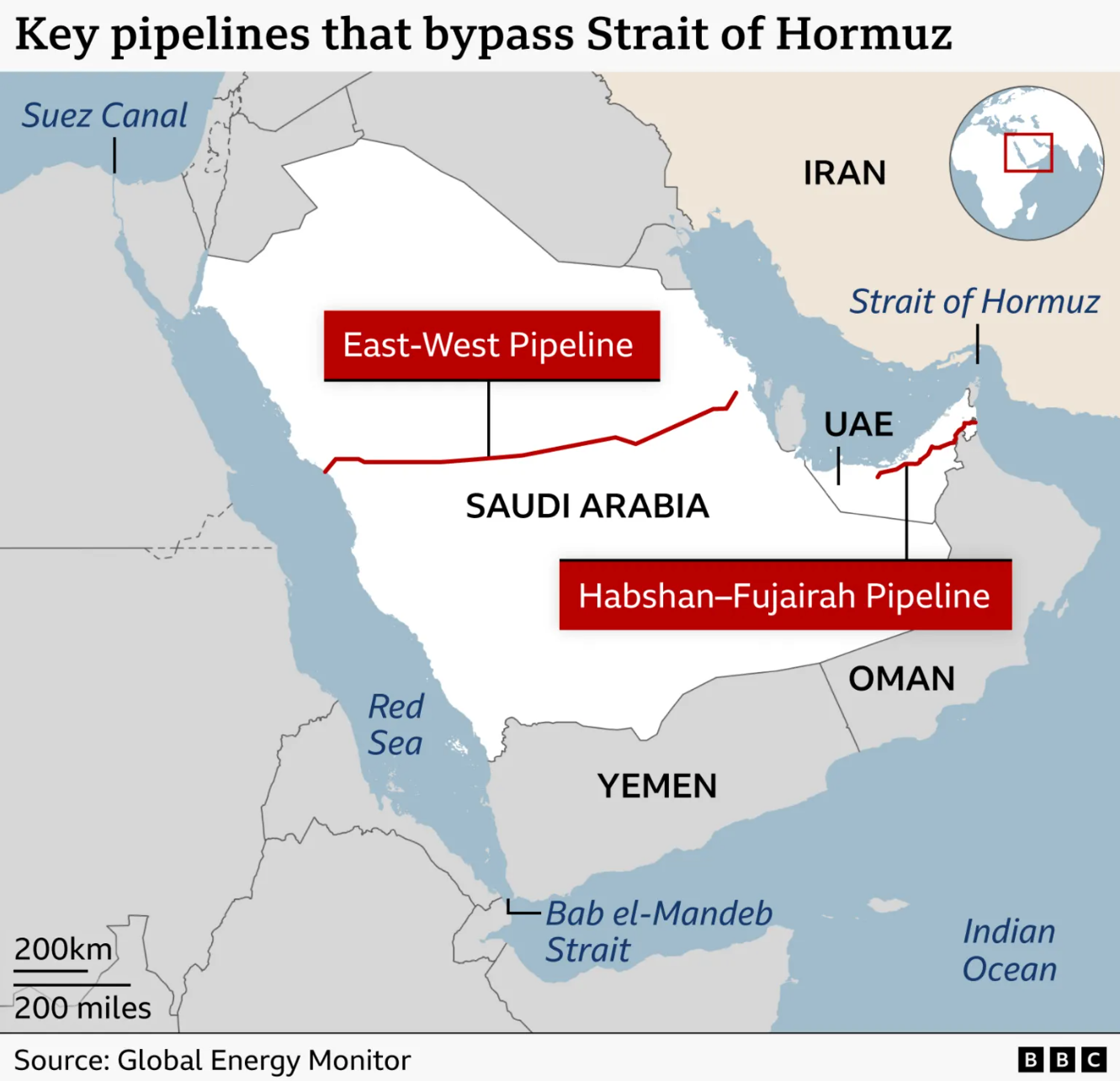
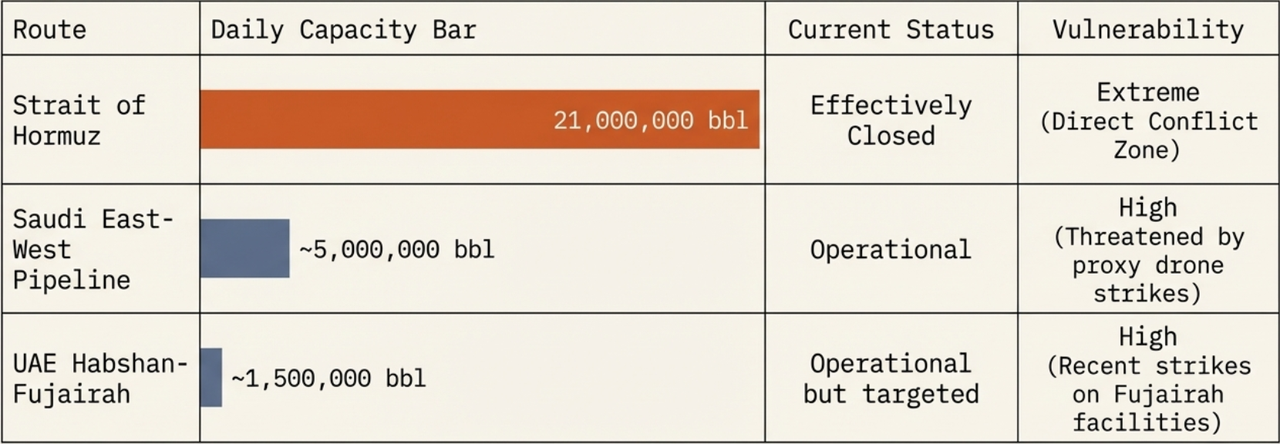
Substitute routes offer a "bypass illusion" that fails under the pressure of a true systemic shock. While the Saudi East-West and UAE Habshan-Fujairah pipelines provide a theoretical combined additional available capacity of 3.5-5.5 mb/d (data from IEA; existing utilisation and operational constraints are taken into account), they are insufficient to offset a 20+ mb/d deficit.
Two key pipelines bypassing Strait of Hormuz. (Source: BBC)
The reason is that these alternatives face two structural failures:
Cargo Incompatibility: Pipelines are restricted to carrying crude oil and cannot transport refined products or LNG.
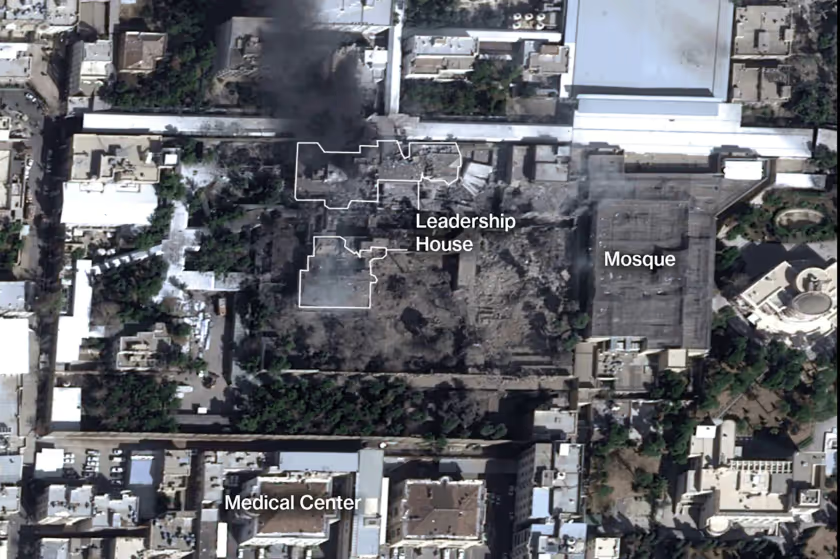
Physical Vulnerability: These routes are not "safe havens". The drone strikesinMarch on the port of Fujairah and infrastructure in Yanbu demonstrated that bypass routes are targeted during active conflicts, effectively tightening the ceiling on reroutable flows.
Bypassing the Strait of Hormuz is a mathematical impossibility.
In summary, Hormuz is not a gate to be opened. It is a fuse that, once lit, necessitates a total re-pricing of the global industrial order.
Transmission Channels: The Anatomy of a Systemic Collapse
This systemic infection moves from energy prices to industrial inputs, eventually manifesting as a global cost-of-living crisis as shortages in fertilizers, high-tech gases, and refined fuels hit downstream sectors far removed from the Persian Gulf.
2.1. Logistics and Vessel Traffic: The Immediate Halt
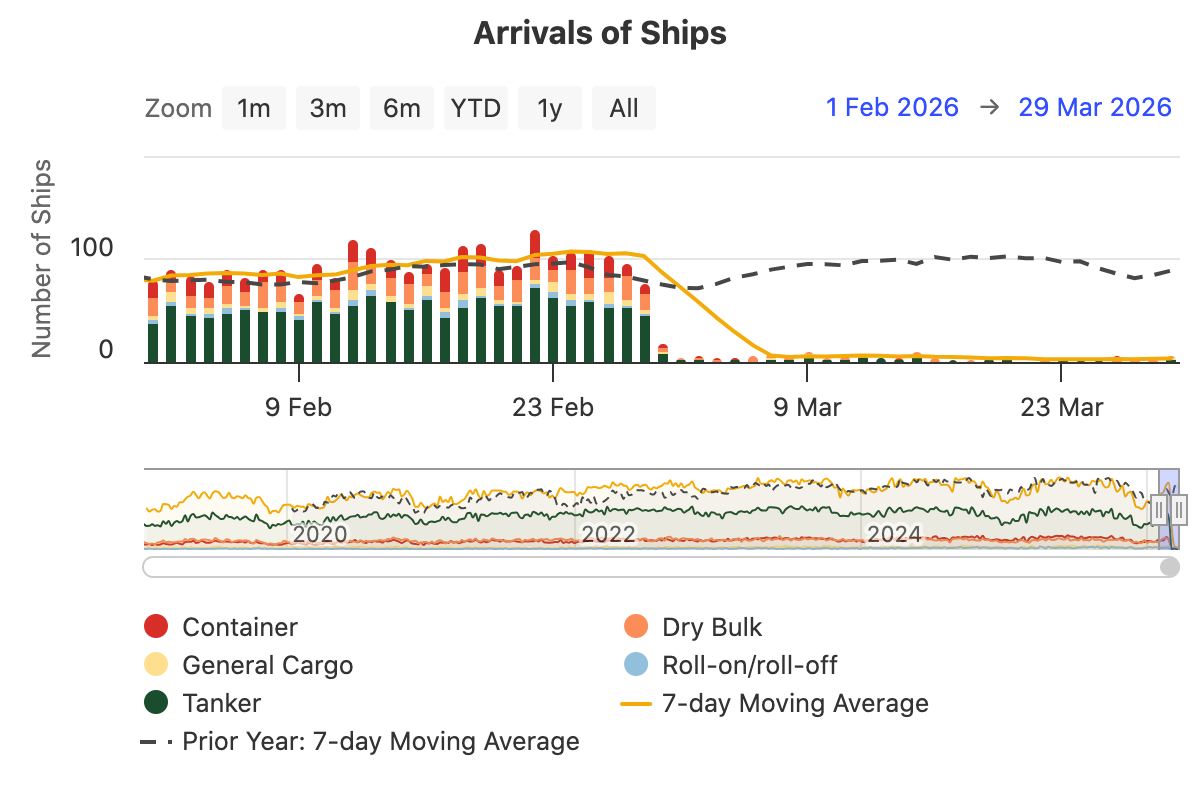
The primary physical reaction to the 2026 crisis was a near-total collapse in commercial activity. Real-time IMF PortWatch data showed a 97% reduction in commercial transits, declining from an average of 129 daily transits in February to as few as 3 in the first week of March.
Number ships passing through the Strait of Hormuz. (Sources: UN Global Platform, IMF PortWatch)
2.2. The Insurance and Freight Premium could Make Transit Commercially Unattractive
The JWC (Joint War Committee) and marine insurers can act as a de facto commercial choke point. By expanding Listed Areas and repricing or restricting cover, they can make Hormuz transits sharply more expensive even without a formal blockade.
In March 2026, war-risk premiums rose from 0.25% of vessel value in normal conditions to around 1–3% in many cases, and, in some extreme mid-March cases, as high as 7.5–10% of hull value for higher-risk vessels. That pushed voyage insurance costs into millions of dollars and materially constrained commercial traffic, though shipping was also curtailed by direct crew-safety concerns rather than insurance alone.
Hormuz may remain nominally open, but commercial shipping can still seize up when war-risk pricing explodes.
2.3. Downstream Energy: The Refined Products Squeeze
In Asia, the naphtha shortage created an immediate crisis for the petrochemical sector, as a large share of Asia’s petrochemical feedstock imports comes from the Middle East, with dependence especially high in Northeast Asia (roughly 70% for Japan and about 50–54% for South Korea).
Major users, including South Korea’s YNCC and Indonesia’s Chandra Asri, were forced to declare force majeure, a legal declaration that they cannot fulfill contracts due to extraordinary circumstances, as their feedstock supplies were depleted.
YNCC, South Korea's largest ethylene producer, was forced to reduce its operating rates.
2.4. The Fertilizer and Food Security Link
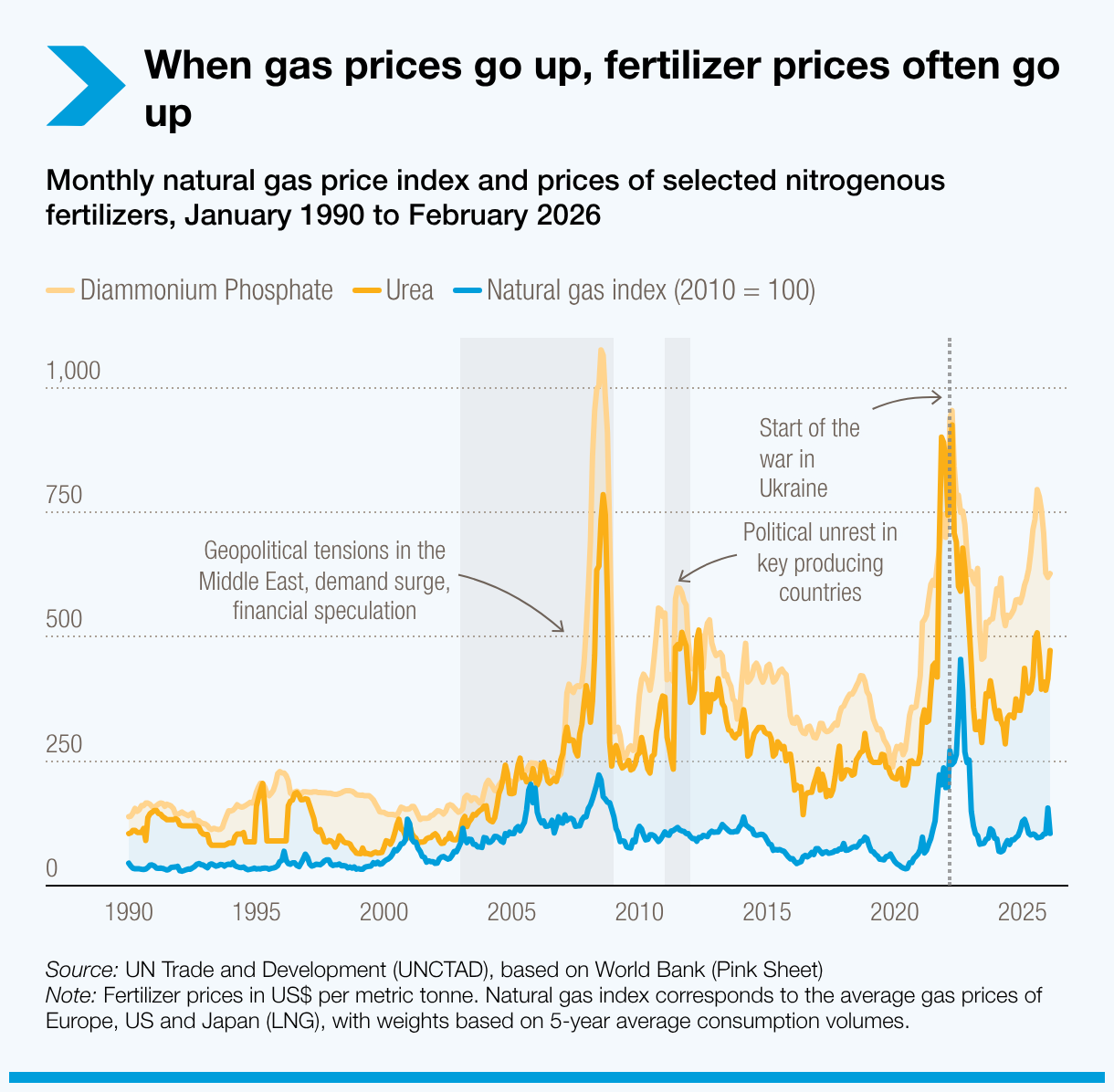
The Strait also matters through fertilizer supply chains. The region accounts for 34% of global urea, 20% of ammonia, and nearly 50% of global seaborne sulfur trade.
Qatar Fertiliser Company's official website states that it is one of the world's largest single-location urea exporters, with an annual production of 5.6 million tons of urea, which could account for up to 14% of global supply.
Meanwhile, a recent Reuters report indicates that the disruption to Hormuz has tightened global fertilizer supply, prompting China to release its fertilizer reserves ahead of schedule, and that approximately one-third of seaborne fertilizer supply is related to Hormuz.
This creates direct transmission into food systems, as stress in Gulf energy and chemical exports can spill into fertilizer availability and pricing, and from there into food production costs and, potentially, food inflation.
This relationship exists because gas is mainly a feedstock + fuel in nitrogen fertilizer production, while sulfur is a by-product of oil and gas processing. (Source: UN Trade and Development)
2.5. Helium and High-Tech Bottlenecks
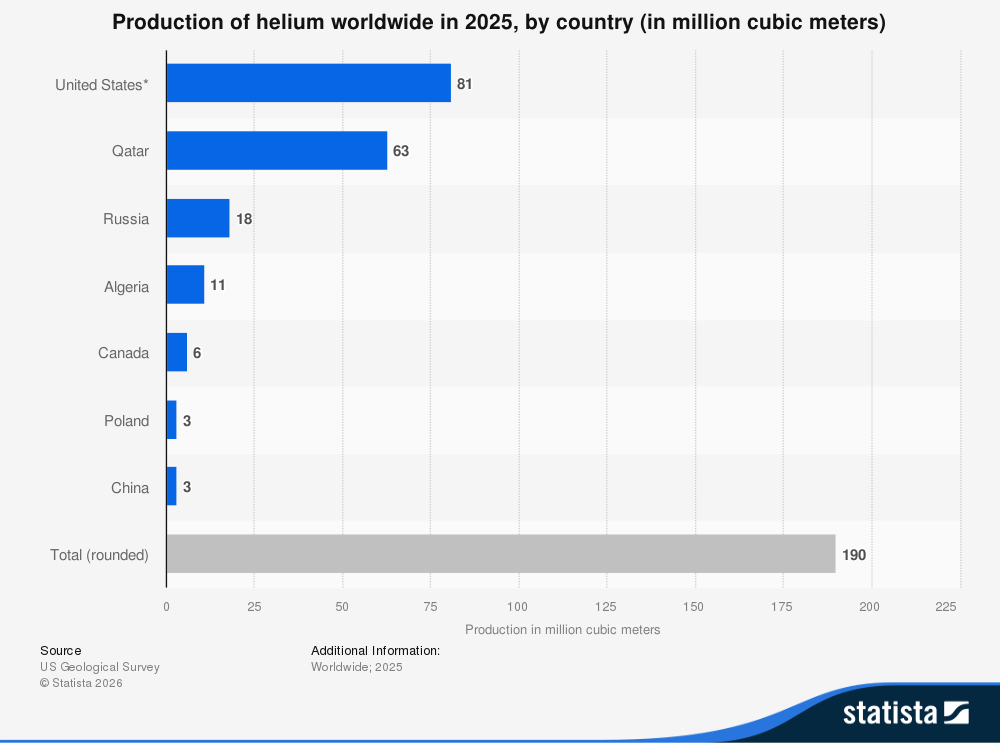
An overlooked transmission channel is the "Helium Link". Helium is extracted from Qatari LNG processing, and the region accounts for 30-38% of global supply. Because helium is non-substitutable, a halt in transits can spill into sectors that rely on helium as a specialized industrial input, including semiconductor manufacturing and certain medical applications like MRI systems.
Qatar was the world's second largest producer of helium in 2025. (Source: Statista)
Market stress shows up within days, as spot supply is tighter and buyers scrambles for alternative cargoes. Reuters reported this had already begun affecting tech supply chains by March 26, and Air Liquide, a leader in the helium market, said on March 25 that a short-term helium shortage was already expected.
Large users often have some buffer stock or contracted supply. But helium is hard to stockpile for long in liquid form. It typically needs to be transported within roughly 40-60 days of liquefaction. That means a short disruption may be absorbed, but a multi-week disruption starts to bite much harder later.
Helium is highly effective at transferring heat, making it ideal for rapid cooling. (Image credit: Shutterstock/aPhoenix photographer)
2.6. Timing, Sequencing, and Persistence
The economic significance of a Hormuz disruption depends not only on size but also on duration.
Some effects appear almost immediately, such as changes in traffic, freight, insurance, and headline energy prices. Others are slower and depend on inventories, contract structures, and the ability of firms to draw on buffers or alternative supply.
The longer the disruption lasts, the more likely it is to move from transport and pricing shocks into a broader industrial and food-system problem.
The Dark Edge Case of Prediction-Market Era Exposed?
Click on the Bookmark to read Article 2 of the Series
Sign up for Prediction Markets
Your complete guide to prediction markets: how they work, where to trade, why they matter, and current updates.
No spam. Unsubscribe anytime.
Disclaimer: The content is for informational purposes only. You should not construe any such information or other material as legal, tax, investment, financial, or other advice. Nothing contained in this article constitutes a solicitation, recommendation, endorsement, or offer by the author(s) or any third party service provider to buy or sell any securities or other financial instruments in your or in any other jurisdiction in which such solicitation or offer would be unlawful under the securities laws of such jurisdiction. The author(s) report(s) no conflict of interest.
The Commodity Futures Trading Commission sued Illinois officials over state efforts to regulate prediction markets, as the multi-billion-dollar industry continues to surge despite some efforts to limit the exchanges.
The agency is seeking injunctions against officials including Governor J.B. Pritzker, Attorney General Kwame Raoul, and the Illinois Gaming Board. The filing cites cease-and-desist letters the gaming board has issued to Kalshi, Polymarket and Crypto.com that seek to force the companies to abide by state gambling laws.
The lawsuit is the latest escalation in the legal fight between states and prediction market companies over whether the platforms should be regulated by the CFTC or fall under state jurisdiction. Under the Trump administration, the CFTC has asserted “exclusive jurisdiction” over prediction market platforms.
“Illinois’s attempt to shut down federally regulated DCMs intrudes on the exclusive federal scheme Congress designed to oversee national swaps markets,” the filing states, referencing designated contract markets that are overseen by the CFTC.
The case is US v. Illinois, 26-cv-3659, US District Court, Northern District of Illinois (Chicago).
Kalshi is having a legal war with Nevada, unsurprisingly. On the one hand, you have the traditional Las Vegas casinos celebrating their long-standing monopoly on sports betting as the lifeblood of the state, funding its residents and public infrastructure. On the other hand, you have a new entrant riding the halo of being a federally regulated "financial product." The tension was never hard to spot, and it was always going to end up in court.
The US, founded on federalism, is no stranger to the question of state versus federal authority. And on this particular question: "who should win?" , this piece might just be your reference if you ever consider investing in an event contract on this topic.
Kalshi's position: federal jurisdiction, full stop
Kalshi argues that the federal agency, not the state, should have exclusive jurisdiction over prediction markets. Through its years-long legal uphill battle, Kalshi has established that its core product, the event contract, carries legal status as a "derivative," placing it squarely under the CFTC's (Commodity Futures Trading Commission) jurisdiction over "all trading accounts, agreements, contracts, and transactions" under the CEA (Commodity Exchange Act).
Kalshi further argues that event contracts, with real economic utility such as risk hedging and price discovery, structurally qualify for the "bona fide business" exception to the statutory definition of gambling.
This view that event contracts are fundamentally different from traditional gambling, which is merely speculative, has been publicly backed by the current CFTC acting chairman Michael Selig. Pointed out by Selig in his X post in March 2026, Arizona's Attorney General's criminal charge against the prediction market exchange should be qualified as a 'jurisdictional dispute' rather than a 'criminal charge' against operation of illegal gambling, further confirming the underlying jurisdictional tension.
Nevada's counter: silence isn't preemption
Nevada, however, argues that the CEA's text and history simply do not reach state gambling law, and that shifts the burden onto Kalshi to prove Congress clearly intended to displace it. Nevada's deeper argument is that neither field preemption nor conflict preemption is established here: the CEA was enacted to address price manipulation in commodity markets, not to federalize state gambling regulation, and Congress never contemplated displacing state gaming authority at all.
The state leans on Wyeth v. Levine (2009): when Congress has not clearly stated its intent to preempt an area of historic state police power, courts must presume that power survives. Gambling regulation sits squarely in that category. Mere silence on the field of prediction markets, according to Nevada, is not field preemption, rather it is just silence.
So who would actually win?
The case currently sits at the state court level. The Ninth Circuit denied Kalshi's emergency motion to block Nevada from enforcing its gaming regulations, and a Nevada state court judge then granted a temporary restraining order blocking Kalshi from operating in the state, with both hearings scheduled in April.
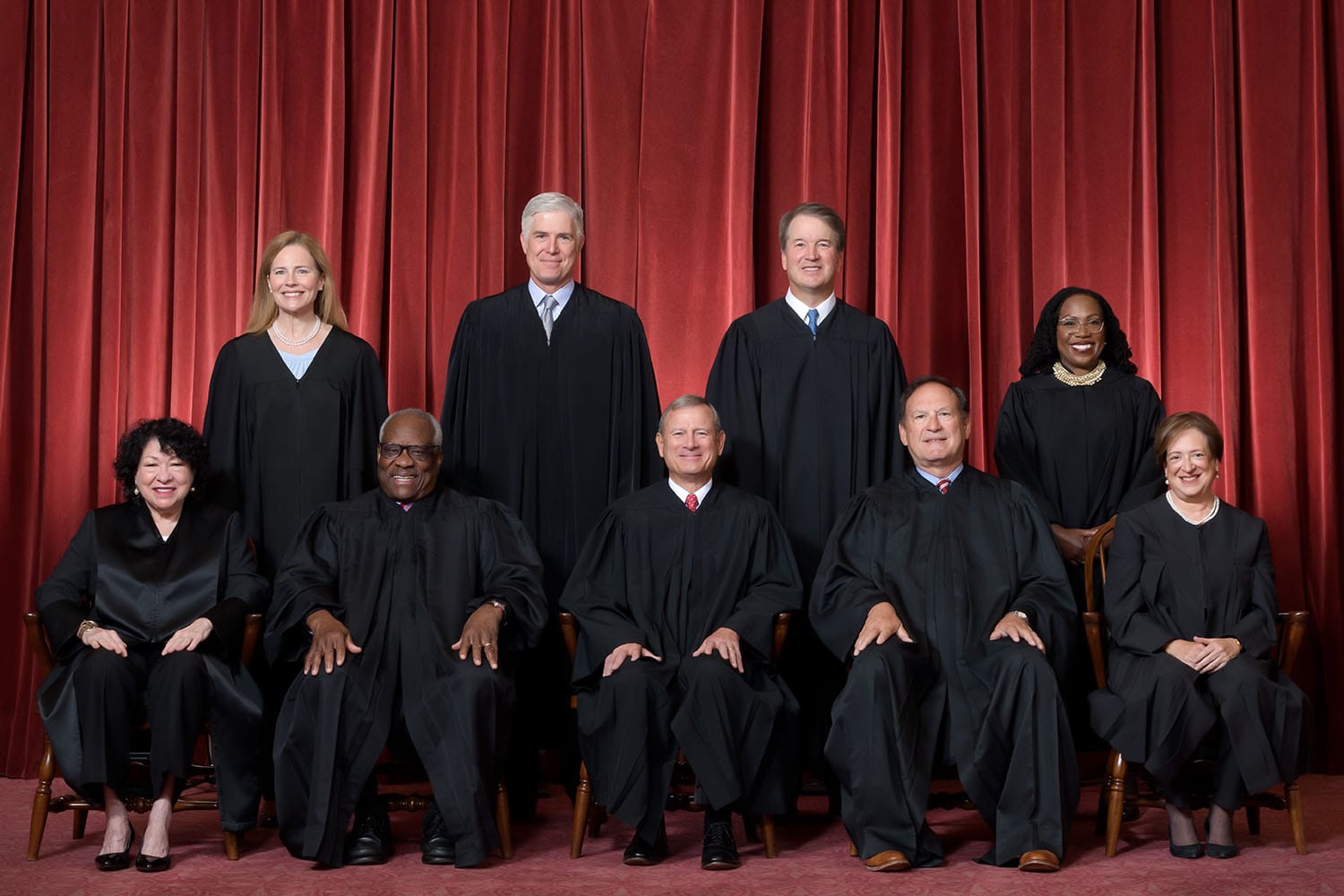
Will the case eventually arrive at the Supreme Court? Professionals have predicted most likely yes, may or may not because of Kalshi, the need for this jurisdictional question to be resolved lingers. Assume that it did, and how the nine sitting justices might split becomes worth an analysis.
The Supreme Court as composed June 30, 2022 to present.Front row, left to right: Associate Justice Sonia Sotomayor, Associate Justice Clarence Thomas, Chief Justice John G. Roberts, Jr., Associate Justice Samuel A. Alito, Jr., and Associate Justice Elena Kagan. Back row, left to right: Associate Justice Amy Coney Barrett, Associate Justice Neil M. Gorsuch, Associate Justice Brett M. Kavanaugh, and Associate Justice Ketanji Brown Jackson.Credit: Fred Schilling, Collection of the Supreme Court of the United States
The split isn't going to be the usual left-right divide. It’s messier. Justice Gorsuch, notably faithful to textualism, is very likely to persist in the position he staked out in Virginia Uranium, Inc. v. Warren (2019): that preemption arguments must be grounded in statutory text rather than in vague federal interests. In Virginia Uranium, Gorsuch was also joined by Justice Thomas, an equally committed textualist, and Justice Kavanaugh, who has consistently resisted finding any congressional delegation of legislative power to federal agencies absent a clear statement to that effect.
On the other side stand Roberts and Alito, both of whom dissented in Virginia Uranium. Roberts has long favored the narrowest ruling available in any given case, making a sweeping declaration, that CFTC registration categorically overrides all state gambling regulations nationwide, an unlikely outcome from his pen. Alito presents a more genuinely uncertain picture: he has historically favored federal regulatory uniformity in commercial fields, but his record on state autonomy cuts in the other direction and makes his ultimate vote hard to predict.
The three liberals, Sotomayor, Kagan, and Jackson, are expected to side with Nevada, but their real concern is the precedent. If a federal registration alone is enough to wipe out a state's entire gaming regulatory architecture, that logic doesn't stop at Kalshi. Every federally regulated platform suddenly has a template to bypass state law entirely.
Which leaves the ultimate disposition turning on Kavanaugh and Barrett, whose votes are less predictable than those of their colleagues. Kavanaugh has a well-documented record of rejecting the practice of deferring to federal agencies on their own interpretation of ambiguous statutory language. That said, as a pragmatic textualist, there remains a chance he reads the specific CEA provision differently and lands in Kalshi's favor. Barrett, despite being a textualist, has criticized state court overreach in her dissent in Mallory v. Norfolk Southern Railway Co. (2023), but her vote will likely depend on how she reads "exclusive jurisdiction" in the CEA itself.
Given the analysis above, two scenarios emerge as most likely:
The first and most probable: a ruling substantially in favor of the states. Thomas, Gorsuch, and Kavanaugh on the conservative side, combined with Sotomayor, Kagan, and Jackson from the liberal bloc, form a plausible six-vote majority for the proposition that the CEA does not clearly preempt state gambling regulation. If Barrett's reading of the statutory text leads her to the same conclusion, that majority expands to seven, a ruling that would carry significant precedential weight and effectively close the door on similar preemption arguments by other federally regulated platforms seeking to bypass state law.
The second scenario: a Roberts compromise. Rather than resolving the case on broad preemption grounds, Roberts may draw a functional distinction between event contracts with genuine economic utility and those that are more speculative: i.e., sports results, elections. The line is not easy to draw, but it gives the Court a way to resolve this dispute without writing a rule that governs every prediction market product in existence. It's the outcome most consistent with Roberts' institutional instincts, leaving the broader regulatory debate open rather than closing it.
A clean ruling in Kalshi's favor, one that broadly establishes federal preemption of state gambling regulation, remains the least likely outcome on the board. It would require Roberts, Alito, Kavanaugh, and Barrett to coalesce around a broad federal preemption ruling, which is a configuration that runs against both the weight of Virginia Uranium and the judicial philosophy of at least two members of that coalition. Absent an extraordinary intervention by the Trump administration explicitly advocating for comprehensive federal preemption of state gambling law, the doctrinal obstacles to this result appear substantial.
The Long Game
Kalshi is fighting a tough war, and its exponential growth in market size hasn't made the legal picture any brighter. Kalshi may win an intermediate victory at the Ninth Circuit, but that doesn't guarantee a permanently comfortable position. Should a similar case eventually draw the Supreme Court's attention, the odds would not be in its favor. Kalshi's best option is likely a sit-down negotiation with state regulators or a push on Congress, both of which implicate further uncertainties. And personally, as an outside observer, I wouldn't take my bet if this event were ever listed as a contract, for the sake of my trading track record.
Disclaimer: The content is for informational purposes only. You should not construe any such information or other material as legal, tax, investment, financial, or other advice. Nothing contained in this article constitutes a solicitation, recommendation, endorsement, or offer by the author(s) or any third party service provider to buy or sell any securities or other financial instruments in your or in any other jurisdiction in which such solicitation or offer would be unlawful under the securities laws of such jurisdiction. The author(s) report(s) no conflict of interest.
Sign up for Prediction Markets
Your complete guide to prediction markets: how they work, where to trade, why they matter, and current updates.
A couple of weeks later, I think the Illinois Democratic primary was actually pretty simple.
Traders looked at the races and basically said: okay, who has the biggest pile of cash, the fanciest profile, or the most recognizable name? Then they bought that candidate.
Voters were playing a different game. They cared more about who had the real local backing, the better endorsement chain, and the stronger on-the-ground coalition. So the market was betting on the glossy campaign brochure, while the electorate was voting on neighborhood plumbing. That’s why the pricing got so silly.
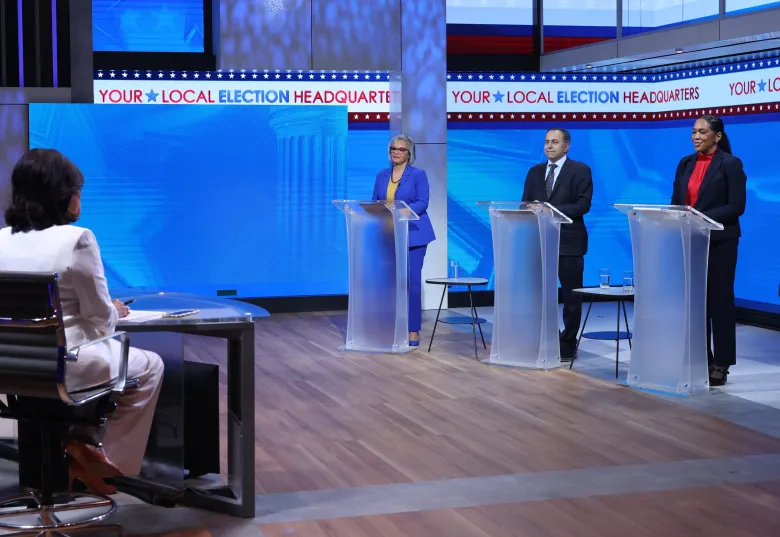
U.S. Rep. Robin Kelly, from left, U.S. Rep. Raja Krishnamoorthi, and Lt. Gov. Juliana Stratton debate at WGN-Ch. 9 in Chicago on Feb. 19, 2026. The three are vying for the Democratic nomination for U.S. Senate. (Image credit: John J. Kim/Chicago Tribune)
Take the Senate race. Right before the vote, Kalshi had Raja Krishnamoorthi around 56%-61% and Juliana Stratton around 40%-44%. Raja also had the kind of balance sheet that makes traders weak in the knees: about $30 million raised plus more than $19 million transferred from his House account. On paper, that looks like a monster favorite.
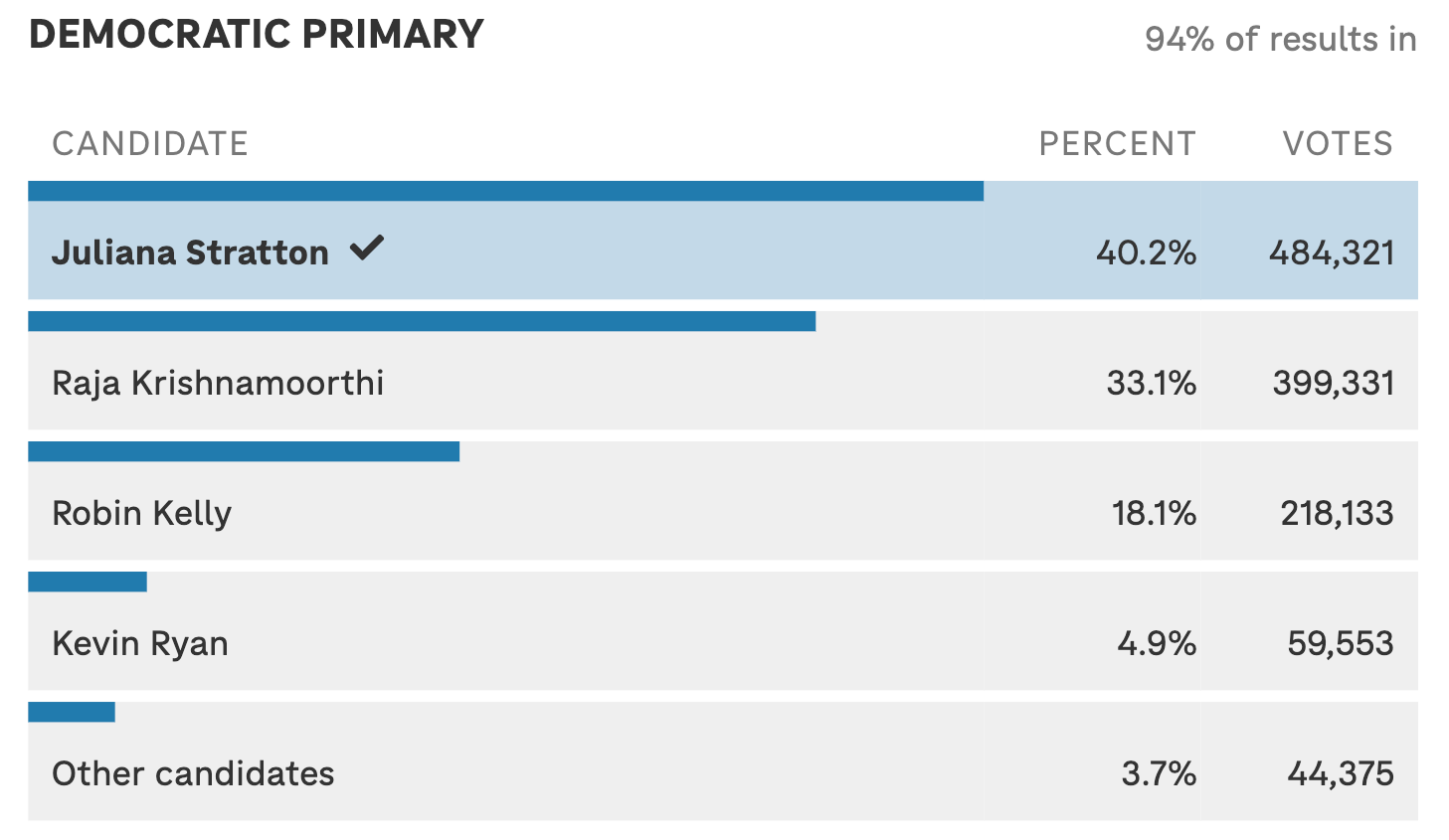
Then Stratton won anyway, at roughly 40%, with Raja at about 33% and Robin Kelly at 18%.
2026 IL Democratic primary election result (Source: NPR)
The Senate margin market on both Kalshi and Polymarket are trading at 95+% on “Stratton 6–9%”.
And that’s really the whole story. The market saw money and assumed money would turn into votes. But Illinois was a crowded, no-runoff primary with heavy early voting.
In that kind of race, money matters, sure, but it’s not magic. If another candidate has the cleaner coalition, the better machine support, and the more natural fit with the electorate, your giant ad budget can start to look a bit like bringing a gold-plated fork to a street-food contest. Nice fork. Still not the point.
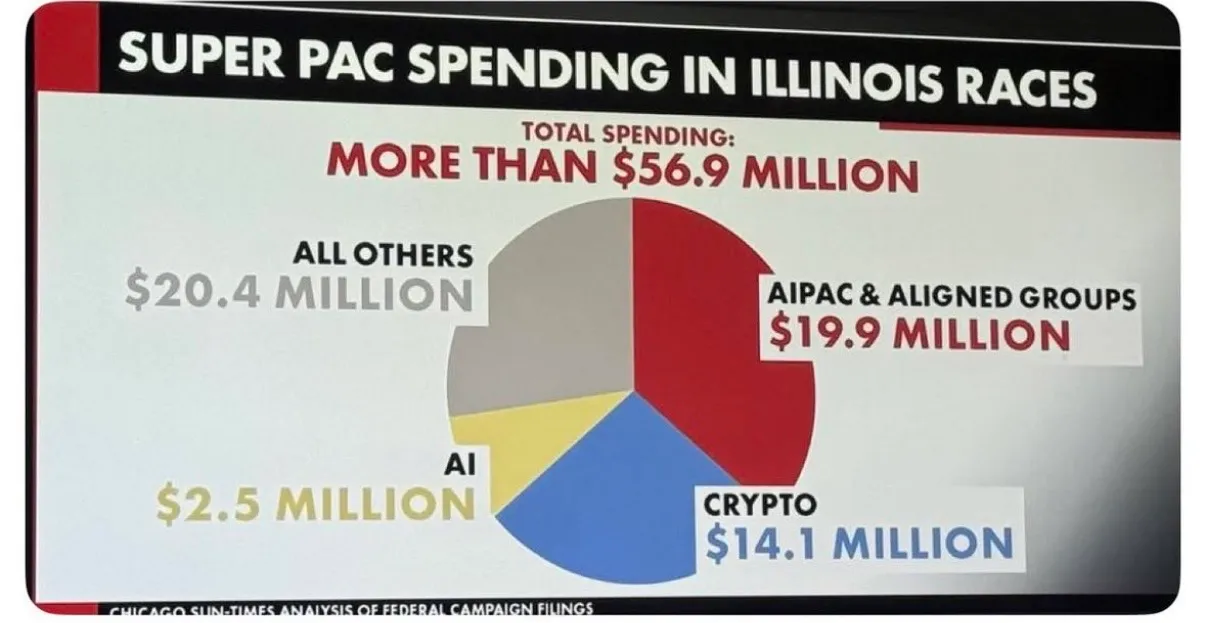
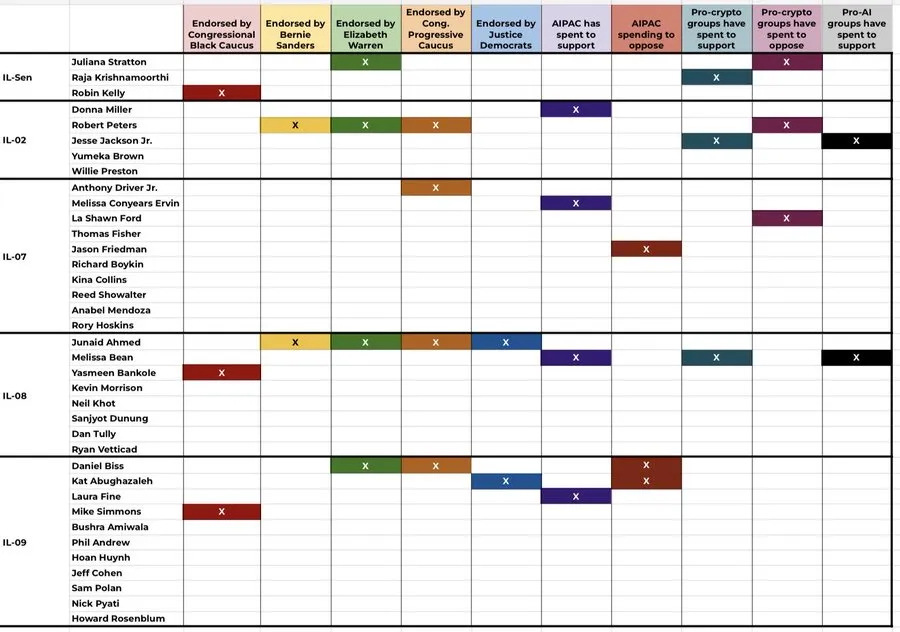
A peek at the absurd levels of outside spending and PAC dollars we saw in the Illinois primary (Source: Chicago Sun-Times)
What makes the miss more interesting is that the market had multiple chances to avoid it.
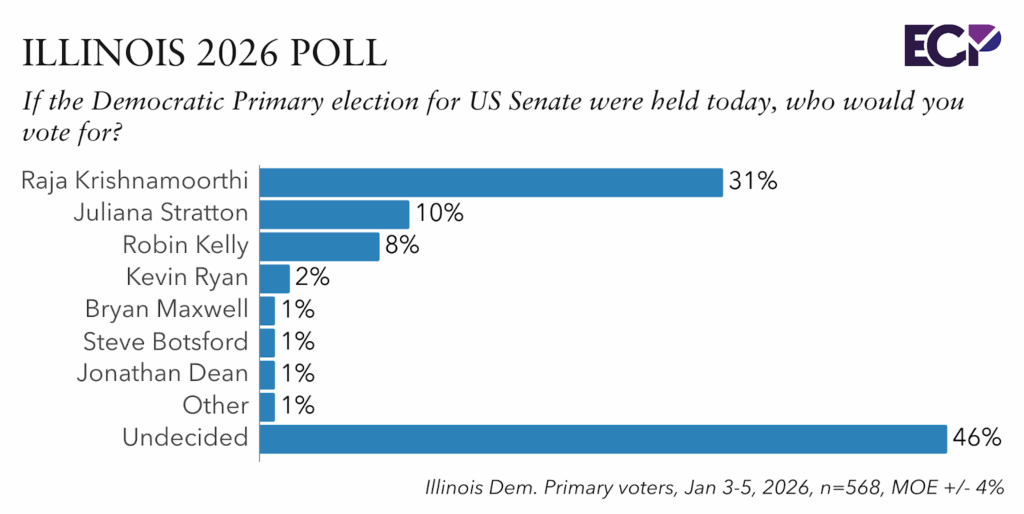
Emerson’s January poll had Krishnamoorthi at 31%, Stratton at 10%, Kelly at 8%, and 46% undecided. That should’ve scared traders. With nearly half the vote still up in the air, “Raja’s leading” was a lot less solid than it looked.
Illinois 2026 Poll Result by Emerson College Polling.
Same with the expectation data. NPR Illinois said likely Democratic voters thought Krishnamoorthi would win 46% to 20% over Stratton, with Kelly at 16%. But that wasn’t proof. It was more like everyone telling each other the same story and then mistaking it for reality.
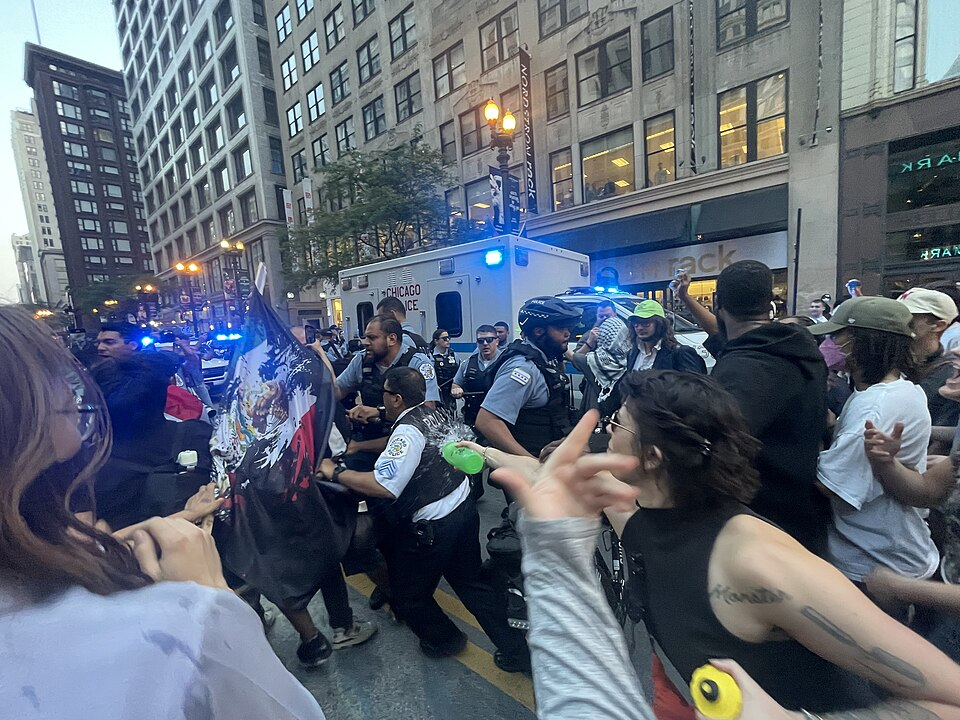
Then the race shifted. Immigration and ICE became more important late, and that fit Stratton better. The market was still asking who had more money and ads. Voters were asking who sounded more like them. By then, the price was stale.
ICE protests get geated in Chicago. (Image credit: SwissAmish)
The funniest part is that the Senate race wasn’t even the only example. The market made the same mistake in the House races too.
In IL-02, Kalshi had Jesse Jackson Jr. around 74%–76%, and then he lost badly to Donna Miller, who won about 40% to 29%.
Miller's organized credibility brought him this victory. He had a cleaner profile, the fundraising lead, and enough organizational ballast. Illinois showed that, in fractured Democratic primaries, transferable networks beat famous surnames.
Former Rep. Jesse Jackson Jr., who was convicted of finance fraud, has announced his campaign to return to Illinois' 2nd Congressional District seat. His father, Rev. Jesse Jackson Sr., served as a shadow U.S. senator for the District of Columbia. (Image credit: jessejacksonjrforcongress.com)
In IL-07, Melissa Conyears-Ervin was around 73% on Kalshi and still lost to La Shawn Ford.
Ford had the one asset that mattered more in a crowded, low-plurality race: Danny Davis’s succession blessing. He won with just 23.9% to Conyears-Ervin’s 20.5%, which is exactly the kind of result you should expect when a local machine handoff outruns paid media.
La Shawn Ford and Melissa Conyears-Ervin on Election Day March 17. (Image credit: Austin Weekly News)
So this wasn’t one weird pricing error. It was a pattern. Traders kept paying up for the candidate who had the strongest surname recognition or who looked strongest in a fundraising memo, while voters kept rewarding the candidate with the better real-world network.
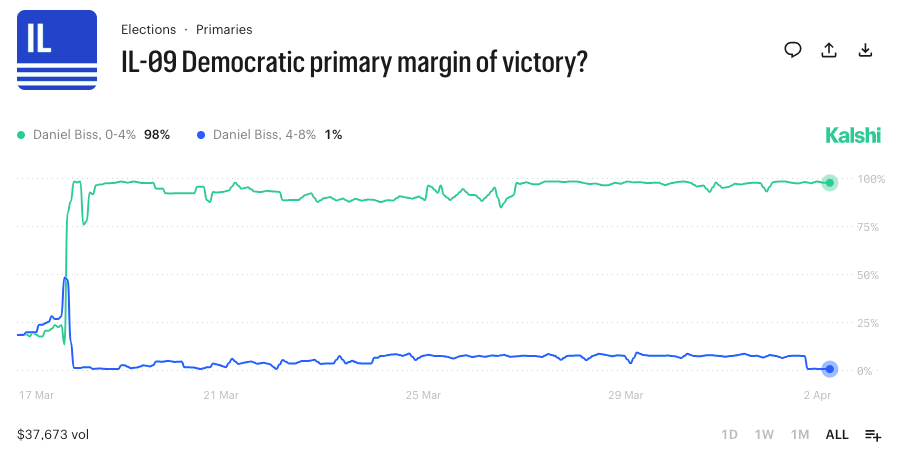
The market was broadly right only where coalition ownership was clearer, like Melissa Bean in IL-08, who won 32% to Junaid Ahmed’s 26.5%, and Daniel Biss in IL-09.
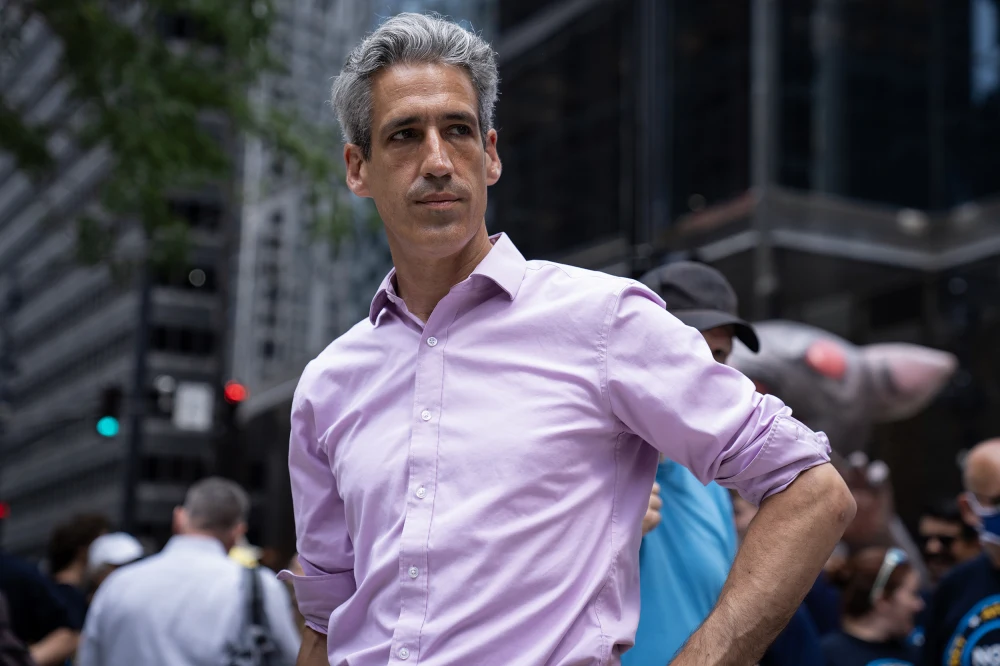
Democratic candidate Melissa Bean at Harper College in Schaumburg, Illinois, on Feb. 7. (Image credit: Talia Sprague / Tribune News Service via Getty Images)Evanston Mayor Daniel Biss won a contentious Democratic House primary in the Chicago area on Tuesday, after weathering attacks from a group seeded by the AIPAC-aligned super PAC.(Image credit: E. Jason Wambsgans / Chicago Tribune/Tribune News Service via Getty Images)
That’s the part prediction markets still get wrong more often than they should. People love measurable things. Cash totals are measurable. Famous last names are easy to recognize. TV ad saturation feels concrete. Coalition strength is messier. Local endorsements are messy. Transferable political networks are messy. But messy things still win elections.
And honestly, that’s why this was such a good lesson. The market wasn’t fooled by some last-minute shock out of nowhere. It just put too much weight on the wrong variables. It treated “most money” as if it meant “most likely to finish first”.
In a fragmented plurality race, that’s just not reliable. Sometimes the richest candidate is the best candidate. Sometimes he’s just the guy burning money while someone else is quietly stacking actual voters.
In addition, the best hedge in races like these is usually not candidate-versus-candidate. It is winner plus margin.
In Illinois, crowded fields compressed victory bands. Kalshi’s IL-09 market had Biss by 4-8 points at 29 cents and Biss by 0-4 at 24 cents shortly before polls closed, which was a far more realistic read of a 15-candidate plurality race than paying up for a cartoon blowout.
That framework generalizes well: in future no-runoff Democratic primaries, pair the undervalued coalition candidate with narrower margin bands rather than paying for a dominant-win narrative.
You can profit via making predictions on the winning margin on platforms like Kalshi
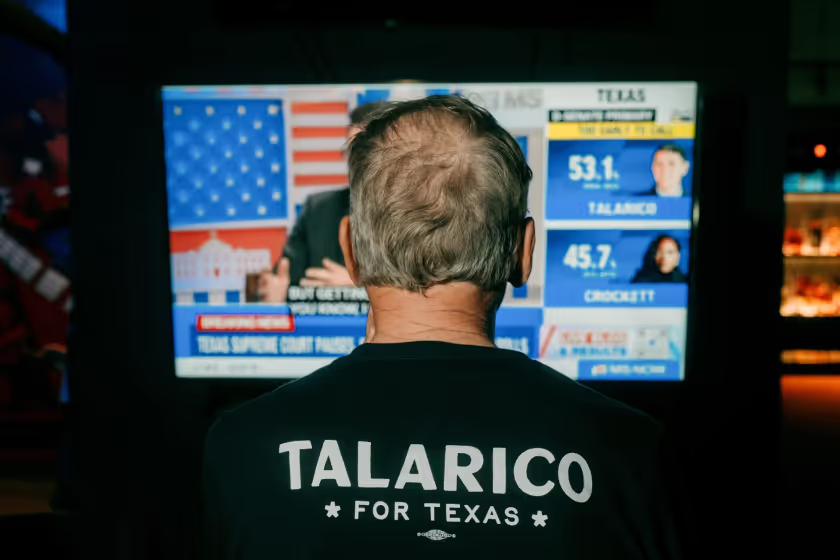
There was an instance where prediction markets picked Texas Democratic Primary winner but missed on GOP race.
Now that the primary is over, the edge is gone. The market has mostly gone back to treating Illinois like Illinois. But the lesson is still useful, especially if you trade primaries.What I’d remember next time:
Cash isn’t a coalition
Big names get overpriced most of the time
In crowded no-runoff races, local political machinery matters more than traders want to admit
If the market is buying the obvious story, check whether voters are playing a different game
If you want the one-line version: Illinois wasn’t a story about voters doing something shocking. It was a story about traders doing something lazy.
Disclaimer: The content is for informational purposes only. You should not construe any such information or other material as legal, tax, investment, financial, or other advice. Nothing contained in this article constitutes a solicitation, recommendation, endorsement, or offer by the author(s) or any third party service provider to buy or sell any securities or other financial instruments in your or in any other jurisdiction in which such solicitation or offer would be unlawful under the securities laws of such jurisdiction. The author(s) report(s) no conflict of interest.