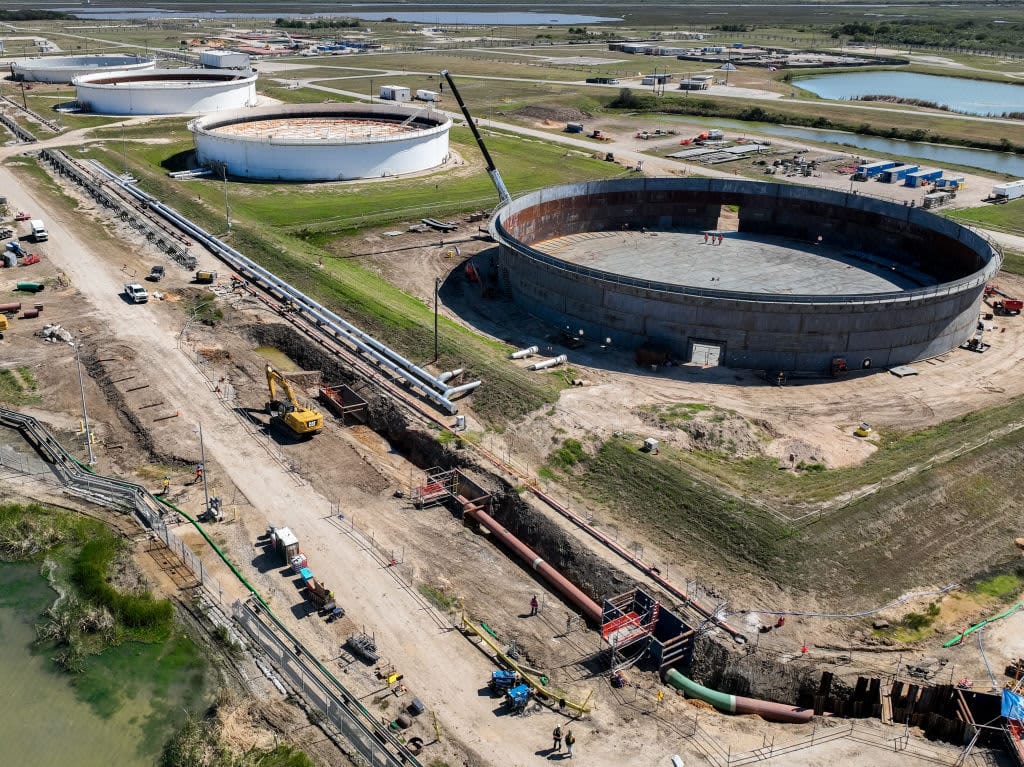
The U.S. Strategic Petroleum Reserve has fallen to the lowest level in more than 40 years as emergency stocks are released to help ease the supply disruption triggered by the Iran war.
The SPR stood at 340.3 million barrels as of June 12, the lowest level since the summer of 1983, according to data released Monday by the Department of Energy. The reserve fell nearly 9 million barrels week over week.
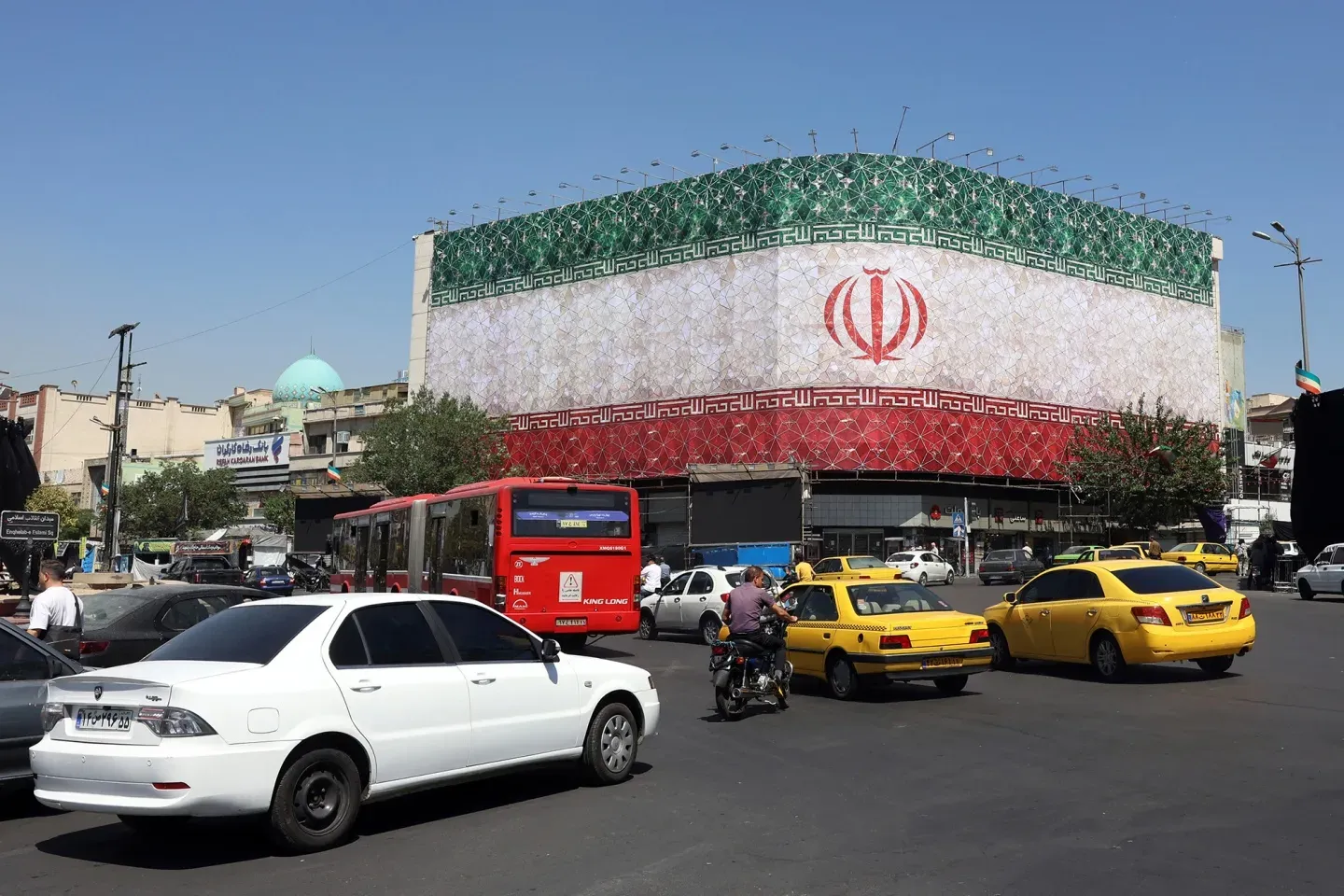
The deal that the U.S. and Iran are set to sign on Friday to reopen the Strait of Hormuz comes as oil executives have warned that global inventories are rapidly depleting to critical levels.
"We're approaching unheard of inventory levels," Exxon senior vice president Neil Chapman said May 28 at a conference hosted by Bernstein in New York. Chapman warned at the time that oil prices would spike as inventories fall while summer fuel demand is set to peak.
Inventories will continue to decline even after the U.S.-Iran deal is implemented as it will likely take weeks to months for oil flows through Hormuz to normalize.
"We still have inventory draws. Those are inexorable and they're already at historic lows," said Bob McNally, president of consulting firm Rapidan Energy. "We don't think we're out of the woods in terms of upper pressure on prices"
The U.S. agreed in early March to release 172 million barrels from the reserve. It was part of a coordinated release of 400 million barrels by the members of the International Energy Agency, the largest such intervention in the organization's history.
"The U.S. is the supplier of last resort," said Matt Smith, director of commodity research at Kpler. "Everybody's coming to the U.S. to pull barrels out of it because there's not the availability elsewhere."
President Donald Trump repeatedly slammed the Biden administration for releasing barrels from the SPR after Russia's invasion of Ukraine. The SPR hit a Biden-era low of around 346 million barrels in July 2023.
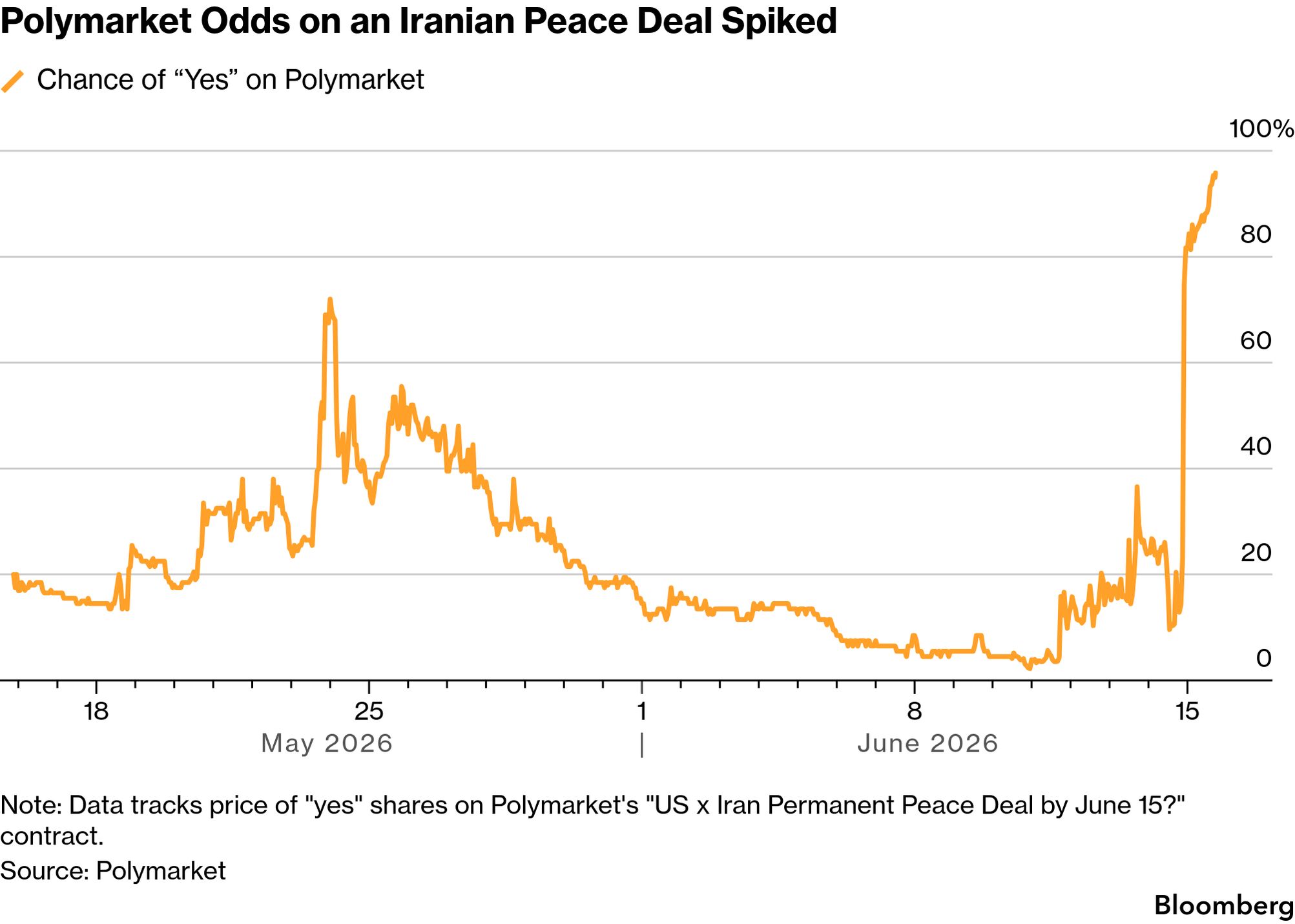
A proposed deal to end hostilities between the US and Iran gave equities and bond traders a measure of relief on Monday. It also left prediction markets with a new headache.
Polymarket, one of the largest event betting exchanges, has hosted more than $345 million of trading on the question of whether and when the US and Iran would sign a peace deal.
Both countries announced they had an agreement over the weekend, and some traders thought they had won a payout. But the bets are in limbo because it was not clear if the announcement was enough to meet the conditions written into Polymarket’s contracts.
A proposal made on Sunday night to resolve the contract to “yes” — there was a peace deal — was quickly disputed by holders of UMA, the cryptocurrency used to handle market challenges on Polymarket.
Some of those arguing the outcome say the contract’s terms have not been met, in part because no document has been signed, and in part because it’s unclear if the agreement between the two sides represents a “permanent” end to the fighting.
The dispute is the latest — and one of the largest — conflicts to roil Polymarket, underscoring the ongoing difficulty prediction markets have had in resolving yes-or-no conflicts tied to messy real world events.
Polymarket’s reliance on UMA to handle its disputed bets has been unpopular with some traders because UMA holders can sway decisions worth billions of dollars without revealing their identity or possible conflicts of interest. The process sees token holders debate the topic in an online chatroom, before voting on the outcome.
A recent Bloomberg analysis showed just nine wallets control more than half of the tokens used for such votes.
The terms of Polymarket’s contracts tied to an Iranian peace agreement indicate that any deal must explicitly state that military hostilities between the US and Iran “have ended or will permanently cease,” meaning temporary ceasefires would not qualify.
Users gathered Monday in UMA’s online Discord chatroom to argue over whether the announcements over the weekend were enough to meet these terms. The debate and subsequent vote on the matter is expected to conclude later this week.
The two countries said on Monday that they had an interim peace agreement to reopen the Strait of Hormuz for 60 days. Delegations from both sides are set to hammer out the details in Qatar this week, with a memorandum of understanding expected to be signed in Switzerland on Friday.
A number of Polymarket users pointed to the temporary nature of the Strait’s reopening as a sign the deal was not permanent.
Conversely, others said that Pakistani Prime Minister Shehbaz Sharif’s description of the agreement as a declaration of “immediate and permanent termination of military operations” was sufficient evidence for the market to conclude.
There was particular debate over a contract tied to whether a peace deal would be reached by Monday, which has attracted $66 million in trading volume so far.
Contracts remain open for trading during the UMA dispute process, allowing investors to effectively bet on the outcome of the debate rather than the original event that had attracted the wagers.
Polymarket did not immediately respond to a request for comment on the dispute.
Odds that the Strait of Hormuz traffic will return to normal before August surpassed 50% after U.S. President Donald Trump announced a deal with Iran on Sunday, which includes reopening the strait.
Chances that the strait's traffic will return to normal before August sit at 58% on Kalshi. The last time those odds were that high was in late May. Other markets also saw jumps, with a 75% probability that traffic will return to normal before the end of this year.
The higher odds come after Trump's announcement, in which he declared both sides had agreed to a "memorandum of understanding" and approved removing the U.S. naval blockade.
"Ships of the World, start your engines. Let the oil flow!" he wrote about the strait on Sunday's Truth Social post.
Trump later clarified the strait would open after a deal is signed on Friday, "for purposes of mine removal." Iranian state news agency Mehr also reported the strait would reopen under "Iranian arrangements."
Qatar asked for further clarity on Monday on "outstanding issues" between the countries, "including ensuring freedom of navigation in the Strait of Hormuz."
A key player excluded from the deal is Israel, the nation that collaborated with the U.S. to strike Iran on Feb. 28.
The confusion suggests why traders on Kalshi have avoided placing at least a 90% chance that the strait would before the end of this year.
Iran's Deputy Foreign Minister Kazem Gharibabadi said the "end to the war" included Lebanon but on Monday, Israel said its defense force will continue to stay put in "security zones" in Lebanon, Gaza and Syria.
Vice President J.D. Vance told CNBC's "Squawk Box" the deal will open the strait without tolls for the long term.
"We're already seeing in the past 24 hours more traffic flow," he said on Monday. CNBC could not immediately verify this.
Iran and the U.S. are set to sign the peace deal on Friday in Geneva.
Kalshi Inc. has developed its own AI agent to help deal with a number of internal processes, including some of the thorniest issues it faces around the wording of its prediction market contracts.
The company has been using the tool — known internally as Harrison — to help avoid hiccups on the millions of wagers it handles every day on the outcomes of events like elections, sports games and award ceremonies, co-founder Luana Lopes Lara said in interview.
Multi-million dollar bets often turn on the specifics of how Kalshi’s contracts are written, such as the language being used or evidence sources. The industry has faced controversy in the past when market phrasing has not matched up with the complicated nature of real-world events.
The AI agent, which the company has not previously spoken about publicly, also performs daily tasks like aggregating top news, analyzing what competitors are offering and making recommendations on what the exchange should list next or where it should focus rewards for users adding liquidity.
“We actually have an AI engineer in the markets team, where the AI is battle-testing the entire certification — finding out if you go in this direction, maybe there’s a hole here, and all of that,” Lopes Lara said.
Lopes Lara said that outside of engineering, staff on its markets team are the biggest users of the technology among the company’s 150-person workforce. The Kalshi agent — built on top of Anthropic’s Claude model — offers a window into how fast-growing startups are building their own tools to handle tasks that used to be left to high-level employees.
When Kalshi was founded, Lopes Lara and her co-founder, Tarek Mansour, hired a roster of debate champions from Yale University to do the work of battle-testing the structure of the contracts it lists. One of those graduates still works at the company today.
Market structure has often been a thorn in the side of prediction market providers when events go in unexpected directions. Kalshi, for instance, resolved a market tracking whether a Netflix Inc. executive would say “Warner Bros.” on a January earnings call to “no” because the person pronounced the name as “Warner Brothers.”
Kalshi now has more than 500 templates for possible markets that have already been worked through by its team, Lopes Lara said, reflecting the exchange’s own predictions for what might happen in the world, with a regulated contract to match. Each template goes through the same review: how can it be generalized to fit more events? How can it be stress-tested? Does it meet user requirements?
“Nowadays it’s very easy because for every suggestion, the AI already suggests which market, which template to use, issues we should think about, maybe a new certification or amendment,” Lopes Lara added.
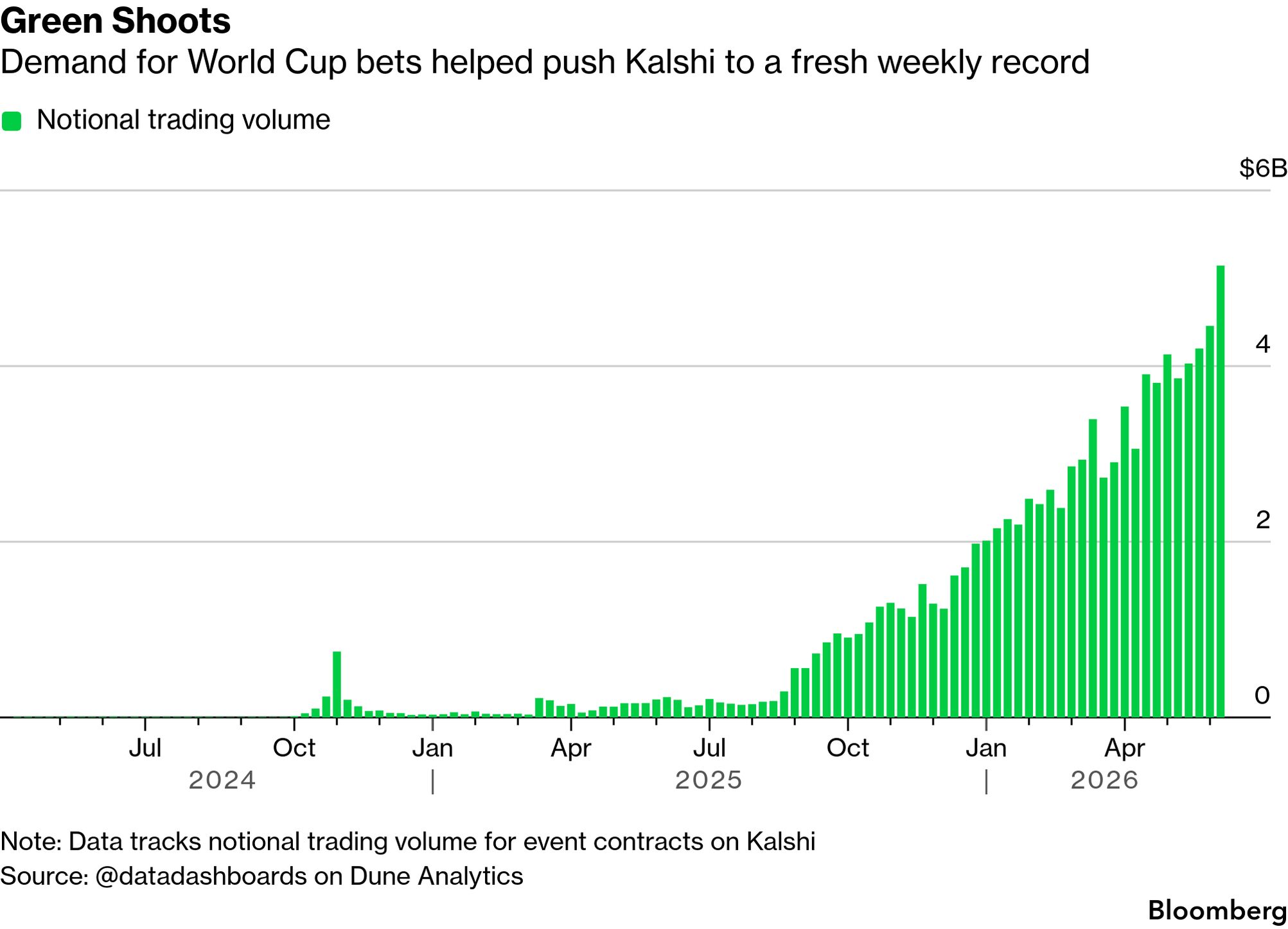
Demand for wagers on sports events like the World Cup and NBA Finals led to a record month at the exchange in May, amounting to nearly $18 billion in notional trading volume, according to user-compiled data on Dune Analytics. In the first week of the World Cup this month, Kalshi also broke a weekly record with $5.1 billion in volume.
Listing a new market on Kalshi typically requires two people, Lopes Lara said: one to work on populating the template with the right information, rules that need to be displayed or warnings to be included; and a second person to review it all. Contracts then face a one-to-two hour delay for spotting any issues before going live to all traders, with a paid bounty offered to those who identify flaws.
Resolving a market works much the same way. Some markets, like who won a sports game, can be determined automatically based on an external data provider. Elsewhere, Kalshi’s AI will send alerts to team members if it sees a lot of news articles on one topic, attaching a list of markets that might require determination.
In most cases, determining an outcome is a three-step process: someone on the markets team inputs an outcome into the system, while a second person independently adds their own decision.
Kalshi’s AI verifies whether the answers match, while also checking against its own suggested response. If a market is complicated, like a Supreme Court ruling, there’s an additional layer of checks, sometimes involving Kalshi’s chief regulatory officer.
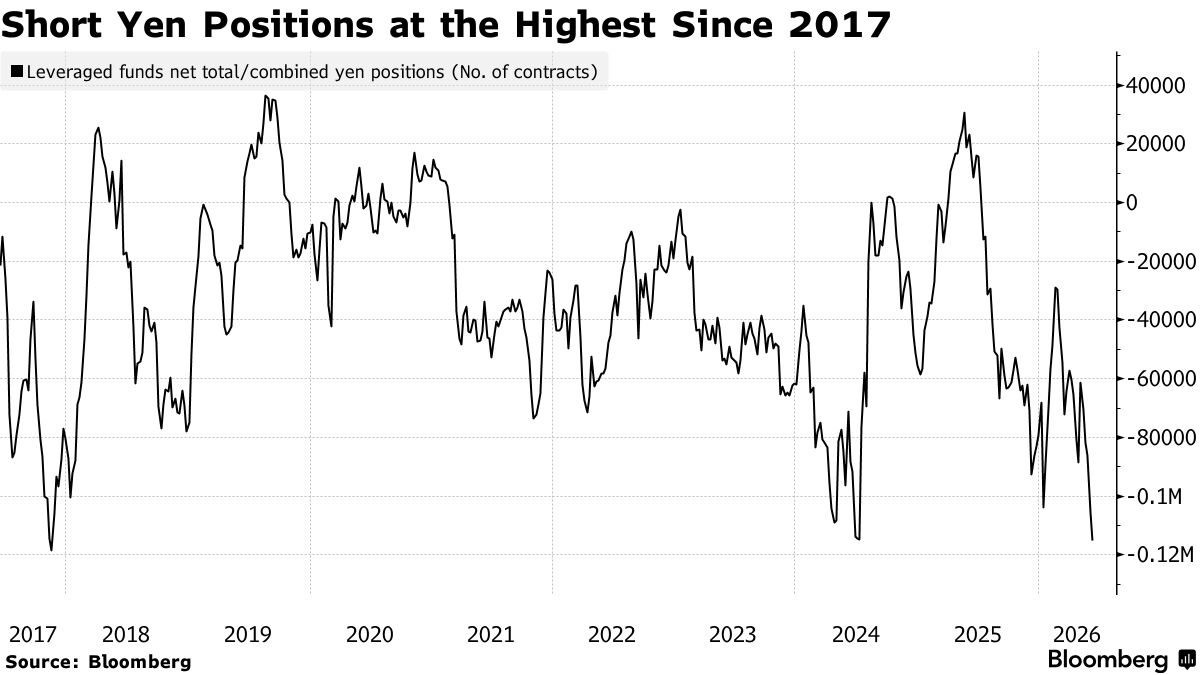
Speculators have boosted their bets against the yen to a nine-year high, signaling the revival of the yen carry trade despite intervention risks and a potential rate hike by the Bank of Japan on Tuesday.
Leveraged funds Speculators Increase Bearish Yen Wagers to Nine-Year High: CFTC their bearish positions on the yen to over 115,000 contracts in the week through June 9 — the highest level since November 2017, according to Commodity Futures Trading Commission data. That comes as the yen hovers near the 160-per-dollar level, putting traders on alert for government intervention.
The so-called yen carry trade, which involves borrowing in the relatively low-yielding Japanese currency and investing in other currencies offering higher returns, is thriving again partly because global market volatility has remained relatively subdued. The yen has also trended lower, defying the BOJ’s gradual rate hikes and taking Tokyo’s record-breaking currency interventions in its stride as the interest rate gap with the US persists.
Read: Collapsing Volatility Turbocharges Returns in Carry Trades
The BOJ’s potential rate hike and FX support are “already substantially priced in” by the market at this point, whereas both moves were surprises two years ago, JPMorgan Chase & Co. strategists including Junya Tanase wrote in a note. Many investors view intervention-driven yen strength as an opportunity to sell, as evidenced by the April-May intervention, which saw short yen positions briefly shrink before quickly rebuilding and returning to pre-intervention levels, they said.
Still, the yen carry trade isn’t without risks. It blew up in 2024, when the BOJ raised rates and unveiled plans to halve bond purchases, triggering a sharp rebound in the yen that forced investors to rapidly unwind leveraged positions and sent shockwaves through global currency and equity markets.
ECB Raises Rates Again as Middle East War Rewrites Europe’s Inflation Outlook
Brief Analysis
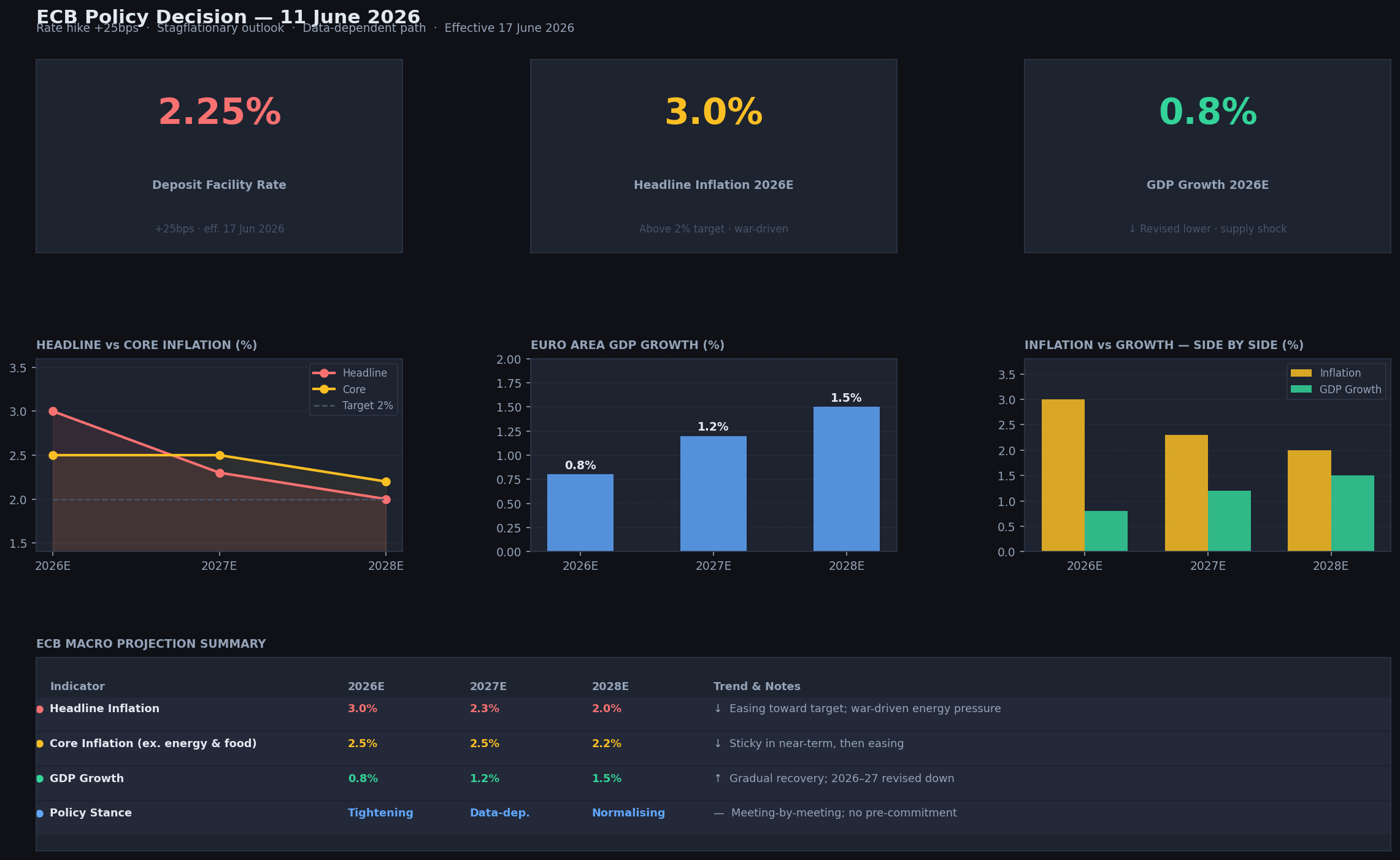
The European Central Bank raised its three key interest rates by 25 basis points on 11 June 2026, saying the war in the Middle East is generating new inflation pressure and creating uncertainty around the euro area’s medium-term outlook. The deposit facility rate will rise to 2.25%, the main refinancing operations rate to 2.40%, and the marginal lending facility rate to 2.65%, effective 17 June 2026.For markets, the most important signal is not only the rate hike itself. It is that Europe has moved back into a stagflation-style trade-off: inflation risks are rising while growth expectations are being revised lower. In the ECB’s new baseline, headline inflation is expected to average 3.0% in 2026, 2.3% in 2027, and 2.0% in 2028. Core inflation, excluding energy and food, is projected at 2.5% in both 2026 and 2027, before easing to 2.2% in 2028.
“The ECB’s latest decision turns Europe’s macro outlook into a two-sided prediction market: inflation risk is back, but growth risk is rising at the same time.”
That tension is visible in the growth forecasts. The ECB now expects euro area growth of only 0.8% in 2026, followed by 1.2% in 2027 and 1.5% in 2028. The 2026 and 2027 forecasts were revised down because the war is expected to hit commodity markets, real incomes, and confidence.
“This is not a clean tightening cycle. It is a policy response to a supply shock, where higher energy prices can lift inflation while simultaneously weakening consumers and businesses.”
The decision creates a highly tradable setup for prediction markets because the ECB is refusing to commit to a fixed policy path. It said future decisions will be data-dependent and made meeting by meeting, based on the inflation outlook, underlying inflation dynamics, incoming economic and financial data, and the strength of monetary policy transmission.
“The most important line for traders is that the ECB is not pre-committing to a particular rate path. That keeps every future meeting live.”
This makes the next phase of European monetary policy unusually measurable. Inflation prints, energy prices, growth revisions, wage data, confidence indicators, and each ECB meeting can now directly shift the odds of another hike, a pause, or even a later policy reversal.For prediction markets, the core question is simple: Is this the beginning of a renewed tightening cycle, or the final hike before growth weakness overtakes inflation as the ECB’s bigger problem?
Economic forecasts tell us what analysts expect, but prediction markets show us where traders are willing to put capital behind a view.
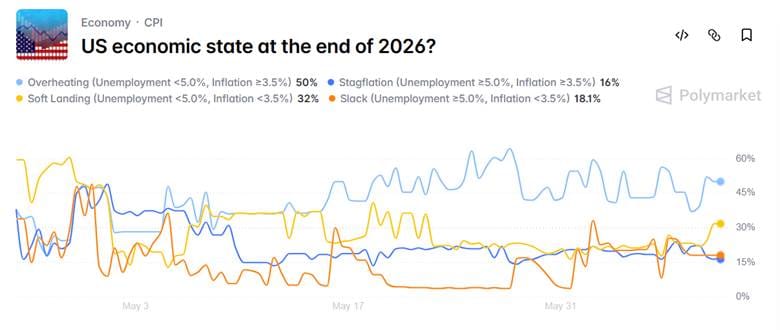
Right now, one of the more interesting macro markets on Polymarket is asking what kind of economy the US will have at the end of 2026. The market gives traders four choices: soft landing (32%), overheating (50%), stagflation (16%), or slack (18.1%). The contract resolves based on official BLS data for December 2026.
Strip away the labels and the trade comes down to two questions: does inflation stay sticky, and does unemployment cross 5%?
As of this writing, “overheating” at 50% looks like the obvious answer. Inflation is still high, unemployment is still below 5%, and the economy has not clearly cracked, so based on the latest data alone, the label fits almost too neatly.
But there may be a blind spot here.
Inflation is already close to the line
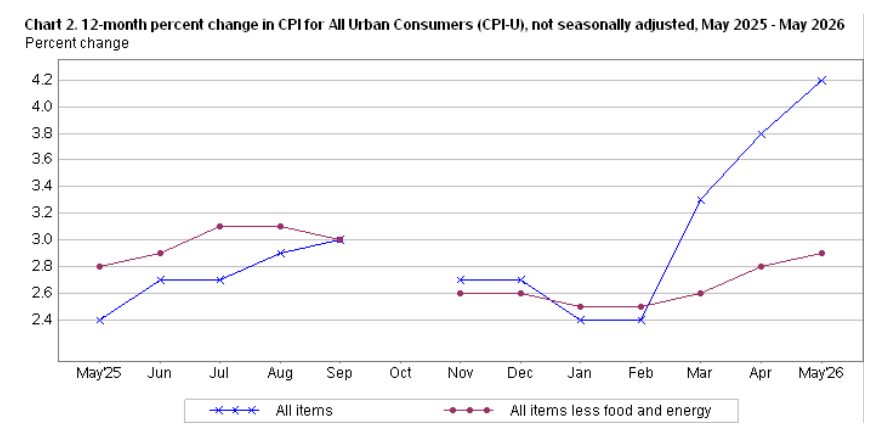
The inflation condition is currently satisfied, but the question is whether it stays satisfied through the market's December 2026 resolution data. May CPI was 4.2% year over year, while chained CPI was 4%. Both are above the market’s 3.5% cutoff.
So, for stagflation to resolve, December 2026 inflation needs to remain above the market's cutoff. And there are several reasons it could.
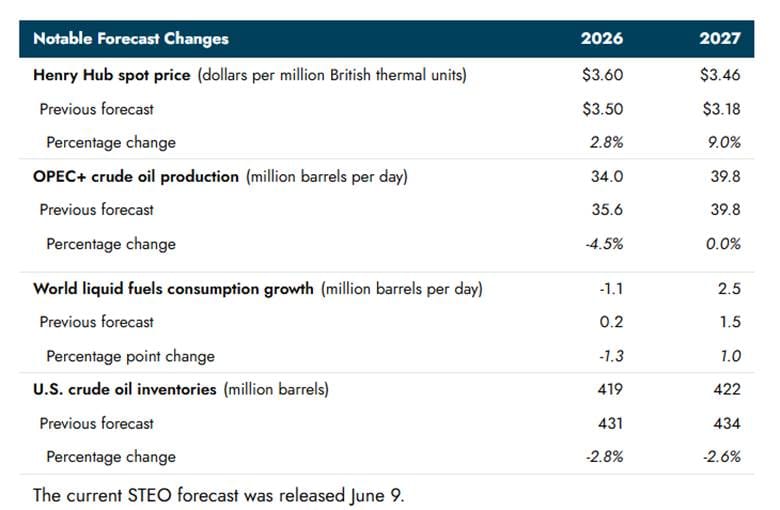
Energy prices are the obvious one. The EIA’s forecast points to a tight oil market through early summer. Its latest outlook assumes the Strait of Hormuz remains effectively closed in the near term, with shipments only starting to resume in the third quarter.
Oil touches transport, food distribution, airline costs, manufacturing, and consumer expectations. When energy prices rise, they can show up across the economy in ways that are hard for central banks to ignore.
This is especially awkward for the Fed. If inflation is being pushed up by energy, cutting rates does not produce more oil. But keeping rates high can still hurt jobs, housing, credit, and business investment.
The labor market does not need to collapse
Inflation is already in the right zone for both overheating and stagflation, so unemployment is the swing variable.
The Fed’s own language points to this tension. Its April statement described an economy still expanding at a solid pace, but with job gains remaining low on average, unemployment little changed, and inflation elevated partly because of global energy prices.
For this market to resolve as stagflation, the December 2026 unemployment rate needs to reach at least 5.0%. The latest unemployment rate was 4.3%, so the gap is only 0.7 percentage points.
Fiscal pressure adds another layer
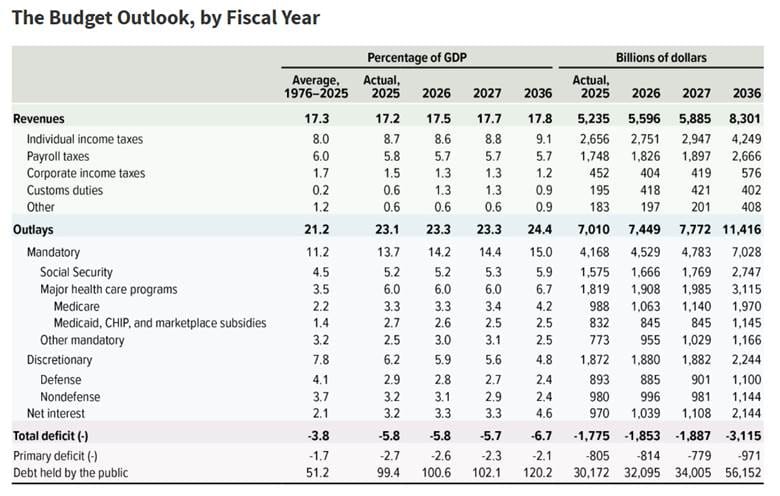
The US is running large deficits, and interest costs are a burden. If the government has to borrow more, investors may ask for a higher return before they agree to hold long-term debt. So yields can stay high even if the Fed is not the one pushing them up.
Once yields move higher, the effects show up almost everywhere. Mortgages get priced off them. So do auto loans, corporate debt, and parts of the credit-card market. Stocks feel it too, because higher bond yields make future earnings look less valuable today.
The overheating outcome assumes the US can keep absorbing high inflation, high rates, high oil prices, and large deficits without the labor market crossing a fairly modest 5% unemployment line.
Maybe it can. But this is not a risk-free assumption.
Why stagflation may be the better mispricing
Overheating is basically the “everything keeps working, but inflation stays hot” outcome. Stagflation is the “inflation stays hot, but the labor market finally starts to feel the pressure” outcome.
The second path only requires a small rise in unemployment and inflation that refuses to cool below the market’s threshold.
This makes it a cleaner mispricing candidate than a basic recession market. A recession call needs broader economic damage. A stagflation call, at least in this Polymarket market, needs a milder shift: unemployment at 5.0% or above, inflation at 3.5% or above.
This is why this market is worth watching.
The crowd may be right that the US economy is too strong for a classic downturn. But it may still be wrong about the type of strength we are dealing with. An economy can look hot late in the cycle, then start to leak from the labor side while inflation remains sticky.
The bottom line
Prediction markets are good at showing what traders believe right now. For traders, the key question is not whether the economy is strong today, but whether today's strength can survive another several months of energy pressure, restrictive policy, and rising credit costs without the labor market crossing a relatively modest threshold.
Overheating is not a dumb market view; it is the current-data view. But stagflation is the convex risk if labor deteriorates while energy keeps CPI high. If unemployment moves only modestly higher while energy keeps CPI above 3.5%, this market could reprice faster than traders expect.
The Commodity Futures Trading Commission unveiled a proposal for prediction markets Wednesday that would crack down on bets related to war, terrorism and assassination.
The CFTC plan also proposed narrowly defining some “gaming” — the category that helped launch the surge of sports-related prediction markets 18 months ago - to be games of “pure luck.” That definition would allow the majority of sports contracts now trading to continue.
The move is the latest by the agency that has argued it has “exclusive jurisdiction” overseeing the surging industry. The contracts are treated as derivatives by the regulator and allow people to place a wager on just about anything, from the FIFA World Cup to the timing of a potential peace deal between the US and Iran.
“The CFTC will protect the integrity of our regulated markets without standing in the way of responsible innovation,” Chairman Michael Selig said in a news release.
The once-niche corner of finance exploded in popularity after a federal court approved Kalshi to trade election-related contracts just before the 2024 elections. The first sports contracts, previously viewed as prohibited by prior administrations, launched soon after. Prediction markets, including those not regulated by the CFTC, are now seeing billions of dollars of notional trading volume each month.
The industry is expected to only grow as more companies submit applications to act as brokers or exchanges for them. But that rapid expansion has left questions unanswered about what constitutes “gaming” and whether it includes activity many states and others view as sports gambling. And while the CFTC’s statute gives the agency discretion to subject certain issues — such as assassination and terrorism — to heightened scrutiny, there have been concerns about a moral gray area for some of the bets.
Since President Donald Trump returned to the White House, the CFTC has embraced prediction markets in sharp contrast to Biden-era regulators who sought to restrict the industry. Views on the platforms haven’t cut cleanly around party lines though.
Numerous Republican state attorneys general and former GOP lawmakers, including Trump’s previous White House chief of staff Mick Mulvaney, are pushing for states to regulate the industry. Democrats including Senator Richard Blumenthal have also raised concerns about prediction markets.
As the battle continues to play out in courts, the agency has backed the exchanges and sued regulators in Illinois, Connecticut and Arizona for trying to force companies to abide by their respective laws.
The agency said at the time that “this unprecedented measure by the CFTC is necessary” to protect its jurisdiction over prediction markets. It later sued New York, Minnesota and Rhode Island as well.
Trump’s family has also entered the prediction market space. His son, Donald Trump Jr., is an adviser to both Kalshi and Polymarket, and Trump Media & Technology Group Corp. has announced its own marketplace.
Bond traders are piling into positions targeting multiple Federal Reserve interest-rate hikes in the coming months, with some looking for a move as early as the September policy meeting.
That’s the theme in the options market linked to the Fed-sensitive Secured Overnight Financing Rate, where traders have been increasing wagers on rate increases ever since Friday’s surprisingly strong US employment report, which sent the bond market tumbling.
Friday saw a flurry of activity involving multiple trades that stand to gain in the event of at least one rate hike this year, with options volumes SOFR Options See New Hedges for Fed Rate Hikes: Open Interest usual levels. The action SOFR Options Trade Targets at Least One Fed Hike by September even as the cash market recovered somewhat as oil and stocks slumped. One standout trade looking to target at least one hike and possibly two by the mid-September gathering.
The swift move toward hawkish protection followed a report on US job growth topping all forecasts in May, the clearest sign yet that the labor market may be breaking out from a prolonged period of lackluster hiring. Next up comes a key inflation report Wednesday that’s expected to show continued pricing pressures.
“The combination of stronger payrolls and uncomfortably elevated inflation has left markets penciling in higher odds of the Fed having to tighten policy,” said Gennadiy Goldberg, head of US rates strategy at TD Securities. “This has continued to leave yields elevated, though risk-off moves in equities appear to be helping to backstop yields.”
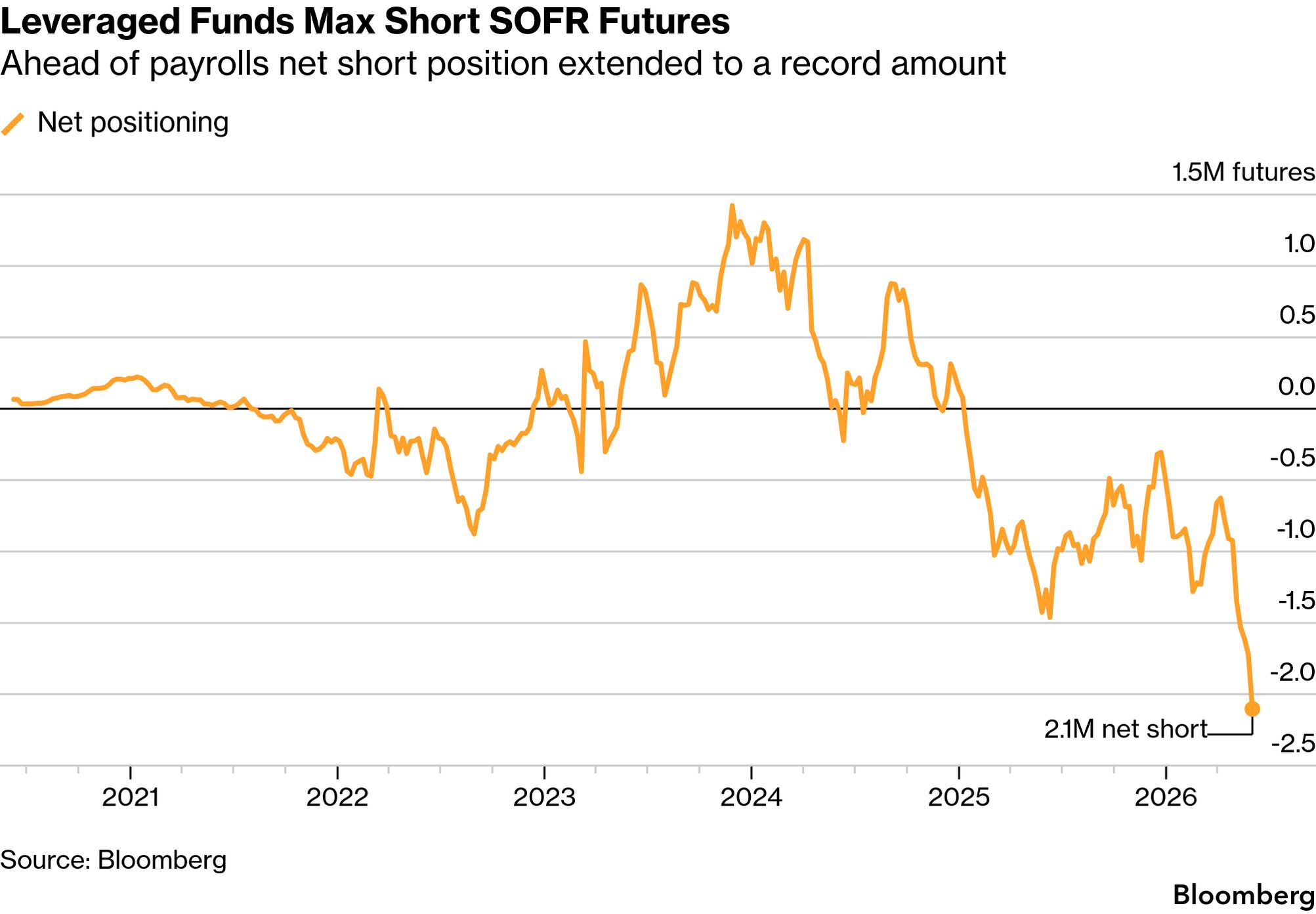
The bearish sentiment in the options market has been matched in futures, which are now pricing in a full quarter-point rate hike by the end of the year. Heading into the payrolls print, hedge funds had ramped up a net short position in SOFR futures to the most on record, the latest CFTC data showed.
“Short momentum still dominates,” wrote David Bieber, a strategist at Citigroup Inc. in a report Tuesday.
To be sure, these leveraged short positions could also be linked to strategies such as basis trades against cash or swaps, as well as convexity hedging or outright directional views.
A deepening bearish futures position would leave SOFR futures vulnerable to short-covering flows should the conviction around rate hikes start to falter. Wednesday’s May consumer price data could act as a brake on such positioning should it come in softer than expected, or alternatively act as a launchpad for additional hawkish options flows if it’s stronger than forecast.
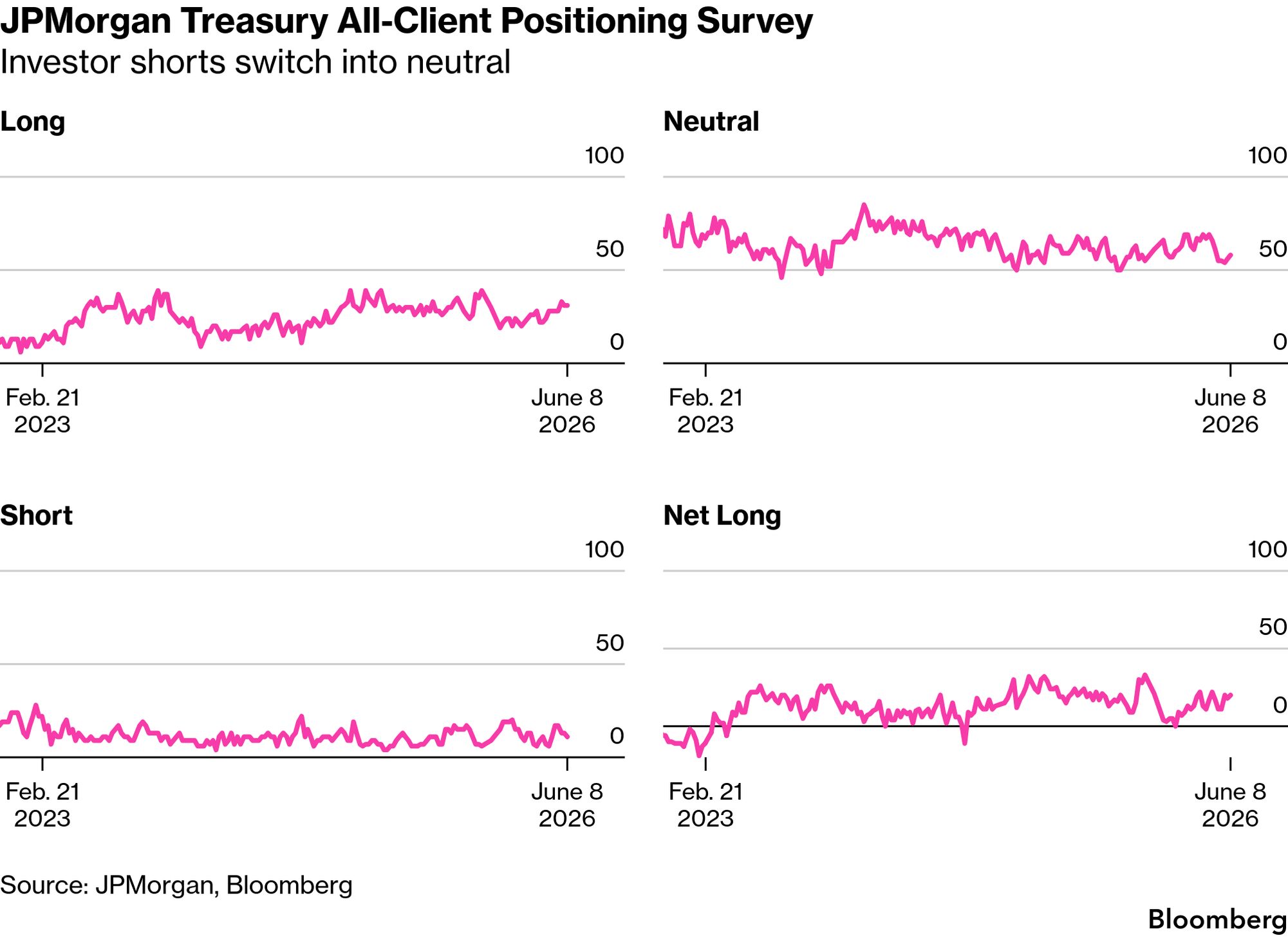
Elsewhere, in the cash market, this week’s JPMorgan Chase & Co. Treasury client survey saw a small reduction in short positions, shifting into a neutral stance.
Here’s a rundown of the latest positioning indicators across the rates market:
JPMorgan Treasury Client Survey
In the week up to June 8, investor outright short positions were cut by two percentage points, shifting into neutrals with longs unchanged on the week. The all-client survey now shows the fewest outright shorts since May 4.
SOFR Options Positioning
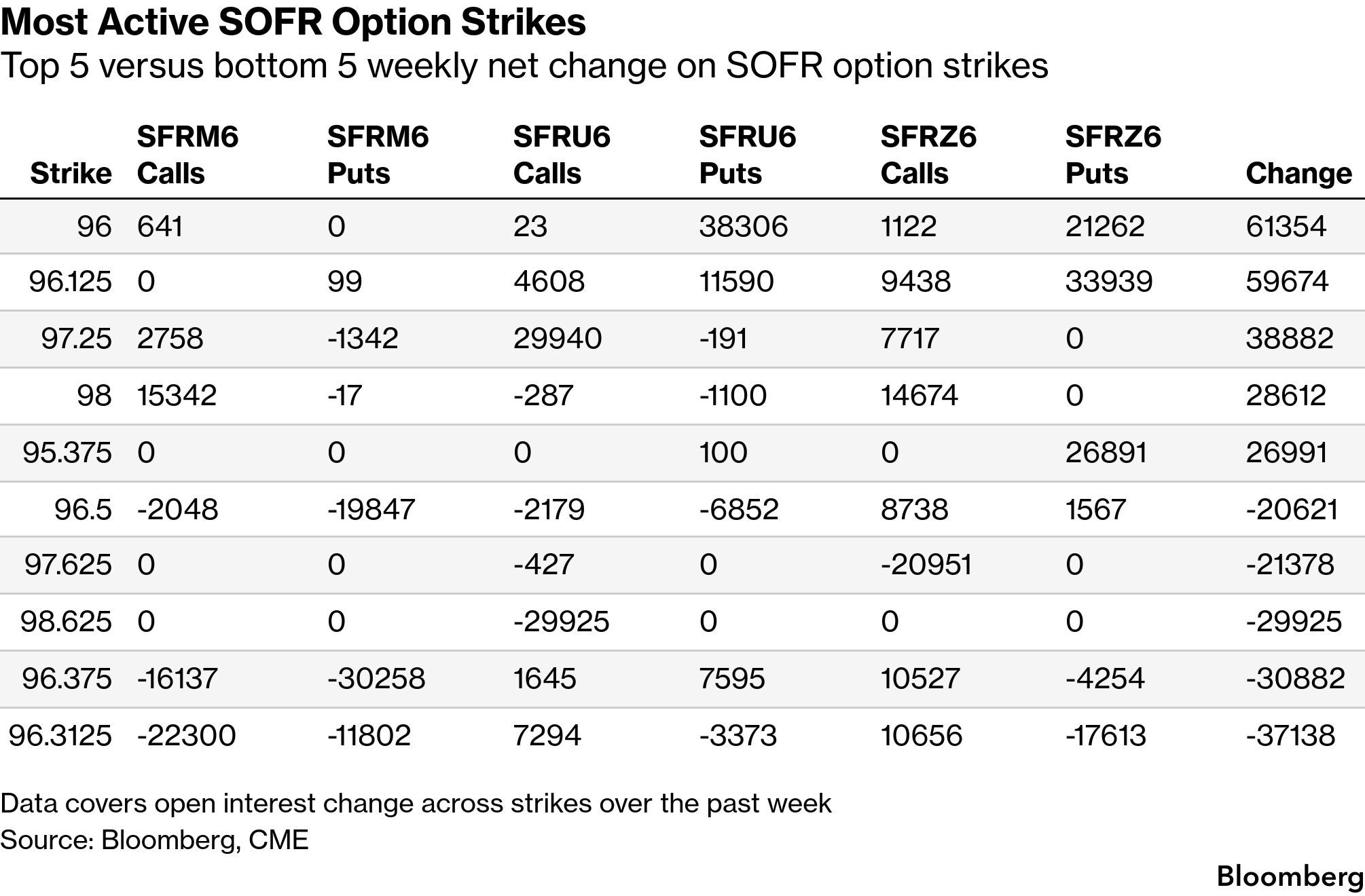
Across SOFR Jun26, Sep26 and Dec26 options, there was a large amount of new risk added over the past week across Dec26 puts largely due to heavy buying in the SFRZ6 96.125/96.00/95.375 broken put tree. For position liquidations over the past week, open interest dropped significantly across a number of strikes in Jun26 calls and puts. Flows for position unwinds included SFRM6 96.3125/96.375/96.4375 call fly sales and SFRU6 96.875/98.625 call spread buyers.
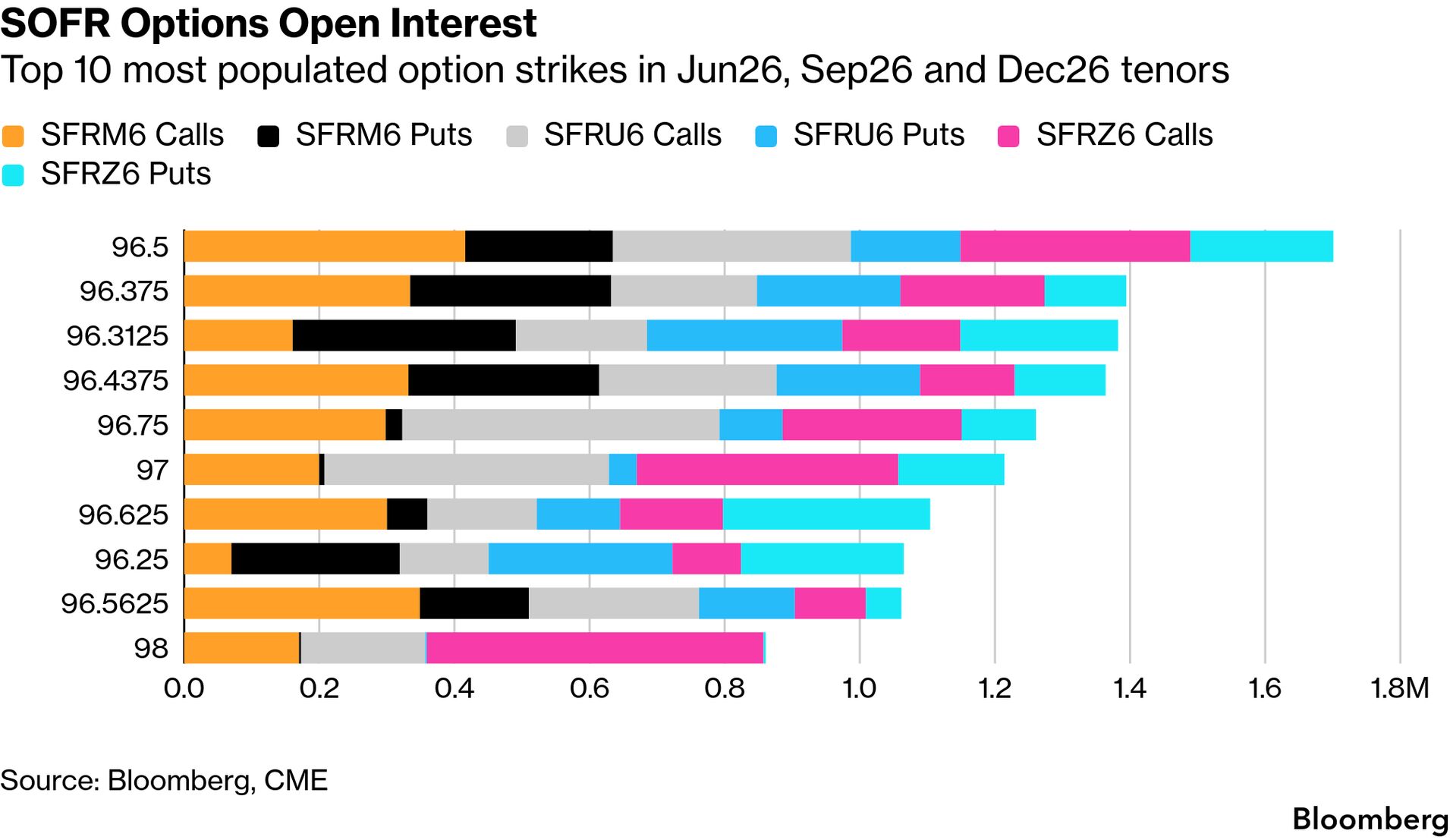
The 96.50 strike remains the most populated, where a notable amount of Jun26 and Dec26 call positions sit. Recent popular positions around the 96.50 strike have included buyer of SFRU6 96.125/96.25/96.375/96.50 call condors with SFRM6 96.3125/96.375/96.4375/96.50 call condors. Over the past week SFRZ6 96.50/97.00/97.50 call trees have also been bought in good size for new risk. Also, the 96.375 strike has been added to over the past couple of weeks, where flows have included buyer of SFRZ6 96.3125/96.375/96.4375 call flies.
Treasury Options Skew
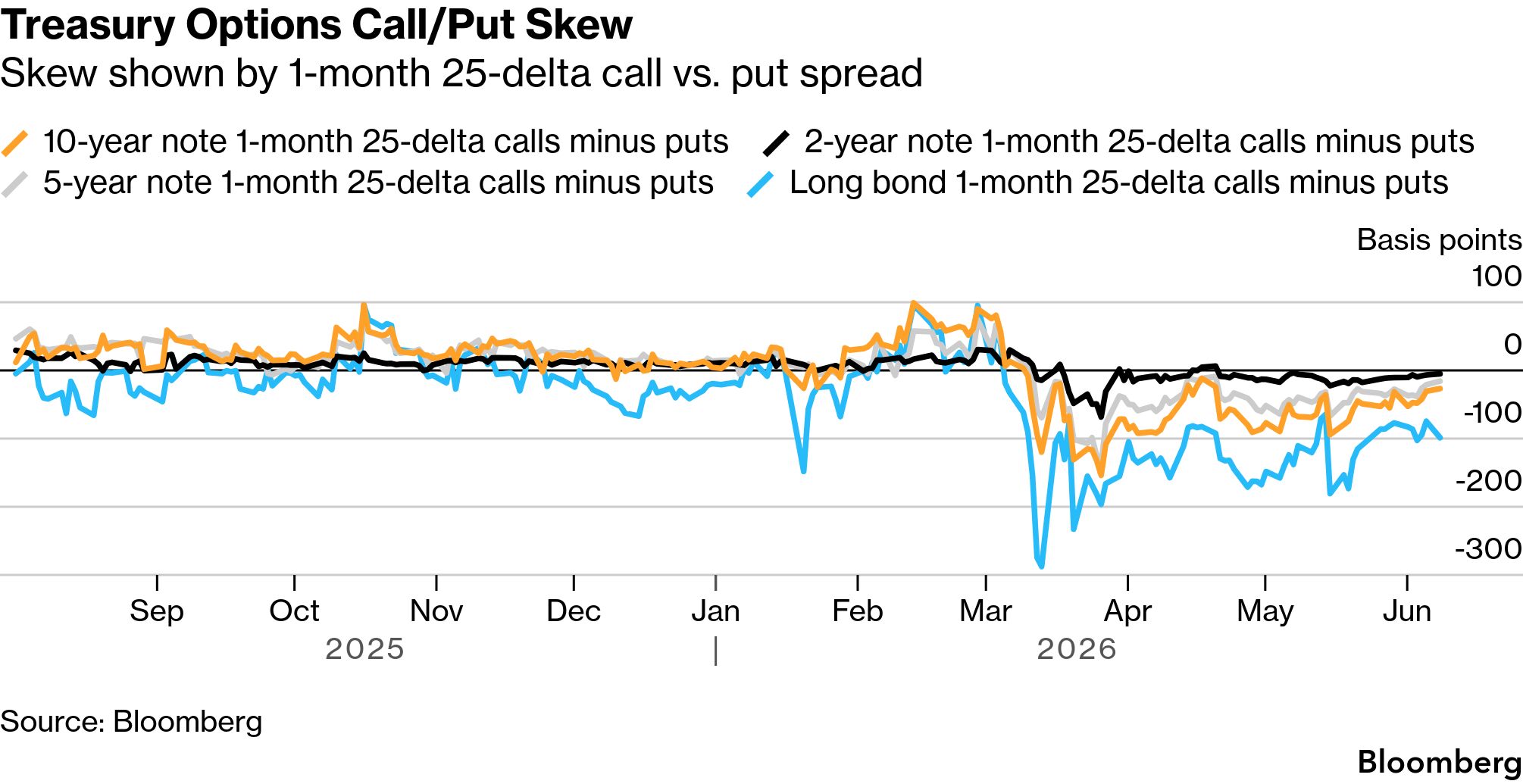
The premium paid to hedge options in long-bond futures remains well skewed toward puts, indicating traders paying a premium to hedge a bond selloff in the long-end of the curve over a bond rally. The skew on options from 2-year note futures out to 10-year note futures continues to trend back toward neutral level.
Kalshi is planning to require that participants in some prediction markets disclose the identity of their employers, after an advisory committee recommended tighter security measures to combat potential insider trading and market manipulation.
Users seeking to make bets in some markets linked to material nonpublic information will be required to submit an online form disclosing where they work, Kalshi said. The changes are set to be rolled out in the coming weeks.
Sensitive betting markets related to issues such as company performance and national security, including the war in Iran, are expected to require employment disclosure, according to a Kalshi official.
In most cases, Kalshi won’t verify the employment information provided by users unless the company learns of suspicious activity, a Kalshi spokeswoman said. Once suspicious activity is flagged, the company will launch an investigation and seek proof of employment.
The increasing popularity of prediction markets like Kalshi and Polymarket has compounded pressure on them to address suspicious activity, with lawmakers, regulators and prosecutors raising concerns about insider trading.
The changes being put in place by Kalshi come in response to a report from an audit committee, which recommended Kalshi collect employment information from users, according to a summary of the panel’s findings.
Under Kalshi’s current data collection system, “identifying potential insider relationships typically required manual review using publicly available information after trading activity had already occurred,” the report says. Collecting employment information could improve “market surveillance analysis, early-stage investigative review, and deterrence.”
The audit committee is led by Brian Nelson, a former Treasury undersecretary for terrorism and financial intelligence; Daniel Taylor, the director of the Wharton School’s forensic analytics lab; and Lisa Pinheiro, a managing principal at economic consulting firm Analysis Group.
The company is also launching enhanced whistleblower features, Kalshi said.
The audit committee’s report discloses for the first time that Kalshi has made more than 20 referrals to the Commodity Futures Trading Commission and the Justice Department during the first quarter of 2026.
Those who have been referred to federal authorities this year include former New York Congressman George Santos and accounts linked to military spouses, according to people familiar with the matter.
Accounts belonging to military spouses on Kalshi made accurate bets on when former Venezuela President Nicolás Maduro would be ousted just days before he was seized by U.S. officials in January, according to a person familiar with the matter. At least one of those accounts was referred to federal investigators with the suspicion that a person using the spouse’s account used nonpublic information to make that bet, the person said.
Kalshi, which is regulated by the CFTC, enforces federal know-your-customer rules, known as KYC, mandating banks and brokers to require users to disclose their identities to prevent financial fraud and illicit activity. Kalshi requires users to give their address, at least part of their Social Security number, their phone number, date of birth and identity documentation. Users must be at least 18 years old.
In May, the exchange introduced new identity verification measures including facial recognition in an effort to prevent minors from accessing their parents’ accounts.
The prediction-market exchange has touted its use of KYC as a differentiator from its competitor, Polymarket, whose offshore platform doesn’t require users to submit proof of identity. Kalshi recently backed the launch of Americans for Fair Markets, an advocacy group that supports “federally regulated, onshore exchanges vs. offshore platforms with no KYC and no recourse,” according to the company.
In late February, Kalshi informed the CFTC and Justice Department about suspicions that Santos traded illegally in an event-based market that referenced his own appearance at this year’s State of the Union address. Santos has denied any wrongdoing.
Kalshi said it uses a third-party vendor to block members of Congress, the president, cabinet secretaries, judges, other top government officials and their families from joining the platform. Kalshi also bans candidates running for public office, campaign employees and those working at polling stations from betting on election markets.
The changes come following two recent high-profile insider trading cases involving Polymarket users and a Congressional probe of how both Kalshi and Polymarket manage insider trading risk. In April, a U.S. soldier was charged with using classified information about the arrest of Maduro to trade on Polymarket. Last month, a Google employee was charged with using insider information about Google’s annual search trends report to make $1.2 million on Polymarket.
In both cases, prosecutors at the Southern District of New York used information from other sources to bolster their identification of the defendants. Polymarket moved offshore and outside the strictures of U.S. regulations after a 2022 settlement with the CFTC.
Polymarket has touted its work with law enforcement in both cases. When the indictment against the Google employee was unsealed, the company’s chief legal officer, Neal Kumar, posted on X, “Say it with me now—it’s not anonymous.”
Polymarket has a data partnership with Dow Jones, the publisher of The Wall Street Journal.
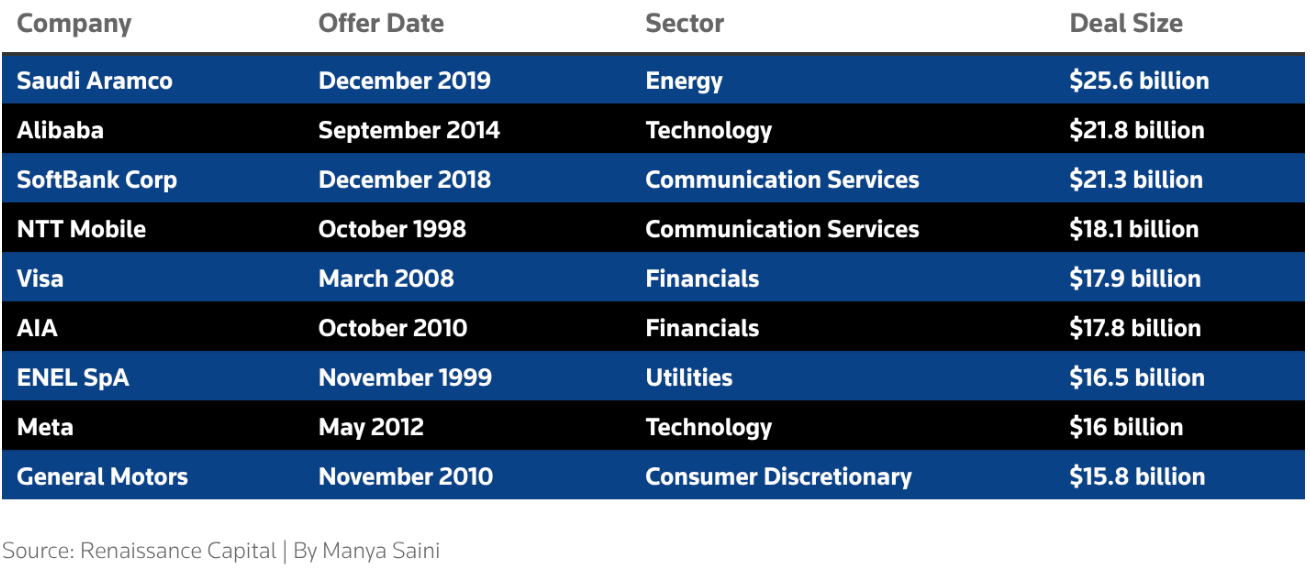
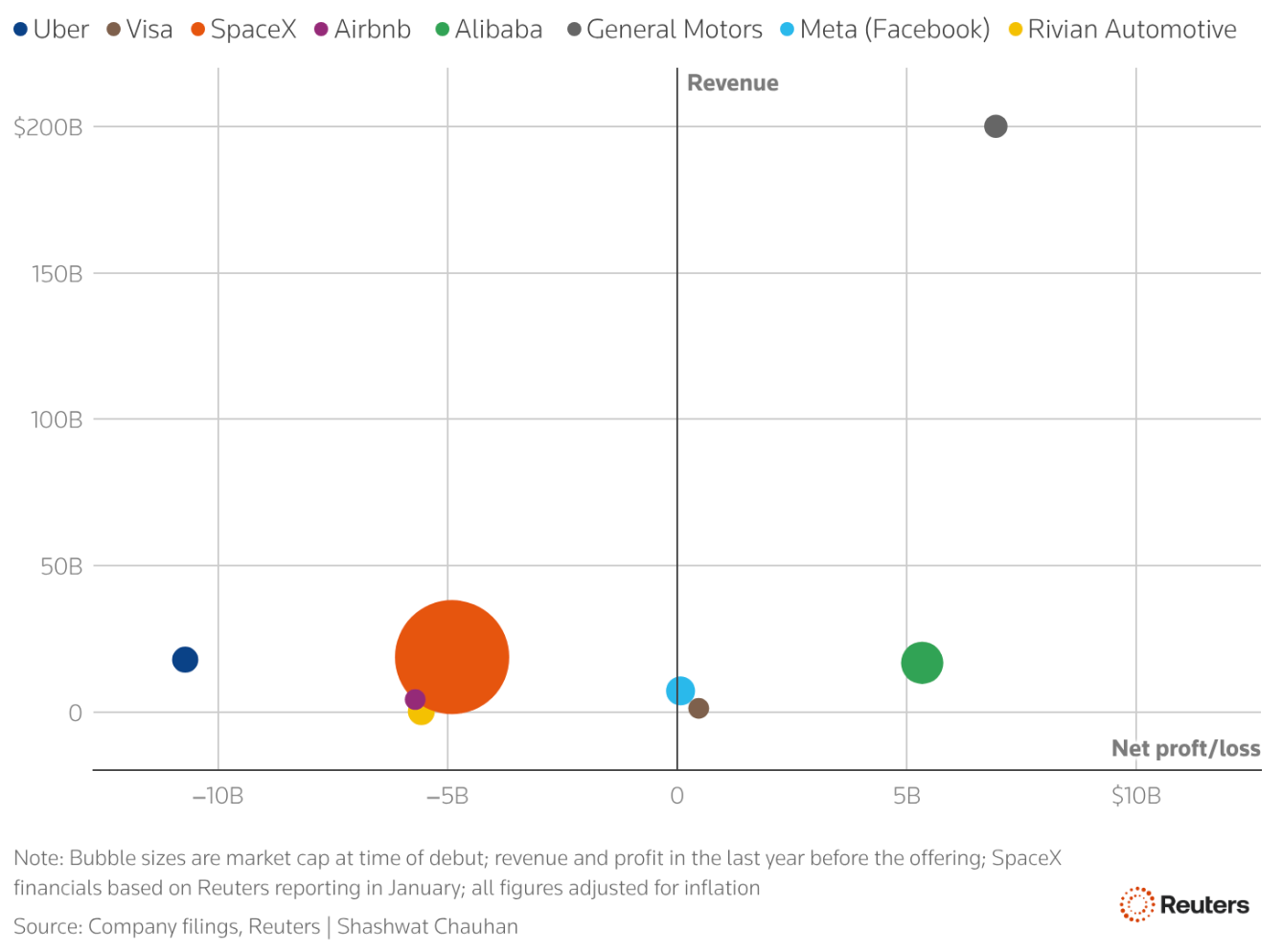
SpaceX is slated for its initial public offering in June, with the IPO expected to be the largest ever in history, crossing the Aramco IPO which was priced at $1.7 trillion.
SpaceX is now targeting a valuation of at least $1.7 trillion with the latest Polymarket predictions pricing the IPO to be closer to the $2.5 trillion mark.
The IPO numbers are a sight to behold – a fixed price of $135 per share for 555.6 million shares and a target to raise around $75 billion, according to Reuters reports.
Table 1: Largest U.S. IPO deals in history (Renaissance Capital sorted)
Meanwhile, 30% of the float has been reserved for retail investors, with Elon Musk expecting to walk away with around 82% of the voting power.
On the surface, the SpaceX IPO promises to be a crucial catalyst for the entire space industry, with its listing validating the varying paths other listed companies in the sector have taken.
And you can’t really argue against that as we approach June 12, the date when the stock begins trading.
Since SpaceX IPO reports surfaced back in March, space stocks have experienced an unprecedented rally. Rocket Lab’s stock has surged nearly 72% year-to-date, AST SpaceMobile is up over 47%, while carrying a market cap of $41 billion, while booking under $15 million in quarterly revenue, missing estimates by 60%.
Similarly, Stellogic is up over 335% YTD. It is a similar story across other stocks such as Intuitive Machines, Firefly Aerospace, York Space Systems and Planet Labs.
However, if we look at this closely, none of these stocks’ surge is driven by strong earnings.
These stocks appear to be flying high because investors who craved exposure to the SpaceX IPO story had no way to own the stock and decided to put their money in the closest alternatives.
That logic however, expires on June 12.
This is when as an investor, you would no longer need a SpaceX alternative when you can buy the stock.
A $75 Billion Raise
SpaceX is targeting to raise $75 billion upon IPO and has option for another $11 billion – making it the largest equity drain in the sector’s history.
SpaceX is likely to be the key stock that every institutional fund would want to get their hands on for space exposure.
This could have an impact on stocks such as Rocket Lab and AST SpaceMobile whose slice of the money is likely to be chased by SpaceX.
On top of that, Nasdaq’s expedited entry rules will make the company of SpaceX’s size eligible for the Nasdaq-100 after a 15-day period.
It is safe to say that SpaceX is not just a company that is competing for capital – it is a company that competes through its product line. The company’s S-1 already named Rocket Lab as a competitor and will be looking to diversify into medium-lift payload.
Until the IPO, AST SpaceMobile could trade at around 100 times estimated forward sales only because of the absence of a publicly-listed pure-play stock to keep a leash on it. Following SpaceX’s IPO, we can expect this metric to be contained.
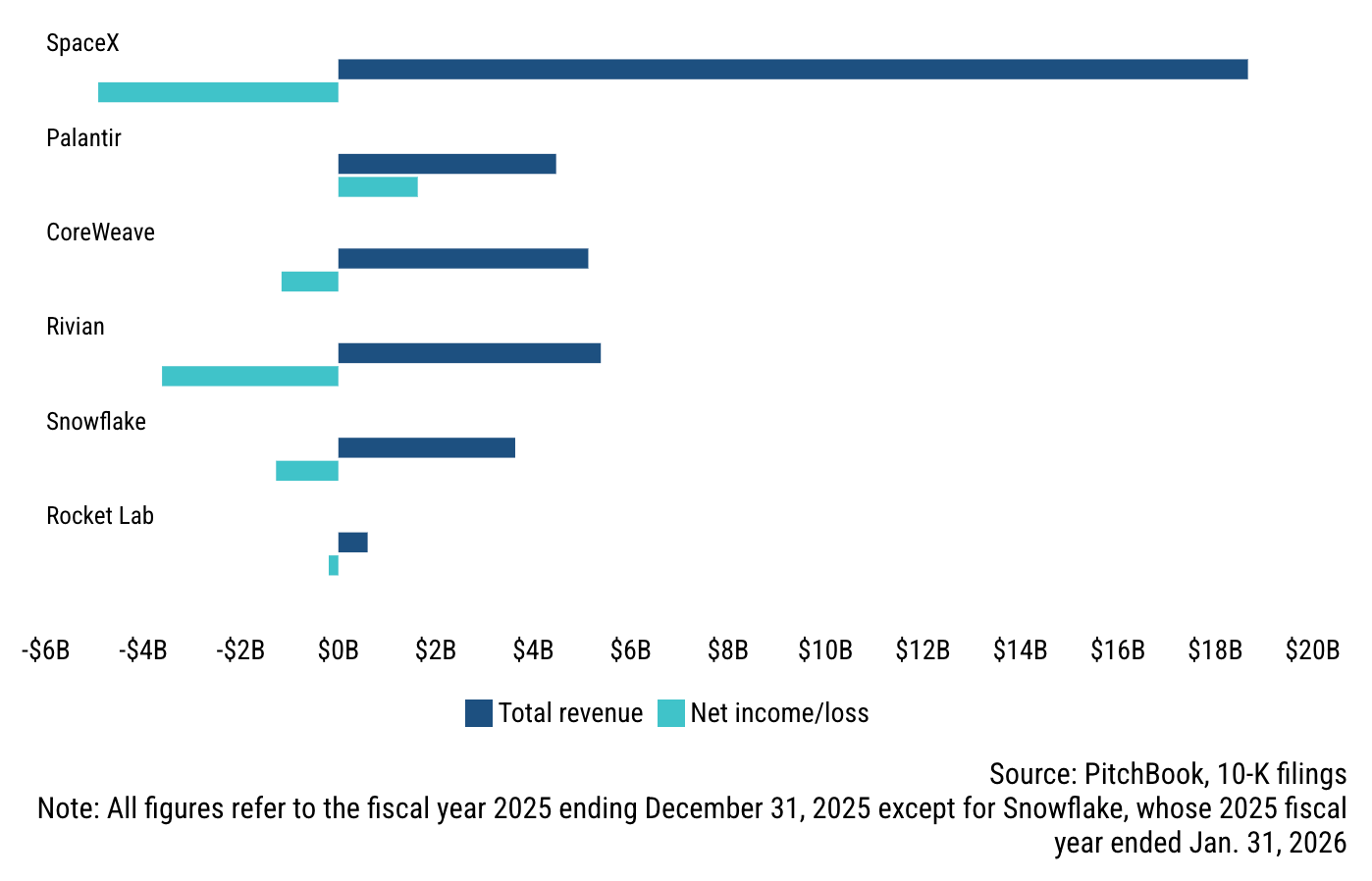
Figure 1: Financial Performance of Peers (Morningstar sorted)
How are Prediction Markets Seeing the IPO Event?
One of the best ways to assess the SpaceX IPO event and its fallout is by gauging Polymarket traders sentiment.
Over 99% traders expect the IPO to close above $1.2 trillion, while 70% expect it to close over $2 trillion.
Meanwhile, a wide majority of traders expect the company’s market cap to cross $1.6 trillion by the end of June.
Embedded JavaScriptEmbedded iFrameWill SpaceX's market cap be less than $1.0T at market close on IPO day? Yes 0% · No 100% View full market & trade on Polymarket
The numbers are telling and validate the IPO mechanics. Rather than going for a conventional price range, SpaceX has gone for a fixed share price. Musk will be selling zero shares, thus constricting supply with expected frenzied demand of the stock.
To date, investor focus on prediction markets is on SpaceX, which means that a lot of industry peers are quietly going through a de-rating event after initially benefitting from the IPO announcement.
Will SpaceX Cross $2 Trillion In Market Cap in 2026?
YesResult
29.98%
NoResult
70.02%
1,938 Polls
EndedTBD
All Eyes to Remain on SpaceX
One cannot deny that SpaceX IPO is going to be a key driver for the space economy. The World Economic Forum has already forecasted the sector to reach $1.8 trillion by 2035. SpaceX becoming a publicly-listed company further legitimizes the projections.
However, the WEF report, when studied in detail, focuses on growth areas that a lot of SpaceX peers aren’t venturing into yet.
Around 60% of space industry expansion will come from segments such as logistics, agriculture, insurance and defense data and not launchers and satellite – two segments that a lot of listed space stocks call their bread and butter.
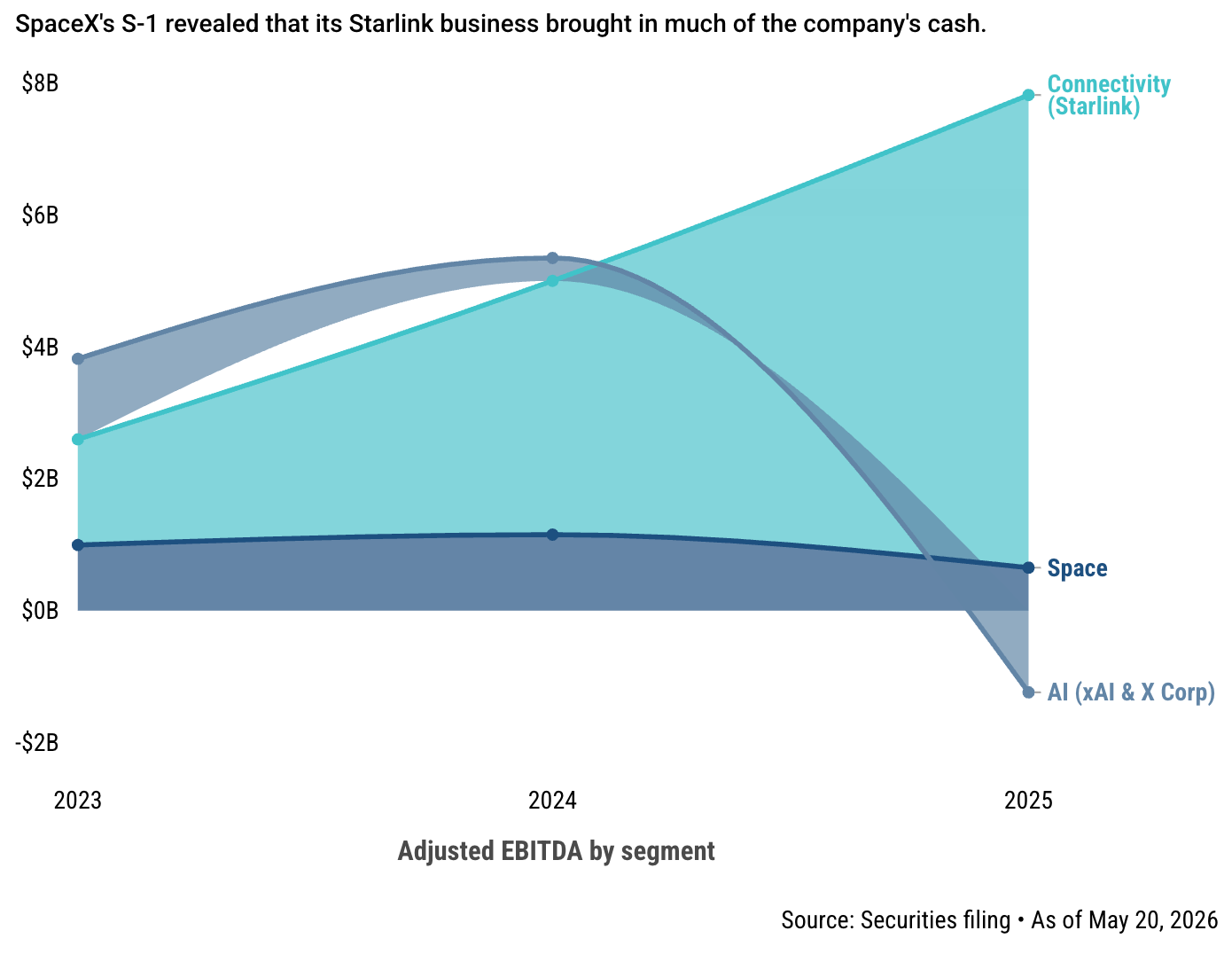
The same can be said about SpaceX whose only profitable segment is Connectivity through Starlink, which posted a quarterly profit of $1.19 billion.
Space launch segment on the other hand, booked a loss of $619 million.
SpaceX has been tagged as a satellite-broadband-and-AI company which also owns the best rocket technology in the world. And this is the dangling carrot that investors are chasing.
What also needs to be analyzed is that the company booked $4.94 billion GAAP net loss in 2025, capital expenditure of $10.1 billion in a single quarter and a $41.3 billion accumulated deficit.
A company with a potential market cap of $1.77 trillion cannot afford execution shortcomings on projects such as Starship, Starlink or burning cash on AI.
Figure 2: SpaceX Adjusted EBITDA by Segment (Morningstar sorted)
A Sum-of-Its-Parts Valuation
Taking away the glamor and spectacle that we’ve come to see from anything carried out by Musk, SpaceX is promoting itself as a potential $1.77 trillion company which relies on three distinctly different businesses, thus making the valuation a sum of its parts.
Connectivity is expected to remain the best performing segment and helps justify the current valuation, especially if Starship continues to refine its tech stack.
The launch business on the other hand, appears to be more of a strategic presence rather than a profit making tool.
Meanwhile, the company is burning cash on its AI unit, which means that in the long run, SpaceX will either “normalize” as either a highly niche space innovation company or an AI company with several space-related clusters with long-term strategic goals.
Figure 3: Valuation of Major Offering on Record (Reuters sorted)
The Liquidity Siphon Effect
Naturally, the $75 billion fund raising target seems like an apocalyptic scenario for its peers. However, this amount represents only a fraction of the total US money-market funds which is about $7.89 trillion.
And while it may appear that the IPO could potentially impact other space stocks, we need to understand SpaceX as a business.
The company is very unusual if we look at it purely from a space industry point of view. It is a space stock, a satellite-broadband and telecommunications stock and it is also an AI-infrastructure stock following the xAI merger.
In the US, IPO funds are mostly raised from institutional investors and large brokerages through the recalibration of existing equity and portfolio positions.
Therefore, upon its IPO, SpaceX will be siphoning the $75 billion from multiple sources – from space allocations to the telecom sector to the AI-infrastructure bucket, meaning that no single source is going to be drained.
However, one siphoning scenario that could unfold in the coming days could be the stock’s entry in the Nasdaq-100, which could result in several funds selling a slice of every niche stock they hold to acquire the SPCX stock.
This could expose several space stocks but the event would not be confined to them, with the likes of Nvidia, Microsoft, Alphabet and even Nebius, likely to be exposed.
SpaceX IPO – A Catalyst of Differentiation
June 12, the day when SpaceX IPO takes place, should be seen as a sorting mechanism, not just a cataclysmic event for the space industry.
While the IPO is definitely a catalyst, what it actually catalyzes is market differentiation.
In the first couple of weeks of the IPO, we could see SpaceX experiencing a rally, while other space stocks lose a chunk of their respective market caps.
By the end of the 15th day, the time when the company could be eligible for the Nasdaq-100 entry, we could see a weight dilution event with constituents shrinking their weight proportionally to make room for funds to add SPCX into their portfolios.
The largest constituents such as Nvidia, Apple, Microsoft, Alphabet and Amazon could be the key stocks in what is likely to be a modest dilution event, simply because they have the biggest positions.
A very crucial point to be mentioned here is that an index fund doesn’t buy a stock based on the company’s full size, it makes a buy based on float. SpaceX is only selling around $75 billion worth of stock, while the rest will be locked up by Musk and insiders.
Now Nasdaq’s rule explicitly cap the index weight at around 3x the float, not the market cap.
Since there will be very few shares trading at the start, index fund could struggle to find enough which could lead to a short-term increase in the stock price. Under Nasdaq-100 IPO lockup regulations, insiders are restricted from selling their shares for 180 days. Once the lockup period ends, insiders could start selling their shares, thus creating a secondary market distribution.
Therefore, it is safe to assume that the share buying will be spread out and not aggressive on day 15.
Will SpaceX Gain Entry into the Nasdaq-100 After Day 15 of its IPO?
YesResult
96.06%
NoResult
3.94%
1,650 Polls
EndedTBD
On top of that, Nasdaq-100 will remain the only major index buying the SpaceX stock. The S&P 500 is closed for now because the company lost around $4.9 billion last year, making it unqualified.
The overall effect of the SpaceX IPO on the big stocks, based on our research, is likely to be small and mechanical. However, what should be looked at in the long run would be the company’s own share dynamics and how the smaller space stocks behave immediately and a while after the IPO.
As prediction market volumes continue to march higher and platforms increasingly look to institutional players to engage, a startup is seeking to make it easier to move money around on event contract exchanges.
EDGE Markets — which runs a banking platform designed for gambling and prediction market spending — is set to debut two products, the company shared exclusively with CNBC ahead of a Monday announcement. It will also reveal a $29.2 million Series A funding round, led by venture capital firm CoinFund.
The company will announce EDGE Connect, a real-time payments system to reduce the time it takes for individual traders to transfer funds from their bank accounts into wallets on prediction market exchanges.
Users get access to EDGE Connect if they use EDGE Boost, a financial platform that only allows deposits to be used for spending on gambling and prediction markets. CEO Seni Thomas told CNBC in an interview that EDGE Connect is currently available on Kalshi, and that the company is actively working to implement the technology on five other platforms in the coming months.
Kalshi confirmed to CNBC the partnership with EDGE.
"We have 24-hour markets… and you can't get money in at the same velocity," Thomas said. "Any one of our users can sign into our consumer bank accounts and actually push out up to $10 million per day, and it hits your Kalshi account within two minutes."
The company is also announcing EDGE Pro, a platform that will serve as a hub for institutional market makers to easily move money between various prediction markets regulated by the Commodity Futures Trading Commission. Pro will launch to a waitlist as EDGE awaits regulatory approvals from the National Futures Association.
Thomas said that Pro solves a unique issue that institutional traders face in the prediction market space.
"You're going to now have 10 different liquidity pools, actually offering very similar contracts," he said. "You need to have a very, very fast infrastructure to be able to kind of move all that in real time."
EDGE Markets was founded in 2020 by Thomas and then launched EDGE Boost in March 2025. Boost has processed over $2 billion in transactions since then.
"The biggest moments in gaming and prediction markets happen on nights and weekends, exactly when the banking system slows to a crawl. EDGE built the rails to match that reality," Alex Felix, a managing partner at CoinFund, said in a statement. "We think EDGE becomes the default settlement layer for an entirely new category of financial markets."