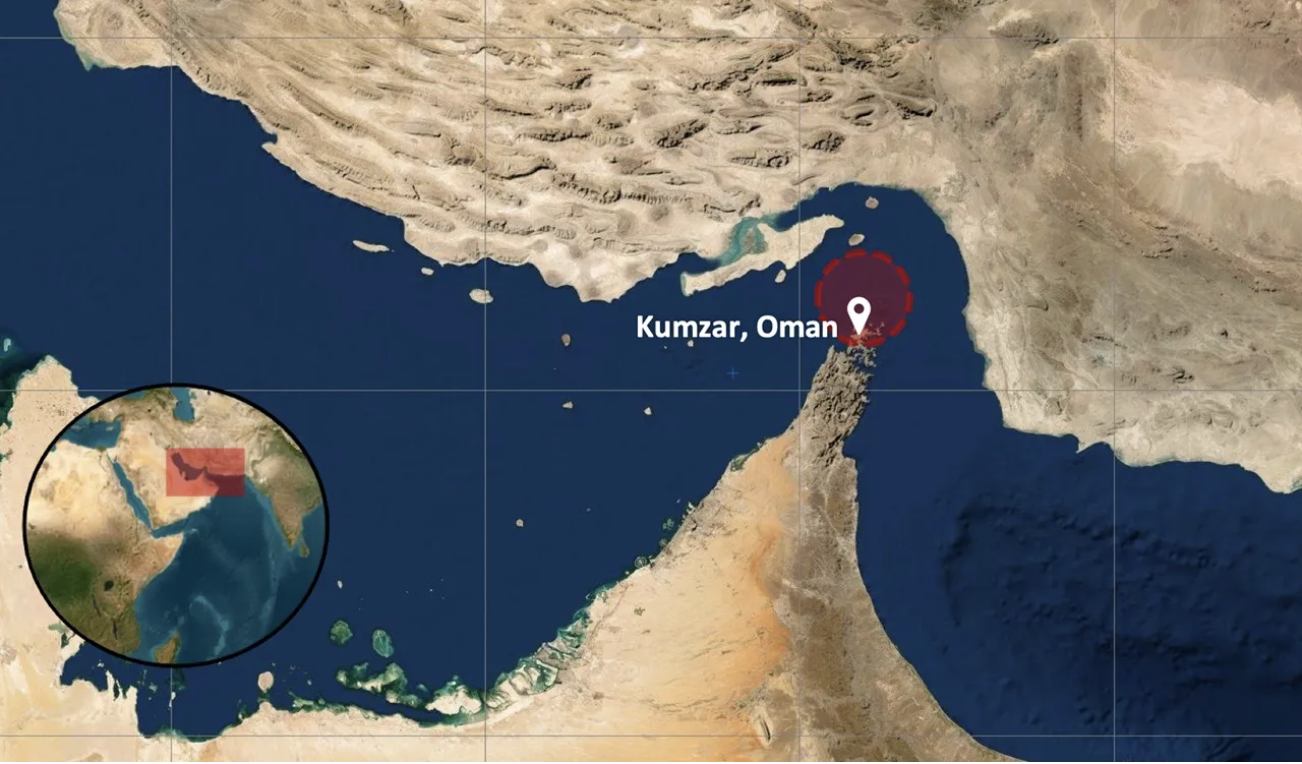
In what could be the latest attack on a commercial ship in the Strait of Hormuz a vessel is reported to be on fire.
Will Iran-US ceasefire be reached by the end of July 2026?
YesResult
16.88%
NoResult
83.12%
1,238 Polls
EndedTBD
The UK Maritime Trade Operations (UKMTO) said that military authorities reported that a vessel was on fire 8nm northwest of Kuzmar, Oman in the Strait of Hormuz. “The cause of the fire has not been verified at this time,” it said.
No further details on the incident were available. “Vessels are advised to transit with caution and report any suspicious activity to UKMTO while authorities investigate.”
As of 19 July the Joint Maritime Information Centre (JMIC) said there had been 11 Iranian attacks on ships in the Strait of Hormuz since 25 June and the threat level remained at Severe “with deliberate hostile action assessed as highly likely under current conditions”.
“Recent confirmed incidents reinforce that the threat environment remains heightened and warrants extreme vigilance. IRGC attacks, hailing, and routing pressure continue, particularly for AIS-active vessels,” JMIC said.
Iran vows not a ‘single drop’ of oil or gas will pass strait of Hormuz as US carries out ninth night of strikes – Middle East crisis live
US military says it is ‘holding Iran accountable’ as maritime agency reports a vessel on fire in strait.
US launches ninth night of Iran strikes as strait of Hormuz standoff sees oil price pass $90 a barrel.
Iran’s Revolutionary Guard had earlier claimed that two oil tankers were blown up after attempting to transit through the southern route of the strait, but there has been no independent confirmation of this and it is unclear if the IRGC was referring to this vessel.
The U.S. is seeking a share in Korean semiconductor companies’ enormous profits from the global artificial intelligence (AI) chip boom, citing strong U.S. demand for Korean chips, according to an industry source.
Will certain US-Korea chip-making related agreement be announced in July 2026?
YesResult
75.00%
NoResult
25.00%
4 Polls
EndedTBD
This comes amid debates here on what defines “excess” gains, whether they should be shared with subcontractors or even with the public, and how much each subcontractor or contributor is entitled to.
The industry source familiar with the matter said during a meeting last month that Rick Switzer, deputy United States Trade Representative (USTR), told Korea's Trade Minister Yeo Han-koo that the U.S. side deserves a share of the massive profits of SK hynix and Samsung Electronics.
“That was based on a rationale that American companies purchased large volumes of Korean semiconductors and thus contributed to the Korean firms' earnings,” the source said. “So, if the Korean chipmakers’ partner firms in Korea are entitled to parts of the profits, the American ones are, too.”
A ranking government official also told The Korea Times that the U.S. side made such a claim, without elaborating.
The Korea Times has reached out to USTR, as well as the U.S. departments of Commerce and Treasury multiple times to confirm the claim, but they did not respond.
Officials at Korea's Ministry of Trade, Industry and Resources said they were unaware of the matter.
"Basically, Korean companies have already announced investments through business roundtables in line with last year's tariff agreements, and they have also made substantial investments over the years," a ministry official said.
"Our basic position is that matters related to industry should proceed based on commercial reasonableness and such principles, and we will continue to follow that approach. Regarding semiconductors, there is nothing we know at this point or can comment on."
The U.S. claim comes amid a continued surge in Korea’s semiconductor exports including those to America.
Semiconductor exports in the first half of this year reached a record $192.43 billion, up 162.5 percent from $73.31 billion a year earlier, while exports to the U.S. rose 91.3 percent to $26.4 billion from $13.8 billion, according to government data.
In June alone, semiconductor exports climbed 199.2 percent year-over-year to a record $44.82 billion from $14.98 billion, and shipments to the U.S. surged 377.2 percent to $6.49 billion from $1.36 billion.
So far, Washington's public focus has not been on profit-sharing but on urging Korean chipmakers to expand semiconductor manufacturing in the U.S.
Last week, U.S. Commerce Secretary Howard Lutnick publicly called on Samsung Electronics and SK hynix to build memory chip fabrication plants in the country, reinforcing the Donald Trump administration's push to localize semiconductor production.
Both companies have already announced major U.S. investments, but neither currently has plans to build advanced DRAM or NAND fabrication plants there.
In recent months, it has been debated here whether Samsung Electronics and SK hynix should redistribute so-called excess profits to subcontractors and suppliers, who partially contributed to the profits, or even to the public since taxpayers' money has been spent to support necessary infrastructure.
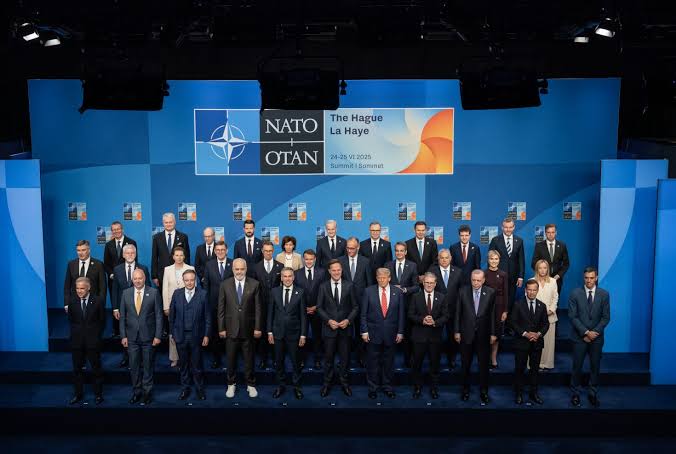
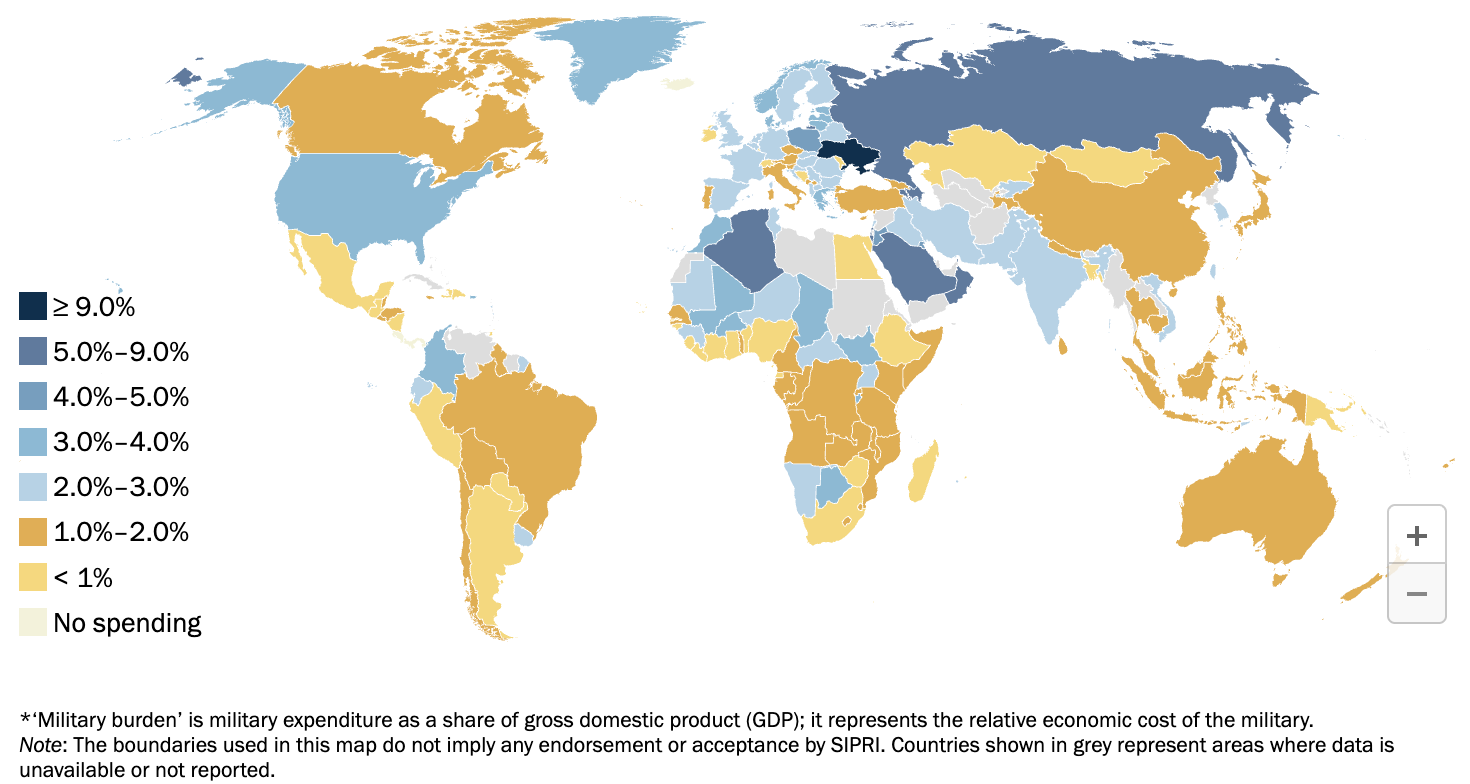
The latest NATO summit ended with familiar headlines: higher defense spending, stronger commitments to collective security, continued support for Ukraine, and new initiatives on defense production and military technology. NATO leaders emphasized that the alliance is moving from setting spending targets to delivering concrete capabilities, including expanded defense industrial cooperation and investments in drones, logistics, and critical infrastructure.
But the summit's significance is not defined by the final communiqué. More important is whether the NATO is entering a fundamentally different phase. That Western security can more influenced by long-term economic, industrial and political adjustments rather than direct military crises.
What will be the biggest challenge for NATO over the next decade?
Turning higher defense spending into real military capabilityResult
41.04%
Maintaining unity among membersResult
18.42%
Reducing reliance on U.S. military supportResult
27.84%
Expanding defense industrial capacityResult
12.70%
1,401 Polls
EndedTBD
From Burden Sharing to Burden Building
For years, NATO debates focused on burden sharing: how much each member should spend on defense. This conversation is evolving.
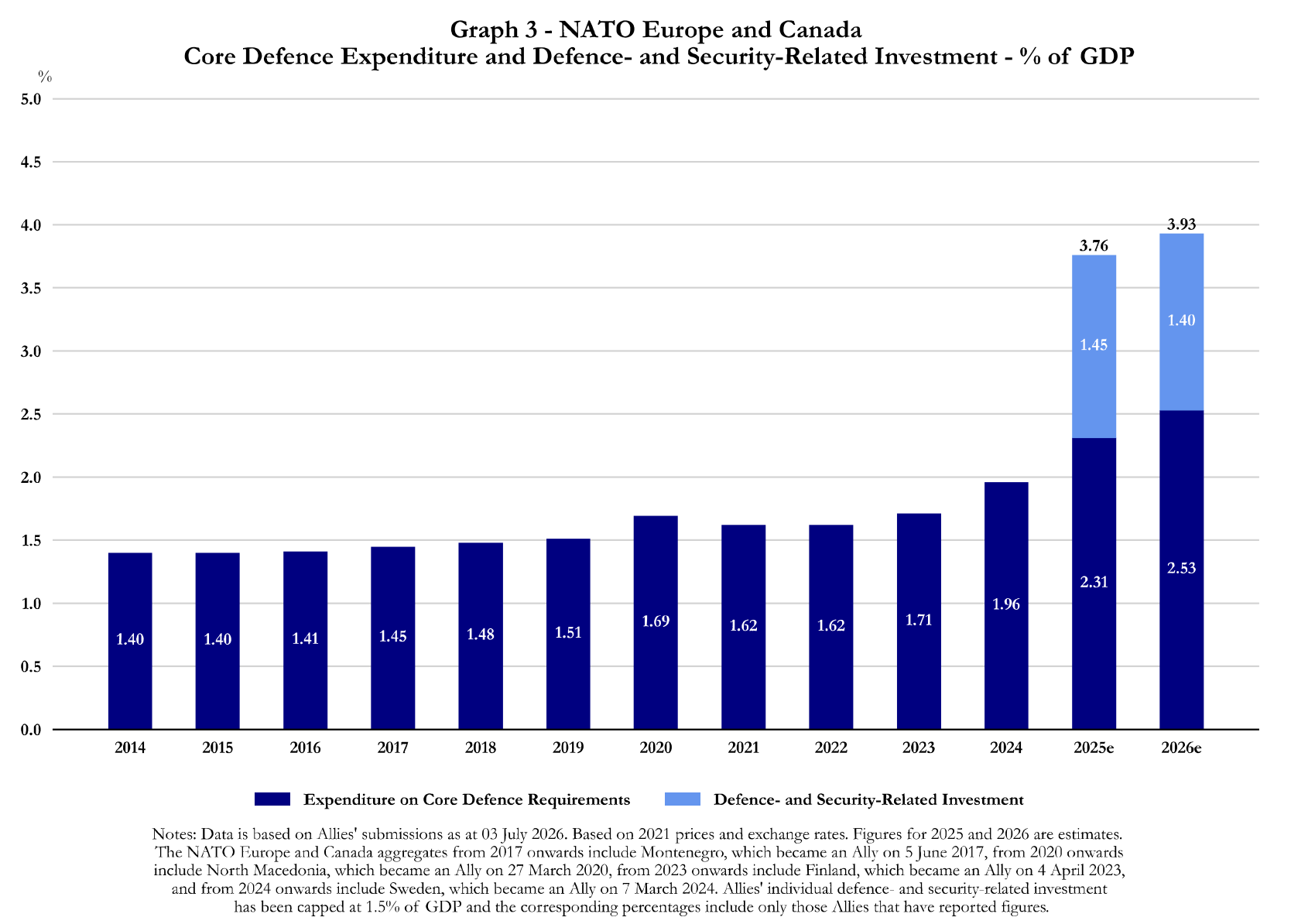
The challenge is no longer simply reaching spending targets. It is whether member states can translate higher budgets into usable military capabilities. At the summit, leaders highlighted expanding defense production, accelerating procurement, improving logistics, and strengthening Europe's industrial base alongside commitments to continued support for Ukraine.
This distinction matters because defense spending is only one input. Modern military readiness also depends on manufacturing capacity, supply chains, workforce skills, energy infrastructure, and the ability to replenish equipment during prolonged conflicts.
In other words, NATO's next challenge is more about building industrial resilience rather than allocating money.
Europe Is Taking Greater Responsibility—But Unevenly
Another noticeable shift is Europe's growing role within the alliance.
The U.S. has continued encouraging European allies to assume a larger share of regional security responsibilities, while many European governments have responded by increasing defense budgets and expanding domestic defense industries.
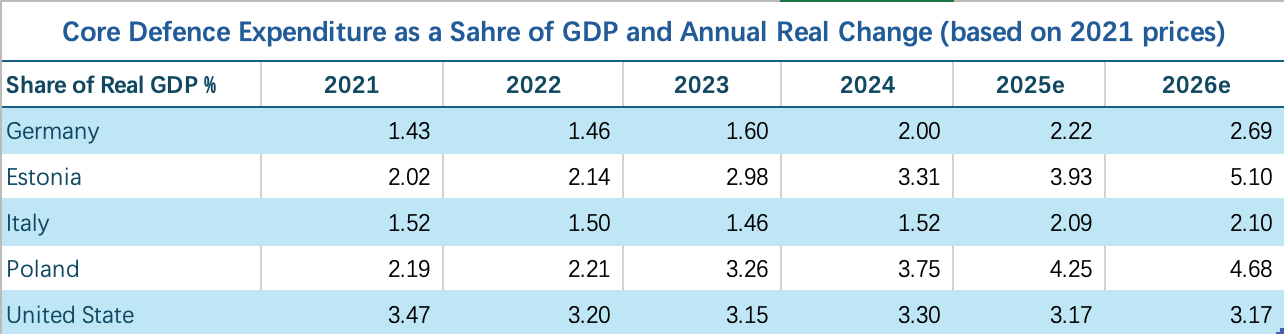
Countries closer to NATO's eastern flank generally view military investment as an urgent security necessity. Others are facing more fiscal trade offs. They have to balance the defense commitments against aging populations, public services, and slower economic growth. Reuters reported that while Germany and several Eastern European allies have significantly expanded defense budgets, larger economies including the UK, France, and Italy are facing greater difficulty sustaining higher military spending because of fiscal constraints.
This divergence does not necessarily threaten NATO's unity, but it does suggest that implementation may prove more challenging than political commitments.
Security Now Extends Beyond the Battlefield
One of the most significant changes is how NATO increasingly defines security itself.
The summit emphasized drones, AI-enabled capabilities, logistics, energy infrastructure, and defense supply chains alongside traditional military forces. The new procurement commitments and investment in unmanned systems illustrate that future deterrence will not only depends on the number of troops, but also rely on industrial capacity and technological innovation.
This reflects a broader strategic lesson drawn from recent conflicts.
Wars are no longer determined solely by battlefield performance. They are increasingly shaped by whether countries can sustain production, secure critical materials, protect digital infrastructure, and maintain resilient supply chains over extended periods.
As a result, economic capacity has become an increasingly important component of national security.
Alliance Unity Still Faces Political Tests
The summit also highlighted a reality that has become increasingly visible in recent years: NATO's military commitments continue to coexist with political differences among members.
Discussions around defense spending, the future balance of responsibilities between the U.S. and European allies, and broader strategic priorities reflected ongoing debates within the alliance. Although European members have increased defense investment, there are still doubts over how responsibilities should be shared across the alliance.
At the same time, these differences did not prevent NATO members from reaffirming their core security commitments. In the Ankara Summit Declaration, leaders reiterated their commitment to collective defense under Article 5 and emphasized that alliance unity and solidarity remain central to NATO's security framework.
The broader challenge for NATO is therefore not eliminating political disagreements, but maintaining strategic alignment while members pursue different national priorities.
The Broader Strategic Challenge for NATO
The Ankara summit was not a single announcement, it is more about accelerating a broader transition already underway.
NATO is increasingly expanding its focus beyond traditional deterrence to include industrial capacity, technological competitiveness, and long-term economic resilience. The alliance's recent commitments have placed greater emphasis on defense production, innovation, and the ability to sustain capabilities over time.
Whether this strategy succeeds will depend not only on defense spending, but also on whether member states can translate political commitments into stronger industrial capacity, faster procurement, and deeper cooperation.
The next phase of Western security may therefore be shaped not simply by military strength, but by the economic and industrial foundations that make long-term deterrence possible.
What will impact most on Western security over the next two years?
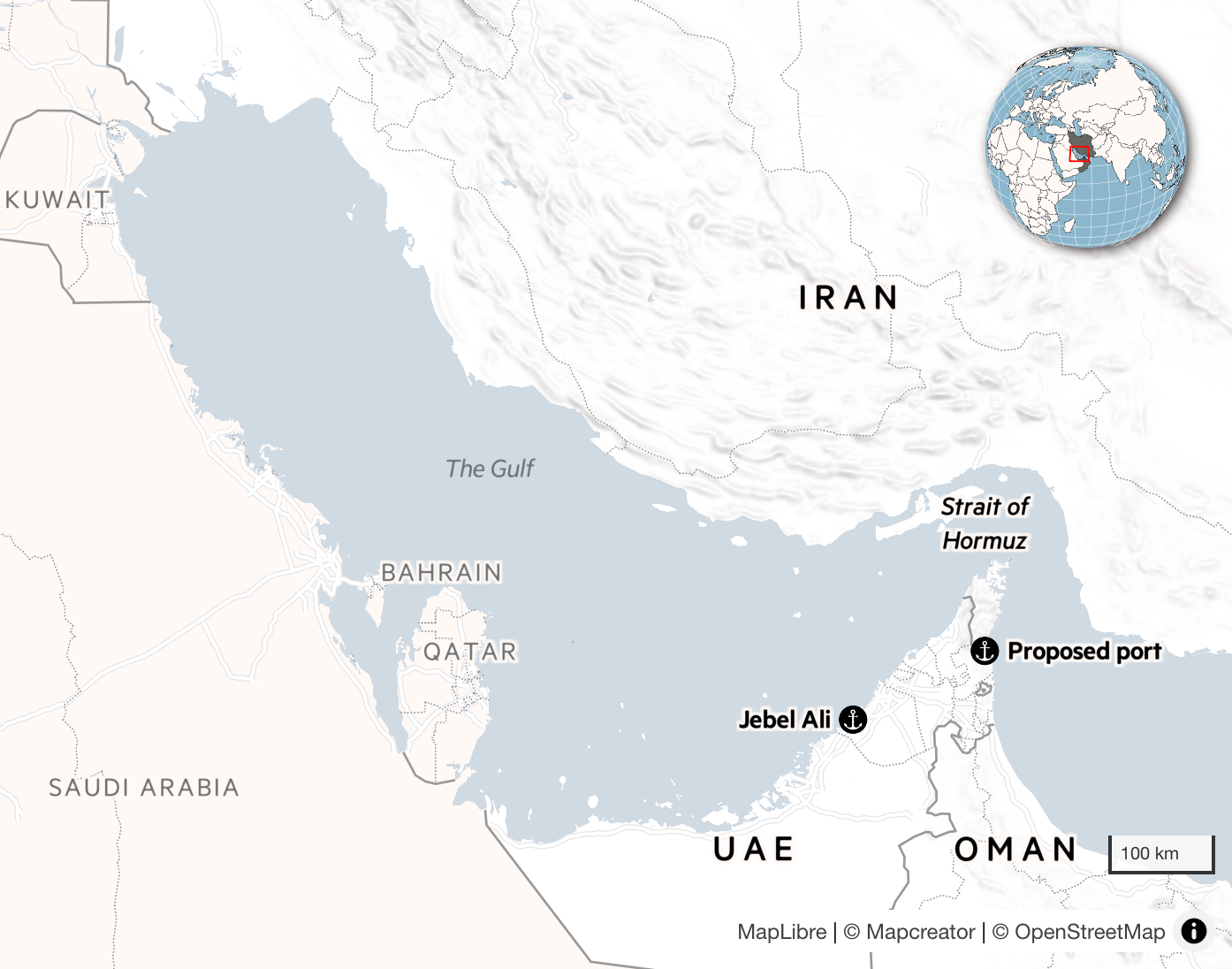
DP World is planning to build a new port and a container terminal on the United Arab Emirates’ east coast that would reduce Dubai’s dependence on its flagship Jebel Ali hub and bypass the Strait of Hormuz.
Will Dubai's new port plan materialize by the end of 2026?
YesResult
66.67%
NoResult
33.33%
3 Polls
EndedTBD
The Dubai-based port operator is in talks to develop a brand new multipurpose port in the coastal area of Fujairah and a new terminal at the existing harbour in the same emirate, people familiar with the matter said.
Shifting some of the port’s capacity outside Dubai marks a seismic change for the emirate, which has established itself as a global trade and finance hub partly off the back of Jebel Ali’s growth.
DP World’s plans align with a broader UAE government initiative to attempt to bulletproof its economy against future hostilities with Iran by reducing its dependence on the strait, where shipping has been disrupted by Iranian drones and missile strikes since the US-Israeli attack.
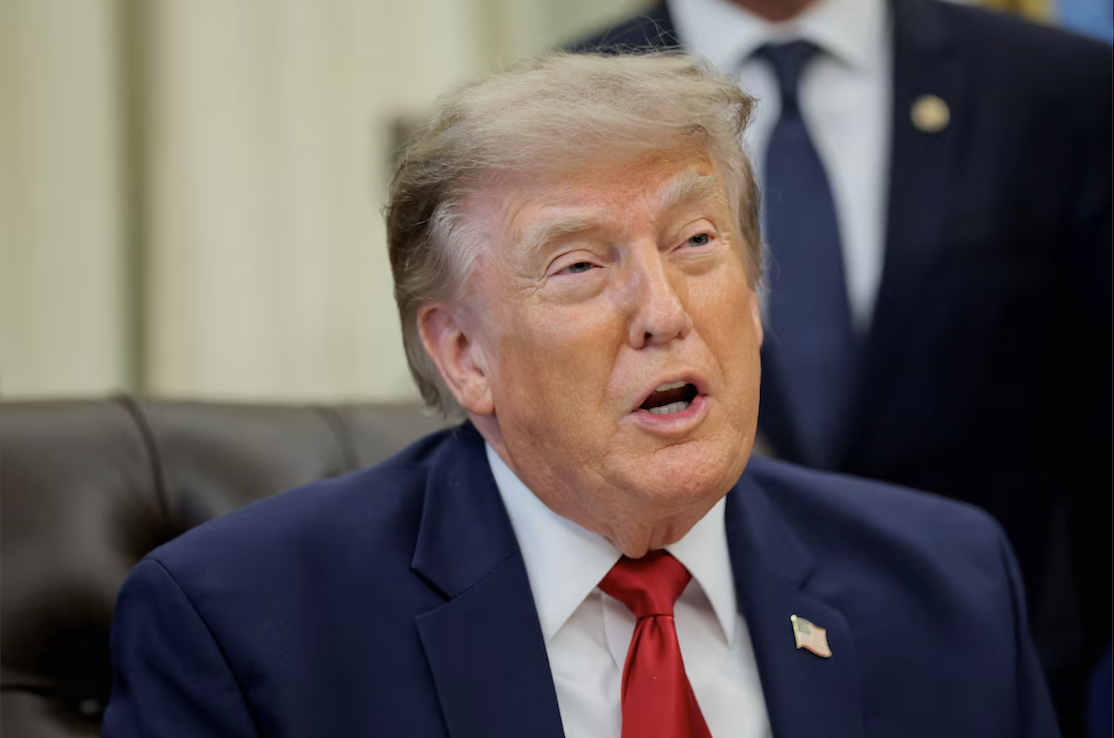
President Donald Trump backed away from his plan to impose a 20% charge on cargo shipments through the Strait of Hormuz after US allies in the Gulf urged him to drop it.
Trump announced the decision Tuesday, one day after rolling out the fee, saying that the expected revenue would be replaced by forthcoming direct investments in the US from Gulf states. He did not specify a dollar amount or which countries would participate.
“I have decided to replace the 20% United States Reimbursement Fee with Trade and Investment Deals that the various Gulf States will be making into the United States,” Trump posted on social media.
Even as Trump dropped that plan, the US announced it had resumed its blockade on Iranian shipping to and from its ports and coastal areas, effective at 4 p.m. Washington time.
US Central Command said in a post on X that it completed a seven-hour wave of strikes against dozens of targets near the Strait of Hormuz and along Iran’s coast aimed at degrading Tehran’s ability to threaten commercial shipping.
Trump discussed broadening the offensive against Iran beyond the current campaign around the strait during a Situation Room meeting Tuesday, Axios reported, citing three people familiar with the discussions.
Trump’s reversal on fees underscored shifting US policy toward the vital waterway, which carried roughly one-fifth of global oil flows before the war. US officials have alternated between insisting passage should remain free and debating who, if anyone, should charge for transit, while Iran maintains it controls the strait.
The reversal also reinforced the “TACO” — or Trump Always Chickens Out — dynamic that emerged among traders last year as the president vacillated over his tariff policies.
Asked by reporters why he abandoned the proposal, Trump said Gulf leaders from Saudi Arabia, Qatar, Bahrain, Kuwait and the United Arab Emirates urged him to pursue investment commitments instead. “I don’t like the concept of a fee,” he said.
It’s unclear whether any Gulf states have made new financial pledges. At least one regional government has said it had not agreed to increase its existing commitments in exchange for waiving the transit fee through the strait, according to a person familiar with the matter.
In a Fox News interview that aired Tuesday evening, Trump said US strikes against Iran would broaden to attacks on bridges and power stations next week “unless they get to the table and negotiate.” He has previously made similar threats to attack civilian infrastructure — which critics say could constitute war crimes if carried out — but has not followed through.
Global crude oil benchmark Brent advanced toward $86 a barrel after surging 11% in the previous two sessions as Trump said the US would continue striking Iran and reiterated threats to target infrastructure.
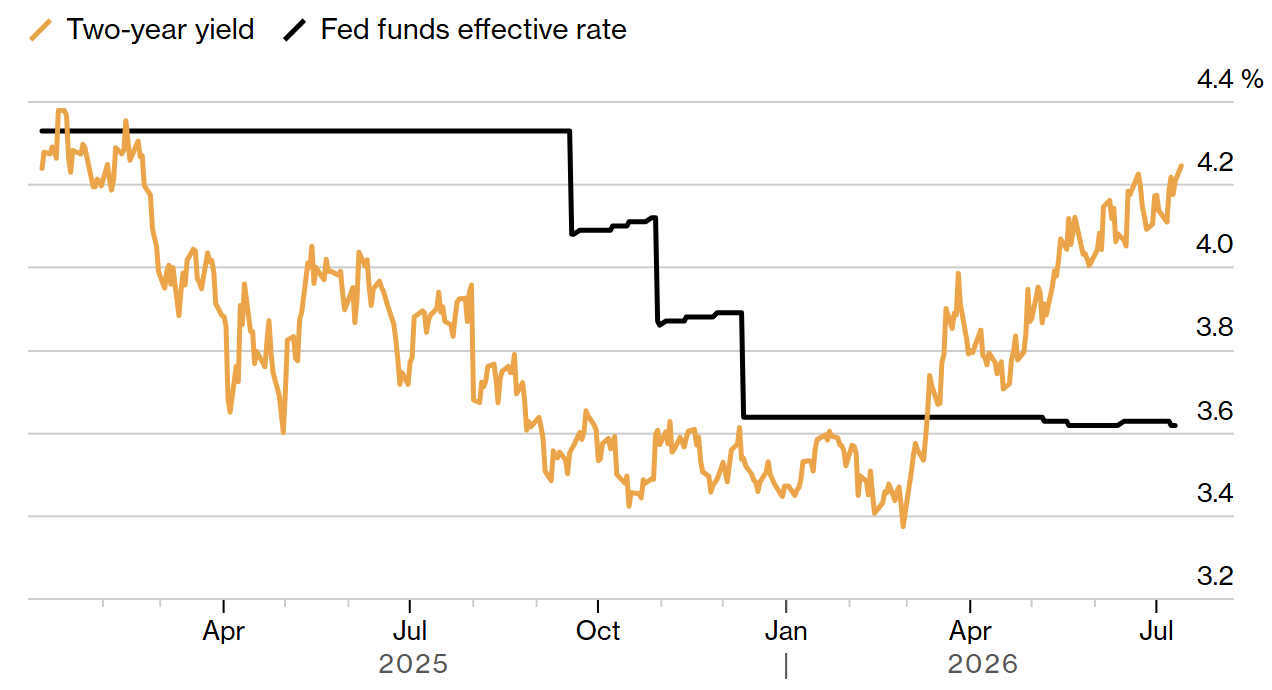
Bond traders ramped up bets that the Federal Reserve will raise interest rates later this month, ahead of a closely watched US inflation report and remarks from Fed Chair Kevin Warsh.
Rising rate expectations are evident both in interest-rate options, where the market-implied chance of a quarter-point hike later this month has climbed to about 50% from less than 10%, and in US government bonds. The two-year Treasury note’s yield, more sensitive than longer-maturity debt to changes in the Fed’s rate, stayed above 4.25% Tuesday, exceeding the policy rate by a widening margin.
US Two-Year Yield Exceeds Fed's Policy Rate by Widening Margin. Source: Bloomberg
The moves accelerated after Fed Governor Christopher Waller — until recently one of the central bank’s most dovish officials — said a rate increase “in the near term” should be considered if the inflation data show “another hot reading” on core prices, which exclude food and energy. “The FOMC has to be ready to tighten monetary policy to prevent a repeat of the 2021-to-2022 inflation episode,” he said.
Bond traders are increasingly anxious it will take higher interest rates to bring inflation back toward the Fed’s 2% target. Oil prices extended gains on Tuesday, with US military forces set to resume blockading traffic to and from Iranian ports and coastal areas. Trump also said the US would keep up attacks on Iran.
Will the Fed resume its rate-hiking cycle?
YesResult
37.62%
NoResult
62.38%
832 Polls
EndedTBD
Their stress is compounded by Fed Chairman Kevin Warsh’s aversion to making predictions about its course.
Short-term interest-rate markets fully price in a Fed rate increase by year-end and a second one by mid-2027 — probably not enough, Al-Hussainy said. He thinks the central bank is likely to unwind all three of the quarter-point cuts it made over the final four months of last year in response to weakening labor-market conditions.
Wagers on near-term Fed rate hikes have flooded into the interest-rate futures market, helping drive up open interest in August federal funds futures. The number of contracts in which traders hold positions has increased about 23% in July. Open interest data are reported after the close, and stand to increase further.
The CPI report is expected to show a 0.1% drop in overall prices from May, bringing the year-on-year rate down to 3.8% from 4.2%. Core prices are seen rising 0.2% from May and 2.8% from last June.
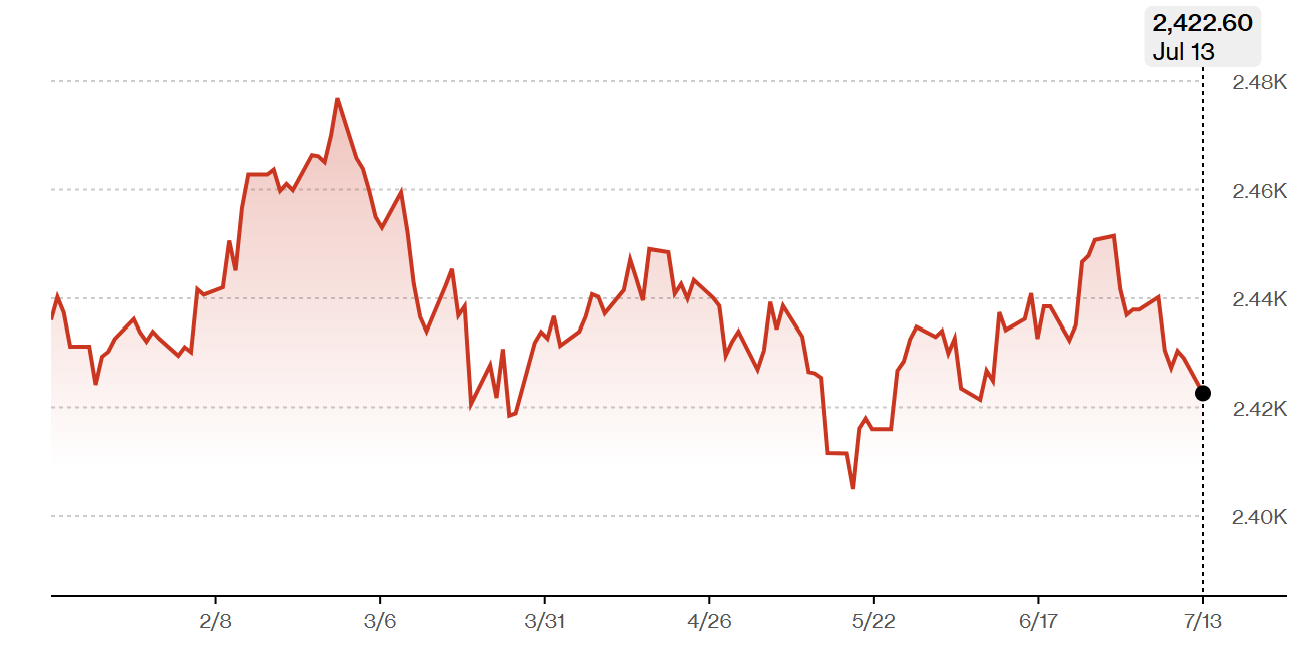
Even softer-than-expected CPI readings may provide limited relief in the bond market, however, where two-year Treasury yields have risen about 10 basis points this month, 10-year yields 15 basis points, wiping out the market’s gains for the year as measured.
US Treasury Total Return Unhedged USD. Source: BloombergSSou
On Kalshi, there is a family of contracts that pay out when a sports match has any delay due to weather.
At first, this sounds like one of the least controversial event contracts. Ordinary humans cannot create a thunderstorm. Weather forecasts are public. Delays impose real costs on ticket holders. This contract may offer a hedging opportunity for stakeholders who bear losses if the match cannot start on time.
But the contract is not settled by rainfall, lightning or wind speed.
Under Kalshi's rules, a qualifying delay must be formally announced by the governing body of the sports event. Officials must also identify weather, atmospheric conditions or weather-related safety as the primary reason.
In addition to predicting the weather, traders are also predicting how a small group of people will interpret the weather, apply safety rules and describe their decision publicly. This distinction places weather-delay markets in a grey area between weather-related derivatives and contracts on decisions made by a small group of officials.
They are not pure "weather/climate contracts"
Kalshi classified its weather-delay product as “Weather/Climate” in its filings with the CFTC. The templates can cover sports matches as well as other events. Qualifying weather can include rain, snow, lightning, extreme temperatures, strong winds, poor visibility and any atmospheric condition that officials consider unsafe.
The actual settlement chain is therefore: Weather conditions → safety assessment → official decision → public announcement → settlement.
A conventional weather contract has a shorter chain: Measured weather conditions → settlement.
Each extra step introduces additional uncertainty and another potential point of manipulation.
Suppose heavy rain falls before a baseball game. The field is wet, but the organizing body believes it can be prepared in time. The contract resolves No.
Suppose the game starts late because rain affected transport, staffing and stadium entry. The announcement describes the cause as an operational problem. The contract may still resolve No.
The price is therefore not a clean forecast of atmospheric conditions, but partly a forecast of institutional behaviour and official language.
Some weather decisions are close to automatic (e.g., a lightning strike occurs within a defined distance). Other decisions require more (subjective) judgment (e.g., whether a wet field remains playable when the rain has stopped).
League rules illustrate this mixture of protocol and discretion. Under the NFL rulebook, severe weather, lightning and flooding are treated as emergencies. Authority to determine whether an emergency exists is vested in the Commissioner, designated League-office representatives and the game referee. If neither the Commissioner nor a designated representative is present, the referee has sole authority, although the referee must try to consult the league and may seek information from the weather bureau and police.
This is not identical to a referee deciding whether a pass interference penalty occurred. Weather is an external event, and safety procedures constrain the decision. But the settlement still depends on identifiable people exercising authority and discretion.
Should a weather-delay contract be treated as a weather product or a sports betting product?
A weather product, because weather is the underlying causeResult
0.00%
A sports betting product, because the result depends on a sporting eventResult
0.00%
A hybrid product that needs its own regulatory categoryResult
0.00%
It depends on the specific settlement rulesResult
0.00%
0 Polls
EndedTBD
The CFTC's emerging dividing line
In June 2026, the CFTC proposed a new framework for determining when specific contracts involving "gaming" or other listed activities are contrary to the public interest. The proposal is not yet a final rule and is seeking public comment.
The CFTC takes a relatively favourable view of markets based on broad sporting outcomes, such as final scores, winners, point differences and statistics produced over a meaningful period of play. These results reflect the combined actions of many participants. No single person normally controls the entire settlement result, and suspicious attempts to influence it may create patterns that surveillance systems can detect.
The Commission is much more sceptical of contracts that settle solely on a referee's judgment, a disciplinary ruling or another discrete action controlled by a small number of identifiable people. Its proposal points to several concerns including:
inappropriate contact between traders and officials
selective or manipulated decision-making
limited accountability under time pressure
weak informational value
damage to confidence in the integrity of the game
The CFTC preliminarily concluded that contracts settled solely by such officiating outcomes would likely be contrary to the public interest.
However, a weather-delay market sits between the two categories. It does not settle on the final outcome of a long contest. But it also does not settle solely on an arbitrary whistle or penalty. The weather is external, while the official response is internal.
The CFTC has not expressly classified weather-delay contracts as prohibited officiating markets. It would therefore be inaccurate to claim that the agency has already ruled them unlawful. Still, the final payout may depend on a limited number of people who know about the decision before the public does and may influence the decision-making process, its timing, and how it is communicated.
Michael Selig, Chairman of the Commodity Futures Trading Commission (CFTC), testifies before Congress as the agency considers how prediction markets, including sports event contracts, should be regulated under federal derivatives law. (Eric Lee|Bloomberg)
Markets create valuable information, and incentives to obtain it
The usual defence of prediction markets is that they reward people for finding and contributing useful information. But that is also their risk. Once an outcome can be traded, information that previously had little private monetary value can become valuable. And traders may begin searching for people close to the decision.
Sportico reported that gamblers contacted a doctor who had previously treated NFL quarterback Joe Burrow, seeking information after Burrow suffered a wrist injury. The pressure was not limited to physicians. Nurses, assistants and office workers could also become targets because they might have access to non-public medical information.
A 2026 Reuters legal analysis similarly described injury reports and lineup decisions as financially valuable information that can create integrity and employment-law risks when it circulates internally before public release.
Weather delays do not involve the same medical privacy concerns. But the information structure is similar. Potential sources from whom traders can get non-public information include:
referees and league personnel
venue managers, security and operations staff
people preparing official announcements
Some of these individuals have some influence over how and when the event delay decision is communicated.
However, to the best of my knowledge, there is no public evidence that Kalshi's weather-delay contracts have already caused bribery, harassment or altered safety decisions. The comparison with injury information is just evidence of a possible mechanism. But regulators normally do not (and should not) wait for the first successful manipulation before considering whether a market creates the wrong incentives.
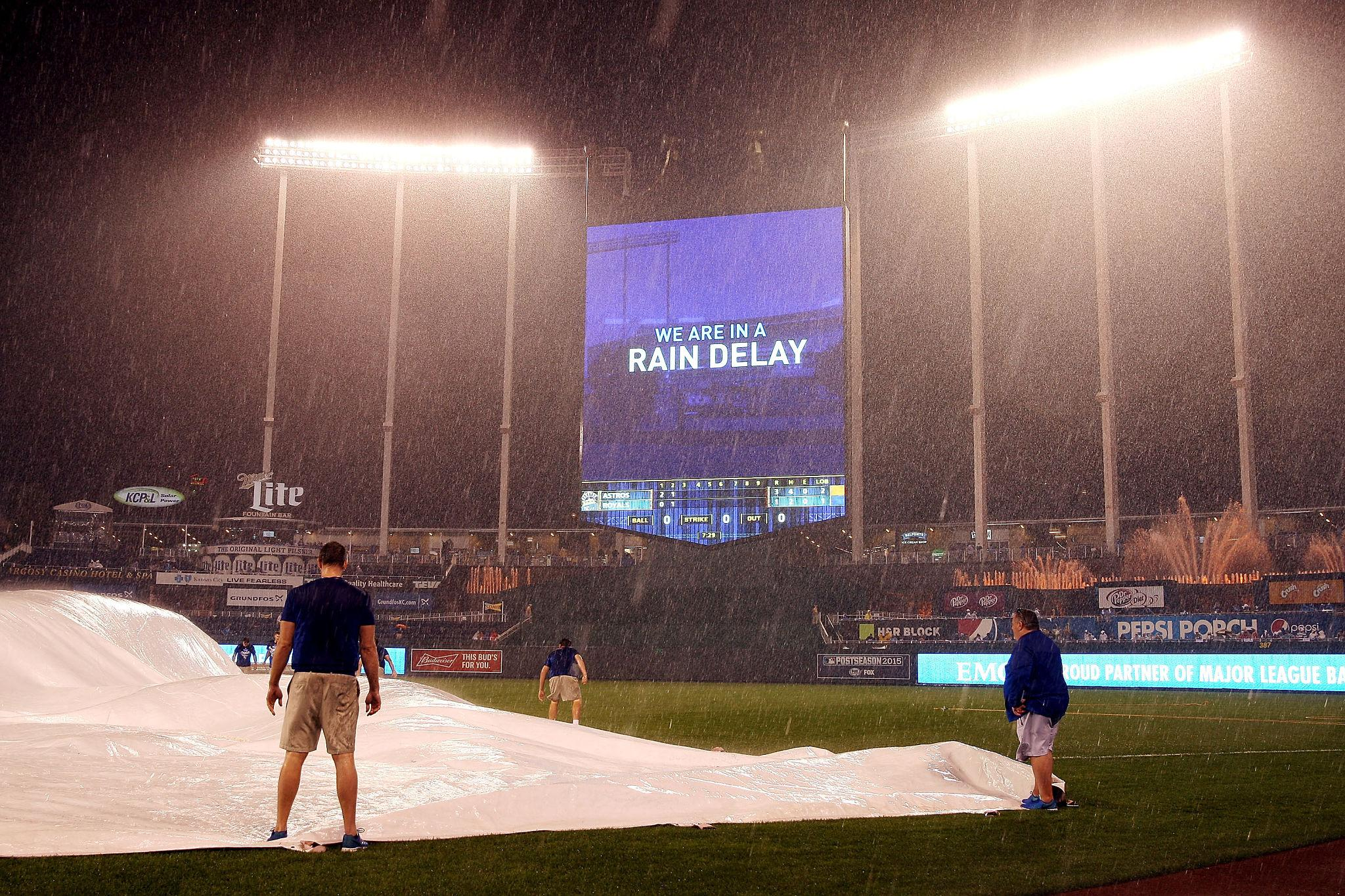
A tarp covers the field during a rain delay at the 2025 MLB Speedway Classic at Bristol Motor Speedway. (Brycenrichter|Wikimedia Commons)
The costs can fall on people who never trade
A trader who loses money may blame the referee who stopped the game, the venue official who delayed entry, the grounds crew that declared the field unsafe or the league employee who wrote the announcement, when a delay is not that necessary from their perspective.
The larger issue is the distribution of benefits and costs. The exchange earns fees. Traders gain a new product. Some businesses may receive a useful probability signal. But venue workers, officials and contractors may bear the additional cost of suspicious approaches, investigations, and public accusations. These external costs are relevant even when nobody successfully manipulates the result.
An NCAA study published in November 2025 found that more than one-third of surveyed Division I men's basketball players had experienced harassment from bettors. Earlier NCAA research also found betting-related harassment across several college sports.
The strongest case for allowing the markets
Weather delays are economically meaningful. They affect ticket holders, television schedules, staffing, transport, and nearby businesses. A market could help stakeholders hedge.
It may also answer a more useful question than a standard weather forecast. A forecast tells a restaurant owner that rain is likely. A delay market estimates whether the rain will be serious enough, under the relevant sporting rules and local conditions, to disrupt the event.
These are real benefits. Calling the product meaningless gambling would ignore the economic consequences of event disruption and the potential value of aggregated forecasts.
Football spectators wait in wet conditions in California. Weather disruptions can affect ticket holders’ travel, schedules and overall event experience, as well as the businesses serving them. (John Martinez Pavliga|Wikimedia Commons)
So, should these markets exist?
Sports weather markets should not be rejected simply because they are connected to betting. Weather disruption is real, costly and forecastable.
The harder question is whether a contract that, in some cases, depends partly on the discretionary decisions of a small group creates public-interest concerns.
While the CFTC has not pushed back and its 2026 proposal remains unfinished, these markets are testing how far the CFTC is willing to tolerate such markets.
The NFL would not be comfortable with Kalshi allowing weather delay wagers on its games, according to Sportico.
Overall, the current design raises more public-interest concerns than its "Weather/Climate" label might initially suggest. Its settlement can depend on judgment, timing and official wording, which deserve much greater scepticism. It creates incentives to seek non-public information or manipulate the market itself. Its social costs may fall on officials and workers who did not choose to participate in the market.
Disclaimer: The content is for informational purposes only. You should not construe any such information or other material as legal, tax, investment, financial, or other advice. Nothing contained in this article constitutes a solicitation, recommendation, endorsement, or offer by the author(s) or any third party service provider to buy or sell any securities or other financial instruments in your or in any other jurisdiction in which such solicitation or offer would be unlawful under the securities laws of such jurisdiction. The author(s) report(s) no conflict of interest.
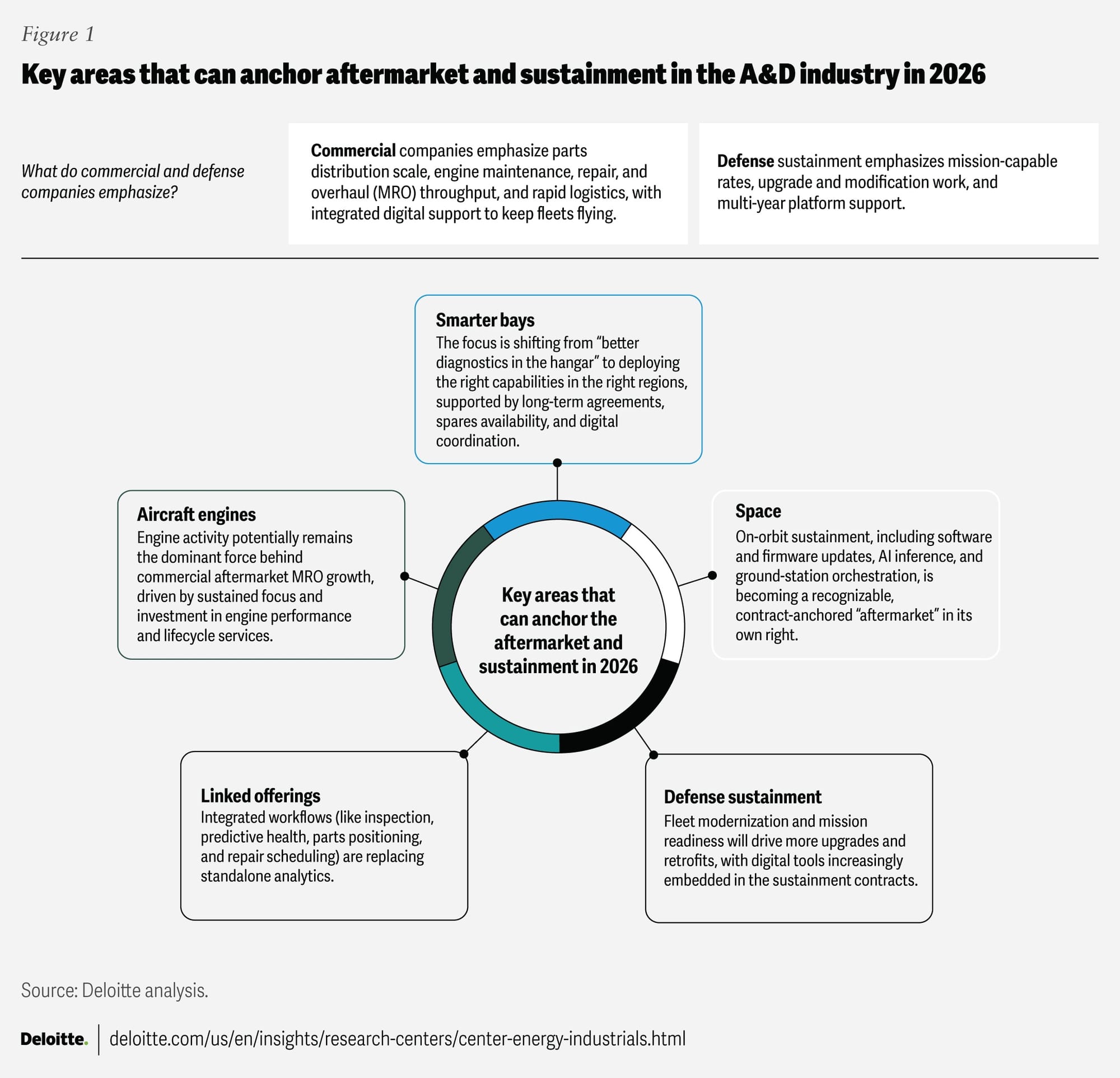
PwC's mid-year 2026 aerospace and defense outlook shows the five largest U.S. primes closing FY2025 with a combined $1.36 trillion backlog, up 23.7% year-over-year. Markets have priced this as record orders, rising budgets, primes trading at 20-25x forward earnings.
The Navy has been trying to deliver two Virginia-class submarines a year since 2011. It is currently delivering 1.3. The Congressional Budget Office puts the average delay at four years past the dates written into the original contracts, and this gap grew, not shrank, between 2025 and 2026, despite billions already spent trying to close it.
Current valuations appear to assume that most backlog converts with relatively limited execution risk. Delayed delivery doesn't shrink the backlog number itself, but it defers revenue recognition, pressures margins on fixed-price contracts, and slows cash generation. Basically, the things the multiple is actually being paid for. But step back and there's a simpler read hiding underneath all three: the market keeps treating a signed contract as a promise the industry can keep on schedule. Increasingly, it can't.
PwC's own report says as much: M&A is now being used as "a practical fix for capacity that organic investment cannot close quickly enough" across aircraft, engines, and shipbuilding.
Put simply, ships, engines, and munitions are stuck behind a wall of missing welders, pipefitters, and electricians.
So, can the industry staff the shop floor fast enough to fill them on schedule?
Where do you come down on defense backlog right now?
Backlog is real revenueResult
50.00%
Capacity gap is underpricedResult
25.00%
Depends on the name (some primes, not others)Result
0.00%
Waiting on Q2 earnings before decidingResult
25.00%
4 Polls
EndedTBD
Here’s what the market is actually betting on
Defense budgets are expanding on both sides of the Atlantic. NATO members are treating higher spending as a durable planning assumption rather than a crisis response, and PwC notes that European revenue has grown by double digits across major US contractors this year.
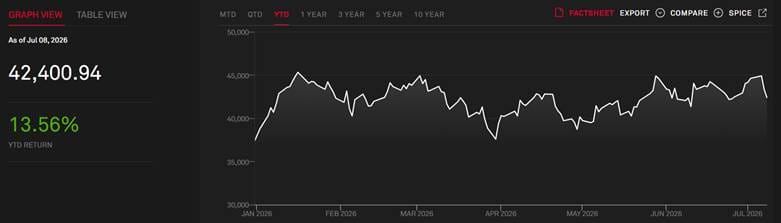
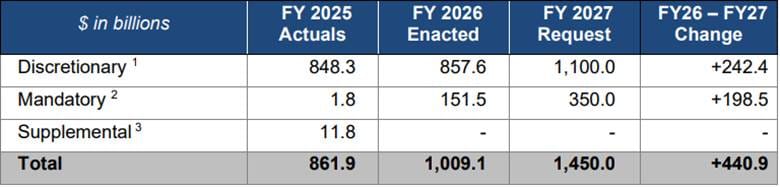
The sector itself has risen roughly 15% since early 2026, outpacing the broader market, and Wall Street's baseline demand assumptions keep getting revised up, not down, as the FY2027 NDAA authorizes $1.15 trillion in military spending, and President Trump has floated pushing the number to $1.5 trillion.
On paper, this is a sector with multi-year revenue visibility that few others in the market can match.
What's notable is what the skeptics are actually skeptical about. Wells Fargo's David Strauss cut his Lockheed target by 12% and his Northrop target by 23% this week, but his reasoning was multiple compression after a period of "meaningful underperformance" relative to the defense budget's growth, so a valuation call, not a delivery call.
Nobody on the sell side is downgrading these names because the Navy can't find welders. The debate happening in research notes is entirely about whether the stocks have gotten ahead of themselves on price.
The issue? The market is pricing contracts as if they were deliveries
Companies aren't buying market share. They're buying the physical and human capacity to build things they've already been paid to build. When M&A becomes a substitute for organic capacity expansion, that's a tell that internal capacity isn't growing fast enough on its own.
The clearest example of this problem, though not the only one, is in shipbuilding, where almost all US defense construction capacity sits. Navy Secretary John Phelan said this year that the maritime industrial base needs roughly 250,000 new shipbuilders over the next decade just to hit existing fleet plans.
McKinsey's read of Department of Labor data lands in the same range, estimating a shortfall of 200,000 to 250,000 workers. This isn't a hiring problem that money fixes quickly. According to the same source, about 27% of shipbuilders are already 55 or older, first-year attrition among new welders and electricians runs as high as 20-22%, and a welder qualified for nuclear submarine work takes years of certification, not weeks of training.
The Columbia-class submarine program, the Navy's top acquisition priority, was contracted for an 84-month build and is now tracking closer to 96 months, with delivery pushed toward 2028, according to Congress. The Navy has attributed part of this slip to late turbine generators and a delayed bow section, both manufacturing execution problems rather than funding or design issues.
The Constellation-class frigate program is the more dramatic case: the Navy cut the program from a planned 20 ships to 2 in November 2025, after delays of at least three years pushed the first delivery from 2026 to 2029, driven in large part by workforce shortfalls at the building yard in Wisconsin.
The Pentagon's own FY2027 budget request sets aside $3.1 billion specifically for "wage increases... to recruit and retain workers" at nuclear shipyards, and a separate workforce line for castings, forgings, and munitions plants. This is the government's own diagnosis of the bottleneck, not an outside critic's.
Sign up for Latest Financial Analysis
To be the premier information portal for in-deep news.
No spam. Unsubscribe anytime.
Four triggers to watch next
1. Q2 earnings, late July
Lockheed and Northrop report the same week, RTX close behind. Backlog may rise again, but that's not the number that matters. Watch book-to-bill against free cash flow, and whether more fixed-price charges show up on the same programs that are already behind.
2. Shipyard workforce data from the Department of Labor and Navy budget submissions
The Navy's Maritime Industrial Base program is now tracking hiring against its 250,000-worker target. If those numbers show meaningful progress by early 2027, some of this thesis weakens.
If attrition stays in the 20%-plus range and headcount growth stalls, expect more Columbia- and Constellation-style schedule resets across other programs, including Virginia-class submarines and the next tranche of destroyers.
These programs represent different segments of the industrial base (submarines, the surface combatants, and strategic deterrence), suggesting the issue is broader than a single contractor.
3. Further M&A aimed explicitly at capacity rather than capability
PwC flags distressed acquisitions of qualified facilities and roll-ups of Tier 2/3 suppliers as an active 2026 trend. T3 Defense Inc. (NASDAQ: DFNS) raised $20 million in February specifically to keep buying suppliers it describes in SEC filings as sitting at "critical bottlenecks at the sub-OEM level."
An acceleration of these deals, especially forced or distressed transactions rather than strategic ones, would confirm capacity scarcity is worsening, not stabilizing.
4. Munitions: Delivered units, not stated capacity
The Pentagon's targets call for PAC-3 MSE output rising from roughly 600 to 2,000 units a year by 2030 and PrSM output roughly quadrupling. Lockheed says its PAC-3 ramp is currently running ahead of commitments. If that holds across other programs, and if NATO's roughly sixfold increase in 155mm shell capacity since 2022 keeps translating into delivered rounds rather than just announced capacity, this is the strongest evidence the market has this right rather than wrong.
The gap between capacity announcements and delivered units program by program is the one number that settles this either way.
The bottom line
The market is paying a premium for hardware that doesn't exist yet, on a delivery timeline the industrial base keeps failing to hit, and nobody pricing these stocks is discounting for this gap.
Submarines are four years late.
Munitions ramps depend on workers who don't exist.
Fixed-price programs are bleeding cash on the exact contracts the backlog is supposed to convert.
Until delivery data starts closing the gap, this trade is a bet on an industrial base that hasn't earned the multiple yet.
Which trigger will you actually be watching?
Q2 earningsResult
0.00%
Shipyard workforce dataResult
0.00%
Capacity-driven M&A activityResult
0.00%
Delivered munitions units vs. stated capacityResult
0.00%
0 Polls
EndedTBD
Sources
Breaking Defense: What the Constellation-class frigate’s cancellation means for Navy, Fincantieri
CBO: Testimony on Challenges Facing the Navy’s and Coast Guard’s Shipbuilding Programs and the Shipbuilding Industrial Base
Congress.Gov: Navy Columbia (SSBN-826) Class Ballistic Missile Submarine Program: Background and Issues for Congress
CSIS: Is the Industrial Base on a Wartime Footing? A Progress Report
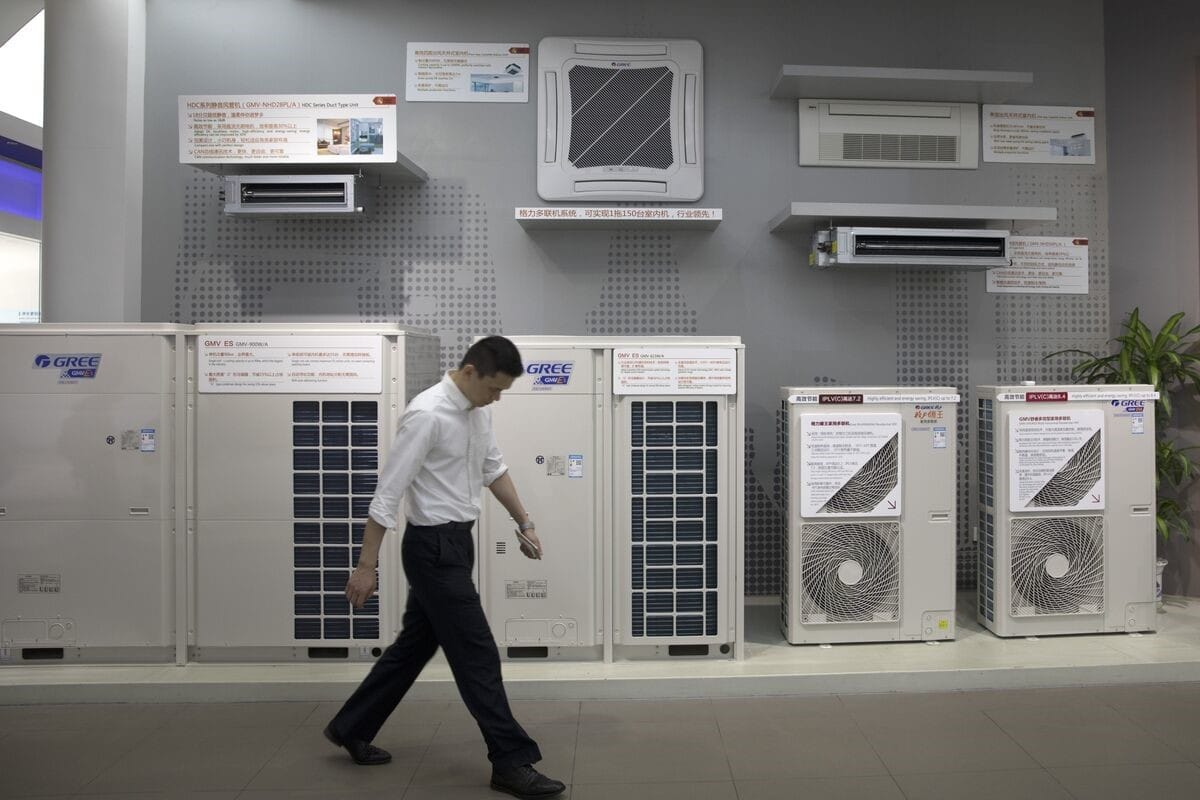
Europe's worst heatwave on record has turned into a genuine earnings boom for Chinese appliance makers. Midea, Haier, and Gree are all reporting strong 2026 growth into a market that's suddenly desperate to cool down.
Chinese AC exports to the EU hit $3.76 billion in the first half of 2026, up 43.2% year-over-year. Midea's PortaSplit line has shipped more than 200,000 units this year alone, doubling sales every year since launch. Gree's installation backlog in France now runs into late August.
None of this growth accounts for what happens to the product itself in two and half years.
Most of the units driving this boom run on R32 refrigerant, with a global warming potential of 675. The EU's F-Gas Regulation bans split air-conditioning systems under 12 kilowatts (basically all standard home AC units fall under this line) from using any refrigerant above a GWP of 150, starting January 1, 2029. R32 at 675 is more than 4x over this line.
So, is this year's export boom built on a product line that has a legislated shutoff date?
Where do you land on China's AC export boom to Europe?
I'd buy the momentumResult
50.00%
I'd be cautiousResult
50.00%
Depends entirely on which manufacturerResult
0.00%
Need more data before I'd take a positionResult
0.00%
4 Polls
EndedTBD
The demand case: Nobody can bet against a heatwave
The demand case is real and well-documented. Samsung told Reuters it expects "sustained demand through the peak cooling season."
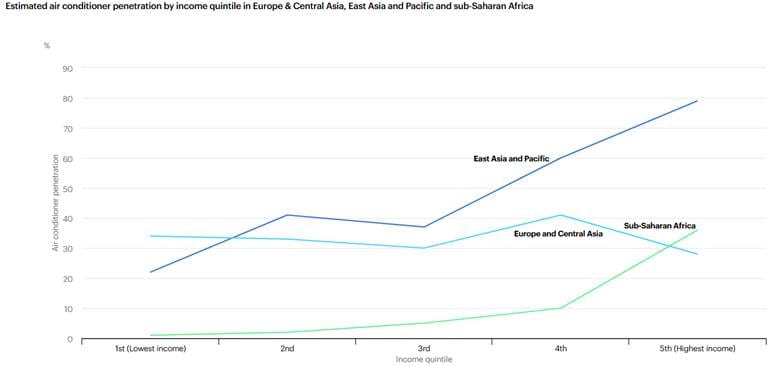
Only about one-fifth of European households currently own air conditioning, against a continent the World Meteorological Organization says is warming at more than twice the global average.
The IEA estimates that AC ownership remains highly income-dependent in Europe, with penetration still well below East Asia even among wealthier households.
Morningstar is forecasting a "meaningful" boost to Chinese manufacturers' second- and third-quarter revenue specifically from this trade.
There's a political layer too, and it's arguably bullish, not bearish. Brussels wants to narrow its trade deficit with China by October, but can't act aggressively against a product category that's currently keeping European households from heat stroke.
European Trade Commissioner Maros Sefcovic has said "the status quo is not an option" on the broader trade imbalance, yet no formal anti-dumping case has been opened against AC imports specifically, even as some EU lawmakers have floated tariffs of 15-25%.
For now, Europe needs the units too badly to restrict them.
But there’s a blind spot: The refrigerant deadline
R32 isn't a minor technical detail, it's the refrigerant charge inside the exact split units currently selling at record volume. Once the EU's GWP 150 threshold takes effect for split systems in 2029, existing installed systems can continue operating, but manufacturers cannot place newly produced non-compliant split systems on the EU market after the deadline.
The fix exists, but it isn't free. R290 (propane) has a GWP of 3, comfortably under the threshold, and Chinese manufacturers aren't starting from zero either because Midea has been developing R290 compressor technology since 2004 and has sold Blue Angel-certified R290 split units in Germany since 2021.
But R290 is flammable, requiring explosion-proof design work that industry estimates put at a 20%-30% cost increase per unit.
And per Danfoss's own read of the regulation, a Danish refrigeration manufacturer with no obvious stake in flattering China's position, the split-system replacement is a "serious problem," one "raised by many industry associations." To reiterate, it's not a Chinese outlet arguing its own manufacturers have an edge, it's a European supplier to the same industry admitting nobody has a clean, cost-competitive answer yet.
This leaves a real question sitting underneath a growth trade everyone's already pricing as durable: how much of today's export volume is riding a refrigerant line that has two and a half years left, and how cleanly does that volume convert to the compliant product once the deadline actually bites.
What actually tells you which way this breaks
1. Manufacturer roadmap disclosures. As of this writing, Midea, Haier, and Gree all already sell R290 units in Europe, but what none of them have disclosed is what share of this year's export surge, the actual R32 volume driving current earnings, is converting.
2. R290 unit pricing versus R32. If the 20%-30% cost premium narrows meaningfully as volume scales, the transition risk shrinks. If it holds or widens, expect margin pressure to show up in future guidance before it shows up in headlines.
3. The EU-China October trade deadline. A tariff or import-restriction outcome here could compress the runway to 2029 significantly, layering political risk on top of the regulatory one.
4. Manufacturer or third-party disclosure of finished-unit refrigerant mix. Chinese export codes track bulk refrigerant chemicals (R32, R290, etc.) separately from finished air conditioners, with no code that says what's charged inside the units actually shipped. The only way this number surfaces is if a manufacturer, industry body, or market research firm discloses it directly. Right now, that data isn't public, so its absence is itself worth noting.
The bottom line
The heatwave is real, and so is the demand, but what isn't being priced is that the product generating those beats has a shelf life set by EU law, not by weather.
Chinese manufacturers may be better positioned than anyone to make this switch. Midea's decade-plus head start on R290 is a genuine advantage, and history suggests EU trade barriers alone haven't been enough to dislodge a scaled Chinese cost advantage once it's established.
In fact, the EU's 2013 anti-dumping tariffs on Chinese solar panels are the clearest precedent: the European Commission's own 2018 review found domestic manufacturers never recovered the market share the tariffs were meant to protect, while a leading German producer went bankrupt anyway.
But "well positioned to eventually comply" and "already compliant at the volume being sold today" are different claims, and current earnings expectations appear to assume a relatively smooth transition, even though manufacturers have not disclosed enough evidence to verify that assumption.
Which signal will you actually be watching?
Manufacturer production-share disclosures (R290 vs. R32)Result
2.80%
R290 cost premium narrowing or wideningResult
14.02%
The EU-China October trade deadline outcomeResult
78.51%
Manufacturer or third-party disclosure of finished-unit refrigerant mixResult
4.67%
107 Polls
EndedTBD
Sources:
Business Standard: Europe's heatwave lifts demand for China's portable air conditioners
China Daily: Chinese cooling appliances ride Europe's heat wave with smart, installation-free designs
CNBC: Europe wants to rebalance trade with Beijing, but can’t quit Chinese air conditioners
European Central Station: Chinese air conditioners are selling like hotcakes in Europe, and European air-conditioner merchants have issued a warning: if they cannot beat Chinese manufacturing, they will change the rules.
European Commission: Press remarks by Commissioner Šefčovič on the EU-China Trade and Investment Consultations
IEA: Staying cool without overheating the energy system
Reuters: As Europe roasts in a heat wave, Asia's air-con makers grab some cool cash
ScienceDirect: Protectionism's adverse impact on renewable energy deployment: evidence from the European Union's import duties on China-made photovoltaic panels
United Nations: Energy efficient and climate-friendly split air conditioners now on sale in Europe
For more than three years, Polymarket operated outside the U.S. after settling charges with the U.S. Commodity Futures Trading Commission (CFTC) in early 2022. It changed when Polymarket acquired CFTC-regulated exchange and clearinghouse QCX, giving it a legal pathway back into the American market. Since then, Polymarket US has begun filing exchange rules, incentive programs, and event contract certifications with the CFTC as it prepares for a broader rollout.
Which factor will matter most for prediction markets in the U.S. over the next three years?
Clearer federal regulationResult
33.34%
Better trading liquidityResult
33.33%
Greater institutional participationResult
0.00%
Wider public adoptionResult
33.33%
I have my own unique opinionResult
0.00%
3 Polls
EndedTBD
The return itself is significant, but it is probably not the biggest story.
The more important question is whether Polymarket's reentry shows that prediction markets are moving from a regulatory experiment into a recognized part of U.S. financial infrastructure.
From Regulatory Outlier to Licensed Exchange
The back of Polymarket looks differ from other platform who left the U.S.. Instead of rely on the off-chain crypto platform, Polymarketchose to acquire an already licensed derivatives exchange rather than wait years for a new license.That acquisition gave it access to an established regulatory framework while allowing it to operate under CFTC oversight. Reuters reported the transaction followed the company's acquisition of QCEX and QC Clearing, which provided the legal infrastructure necessary for a U.S. relaunch.
Since then, Polymarket has submitted multiple filings covering exchange rulebooks, liquidity incentive programs, and election related event contracts, suggesting the company is preparing for long-term regulated operations rather than a limited pilot.
A Different Regulatory Environment
Polymarket is also returning to a market that has changed dramatically.
Several years ago, prediction markets occupied a legal gray area. Today, event contracts have become part of a broader policy debate involving regulators, exchanges, and state governments.
Kalshi's legal victories helped establish that at least some event contracts could operate within the U.S. derivatives framework. And the CFTC has opened a formal rulemaking process to determine how prediction markets should be regulated in the future. Polymarket submitted comments arguing that regulated prediction markets improve price discovery and information aggregation, while acknowledging that clear regulatory standards remain necessary
This does not mean regulatory uncertainty has disappeared.
There are still ongoing debates regarding which contracts should be permitted, where the boundary between financial forecasting and gambling should be delineated, and how federal authority should interact with state-level restrictions.
Competition is About More Than Users
Most media reported Polymarket's return as a direct challenge to Kalshi.
Competition certainly matters, but the deeper contest may involve market design.
Kalshi operates within a fully regulated U.S. financial framework, while Polymarket built its reputation as a crypto native global platform with great liquidity and international participation. Bringing those strengths into a regulated U.S. exchange, then a boarder question comes: which model will traders prefer ultimately?
The answer could influence how future prediction markets are structured—not only in the United States but globally.
Why This Matters Beyond Prediction Markets Itself
The implications extend well beyond one company.
If multiple regulated exchanges begin listing(which is already in process) event contracts on politics, economics, weather and other real world events, prediction markets could become another source of market based expectations alongside traditional surveys, analyst forecasts, and futures markets.
Supporters argue these markets aggregate dispersed information more effectively than opinion polls, while critics worry that certain contracts could encourage speculation on sensitive public events. The CFTC's ongoing review is expected to play a central role in defining where those boundaries ultimately lie.
Therefore, Polymarket's return to the U.S. is not simply a company expanding into a new market.
It represents another step in the gradual institutionalization of prediction markets.
Whether this can become a lasting shift will depend less on one platform's trading volume or liquidity, it is more about whether regulators, exchanges, and investors can agree on where prediction markets fit within the U.S. financial system.
China is planning to allow the country's leading AI companies to purchase a limited number of Nvidia's H200 AI chips, according to The Information, citing two people with direct knowledge of the matter.
The report said Chinese officials have recently informed companies including Alibaba, ByteDance, and DeepSeek that they may soon receive approval to buy a limited quantity of Nvidia's H200 chips. The move would mark a notable shift in Beijing's approach to advanced AI hardware imports.
Will China be able to buy H200?
YesResult
75.00%
NoResult
25.00%
4 Polls
EndedTBD
The development comes after the U.S. government approved Nvidia's sales of H200 chips to China and granted export licenses to around 10 Chinese companies. However, Chinese authorities had previously delayed their own approvals as they sought to support the growth of domestic AI chipmakers. Reuters reported in March that Nvidia had already secured Beijing's long-awaited approval to sell the H200 chips in China.
News of the potential policy change boosted investor sentiment. Nvidia shares rose in Wednesday morning trading following the report.
The reported shift also highlights the growing shortage of AI computing power in China. Demand for advanced AI chips has continued to outpace supply as Chinese technology companies expand their investments in large language models and other generative AI applications.
Most people open a prediction market and see probabilities.
A contract trading at 52 cents? The market thinks the event has a 52% chance.
A contract trading at 9 cents? Longshot.
A contract trading at 98 cents? Basically done.
That is the normal way to read these markets. But it is somewhat incomplete.
Because when an event contract gets close to certainty, it starts to behave less like a bet and more like a bond.
Not always. A 50-cent contract or a 10-cent longshot is still mostly about information. But a 98-cent contract that will not redeem for six months? That is a different animal. It is essentially a tiny fixed-income product wearing a prediction-market costume.
Do you understand what the word "bond/bonding" means in prediction-market contexts?
Yes, and I've used this strategy beforeResult
0.00%
Yes, but I've never used this strategy beforeResult
100.00%
No, I don'tResult
0.00%
4 Polls
EndedTBD
From odds to yield
Prediction market prices are often interpreted as probabilities because of its payout structure: a winner-take-all contract pays $1 if an event happens and $0 if it does not. Wolfers and Zitzewitz famously provided a theoretical case for why prediction market prices can be treated as probability-like signals under reasonable assumptions (but some are sometimes non-negligible in real life!).
This idea is useful. It is why prediction markets are interesting in the first place.
But it works best when the main question is still "Will the event happen?"
Near certainty changes the question and shifts the focus to something else.
When a contract trades at 97, 98, or 99 cents, the important question may no longer be "am I right?" It may be "When do I get paid?" or "Should I hold the contract into resolution or sell it now?"
That is the fixed-income layer hiding inside prediction markets.
A normal bond asks:
How much do I pay today?
How much do I receive later?
How long do I wait?
What risk do I take while waiting?
A near-certain prediction market contract asks almost the same thing:
So yes, it is still a prediction market contract. But economically, it starts to look like a zero-coupon event bond.
What is an event bond?
Let’s define it loosely.
An event bond is a near-certain prediction market position where the main economic question is no longer "will this happen?" but "what yield am I earning while waiting for settlement?"
This is not an official product category. You will not see a tab on Polymarket called "bonds". But the economics are there. The word "bond" is a slang term in the prediction markets community.
When you buy a contract at $0.96 and it later redeems at $1, your nominal gain is 4.17%. But that number is almost meaningless by itself.
If settlement happens tomorrow, that is huge.
If settlement happens in a year, that is the annual yield.
If settlement gets disputed, delayed, or blocked by some platform issue, that gain suddenly looks less sure, and it functions more like a risk premium in order to compensate you.
This only makes sense when event risk is close to zero. If the outcome is still genuinely uncertain, then the contract is not a clean event bond. It is a risky bond with default risk. The closer a contract gets to certainty, the more it starts to look like fixed income.
The authors point to Polymarket’s "Will Jesus Christ return in 2025?" market. For months, the near-certain NO side traded around $0.96. At first glance, that looks absurd. Was the market really saying there was a 4% chance of the Second Coming? Probably not.
A better reading is that the market was pricing a delayed dollar. A trader buying NO at $0.96 could earn about 4.2% if the position eventually redeemed at $1, but only after locking capital for most of the year. That discount can be consistent with near certainty once you account for outside returns, liquidity needs, and residual platform risk.
So, the trade was not about miracles. It was about duration, or how much you should be compensated for locking your money in the contract for almost a year.
A contract below $1 does not always mean the market thinks the event still has real uncertainty. Sometimes the market is saying, "believe this wins, but I need to be paid to wait."
The hidden yield curve
The paper formalizes this as settlement-induced discounting. Instead of treating price as pure probability, it writes the price as: Price = Expected payoff × Settlement discount.
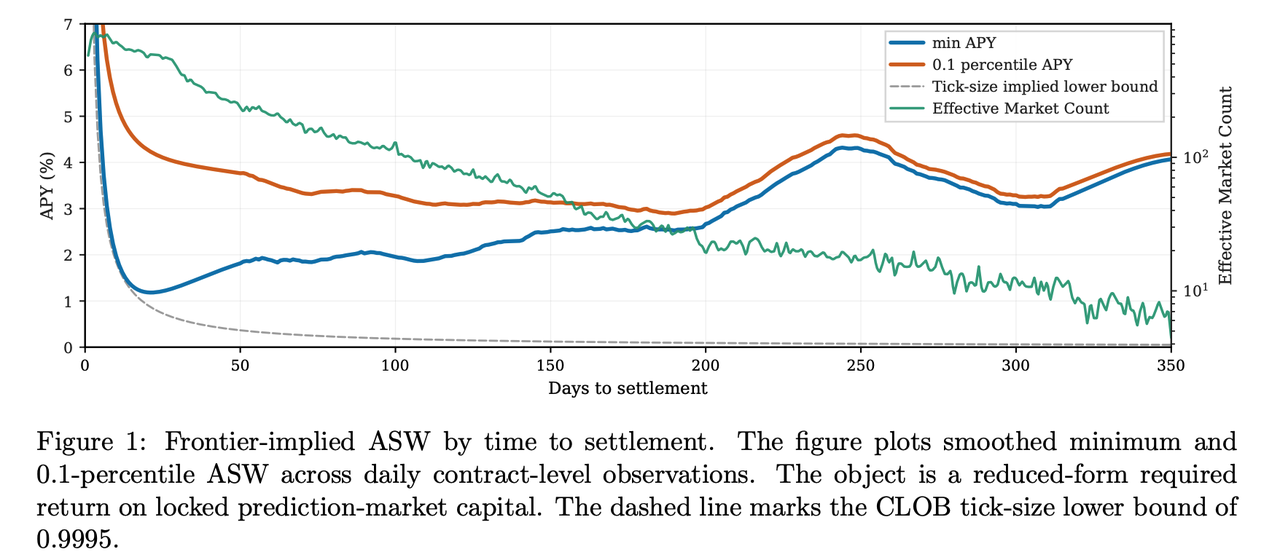
The settlement discount captures the value of delayed redemption, capital lock-up, outside opportunities, liquidity demand, and residual platform or oracle risk. The authors summarize this discount as an Annualized Settlement Wedge, or ASW, which is basically the implied required return for capital locked in near-certain prediction market claims.
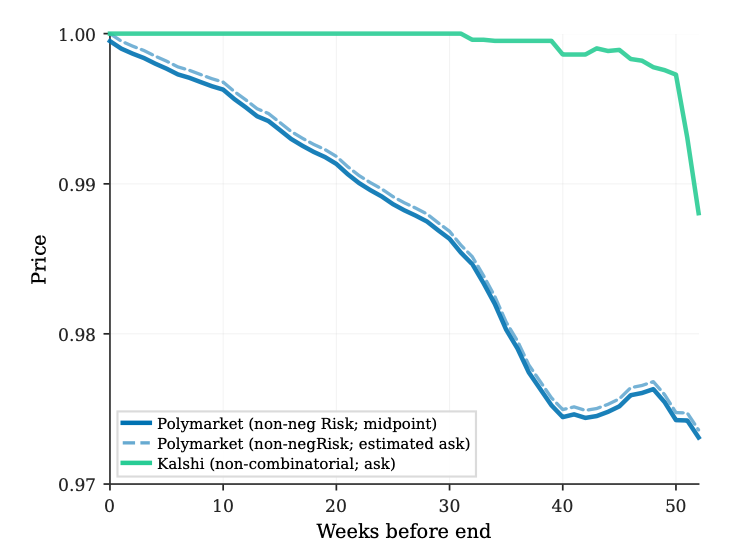
In other words, prediction markets have a hidden yield curve. It is not printed on the homepage. It is implicit in the prices and appears when near-certain contracts refuse to trade at $1.
The paper finds that the ASW is positive, maturity-dependent, and time-varying.
Many long-dated high-probability contracts look like they underprice certainty, but a lot of that apparent mispricing is actually the price of locked capital. People love to call these trades "free money". But they are often not free money. They are yields, with risks.
On the other hand, a lot of near-settlement contracts offer attract yields on an annualized basis. These are great opportunities, but those gains are one-off only. You cannot earn the full annualized gains since they are not recurring profits.
The hidden yield curve of prediction-market certainty. The curves show the implied annualized return required to hold near-certain claims until settlement.
Why this changes how we read prediction markets
Prediction markets are financial markets, not magic probability dashboards. Some prediction market mispricing is informational. Some are behavioral. Some come from thin liquidity or retail demand. But near certainty reveals mostly funding friction.
This also helps explain why long-horizon markets are hard. Earlier research found that markets are reasonably well calibrated in short horizons but can become biased further from expiration. When the time value of money is considered, exploiting miscalibration depends on the trader having a low enough discount rate.
Another paper on interest-bearing positions makes a similar design point from another angle: long horizons can reduce liquidity and accuracy because committed capital has an opportunity cost, while paying interest can reduce the horizon effect and increase participation.
In other words, long-dated uncertainty is expensive because capital has alternatives. If a platform wants better long-term pricing, it cannot only attract smarter traders. It also has to make capital more productive.
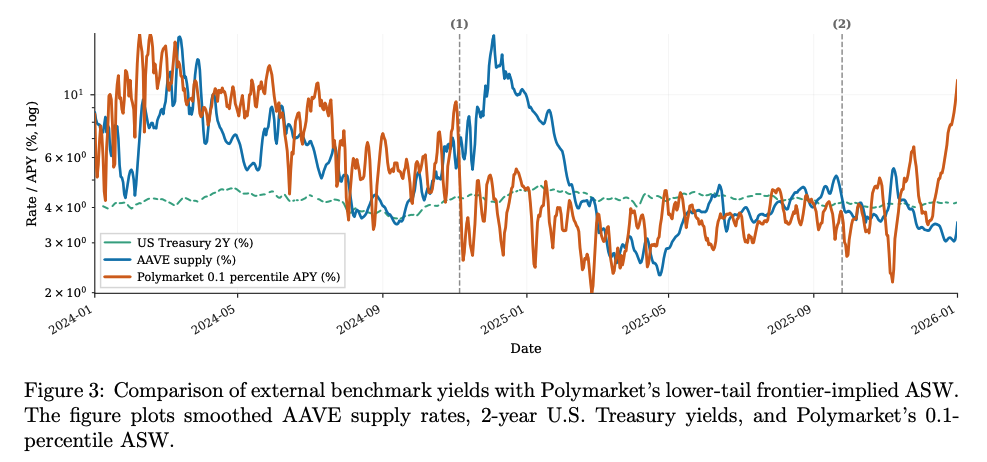
Prediction-market “bond yields” do not move like ordinary interest rates. Polymarket’s settlement wedge sometimes co-moves with crypto-native opportunity costs such as AAVE supply rates. Dash vertical lines mark (1) the November 5, 2024 U.S. election and (2) the introduction of Polymarket’s 4% yield program.
Why collateral matters
Event contracts are fully collateralized. Each complete YES/NO pair is backed by $1 of collateral locked in the system. In simple terms, when traders enter positions, capital is committed to the system and remains tied up until they exit or the market settles. That locked capital has an opportunity cost, especially in long-dated markets.
Therefore, long-dated near-certain contracts should trade at a discount. Someone has to be compensated for tying up money that can be useful elsewhere (e.g., earning interests in banks, committing to alternative investment opportunities).
But if platforms pay yield on collateral or open positions, that discount should shrink.
Kalshi introduced interest accrual on cash and open positions in March 2026, explaining that users can earn interest on the underlying collateral even before a market resolves. Its help page listed a 3.25% variable interest rate for eligible accounts.
Polymarket also introduced Holding Rewards for certain long-term markets, describing them as rewards on eligible positions designed to help maintain long-term pricing accuracy. Its help page listed a 3.25% annualized reward rate on total position value for eligible markets, with rewards sampled hourly and distributed daily.
That sounds like a small product feature. It is bigger than that. Once open positions can earn yield, event bonds stop being just an analogy. They start behaving even more like fixed-income instruments.
A 97-cent contract with no collateral yield is different from a 97-cent contract earning 3.25% while you wait. Same event, different bonds.
Same idea, different market design. Before Polymarket rolled out its holding rewards program, Kalshi’s near-certain contracts stay closer to par across maturities, consistent with the idea that yield-bearing collateral can reduce the cost of waiting.
NegRisk as collateral engineering
There is another design feature that matters: NegRisk markets and capital recycling.
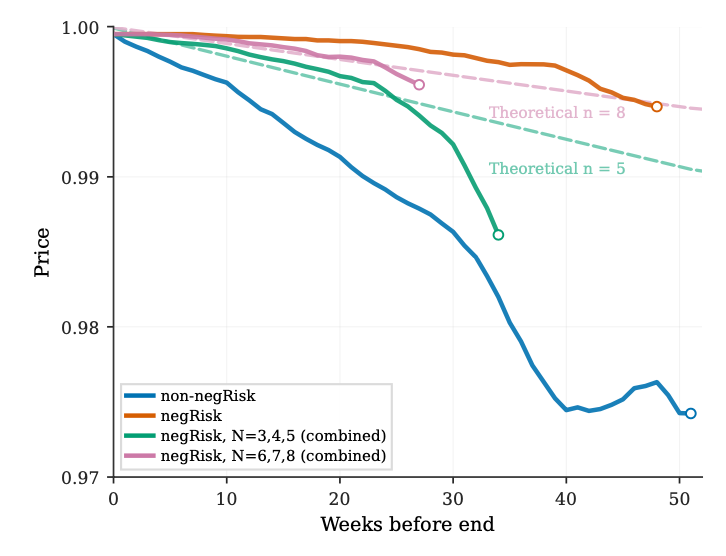
In certain mutually exclusive multi-outcome events on Polymatket, baskets of NO tokens can be converted into something closer to cash plus residual exposure. This compresses the settlement discount because part of the position can be recycled rather than staying fully locked until final settlement.
That may sound technical, but the intuition is simple. In fixed income, traders care about collateral, netting, and balance-sheet efficiency. In prediction markets, traders should care about the same things.
A market design that lets you recycle capital makes the claim more cash-like. A claim that is more cash-like should trade closer to $1.
NegRisk compresses the settlement discount by turning baskets of NO tokens into a cash-like component plus residual YES exposure. The effect is stronger when more outcomes are linked. Ordinary non-NegRisk markets lack this conversion mechanism, so near-certain claims trade further below par.
"Free money" is usually just yield
Prediction market starters often say things like, "This is basically guaranteed. Why is it only 98 cents?"
Other traders would ask a better question, "What is the yield, and what risk am I warehousing?"
Before buying a near-certain contract, ask:
What is the true probability of payout? Are there vague rules that can lead to disputes?
How many days until settlement?
What is the yield to settlement? Is collateral earning yield?
What is my next-best use of capital? What are the yields I can earn elsewhere?
Why am I being offered this yield?” Maybe the other side simply wants cash now/finds a better opportunity/is closing a winning position/knows something adverse that you are not aware of.
If you do not calculate the yield and risks, you are not trading near-certain contracts. You are just staring at cents, and you will lose big when things don't work out for you.
In addition, the most dangerous part of bonding is psychological. You win again and again, so it feels like the strategy works. But if you are buying 96-cent contracts, even a bad strategy can look good for a long time. The losses are rare, and rare losses do not give fast feedback. You may need hundreds of similar trades to know whether you actually have an edge. This is why a high win rate is not the same as positive expectancy. And Rare events teach slowly.
Would you try the "bonding" strategy in the future?
Yes, if the implied yield is attractiveResult
0.00%
Maybe, but I would need better tools to calculate yieldResult
100.00%
Probably not, the tail risks are too hard to judgeResult
0.00%
No, I prefer trading uncertain events with higher upsidesResult
0.00%
1 Polls
EndedTBD
Disclaimer: The content is for informational purposes only. You should not construe any such information or other material as legal, tax, investment, financial, or other advice. Nothing contained in this article constitutes a solicitation, recommendation, endorsement, or offer by the author(s) or any third party service provider to buy or sell any securities or other financial instruments in your or in any other jurisdiction in which such solicitation or offer would be unlawful under the securities laws of such jurisdiction. The author(s) report(s) no conflict of interest.