Premier info portal for prediction markets. The start point of information market.
Macro & Micro Compass - Trust the Numbers? What to Do When the Data Is Under Attack
News
Prediction MarketMacro & Micro Compass

Macro & Micro Compass - Trust the Numbers? What to Do When the Data Is Under Attack

Incoming Fed Chair Kevin Warsh faces a squeeze between political pressure on official data and the rise of alternative metrics, forcing him to defend statistical neutrality.

Politics

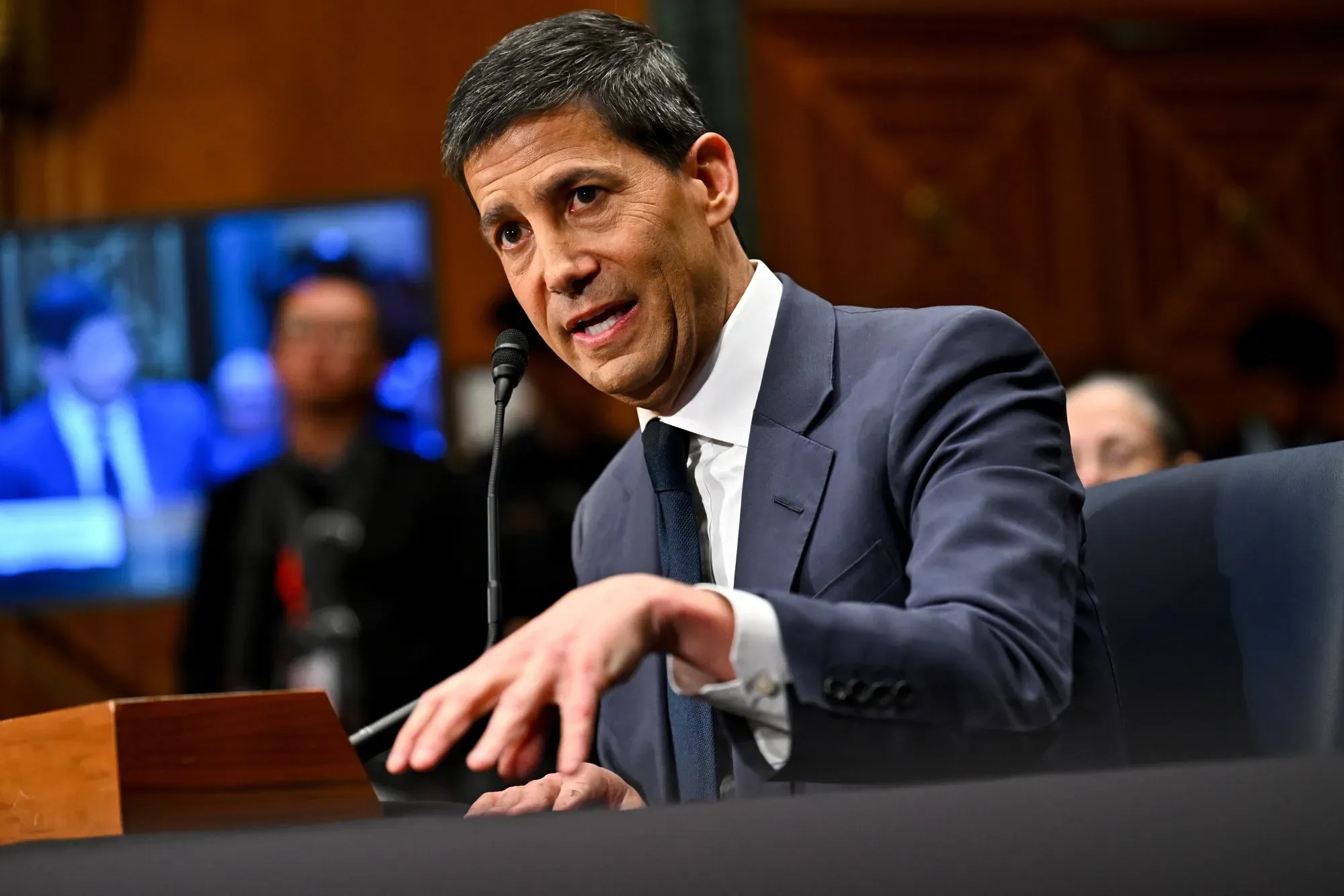
Kevin Warsh will become chair of the Federal Reserve next week, and he has promised to improve how inflation data is collected and analyzed. He should go further. Official statistics, crucial to crafting policy for the vast and complex American economy, are being challenged from two directions, and the squeeze will land on the new Fed chair.

President Donald Trump fired the previous Bureau of Labor Statistics Commissioner Erika McEntarfer last year over a jobs report he found inconvenient and has demanded interest rate cuts that the data does not support. This puts direct political pressure on the producers of the official numbers.

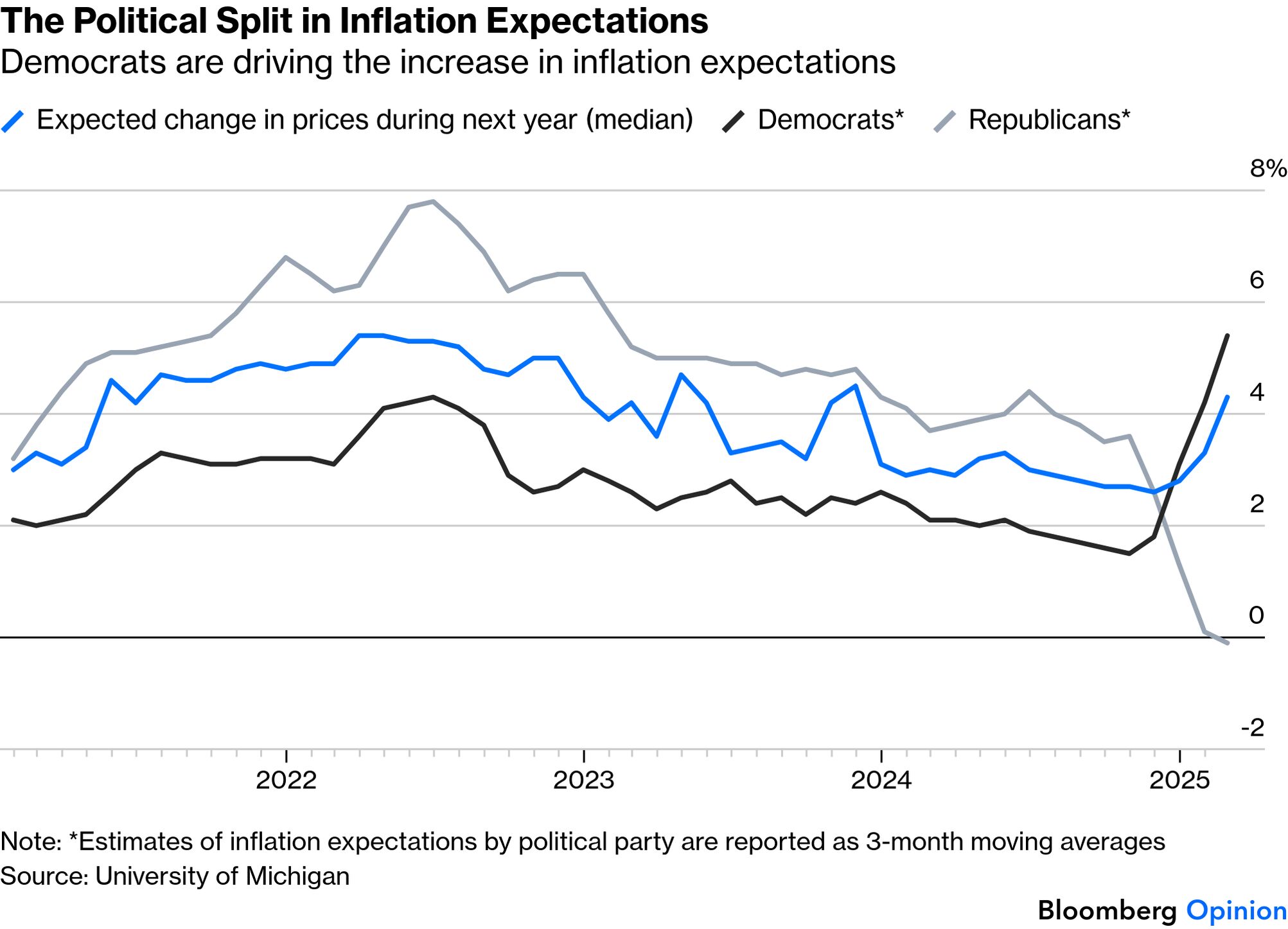
The other pressure comes from the marketplace: alternative statistics that bypass economists altogether and take the policy argument straight to the public political forum. The University of Michigan’s long-running consumer survey of inflation expectations is an example of this latter problem, where the survey has effectively become a partisan thermometer rather than a neutral indicator.
Another is the Ludwig Institute for Shared Economic Prosperity’s True Rate of Unemployment. The measure pegs “functional unemployment” at 23.6%, more than five times the official figure of 4.3% in March. It gets there not by finding hidden unemployment, but by adding the Bureau of Labor Statistics’ existing broader measure (U-6, which also counts the underemployed and runs a bit under 8%) and 16 percentage points of full-time but low-wage workers. It’s an unhelpful grouping since low wages, underemployment and joblessness are distinct phenomena that require distinct measurements and policy prescriptions.

These two pressures look opposite, but they are the same impulse approaching from different doors: The desire to override technocratic measurement with political will. What complicates Warsh’s job is that the official numbers are genuinely fraying, and the marketplace of alternative measures is not all advocacy; some of them fill real gaps.

Consider the BLS payrolls report, the monthly jobs number that moves markets and shapes the Fed’s interest rate decisions. The agency builds it from a survey of employers, but only 43% of employers now respond. This opens the door to revisions, which can sometimes be so large as to entirely alter our view of the labor market.

That’s what happened earlier this year when BLS revisions cut the prior year’s reported job growth by 70%. A labor market that had looked resilient turned out, in the rearview mirror, to have been stagnating. Last October’s Consumer Price Index release was lost entirely to the government shutdown. Even when the official numbers work, they are slow: monthly, quarterly, revised the following year.

A new generation of private competitors looks through the windshield instead. ADP Research’s National Employment Report, built on actual payroll data from 26 million workers, can tell you what is happening in the labor market this week. Truflation scrapes online prices daily. Kalshi Inc., a federally regulated prediction market, runs continuous bets on the next CPI release, aggregating the views of everyone willing to put money behind a forecast. These are windshield views. They are also smudged windshields.

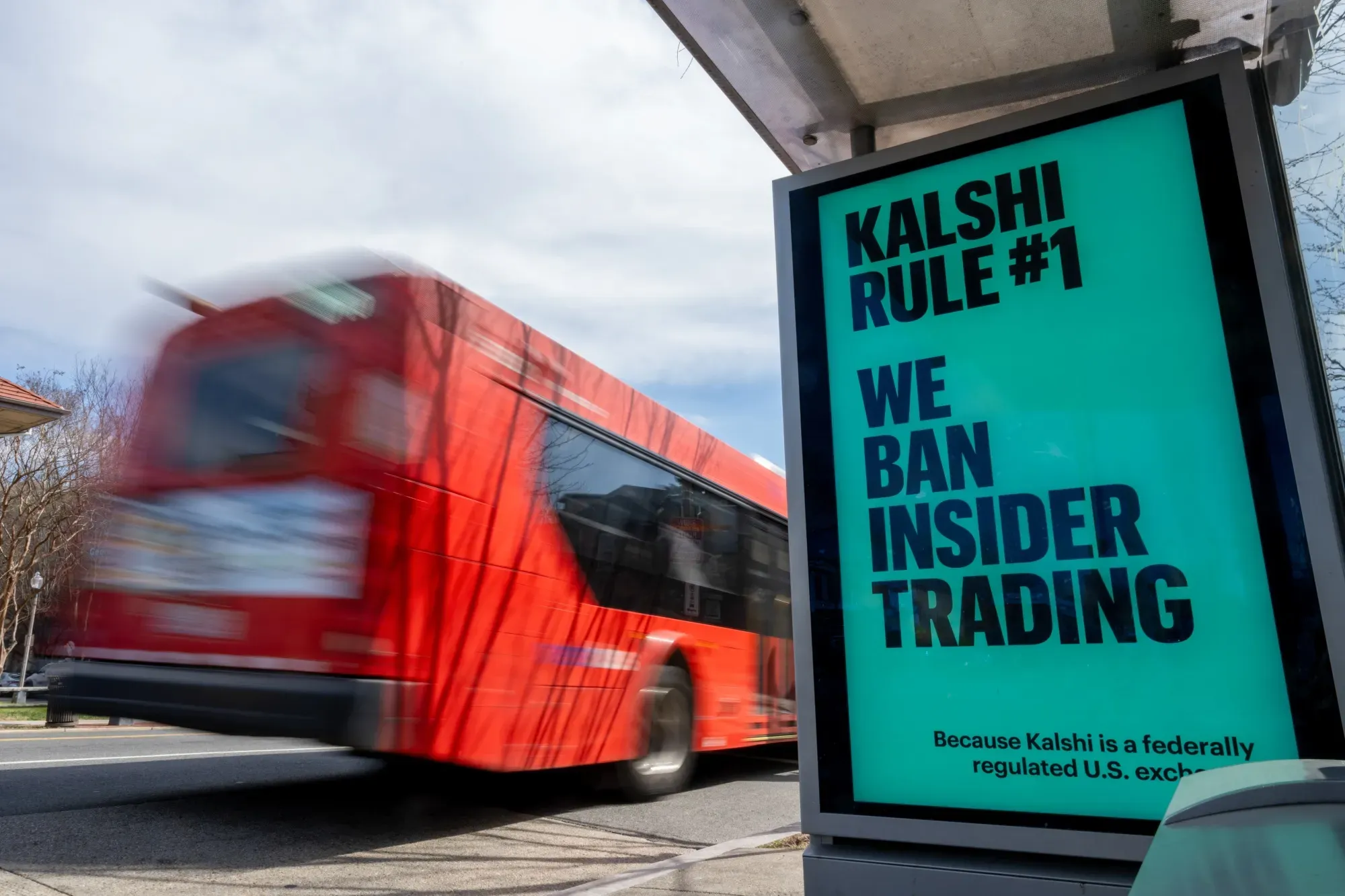
Kalshi prices on the December 2025 CPI release showed two distinct peaks rather than a single consensus, with bettors clustering around 2.55% and 2.65% inflation — almost certainly a sign of partisan rooting. ADP excludes government workers and tilts toward midsize businesses, because that is the shape of its client base. None of this is methodologically clean.

But the smudges and the information are the same thing. The two Kalshi peaks were a signal — a partisan disagreement that is moving consumer behavior, market positioning and Fed credibility. ADP’s business-mix bias is a window into where employment is shifting. Forecasts produced by people with money at risk encode opinions; survey-based forecasts do not, but opinions are data too.

The Fed’s own staff has taken notice. A 2024 working paper, “Kalshi and the Rise of Macro Markets,” found that the prediction market’s prices match or beat the Bloomberg consensus of Wall Street economists on year-over-year CPI. The mode of the Kalshi distribution has matched the realized federal funds rate by the day of every meeting of the central bank’s rate-setting committee since 2022 — a feat neither professional surveys nor federal funds futures can claim.

Warsh’s easier challenge will be integrating reliable, tested, known-defect rearview-mirror numbers with the timelier, broader, messier attempts to peer through the windshield.

His harder job will be firmly rejecting the third category: alternatives that are not faster or richer, only louder. Ludwig’s TRU is the leading example. It conflates low wages with unemployment, even though the policies that would address the two phenomena conflict with each other. Raising the minimum wage, for example, would help some workers but also reduce employment at the margin. TRU couldn’t tell you if you’d helped or hurt because it counts both populations together. Despite its shortcomings, it nonetheless travels effortlessly through political coverage — which is precisely the problem.

The Fed should integrate windshield measures explicitly into its policy framework: prediction market-implied inflation expectations alongside breakeven inflation drawn from the Treasury market; ADP alongside BLS, with the divergences treated as information rather than noise; high-frequency price indexes alongside monthly CPI. It should resist the impulse to elevate every alternative metric that flatters a preferred conclusion.

And it should defend the official series against pressure from the political ins above and the political outs below — not because the official series are perfect, but because they are common. Everyone using the BLS unemployment rate is talking about the same thing.

The country does not need more statistics. It needs better ones, in the right places, with the discipline to know which is which. The temptation that will sit on Warsh’s desk — from one direction in the form of presidential demands, from the other in the form of methodologically aggressive private metrics — is to let the political process pick the numbers. The job of the next Fed chair is to just say no.

  • Five Suggestions for Warsh on Fed 'Regime Change': Bill Dudley
  • Warsh Has Been Too Quiet About Unemployment: Claudia Sahm
  • The Bond ETF Sales Pitch Is Only Half the Story: Aaron Brown
Source: https://www.bloomberg.com/opinion/articles/2026-05-08/trust-the-data-kevin-warsh-faces-a-statistics-problem-at-the-fed

Prediction Market Ban for US House Members, Staff Gets GOP Push
News
RegulatoryPrediction Market

Prediction Market Ban for US House Members, Staff Gets GOP Push

Congress moves to ban members from trading on prediction markets, targeting a new ethics loophole after similar Senate action.

Politics

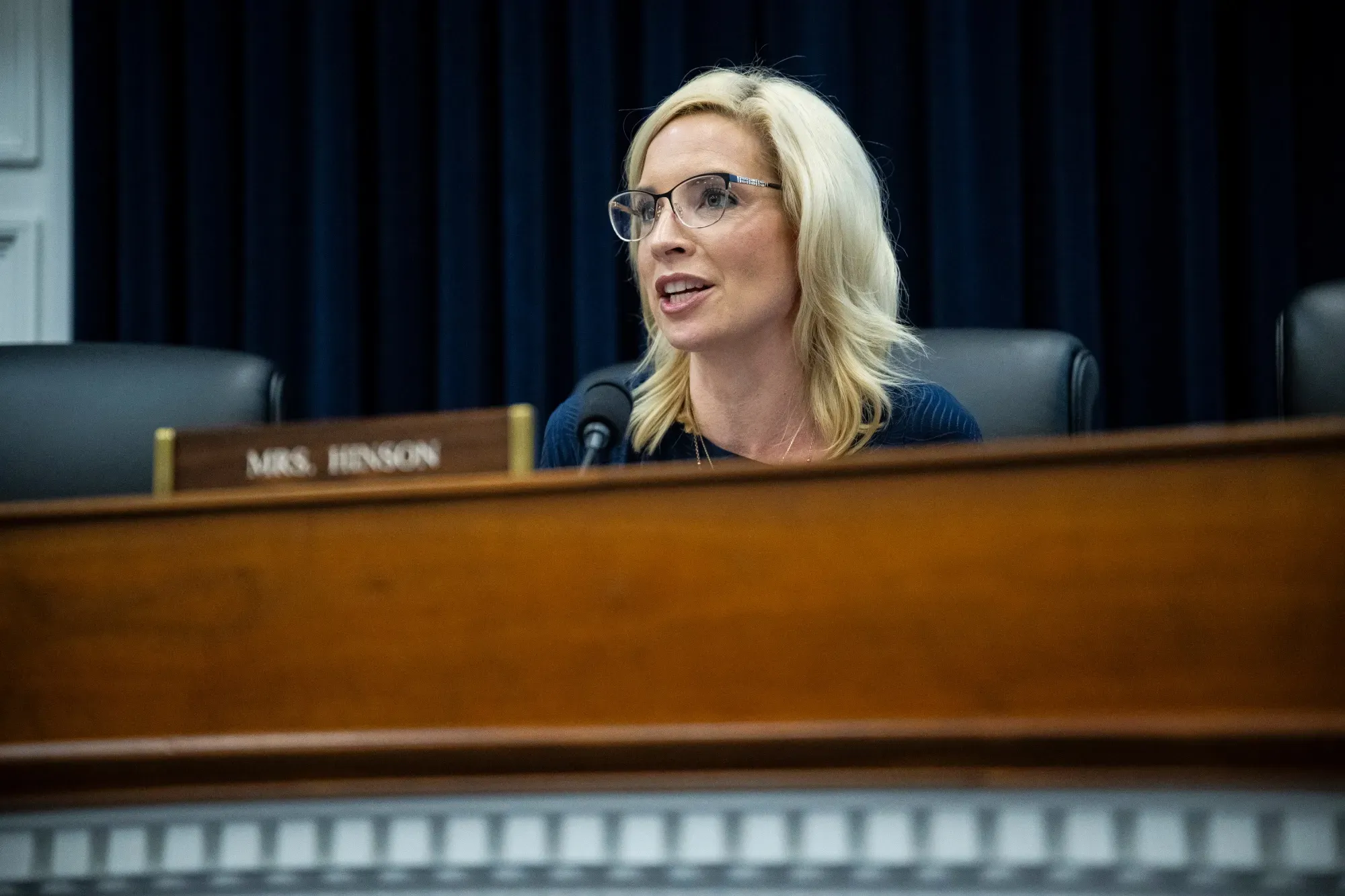
Rep. Ashley Hinson (R-Iowa) introduced a resolution Thursday that would amend the House rules to ban members and their staff from trading on prediction markets.

“No Member, Delegate, Resident Commissioner, officer, or employee of the House of Representatives” may engage in purchasing or selling on prediction markets, the resolution says, referring to agreements or contracts that are dependent on the occurrence of specific events.

Hinson’s proposal mirrors one approved by unanimous consent in the Senate last week, in which senators agreed to amend the chamber’s standing rules to ban senators and staff from engaging in prediction markets. It also has similar language to an amendment that was added to the Senate resolution making clear it does not apply to insurance.

The proposals are the latest example of lawmakers seeking to place restrictions on using their positions for financial gain.

“Members of Congress shouldn’t be able to use insider knowledge to make a profit,” Hinson said in a statement. “We should take immediate action to ensure DC politicians can’t make money off of our policies they are influencing.”

The House returns from a week-long recess next Tuesday. Hinson said she is pressing House Republican leadership to bring the resolution to the floor “immediately.”

“It should receive unanimous support,” she said.

Included in Hinson’s resolution is a non-binding statement that notes it is the “sense of the House of Representatives that the executive branch and judicial branch should establish restrictions similar” to those established by the legislation.

To contact the reporter on this story: Rachel Schilke at [email protected]

To contact the editor responsible for this story: James Arkin at [email protected]

Source: https://www.bloomberg.com/news/articles/2026-05-07/prediction-market-ban-for-us-house-members-staff-gets-gop-push

Polymarket anonymity must end
News
RegulatoryPrediction Market

Polymarket anonymity must end

Crypto prediction markets' anonymity enables manipulation like insider trading and wash trading, requiring KYC verification to build trust and gain regulatory approval.

Politics

The writer is professor of economics at Barnard College, Columbia University

It is impossible to open a bank or brokerage account in the US without going through a process of identity verification. The same is true for regulated prediction markets such as Kalshi. Yet on Polymarket’s main crypto-based exchange, the real-world identities of millions of account holders are invisible.

The protection of anonymity allows for multiple accounts to be operated by a single individual or entity and makes it easier to disguise certain practices that are prohibited by law – including trading on classified information. Manipulative trading practices that are banned on regulated exchanges also become easier to implement.

So far, the attention has focused on insider trading. Last month, an American soldier involved in the capture of Nicolás Maduro was arrested after allegedly making over $400,000 in bets on the timing of Maduro’s removal from power. The soldier’s attempts to conceal his identity were clumsy — a personal email was linked to his account. He has denied the charges he faces. A more sophisticated actor, using the chain-hopping, mixer services and layered wallet structures described in the US Treasury’s 2026 money laundering risk assessment would be hard to identify.

The presence of potential insiders changes the incentives faced by other traders. Looking for unusual directional bets becomes lucrative. Tools like ‘Insider Finder’ have been developed for precisely this purpose. If insiders can be identified, mimicking their behaviour can be profitable. So can trading in a manner that leads others to believe you are an insider and opt to copy your trades.

Anonymity also enables wash trading. This is a form of volume manipulation involving transactions by clusters of colluding counterparties. I have been working with colleagues at Columbia University to develop a procedure for identifying it and we estimate that wash trading accounted for 60 per cent of total trading volume at Polymarket in December 2024. Polymarket said that it was reviewing the study. The recent imposition of trading fees is likely to reduce this, but in the absence of identity verification, the capacity to manipulate volume by operating multiple wallets remains in place.

Polymarket has a US subsidiary but its main prediction market was exiled in 2022. It is seeking approval from regulators to reverse that ban and formally re-enter the US. Although the ban has been easy to circumvent by traders with VPNs, its removal will probably attract new users to the exchange.

Approval should therefore be conditioned on some form of identity verification. The Genius Act imposed know-your-customer (KYC) compliance on issuers of payment stablecoins last year. Regulators should apply the same logic to crypto-based prediction markets.

There are three approaches to this. The most direct is KYC compliance on the platform itself. Another option is to require that crypto transfers in and out pass through approved issuers who are KYC compliant. This would allow suspicious activity, once identified, to be easily traced.

A third option, recently proposed by a Stanford-led team of academics, involves privacy-preserving digital certificates. These are credentials issued by authorised service providers that confirm a user’s identity has been verified, without revealing it to the platform. Uncovering identities would require a court order.

Online prediction markets have been around for almost four decades but have dramatically increased in popularity over the past couple of years. They can serve an important function by aggregating dispersed information and leveraging the wisdom of crowds. But their promise will not be fully realised without building trust. That means weeding out insiders and manipulators and knowing exactly who is trading on the platform.

Source: https://www.ft.com/content/c4612f76-49a2-478a-b755-bee9d6106db7

Macro & Micro Compass - Is the US Going into a Recession? Odds Hit 25%, but Polymarket Traders May Be Missing the Real Risk
News
EconomicsLabor MarketGDPMacro & Micro Compass

Macro & Micro Compass - Is the US Going into a Recession? Odds Hit 25%, but Polymarket Traders May Be Missing the Real Risk

US recession odds are rising on Polymarket, but the 25% trade may not be as simple as it looks. The real risk could be hiding in the fine print.

Economics & FinancePolitics

A recession market should be simple: buy “Yes” if you think the economy breaks, buy “No” if you think it doesn’t. But this one is not so simple.

A slowdown can be real before it is formal. It can hit households, stocks, and confidence before it shows up in the exact data points a prediction market needs. If this gap holds, traders may be paying for the right fear through the wrong contract.

Consumers are spending, but not with much swagger because inflation is doing too much of the work. And bears have fresh material: Gary Shilling is warning that a downturn is almost inevitable, pointing to households paying more to get less, housing still pinned down by high rates, weaker capital spending outside the AI buildout, and stock valuations with little room for disappointment. 

The economy may be vulnerable, but the market may be buying the wrong version of the recession trade. Here’s why!

The market is betting on a crack, but the clock matters

For prediction markets contracts to resolve “Yes,” bad vibes are not enough. This Polymarket market is not paying out because the US economy looks weak, consumers feel squeezed, or traders get nervous. The window runs from Q2 2025 through Q4 2026, and it needs one of two things before the deadline: either two straight negative quarters of real GDP between Q2 2025 and Q4 2026, or an official NBER recession call before the BEA publishes its advance estimate for Q4 2026.

The 25% implied probability is a much narrower bet than it first appears. This is more of a timing bet because the slowdown has to show up in the right data, in the right order, before the deadline. 

That is the first thing the market may be underpricing, not the recession risk itself, but the friction between economic weakness and contract resolution. 

The economy is not booming, but it is not breaking either

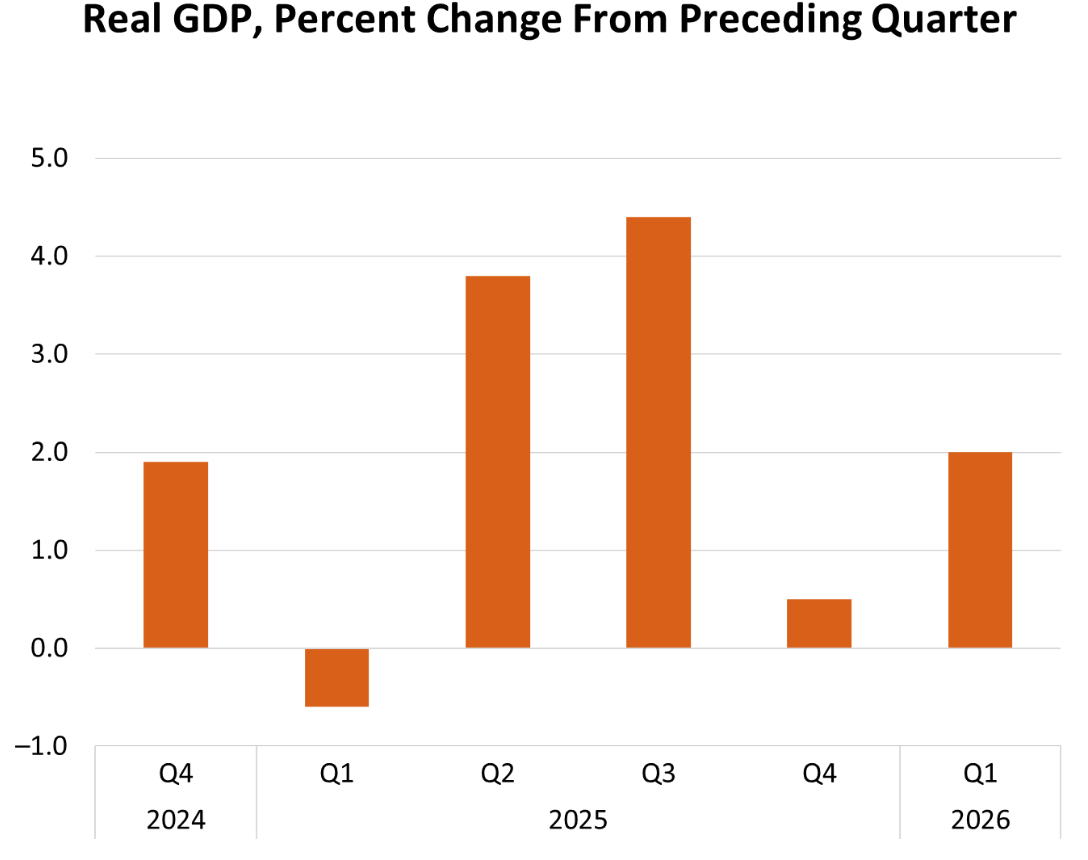
Right now, Q1 made the “Yes” case harder because real GDP grew 2.0% annualized after a weak 0.5% in Q4 2025, so there is no negative-quarter chain for the contract to build on. This is easy to miss if you are focused on recession headlines rather than the settlement path. If this market resolves through GDP alone, the bad prints now have to come in pairs: Q2 and Q3, or Q3 and Q4.

Source: BEA

This is a problem for bears because Q2 does not look broken yet. Atlanta Fed GDPNow had growth running at 3.5% as of May 1. It can move, of course, but that is still a long way from contraction. 

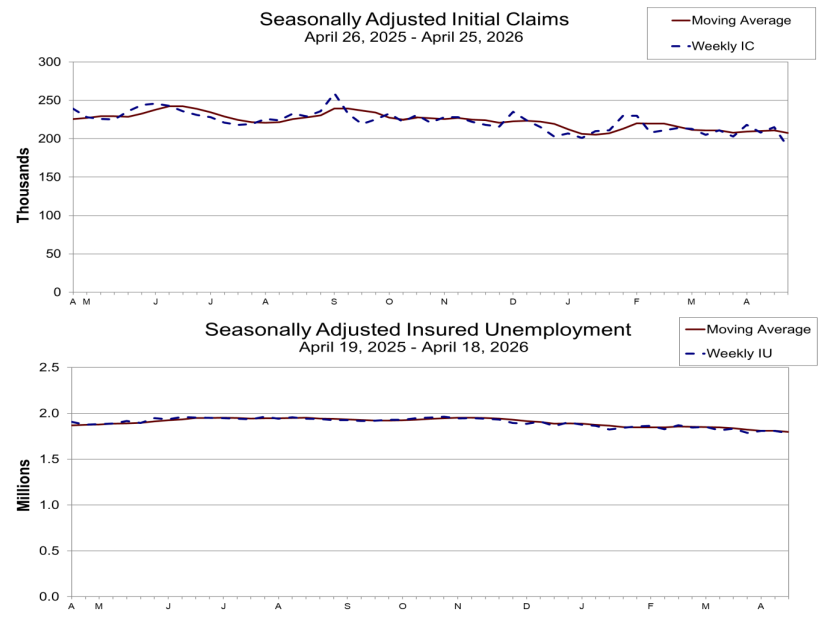
Labor is not helping the recession case either. Payrolls are still rising, unemployment is not flashing a crisis, and jobless claims recently fell to 189,000. This does not erase recession risk, because labor often cracks late, but it does expose the gap in the trade. The economy can weaken before the labor market gives the contract enough proof, so it does put the “Yes” side on a tighter clock.

Source: Department of Labor

The economy can feel worse before it officially breaks. Still, for now, the hard data is keeping the 25% odds on a tight leash.

The case for “Yes”: A slow squeeze?

The economy must get trapped between inflation that will not cool and growth that cannot accelerate.

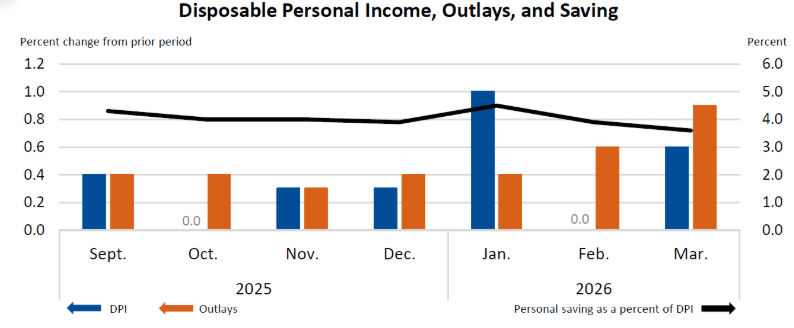
March PCE data gives the shape of it all: consumers spent 0.9% more in nominal terms, which sounds healthy enough. But while spending looked solid on paper, all of that disappeared once prices were accounted for, so households did spend more, but they just did not get much more for it.

Source: BEA

This is the weak spot Gary Shilling is pointing at, and it is the part many can miss until late. His recession call rests on a more basic problem: consumer spending, the ballast of the U.S. economy, has been holding the economy together, and this support looks thinner when real income is slowing and savings are weakening.

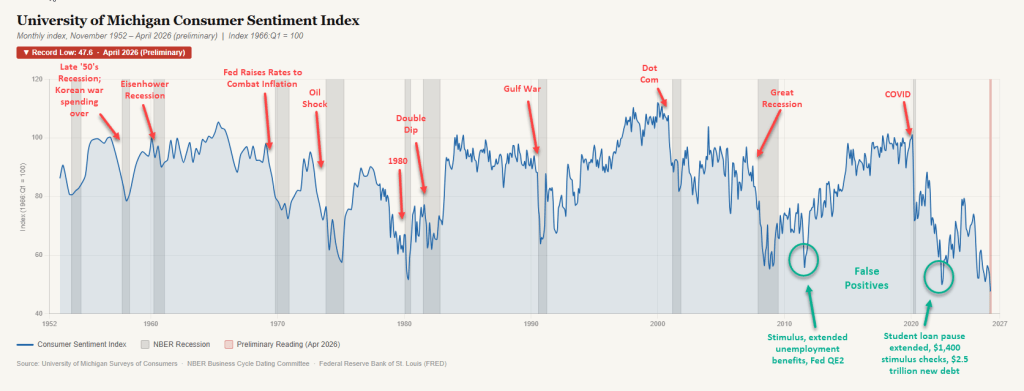
Consumer psychology is flashing its own warning, too. HousingWire points to a sharp drop in University of Michigan consumer sentiment, arguing that the index has historically been a strong recession signal, though it did cry wolf in 2011 and 2022.

image

Source: HousingWire

Oil risk may be the swing factor, but not in the obvious way

The easy story is that war pushes oil higher, consumers pay more at the pump, and recession odds go up.

But the bigger issue is what oil does to the Fed. If energy keeps headline inflation hot, the Fed cannot look at weaker growth and simply say, “Fine, time to cut.” It may have to sit tight while the economy slows, because inflation is still too uncomfortable to ignore.

This is why peace headlines can knock recession odds down so quickly. If the Iran shock fades, one of the main reasons for a trapped Fed fades with it. If it sticks around, Polymarket’s 25% odds stop looking so expensive.

The “Yes” case is more of a grind: higher costs, weaker real income, companies getting more careful, non-AI investment losing steam, and eventually a labor market that stops absorbing the pressure.

Here’s where the market may be mispricing it

A slow squeeze can be painful without being useful.

If Q2 GDP stays positive, the “Yes” side loses a lot of room. The GDP path would then likely need Q3 and Q4 to both come in negative on the advance estimates. The NBER path is not much easier. NBER can call recessions without waiting for two negative GDP quarters, but it still needs broad damage across jobs, income, production, and sales.

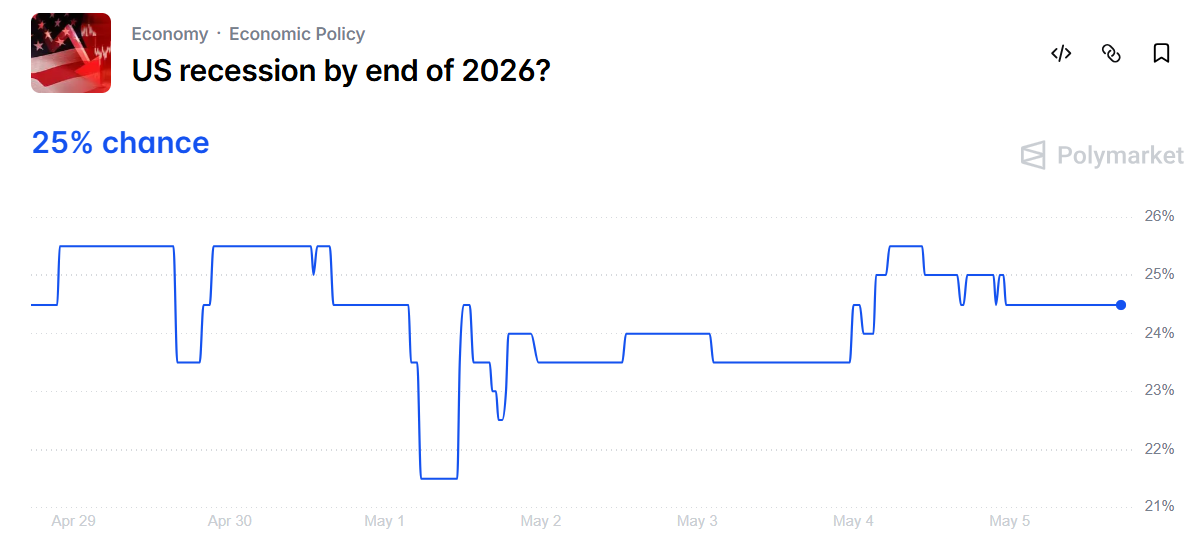
That is why 25% may be rich. The market may be reading the economy correctly, with weaker consumers, sticky inflation, and the Fed with less room to cut. But the missing part is speed, because all of this must become official before the deadline.  A fairer number may be closer to the high teens, maybe 15% to 20%, unless Q2 starts deteriorating quickly.

Overall, Polymarket’s recession odds are not irrational. But they are demanding a lot from the next few quarters, relative to the path required from here, because Q1 GDP was positive and Q2 GDPNow is still strong.

Source: Polymarket

The market needs proof that the squeeze is becoming broad enough, deep enough, and fast enough to show up in the data before the settlement window closes.

Until then, the 25% odds look more like a premium on anxiety. Traders may be right that the U.S. economy is losing altitude. But will it fall quickly enough for this market to pay?

Data sources:

  1. AtlantaFed: Current and Past GDPNow Commentaries
  2. BEA: Personal Income and Outlays, March 2026
  3. BEA: Gross Domestic Product
  4. Federal Reserve: One Transitory Shock After Another
  5. US Bureau of Labor Statistics: Employment Situation Summary
Kalshi Grilled by Massachusetts High Court Over What Gambling Is
News
RegulatoryLegalPrediction Market

Kalshi Grilled by Massachusetts High Court Over What Gambling Is

Massachusetts' top court scrutinizes Kalshi's claim that prediction markets are financial swaps, not gambling, in a case testing state vs. federal regulatory authority.

Politics

The Massachusetts Supreme Court appeared skeptical of Kalshi Inc.’s claim that its prediction markets don’t fall under state gambling laws because the company is instead providing financial arrangements between people using “swap” contracts on events like sports.

The case is one of several legal fights involving states seeking greater oversight of prediction market companies, which argue their activities come under federal rules and should only be regulated by the US Commodity Futures Trading Commission. A judge barred Kalshi in Massachusetts, and the company appealed to the state’s high court, which has yet to rule.

During oral arguments Monday, some justices peppered Kalshi’s lawyer with questions, but also grilled an attorney for the state, which brought the initial suit against the company.

“If you want to gamble on a game, this is one way of doing it, right?” Chief Justice Scott L. Kafker asked a Kalshi lawyer during oral arguments Monday. “This does seem to have a major aspect of sports gambling to it.”

Kalshi attorney Grant Mainland argued to the justices that a provision in the 2010 Dodd-Frank Act updated the Commodity Exchange Act to “broaden the definition” of a swap.

Kafker responded, “The CFTC didn’t think it covered sports until the turn in the administration, right?”

The Trump-era CFTC has largely sided with prediction markets, and the industry has been lobbying to fight stricter rules, even as platforms like Polymarket have drawn national attention from controversies such as insider trading.

State solicitor Gerard Cedrone argued that prediction markets don’t have the same consumer protections as state-licensed betting.

Justice Serge Georges Jr. noted that Kalshi operates “this marketplace where users set odds with each other. Doesn’t that resemble more of a financial exchange rather than a house-based system” comparable to casino-style wagers?

Massachusetts was the first state to sue Kalshi last year, winning a preliminary injunction against in January for violating the state’s sports wagering statute. After Kalshi challenged the enforcement, the state’s Supreme Judicial Court fast-tracked its appeal.

The outcome of the case against is being closely watched, in part because it could end up before the US Supreme Court. Other cases include pending decisions by federal appeals courts in Prediction Markets Get Cold Reception Before Ninth Circuit (1)bid to overturn a ruling in favor of Nevada regulators and another in which the company prevailed over New Jersey regulators.

The battles have also had a unifying effect for state officials who disagree with the CFTC’s view that it has “exclusive jurisdiction” over the exchanges, a position the agency embraced under the Trump administration. A bipartisan group of almost 40 state attorneys general from New York to Alabama joined an amicus brief supporting Massachusetts’ lawsuit against Kalshi.

Massachusetts Attorney General Andrea Joy Campbell told Bloomberg in March that she saw the state efforts as filling a regulatory gap left by the federal government.

“As the federal government steps away from consumer protection, state AGs have stepped up as evidenced by my office’s ongoing lawsuit against Kalshi,” she said. “We will continue to ensure that anyone who wants to offer sports betting in Massachusetts is licensed and proactively works to address any risk of fraud and the significant public health consequences that often accompany sports betting.”

Source: https://www.bloomberg.com/news/articles/2026-05-04/kalshi-grilled-by-massachusetts-high-court-over-what-gambling-is

US soldier pleads not guilty over prediction trades on Maduro capture
NewsAnalysis
RegulatoryGeopoliticsPrediction Market

US soldier pleads not guilty over prediction trades on Maduro capture

A US soldier's insider-trading case on Polymarket emerges as an early legal test for regulating the rapidly growing prediction markets.

Politics

A US soldier pleaded not guilty to charges that he used classified information about the seizure of Venezuelan leader Nicolás Maduro to trade on prediction site Polymarket.

Gannon Ken Van Dyke appeared in a Manhattan courtroom on Tuesday after prosecutors said he made more than $400,000 from trading on the basis of classified information about the timing of the US military operation.

Van Dyke, an active-duty soldier at a military base in North Carolina, allegedly made roughly 13 bets on positions, including “US Forces in Venezuela” and “Maduro out” by certain dates, while he had access to classified information.

The 38-year-old is charged with the unlawful use of confidential government information for personal gain, theft of non-public government information, commodities fraud, wire fraud and “engaging in a monetary transaction in property derived from specified unlawful activity”.

He was released on $250,000 bail.

The case is an early test of the way prosecutors will treat alleged wrongdoing involving the use of prediction markets, which are growing rapidly and allow bets on outcomes that range from the Eurovision Song Contest to an Iran ceasefire extension to the price of bitcoin.

Jay Clayton, US attorney for the Southern District of New York, said last month that his office was looking at ways to bring cases involving alleged wrongdoing using prediction markets.

Van Dyke’s lawyers did not immediately respond to requests for comment.

From December, Van Dyke was involved in planning “Operation Absolute Resolve”, the mission to capture Maduro, prosecutors said.

After the military operation that made his trades successful, he transferred funds to a foreign cryptocurrency vault, then to his crypto exchange account, then to a newly created brokerage account, they said.

After reports of unusual trading surfaced, Van Dyke asked Polymarket to delete his account and changed the email address linked to his cryptocurrency exchange account to one that was not registered in his name, prosecutors said.

The Commodity Futures Trading Commission has separately filed a civil case against Van Dyke.

The US in January launched strikes in Venezuela and captured Maduro along with his wife, Cilia Flores. They were flown to the US and indicted on drug trafficking and conspiracy charges. Both have pleaded not guilty.

Source: https://www.ft.com/content/7600501b-284a-4607-bc1e-f8ae69a2d9e9

Polymarket Seeks CFTC Blessing to Bring Main Exchange Back to US
News
RegulatoryBusinessLegalPrediction Market

Polymarket Seeks CFTC Blessing to Bring Main Exchange Back to US

Polymarket is seeking CFTC approval to reopen its main exchange to US users, a move that could accelerate the industry's growth amid ongoing regulatory uncertainty.

Politics

Polymarket is taking steps to try to bring its main exchange back to the US, according to people familiar with the matter, potentially supercharging an already fast-growing industry by letting Americans access the platform.

Since running afoul of regulators in 2022, Polymarket has technically banned Americans from trading on its international platform while a US-based alternative started by the company has failed to fully launch. In recent weeks though, the company has discussed lifting the prohibition on US-based customers with officials at the Commodity Futures Trading Commission, some of people said, asking for anonymity to discuss non-public information.

Shayne Coplan, chief executive officer of Polymarket, on the floor of the New York Stock Exchange Photographer: Michael Nagle/Bloomberg

It is unclear whether the CFTC will grant the request. Removing the prohibition would take a formal commission vote, a process made easier since four commission seats are vacant and only Chairman Michael Selig would have to act.

A top prediction market platform, Polymarket has faced a series of challenges in the US after reaching a settlement with the CFTC in 2022 that pushed the exchange overseas. That has led the company to fall behind rival Kalshi after the Trump administration embraced the industry.

The president’s family has also entered the space, with Donald Trump Jr. advising both Polymarket and Kalshi. He also invested in Polymarket through the venture fund 1789 Capital, where he’s a partner. Trump Media & Technology Group Corp., the president’s social media company, also plans to launch a prediction market of its own.

Polymarket declined to comment. A spokesperson for the CFTC didn’t respond to requests for comment.

Although US traders are banned from the main exchange, some have found ways to circumvent the prohibition. The CFTC and Justice Department last week accused US soldier Gannon Ken Van Dyke with using classified information to make more than $400,000 on Polymarket’s international exchange, which authorities said he accessed via a virtual private network. Polymarket founder Shayne Coplan said the firm referred the suspicious trading to authorities.

The indictment outlined that Van Dyke did little to cover his tracks and left breadcrumbs that made it easy for investigators to pinpoint his identity.

Selig has previously indicated an interest in bringing more prediction market trading under the agency’s oversight.

“To the extent that there are products available that are taking liquidity out of the United States, we’re going to make sure that we bring that back here into the United States under comprehensive regulation,” Selig said in April 16 testimony before the House Agriculture Committee, which oversees the agency.

There is uncertainty around what would happen with Polymarket’s federally-regulated exchange, Polymarket US, if the CFTC were to approve the firm’s plans for the primary platform. The US exchange, which is not crypto-native, is still in beta mode with little trading. Its current focus is primarily on sports markets, though it has signaled plans to expands its offerings with climate, crypto and election-related bets.

Some of the discussions with the regulator include the prospect of trying to merge the primary exchange’s operations and blockchain-based technology with the domestic exchange’s licenses, and operating with trading solely on the blockchain-based platform, some of the people said.

Source: https://www.bloomberg.com/news/articles/2026-04-28/polymarket-seeks-cftc-blessing-to-bring-main-exchange-back-to-us

Let Candidates Place Bets on Themselves — at Least Sometimes
News
RegulatoryElectionPrediction Market

Let Candidates Place Bets on Themselves — at Least Sometimes

Prediction markets banning candidates from betting on their own races raises questions about whether such wagers truly threaten electoral integrity or merely signal confidence.

Politics

As a law professor and sometime libertarian, I’m of three minds about news that the prediction-market platform Kalshi has banned three candidates for public office for placing bets on their own races.

My first thought is purely libertarian: Kalshi is a private entity, free to set its own rules and do business or not with whomever it pleases, provided that it avoids significant harm to others. If the candidates violated the terms of service, that’s their own fault for not reading the fine print.

My second thought is purely practical: In a world where every month seems to feature another athlete banned for betting on sports, what momentary madness would make politicians imagine that they wouldn’t get caught? Yes, yes, we see a constant stream of candidates whose hopes to hide old scandals have been dashed. But why, in the midst of an electoral battle, go out and create new ones?

My third thought is: But wait! If the candidates bet that they’d win their races, as appears to be the case for at least two of them, what’s the big deal? Aren’t those bets just a signal of their confidence? Mightn’t it be good that those running for office think they’re going to win?

Prediction markets sell contracts, usually a Yes or No on a future event. As of this writing, for instance, a contract that pays $1 if Tulsi Gabbard is the next member of Donald Trump’s cabinet to depart can be had on Kalshi for 57 cents. Now imagine that Carter is a candidate for office. He thinks he has about a 60% chance to win. If the relevant contract costs 45 cents, buying makes sense.

What’s wrong with that?

The most obvious concern is that the candidate who is free to buy Yes is also free to buy No — and, like a basketball player who bets his own team will lose, Carter can easily increase the odds of defeat. A basketball player can intentionally miss shots, commit bad fouls, feign injury. Candidate Carter can say stupid and offensive things, confess to scandalous conduct, or just act like a fool out on the stump. True, none of these behaviors nowadays guarantees defeat for a politician, but all of them make winning harder.

The reason it’s problematic to bet against oneself, however, is to protect the integrity not of the prediction markets, but of the underlying activity: the sporting contest, for example, or the election. That big-money basketball or football games can be fixed is scary. That an election could be fixed is scarier still.

I’m just not sure that the political candidate who bets Yes presents the same risk.

Sports leagues prohibit their insiders from betting either way. They argue, with some force, that even betting on one’s own team to win a particular game can distort the results over the course of a season, as a coach or player has an incentive to shift personnel or efforts away from the games on which no bet has been placed.

An election, by contrast, is a long campaign culminating in a single event — the balloting — which is the only bet we’re talking about.

One might reasonably respond that whether candidates bet Yes or No on the outcome of their own campaigns, the mere fact that they’ve placed bets is bound to reduce trust in the political process itself. But that ship, sad to say, has departed our shores. I don’t think it’s coming back any time soon.

Besides, candidates confident enough to bet on themselves — more so, confident enough to do it publicly — are sending a strong signal about their own belief in victory. That signal, in turn, might bring more resources, in the form of campaign contributions.

One idea is to prohibit only No contracts, letting those running for office (and their staffs) place as many bets on their own victory as they like. A better solution would be to mandate transparency. If candidate or staff place wagers, they must be bought by personal, not campaign funds, and be public. Bonus: A candidate who buys No as a hedge will have to deal with the anger of potential donors who wonder whether the next dollar they give is wasted.

Yes, there are reasonable concerns about trading in financial markets based on nonpublic information. The academic literature on whether to allow insider trading is sharply divided, but it’s easy to see that betting on the outcome of an electoral contest isn’t the same as betting which way a security will move. One may love or loathe Wall Street, but that’s where most people have lodged their retirement savings and investments. So it might make sense to keep regulation sharp.

But I can’t quite imagine anyone seriously planning to finance the golden years by betting on elections.

Don’t get me wrong. I’m not arguing that the world is going to end because a few politicians get kicked off an online betting platform. If they don’t like how they’re being treated, next time maybe they’ll read the fine print before signing up. But I also don’t think the world would end if those seeking public office are left free to vote Yes on their own chances. Our democracy faces larger challenges than candidates confident enough to put money on their own chances to win.

  • The Live Nation Fight Is Over Yesterday’s Technology: Stephen L. Carter
  • Congress Suddenly Remembers It Has Ethics Rules: Mary Ellen Klas
  • The Oil Futures Market Is Lying to Us: JP Spinetto

Source: https://www.bloomberg.com/opinion/articles/2026-04-28/kalshi-politicians-controversy-let-candidates-bet-on-themselves-sometimes

Rules & Mandates - Brazil Blocks Polymarket, Kalshi Over ‘Illegal Betting’
News
RegulatoryLegalPrediction MarketRules & Mandates

Rules & Mandates - Brazil Blocks Polymarket, Kalshi Over ‘Illegal Betting’

Brazil blocks prediction markets like Polymarket, joining a global regulatory pushback against platforms accused of operating as unlicensed gambling.

Politics

Brazil’s government blocked access to Polymarket and Kalshi, part of a crackdown on prediction market platforms it said were out of compliance with federal gambling laws.

A total of 27 sites were blocked for offering “illegal betting,” Finance Minister Dario Durigan said at a Friday news conference in Brasilia, after the government published a resolution banning prediction markets tied to elections, sports and other events.

Durigan cast the move as part of a broader effort to protect the savings of Brazilians and address rising levels of household debt, a problem President Luiz Inacio Lula da Silva has attributed in part to online gambling.

“We have advocated for stricter enforcement and very rigorous regulation, which will continue to advance, so that we can curb the negative externalities and social harm that unregulated gambling causes to the Brazilian population,” Durigan said.

Polymarket didn’t immediately respond to a request for comment. A spokesperson for Kalshi said it is reviewing the resolution.

Prediction markets like those offered by Polymarket have exploded in popularity in recent years, offering users the chance to trade on sporting events, election outcomes, economic data releases and even the return of Jesus Christ. Kalshi, one of the largest platforms, was co-founded by a Brazilian and recently announced plans to expand to customers in Latin America’s largest nation.

But the sites have also faced questions about potential insider trading and broad access to online betting, and Brazil is now among a growing list of nations applying legal scrutiny to them.

Countries like France, Hungary and Portugal have banned locals from trading on Polymarket in recent years, with regulators stating that its wagers fall under gambling rules and the company was thus operating without appropriate licensing.

State regulators in the US have also tried to shut down prediction markets, accusing them of offering unlicensed gambling. But the Commodity Futures Trading Commission, which governs the industry, has pushed back against states in court.

The resolution issued by Brazil’s National Monetary Council, which includes members of the government and central bank, prohibited the trading of derivatives whose underlying assets are linked to sporting events, online gambling and “real or virtual events of a political, electoral, social, cultural or entertainment nature.”

But unlike restrictions in other countries, it carved out an allowance for certain contracts. Bets tied to economic-financial benchmarks, for example, may be permitted at the discretion of securities regulator CVM.

The South American country’s main stock exchange, B3 SA, has explored entering the growing prediction-markets space. The exchange has already confirmed it will launch six new contracts on April 27 tied to the Ibovespa equity index, Brazil’s real currency and Bitcoin, and has studied expanding the offering to include event-based contracts.

Among the possibilities under consideration are products linked to elections. B3 has previously sought a legal opinion on whether Brazilian law allows contracts tied to electoral outcomes.

Such contracts could have been introduced ahead of the country’s October presidential election, a race expected to be closely contested between the leftist Lula and Senator Flavio Bolsonaro. Recent polls show the two running neck-and-neck in a potential runoff.

The new resolution, however, prohibits that practice. The council tasked CVM, the country’s securities and exchange commission, with issuing additional regulations and overseeing enforcement of the new framework.

Source: https://www.bloomberg.com/news/articles/2026-04-24/brazil-moves-to-ban-prediction-markets-on-elections-sports

France Probes Weather Data Glitch After Surge in Polymarket Bets
News
RegulatoryPrediction Market

France Probes Weather Data Glitch After Surge in Polymarket Bets

Prediction markets are booming, raising concerns about manipulation of critical data like airport weather sensors used for betting settlements.

Politics

France’s forecasting office flagged suspected tampering with weather sensors at the country’s largest airport and referred the case to police, after detecting unusual readings alongside heavy betting on a popular prediction market.

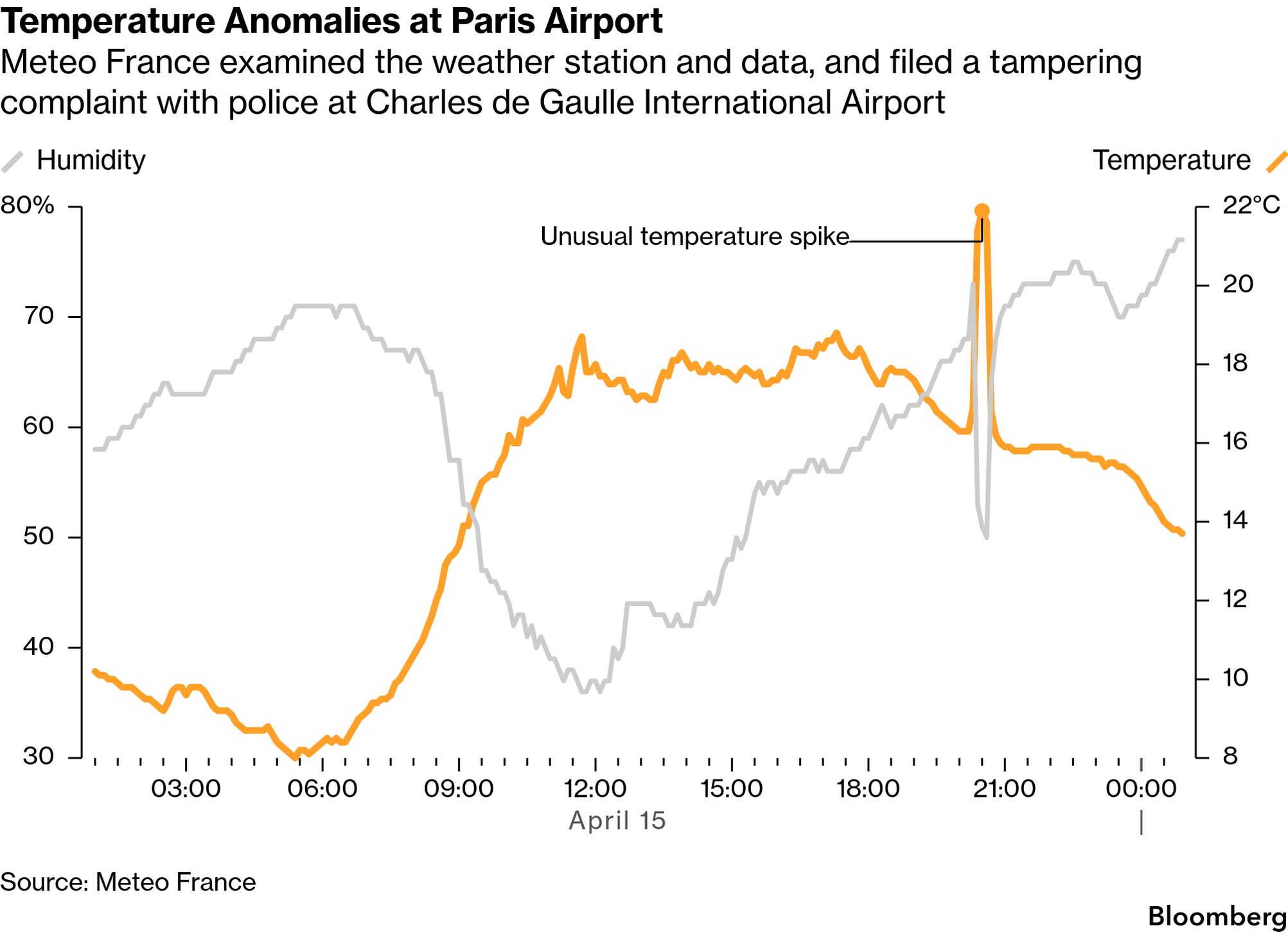
Automated temperature readings taken at Meteo France’s weather station at Charles de Gaulle International Airport spiked 4C and 5C unexpectedly in the evenings of April 6 and April 15, respectively, reaching the highest temperature recorded at the site on those days, data from the installation show.

Readings from the site are important for the safe operation of the airport. They are also used to settle contracts for daily high temperatures on Polymarket, according to information on the website where traders place bets on real-world outcomes.

Weather betting has boomed on prediction markets like Polymarket and Kalshi Inc., where individual traders and weather experts have flocked to put money behind their predictions for temperatures, or the amount of rain or snowfall in particular areas on specific dates.

Boosters say prediction markets create economic and social value by providing better information about what will happen in the world. Detractors call them glorified gambling vulnerable to manipulation, insider trading and other shenanigans.

Concerns have emerged for other contracts on prediction markets, including claims from an Israeli journalist that Polymarket users pressured him to change a story about missile strikes outside Jerusalem.

Prediction market traders and independent meteorologists in a French weather discussion forum flagged the data irregularities and questioned the results of the contracts, which attracted roughly $1.4 million in combined bets, according to Polymarket data. Total betting for each was more than double the typical volume for other daily Paris temperature contracts in April.

A spokesperson for Meteo France, Laurent Becler, said technicians examined sensor data and inspected the weather station, and the forecasting office subsequently filed a complaint for tampering with the operation of an automated data processing system to airport police.

Becler declined to answer additional questions about the possible tampering and data irregularities. Airport police declined to answer questions about the complaint and referred questions to court officials, who declined to answer a request for more information. Charles de Gaulle International Airport declined to comment.

Temperature Anomalies at Paris Airport

Source: Meteo France

Representatives for Polymarket did not respond to questions about the weather contracts. Betting on Paris temperatures switched to using data collected at Paris-Le Bourget Airport instead of Charles de Gaulle on April 19, according to Polymarket’s website.

Meteorologist Ruben Hallali, chief executive officer and co-founder of Paris-based weather intelligence firm HD Rain, said he was among those who reported the anomalous data to Meteo France, where he previously worked.

Hallali said he closely monitors the airport weather station because his firm certifies parametric insurance — policies that don’t require proof of loss and pay out when specific conditions are met — for clients there. “That’s why I was able to spot very quickly the fact that there was a data manipulation,” he said.

The April 15 data are particularly unusual, Hallali said. On that day, temperatures hit 18.8C in the late afternoon and started to taper off before surging from 16.9C to 21.9C in 12 minutes, data from the weather station show. Humidity levels also plunged abruptly around this time, he said

On Polymarket, one trader made more than $21,000 betting that 18C would not be the highest temperature recorded that day, data from the prediction market show.

The consequences of tampering with sensors at an airport could be severe, Hallali said. The data give pilots and air traffic controllers critically important readings on temperature, wind, visibility and other conditions.

Those data are used for takeoffs and landings, to determine which runways are used and helping air traffic controllers set routes and spacing between aircraft. Weather station data are also used to calibrate altitude and fuel use for other aircraft, Hallali said.

“If there is a mistake in this data, it can be dangerous,” he said.

See also: Prediction Markets Polymarket and Kalshi Are Gamifying Truth

Source: https://www.bloomberg.com/news/articles/2026-04-23/france-probes-weather-data-glitch-after-surge-in-polymarket-bets

California’s Billionaire Tax Looks Strong - Until You Look Closer
Analysis
InsightTaxUnited Nation

California’s Billionaire Tax Looks Strong - Until You Look Closer

Strong polls make California’s billionaire tax look tempting. But the market may still be overpricing how easily “Yes” survives November.

Politics

Narrative and the prices on screen

The emotional version of this story is easy to sell. Labor union wants to tax billionaires. Tech money wants to kill it. California is fighting over whether to backfill healthcare and social spending with a one-time levy on extreme wealth.

The market version is colder. On Polymarket, as I am typing this line, the dedicated ballot contract prices qualification at about 66%, while the passage contract prices final enactment at about 38%. In other words, traders think the measure is more likely than not to reach the ballot, but still more likely to fail than pass. That basic two-step framing is correct. The real question is whether the market is still overpricing the second step.

The key number is the market’s implied conditional probability. If the measure is 38% to pass overall and 66% to make the ballot, then the market is implicitly saying:

$$P(\text{Pass in November} \mid \text{Qualifies}) = \frac{P(\text{Passes})}{P(\text{Qualifies})} = \frac{0.38}{0.66} = 57.6\%$$

On Kalshi, the "ballot qualification" contract price is 68%, and the passage contract price is 38%. This gives the same conditional probability at 55.9%.

So the screen is effectively telling you that once the measure qualifies, it becomes roughly a 57% favorite in November. That is the part I still dispute. The new polling from SurveyUSA is better for Yes, but not good enough to justify a near 60-40 conditional favorite.

The proposal

The proposal itself is straightforward enough. California’s Legislative Analyst’s Office says the initiative would impose a one-time 5% tax on the net worth of billionaires who were living in California on January 1, 2026. The tax would be due in 2027, taxpayers could spread payments over 5 years, and real estate, pensions, and retirement accounts would be excluded. 90% of the money would be set aside for healthcare.

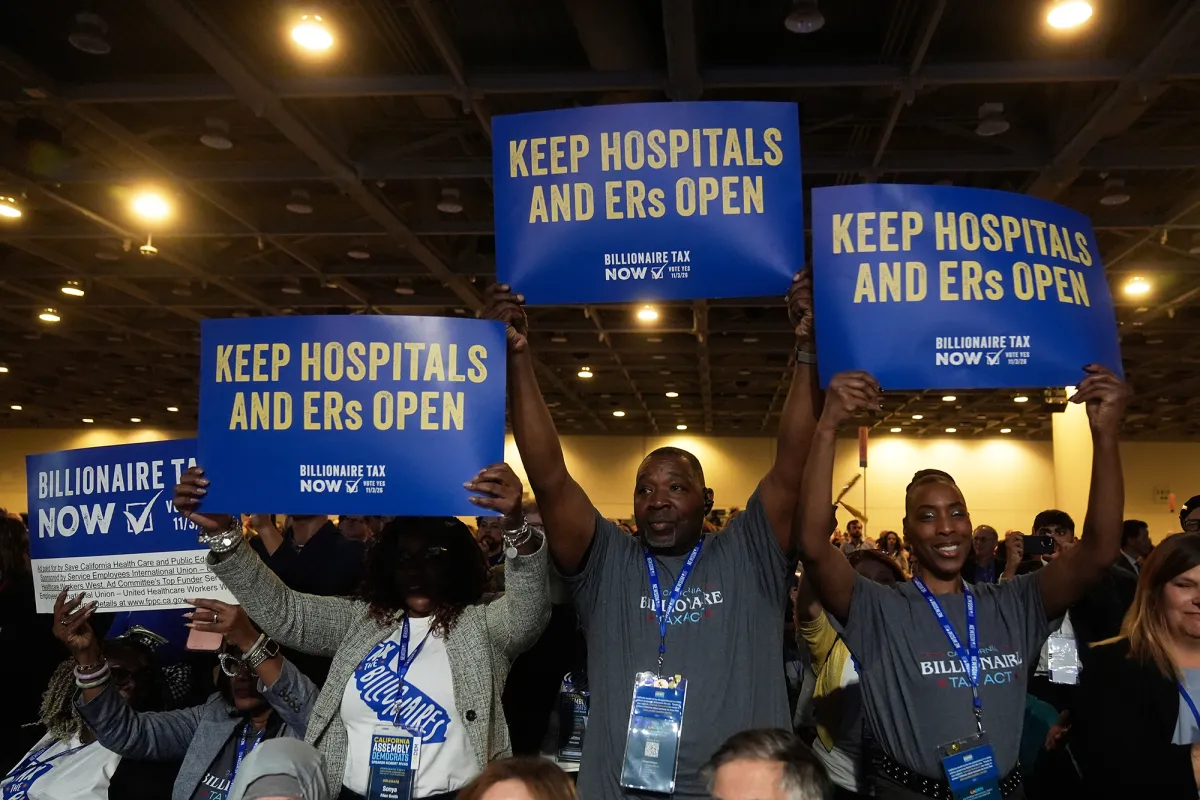
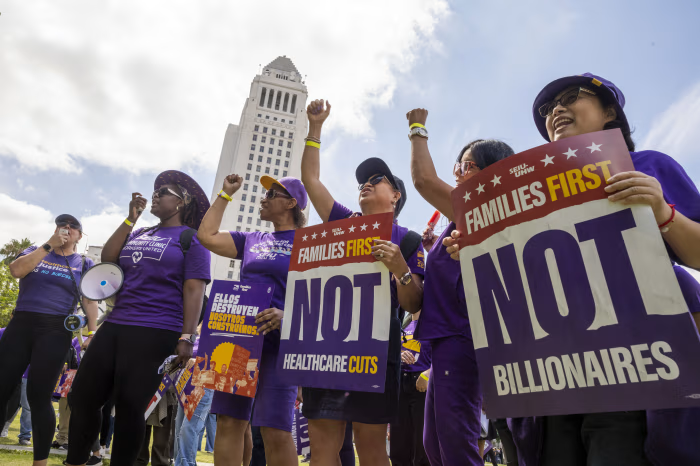
Supporters of California’s proposed billionaire tax displayed signs at the California Democratic Party State Convention in San Francisco on February 21, 2026. (Image credit: Jeff Chiu, AP Photo)

The LAO also says the tax would likely generate a temporary revenue windfall measured in tens of billions of dollars, but could also produce an ongoing decrease in state income-tax revenue of hundreds of millions of dollars or more per year if billionaires change behavior or leave the state. That is not campaign spin but the state’s own nonpartisan fiscal office putting the upside and downside in the same paragraph. And that is the sort of sentence opponents will turn into a weapon. You do not need to prove the measure is economically disastrous. You only need to make enough swing voters uncomfortable with the tradeoff.

Google cofounder Sergey Brin added another 25 million dollars to the Super PAC opposing the state’s proposed 5% wealth tax, on top of the 20 million dollars he had already contributed. (Image credit: Justin Sullivan/Getty Images)

The qualification mechanics are also concrete. The Secretary of State says the initiative was cleared for circulation on December 26, 2025, requires 874,641 signatures, has a circulation deadline of June 24, 2026, and had already reached the 25% signature milestone on February 26, 2026. The dedicated market exists for that branch, it has more direct information than public commentary, and the public facts do not obviously refute a mid-60s qualification probability. So for pricing purposes I treat the market’s 66% qualification number as basically fair.

The SEIU-UHW union argues that the proposed wealth tax could generate about $100 billion and is needed to cushion expected Medicaid funding cuts. (Image credit: Ringo Chiu/Zuma Press)

Polling data

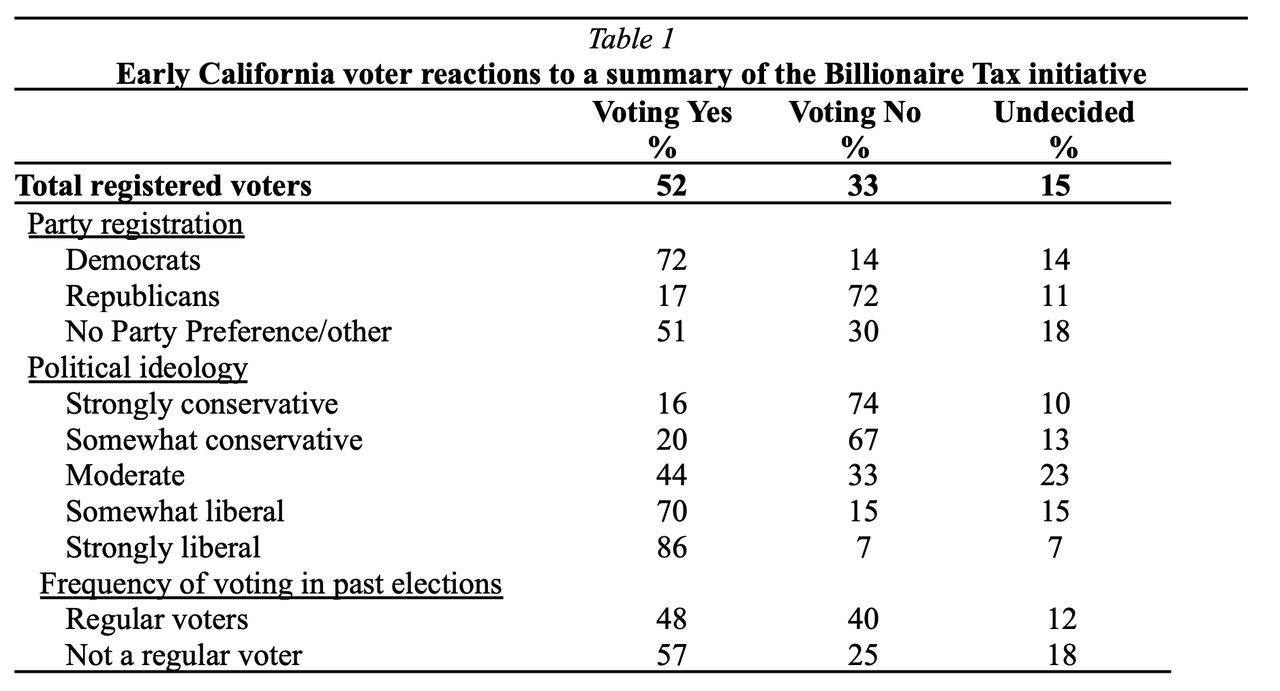
Given the market-implied 57% conditional pass probability in the draft, the real question is not whether the initiative has support. It clearly does. The available public polling shows a genuine lead. Berkeley IGS, fielded March 9-15, found 52% Yes, 33% No, and 15% undecided among California registered voters (with a 2% margin of error). SurveyUSA, fielded April 8-10, found 63% Yes, 23% No, and 14% not sure among registered voters (with a 4.2% credibility interval). That is not a weak measure. But it is also not a measure with no room to move.

The more important point is how that support is distributed. Berkeley crosstabs shows strong partisan asymmetry: Democrats support the measure 72% to 14%, while Republicans oppose it 72% to 17%. Among No Party Preference/other voters, support is positive but softer at 51% Yes to 30% No. Berkeley also shows a turnout-skewed electorate: among regular voters, support drops to 48% Yes and 40% No, compared with 57% Yes and 25% No among non-regular voters.

Berkeley IGS polling results in March

SurveyUSA, meanwhile, shows support holding above 60% across major regions, at 61% in the Inland region and 66% in the Bay Area. So the combined data do not say the measure is barely alive. They say it leads. But they also say the coalition is uneven, geographically broad, partisan in composition, and less dominant among higher-propensity voters.

SurveyUSA polling results in April

That is why I would frame the disagreement with the market more narrowly. The polls support the claim that the initiative is a real contender and that majority sentiment currently exists. What they do not prove is that a qualified measure should automatically be priced as a near 57% favorite to pass. In both polls, a large bloc remains available to persuasion: Berkeley has 48% either No or undecided, and SurveyUSA still has 37% either No or not sure. For a highly controversial tax initiative facing an expensive opposition campaign, that is still a meaningful amount of movable ground. The data justify a positive baseline, but not an unqualified green light.

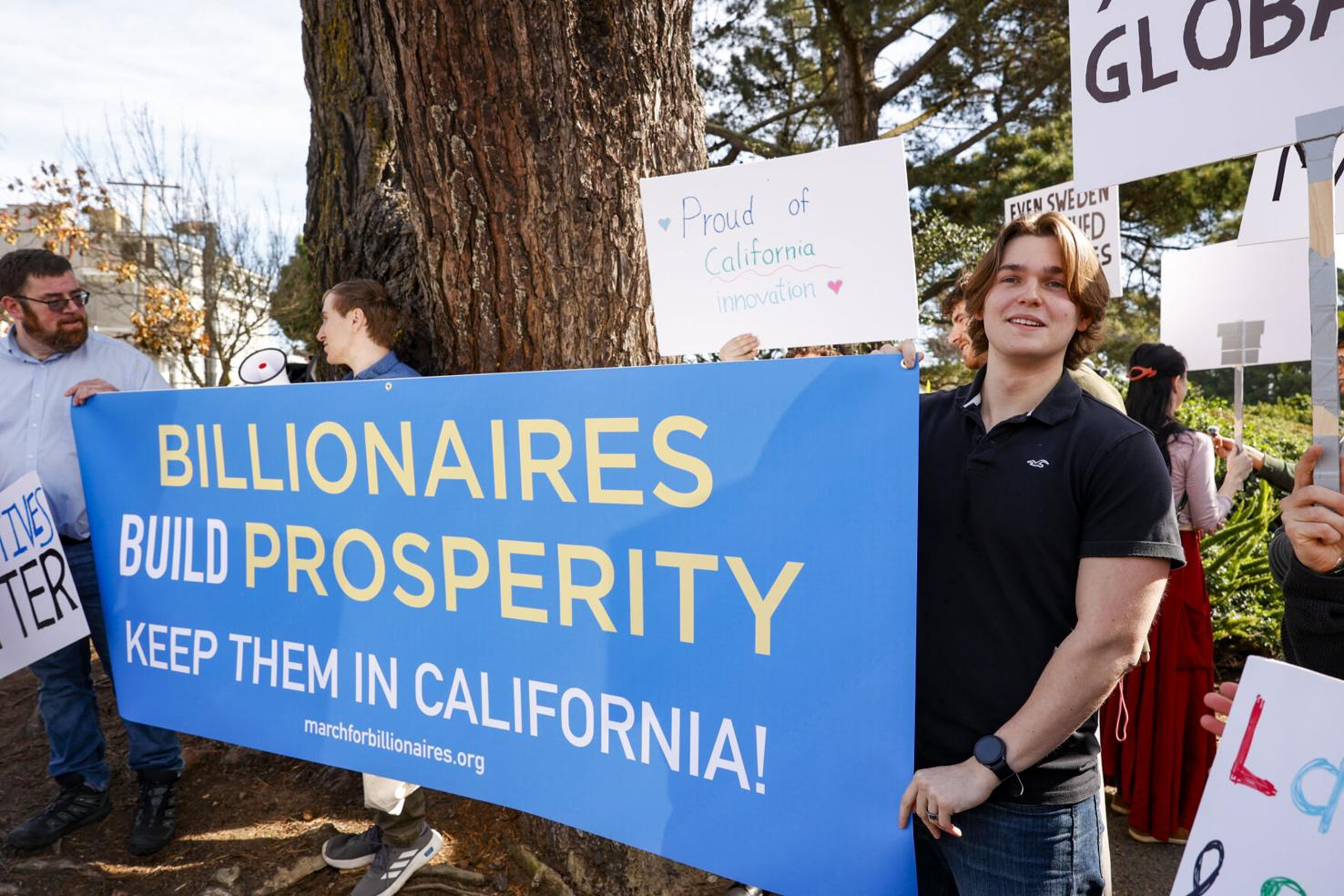
The wealth-tax proposal has faced broad resistance from business groups and some political figures, while a weekend rally in San Francisco attracted only a small crowd. (Image credit: Craig Lee/The Examiner)

Why the structure still matters

The reason I still do not buy the market’s 57% conditional-passage assumption is that this is not just a polling contest. It is a campaign contest. The opposition has real money and real institutional tools. The Guardian reports that Sergey Brin alone has given $45 million to oppose the measure, and that the same anti-tax network is funding related efforts, including a rival “Protect Retirements” measure aimed at crippling the wealth-tax framework. Recent San Francisco Chronicle reporting says that if both measures pass, the one with more Yes votes would override the other. That creates a second layer of risk beyond simple voter approval. At the same time, CalMatters reports real discomfort inside the progressive coalition itself, with some liberal lawmakers and labor groups unconvinced even before the full paid war begins. That is not what an easy game looks like.

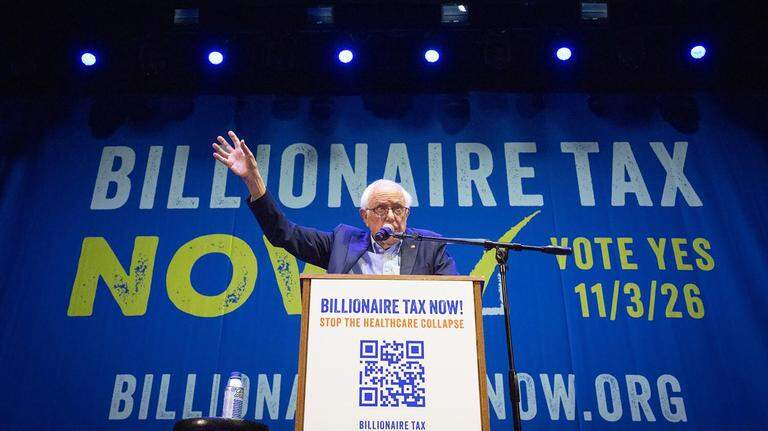
At a Los Angeles rally, Sen. Bernie Sanders backed SEIU-UHW West’s proposed wealth-tax ballot measure, while affluent opponents were simultaneously organizing signature drives for rival initiatives aimed at weakening it. (Image credit: Jason Armond Los Angeles Times)

My probabilities

My base case is:

P(Qualifies by June 25) = 66%

P(Wins in November | Qualified) = 47%

So:

P(Passes) = 0.66 × 0.47 = 31%

Against a live market price of 38%, the contract still looks rich by about 7 percentage points.

Why 66% for qualification? Because the measure has a serious union backer, real salience, and enough runway to remain more likely than not to qualify (the circulation deadline is June 24). But given the intensity of billionaire-funded counter-mobilization and the fact that circulation is still at its early stage, we still need to be cautious. I do not claim an edge here as I think the tradable disagreement is in the conditional branch.

Why 47% for conditional passage? Because the polling data does not show a hardened majority. It is a soft lead that must survive months of paid attacks, fiscal criticism from a nonpartisan state office, capital-flight messaging, and rival-measure confusion. The key thing is not the support rate in March/April. It is the fact that the measure probably needs to enter late October already above the low-to-mid 50s to survive a fully funded anti-tax blitz. Right now it is not there.

What will reprice this market

The first catalyst is the signature and certification window. This is the obvious one. Until the measure is officially on the ballot, the market is really trading both qualification and passage together. Any strong evidence of signature sufficiency should lift the "Yes" price mechanically. Any sign of delays, weak collection pace, or ballot-law complications should hit Yes immediately. The relevant deadline is late June.

The second catalyst is the next serious public polling wave with cross-tabs. Not another vague “Californians support taxing the rich” sentiment readout, but a ballot-wording poll after both sides have been on air. Watch independents and late deciders, not Democrats. If independents slide from 51% support toward the mid-40s, the conditional passage probability should compress fast. If they hold or improve, the market’s current pricing becomes harder to fade.

The third catalyst is the rival-measure battlefield. If the poison-pill countermeasure qualifies, the billionaire tax market should cheapen even if the tax itself qualifies, because the path to victory becomes more complex and more expensive. Conversely, if the rival effort stalls while the tax qualifies cleanly, the "Yes" price could bounce even without better polling. The market is likely to be underpricing this interaction risk due to simple binary ways of thinking.

Brian Galle, a UC Berkeley Law professor involved in designing the new state wealth-tax proposal, argued that although ultrawealthy individuals often threaten to leave when taxes rise, evidence over more than a decade suggests most ultimately stay. (Image credit: Craig Lee/The Examiner)

The trade

The cleanest trade is still No on final passage, NOT No on qualification. I do not see a large enough public-data edge against the dedicated qualification market to fight it hard. But I do see a real edge against the idea that qualification turns this into a probable November winner.

For people who can structure it, the sharper expression is a conditional spread trade: trade the tree, not the slogan. Stay relatively neutral on the ballot leg and fade the passage leg. In plain English, the disagreement is not “will this initiative get close enough to be real?”. The disagreement is “once it is real, should it really be priced like a modest favorite?”.

The market is now pricing the measure as if high-50s conditional passage is the natural consequence of qualification. The data says that it is still too generous. If qualification happens and the market reflexively reprices the passage contract as if ballot access solved the hard part, that could be the moment to re-short Yes. Ballot qualification removes one risk, but it also starts the expensive, high-information phase where soft support usually gets stress-tested.

Disclaimer: The content is for informational purposes only. You should not construe any such information or other material as legal, tax, investment, financial, or other advice. Nothing contained in this article constitutes a solicitation, recommendation, endorsement, or offer by the author(s) or any third party service provider to buy or sell any securities or other financial instruments in your or in any other jurisdiction in which such solicitation or offer would be unlawful under the securities laws of such jurisdiction. The author(s) report(s) no conflict of interest.

Mandelson Vetting Fiasco Leaves Starmer Looking Like Lame Duck
News
ElectionCompetition

Mandelson Vetting Fiasco Leaves Starmer Looking Like Lame Duck

Keir Starmer's authority is eroding under the weight of the Mandelson scandal, leaving him politically vulnerable ahead of crucial local elections.

Politics

Forty-eight hours of brutal public inquiry into Keir Starmer’s judgment have left the prime minister looking increasingly like a lame duck.

Starmer had already been battling for months to save his job before a former top Foreign Office official alleged on Tuesday that he was pressured by 10 Downing St. to approve Peter Mandelson’s appointment as Britain’s envoy to Washington. The official, Olly Robbins, told a parliamentary committee that the prime minister’s office was “dismissive” in its approach to the security vetting that would ultimately raise red flags about the Labour grandee’s background.

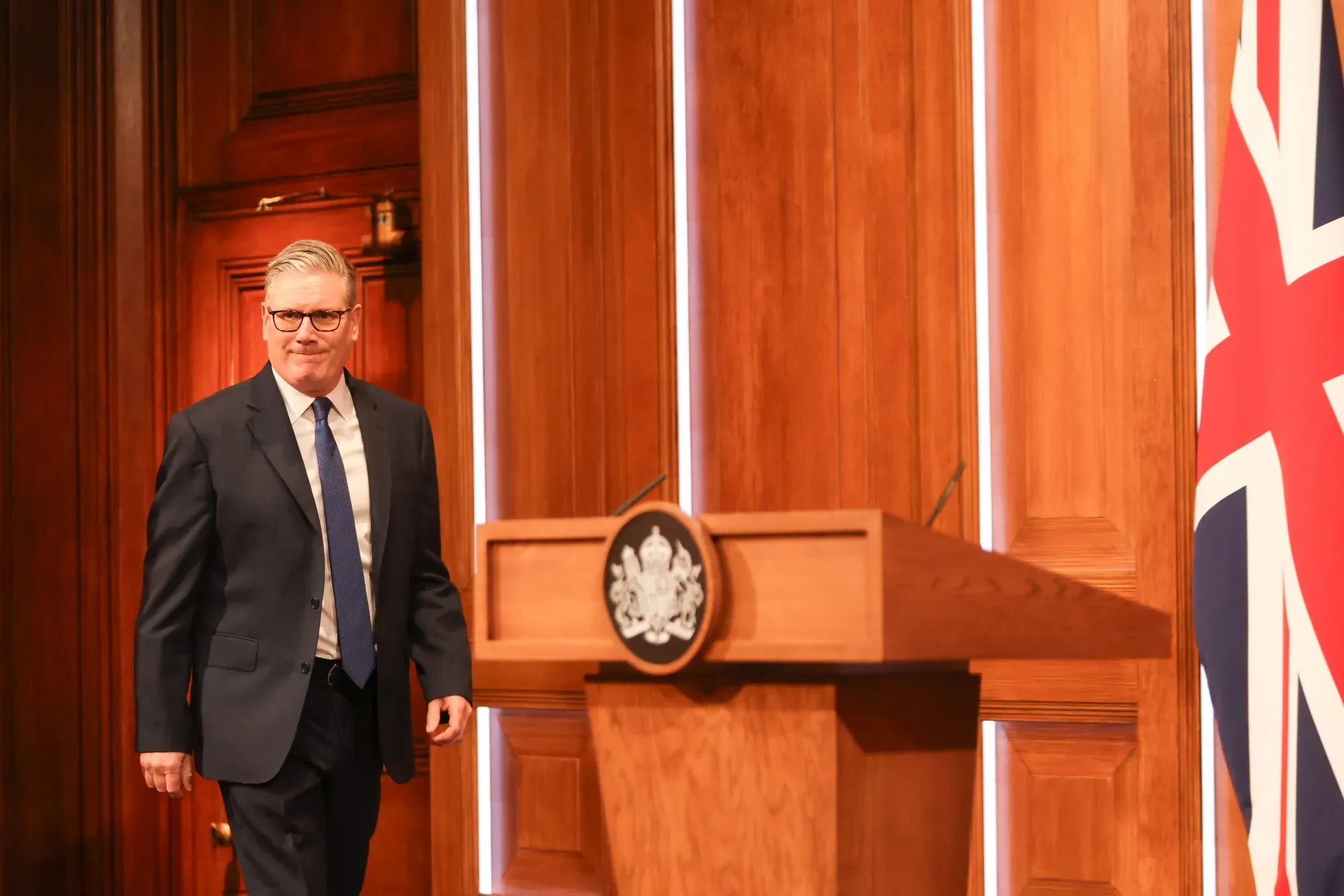
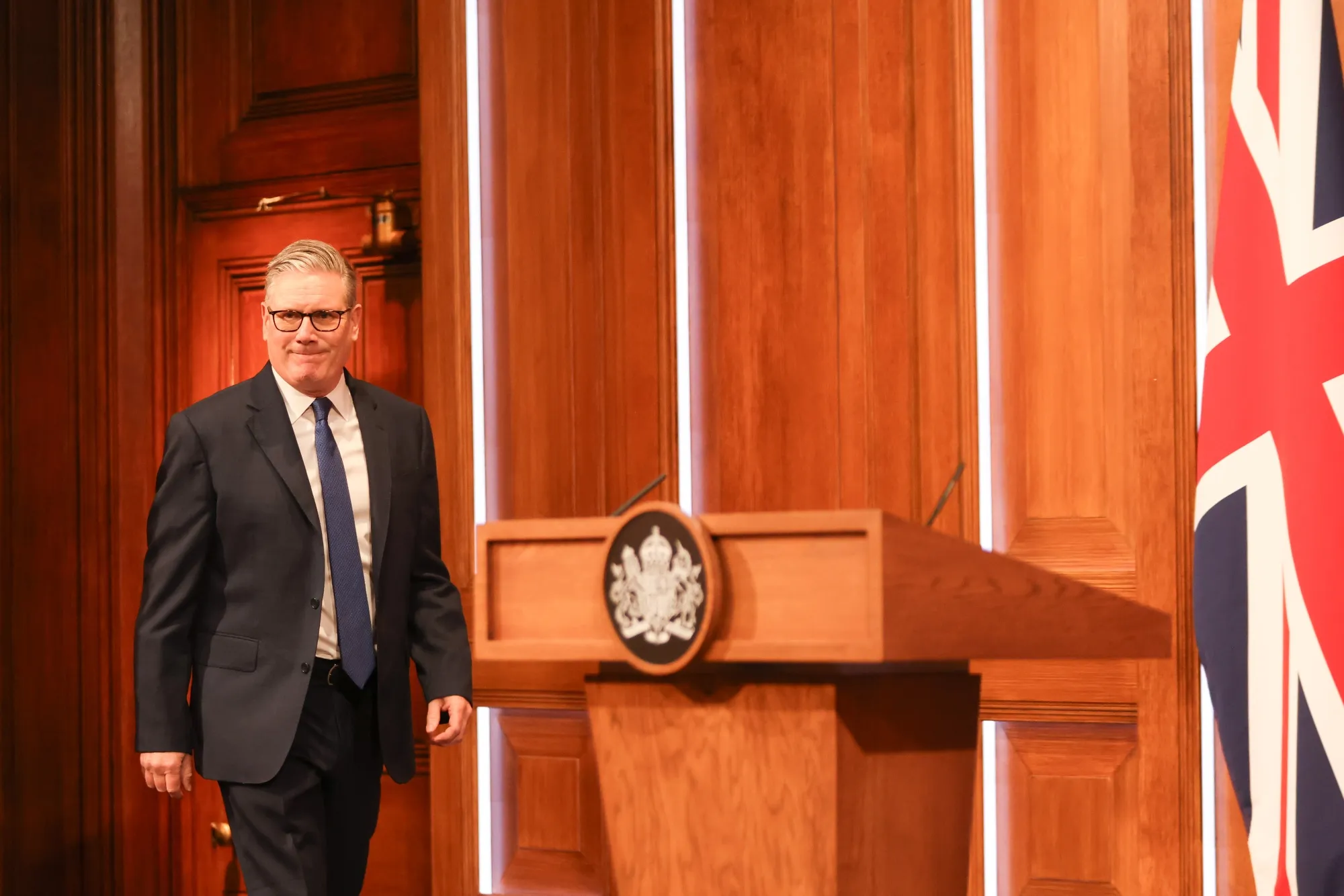
Keir Starmer in Downing Street earlier this month. Photographer: Betty Laura Zapata/Bloomberg

Robbins’ testimony, coming the day after Starmer himself faced a grilling in the House of Commons, provided a graphic postmortem of a personnel decision that has shaken the Labour government. The claims and counterclaims laid bare Starmer’s struggle to adapt to President Donald Trump’s return to power and his behind-the-scenes battle with the civil servants who manage the British state.

Moreover, the episode deepened fears that Starmer might never be able to quiet a scandal that has consumed his premiership since September, when Bloomberg reported new details about the extent of Mandelson’s relationship with the late pedophile financier, Jeffrey Epstein. Gone was another crucial week to improve the Labour Party’s grim outlook ahead of a round of local elections on May 7.

While Labour MPs, ministers and aides interviewed by Bloomberg on Tuesday didn’t expect Starmer to leave before those elections, several said the latest Mandelson revelations had increased the chances that he faces a leadership challenge after the results. One Member of Parliament noted that Starmer’s former deputy, Angela Rayner, had been more visible in the halls of Westminster in recent days, while another pointed to what they saw as tepid support for Starmer during debates.

Robbins’ testimony left key questions unanswered, such as who exactly in Starmer’s office had applied the pressure he alleged, or what security issues vetting officials had flagged. Such details could still come to light, ensuring the scandal continues to chip away at Starmer’s credibility.

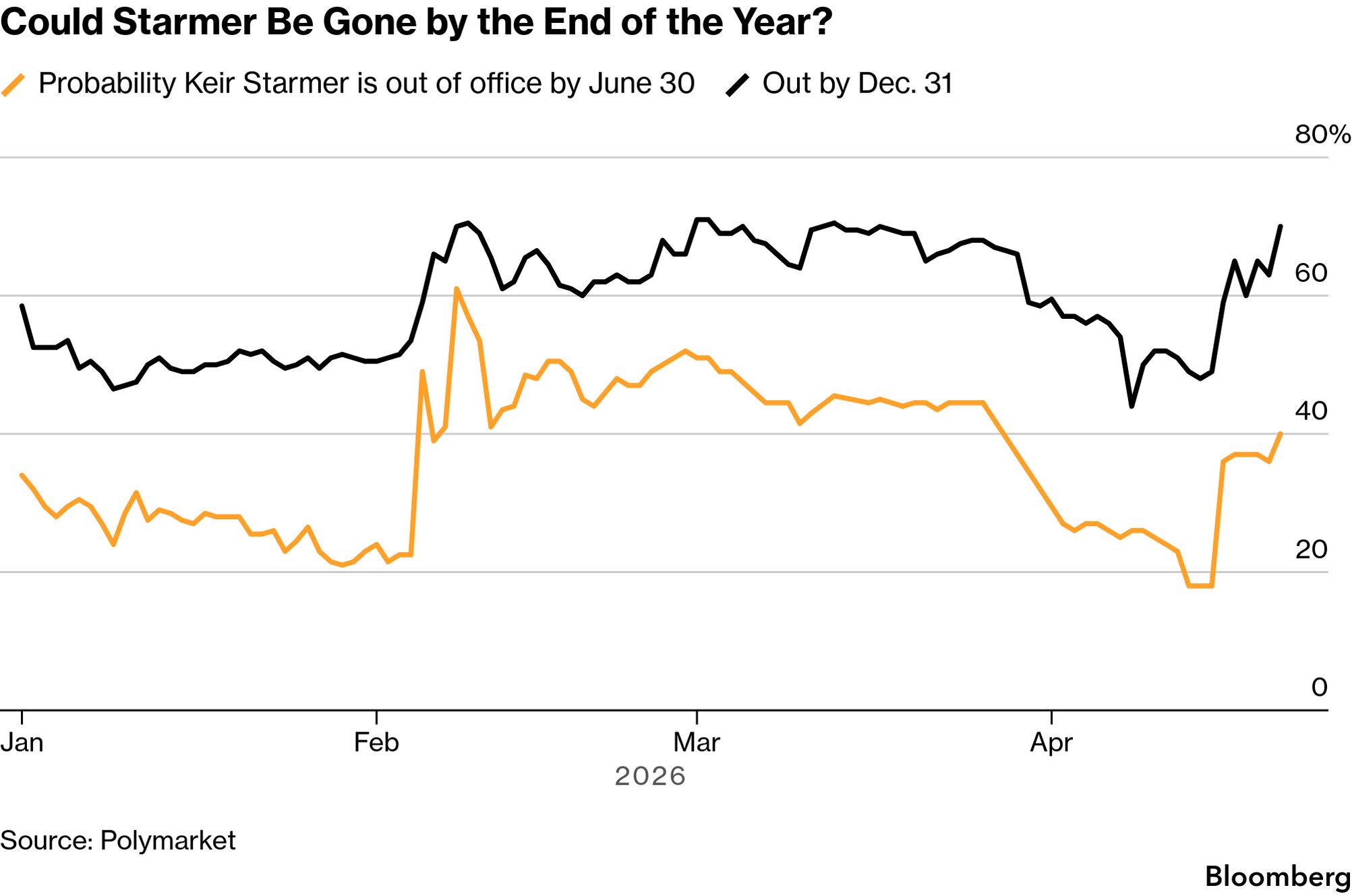
Could Starmer Be Gone by the End of the Year?

Source: Polymarket

A third Labour MP described Starmer as suspended above an elephant trap — still kicking, but one blow could drop him into the pit. The prime minister was safe largely because there was no consensus on a successor, said the person, who like several others interviewed for this story spoke on the condition of anonymity so as not to appear disloyal.

Rayner hasn’t yet resolved a tax issue that forced her to resign in September. Health Secretary Wes Streeting hails from Labour’s right wing and needs to broaden his base. Greater Manchester Mayor Andy Burnham doesn’t hold the necessary seat in Parliament, in part because Starmer’s allies blocked him from seeking one earlier this year.

“The fact that he’s in Manchester rather than Westminster is the only thing keeping Keir Starmer in the job,” James Cleverly, a Conservative MP who previously served as foreign secretary and home secretary, told Sky News. “There isn’t an obvious candidate to replace him.”

Conservative leader Kemi Badenoch has led a chorus of calls from opposition benches in recent days for Starmer to resign, arguing that he broke the Ministerial Code by misleading the House of Commons over Mandelson. While some Labour ministers have rejected those criticisms during media appearances, there hasn’t been anything resembling the outpouring of Cabinet support in February that helped rescue Starmer the last time the Mandelson revelations flared up.

“The quiet, reasonable majority of people do not want a change of prime minister,” Allison Gardner, a Labour MP, said as the Conservatives led a three-hour debate on Starmer’s actions. “People value a stable government, a government that focuses on matters people really care about.”

Still, the persistent uproar over the Mandelson appointment raises new questions about how much focus Starmer could give to other issues. An announcement by Chancellor of the Exchequer Rachel Reeves of plans to weaken the link between gas and electricity prices on Tuesday was largely overshadowed by the drama elsewhere in the Palace of Westminster.

Energy Secretary Ed Miliband, himself an oft-mentioned contender to succeed Starmer, acknowledged during an appearance to promote those plans that he had feared Mandelson’s appointment “could blow up and go wrong.” Starmer allies feared the furor had dashed hopes that the prime minister could capitalize on his decision to stay out of Trump’s strikes on Iran to boost Labour in the run up to the local elections.

Instead, attention centered on the arcane rules and conventions of decision making in Westminster, where Robbins explained how he stood by his decision to approve Mandelson’s security clearance without discussing the action with No. 10 or ministers. The 51-year-old veteran of the civil service service nonetheless said he felt an “atmosphere of pressure” from No. 10 to “get it done” ahead of Trump’s second inauguration last year.

One MP argued that while the Robbins testimony was disastrous for Starmer, the facts surrounding Mandelson’s vetting were messy. It wasn’t clear whether Robbins or the prime minister was right about the process, they said.

That helps explain why no member of Starmer’s Cabinet has so far broken ranks and called for him to go. Another reason is timing. Potential challengers like Rayner and Streeting want to see the May 7 elections play out before they move.

Rayner played down down the Mandelson scandal during an appearance at a growth conference on Tuesday, saying there were “more important questions out there” than the latest twists in the affair.

Some Labour MPs worry Starmer is so weak he couldn’t weather further scandal. One compared his position to that of Boris Johnson after survived the outrage over parties at Downing Street during Covid lockdowns, but before the sexual misconduct allegations against a Tory lawmaker that ultimately secured the former prime minister’s downfall.

Another factor that keeps the premier in place is that no one is confident they would get the successor they want, one of the Labour MPs said. Many fear a messy and protracted contest.

Those “who want Starmer to remain prime minister are those people who are worried who the Labour Party may pick to have instead,” Conservative MP Caroline Johnson said.

Source: https://www.bloomberg.com/news/articles/2026-04-21/mandelson-vetting-fiasco-leaves-starmer-looking-like-lame-duck