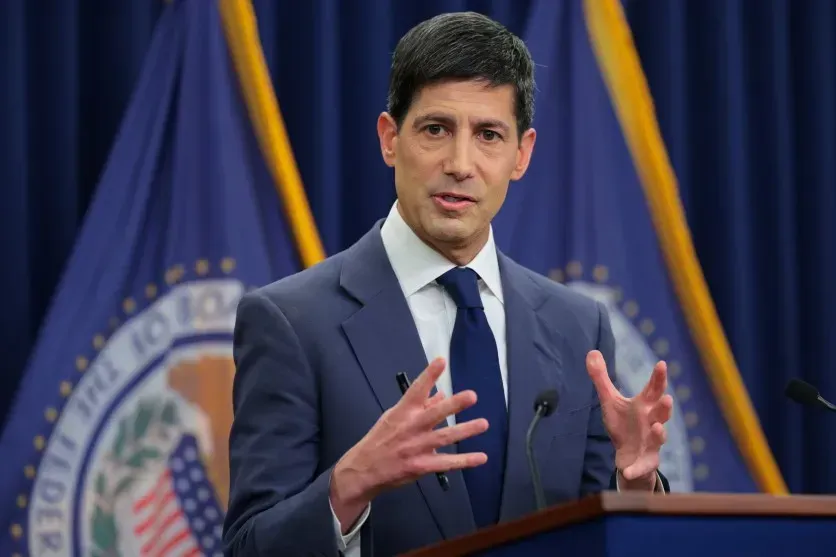
Bond traders ramped up bets that the Federal Reserve will raise interest rates later this month, ahead of a closely watched US inflation report and remarks from Fed Chair Kevin Warsh.
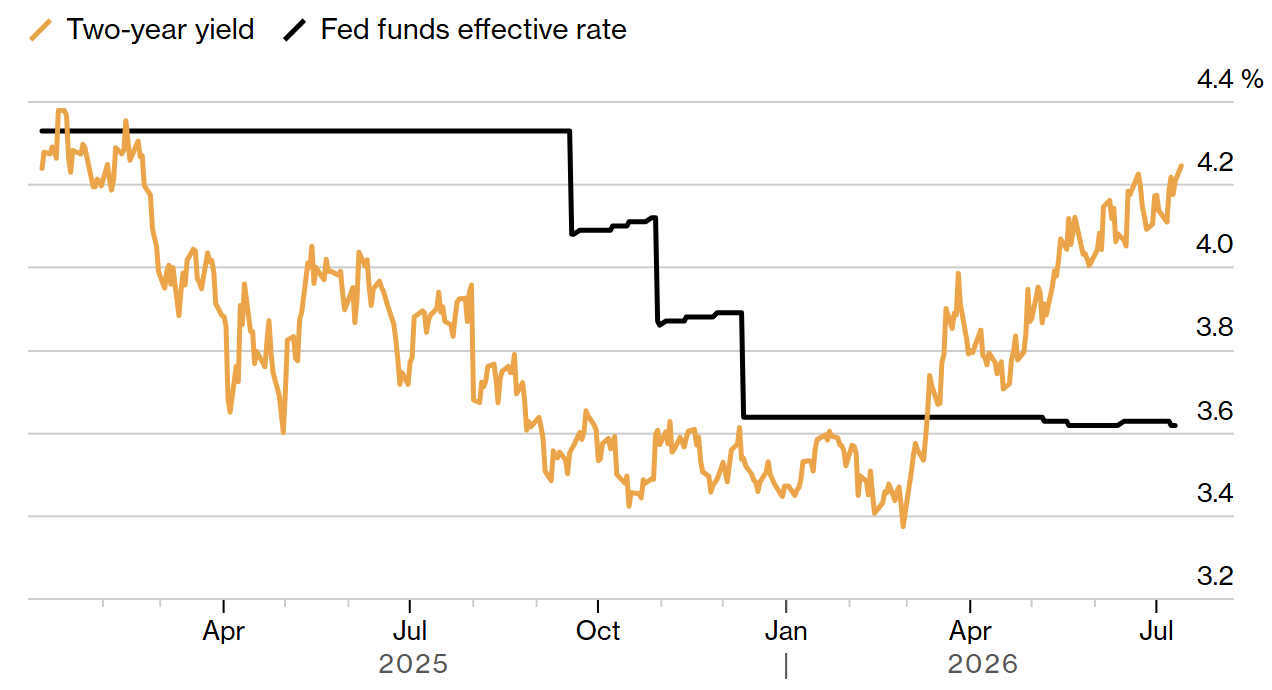
Rising rate expectations are evident both in interest-rate options, where the market-implied chance of a quarter-point hike later this month has climbed to about 50% from less than 10%, and in US government bonds. The two-year Treasury note’s yield, more sensitive than longer-maturity debt to changes in the Fed’s rate, stayed above 4.25% Tuesday, exceeding the policy rate by a widening margin.
US Two-Year Yield Exceeds Fed's Policy Rate by Widening Margin. Source: Bloomberg
The moves accelerated after Fed Governor Christopher Waller — until recently one of the central bank’s most dovish officials — said a rate increase “in the near term” should be considered if the inflation data show “another hot reading” on core prices, which exclude food and energy. “The FOMC has to be ready to tighten monetary policy to prevent a repeat of the 2021-to-2022 inflation episode,” he said.
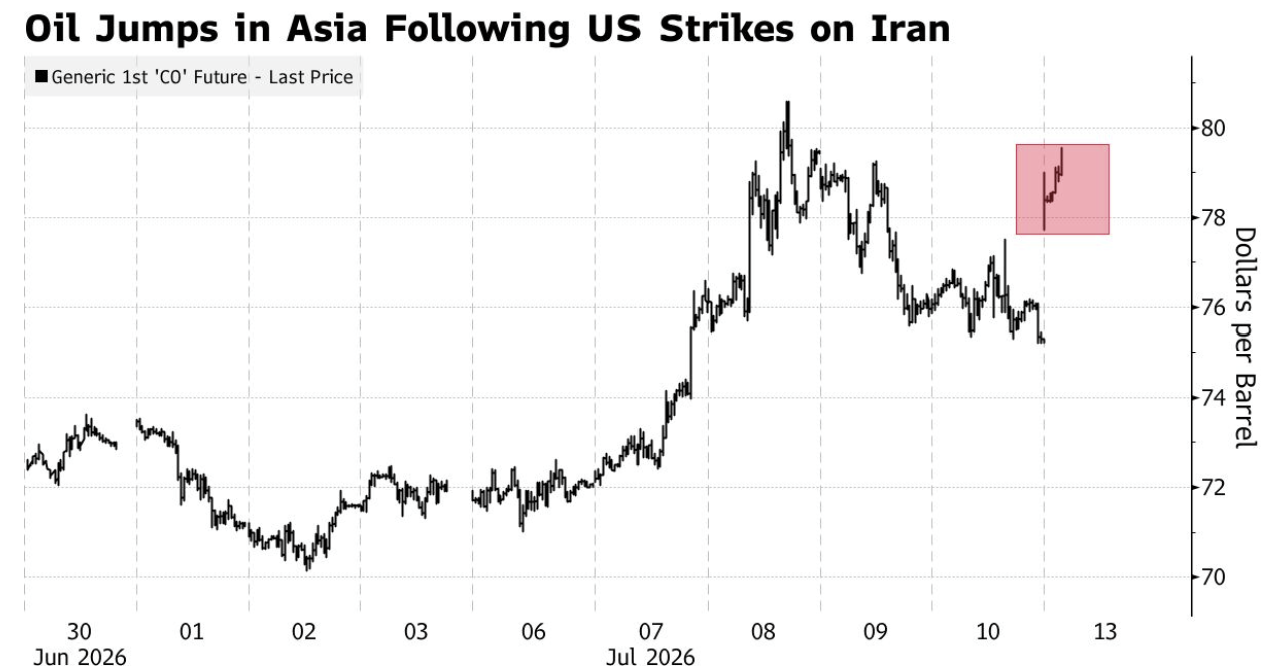
Bond traders are increasingly anxious it will take higher interest rates to bring inflation back toward the Fed’s 2% target. Oil prices extended gains on Tuesday, with US military forces set to resume blockading traffic to and from Iranian ports and coastal areas. Trump also said the US would keep up attacks on Iran.
Will the Fed resume its rate-hiking cycle?
YesResult
37.62%
NoResult
62.38%
832 Polls
EndedTBD
Their stress is compounded by Fed Chairman Kevin Warsh’s aversion to making predictions about its course.
Short-term interest-rate markets fully price in a Fed rate increase by year-end and a second one by mid-2027 — probably not enough, Al-Hussainy said. He thinks the central bank is likely to unwind all three of the quarter-point cuts it made over the final four months of last year in response to weakening labor-market conditions.
Wagers on near-term Fed rate hikes have flooded into the interest-rate futures market, helping drive up open interest in August federal funds futures. The number of contracts in which traders hold positions has increased about 23% in July. Open interest data are reported after the close, and stand to increase further.
The CPI report is expected to show a 0.1% drop in overall prices from May, bringing the year-on-year rate down to 3.8% from 4.2%. Core prices are seen rising 0.2% from May and 2.8% from last June.
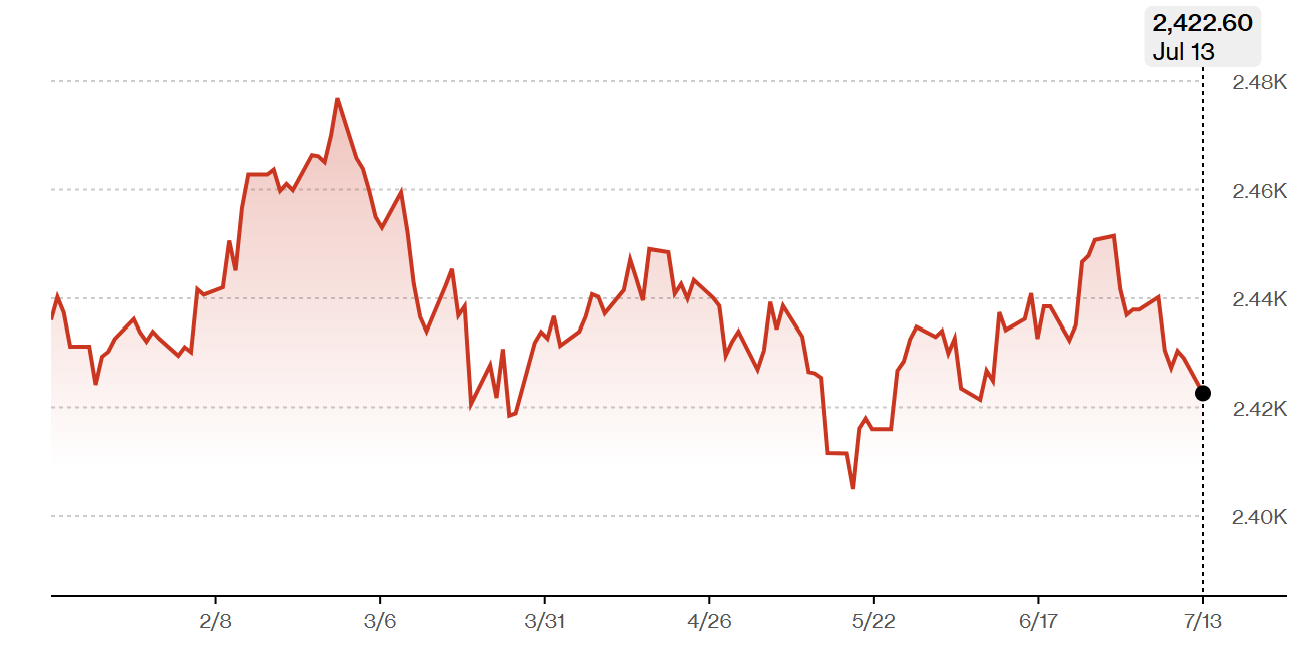
Even softer-than-expected CPI readings may provide limited relief in the bond market, however, where two-year Treasury yields have risen about 10 basis points this month, 10-year yields 15 basis points, wiping out the market’s gains for the year as measured.
US Treasury Total Return Unhedged USD. Source: BloombergSSou
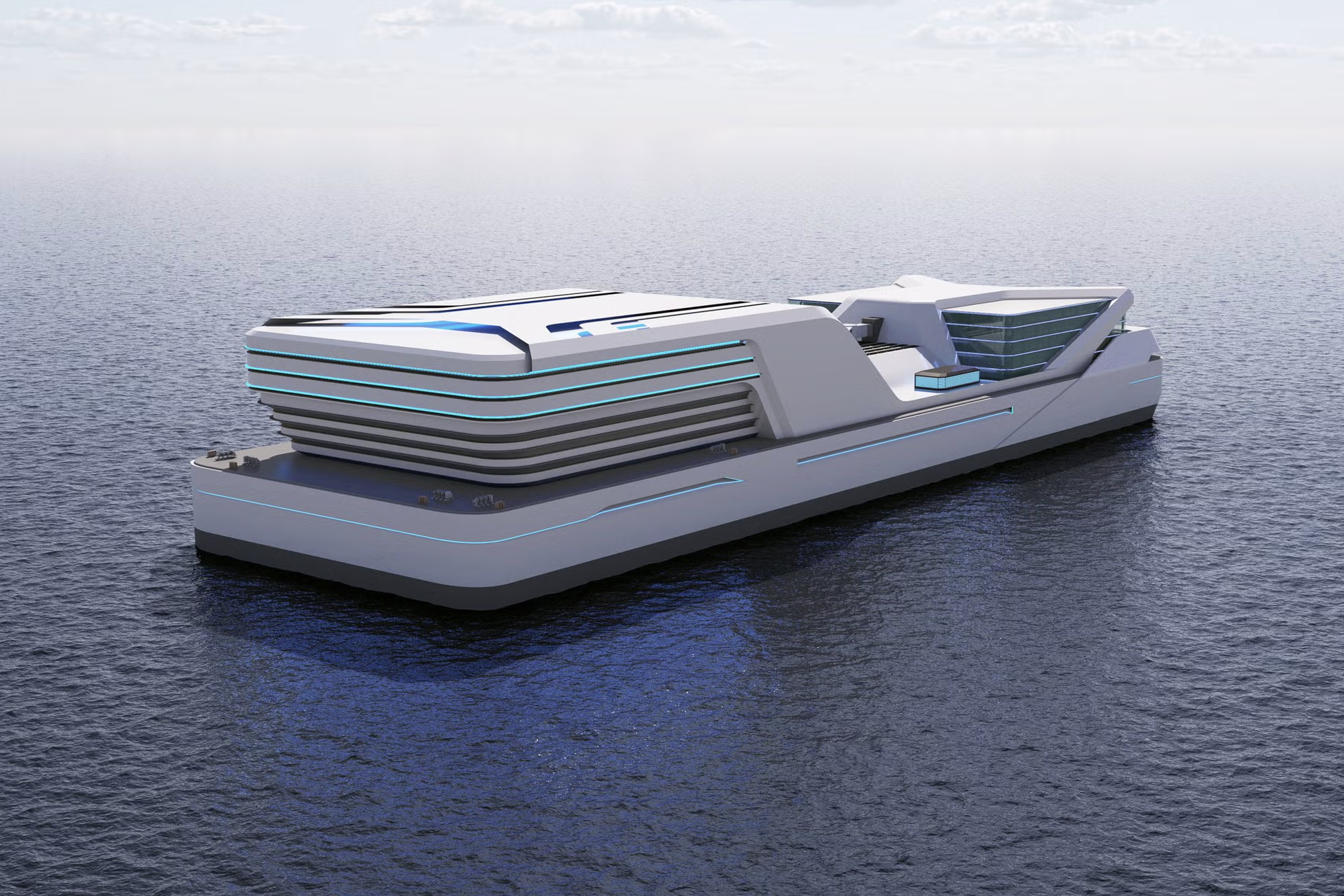
Samsung is reportedly planning to launch its floating data centers in the second quarter of 2028...
Will floating data center launch in or before 2Q2028?
YesResult
50.00%
NoResult
50.00%
2 Polls
EndedTBD
The Korean company’s heavy industries division intends to have orders for the data centers in place to coincide with the launch, according to a report from shipping industry publication TradeWinds News.
Apparently, Samsung Heavy Industries is "pursuing multiple feasible projects in line with the goal of commercializing the FDC by the second quarter of 2028."
The report notes that Samsung Heavy Industries has signed a memorandum of understanding with Greek shipbuilding firm Capital and UK-based financial services company Lloyds Register to develop floating data centers. The agreement will see Samsung developing the floating data center technology, with Capital overseeing project sourcing and investment, and Lloyd’s Register handling regulatory issues.
In May, DCD reported that Samsung’s maritime engineering division had signed a deal with a new company, Mousterian Corporation (M3), to develop floating data centers.
Texas-based M3 will work with Samsung Heavy Industries to “jointly develop and deliver institutional-grade floating data center projects worldwide.” The firm’s founders previously worked for Nautlius, another floating data center project that DCD visited in 2022.
Companies around the world are embarking on floating data center projects, with many seeing them as a cost-effective alternative to expensive land-based facilities at a time when space in many jurisdictions is at a premium.
Keppel has started work on a 25MW floating facility in Singapore, due to come online in 2028, while US-based Panthalassa wants to harness the power of waves for floating data centers at sea.
Floating wind firm Aikido has also announced its entrance into the data center space with the launch of a floating offshore wind platform integrated with a modular AI-focused data center.
Source: TradeWinds, company news, and industry sources.
On Kalshi, there is a family of contracts that pay out when a sports match has any delay due to weather.
At first, this sounds like one of the least controversial event contracts. Ordinary humans cannot create a thunderstorm. Weather forecasts are public. Delays impose real costs on ticket holders. This contract may offer a hedging opportunity for stakeholders who bear losses if the match cannot start on time.
But the contract is not settled by rainfall, lightning or wind speed.
Under Kalshi's rules, a qualifying delay must be formally announced by the governing body of the sports event. Officials must also identify weather, atmospheric conditions or weather-related safety as the primary reason.
In addition to predicting the weather, traders are also predicting how a small group of people will interpret the weather, apply safety rules and describe their decision publicly. This distinction places weather-delay markets in a grey area between weather-related derivatives and contracts on decisions made by a small group of officials.
They are not pure "weather/climate contracts"
Kalshi classified its weather-delay product as “Weather/Climate” in its filings with the CFTC. The templates can cover sports matches as well as other events. Qualifying weather can include rain, snow, lightning, extreme temperatures, strong winds, poor visibility and any atmospheric condition that officials consider unsafe.
The actual settlement chain is therefore: Weather conditions → safety assessment → official decision → public announcement → settlement.
A conventional weather contract has a shorter chain: Measured weather conditions → settlement.
Each extra step introduces additional uncertainty and another potential point of manipulation.
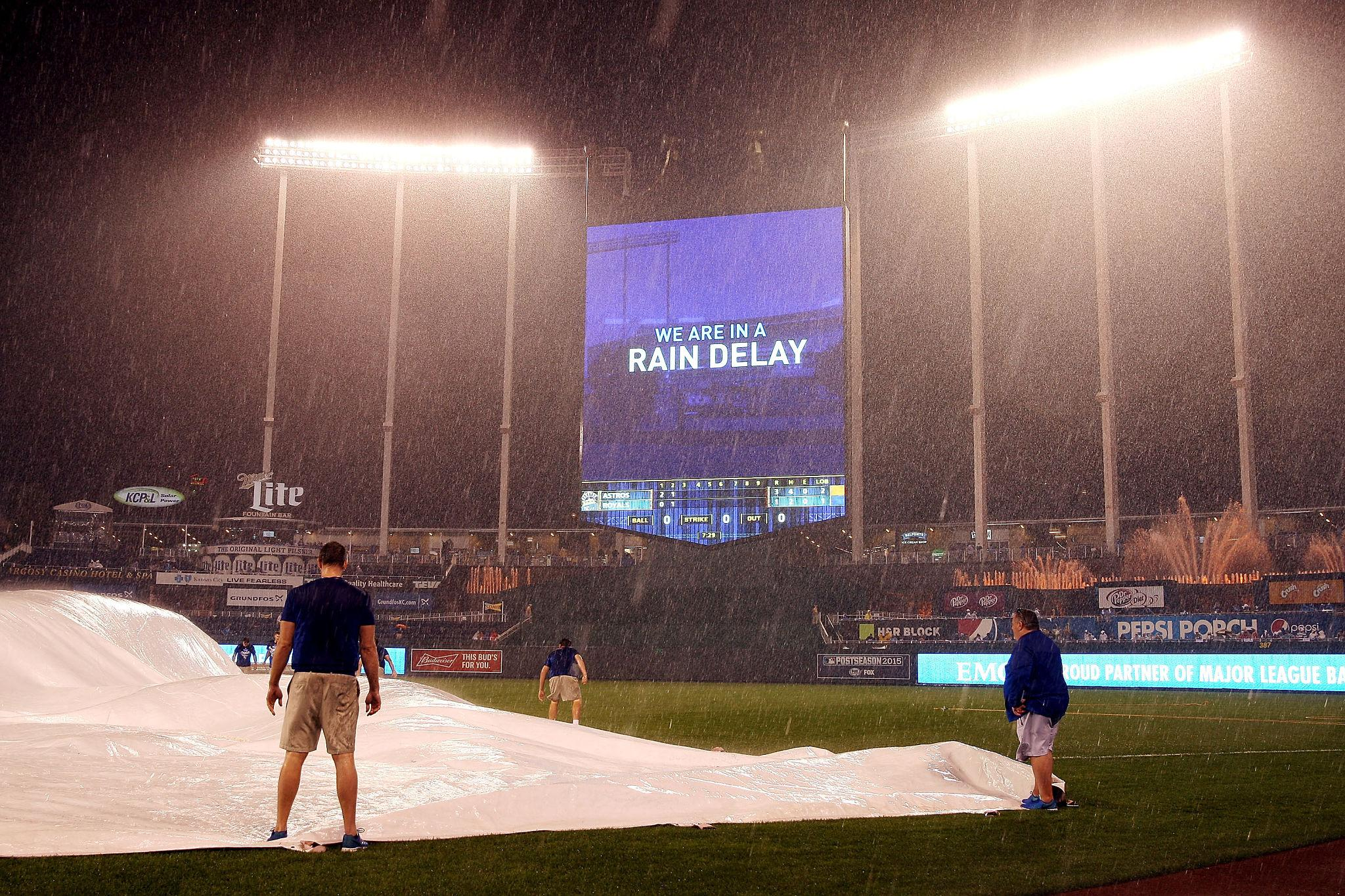
Suppose heavy rain falls before a baseball game. The field is wet, but the organizing body believes it can be prepared in time. The contract resolves No.
Suppose the game starts late because rain affected transport, staffing and stadium entry. The announcement describes the cause as an operational problem. The contract may still resolve No.
The price is therefore not a clean forecast of atmospheric conditions, but partly a forecast of institutional behaviour and official language.
Some weather decisions are close to automatic (e.g., a lightning strike occurs within a defined distance). Other decisions require more (subjective) judgment (e.g., whether a wet field remains playable when the rain has stopped).
League rules illustrate this mixture of protocol and discretion. Under the NFL rulebook, severe weather, lightning and flooding are treated as emergencies. Authority to determine whether an emergency exists is vested in the Commissioner, designated League-office representatives and the game referee. If neither the Commissioner nor a designated representative is present, the referee has sole authority, although the referee must try to consult the league and may seek information from the weather bureau and police.
This is not identical to a referee deciding whether a pass interference penalty occurred. Weather is an external event, and safety procedures constrain the decision. But the settlement still depends on identifiable people exercising authority and discretion.
Should a weather-delay contract be treated as a weather product or a sports betting product?
A weather product, because weather is the underlying causeResult
0.00%
A sports betting product, because the result depends on a sporting eventResult
0.00%
A hybrid product that needs its own regulatory categoryResult
0.00%
It depends on the specific settlement rulesResult
0.00%
0 Polls
EndedTBD
The CFTC's emerging dividing line
In June 2026, the CFTC proposed a new framework for determining when specific contracts involving "gaming" or other listed activities are contrary to the public interest. The proposal is not yet a final rule and is seeking public comment.
The CFTC takes a relatively favourable view of markets based on broad sporting outcomes, such as final scores, winners, point differences and statistics produced over a meaningful period of play. These results reflect the combined actions of many participants. No single person normally controls the entire settlement result, and suspicious attempts to influence it may create patterns that surveillance systems can detect.
The Commission is much more sceptical of contracts that settle solely on a referee's judgment, a disciplinary ruling or another discrete action controlled by a small number of identifiable people. Its proposal points to several concerns including:
inappropriate contact between traders and officials
selective or manipulated decision-making
limited accountability under time pressure
weak informational value
damage to confidence in the integrity of the game
The CFTC preliminarily concluded that contracts settled solely by such officiating outcomes would likely be contrary to the public interest.
However, a weather-delay market sits between the two categories. It does not settle on the final outcome of a long contest. But it also does not settle solely on an arbitrary whistle or penalty. The weather is external, while the official response is internal.
The CFTC has not expressly classified weather-delay contracts as prohibited officiating markets. It would therefore be inaccurate to claim that the agency has already ruled them unlawful. Still, the final payout may depend on a limited number of people who know about the decision before the public does and may influence the decision-making process, its timing, and how it is communicated.
Michael Selig, Chairman of the Commodity Futures Trading Commission (CFTC), testifies before Congress as the agency considers how prediction markets, including sports event contracts, should be regulated under federal derivatives law. (Eric Lee|Bloomberg)
Markets create valuable information, and incentives to obtain it
The usual defence of prediction markets is that they reward people for finding and contributing useful information. But that is also their risk. Once an outcome can be traded, information that previously had little private monetary value can become valuable. And traders may begin searching for people close to the decision.
Sportico reported that gamblers contacted a doctor who had previously treated NFL quarterback Joe Burrow, seeking information after Burrow suffered a wrist injury. The pressure was not limited to physicians. Nurses, assistants and office workers could also become targets because they might have access to non-public medical information.
A 2026 Reuters legal analysis similarly described injury reports and lineup decisions as financially valuable information that can create integrity and employment-law risks when it circulates internally before public release.
Weather delays do not involve the same medical privacy concerns. But the information structure is similar. Potential sources from whom traders can get non-public information include:
referees and league personnel
venue managers, security and operations staff
people preparing official announcements
Some of these individuals have some influence over how and when the event delay decision is communicated.
However, to the best of my knowledge, there is no public evidence that Kalshi's weather-delay contracts have already caused bribery, harassment or altered safety decisions. The comparison with injury information is just evidence of a possible mechanism. But regulators normally do not (and should not) wait for the first successful manipulation before considering whether a market creates the wrong incentives.
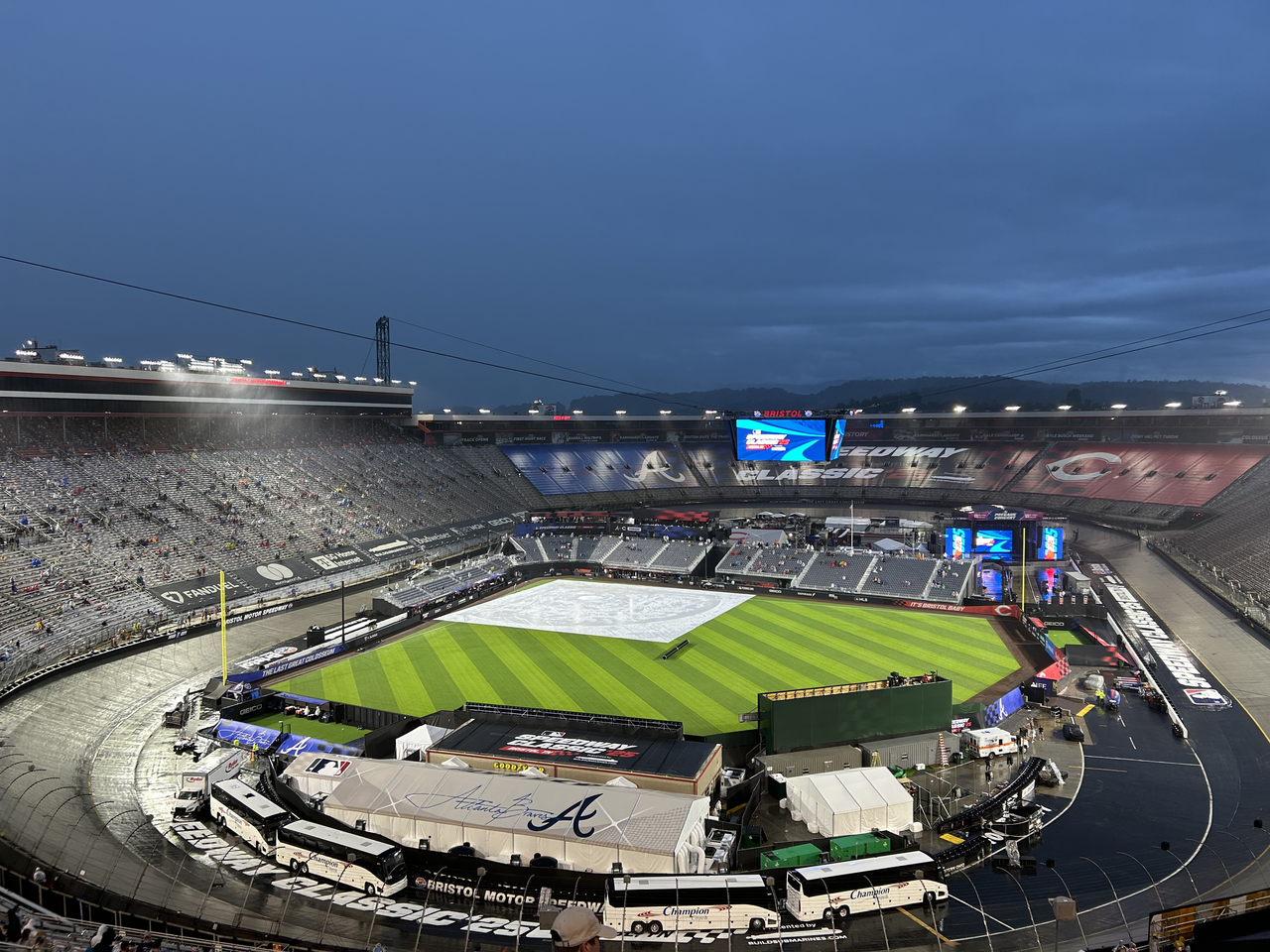
A tarp covers the field during a rain delay at the 2025 MLB Speedway Classic at Bristol Motor Speedway. (Brycenrichter|Wikimedia Commons)
The costs can fall on people who never trade
A trader who loses money may blame the referee who stopped the game, the venue official who delayed entry, the grounds crew that declared the field unsafe or the league employee who wrote the announcement, when a delay is not that necessary from their perspective.
The larger issue is the distribution of benefits and costs. The exchange earns fees. Traders gain a new product. Some businesses may receive a useful probability signal. But venue workers, officials and contractors may bear the additional cost of suspicious approaches, investigations, and public accusations. These external costs are relevant even when nobody successfully manipulates the result.
An NCAA study published in November 2025 found that more than one-third of surveyed Division I men's basketball players had experienced harassment from bettors. Earlier NCAA research also found betting-related harassment across several college sports.
The strongest case for allowing the markets
Weather delays are economically meaningful. They affect ticket holders, television schedules, staffing, transport, and nearby businesses. A market could help stakeholders hedge.
It may also answer a more useful question than a standard weather forecast. A forecast tells a restaurant owner that rain is likely. A delay market estimates whether the rain will be serious enough, under the relevant sporting rules and local conditions, to disrupt the event.
These are real benefits. Calling the product meaningless gambling would ignore the economic consequences of event disruption and the potential value of aggregated forecasts.
Football spectators wait in wet conditions in California. Weather disruptions can affect ticket holders’ travel, schedules and overall event experience, as well as the businesses serving them. (John Martinez Pavliga|Wikimedia Commons)
So, should these markets exist?
Sports weather markets should not be rejected simply because they are connected to betting. Weather disruption is real, costly and forecastable.
The harder question is whether a contract that, in some cases, depends partly on the discretionary decisions of a small group creates public-interest concerns.
While the CFTC has not pushed back and its 2026 proposal remains unfinished, these markets are testing how far the CFTC is willing to tolerate such markets.
The NFL would not be comfortable with Kalshi allowing weather delay wagers on its games, according to Sportico.
Overall, the current design raises more public-interest concerns than its "Weather/Climate" label might initially suggest. Its settlement can depend on judgment, timing and official wording, which deserve much greater scepticism. It creates incentives to seek non-public information or manipulate the market itself. Its social costs may fall on officials and workers who did not choose to participate in the market.
Disclaimer: The content is for informational purposes only. You should not construe any such information or other material as legal, tax, investment, financial, or other advice. Nothing contained in this article constitutes a solicitation, recommendation, endorsement, or offer by the author(s) or any third party service provider to buy or sell any securities or other financial instruments in your or in any other jurisdiction in which such solicitation or offer would be unlawful under the securities laws of such jurisdiction. The author(s) report(s) no conflict of interest.
China’s trade growth accelerated far more than expected in June, as booming global demand for AI hardware and a rush by U.S. retailers to beat anticipated tariff hikes turbocharged shipments.
Will China's exports rise over 20%Y/Y or not in July 2026?
YesResult
100.00%
NoResult
0.00%
2 Polls
EndedTBD
Overall exports rose 27% from a year earlier in U.S. dollar value terms, the strongest since October 2021, customs data showed Tuesday, quickening from the 19.4% gain in May and sharply beat economists’ estimates for a 18.2% growth.
Imports grew 36% in June, the largest jump since June 2021, gaining pace from the 27.4% growth in May and beating economists’ forecast for a 24% growth. The trade surplus stood at $125.6 billion in June.
Factory activity accelerated in June as U.S.-bound orders recorded sharp year-on-year gains, a survey by China Beige Book showed last month, pushing up freight rates. Manufacturers are bracing for additional tariffs from U.S. President Donald Trump’s Section 301 probes as the 10% broad-based duty is set to expire on July 24.
Beijing has grappled with a deepening supply-demand imbalance, as strong industrial output and exports tied to the global AI investment boom continue to power headline growth, even as consumption and private investment weakens amid a prolonged property downturn and volatile global oil prices.
The global AI investment boom has also helped to cushion the fallout from the Middle East conflict and a global oil shock.
China is expected to release its gross domestic product growth for the second quarter on Wednesday. Economists polled by Reuters expect growth to have slowed to 4.5% in the second quarter, after a solid 5% in the first quarter.
Industrial output and retail sales for June, also due Wednesday, are projected to expand 4.7% and shrink 0.1%, respectively. Urban investment is estimated to decline 4.9% in the first half-year, deepening from 4.1% in the first five months, according to a Reuters poll.
Investors are now looking to an expected Politburo meeting in late July for clues on stimulus that could shape policy for the rest of the year, although analysts expect no meaningful stimulus unless growth slows more sharply, given resilient exports and Beijing’s focus on curbing excess factory capacity to fight deflation.
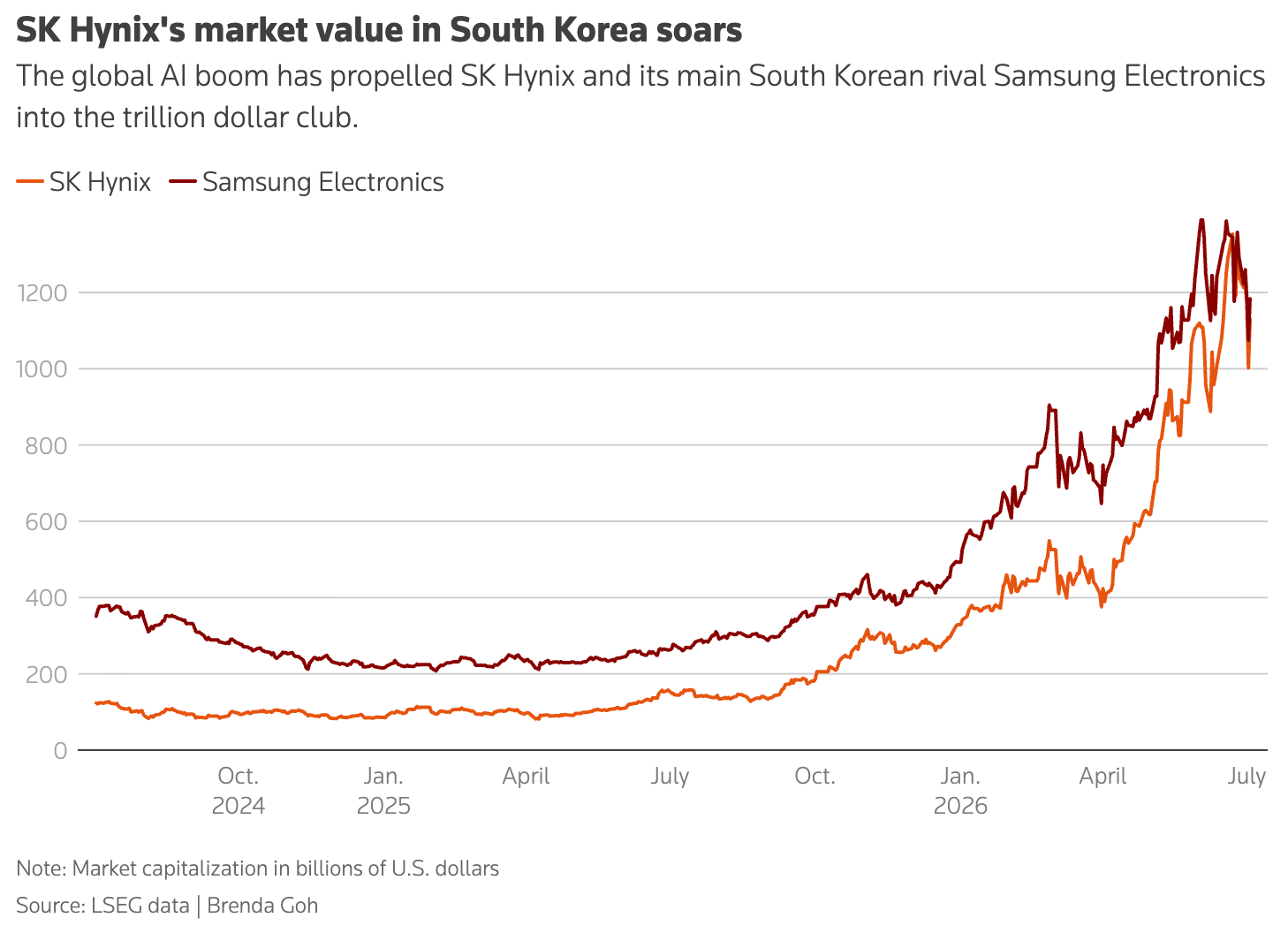
The Korean memory chip-maker's stock price tumbled more than 10% (as of morning July 13, 2026) after its stunning Nasdaq debut last Friday (up 12.8%). Is the rally over, or is this a buying oppotuntiy?
SK Hynix: A record-making Nasdaq debut
Priced at $149 per share, the chipmaker's American Depository Receipts (ADR) raised about $26.5 billion upon the opening bell ringed on July 10, 2026. The stock price closed slight above $168 (+12.8%). The $26.5 billion US listing ranks as the largest ever by a foreign company.
The share sale comes as the company leverages its position as the leading supplier of high-bandwidth memory chips, a critical component for the advanced processors powering global artificial intelligence systems.
Will SK Hynix ADRs drop below $170 or be above $170 by the end of July 2026?
UpResult
100.00%
BelowResult
0.00%
1 Polls
Ended
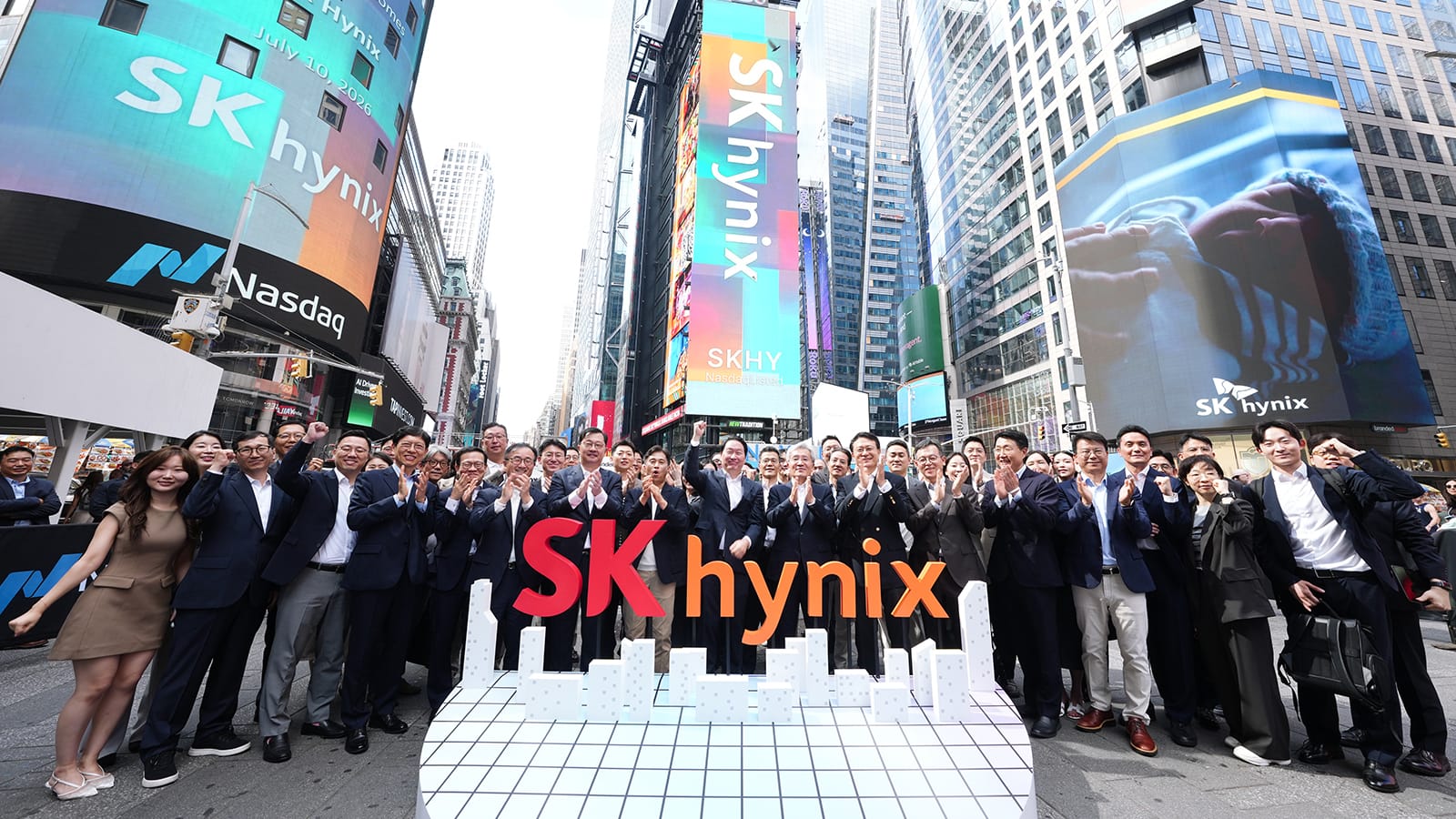
Source: SK’s key executives and employees, including SK Group Chairman Chey Tae-won and SK hynix CEO Kwak Noh-Jung, taking a photo in front of the Nasdaq MarketSite. (Seventh from the left SK Square Executive Vice Chairman Chey Jae-won, SK hynix CEO Kwak Noh-Jung , SK Group Chairman Chey Tae-won, SK hynix Chair of the Board and Independent Director Ko Seung-beom and SK Inc Vice Chairman & SK Americas CEO Yu Jeong-Joon)
Korean stock price plunge - could it be driven by technicality?
On Monday (July 13, 2026), however, the stock has slided more than 10% in Korean market. Some analysts indicate this could be driven by a mix of profit-taking and uncertainty over how the Korean stock shall be valued against its ADR.
As a recap, the stock price has more than tripped year-to-date, despite recent sell-off since June 2026.
Regarding pricing discount/premium, as a benchmark, the ADRs of Taiwan Semiconductor Manufacturing ("TSMC", ADR ticker: TSM) trade at a roughly 13-14% premium to its domestic share.
What will be the premium/discount range of SK Hynix ADRs vs domestic shares (on average, in 2026)?
<10%Result
0.00%
10% to 20%Result
100.00%
>20%Result
0.00%
1 Polls
Ended
Or, is there any fundamental hiccups in the flawless AI boom story?
According to sources that trace to the research of Korea Investment & Securities (July 13, 2026): SK hynix(000660)'s estimates for operating profit for this year and 2027 will be revised down, and 2Q2026 operating profits will fall short of current consensus (the market's average forecast).
The rationales are , according to the analysts: "Because the share of high bandwidth memory (HBM) in sales is higher than competitors, the average selling price (ASP) increase is lower than the market average," and added, "From the third quarter, when HBM4 begins full-scale mass production and sales, the ASP increase will be in line with the market average."
Will SK Hynix 2Q2026 operating profits fall short of concensus?
YesResult
0.00%
NoResult
100.00%
1 Polls
Ended
Could macro events have contributed? (e.g. BOK's policy rates & Middle East conflicts)
According to Korea Economic Daily (July 13, 2026), Bank of Korea seen raising rates in July, with another move in October – A survey of 20 economists shows most expect the policy rate to reach 3% by year-end, with the won gradually strengthening in the second half. To put in context: The Bank of Korea (BOK) is widely expected to raise its policy rate by 0.25 percentage point to 2.75% on Thursday (July 16, 2026).
Meanwhile, oil prices jump as US and Iran trade attacks over Strait of Hormuz. US Central Command (CENTCOM) said on Sunday that it had carried out dozens of strikes on Iran to degrade its ability to attack vessels in the strait, hours after striking hundreds of targets in the country. Iran’s Persian Gulf Strait Authority, which claims the right to control traffic through the Strait of Hormuz, earlier reiterated that vessels attempting to cross the waterway without using its preferred route would “not be covered by safe passage guarantees”.
Will Bank of Korea raise its policy rate to 2.75% in July 2026?
YesResult
0.00%
NoResult
100.00%
1 Polls
Ended
Will Bank of Korea raise its policy rate to 3% by the end of 2026?
YesResult
0.00%
NoResult
100.00%
1 Polls
Ended
The overall AI boom seems intact?
Nvidia CEO Jensen Huang said last month SK Hynix would continue to be the U.S. AI chipmaker's largest partner, adding that the current memory chip shortage would persist for a few years due to strong demand.
"AI demand keeps inflecting, currently driven mostly by strong datacenter CPU demand. HBM demand also remains strong: we expect the market to grow from about $65 billion this year to $120 billion next year and about $290 billion by 2030," said Rolf Bulk, Head of Semiconductors and Infrastructure, Futurum Equities.
The US military launched strikes on Iran Sunday aimed at further weakening the country’s ability to attack civilian vessels transiting the Strait of Hormuz, the US Central Command said. The latest action followed Iranian drone and missile attacks on US allies including Kuwait, Jordan and Qatar.
Iran’s Islamic Revolutionary Guard Corps set fire to several large missile depots and fuel storage tanks at Prince Hassan Air Base in Jordan, using missiles and drones, Iran’s state-run Islamic Republic News Agency reports in X post.
Oil rose and Treasuries fell after this round of strikes against Iran, aggravate uncertainty that higher energy prices will keep inflation elevated and interest rates higher for longer.
Brent crude climbed to $79 a barrel as conflicting claims over the status of the Strait of Hormuz fueled speculation about potential supply disruptions. Treasuries dropped across the curve with the yield on the rate-sensitive two-year note climbing three basis points to 4.24%, the highest since February 2025. Australian and Japanese sovereign bonds also fell, while the dollar strengthened against most of its Group-of-10 peers.
Source: Bloomberg
In other corners of the market, precious metals declined, with gold losing 1.2% to about $4,070 an ounce, while silver dropped 2.5%, as higher oil prices and inflation concerns boost the prospect for higher interest rates.
Meanwhile, traders have ramped up bets on further tightening, with swaps pricing almost 40 basis points of Federal Reserve rate hikes by December, up from about 15 basis points in early June.
Fed Chair Kevin Warsh will also make his first congressional appearance since taking the helm after pledging to scale back forward guidance on the rate outlook. Earlier this month in Sintra, Portugal, Warsh said price risks have come down in recent weeks and repeated his determination to bring inflation back to the US central bank’s 2% target.
Three prominent artificial intelligence developers released new models over the past week. They all promise to be more advanced, but their biggest immediate selling point may not be what they can do but how little they charge to do it.
OpenAI said its most advanced offering, GPT-5.6, is designed to complete more work while using significantly fewer tokens. This will make the software far more cost efficient for customers.
Grok 4.5, from Elon Musk’s SpaceXAI, is claimed as having twice the token efficiency as the latest leading models at the same tasks.
Meta Platforms Inc. is positioning Muse Spark 1.1 as one of the most competitively priced AI models on the market, according to Chief Executive Officer Mark Zuckerberg.
The renewed emphasis on cost coincides with business customers scrutinizing AI spending. Earlier this year, firms encouraged employees to outdo one another by using AI as much as possible, a practice known as tokenmaxxing. But in recent months, some companies have imposed tighter limits after being hit by sticker shock, in part due to developers like Anthropic PBC switching to usage-based pricing rather than simply charging a flat subscription fee.
Gautier Cloix, CEO of Paris-based AI startup H Company, said he’s spoken with a number of executives whose businesses have racked up significant bills after using models from OpenAI and Anthropic. One CEO showed him an invoice indicating a month of AI model usage cost millions of dollars, Cloix said.
“Companies are spending a lot more than they used to,” said Gil Luria, head of technology research at DA Davidson & Co. “As they see these costs get out of control, they’re starting to ask questions about efficiency.”
As a result, some users are also turning to model routing services, which allow them to seamlessly select from hundreds of AI models for various tasks to ensure better prices. One such service, OpenRouter, raised more than $100 million in funding in May to meet demand.
Meanwhile, AI developers may also be able to put more pressure on Anthropic, whose Opus and Fable models rank among the most expensive on a cost-per-task basis, according to Artificial Analysis.
Will frontier AI model API prices keep declining before the end of 2027?
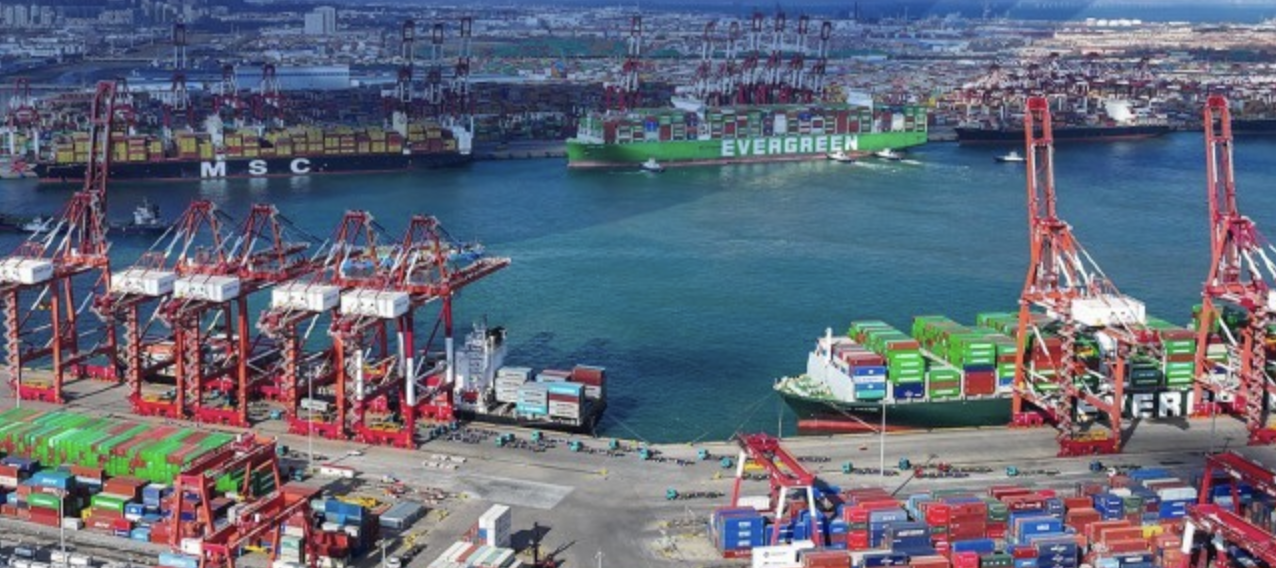
A.P. Moller-Maersk A/S and Hapag-Lloyd AG signaled confidence about resuming passage through the Red Sea, sending the container carriers’ shares down on expectation a return to the shorter route will ease capacity constraints and temper a surge in shipping rates.
Will the 3 major container shipping alliances announce Red Sea full service resumption in 2026?
YesResult
50.00%
NoResult
50.00%
2 Polls
EndedTBD
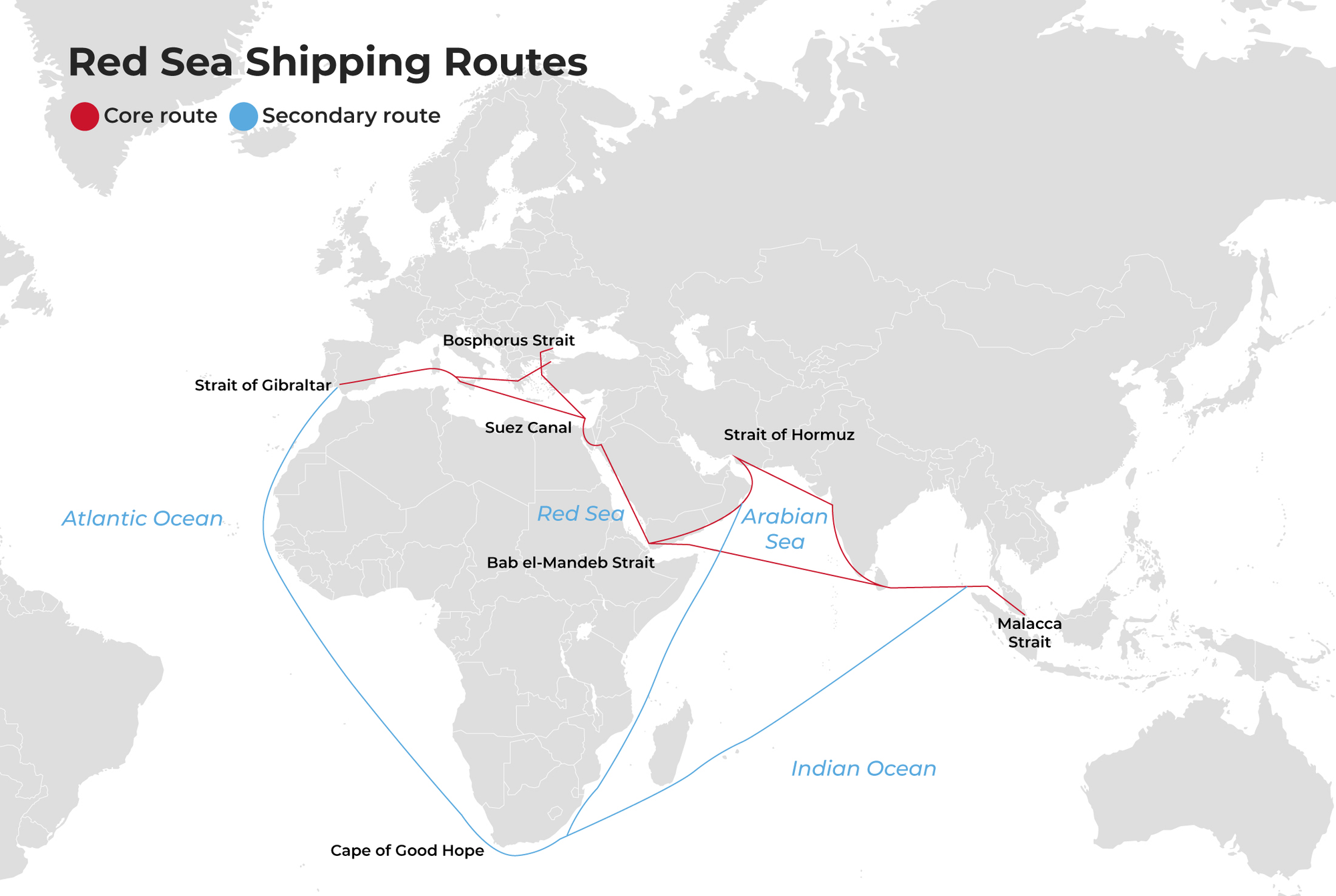
In statements on Monday, the two said they’re redirecting a service that links the southern Mediterranean with China through the Red Sea and Suez Canal — rather make the longer journey around Africa’s Cape of Good Hope. Maersk, the world’s second-biggest container line, and No. 5 Hapag-Lloyd operate a capacity-sharing alliance known as Gemini.
The joint decision “comes following thorough assessments of the security situation in the Red Sea area,” according to the Maersk statement. “With this decision, the Gemini Cooperation takes a step towards a gradual return to a trans-Suez network.”
Under the plans, the first vessels to alter course on the Asia-Europe service will be the Majestic Maersk, which ship-tracking data compiled by Bloomberg shows is currently near Oman.
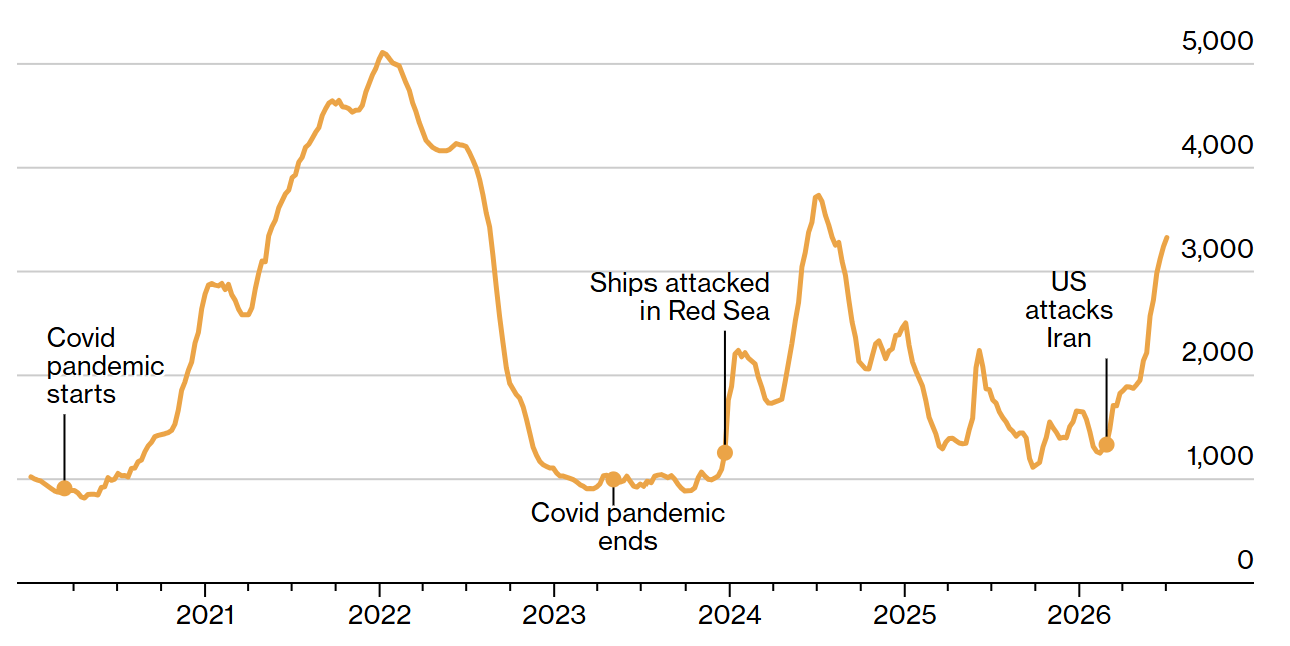
Container vessels and other cargo ships have largely avoided the Red Sea since late 2023, when Yemen-based Houthis started attacking ships in solidarity with Palestinians during a conflict with Israel.
Some carriers were planning to return to the normal route earlier this year, but the Iran war sparked in late February revived threats to the maritime industry.
Taking a longer route around southern Africa to avoid conflict in the Mideast adds time and fuel costs, and stretches capacity. That, plus robust demand heading into peak season for ocean freight, combined to send spot container rates surging in recent weeks.
S&P Global downgraded Oracle's long-term credit rating from BBB (Negative) to BBB- (Stable), citing elevated business risk and weaker near-term cash flows.
While the downgrade came as a surprise given Oracle's positive credit factors such as customer prepayments and the expansion of its Bring Your Own Cloud (BYOC) model, analysts believe the decision primarily reflects S&P's increasingly cautious view of the AI infrastructure sector rather than a sharp deterioration in Oracle's standalone fundamentals.
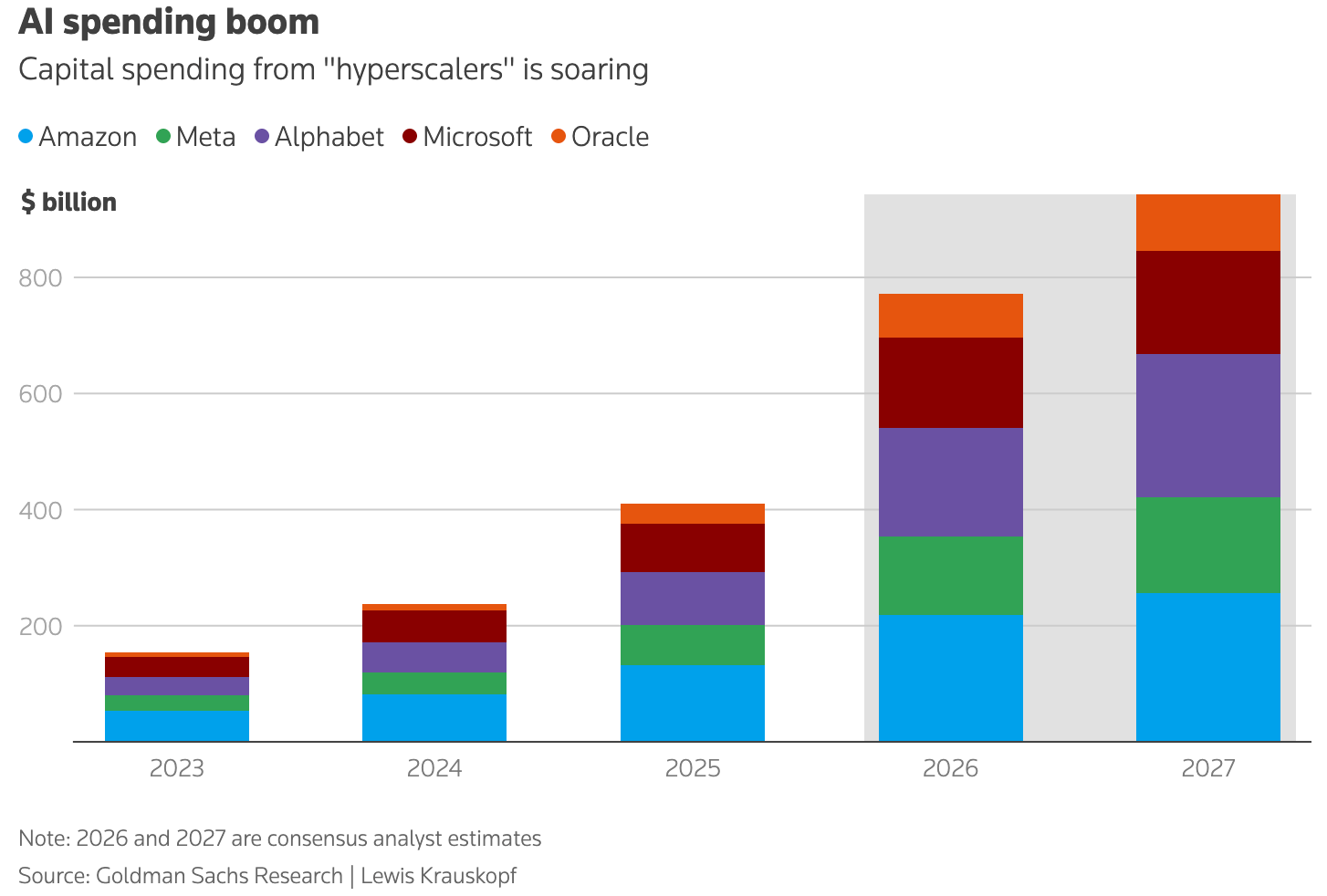
According to Barclays, the downgrade is driven by concerns over the industry's high capital expenditure requirements, intensifying competition, and rising component costs as AI infrastructure investment accelerates.
Will AI infrastructure capital expenditure growth decelerate in 2H2027?
YesResult
27.27%
NoResult
72.73%
11 Polls
EndedTBD
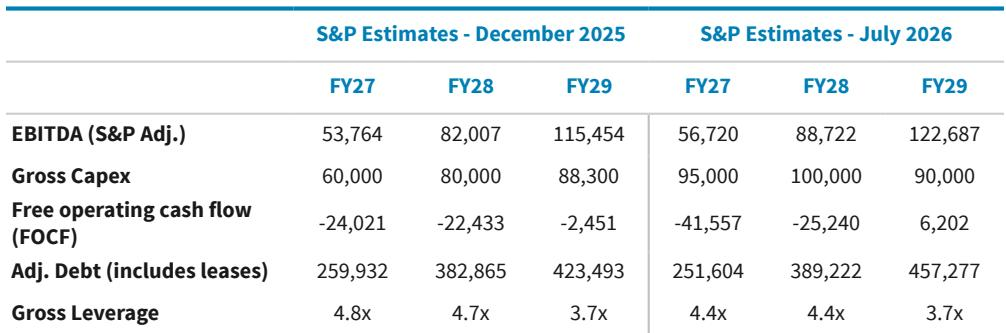
At the same time, S&P actually raised several of its long-term financial forecasts for Oracle, signaling continued confidence in the company's earnings potential. The agency increased its 2027 adjusted EBITDA forecast to $56.72 billion (from $53.76 billion) and lowered its projected peak leverage to 4.4x (from 4.8x), despite raising expected capital expenditures to $95 billion (from $60 billion) and forecasting free operating cash flow (FOCF) of -$41.56 billion (versus -$24.02 billion previously).
Source: S&P
Will Oracle's gross leverage exceed 4.4x at the end of FY2027?
YesResult
0.00%
NoResult
100.00%
2 Polls
EndedTBD
Although Oracle now sits at BBB-, the lowest investment-grade rating before high yield, the accompanying Stable outlook was more constructive than many investors had expected. The rating also leaves Oracle with limited room for further leverage-driven deterioration, which may increase management’s incentive to rely more on equity financing or other non-debt funding sources after 2026.
Market pricing suggests that a meaningful amount of credit concern has already been reflected in Oracle’s spreads. The company’s credit spreads trade wider than those of Charter Communications, despite both issuers sitting near the investment-grade boundary. This indicates that Oracle is already being valued with a significant risk premium. For investors who believe Oracle can eventually convert its AI-related capital spending into stronger earnings and cash flow, current spread levels may offer a more attractive risk-reward profile, even as the company navigates an unusually capital-intensive investment cycle.
Meta Platforms Inc. will invest around $10 billion to build its first data center in Canada as the company expands its infrastructure to support its artificial intelligence ambitions.
The Sturgeon County, Alberta-based data center will have one gigawatt of power capacity — the equivalent of the power used by around 750,000 homes — and will be largely run on natural gas-fired power. Meta said it’s funding the new electrical generation, which will be connected to Alberta’s grid.
The data center will be Meta’s largest outside the US, according to Gary Demasi, Meta’s vice president of data center development and strategy.
The company is expanding its global data center footprint to secure more computing capacity. The Alberta project marks the 33rd data center in its fleet. Meta plans to use the computing power for its own AI models and social media apps, including Instagram and Facebook, but it’s also exploring setting up a cloud business that could sell some of that capacity to other companies.
While Chief Executive Officer Mark Zuckerberg has said the company plans to spend hundreds of billions of dollars to build out AI infrastructure in the US before the end of the decade, Canada has recently sought to lure investment north of the border.
Canadian Prime Minister Mark Carney was elected last year pledging to make the country “the best place in the world to build data centers.” The country has vast reserves of relatively cheap natural gas as well as hydropower.
The largest projects are concentrated in Alberta, the source of most of the country’s oil and gas production. Meta’s latest data center announcement comes after Canadian midstream company Pembina Pipeline Corp. Partners Morgan Stanley Infrastructure Partners and Kineticor Asset Management said they would move ahead with a $3.2 billion gas-fired electricity plant in Sturgeon County. Meta confirmed the plant will support its data center.
Apple announced it will expand its partnership with Broadcom through a more than US$30 billion commitment focused on strengthening its U.S. supply chain. As part of the initiative, Apple will also invest US$1.5 billion in Broadcom's manufacturing facility in Fort Collins, Colorado.
The investment forms part of Apple's previously announced US$600 billion U.S. investment plan, a commitment highlighted by CEO Tim Cook during a White House announcement. The move is expected to align with the Trump administration's push to expand domestic semiconductor manufacturing.
Source: Bloombergap
Broadcom will continue supplying Apple with key wireless technologies, including Bluetooth, Wi-Fi, and RF (radio frequency) filter components manufactured in the United States.
These components will support Apple's expanding lineup of products, including iPhone, iPad, Mac, HomePod mini, Apple TV, and future smart home devices. Broadcom's RF filters will also work alongside Apple's in-house C1, C2, and future C3 cellular modem chips, which Apple is gradually deploying across its product portfolio as it reduces reliance on third-party modem suppliers.
Will Apple expand its commercial partnership with Broadcom again before the end of 2026?
YesResult
50.00%
NoResult
50.00%
4 Polls
EndedTBD
Broadcom rose 4.8% to $388.69 in New York trading on Wednesday, notching the biggest single-day gain since May 14. Apple increased less than 1% to $313.39.
PwC's mid-year 2026 aerospace and defense outlook shows the five largest U.S. primes closing FY2025 with a combined $1.36 trillion backlog, up 23.7% year-over-year. Markets have priced this as record orders, rising budgets, primes trading at 20-25x forward earnings.
The Navy has been trying to deliver two Virginia-class submarines a year since 2011. It is currently delivering 1.3. The Congressional Budget Office puts the average delay at four years past the dates written into the original contracts, and this gap grew, not shrank, between 2025 and 2026, despite billions already spent trying to close it.
Current valuations appear to assume that most backlog converts with relatively limited execution risk. Delayed delivery doesn't shrink the backlog number itself, but it defers revenue recognition, pressures margins on fixed-price contracts, and slows cash generation. Basically, the things the multiple is actually being paid for. But step back and there's a simpler read hiding underneath all three: the market keeps treating a signed contract as a promise the industry can keep on schedule. Increasingly, it can't.
PwC's own report says as much: M&A is now being used as "a practical fix for capacity that organic investment cannot close quickly enough" across aircraft, engines, and shipbuilding.
Put simply, ships, engines, and munitions are stuck behind a wall of missing welders, pipefitters, and electricians.
So, can the industry staff the shop floor fast enough to fill them on schedule?
Where do you come down on defense backlog right now?
Backlog is real revenueResult
50.00%
Capacity gap is underpricedResult
25.00%
Depends on the name (some primes, not others)Result
0.00%
Waiting on Q2 earnings before decidingResult
25.00%
4 Polls
EndedTBD
Here’s what the market is actually betting on
Defense budgets are expanding on both sides of the Atlantic. NATO members are treating higher spending as a durable planning assumption rather than a crisis response, and PwC notes that European revenue has grown by double digits across major US contractors this year.
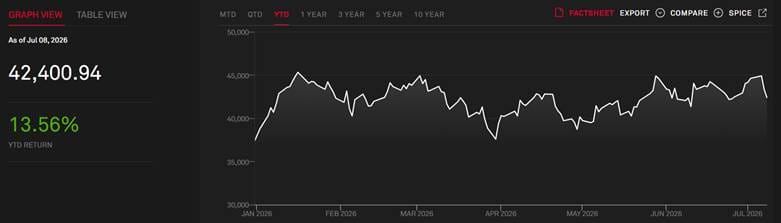
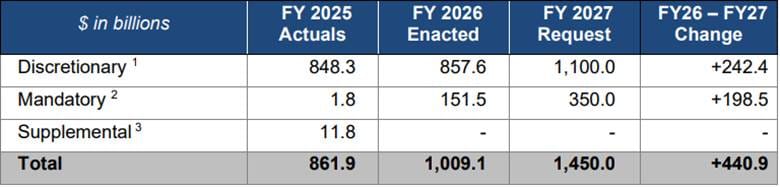
The sector itself has risen roughly 15% since early 2026, outpacing the broader market, and Wall Street's baseline demand assumptions keep getting revised up, not down, as the FY2027 NDAA authorizes $1.15 trillion in military spending, and President Trump has floated pushing the number to $1.5 trillion.
On paper, this is a sector with multi-year revenue visibility that few others in the market can match.
What's notable is what the skeptics are actually skeptical about. Wells Fargo's David Strauss cut his Lockheed target by 12% and his Northrop target by 23% this week, but his reasoning was multiple compression after a period of "meaningful underperformance" relative to the defense budget's growth, so a valuation call, not a delivery call.
Nobody on the sell side is downgrading these names because the Navy can't find welders. The debate happening in research notes is entirely about whether the stocks have gotten ahead of themselves on price.
The issue? The market is pricing contracts as if they were deliveries
Companies aren't buying market share. They're buying the physical and human capacity to build things they've already been paid to build. When M&A becomes a substitute for organic capacity expansion, that's a tell that internal capacity isn't growing fast enough on its own.
The clearest example of this problem, though not the only one, is in shipbuilding, where almost all US defense construction capacity sits. Navy Secretary John Phelan said this year that the maritime industrial base needs roughly 250,000 new shipbuilders over the next decade just to hit existing fleet plans.
McKinsey's read of Department of Labor data lands in the same range, estimating a shortfall of 200,000 to 250,000 workers. This isn't a hiring problem that money fixes quickly. According to the same source, about 27% of shipbuilders are already 55 or older, first-year attrition among new welders and electricians runs as high as 20-22%, and a welder qualified for nuclear submarine work takes years of certification, not weeks of training.
The Columbia-class submarine program, the Navy's top acquisition priority, was contracted for an 84-month build and is now tracking closer to 96 months, with delivery pushed toward 2028, according to Congress. The Navy has attributed part of this slip to late turbine generators and a delayed bow section, both manufacturing execution problems rather than funding or design issues.
The Constellation-class frigate program is the more dramatic case: the Navy cut the program from a planned 20 ships to 2 in November 2025, after delays of at least three years pushed the first delivery from 2026 to 2029, driven in large part by workforce shortfalls at the building yard in Wisconsin.
The Pentagon's own FY2027 budget request sets aside $3.1 billion specifically for "wage increases... to recruit and retain workers" at nuclear shipyards, and a separate workforce line for castings, forgings, and munitions plants. This is the government's own diagnosis of the bottleneck, not an outside critic's.
Sign up for Latest Financial Analysis
To be the premier information portal for in-deep news.
No spam. Unsubscribe anytime.
Four triggers to watch next
1. Q2 earnings, late July
Lockheed and Northrop report the same week, RTX close behind. Backlog may rise again, but that's not the number that matters. Watch book-to-bill against free cash flow, and whether more fixed-price charges show up on the same programs that are already behind.
2. Shipyard workforce data from the Department of Labor and Navy budget submissions
The Navy's Maritime Industrial Base program is now tracking hiring against its 250,000-worker target. If those numbers show meaningful progress by early 2027, some of this thesis weakens.
If attrition stays in the 20%-plus range and headcount growth stalls, expect more Columbia- and Constellation-style schedule resets across other programs, including Virginia-class submarines and the next tranche of destroyers.
These programs represent different segments of the industrial base (submarines, the surface combatants, and strategic deterrence), suggesting the issue is broader than a single contractor.
3. Further M&A aimed explicitly at capacity rather than capability
PwC flags distressed acquisitions of qualified facilities and roll-ups of Tier 2/3 suppliers as an active 2026 trend. T3 Defense Inc. (NASDAQ: DFNS) raised $20 million in February specifically to keep buying suppliers it describes in SEC filings as sitting at "critical bottlenecks at the sub-OEM level."
An acceleration of these deals, especially forced or distressed transactions rather than strategic ones, would confirm capacity scarcity is worsening, not stabilizing.
4. Munitions: Delivered units, not stated capacity
The Pentagon's targets call for PAC-3 MSE output rising from roughly 600 to 2,000 units a year by 2030 and PrSM output roughly quadrupling. Lockheed says its PAC-3 ramp is currently running ahead of commitments. If that holds across other programs, and if NATO's roughly sixfold increase in 155mm shell capacity since 2022 keeps translating into delivered rounds rather than just announced capacity, this is the strongest evidence the market has this right rather than wrong.
The gap between capacity announcements and delivered units program by program is the one number that settles this either way.
The bottom line
The market is paying a premium for hardware that doesn't exist yet, on a delivery timeline the industrial base keeps failing to hit, and nobody pricing these stocks is discounting for this gap.
Submarines are four years late.
Munitions ramps depend on workers who don't exist.
Fixed-price programs are bleeding cash on the exact contracts the backlog is supposed to convert.
Until delivery data starts closing the gap, this trade is a bet on an industrial base that hasn't earned the multiple yet.
Which trigger will you actually be watching?
Q2 earningsResult
0.00%
Shipyard workforce dataResult
0.00%
Capacity-driven M&A activityResult
0.00%
Delivered munitions units vs. stated capacityResult
0.00%
0 Polls
EndedTBD
Sources
Breaking Defense: What the Constellation-class frigate’s cancellation means for Navy, Fincantieri
CBO: Testimony on Challenges Facing the Navy’s and Coast Guard’s Shipbuilding Programs and the Shipbuilding Industrial Base
Congress.Gov: Navy Columbia (SSBN-826) Class Ballistic Missile Submarine Program: Background and Issues for Congress
CSIS: Is the Industrial Base on a Wartime Footing? A Progress Report