Premier info portal for prediction markets. The start point of information market.
2026 Midterms: Is Polymarket Underpricing a Democratic Sweep?
News
Midterm2026InsightElection

2026 Midterms: Is Polymarket Underpricing a Democratic Sweep?

A look at Polymarket’s 2026 midterm odds, the Democratic sweep market, and whether traders are underpricing Senate risk in a broader anti-GOP backlash.

Politics

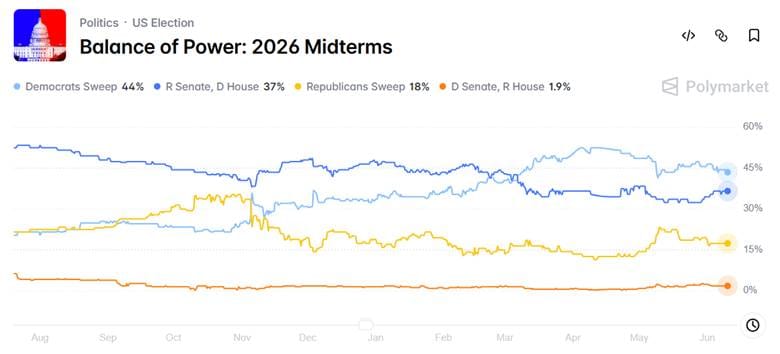
Polymarket is not sleeping on Republican midterm risk. That much is clear from the 2026 balance-of-power market.

The market is giving “Democrats Sweep” a slight edge at around 44%, but the supposed “safer” split-Congress outcome (Republican Senate, Democratic House) is still right behind it in the mid-30s.

It is a reasonable read. Maybe even the obvious one.

But now, the question is whether a 44% Democratic sweep price is still too cautious. A generic ballot around D+6, a still-competitive Maine race, a North Carolina pickup sliding from plausible to central, and a Georgia race that doesn't become a clear GOP gain would all point in this direction.

The issue is not whether Republicans face midterm risk, because this is already clear and priced in.

Are traders underestimating how correlated the House and Senate outcomes could become if the national environment keeps moving against Republicans?

Why the split-Congress price makes sense

The market’s base case is not hard to defend. The House is exposed, the Senate is better protected, and the usual midterm pattern points against the president’s party.

If the economy feels expensive, if Trump’s approval weakens, or if voters simply want a check on Republican control, the House is the easiest place for that frustration to show up.

The president’s party has lost House ground in 20 of the past 22 midterm elections since 1938, with 1998 and 2002 standing out as the rare exceptions. The generic ballot is pointing the same way, with Silver Bulletin recently showing Democrats around D+6.6, close to their position at this stage before the 2018 midterms.

The Senate does not bend as easily.

Democrats need a net gain of four seats, and the map does not give them many obvious places to find them, which is why the Senate is such a grind. They need strong candidates, messy Republican primaries, good turnout, and no surprise losses of their own.

Maybe even a national mood sour enough to drag Republican candidates down in states where the party would normally have room to breathe.

Here's where the Democratic sweep case gets stronger

The split-Congress price leans heavily on the Senate map. Fair enough; Republicans do have the better structure, and Democrats need several pieces to land at once. But structure only gets you so far if voters start treating Senate races as another way to cut into Republican control.

This is especially important because the likely pressure points in 2026 are not abstract policy debates. Cost of living, housing, healthcare, insurance, immigration, and trust in government are all issues that can cut through local campaign messaging.

If enough of those voters decide the country feels worse under Republican control, the backlash may not politely stop at the House.

The races that could make the Democratic sweep price look too low

The best way to test this is not to look at every competitive Senate race equally, but to watch the races that tell us whether the market’s split-Congress assumption is holding.

Maine is the obvious starting point. Susan Collins has spent her career running as a Republican who can stand slightly apart from the national party. This brand has been valuable for years, but with Graham Platner now the Democratic nominee after Janet Mills suspended her campaign, the race also tests whether a weak Republican national environment can overcome Democratic candidate risk. If Collins weakens anyway, the Senate is not as insulated as the market thinks. Will the race become more about Platner than Collins, with his controversies giving Republicans an opening?

Traders should not dismiss North Carolina too quickly, either, because it clearly deserves more weight. It is an open Republican-held Senate seat, with Michael Whatley projected as the GOP nominee, but Cook calls it the GOP seat Democrats are most likely to flip. In other words, it could be the link between a likely Democratic House win and a real Senate path.

Georgia is a defensive test for Democrats. Ossoff is the Democratic incumbent, and Republicans still need their runoff to settle who runs against him, so for Democrats, it's rather simple: do not let Georgia become the seat that cancels out gains elsewhere. If Ossoff holds up and Democrats are gaining in Maine and North Carolina, the Senate market has strong reason to move toward Democratic control.

None of these races has to become easy for Democrats. This is not the point. They need enough of them to confirm that House weakness is bleeding into the Senate. In this case, the 44% Democratic sweep price may start looking too low.

The better way to read the markets

At first glance, this looks like a market about who controls Congress. But that is only the surface-level read.

Beneath the balance-of-power label, this is a market on the severity of the Republican backlash.

The split-Congress price is basically a bet on a contained backlash. Enough voter anger to cost Republicans the House, not enough to break the Senate map.

Republicans can survive a normal midterm drag because the map gives them cover. They may not survive as easily if voters stop separating individual Senate races from the bigger question of Republican control. At this point, geography still matters, candidate quality still matters, but the party label starts doing more of the work.

This is the part that traders may be too relaxed about. They are clearly pricing Republican risk in the House. The mistake may be assuming that the same risk can be fenced off before it reaches the Senate.

From here, the sweep case should rise or fall on four signals:

  1. Do Democrats stay near D+6 or better on the generic ballot?
  2. Does Maine remain competitive despite Platner's baggage?
  3. Can North Carolina become a real pickup rather than just a theoretical one?
  4. Does Georgia stay stable enough for Democrats to protect Ossoff?

If the answer is yes, then the split-Congress price may be leaning too hard on Senate insulation. That's because a Democratic sweep does not require every Senate race to be easy; it only needs enough races to confirm that the backlash is no longer contained.

The split-Congress bet says 2026 is a warning shot.

The Democratic sweep bet says it becomes a verdict.
Sources:

1.  270towin.com: Cook Political Report 2026 Senate Ratings

2.  Brookings: What history tells us about the 2026 midterm elections

  1. CookPolitical.com: The Cook Political Report
  2. CNN: Elections 2026
  3. Silver Bulletin: Who's ahead on the generic congressional ballot?
Is Polymarket underpricing a Democratic sweep in the 2026 midterms?

Yes, the Senate risk is higher than the market thinks
33.30%
No, the Senate map still protects Republicans
33.30%
Too early to tell
33.30%
3 Polls

What would most likely push Democratic sweep odds higher?

Stronger Democratic generic ballot
33.30%
Collins falling behind in Maine
0.00%
North Carolina moving towards Democrats
33.30%
Ossoff looking safer in Georgia
0.00%
Cost-of-living issues worsening
33.30%
Others
0.00%
3 Polls
Macro & Micro Compass - Polymarket Leans Toward an Overheating US Economy, But the Stagflation Trade Is Not Dead Yet
Analysis
InflationCPIEconomicsMacro & Micro CompassAnecdote

Macro & Micro Compass - Polymarket Leans Toward an Overheating US Economy, But the Stagflation Trade Is Not Dead Yet

Polymarket traders are leaning toward an overheating US economy in 2026. But sticky inflation, oil risk, and a small rise in unemployment could point to a more uncomfortable outcome.

Economics & FinancePolitics

Economic forecasts tell us what analysts expect, but prediction markets show us where traders are willing to put capital behind a view.

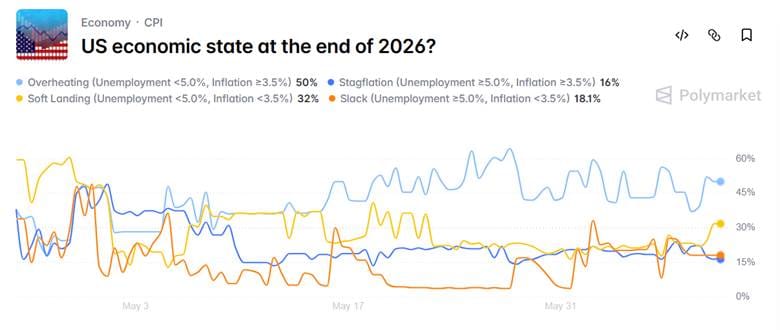
Right now, one of the more interesting macro markets on Polymarket is asking what kind of economy the US will have at the end of 2026. The market gives traders four choices: soft landing (32%), overheating (50%), stagflation (16%), or slack (18.1%). The contract resolves based on official BLS data for December 2026.

Strip away the labels and the trade comes down to two questions: does inflation stay sticky, and does unemployment cross 5%?

As of this writing, “overheating” at 50% looks like the obvious answer. Inflation is still high, unemployment is still below 5%, and the economy has not clearly cracked, so based on the latest data alone, the label fits almost too neatly.

But there may be a blind spot here.

Inflation is already close to the line

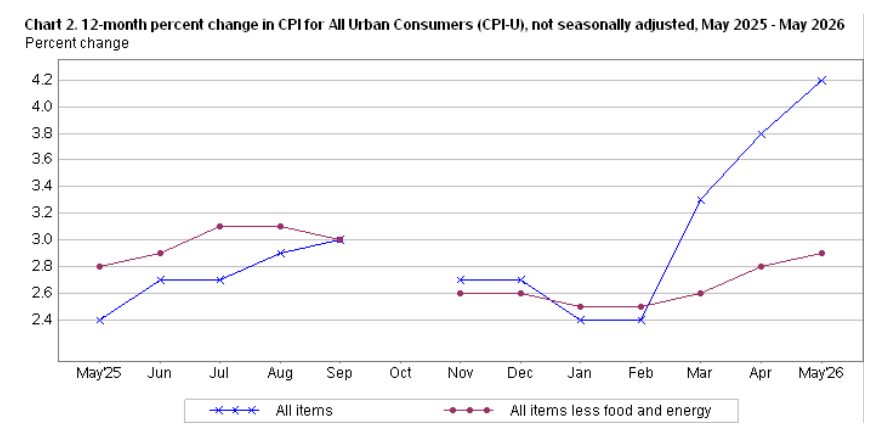
The inflation condition is currently satisfied, but the question is whether it stays satisfied through the market's December 2026 resolution data. May CPI was 4.2% year over year, while chained CPI was 4%. Both are above the market’s 3.5% cutoff.

So, for stagflation to resolve, December 2026 inflation needs to remain above the market's cutoff. And there are several reasons it could.

Source: BLS News Release

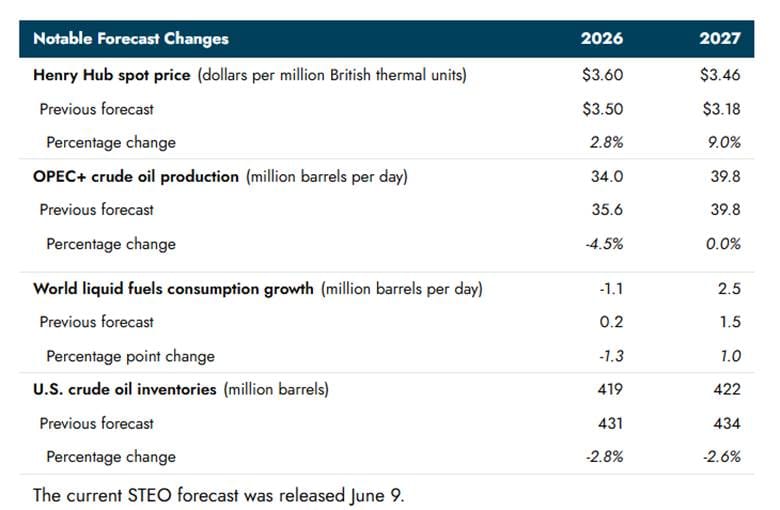
Energy prices are the obvious one. The EIA’s forecast points to a tight oil market through early summer.  Its latest outlook assumes the Strait of Hormuz remains effectively closed in the near term, with shipments only starting to resume in the third quarter.

Source: EIA

Oil touches transport, food distribution, airline costs, manufacturing, and consumer expectations. When energy prices rise, they can show up across the economy in ways that are hard for central banks to ignore.

This is especially awkward for the Fed. If inflation is being pushed up by energy, cutting rates does not produce more oil. But keeping rates high can still hurt jobs, housing, credit, and business investment.

The labor market does not need to collapse

Inflation is already in the right zone for both overheating and stagflation, so unemployment is the swing variable.

The Fed’s own language points to this tension. Its April statement described an economy still expanding at a solid pace, but with job gains remaining low on average, unemployment little changed, and inflation elevated partly because of global energy prices.

For this market to resolve as stagflation, the December 2026 unemployment rate needs to reach at least 5.0%. The latest unemployment rate was 4.3%, so the gap is only 0.7 percentage points.

Fiscal pressure adds another layer

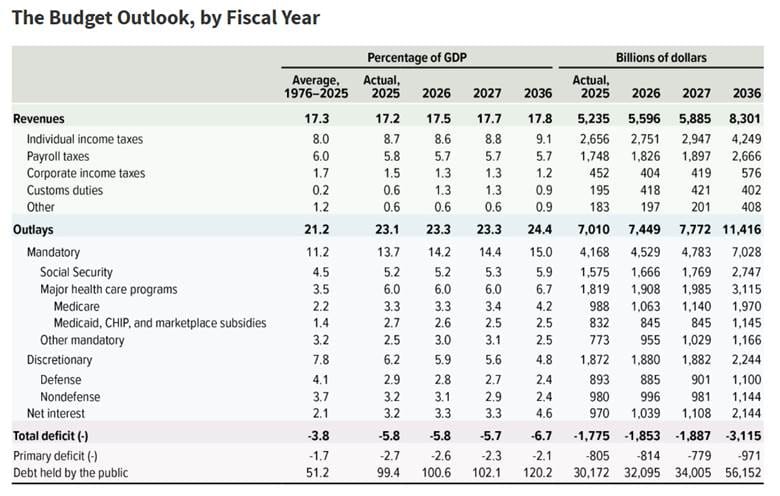
The US is running large deficits, and interest costs are a burden. If the government has to borrow more, investors may ask for a higher return before they agree to hold long-term debt. So yields can stay high even if the Fed is not the one pushing them up.

Source: CBO

Once yields move higher, the effects show up almost everywhere. Mortgages get priced off them. So do auto loans, corporate debt, and parts of the credit-card market. Stocks feel it too, because higher bond yields make future earnings look less valuable today.

The overheating outcome assumes the US can keep absorbing high inflation, high rates, high oil prices, and large deficits without the labor market crossing a fairly modest 5% unemployment line.

Maybe it can. But this is not a risk-free assumption.

Why stagflation may be the better mispricing

Overheating is basically the “everything keeps working, but inflation stays hot” outcome. Stagflation is the “inflation stays hot, but the labor market finally starts to feel the pressure” outcome.

The second path only requires a small rise in unemployment and inflation that refuses to cool below the market’s threshold.

This makes it a cleaner mispricing candidate than a basic recession market. A recession call needs broader economic damage. A stagflation call, at least in this Polymarket market, needs a milder shift: unemployment at 5.0% or above, inflation at 3.5% or above.

This is why this market is worth watching.

The crowd may be right that the US economy is too strong for a classic downturn. But it may still be wrong about the type of strength we are dealing with. An economy can look hot late in the cycle, then start to leak from the labor side while inflation remains sticky.

The bottom line

Prediction markets are good at showing what traders believe right now. For traders, the key question is not whether the economy is strong today, but whether today's strength can survive another several months of energy pressure, restrictive policy, and rising credit costs without the labor market crossing a relatively modest threshold.

Overheating is not a dumb market view; it is the current-data view. But stagflation is the convex risk if labor deteriorates while energy keeps CPI high. If unemployment moves only modestly higher while energy keeps CPI above 3.5%, this market could reprice faster than traders expect.

Data sources

  1. BLS: Consumer Price Index Summary    
  2. CBO: The Budget and Economic Outlook: 2026 to 2036
  3. EIA: Short-Term Energy Outlook
  4. Reuters: Yields mixed after jobs data lifts Fed hike odds
  5. U.S. Bureau of Labor Statistics: Consumer Price Index News Release

Where is Polymarket most likely mispricing the 2026 economy?

Overheating is priced too high
25.00%
Stagflation is priced too low
37.50%
Soft landing deserves better odds
25.00%
Slack is being overlooked
12.50%
The current odds look fair
0.00%
8 Polls

What would make you more likely to bet on stagflation?

Unemployment reaches 4.6% or higher
0.00%
CPI stays above 4%
0.00%
Oil prices remain elevated through Q3
100.00%
The Fed stays restrictive despite weaker jobs data
0.00%
Credit conditions tighten further
0.00%
2 Polls
CFTC Floats Prediction Market Rule to Crack Down on War Bets
News
RegulatoryPrediction Market

CFTC Floats Prediction Market Rule to Crack Down on War Bets

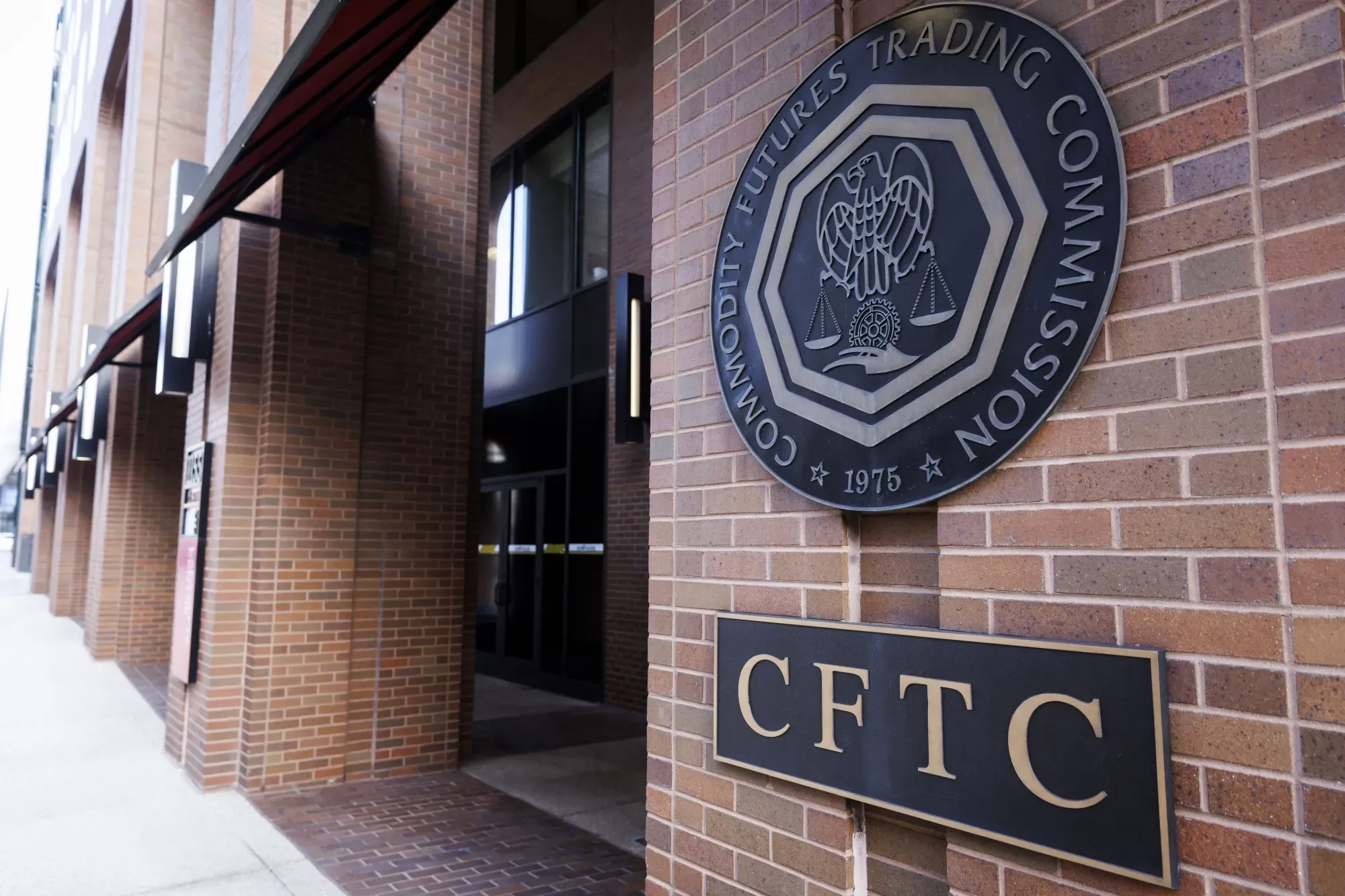
The CFTC moves to assert jurisdiction over surging prediction markets by proposing to ban bets on war and terrorism while permitting most sports contracts.

PoliticsEconomics & Finance

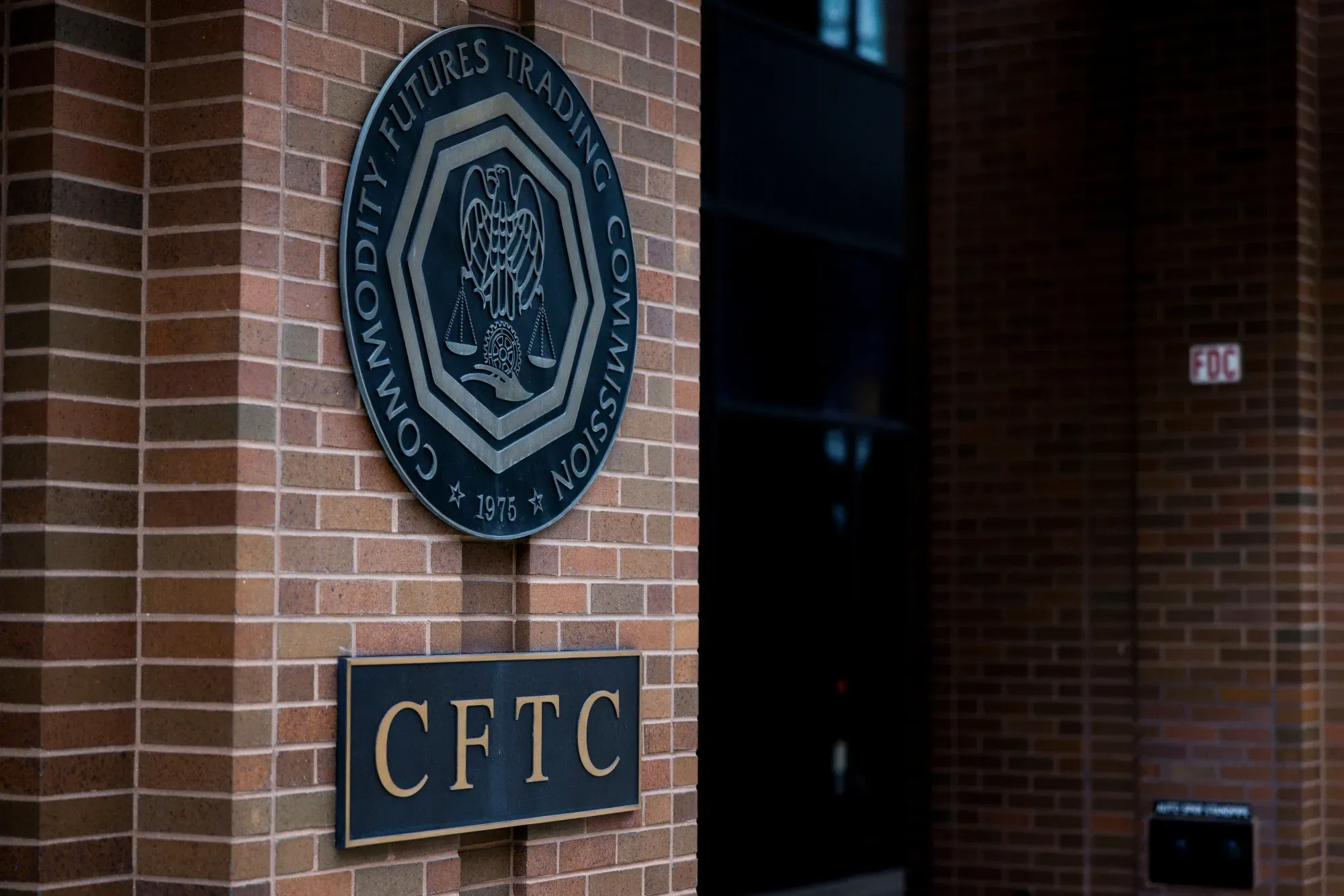
The Commodity Futures Trading Commission unveiled a proposal for prediction markets Wednesday that would crack down on bets related to war, terrorism and assassination.

The CFTC plan also proposed narrowly defining some “gaming” — the category that helped launch the surge of sports-related prediction markets 18 months ago - to be games of “pure luck.” That definition would allow the majority of sports contracts now trading to continue.

The move is the latest by the agency that has argued it has “exclusive jurisdiction” overseeing the surging industry. The contracts are treated as derivatives by the regulator and allow people to place a wager on just about anything, from the FIFA World Cup to the timing of a potential peace deal between the US and Iran.

“The CFTC will protect the integrity of our regulated markets without standing in the way of responsible innovation,” Chairman Michael Selig said in a news release.

The once-niche corner of finance exploded in popularity after a federal court approved Kalshi to trade election-related contracts just before the 2024 elections. The first sports contracts, previously viewed as prohibited by prior administrations, launched soon after. Prediction markets, including those not regulated by the CFTC, are now seeing billions of dollars of notional trading volume each month.

The industry is expected to only grow as more companies submit applications to act as brokers or exchanges for them. But that rapid expansion has left questions unanswered about what constitutes “gaming” and whether it includes activity many states and others view as sports gambling. And while the CFTC’s statute gives the agency discretion to subject certain issues — such as assassination and terrorism — to heightened scrutiny, there have been concerns about a moral gray area for some of the bets.

Since President Donald Trump returned to the White House, the CFTC has embraced prediction markets in sharp contrast to Biden-era regulators who sought to restrict the industry. Views on the platforms haven’t cut cleanly around party lines though.

Numerous Republican state attorneys general and former GOP lawmakers, including Trump’s previous White House chief of staff Mick Mulvaney, are pushing for states to regulate the industry. Democrats including Senator Richard Blumenthal have also raised concerns about prediction markets.

As the battle continues to play out in courts, the agency has backed the exchanges and sued regulators in Illinois, Connecticut and Arizona for trying to force companies to abide by their respective laws.

The agency said at the time that “this unprecedented measure by the CFTC is necessary” to protect its jurisdiction over prediction markets. It later sued New York, Minnesota and Rhode Island as well.

Trump’s family has also entered the prediction market space. His son, Donald Trump Jr., is an adviser to both Kalshi and Polymarket, and Trump Media & Technology Group Corp. has announced its own marketplace.

Source: https://www.bloomberg.com/news/articles/2026-06-10/cftc-floats-prediction-market-rule-to-crack-down-on-war-bets

China is helping to cushion global oil prices below $100 — but analysts warn it won’t last
News
InsightOil & Gas

China is helping to cushion global oil prices below $100 — but analysts warn it won’t last

China's crude import cuts have cushioned oil prices during the Iran war, yet analysts warn higher prices are needed to rebuild depleted inventories.

Economics & FinancePolitics

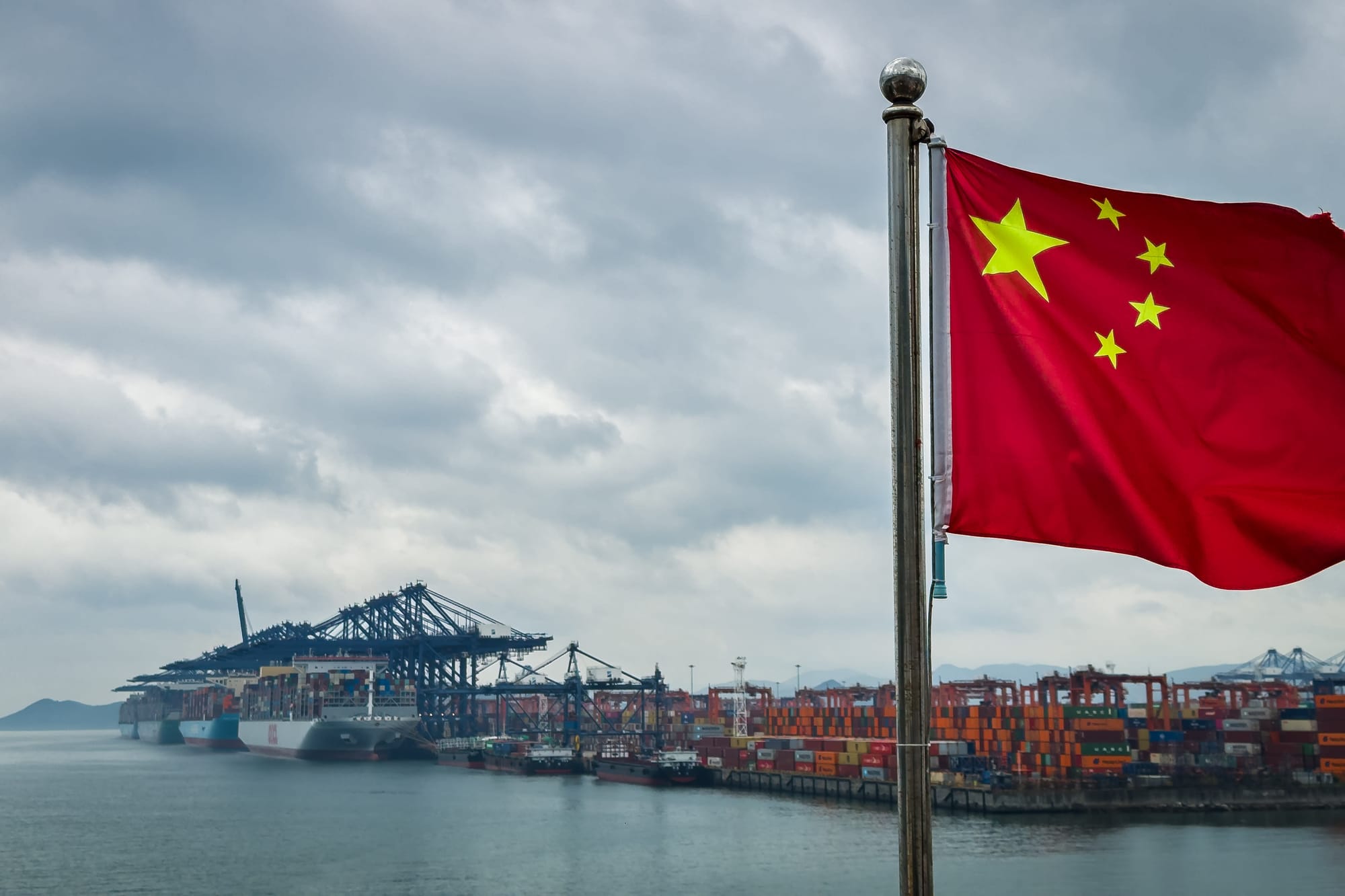
A rapid reduction in Chinese crude imports has helped stop oil from trading even higher since the outbreak of the U.S.-Iran war — but analysts warn that price rises will be needed as market balance is gradually restored.

The Middle East conflict has entered its 100th day — but fears of a $200-per-barrel spike have failed to materialize, despite global crude supplies tumbling 14% since hostilities began on Feb. 28.

Market strategists say China is acting as a key pressure valve on energy markets, with Beijing's move to cut crude imports from 11.7 million barrels a day in February to just under 9 million a day by late May helping to ease the Strait of Hormuz supply shock.

China's cut represents about 74% of the decline in global crude imports, a "disproportionate" share of the adjustment, according to J.P. Morgan analysts, who said this has helped prices remain "remarkably calm" four months into the conflict.

However, Societe Generale warns that the market will ultimately require higher oil prices moving forward as global inventories are depleted and strategic reserves require rebuilding.

In a note, SocGen commodity analysts said the 14% loss in global crude supply, largely driven by the closure of the Strait of Hormuz, has pushed prices about 30% higher. In contrast, the 1973 OPEC oil embargo cut off about 7% of supply — but sent prices soaring some 134%.

SocGen analysts said multiple factors — including strategic inventory releases, reassuring signals from Washington, and increased output from countries including Brazil and Venezuela — have offset the Hormuz supply squeeze and helped avoid a repeat of the 1973 crisis.

But they pinpointed China's "enormous" reduction of imports, at almost 3 million barrels a day, and lower refining activity, as a critical rebalancing force in markets.

"It represents one of the largest offsets to the shock, second only to Saudi rerouting flows and larger than coordinated SPR releases from the U.S., Europe, and Japan," SocGen analysts led by Mike Haigh, head of FIC and commodity research, noted.

Roughly one-fifth of the world's seaborne oil supply passes through the Strait, a narrow shipping lane between Iran and Oman.

Renewed tensions

Rory Green, head of emerging markets macro and strategy at GlobalData TS Lombard, said China's large-scale, rapid electrification of energy production and transportation since 2022 has helped shift China from an energy balance toward a "substantial surplus."

In a note published at the end of May, Green said crude oil prices have not exceeded $200 per barrel, "contrary to the predictions of many energy analysts at the outset of the Iran conflict", adding that China's "official and quasi-official" crude stockpiles have also played a role in cushioning prices.

Brent crude prices surged 4.9% on Monday to $97.67 per barrel after Israel and Iran exchanged missile strikes, the first time the two countries targeted each other directly since the April ceasefire. The re-escalation also sent U.S. West Texas Intermediate futures higher, up 4.9% to $94.93.

Analysts are now split on oil's price trajectory.

J.P. Morgan analysts said their base case scenario of a June reopening of the Strait would keep Brent crude at around $100 for the rest of 2026. They estimated that a longer-lasting closure would add about $5 in the third quarter and $15 in the fourth quarter as stocks deplete faster.

Fitch analysts, meanwhile, said a late July reopening would cause Brent prices to "fall sharply", reaching an average of $70 per barrel from September, adding that the current spike reflects a "temporary logistical supply shock" rather than a lasting loss of production capacity.

However, SocGen said strategic reserves will need to be rebuilt, adding that existing stockpiles will need incremental supply, and new oil production "requires stronger returns to move forward."

"Taken together, the longer-term equilibrium price for oil is likely higher than what the current forward curve implies," SocGen's commodity analysts added.

Source: https://www.cnbc.com/2026/06/08/china-oil-iran-war-us-israel-energy-prices-strait-hormuz.html

Kalshi, Polymarket to Be Targeted in House GOP Stock Ban
News
Regulatory

Kalshi, Polymarket to Be Targeted in House GOP Stock Ban

House Republicans seek to add restrictions on lawmakers' prediction market bets to their stock trading ban bill, citing insider trading risks.

Politics

The House Administration Committee’s top Republican is working to add restrictions on lawmakers using prediction markets to the panel’s signature stock ban bill and pass it this summer.

The panel in January advanced a GOP-led stock ban bill (H.R. 7008), which Democrats painted as watered down because it would ban trades while allowing members to hold onto existing shares. Republican leaders have said they’ll schedule a vote on the legislation, but it’s been in limbo for months.

Administration Chairman Bryan Steil (R-Wis.) is planning to add language barring members from betting on elections and public policy on prediction markets to the bill, he said Thursday at a roundtable with reporters. “In my conversations with members and just the broad public, I don’t think anyone believes that members of Congress should be making trades on elections or making trades on public policy,” Steil said.

Betting markets such as Kalshi and Polymarket have come under congressional scrutiny as lawmakers weigh barring themselves from making predictions that could involve inside information. The Senate in April adopted a rule prohibiting its members from using prediction markets. Steil said while he would support such a rule, he’s focused on legislation that would carry the force of law even after lawmakers leave the chamber.

Steil attributed the stock ban’s delayed House vote to a lack of floor time and said he’s hopeful leadership will put it on the floor for a vote — with the prediction markets language — this summer. He said the committee-advanced stock bill could be amended with another markup or a manager’s amendment.

Speaker Mike Johnson (R-La.) confirmed in a brief interview with Bloomberg Government Thursday that he intends to put the stock ban bill on the floor this summer.

House Administration isn’t the only committee with some jurisdiction over these emerging markets. Steil said he expects the House Ethics Committee to issue updated guidance for members related to prediction markets protocols.

Notably, Steil didn’t advocate for a full ban on prediction markets for members of Congress. He said certain bets, like predicting the winner of the Super Bowl, wouldn’t conflict with lawmakers’ roles. Steil said he wants his prediction markets legislation to crack down on two areas — bets on elections and on public policy decisions. Both, Steil said, could be viewed by the public as insider trading.

The House Financial Services Committee, of which Steil is a member, held a Republican-only roundtable Wednesday with prediction market executives and the American Gaming Association. The major betting markets already include restrictions on insider trading, he said, but their novelty means the House lacks specific rules to regulate them among lawmakers.

“I don’t think this is a critique of the underlying product one way or the other,” Steil said of his proposal.

To contact the reporter on this story: Maeve Sheehey in Washington at [email protected]

To contact the editors responsible for this story: Robin Meszoly at [email protected]; Max Thornberry at [email protected]

Source: https://www.bloomberg.com/news/articles/2026-06-04/republican-seeks-to-add-kalshi-polymarket-rules-to-stock-ban

George Santos’ Kalshi Bets About Himself Spark Insider Trading Investigation
News
RegulatoryPrediction Market

George Santos’ Kalshi Bets About Himself Spark Insider Trading Investigation

The surge in prediction markets has triggered increased regulatory investigations and platform actions over insider trading concerns.

Politics

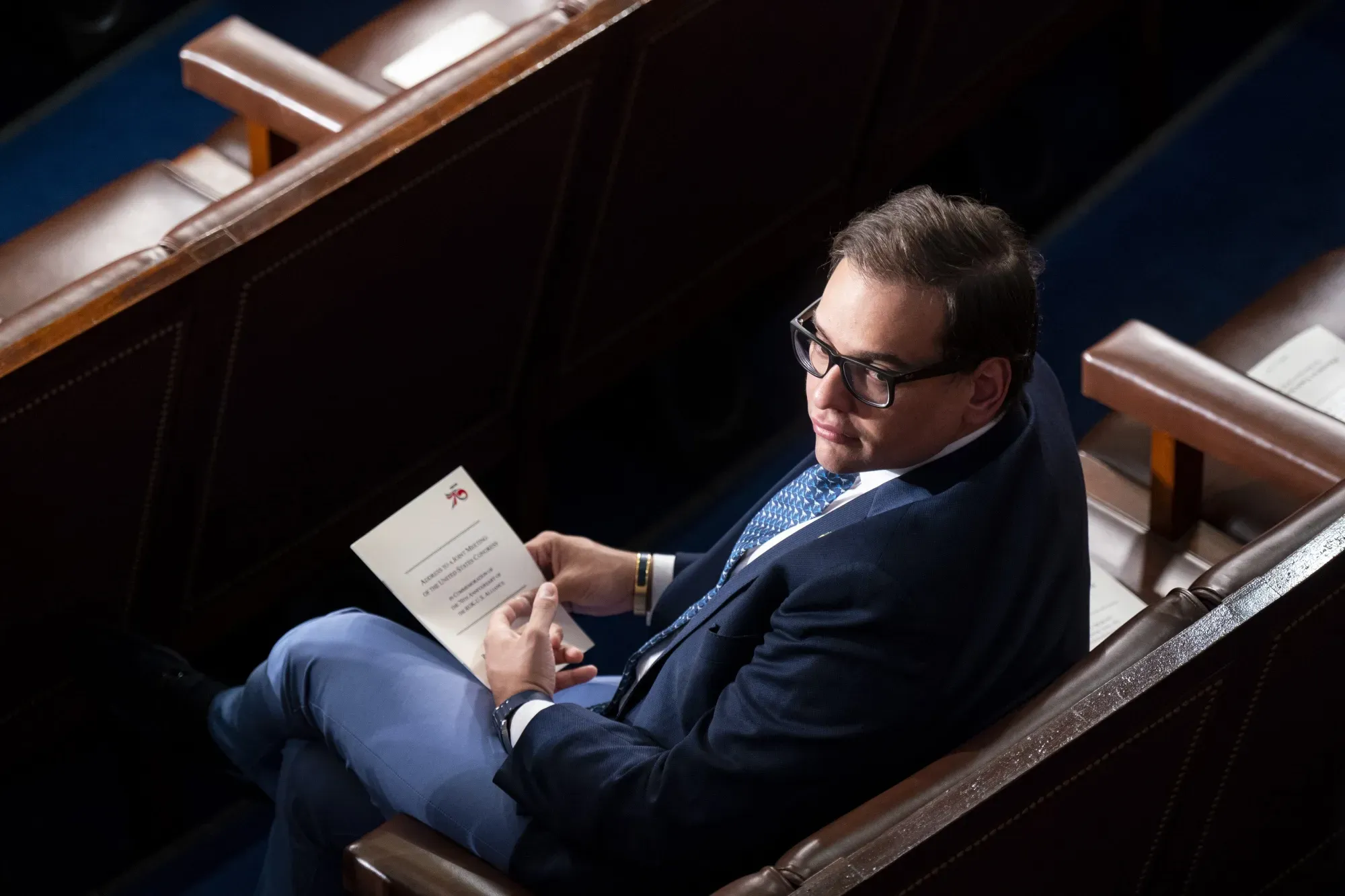
George Santos has emerged as the latest flashpoint in the controversy over possible insider trading on prediction markets, as concerns become increasingly widespread about potential illicit bets on the platforms.

Alleged trading by Santos, a former congressman who was expelled from the US House in 2023, is being investigated by the Commodity Futures Trading Commission, according to a person familiar with the matter. The regulator is looking at wagers he placed on whether he would attend the State of the Union address in February.

Prediction markets — which allow customers to bet on just about anything — have surged over the past year and a half. That has prompted investigations by US authorities and led to two high-profile cases over alleged illicit wagers.

The probe into Santos’ trading stems from wagers made earlier this year, when users on Kalshi were placing bets on who would attend the State of the Union. Around the time, Santos said in a social media post that he was “going to be there,” but did not attend, writing in a follow-up post that watching the speech from an airport television “was not part of the plan.”

NPR, which reported earlier on Santos’ trades and the CFTC investigation, said the Justice Department is also probing the matter. A spokesperson for Kalshi declined to comment. Santos didn’t immediately respond to a request for comment.

Probes by authorities can end without charges or enforcement actions being taken. Prediction markets are overseen in the US by the CFTC, which views the platforms as derivatives exchanges.

Kalshi and its chief rival Polymarket say they are opposed to insider trading and actively policing the markets. Kalshi has suspended and fined congressional hopefuls for betting on their own races in Minnesota, Texas and Virginia.

Polymarket has also referred cases to the authorities and two of their customers were charged earlier this year, including a Google software engineer accused of betting on search results and a US solder allegedly placing wagers about the ouster of then-Venezuelan President Nicolás Maduro.

In Washington, the White House warned employees that they are not allowed to trade on prediction markets using confidential information. Lawmakers have also proposed legislation aimed at cracking down on insider trading and the Senate banned its members and staff from trading on the platforms.

House Oversight Chairman James Comer has also launched an investigation into insider trading on prediction markets.

Once seen as a rising star in the Republican Party, Santos served in Congress for less than a year and was sentenced to serve more than seven years in April 2025 for stealing campaign funds.

President Donald Trump announced in October he was commuting Santos’ sentence, saying he “was somewhat of a ‘rogue,’ but there are many rogues throughout our Country that aren’t forced to serve seven years in prison.”

“Good luck George, have a great life!,” Trump said at the time.

Source: https://www.bloomberg.com/news/articles/2026-06-03/george-santos-kalshi-wagers-draw-fresh-insider-trading-scrutiny

CFTC Awards Five Whistleblowers $8 Million for Enforcement Tips
News
Prediction Market

CFTC Awards Five Whistleblowers $8 Million for Enforcement Tips

Politics

The US Commodity Futures Trading Commission said it will award more than $8 million to five whistleblowers who provided information that helped agency investigators recover funds for defrauded investors.

The Wall Street regulator didn’t identify the tipsters or the scheme they flagged, but said the individuals helped the agency complete a successful enforcement action.

“Whistleblowers like today’s awardees enable the CFTC to hold perpetrators of fraud to account and deter future wrongdoing in the markets the CFTC oversees,” David Miller, the agency’s enforcement director, said Monday in a statement.

Established in the wake of the 2008 financial crisis, the CFTC’s whistleblower program aims to root out market problems by encouraging individuals to share original, timely information that helps the agency identify alleged wrongdoers. Tipsters may be eligible for awards, which can range from 10% to 30% of monetary sanctions collected.

The agency has awarded more than $430 million to whistleblowers since 2014, stemming from enforcement actions that resulted in more than $3.7 billion in monetary sanctions, the CFTC said Monday.

Source: https://www.bloomberg.com/news/articles/2026-06-01/cftc-awards-five-whistleblowers-8-million-for-enforcement-tips

Traders on Kalshi indicate that May's jobs report will top Wall Street expectations
News
EconomicsPrediction Market

Traders on Kalshi indicate that May's jobs report will top Wall Street expectations

Traders on Kalshi expect that job creation in May will see a slowdown but still surpass Dow Jones consensus.

Economics & FinancePolitics

Traders on Kalshi expect that job creation in May will see a slowdown but still surpass Dow Jones consensus.

Dow Jones estimates that May's nonfarm payrolls report — due Friday from the Bureau of Labor Statistics — will show a gain of 90,000 jobs. The consensus reflects an anticipated decline from April's recorded 115,000 nonfarm payrolls and March's 185,000, the highest this year has seen so far.

Kalshi traders on Monday were assigning a 56% probability that the report would beat the Wall Street forecast.

Odds that over 100,00 new jobs would be added jumped after April's job report was released and currently stand at 49%. Traders on Monday also put a 40% chance that new  jobs will surpass 110,000.

RBC Economics had a more hopeful outlook compared to Dow Jones.

"We expect 99K jobs were added to payrolls with the unemployment rate holding steady at 4.3%," the firm reported last Friday. "So far in 2026, the labor market appears to be on solid footing. Still, on aggregate, new job creation has been quite limited with monthly payroll gains averaging 55K over the past six months."

The job report is set to come out ahead of the Federal Reserve's first meeting with new Chair Kevin Warsh on June 16-17. Markets are expecting the Federal Open Market Committee to stay on hold at the meeting, though the jobs report could influence that decision.

Dow Jones also expects hourly earnings to increase by 3.4% annually, a slight dip from last month's 3.6%. Economists also put average hourly earnings to increase by 0.3% month-over-month, slightly higher than last month's 0.2%.

Source: https://www.cnbc.com/2026/06/01/traders-on-kalshi-indicate-that-mays-jobs-report-will-top-wall-street-expectations.html

Rubio odds for GOP 2028 nominee close to overtaking Vance on Kalshi
News
SignalsPrediction Market

Rubio odds for GOP 2028 nominee close to overtaking Vance on Kalshi

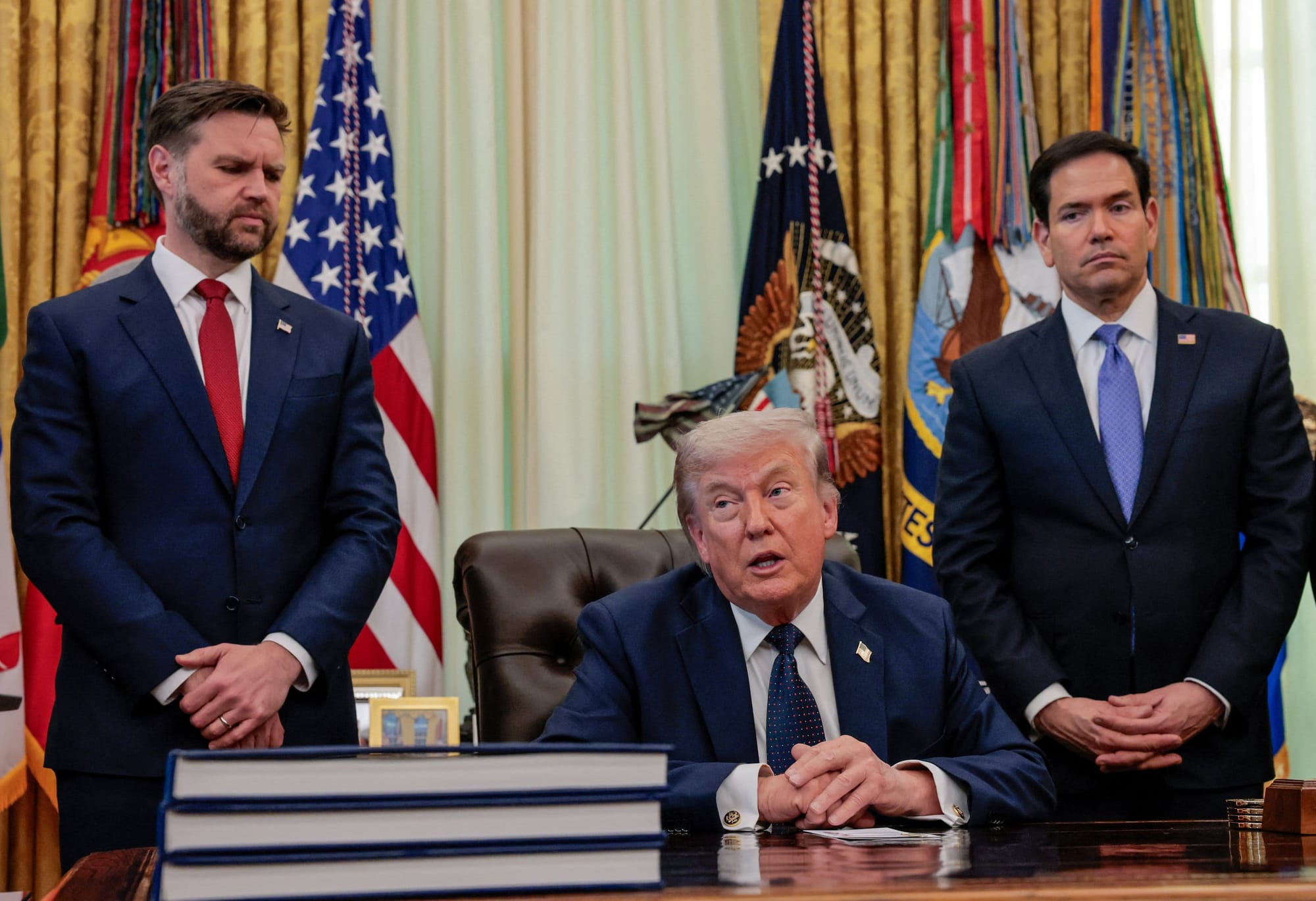
Secretary of State Marco Rubio is seen as increasingly likely to be the GOP nominee in 2028, according to traders on prediction market platforms.

Politics

Secretary of State Marco Rubio is seen as increasingly likely to be the GOP nominee in 2028, according to traders on prediction market platforms.

While Vice President JD Vance is still favored by traders on Kalshi, his odds have slipped to just 33% on Monday from around 50% on Jan. 1. Rubio, meanwhile, has risen to 30% from around 12% odds.

Vance was seen as the heir to President Donald Trump's "Make America Great Again" movement, considering his high-profile role in the administration as formally second in command.

However, Trump has reportedly cast doubts about whether he views Vance as his successor, as most recently detailed by a report from The New York Times over the weekend. The Times said that Trump brings up Vance's initial opposition to the war in Iran when musing over his candidacy.

Rubio's odds have risen throughout the year, but have sharply increased around the initiation of key military operations, including the capture of Venezuelan President Nicolas Maduro in January and the start of the war with Iran in late February.

Rubio also delivered a short impromptu speech from the White House press room about his hopes for America in May that he clipped into a viral short-form video, creating questions about what the Cabinet member's plans are for 2028.

While Rubio's role in military conflicts has increased his chances to be the Republican nominee, those same conflicts have hurt the party's chances of winning the presidency as Trump's approval ratings have fallen since the start of the year. Odds that the GOP wins the White House in 2028 have fallen to 39% on Monday from 45% before the war with Iran.

Traders on Polymarket give Vance a 31% chance of being the Republican nominee in 2028, while Rubio is close behind at just under 27%.

Source: https://www.cnbc.com/2026/06/01/rubio-odds-for-gop-2028-nominee-close-to-overtaking-vance-on-kalshi.html

White House Reviews CFTC Plan to Supervise Prediction Markets
News
Regulatory

White House Reviews CFTC Plan to Supervise Prediction Markets

CFTC is asserting federal authority over the booming prediction market industry, proposing new rules in a jurisdictional battle with states seeking to regulate it as gambling.

Politics

The White House is reviewing a new US Commodity Futures Trading Commission proposal that would lay out guidelines for event contracts, the agency’s latest move to mark its turf as it battles with states over who gets to regulate the exploding prediction markets.

The plan is under review by the Office of Management and Budget, according to a notice posted on a US government website. The notice includes no details about what’s in the proposal, which would be subject to public comment.

A CFTC spokesperson wouldn’t elaborate on the contents, adding the agency “will have more to say once that process is complete.”

Any plan is expected to build off feedback received this spring after the agency issued a document that asked the public to answer numerous questions about regulating the space, including how to handle insider trading and whether to prohibit certain types of event contracts. The agency received more than 3,000 responses.

Online platforms like Kalshi and Polymarket allow users to place yes-or-no trades on the outcomes of future events on a wide variety of topics, from who will win the French Open to whether President Donald Trump will get impeached this term. Questions such as those tied to impending military action and barely disguised wagers on assassinations have drawn objections, and there has been concern bettors might try to influence outcomes of events to make their wagers pay off.

CFTC Chairman Michael Selig has aggressively defended the agency’s jurisdiction over US-based exchanges, arguing the platforms technically trade derivatives that fall under the regulator’s turf. “We will see you in court,” he posted on X in February as a message to states trying to curb the firms and regulate them akin to gambling businesses.

The president himself weighed in on Tuesday in a Truth Social post, saying it was “critically important” that the CFTC has exclusive authority over the markets. “Thank you, Mike!” he said.

Trump’s family has entered the prediction market industry. His son, Donald Trump Jr., is an adviser to both Kalshi and Polymarket, and Trump Media & Technology Group Corp. announced its own marketplace.

Source: https://www.bloomberg.com/news/articles/2026-05-27/white-house-reviews-cftc-plan-to-supervise-prediction-markets

Bad Behavior Is Moving Markets. Where Are the Regulators?
Analysis
EconomicsRegulatory

Bad Behavior Is Moving Markets. Where Are the Regulators?

Lax oversight of prediction markets and traditional assets fuels insider trading risks, eroding investor trust in market integrity.

Economics & FinancePolitics

A series of suspicious oil trades earlier this year, during the US-Israeli conflict with Iran, prompted the White House to go so far as to send a staff-wide email warning against insider trading. Remarkably prescient trades had become such a regular occurrence that President Donald Trump’s government had grown concerned with the optics — and that’s saying something for an administration that has flaunted its conflicts of interest!

Well-founded concerns persist that the government is doing too little to police insider dealing in both new and traditional markets. Prediction markets, in particular, have become an invitation to anyone with a nugget of information to place bets using hyper-specific event contracts concerning policy decisions and other government actions.

A New York Times report detailed dozens of dubious and previously unscrutinized trades on the prediction platform Polymarket. CBS News reported on nine connected Polymarket accounts that have made more than $2.4 million betting almost entirely on US military actions. The company has said that “insider trading has no place on Polymarket,”1 and that it refers cases involving classified government information to the Justice Department. But it goes beyond the new event contract markets. Oil futures again suspiciously sold off this month before an Axios scoop that suggested progress toward ending the Iran war.

It’s the type of behavior that harks back to the anything-goes stock market of the 1920s when a regulatory vacuum allowed an informed elite to profit off the backs of the masses. Long after the financial anarchy culminated in the 1929 crash and the Great Depression, the loss of trust lingered, crimping stock market participation and forestalling any kind of rebound. Congress eventually created the Securities and Exchange Commission to protect investors and guard against fraud. An epidemic of dodgy transactions once again tested public faith in markets in the 1980s, especially after the prosecutions of junk-bond king Michael Milken and the late insider-trader Ivan Boesky, an inspiration for the Gordon Gekko character in the film Wall Street.

The actual prevalence of insider trading and other unethical behavior today is hard to quantify in real time because it happens in the shadows. But as the perception of bad behavior grows, it is incumbent on regulators and policymakers to send clear signals to the American public and international investors that they’re addressing the problem.

Under Chair Paul Atkins, the SEC claims it’s doing more with less, and that it can remain tough on the crimes that matter most without creating burdensome compliance hoops for companies to jump through. “Our goal should be to increase the cost of fraud and manipulation, not the cost of compliance itself,” Atkins said in remarks earlier this year.

Retail investors are counting on the protection. The proportion of families that directly hold stocks is near a record, and retail traders’ daily net turnover of individual US equities soared to around $750 million a day in 2025, from less than $60 million in 2019. That level of participation won’t be sustainable if our market integrity is allowed to deteriorate. Traders surveyed by Bloomberg News already report declining confidence in the workings of the oil market. Investors will ultimately retrench and the cost of capital will increase.

These effects can be especially catastrophic for the working class, who might be scared away from investing for retirement or their children’s educations. This at a time when Americans’ trust in their institutions is already extraordinarily low.

The authorities are catching some of the naughty behavior. A US Army soldier was charged with using classified information about the capture of Venezuela’s Nicolás Maduro to make more than $400,000 on Polymarket. And indictments unsealed this month describe an alleged insider-trading ring involving attorneys from some of the top mergers and acquisitions firms in the country.

But we only learned of a Commodity Futures Trading Commission probe into suspicious oil trades after a letter from Democratic Senators Elizabeth Warren of Massachusetts and Sheldon Whitehouse of Rhode Island encouraged the agency to open such a probe. For all the insider trading cases that have made headlines, the real risk is that they’re just the tip of a much larger iceberg that our downsized regulatory authorities aren’t fully addressing.

The SEC took the fewest enforcement actions in a decade during the last fiscal year, and it recently saw enforcement director Margaret Ryan quit after just six months. It dismissed or paused at least a dozen cases against crypto companies, and it dropped civil enforcement actions against three businessmen who received pardons or commuted sentences from the president.

The CFTC, which generally has responsibility over the new prediction markets, also saw less enforcement activity versus the prior year. The New York Times reported over the weekend that the CFTC’s then-acting chair Caroline Pham and her senior counsel helped prediction markets get their way with regulators, and that some officials who raised concerns were put on leave.

Less active regulators send a signal to bad actors that the odds of crime paying off are improving. History has shown that individuals consumed by worry about getting cheated are less willing to invest. In one study of the record-breaking Bernard Madoff Ponzi scheme, the authors found that investors more exposed to the fraud were more likely to pull their money from investment advisers and put it in cash. Another study found the larger the staff and budget that the SEC throws at the problem of enforcement, the less brazen the pre-event price run-ups ahead of major corporate news announcements such as earnings and M&A.

Questions about how government officials conduct themselves have also grown. Trump’s investment advisers placed more than 3,700 trades in the first quarter, including many that involved companies that have dealings with the administration. And although the US Senate has banned itself from prediction market participation, the House has been . Efforts to bar members of Congress from stock trading have languished for years.

It’s still far from clear when an event contract trade rises to the level of illegal insider trading under existing law — to prosecute successfully, you sometimes need something as egregious as the misappropriation of classified military intelligence, as in the Venezuela case. And while the trading volumes in prediction markets are still small compared to stocks and bonds, the markets are growing by leaps and bounds, and the signals they generate are exerting vast influence on traditional markets.

  • Let Political Candidates Bet on Themselves: Stephen L. Carter
  • Investors Benefit From More Financial Data, Not Less: Editorial
  • High Bond Yields Are What US Needs in the AI Era: Jonathan Levin

Source: https://www.bloomberg.com/opinion/articles/2026-05-27/bad-behavior-is-moving-markets-where-are-the-regulators

Rules & Mandates - Beyond the Headline Odds: How Colombia’s Election Markets Fit Together
Editorial
ElectionRules & MandatesRegulatoryLegal

Rules & Mandates - Beyond the Headline Odds: How Colombia’s Election Markets Fit Together

Linked Colombia presidential election markets reveal one implied election path, and a hidden runoff assumption behind the headline odds.

Politics

Prediction markets often look like separate bets, but related contracts can be stitched together into one implied probability model that hints deeper pricing. Colombia’s 2026 first-round election markets are a good example. The first-round winner market, second-place market, third-place market, advance-to-runoff market, standalone outright-win market, and final-winner market are not independent signals. They are different slices of the same election tree.

The basic electoral rule is simple: Colombia holds a second round on June 21 if no candidate wins more than 50% of valid votes in the first round on May 31. Polymarket’s first-round winner market resolves to the candidate with the greatest number of valid votes, regardless of whether that candidate clears 50%. The same logic applies to the second- and third-place markets. The advance-to-second-round market resolves to the pair that advances, but if someone wins outright in the first round, it resolves to “1st Round Outright Winner.”

Colombian presidential candidates Iván Cepeda, Abelardo De La Espriella, and Paloma Valencia. (Image credit: Americas Quarterly)

The market’s implied ranking

The first-round winner market has Iván Cepeda Castro at about 65%, Abelardo de la Espriella at 35.1%. That means the market thinks Cepeda is the most likely first-place finisher.

The second-place market then fills in the next layer. It prices De la Espriella at about 61% to finish second, Cepeda at 31.8%. This is exactly what we would expect if the two main rank-order paths are (1) Cepeda first, De la Espriella second and (2) De la Espriella first, Cepeda second.

The third-place market makes the implied ranking even clearer. It shows Valencia as the dominant third-place candidate, although this market is thin.

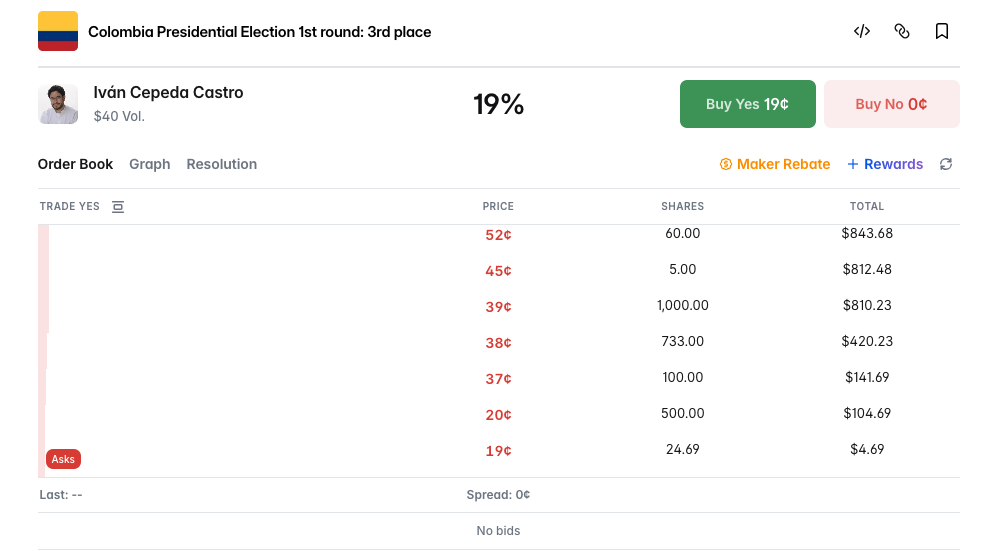
Furthermore, Cepeda's odds on this market are displayed at 19% on the webpage, which does not make any sense at first glance. However, it is not difficult at all to find out there is no bid in the order book. In other words, you cannot simply sell YES at the displayed price and capitalize your "alpha" due to a lack of liquidity.

So the precise price should not be over-interpreted, but the direction is clear: the market expects Valencia to finish behind Cepeda and De la Espriella.

The advance market fits the ranking markets

The advance-to-second-round market prices the pair De la Espriella + Cepeda at about 81%, while the outright-winner branch is about 15% (there is a standalone outright-winner market as well).

The key calculation is for a conditional probability:

$$P(\text{De la Espriella + Cepeda advance} \mid \text{runoff}) = \frac{81\%}{1-15\%} = \frac{81\%}{85\%} \approx 95.3\%$$

This means the market is not merely saying De la Espriella and Cepeda are likely to be top two. It is saying something more precise:

Conditional on there being a runoff, the runoff is overwhelmingly likely to be Cepeda versus De la Espriella.

That is consistent with the first- and second-place markets. Cepeda is the most likely first-place finisher, and De la Espriella is the most likely second-place finisher.

The important caveat is that the first- and second-place markets are resolved by vote ranking even if someone wins outright. But the advance-to-second-round market does not name a candidate pair if someone wins outright. It resolves to “1st Round Outright Winner.”

That means we should not compare these markets too mechanically.

For example:

$$ \begin{aligned} P(\text{Cepeda first}) &\neq P(\text{Cepeda advances}) \\ \text{and}\quad P(\text{De la Espriella second}) &\neq P(\text{De la Espriella + Cepeda runoff}) \end{aligned} $$

This is why the correct relationship is:

$$ \begin{aligned} P(\text{Cepeda + De la Espriella top two}) \approx\;& P(\text{Cepeda + De la Espriella runoff}) \\ &+ P(\text{outright win where they are still top two}) \end{aligned} $$

So if the advance market has Cepeda + De la Espriella at 81% and outright at 15%, the implied probability that Cepeda and De la Espriella are the top two in raw first-round vote ranking could easily be in the low-to-mid 90s. That fits the first- and second-place market, where De la Espriella and Cepeda together account for roughly 98% and 93% of displayed first- and second-place probability.

Consistency check

The markets pass the main logic tests.

First, the standalone outright market and the advance-market outright branch are aligned at roughly 15%. That is the most important identity.

Second, both markets say there is about an 85% chance of a runoff, and within that runoff state, about a 95% chance that the pair is Cepeda and De la Espriella. That is consistent with the first-place and second-place markets.

Third, the third-place market, although very thin (to the extent that existing limit orders hardly get filled), supports the same hierarchy by putting Valencia as the most likely third-place finisher.

The final winner market

If De la Espriella is priced around 67-70% to win the presidency, while the Cepeda + De la Espriella runoff pair is priced around 81%, the market is implicitly assigning him a very high probability of beating Cepeda in the second round.

A rough way to see this is (if cases where De la Espriella reaches a runoff against Valencia or another candidate are ignored):

$$ \begin{aligned} P(A \text{ wins presidency}) \approx\;& P(A \text{ wins outright}) \\ &+ P(A+C \text{ runoff}) \times P(A \text{ beats } C \mid A+C \text{ runoff}) \end{aligned} $$

where A is De la Espriella and C is Cepeda.

Since the overall outright branch is 15%, and De la Espriella is only about 35% in the first-round winner market, a simple allocation would put his outright-win contribution at roughly 15%×35%=5.25%.

If his final-winner market is around 67%, then the implied runoff conversion is approximately:

$$P(A \text{ beats } C \mid A+C \text{ runoff}) \approx \frac{67\%-5.25\%}{81\%} \approx 76.2\%$$

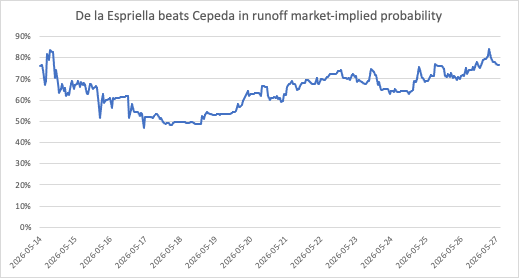
Using the same logic, we can calculate a time series of the market-implied probability that De la Espriella beats Cepeda in a runoff.

The chart shows the market gradually moving from uncertainty about De la Espriella’s runoff strength toward a much more aggressive conditional view.

The lows around May 17-18 reflect that the race had not yet fully consolidated around the De la Espriella versus Cepeda runoff frame back then. The rebound after May 19 reflects the market increasingly pricing him not merely as a top-two candidate, but as the likely winner of a Cepeda-De la Espriella runoff. That is directionally consistent with two recent polls. Invamer’s poll, conducted May 13-20, indicated Cepeda beating De la Espriella 52.4% to 45.3%, with a 2.4-point margin of error. AtlasIntel’s poll, conducted May 18-21, showed De la Espriella beating Cepeda in a runoff by 50.0% to 41.3%, with a 1-point margin of error.

An aerial view shows a billboard of Colombian presidential candidate Abelardo de la Espriella in Cali, Colombia, on May 21. (Image credit: Joaquin Sarmiento/AFP via Getty Images)

Conclusion

The Colombia markets are useful because they show why related prediction markets should not be read one by one. The first-round markets and the advance market support the same structure: Cepeda will meet De la Espriella in the runoff if there is one. The final-winner market then adds the more controversial assumption. It implies that De la Espriella is heavily favored to win the expected runoff against Cepeda. Whether that assumption is correct is a polling and turnout question. But the linked-market structure makes the assumption visible.

That is the value of reading these contracts together. The headline price tells us who the market thinks is likely to win at each stage. The market complex helps us decompose.

Below are two of my previous articles that apply the same way of thinking.

CTA Image

Andy Burnham Is the Favourite. That Does Not Make Him Inevitable

Learn more
CTA Image

California’s Billionaire Tax Looks Strong - Until You Look Closer

Learn more

Disclaimer: The content is for informational purposes only. You should not construe any such information or other material as legal, tax, investment, financial, or other advice. Nothing contained in this article constitutes a solicitation, recommendation, endorsement, or offer by the author(s) or any third party service provider to buy or sell any securities or other financial instruments in your or in any other jurisdiction in which such solicitation or offer would be unlawful under the securities laws of such jurisdiction. The author(s) report(s) no conflict of interest.