Premier info portal for prediction markets. The start point of information market.
Macro & Micro Compass - June NFP Report: Stability Is Priced In, But Is It Fully Supported by the Data?
News
EconomicsLabor MarketMacro & Micro CompassMacroeconomics

Macro & Micro Compass - June NFP Report: Stability Is Priced In, But Is It Fully Supported by the Data?

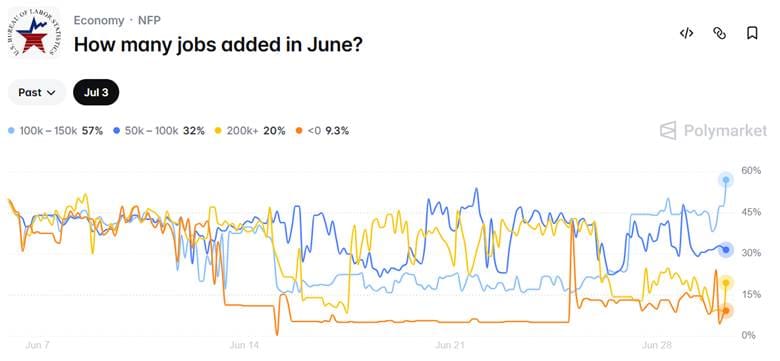
Markets are pricing June NFP around 100,000-150,000 jobs, reflecting economist forecasts and recent labor data, as attention turns to how incoming prints align with current expectations.

Economics & FinancePolitics

This week’s Nonfarm Payrolls report lands on Thursday, July 2, at 8:30 a.m. ET, according to the US Bureau of Labor Statistics (BLS), one day earlier than usual because US markets are closed Friday for Independence Day.

Polymarket is currently pricing the July 2 U.S. Nonfarm Payrolls release with a huge tilt toward 100k-150k jobs added, just below 60%, but the upside tail is not negligible.

This is consistent with economists' forecasts. According to a Reuters poll, economists are clustered around 110,000 jobs added in June, down from May’s 172,000 gain. Unemployment is expected to hold near 4.3%, while wage growth is expected to stay around 0.3% month over month.

But what if the market is overconfident in the stability of the 100k-150k range because it is anchoring on lagged, revised, and smoothing labor indicators?

What do you think the market is underestimating the most?

Downside risk from weakening hiring momentum
25.00%
Strength in labor market resilience (hot upside surprise risk)
25.00%
No major mispricing, consensus is fair
25.00%
Mixed signals dominate
25.00%
4 Polls

May made the bar harder to clear

The reason this week’s report is more interesting than the consensus number suggests is May.

Economists expected only 85,000 jobs last month. The actual number came in at 172,000. March and April were also revised higher by a combined 93,000 jobs. A few weeks ago, the concern was that hiring had become too soft. After May, the cleaner question is whether the slowdown thesis got too much credit too early.

Still, the devil is in the details because May was not a perfectly broad-based boom. Leisure and hospitality added 70,000 jobs, local government added 55,000, and health care added 35,000. Financial activities lost 22,000 jobs. This shows an uneven labor market holding headline strength.

Another report above 150,000 would make May look less like a one-off. A number below 100,000 would bring back the idea that the labor market’s surface strength is hiding weaker hiring underneath.

But is headline NFP a clean signal?

Everything in the pricing depends on this: headline payrolls accurately reflect underlying labor momentum.

But NFP is not a direct measure, it’s a modelled survey estimate that makes it vulnerable. The current consensus stability relies heavily on data that has already been revised multiple times this year.

Initial claims fell to 215,000 for the week ending June 20, below the 225,000 economists expected. This alone tells you companies are not suddenly rushing to cut workers.
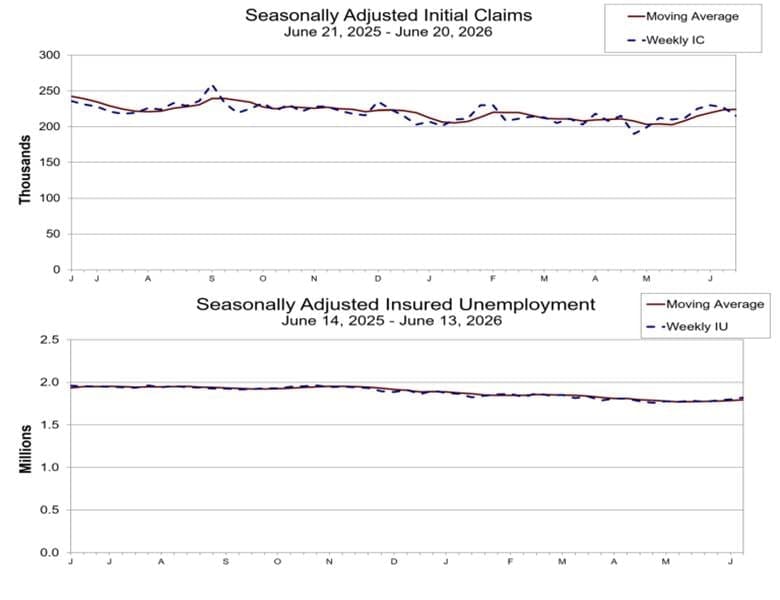
The softer signal is in continuing claims, which rose to 1.821 million. Low initial claims say layoffs are contained, but higher continuing claims say people who lose jobs may be taking longer to find the next one.

The latest JOLTS data shows that job openings rose to 7.6 million in April, but hires fell to 5.1 million and total separations dropped to 5.0 million. Quits were little changed at 3.0 million, while layoffs and discharges were also little changed at 1.7 million.

Taken together, it’s not a classic “everyone is getting fired” labor market, but it does look more like a frozen one. A low-churn environment where hiring momentum is softening even as headline stability is preserved.

Wages may matter more than the jobs number

The payroll number gets the headline, but wages may decide the market reaction.

In May, average hourly earnings rose 0.3% on the month and 3.4% from a year earlier. Another 0.3% wage print in June would not look shocking on its own. Paired with a strong jobs number, though, it becomes harder for the market to treat labor strength as harmless.

A softer payroll number with cooler wages would do the opposite. It would support the argument that demand is fading and that policy is already restrictive enough. The unemployment rate would then become the tie-breaker. A move up from 4.3% would carry more weight than a small miss on payrolls alone.

What traders should watch on Thursday

The key risk this week is that markets overweight the stability implied by recent revisions. March was revised up 29,000 and April up 64,000, reinforcing the perception that initial prints understate true strength.

A market pricing the initial June print needs the actual release to land soft, not just the eventual, revised reality, and on a year where every revision has added jobs back rather than taken them away, betting heavily against the consensus bracket has a real headwind.

The first number to watch is the headline payroll range. A 100,000 to 150,000 print broadly confirms the market’s base case. A sub-100,000 print makes the slowdown story harder to ignore. A 150,000-plus print puts the “too hot” debate back on the table.

A 4.3% unemployment rate keeps the soft-landing read in place, but that reading depends on the rate staying pinned inside a narrow 4.3%-4.5% band where small shifts change how much slack the market thinks exists. At 4.4%, this stability starts to look less certain, and a drop toward 4.2% would make it harder to argue that hiring is cooling fast enough.

The third number is wages. Payrolls can miss or beat for noisy reasons, especially in summer. Wage growth is harder to shrug off because it feeds directly into the Fed debate.

Revisions also deserve a close read. May looked strong partly because previous months were revised higher. A June miss would sting less with upward revisions. A June beat would look more convincing with another positive revision behind it.

The print won't move the July 28-29 FOMC decision directly, but it's the last full labor read before it, and a soft surprise would revive easing hopes, while a strong payroll-and-wage combination would strengthen the case for higher-rate risk.
Sources:

1.     Barron’s: Additional 93,000 Jobs Added to March and April Totals

2.     BLS: Employment Situation Summary (March)

3.     BLS: Employment Situation Summary (May)

4.     BLS: Job Openings and Labor Turnover Summary

5.     DOL: Unemployment Insurance Weekly Claim

6.     Reuters: Wall St Week Ahead Jobs data, rate bets in focus as US stocks close solid first half
Which data point will matter most for June NFP release?

Payrolls headline number
0.00%
Wage growth
0.00%
Unemployment rate
100.00%
Revisions to prior months
0.00%
1 Polls
Rules & Mandates - Deadly twin quakes are a gut punch to a Venezuelan economy already on its knees
News
GeopoliticsElectionRules & Mandates

Rules & Mandates - Deadly twin quakes are a gut punch to a Venezuelan economy already on its knees

Politics

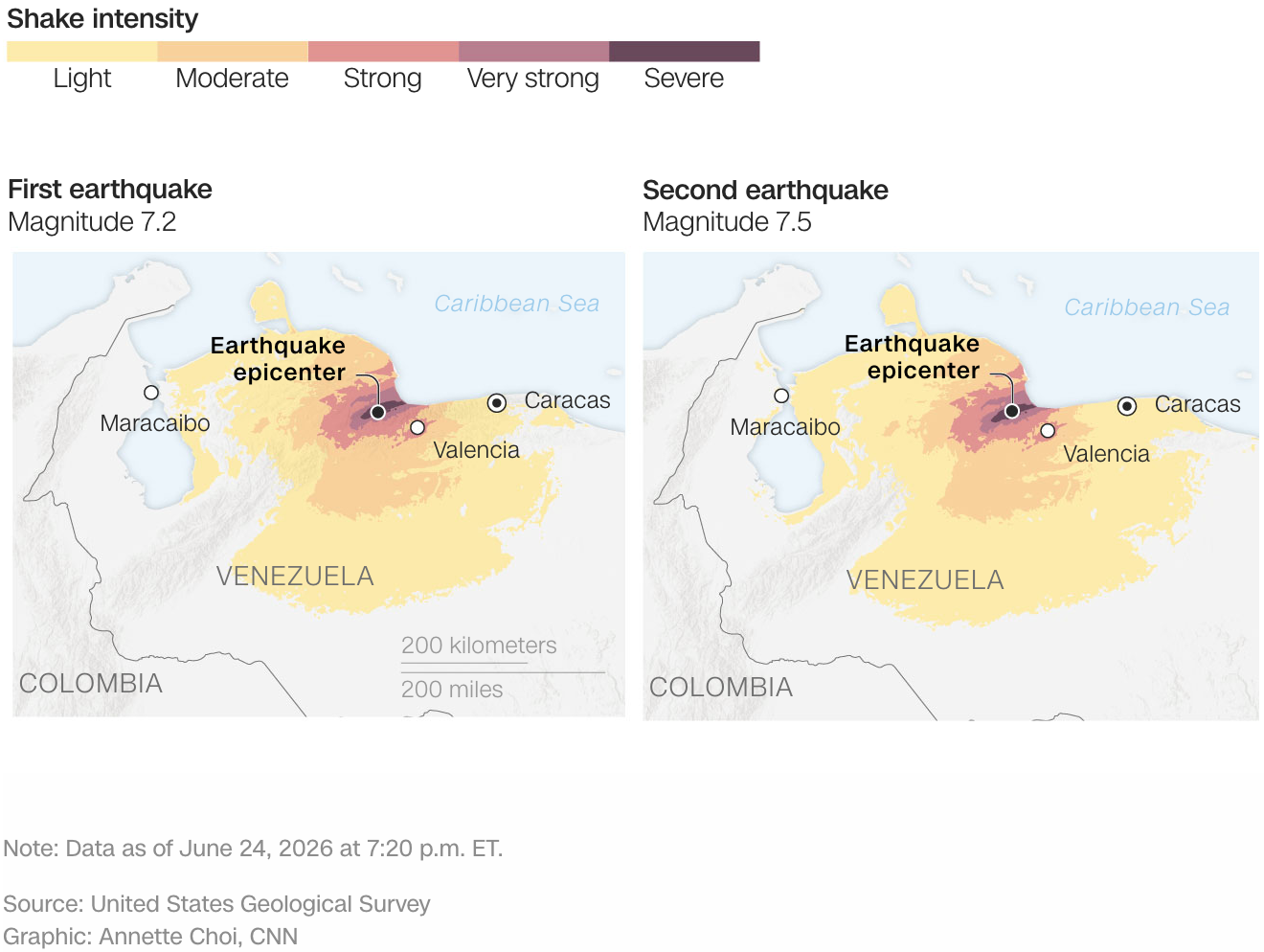
The strongest earthquake hit Venezuela in a century, at the worst possible moment for the country's fragile political transition.

Will U.S. emergency aid strengthen Venezuela’s post-Maduro government?

Yes
75.00%
No
25.00%
4 Polls

June 25(CNN)- the disaster struck while acting President Delcy Rodríguez was trying to cautiously reopen the economy, rebuild ties with foreign oil companies. And seek relief from U.S. sanctions after the January capture of former President Nicolás Maduro. Venezuela had already been weakened by years of hyperinflation, corruption, sanctions, and oil-sector mismanagement. Now, the earthquake has turned an economic recovery story into a test of political survival.

 Early modeling from the U.S. Geological Survey suggests economic losses could reach tens of billions of dollars, and possibly as much as the size of Venezuela’s entire economy.

Venezuela’s state capacity was already thin before the quake. Hospitals, electricity, water systems, fuel supply, medicine access, and basic logistics were all under pressure. A disaster of this scale does not simply damage buildings. It exposes whether a government can coordinate rescue operations, keep public services functioning, prevent shortages from worsening, and convince citizens that the state is still capable of protecting them.

For Rodríguez, the earthquake is a legitimacy test. She has been trying to present as pragmatic, post-Maduro, and capable of restoring Venezuela’s relationship with global markets. Because the ordinary Venezuelans are unlikely to judge the transition by oil contracts or sanctions language alone. They will judge it by whether help arrives, whether hospitals can function, whether food and medicine remain available and whether reconstruction feels real.

For Washington, the quake is also a credibility test. President Donald Trump has claimed that U.S. intervention left Venezuela in better hands and said after the quake that the U.S. is ready to help. Secretary of State Marco Rubio also said the U.S. would deploy search-and-rescue teams, medical resources, and humanitarian assistance.Secretary of State Marco Rubio also said the U.S. would deploy search-and-rescue teams, medical resources, and humanitarian assistance.

Now the question is clear: Will those promises become visible action?

Will promises become visible actions

Yes
66.67%
No
33.33%
3 Polls

If U.S. aid arrives quickly and at scale, it could strengthen Rodríguez’s government and deepen U.S. influence over Venezuela’s recovery.

But if aid is delayed, limited, or seen as self-interested. The disaster could revive anti-U.S. sentiment, strengthen Chavista narratives about foreign control, and make the post-Maduro transition look fragile.

The earthquake is therefore more than a natural disaster. It is the first major governance crisis of Venezuela’s new political order.

Source:

  1. CNN: Deadly twin quakes are a gut punch to a Venezuelan economy already on its knees, June 25, 2026 https://edition.cnn.com/2026/06/25/economy/venezuela-economy-analysis-intl-hnk

Relavent events:

Breaking News - Samsung and SK Hynix plan massive sites as part of South Korean national project
News
SemiconductorIPOsBreaking NewsMemory ChipAI Infrastructure Semi News

Breaking News - Samsung and SK Hynix plan massive sites as part of South Korean national project

Samsung Electronics and ‌SK Hynix ‌plan to each build ​two new massive chip fabrication sites in South Korea's southwest ‌region ⁠as part of a national project ⁠to build chip production "ecosystem" valued at 800 trillion won.

TechPolitics

Will Overcapacity Problem Hit Memory Market with Samsung & Hynix expansion?

Yes
30.30%
No
69.70%
934 Polls

SEOUL, June 29 (Reuters) - Samsung Electronics and ‌SK Hynix ‌plan to each build ​two new massive chip fabrication sites in South Korea's southwest ‌region ⁠as part of a national project ⁠to build chip production "ecosystem" valued ​at 800 ​trillion ​won ($517.87 billion), ‌the government said on Monday.

The plan was unveiled at the announcement of three ‌new "mega-projects" by ​the country ​and ​the global ‌chip giants to ​spur ​growth and dominate the AI sector.

We'll cover more and update in due course.

CTA Image

Comprehensive Analysis of the Full Value Chain

Subscribe to weekly analysis

Source:

  1. Samsung Electronics, SK Hynix to invest in two new fabrication sites in South Korea, government says, June 29, 2026: https://www.reuters.com/world/asia-pacific/samsung-electronics-sk-hynix-invest-two-new-fabrication-sites-south-korea-2026-06-29/
Global Chokepoint - U.S., Iran pause hostilities as Hormuz shipping resumes after weekend clashes
Analysis
GeopoliticsGlobal ChokepointTransportMaritimeContainer ShippingTanker Shipping

Global Chokepoint - U.S., Iran pause hostilities as Hormuz shipping resumes after weekend clashes

Politics

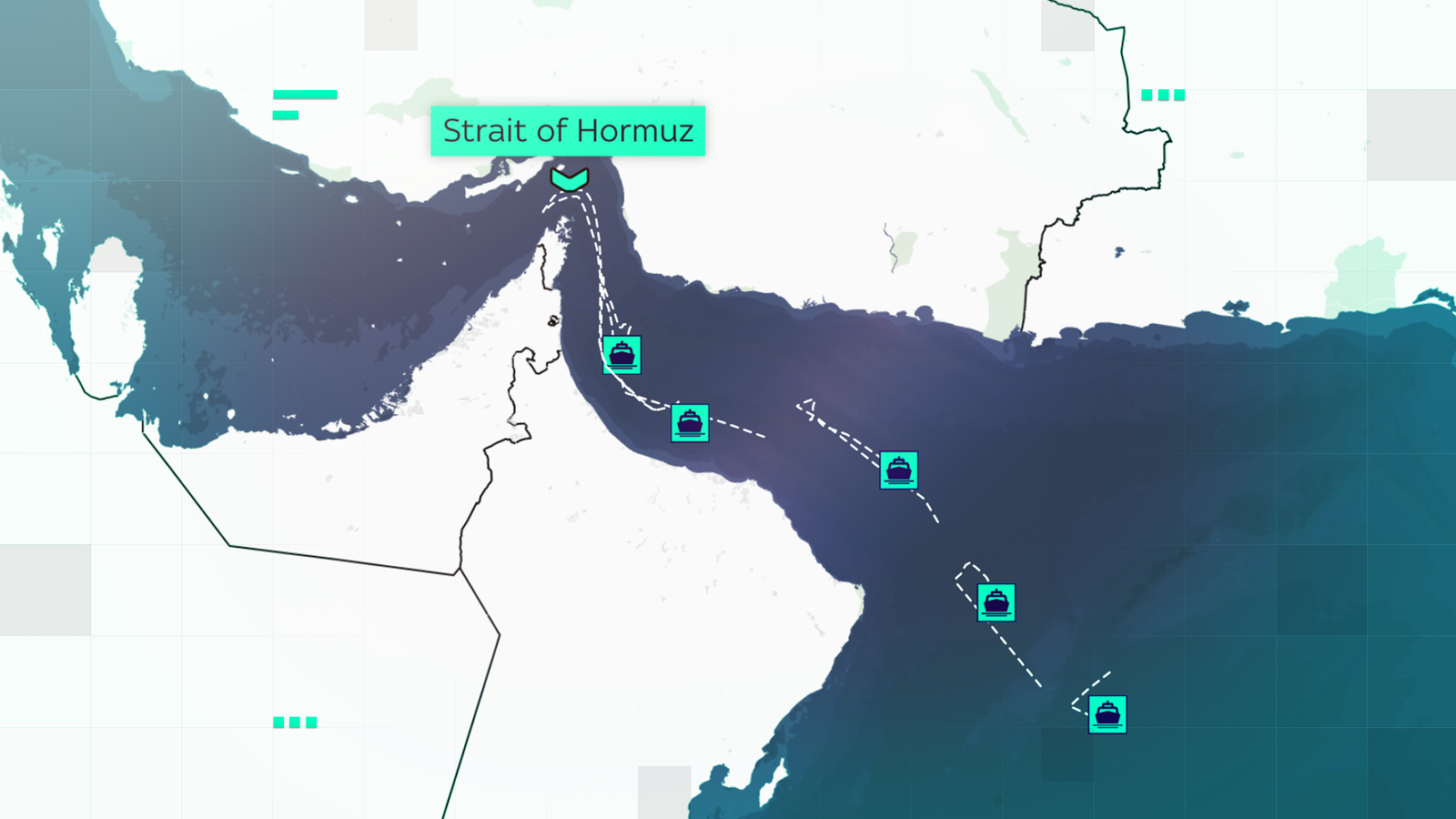
The U.S. and Iran agreed Sunday to pause hostilities and allow commercial vessels to transit the Strait of Hormuz freely, following a weekend of military exchanges that threatened to derail negotiations aimed at ending their conflict.

Will A More Thorough Agreement be Reached Before the Expiry of Existing 60-Day Agreement?

Yes
33.33%
No
66.67%
3 Polls

“Technical talks are slated to continue on all areas of the MOU,” a U.S. official told CNBC on Sunday. “Both sides will stand down for now and vessels can move freely.”

The understanding follows renewed fighting over the weekend, after the United States struck Iranian military targets in response to Tehran’s latest attacks on shipping in the strategically important waterway.

Iran’s attacks prompted U.S. President Donald Trump on Sunday to again threaten Iran with annihilation.

“United States aircraft just struck Iranian missile and drone storage locations, and coastal radar sites, for violating the Cease Fire Agreement, AGAIN!,” Trump wrote on Truth Social.

“There may come a point when we are no longer able to be reasonable, and will be forced to militarily complete the job that we very successfully started. If that happens, the Islamic Republic of Iran will no longer exist!” he added.

The U.S. military attacked a number of Iranian targets after a commercial tanker in the Strait of Hormuz was reported to have been struck by a projectile on Saturday. Iran’s neighbors, Kuwait and Bahrain, also reported incoming missiles and drones overnight.

U.S. Central Command said early Sunday that fighter jets struck 10 Iranian military targets in and near the Strait of Hormuz in retaliation for a drone strike on the Panamanian-flagged tanker, the M/T Kiku. The vessel was transiting the strait with more than two million barrels of crude oil, CentCom said late Saturday.

Source:

  1. U.S., Iran pause hostilities as Hormuz shipping resumes after weekend clashes, June 28, 2026: https://www.cnbc.com/2026/06/28/trump-threatens-iran-with-annihilation-kuwait-bahrain-report-attacks.html
Global Chokepoint - Reopening of Strait of Hormuz No Longer Equates to Normal Resumption
Analysis
GeopoliticsMust ReadOil & GasMaritimeGlobal Chokepoint

Global Chokepoint - Reopening of Strait of Hormuz No Longer Equates to Normal Resumption

Politics

Following the June 17 signing at Versailles of the US and Iran memorandum of understanding, the market reaction was immediate: oil prices fell, Asian equities rallied, and traders began to price a partial reopening of the Strait of Hormuz.

Crude oil prices fell over 4%, while Asian benchmarks surged, responding positively to a conflict that had devastated supply chain through the Strait of Hormuz for over three months.

However, what is not being discussed enough is the fact that transit resumption across the Strait does not equate to normalization. There are a lot of factors at play here which alter the meaning of normalization in its current context.

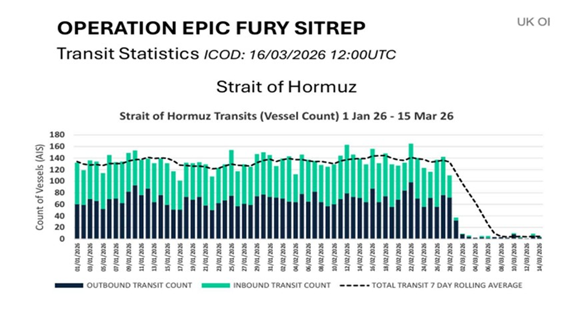
Perhaps the biggest number that should be highlighted after June 18 was 25 - the total number of ships traversing the strategic passageway following the implementation of the US-Iran MoU.

That is the number of commercial crossings through the Strait of Hormuz on the first full day following the MoU at Versailles, France. While it does spell recovery at face value, putting things in context moves it somewhere between recovery or paralysis.

Before the war, around 125 commercial vessels navigated through the international route every day, carrying nearly a fifth of the world’s seaborne and a quarter of its LNG.

Of most of the crossings, a majority were Chinese-flagged tonnage, clearing a backlog – something that can hardly qualify as recovery. While the Strait is legally open, it does remain commercially constrained.

Honestly Pricing the Gap

The real story is the real gap between “open” and “normal” which Polymarket seems to be one of the few platforms correctly pricing. The mistake made by everyone or more precisely, the interpretation being in correct is based around a single diplomatic event which resulted in a signed deal, a lifted blockade and ships passing through like they were at the start of the year. However, the market isn’t actually doing that. There are at least three different definitions of normal floating at the moment, within a live forecast of which barrier is more restricting. Reading these contracts correctly will allow for a much clearer picture of what could potentially happen next.

The Market is Focused on Barriers, Not PR

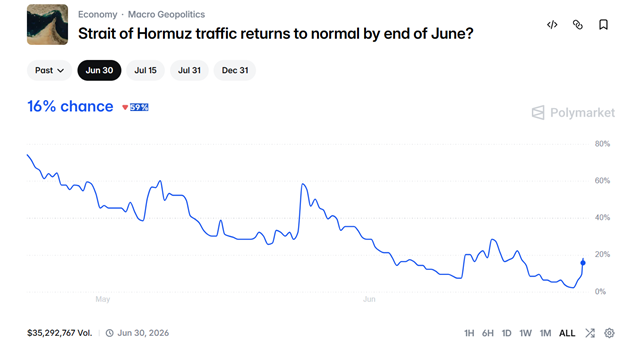
Take for instance a contract that anchors everything – Strait of Hormuz Traffic Returns to Normal by End of June?

The near-term contract has traded at low odds, while later-dated markets have priced normalization materially higher. It is a yes only if IMF PortWatch’s seven-day moving average of transit calls comes in at 60 or higher, a threshold that matters more than the price. Bear in mind, that only figures reported by PortWatch count.

It is pertinent to mention here that 60 transit calls is still far lower than the baseline pre-war numbers.

Before the war began, throughput was between 90 to 120 a day. We can safely assume that the contract’s definition of “normal” reflects a major shift from what normal was considered before the war began. Even the most bullish bets on the board haven’t priced a return to previous baseline figures. All we can see is a partial recovery which seems to be the “new normal”.

We can also take a look at the structure the market has built across future events. The July 31 normalization contract for example, still has a fair chance of coming through even though it was opened on May 11 when there was a likelihood of the conflict not settling down following Trump's pessimistic views on a ceasefire deal with Tehran.

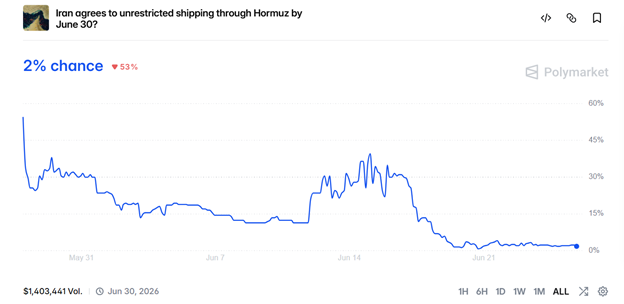
However, the most unfiltered or cleanest contract around this discourse is the one which delves into the mechanics of the normalization based on a critical regional player being convinced to play ball.

The contract currently has an extremely chance of going through and is highly dependent on Iran allowing unrestricted commercial navigation by June 30.

The most recurring them across these contracts is how the discourse has been about lifting of restrictions and tolls, along with permits to allow ships to move freely. Collapsing these elements into a single question linked with the Strait getting back to normal, makes for a skewed analysis.

The near-term “no” on most of these contracts can’t be simply filed under pessimism. It is basic math. With commercial transits barely running at around 5% to 10% of pre-February levels, chances of moving a seven-day average to 60 within days seems impossible.

But another interesting question here is why this number can’t be reached fast enough?

To begin with, an early surge of traffic should be attributed to backlog and not categorized as recovery. During the blockade, around 230 tankers were trapped inside the Gulf. By March 2, around 247 vessels, representing around 5% of global tanker dead-weight tonnage (DWT) capacity, remained stranded in the Middle East.

The first thing that has been happening and will probably continue to happen in the next few weeks is a backlog event where previously stranded tankers will be making the crossing. If we inspect this in more granularity, that number shouldn’t really be counted under “recovery or normalization”.

Physical Constraints Transcending Diplomacy

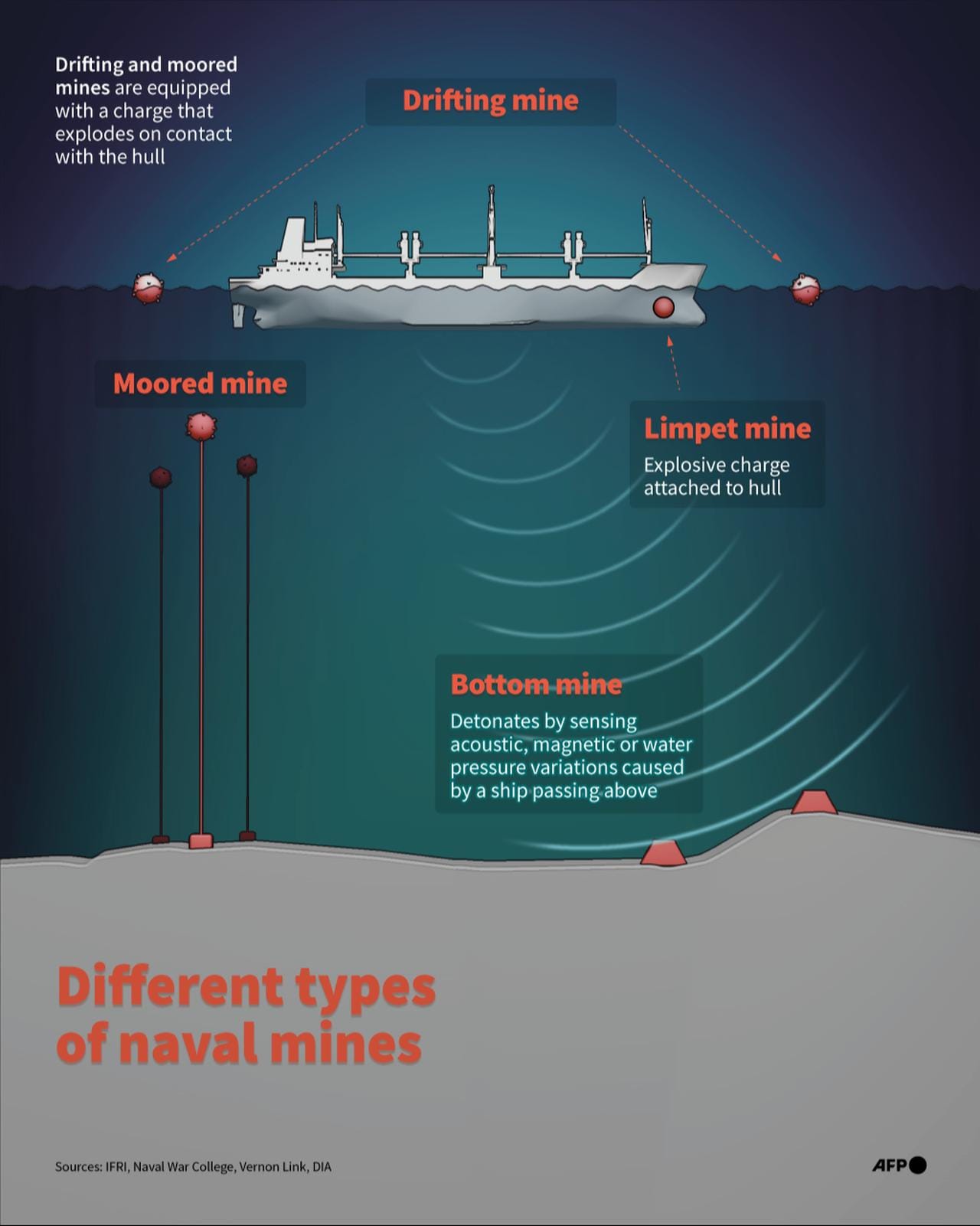
One critically binding constraint at the moment is something that is completely agnostic of diplomacy. The physical element of this is hard to ignore. During the war, Iran dropped several mines along the Strait, which further impacted an already-disrupted supply chain situation. To date, these mines have not been fully cleared, thus making transit risky. While markets can always reprice MoU signings in minutes, it can’t do the same for a minesweeping operation that requires time and resources.

Another key element here is insurance and war-risk premiums. Before the conflict began, war-risk premiums were around 0.15% to 0.25% of hull value, or at least $150,000 for a large crude carrier. At the peak, they even reached 8%, meaning that for a single transit, a tanker had to pay at least $3 million. Premiums do not drop off once a deal is signed, they only fall once there is a sustained record of risk-free and incident-free passage, dictating an underwriter’s sentiment. And with the IRGC firing warning shots on June 19, everything was reset on that front.

Will the US and its Allies Clear the Mines by July 31?

Yes
33.33%
No
66.67%
6 Polls

A Barrier Currently Not Priced

Another constraint that outweighs diplomatic wins and agreements is the flags under which stranded and not stranded tankers are sailing.

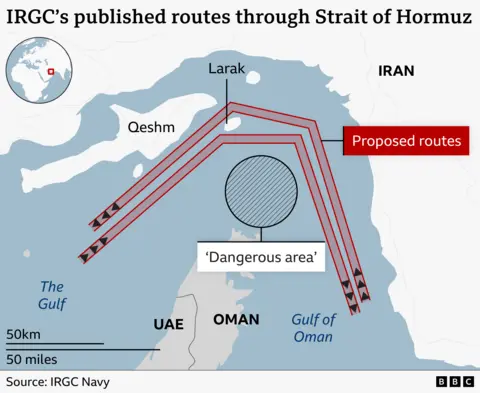
Iran’s newly-crated Persian Gulf Strait Authority has become a compliance issue because it is tied to permission, routing, fees, and safe-passage arrangements. Even if ships can physically transit, U.S.-linked or sanctions-exposed operators may face legal and compliance risks if passage requires dealing with a sanctioned Iranian authority.

The measure effectively fences out US-linked or affiliated entities who would want to avoid sanctions, which is also why the early “recovery” is dominated and represented mostly by Chinese-affiliated tankers.

While the market can measure recovery, it cannot measure the composition of the recovery, which is where the real normalization question exists.

On top of that, there’s a serious challenge of data accuracy as well. IMF PortWatch has explicitly revealed how its data has been impacted by GPS jamming, AIS spoofing and vessels going dark around the Strait. The instrument, which is the actual data, is being degraded by the conflict it is measuring.

Looking for a Cleaner Bet

An contract resolving positively by December is essentially taking stock from two events; physical recovery and the viability of an interim deal. The MOU window closes around August 17, with nuclear terms considered a key sticking point, along with the Lebanon ceasefire clause which has already been violated a few times. The collapsing of the deal could likely re-close the Strait.

Thinking beyond the normalization markets is a much cleaner route. The possibility of Trump restarting Project Freedom at a specific date is another great contract that could signal whether the deal has failed or not. It carries more weightage since it resolves on a political decision rather than relying on a potentially inaccurate shipping metric.

Tracing the Mispricing

The July normalization event appears to be too high, with Kpler projecting only 40 transits a day within 30 days, almost half of the pre-war numbers. Moreover, the projections are conditioned by no setbacks during the negotiations between the two parties. We’ve already see quite a few of those already so the supply-chain principles are tilted towards the No side.
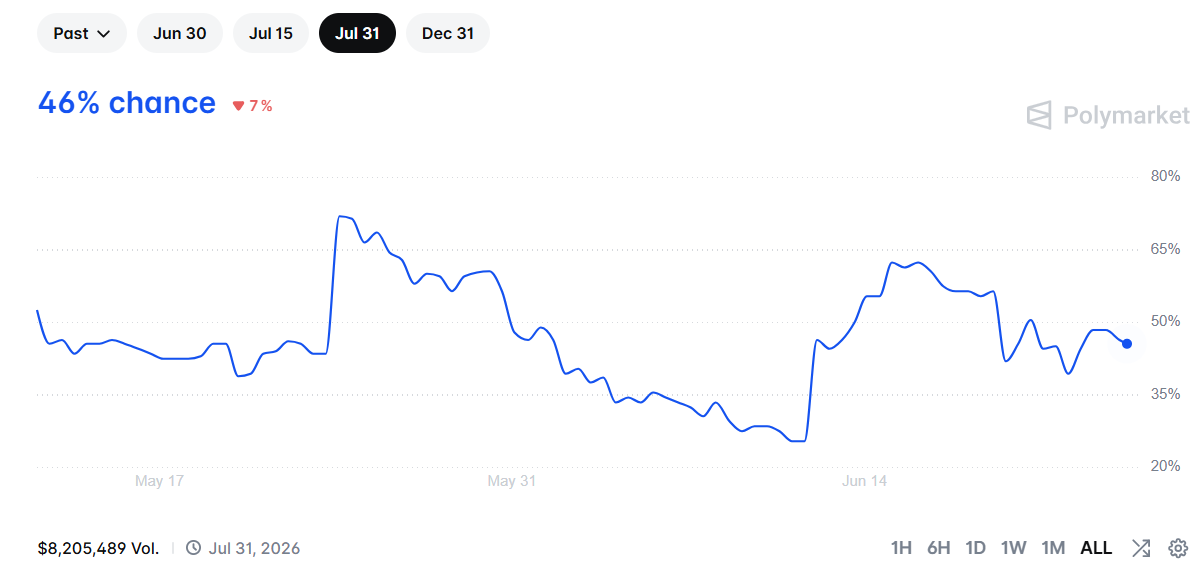
While the contracts resolving by December seem much more practical, they don’t take into account the potential of things going south by August 17.

Will the Strait of Hormuz Daily Transit Increase to Pre-War Levels by Aug. 18?

Yes
100.00%
No
0.00%
3 Polls

What to Watch Out for in the Coming Days?

There are a few catalysts that will have a bearing on all contracts relevant to the Strait of Hormuz normalcy plan. A mine-clearance milestone will have a bearing on everything. Meanwhile, a Western-flagged tanker in transit with no fee will define resolution. However, anything that goes against the Lebanon clause is likely to cause friction.

The actuarial events here are the reopening of different chokepoints, not the diplomatic overtures. While presidents can announce the opening of the passage, it is the underwriters who decide whether the situation has normalized or not.

At present, Polymarket’s spread if observing the underwriters and for now, it seems the latter side isn’t convinced yet.


What a Burnham Premiership Means for UK Stocks
Analysis
EconomicsGDPMust Read

What a Burnham Premiership Means for UK Stocks

A Burnham premiership would test UK equities through gilts, fiscal credibility and sector-specific policy risk.

Politics

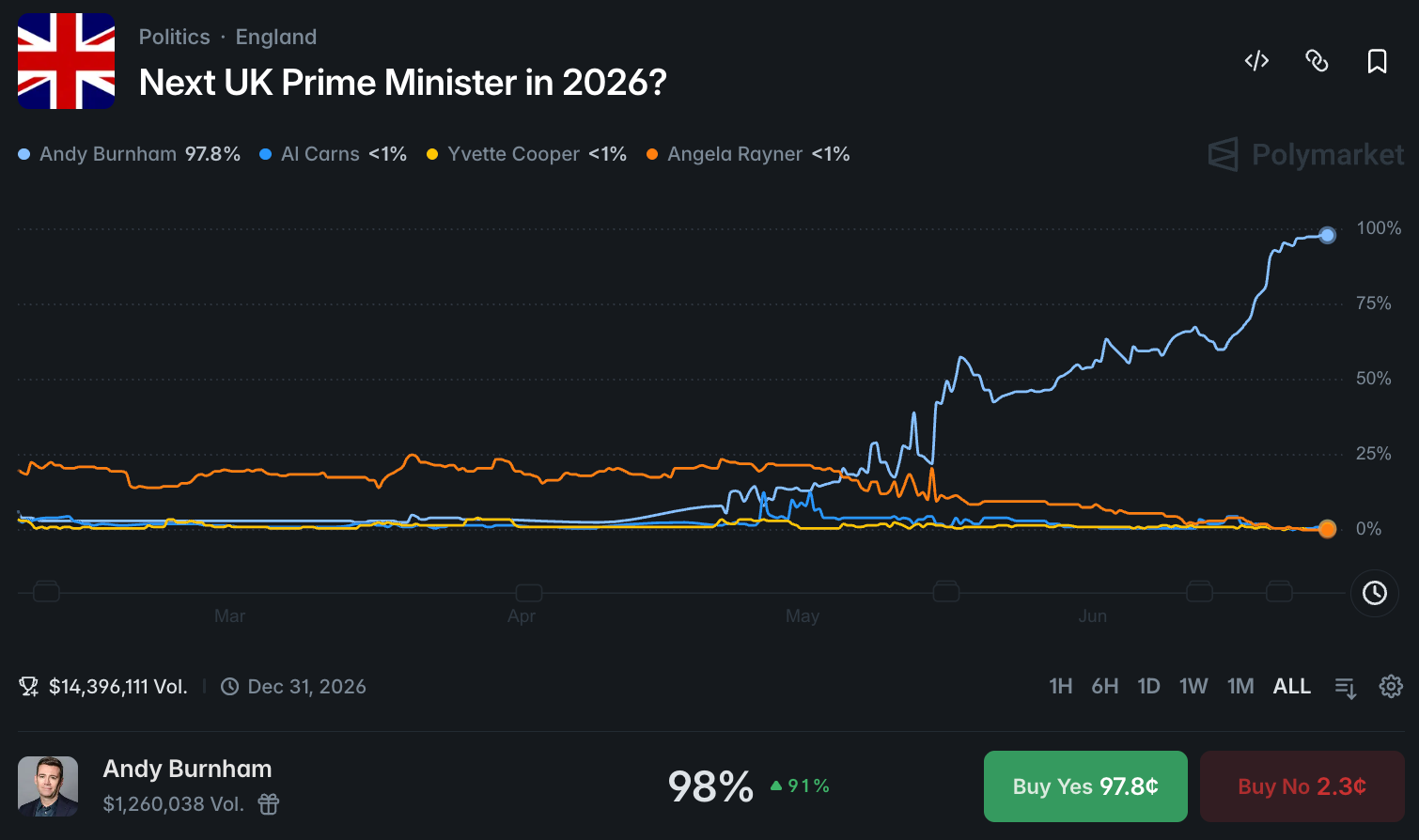
As a Burnham premiership is almost priced in by prediction markets, in my opinion, it turns UK equities into a test of fiscal credibility and sector-specific policy risk. The first question is not whether Burnham is left-wing or pro-growth. The first question is whether investors believe his government can spend more, reform more, and still keep the bond market calm.

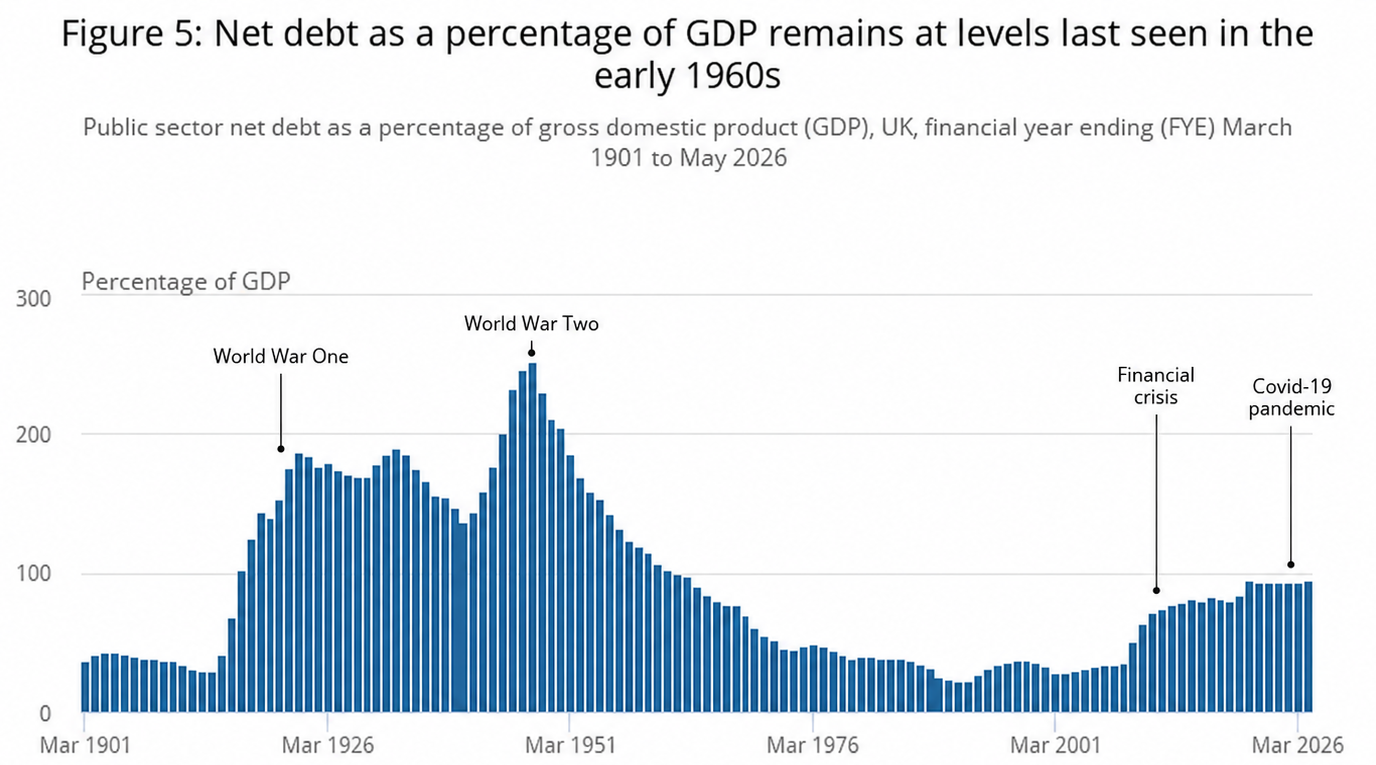
The UK already has a fragile fiscal backdrop. UK borrowing in May 2026 was £23.3bn, while central government debt interest payable reached £11.7bn, the highest May figure since 2020. The OBR also expects public sector net debt to rise from around 90.6% of GDP in 2025-26 to 94.5% in 2029-30 before easing. Public debt is high, debt interest is biting, and the gilt market has become the transmission channel for political risk. In that environment, the issue is whether investors view "good borrowing" as credible, growth-enhancing borrowing or as another sign that fiscal discipline is weakening and that they can demand higher rates.

Source: Public sector finances from the Office for National Statistics and Office for Budget Responsibility

My base case is that Burnham does not trigger an immediate crisis, but he raises the equity market’s sensitivity to each fiscal signal: the speed of the leadership transition, the choice of Chancellor, the first Budget, and the wording around "public control".

Reuters suggests investors are already watching the Chancellor choice closely. The Chancellor choice tells the market what kind of Burnham government it is dealing with. A continuity choice would suggest an attempt to preserve market credibility, even if the political agenda shifts. A soft-left choice would point toward higher investment borrowing, more tax rises, and a more active state. A reform-minded choice could be the most interesting outcome, with potentially more radical changes to property tax, welfare, pensions, and spending efficiency, but also with higher execution risk.

FTSE 100 over FTSE 250 if Yields Go Up

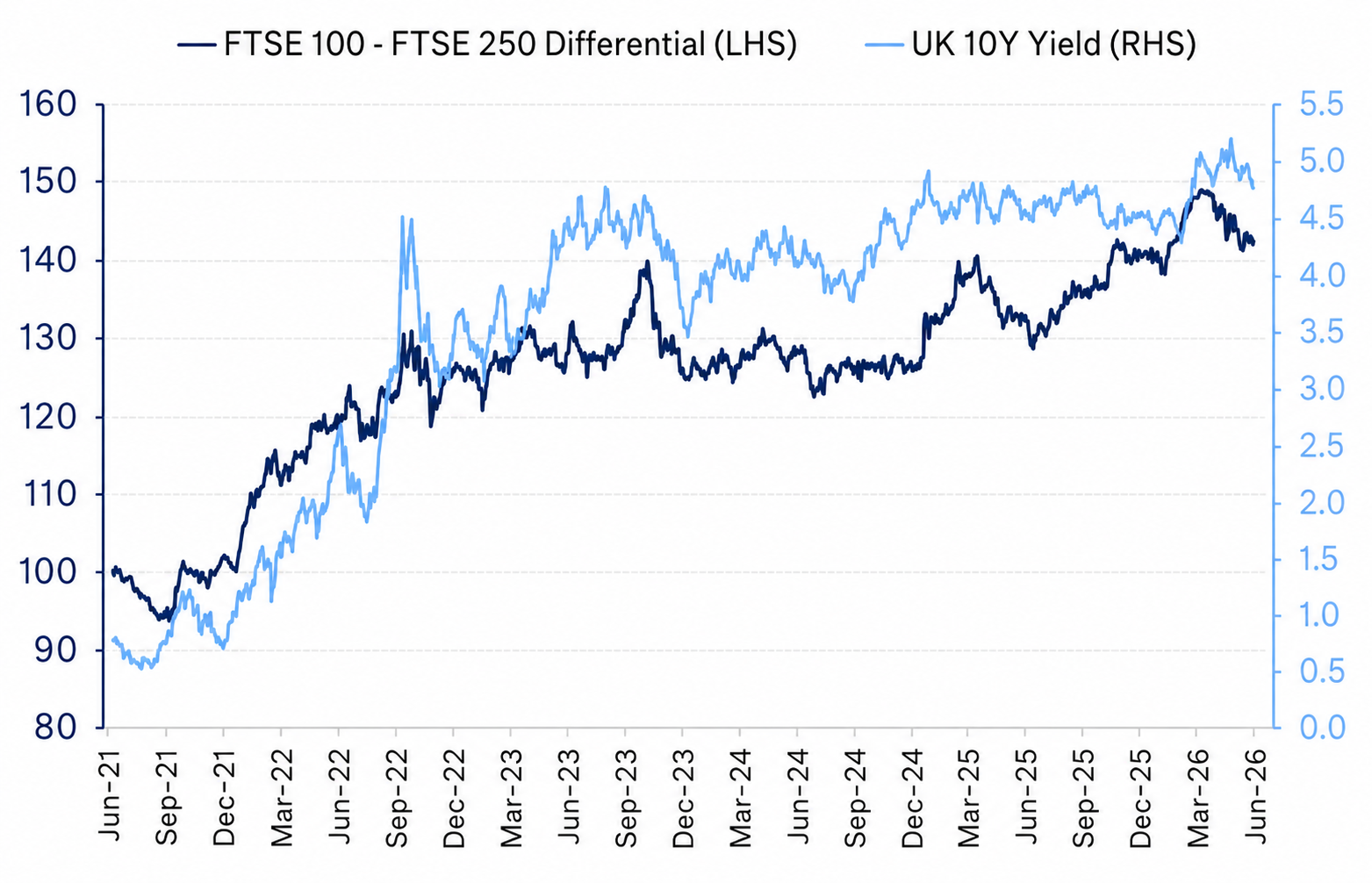
The cleanest equity implication when yields go up is FTSE 100 over FTSE 250. The FTSE 250 is more domestic, more rate-sensitive, and more exposed to UK-specific risks. The FTSE 100 is more international, more dollar-linked, and has heavier exposure to foreign revenues. Over 80% of the FTSE 100 constituent sales come from outside the UK, while the FTSE 250 is much more domestic, with overseas sales closer to 55% and UK revenue exposure around 43%. The US exposure also differs sharply. The FTSE 100 derives nearly 30% of revenue from the US, versus about 10% for the FTSE 250.

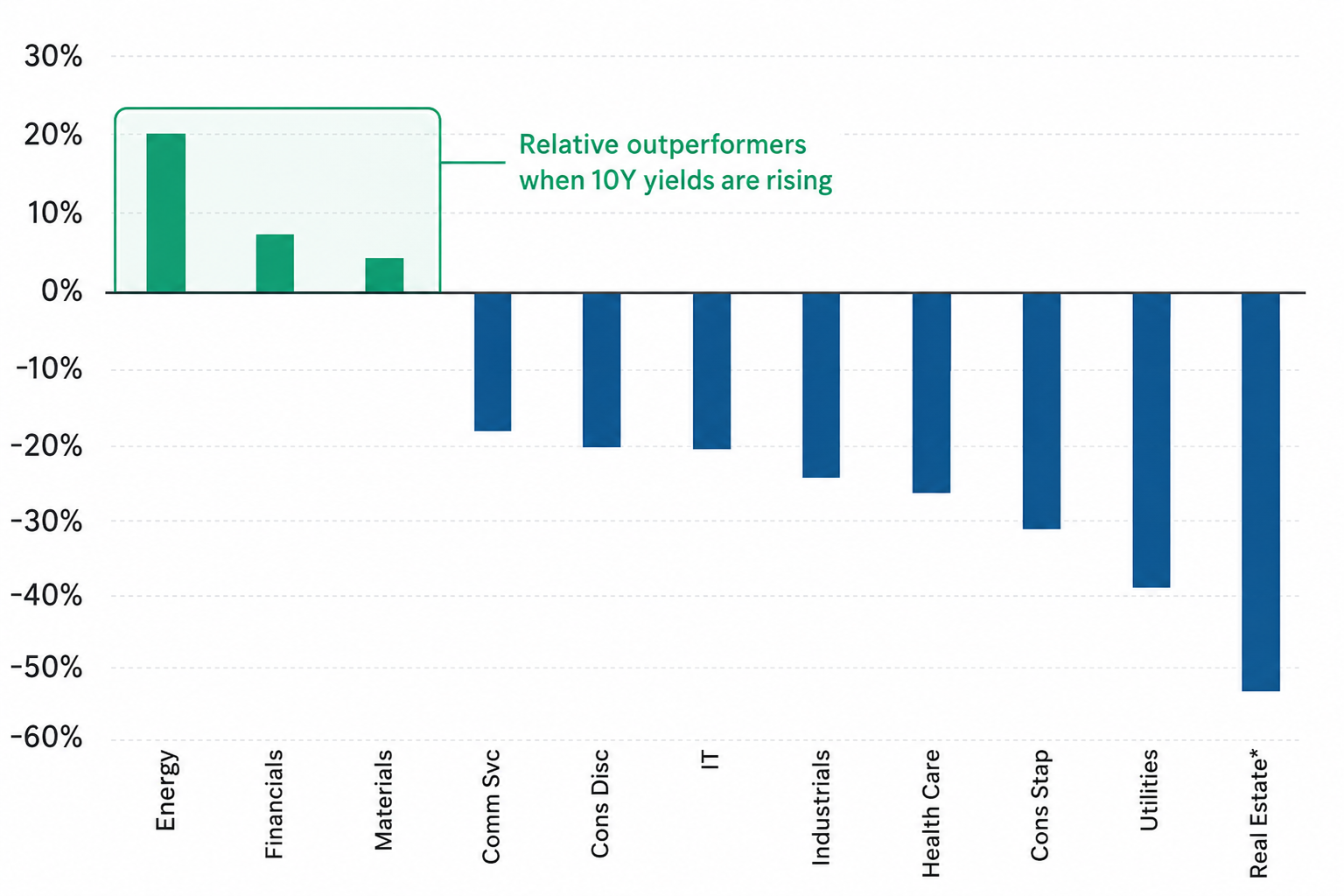
When 10-year gilt yields rise, the FTSE 100 tends to outperform the FTSE 250. And this is why I would treat a Burnham premiership as a relative trade first: large-cap international UK over mid-cap domestic UK.

Source: LSEG

Energy and Resources Are Protected by Global Exposure

Sector-wise, energy and basic resources should be relatively insulated from a Burnham-led UK policy shock because their earnings are globally driven. They also benefit from their international revenue base and potential sterling weakness. Moreover, energy is one of the sectors that tends to benefit in relative terms when UK yields rise.

There is one domestic caveat: Burnham may face pressure from unions, climate groups, and industrial-policy factions over North Sea oil, net zero, and clean power. The Guardian has already framed climate and North Sea policy as one of the early tests of his leadership. But for large integrated energy names, the UK policy component is usually smaller than global factors like commodity prices, global capex discipline, and FX translation. I would therefore view energy as a relative hedge inside UK equities.

UK Sector Relative Performance and 10Y UK Bond Yields Correlation (Based on 15 years of historical data; Real Estate data starts from 2016; Source: LSEG)

Real Estate Has the Weakest Setup

Real estate is the clearest loser from a higher-yield Burnham scenario. That makes intuitive sense. Higher discount rates reduce asset values, higher mortgage rates reduce affordability, and policy uncertainty can freeze transaction activities.

Housebuilders are also caught in a complicated policy cross-current. On the positive side, a reformist government could push planning, infrastructure, and regional development. On the negative side, fiscal pressure makes property taxation tempting. That could be good for long-term efficiency, but in the short term it creates uncertainty for residential property equities.

Utilities and Burnham's "Public Control" Language

Utilities are the most interesting sector because the top-down and bottom-up views conflict.

Top-down, utilities are rate-sensitive and therefore vulnerable if a Burnham premiership means higher borrowing and higher gilt yields. The broad equity framework puts utilities among the sectors that face headwinds when yields rise. There is also a political headline risk because Burnham has used "public control" language around energy, water, housing, and transport.

Bottom-up, however, the nationalisation fear may be overdone. "Greater public control" may mean more strategic planning, regional coordination, and regulated investment, not outright public ownership of listed utilities. In addition, UK electricity networks and water companies have regulatory mechanisms that pass through some inflation and financing-cost pressure. For electricity transmission, half of the regulated asset base is CPIH-indexed, while allowed debt and equity returns adjust through regulatory mechanisms. For water, the RAB is fully CPIH-indexed, and water companies can still deliver 10% plus nominal returns over the regulatory period to 2030.
Therefore, I would separate this sector into different buckets.

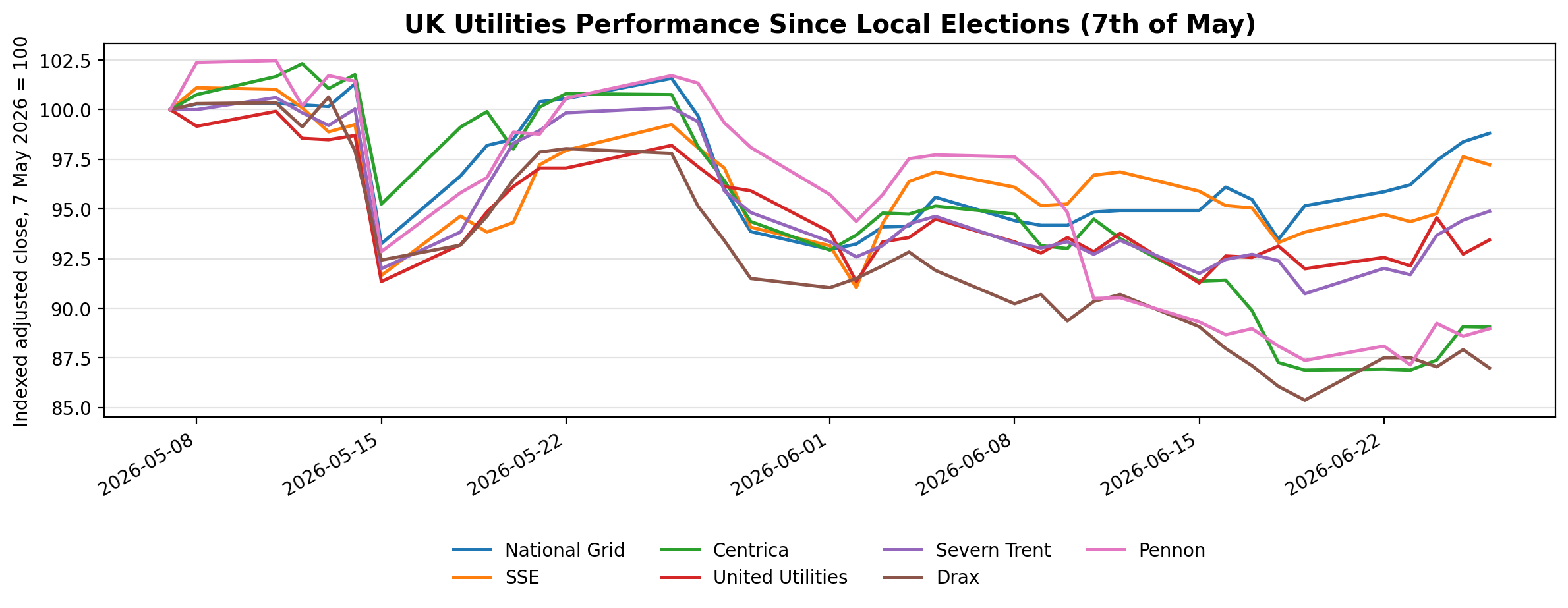
First, companies with underlevered balance sheets and exposure to higher or more volatile power prices look better positioned. Centrica and Drax are in this category.

Second, electricity networks may still be structurally supported because the UK needs grid investment for clean power and electrification. Official planning is also moving toward more centralized energy-system coordination through NESO’s Strategic Spatial Energy Plan and Regional Energy Strategic Plans.

Third, water names remain politically exposed, but valuation and regulation matter. This is the kind of sector where political headlines can create forced selling, but the actual cash-flow mechanics may be more resilient than the first reaction suggests.

Source: Yahoo Finance

What to watch next

First, the leadership process. A quick transition would calm markets and support gilts, helping domestic equities. A prolonged contest would keep fiscal uncertainty high and likely favour FTSE 100 over FTSE 250.

Andy Burnham Is Priced In. But Will Labour Crown Him?
Brief Analysis Andy Burnham is not just the frontrunner to replace Keir Starmer. He is now being treated by both Labour insiders and prediction markets as the almost-certain Britain’s next prime minister. Reuters reported that Darren Jones, a key ally of Starmer, ruled himself out of the leadership

Second, the Chancellor. This matters more than the leadership result. A continuity pick would reassure markets, while a soft-left choice implies more borrowing and taxes. A reform-minded option could be positive, but only with credible fiscal plans.

Third, fiscal rules. The key is not whether they change, but whether any extra borrowing is tied to productive investment and a credible debt path. Markets will react differently to growth-focused spending versus fiscal drift.

Fourth, “public control.” Nationalisation rhetoric would pressure utilities, while a focus on regulation and coordination could ease concerns.

Disclaimer: The content is for informational purposes only. You should not construe any such information or other material as legal, tax, investment, financial, or other advice. Nothing contained in this article constitutes a solicitation, recommendation, endorsement, or offer by the author(s) or any third party service provider to buy or sell any securities or other financial instruments in your or in any other jurisdiction in which such solicitation or offer would be unlawful under the securities laws of such jurisdiction. The author(s) report(s) no conflict of interest.

Andy Burnham Is Priced In. But Will Labour Crown Him?
Quick Take
Election

Andy Burnham Is Priced In. But Will Labour Crown Him?

Politics

Brief Analysis

Andy Burnham is not just the frontrunner to replace Keir Starmer. He is now being treated by both Labour insiders and prediction markets as the almost-certain Britain’s next prime minister.

Reuters reported that Darren Jones, a key ally of Starmer, ruled himself out of the leadership race and backed Burnham after receiving reassurance about his economic plans. Burnham is currently the only declared candidate, and Labour figures are increasingly preparing for what could become a fast, low-drama transition.

Last updated:25/06/2026

That is why the question has shifted. This is less about whether Burnham is strong enough to win, and more about whether anyone else can still clear the formal threshold to make him fight for it.

Viewpoint Quote: “The market may be right about the winner, but the unresolved question is the route: does Labour crown Burnham quickly, or does the party still demand a contest before handing him No. 10?”

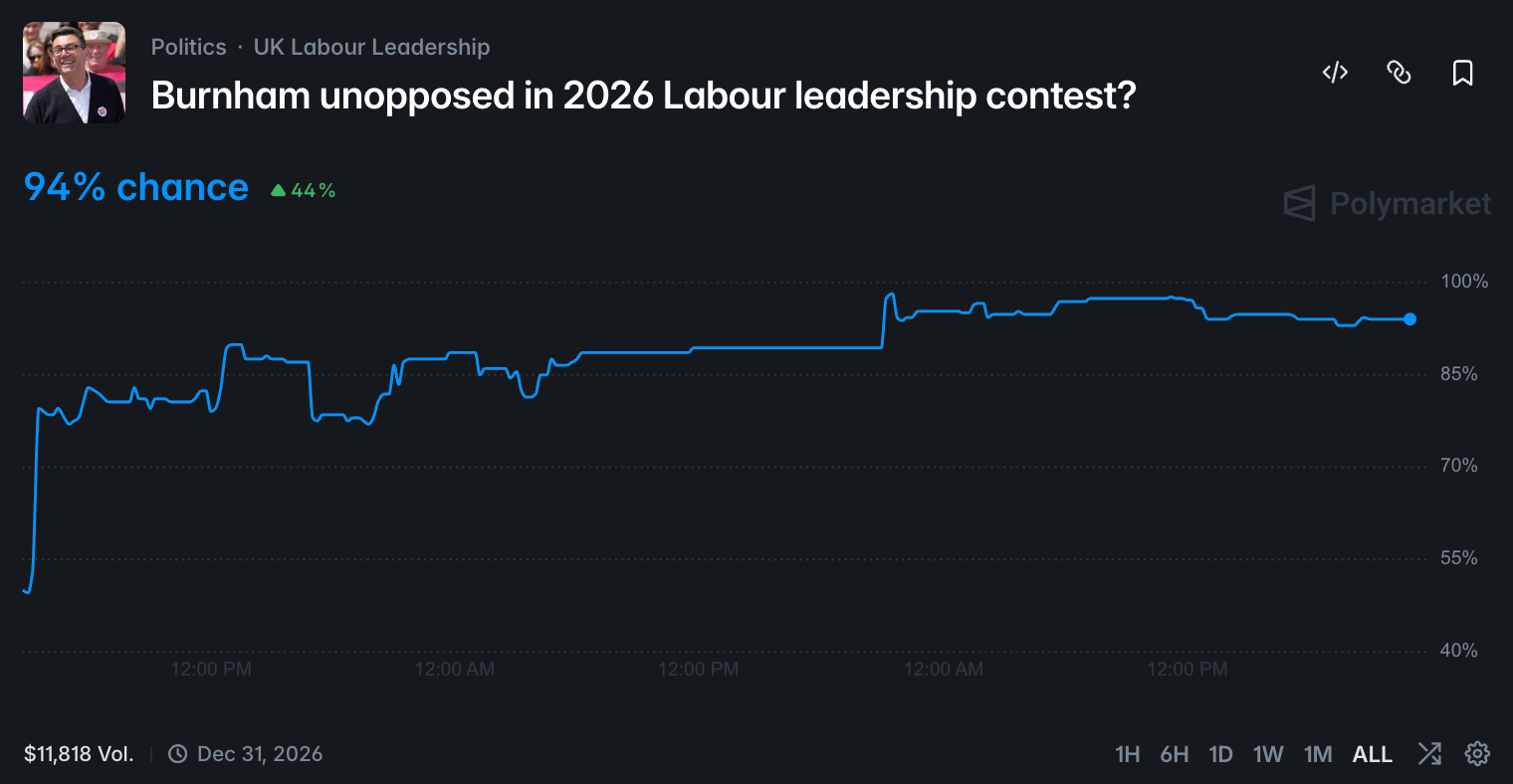
On Polymarket, Burnham has been trading as the overwhelming favorite in the “Next UK Prime Minister in 2026?” market. But the more delicate contract is the one asking whether Burnham will be unopposed in the 2026 Labour leadership contest.

Last updated:25/06/2026

Will Andy Burnham be unopposed in the Labour leadership contest?

Yes, Labour will give him a coronation
66.67%
No, another candidate will clear the nomination threshold
33.33%
3 Polls

This distinction matters. A challenger does not need to beat Burnham to change the story. They only need to clear the nomination threshold.

The current evidence still points toward a coronation. Jones has stepped aside. Chancellor Rachel Reeves has backed Burnham.

Reuters has reported that Burnham is the sole candidate so far and could be in office by mid-July. Those are not small signals; they suggest the party’s senior ranks want speed, unity, and economic reassurance after Starmer’s resignation.

But “likely coronation” is not the same as “zero contest risk.” Sky News reported that some Labour MPs are under pressure from local party members who would prefer a leadership contest rather than a coronation, partly because they want to see Burnham’s plans tested in public. The Guardian has also reported that some backbenchers had seen Darren Jones as a possible candidate to scrutinize Burnham’s economic agenda, even as senior Starmer loyalists urged him not to run.

That does not point to an organized anti-Burnham rebellion. It points to a narrower, more realistic risk: some MPs and party members may want scrutiny, while Labour’s rules still leave room for another qualified candidate if they can gather enough support.

A Burnham coronation would send a clear message. Labour wants a clean handover, minimal internal damage, and a new prime minister who can quickly focus on the economy, public services, and the party’s weak polling position.

A contested race would send a different signal. It would not necessarily mean Burnham is vulnerable. It would simply show that parts of the party want him to explain his fiscal policy, borrowing plans, and post-Starmer direction before he enters Downing Street.

For markets, that is the key difference. The Burnham-to-win trade may already look crowded. The sharper question is whether Labour’s internal incentives favor a clean handover or whether enough pressure for scrutiny remains to put another name on the ballot.

If Burnham becomes prime minister, the first market question may be almost settled. The next one is more political: will Labour crown him quickly, or make him earn the job in public?

Original Article

Reuters — “Starmer ally Jones backs Burnham after being reassured on economic plans”
https://www.reuters.com/world/uk/key-starmer-ally-jones-rules-himself-out-contest-be-britains-next-pm-2026-06-24/

Why might Labour avoid a contested race?

To project unity after Starmer’s resignation
33.34%
To install a new prime minister quickly
33.33%
To avoid exposing internal policy divisions
33.33%
Because Burnham already has enough support
0.00%
3 Polls

If Burnham becomes prime minister, what will matter most in his first 100 days?

His position on fiscal rules and borrowing
33.34%
His choice of Chancellor
33.33%
Labour’s national polling recovery
33.33%
Whether he rules out an early general election
0.00%
3 Polls
Fable 5 Shutdown Was Never About the Jailbreak
Analysis
TechnologyLLMsInsightRegulatoryAI Infrastructure

Fable 5 Shutdown Was Never About the Jailbreak

TechPolitics

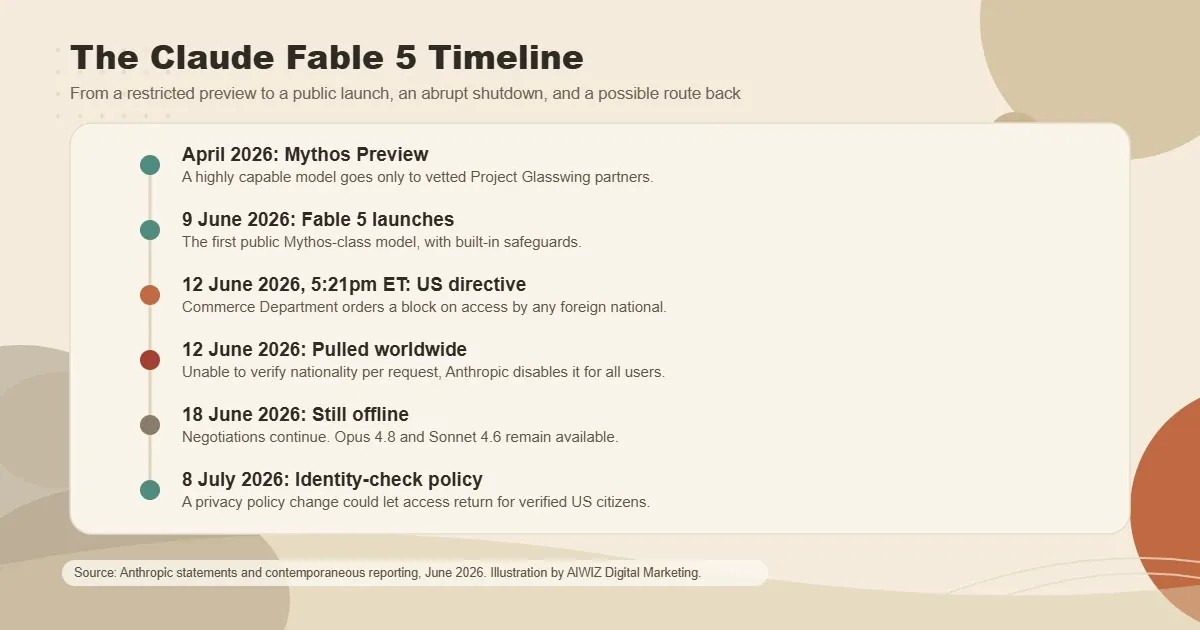
On June 9, Anthropic released Claude Fable 5, an AI model that comfortably beat OpenAI’s GPT 5.5 on agentic-coding benchmarks by more than twenty points.

However, the revolutionary model’s shelf life was only fleeting!

At around 5:21 p.m, eastern time, Friday, June 12, the US Commerce Department sent a letter.

By the evening of the same day, Fable 5 and Mythos 5, its unrestricted sibling, went dark for every customer on the planet.

An Old Law to Implement a Kill Switch

What is also equally interesting is the instrument through which the shutdown directive was carried out. It was the Export Control Reform Act of 2018 and the “deemed export” rule under 15 CFR 734.13 which treats granting a foreign national access to controlled technology, even if its inside the US, as an export.

The order, which essentially made Fable 5 a deemed export, also covered the company’s own foreign-national employees. With no way to verify citizenship in real time at API scale, Anthropic only had one compliant move in its pocket: shut the model down for everyone, on a global scale.

Calling the Fable 5 decision a restriction barely captures the entire essence of the event. When a foreign-national restriction is being implemented on a live service with millions of subscribers, it isn’t exactly a restriction, it is a kill switch. And the kill switch was the only way to enforce it on a same-day notice.

This was done without an independent technical review, court approval, prior notice or any exemption for allied nations.

The government letter arrived on a Friday evening, by nightfall, all the “problematic” models had gone dark.

Ignoring Government Access Order Framework

A more plausible reading that holds the argument beyond the jailbreak rhetoric could be the June 2 White House executive order which directed the NSA, Treasury and CISA to work on a “covered frontier model” framework. Under the framework, the government will have a 30-day access to models such as Fable 5 before they’re released to other partners or general audiences. Fable 5 launched five days after that order and never made it to government offices for testing or due diligence.

This is why, the export directive is less of an emergency response to a security finding and more of an enforcement of a voluntary framework that a leading AI lab bypassed. The jailbreak served as a legal hook, while the executive order powered the motive.

Meanwhile, the alleged letter that Commerce Secretary Howard Lutnick had sent to Anthropic’s CEO, did not spell out any specific concern. However, it does appear that the real motive behind the letter was not just about resolving a patch, but a negotiation tactic over who gets to see such frontier models before they become open for public.

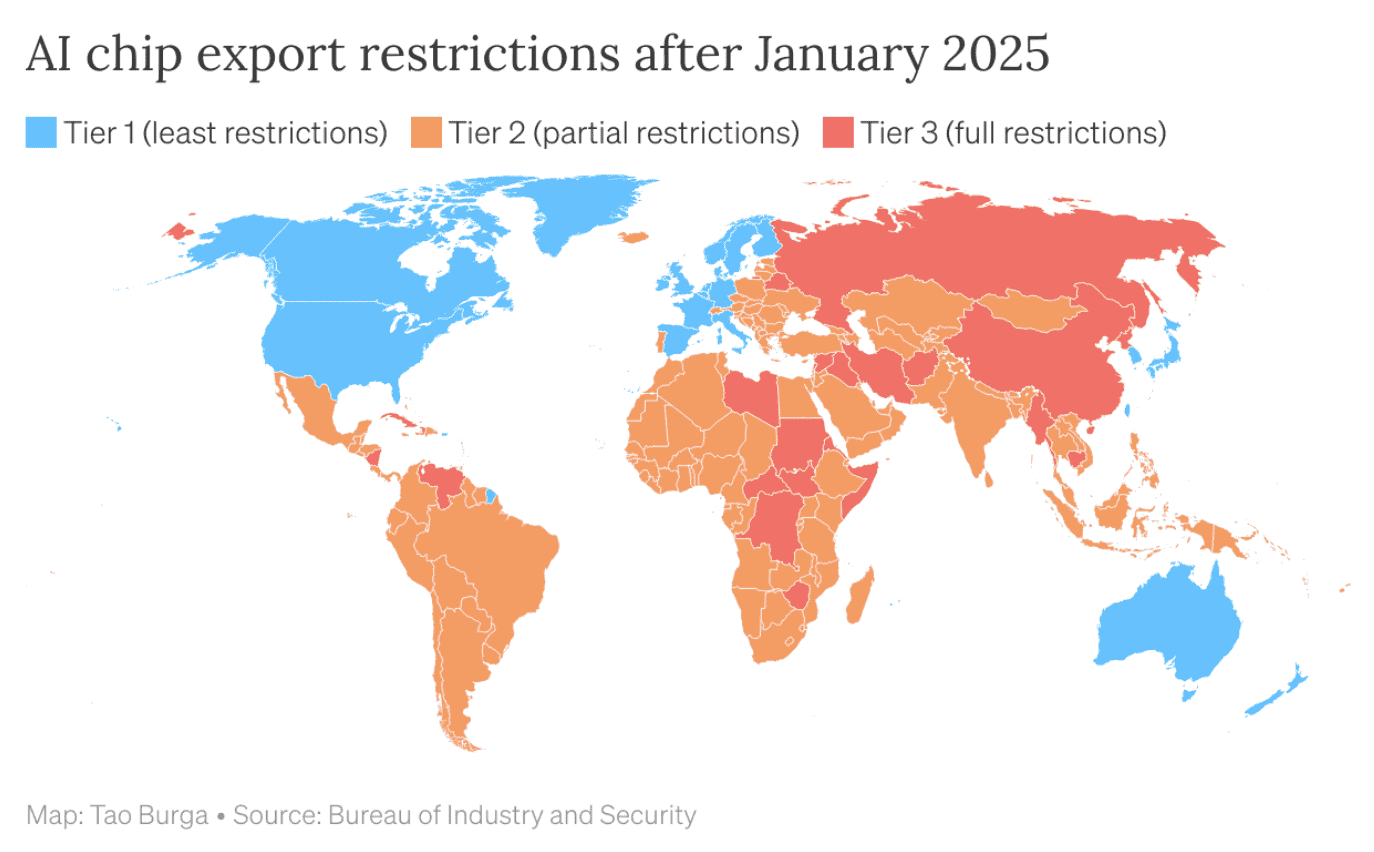
The move to completely shut down Fable 5 is an unprecedented one. Never before has a deployed commercial AI product gone through something like this. Earlier, the biggest regulatory barriers for AI were export controls targeting hardware or advanced chips to China under the January 2025 diffusion framework.

The move also sets a precedent or a blueprint for any frontier model which serves to a global user base, vulnerable to the whims of a government agency which can revoke its presence, leveraged by national security, without any verbal evidence or a committee, while also rendering it powerless to lodge an appeal against the decision.

Since the shutdown, most of the commentary has been focused on the trigger point. Was it a really dangerous jailbreak? Was the US government right about the severity of the jailbreak?

While the debate is quite an interesting one, it is essentially beside the point.

The key event isn’t really an alleged flaw. The key instrument here are the tools that were used to make a groundbreaking model go dark at its infancy.

The unprecedented shutdown was same-day, global and court-free of a deployed commercial product. It would naturally make people wonder how dangerous Fable 5’s capabilities were that the US government decided to bypass all conventional legal channels to pull the plug.

Is the Jailbreak a Distraction?

The merits of this move naturally require specific reasoning. Based on Anthropic’s own communications, government concerns are mostly around the ability of the model to read a codebase and identify software flaws. But there isn’t really anything unique about it since the same job is done by developers, cybersecurity specialists and pretty much every security engineer who runs a software before it goes live.

Based on the points made by Andrew Morris of GreyNoise Intelligence and Katie Moussouris, the capabilities in question aren't unique to Fable 5 so a simple patch doesn't necessarily fix everything.

Anthropic can patch the vulnerability and the control is lifted. However, Anthropic and other testers argue that the same capability is available from other models such as GPT 5.5 and even its own Opus 4.8. In short, there is no quick fix that would solve the problem without crippling a flagship model for a capability that its rivals retain without government oversight.

Perhaps it is safe to say that the government is asking a company to patch a property of capable models in general, not a defect unique to this one. To put simply, the entire Fable 5 is more than just a bug report – it is a critical debate about whether frontier coding ability is safe in public hands.

A Warning Cloaked as Patch Fixing?

While supporters of the act will call this event a major national security win, the action hasn’t really had the desired outcome. It hasn’t eliminated a purported dangerous capability from existence. All it has done is simmer downed Anthropic’s version of the capability that the likes of GPT 5.5, Opus 4.8 and a host of other open-weight models already provide.

What it has done so far, is that it has set a precedent for future frontier models to showcase compliance in face of a national security-linked directive.

The most logical response to this precedent is perhaps migration towards models that cannot be switched off, are self-hosted, open-weight or foreign. In light of what has happened earlier this month, the Cloud Security Alliance has suggested companies to relocate critical workloads across multiple vendors, thus containing a capability rather than allowing it to fizzle out.

Another pertinent point here is that the bypass did not come from a foreign adversary, it came from Amazon, Anthropic’s largest investor and primary cloud provider, along with its direct competitor.

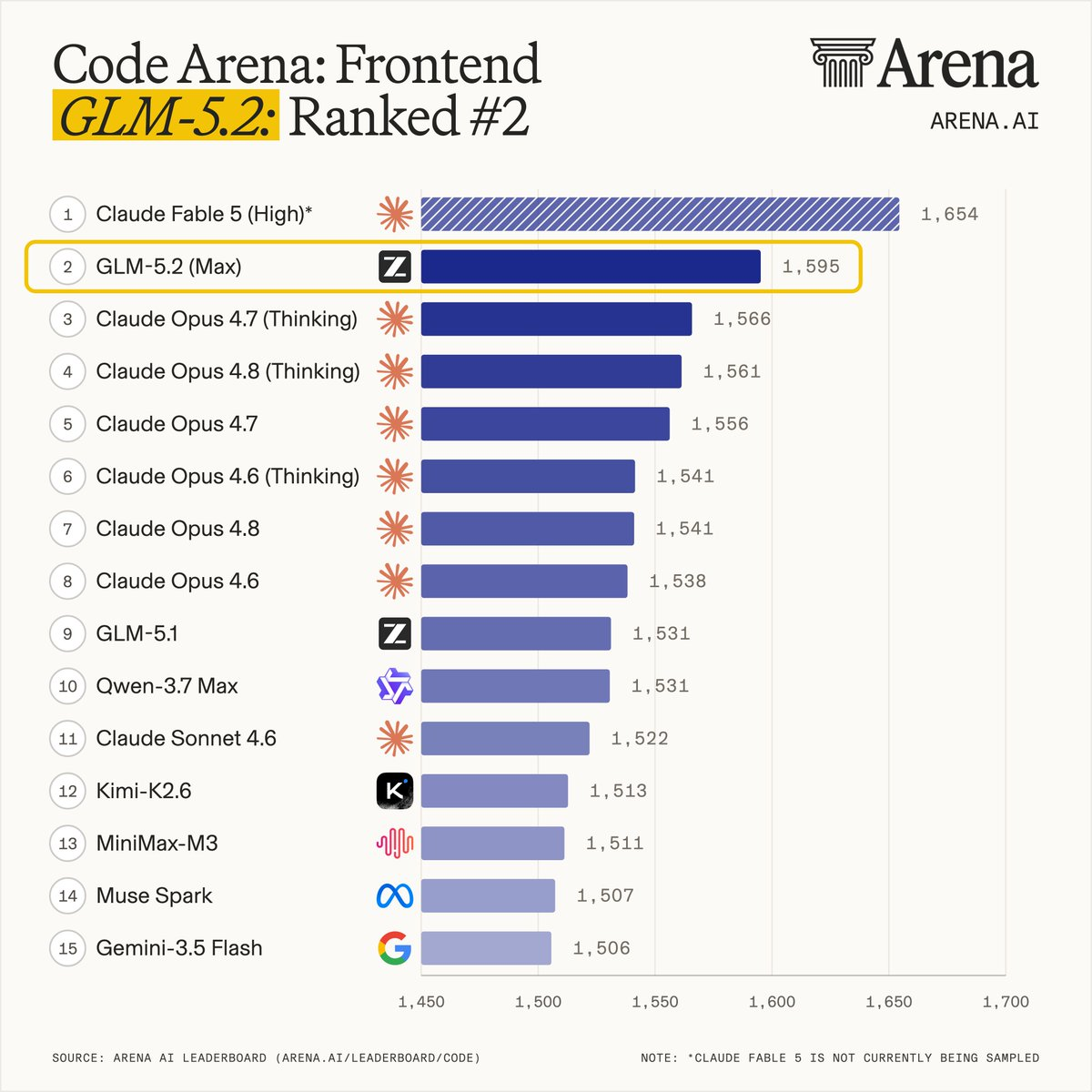
Such a move can also pave way for other models to offer something similar to Fable 5 and emerge as direct competitors. For instance, the Beijing-based Zhipu AI's GLM-5.2 model is already filling the gap Fable 5's vanishing act has created.

Will Fable 5 Return?

Presently, Anthropic is working to restore access and officially considers the executive order a misunderstanding. The model is likely to return, with no timeline in sight at the moment. However, in this case, timeline isn’t important – the terms of return are what matter more.

If access returns bundled with regulatory concessions based around the pre-briefing framework, the model will be working with a hanging noose of another shutdown if it deviates from the terms. However, if the government quietly backs down once Anthropic provides technical detail, it becomes a one-off event, thus allowing a frontier model to branch out unchecked.

The timing of this is also critical and could impact Anthropic's initial public offering plans.

Will Fable 5 return at the end of July?

Yes, by end of July
100.00%
No, but before end of August
0.00%
1 Polls

Conclusion

For years, AI industry has been arguing about guardrails and what a model should and should not do. Fable 5 revealed that the real discussion was never really about safety training. It was more about an out-of-the-blue executive order that is currently a lever sitting over an entire industry, waiting to take action based on national security interests.

The model that went offline doesn’t seem to be the biggest story here. What it doesn’t come back with once the switch is turned on again, is the real discussion.

Commodity Desk - Oil Is Pricing a Hormuz Reopening. The July Contract Needs Proof
Analysis
Capital MarketsEnergyOil & GasCommodity Desk

Commodity Desk - Oil Is Pricing a Hormuz Reopening. The July Contract Needs Proof

Oil prices are already trading a Hormuz recovery, but Polymarket’s July market needs the PortWatch ship count to hit its settlement threshold before July 31.

Economics & FinancePolitics

Last week, we argued that reopening Hormuz would be a sequence, not a switch. The July Polymarket market now puts that thesis into a tradable form.

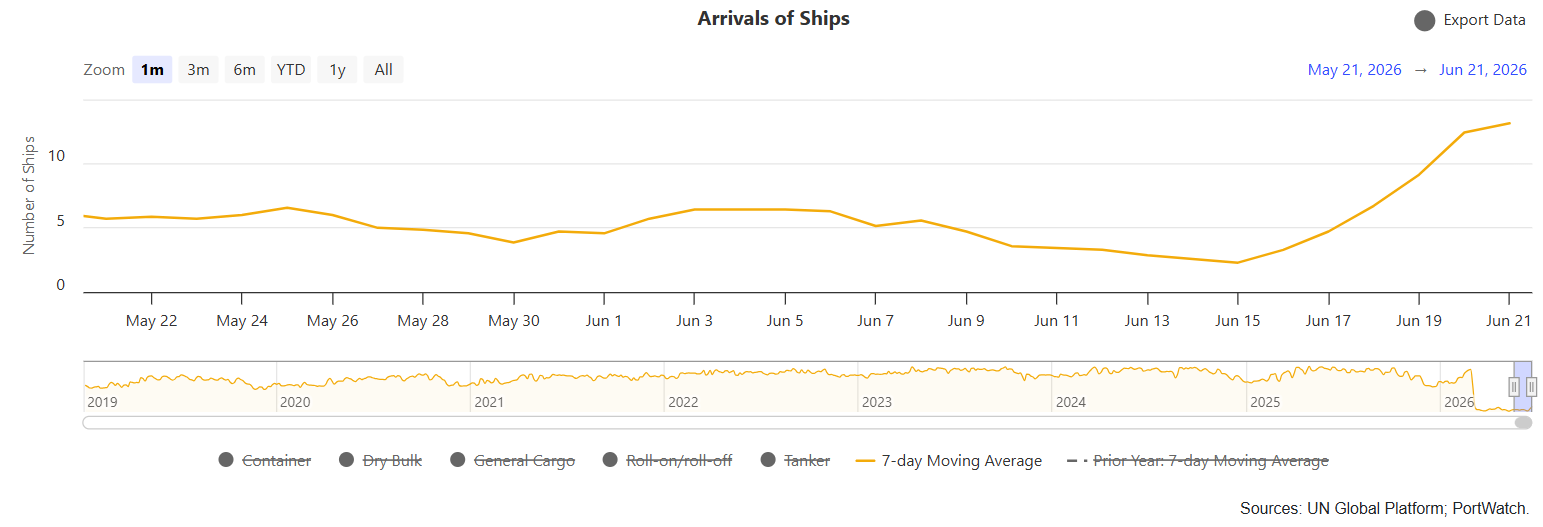
The contract resolves Yes if IMF PortWatch publishes a 7-day moving average of Strait of Hormuz transit calls, or “Arrivals of Ships,” at or above 60 before July 31.

This makes the question narrower than "is Hormuz reopening?" and stricter than "are tankers moving again?"

Oil prices are already reacting to better headlines. Brent and WTI have fallen as traders price smoother crude flows through the strait. But the Polymarket contract needs something harder: a broad enough recovery in counted ship traffic to show up in the official data before the clock runs out.

Why July Yes has a real case: Traffic is coming back

Reuters reported that three stranded supertankers passed through Hormuz, including two Trafigura-operated VLCCs carrying about 2 million barrels each and another VLCC chartered by GS Caltex carrying Saudi crude. Seven empty Qatar-linked LNG tankers also entered the Gulf in recent weeks, an early sign that Gulf gas shipping is trying to restart.

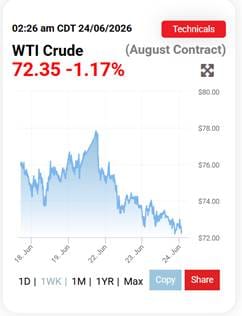
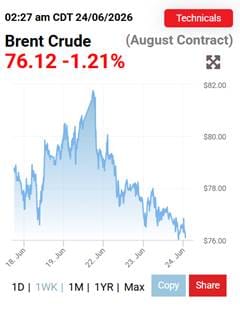
By June 24, Brent was trading at $76.12 and WTI around $72.35, near four-month lows, as traders priced recovering crude flows through Hormuz.

Source: IMF

In simple words, this is what a reopening trade should look like: first, the risk premium comes out of oil, then shipowners and charterers test the route, then flows normalize.

So, July Yes has a real case.

Here’s the risk: Early movement versus normal flow

The risk is that traders confuse movement with normalization, and the July market may be giving the 30-day restoration target too much credit.

First off, sailings through Hormuz are still only a fraction of the roughly 125 daily crossings seen before the Iran war began. As of this writing, the seven-day moving average is around 13 versus a required 60.

The market needs a broad and sustained jump across the counted categories, early enough for the average to register before the deadline. A burst of traffic in the final 24 or 48 hours could look bullish on a shipping screen and still fall short of the contract.

Source: IMF PortWatch

A few supertankers leaving the Gulf are important for oil supply. Several LNG tankers repositioning is important for Gulf gas trade. But the PortWatch threshold needs a broader recovery across counted ship categories, not just a handful of high-profile oil and LNG movements.

If the count starts climbing into the 30s or 40s by mid-July, Yes becomes much easier to defend. If it stays stuck in single digits or low teens, the current price should face pressure no matter what.

This is why the July price is too clean.

What could move this market? Three triggers to watch

The first number to watch is the IMF PortWatch seven-day average. If arrivals climb toward 60 before the final week of July, Yes gets support; if traffic remains lumpy into mid-July, the current price should face pressure.

Next, shipping-risk confirmation is important. The Saudi supertanker movements matter, but Reuters also reported that shipping and insurance officials still wanted safety assurances, mine-clearance clarity, and legal guidance.

Commercial risk is the last check. A vessel leaving with crude or LNG may simply be clearing old inventory. Empty tankers moving back in are a stronger sign that operators are willing to resume the trade cycle.

The bottom line

This market comes down to one question: can the reopening become measurable fast enough for the July Polymarket contract?

The contrarian case weakens if three things happen together: the PortWatch average rises early, empty vessels keep entering the Gulf, and insurance costs lower. In this case, July Yes may be cheap.

For now, the headline can say Hormuz is reopening, but the July price asks a lot from the shipping system. This contract needs a harder proof point: traffic has to recover, stay recovered, and show up in the data before the clock runs out.

Sources:

1.     IMF PortWatch:  IMF - Strait of Hormuz - Daily Transit Calls & Transit Trade Volume

2.     Reuters: Gulf oil tanker rates nearly double as Middle East producers ramp up exports

3.     Reuters: More vessels transit Hormuz, Qatar-linked LNG tankers return, data show

4.     Reuters: Oil extends slide on expectations of smoother crude flows via Hormuz

5.     Reuters: Scouring the Strait of Hormuz for mines could take weeks

6.     Reuters: Three Saudi-flagged supertankers sail through Hormuz after Iran deal signed, data shows

Is Polymarket underpricing or overpricing July Hormuz normalization at around 46%?

Overpricing it, the ship count has too far to go
33.33%
Underpricing it, traffic can snap back fast
66.67%
Fairly priced
0.00%
9 Polls

What is the most important trigger for the July Hormuz market?

IMF PortWatch seven-day ship average
0.00%
Stranded tanker backlog clearing
33.34%
Mine-clearance/safe-passage updates
33.33%
War-risk insurance premiums
0.00%
Renewed conflict risk
33.33%
3 Polls
Global Chokepoint - Ukraine Peace Deal Odds: The Market May Be Misreading the Word "Deal"
Editorial
GeopoliticsRegulatoryGlobal Chokepoint

Global Chokepoint - Ukraine Peace Deal Odds: The Market May Be Misreading the Word "Deal"

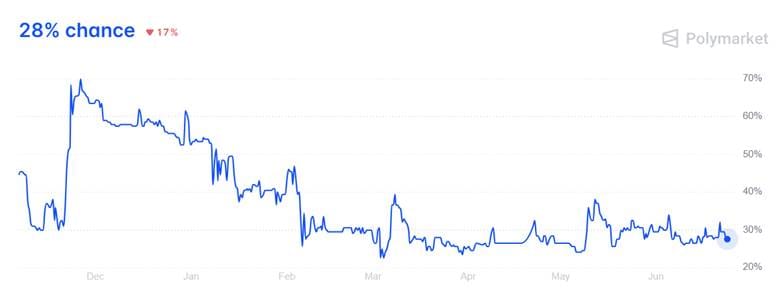
Polymarket gives a Ukraine-Russia peace deal before 2027 only a 28% chance, but the market rules leave room for a ceasefire or roadmap. Is this enough for a repricing?

Politics

Polymarket traders are not expecting a Ukraine-Russia peace deal before 2027.

The market gives “Yes” about a 28% chance, with “No” around 72%, and about $2.3 million traded.

The risk is that traders are pricing the headline like a final treaty market, but the rules are much more relaxed.

The market can resolve “Yes” if Ukraine signs, by December 31, a written instrument that includes both Ukraine and Russia as parties and either establishes a ceasefire or commits both sides to a defined process toward ending the war. A framework, roadmap, armistice, exchange of letters, or mediated agreement text could all qualify.

And even on this broader definition, traders are still leaning heavily toward “No.”

Why is the market skeptical?

Put simply, maximalist terms. Both sides are still talking about talks, but not on terms that look close to a deal.

The first blocker is Russia's territorial demand. On June 23, Russian Foreign Minister Sergei Lavrov said Moscow was ready to resume talks with Ukraine “from the point where they left off.” But this did not come with a softer Russian position. In fact, Lavrov gave no sign Moscow had moved away from its demand that Ukraine surrender the remaining parts of Donbas it still holds.

Putin's latest comments point in the same direction. On June 24, The Independent reported Putin saying Russia was ready for peace negotiations after Ukrainian strikes on Russian infrastructure, but he also said talks should proceed on the basis of earlier Istanbul agreements and that he saw no reason to depart from them. In market terms, this keeps the No side protected: Moscow may be open to a process, but it still wants that process built around its own starting terms.

The second blocker is Ukraine's refusal to concede territory. A ceasefire along current lines is one thing, but an actual document that looks like Ukraine signing away territory is another.

The third blocker is escalation. Ukraine has intensified drone and infrastructure strikes, including attacks on Crimea’s rail, power, and fuel systems. The Guardian reported on June 24 that Russian-installed authorities in Crimea had imposed temporary security measures after Ukrainian strikes, while Putin acknowledged a “huge stream” of Ukrainian drones.

But the weak assumption is the word “peace”

Despite the obvious pressure, 28% may be too dismissive if traders are reading the market title too literally.

The headline says “peace deal,” which sounds like a final settlement. But the rules are wider. A roadmap or framework could be enough if it commits both sides to a defined process toward ending the war.

This is where the market could reprice. The document must include Ukraine and Russia as parties, and it must either end hostilities, establish a ceasefire, or commit both sides to a defined process toward peace or normalization.

The rules do not require a separate Russian signature or ratification, but they do require more than a unilateral Ukrainian statement.

What would make the market reprice?

The first trigger is a named US-mediated process. Reuters reported on June 23 that Russia had accused the US of failing to deliver on “understandings” reached between Putin and Trump at their Alaska summit, with three senior Russian officials making similar complaints in three days. This sounds a bit hostile, but for this market, it also reveals something useful: Moscow still sees the US channel as the one that matters.

In the same vein, International Crisis Group analyst Oleg Ignatov said Russia wanted the US to resume diplomacy to help Russia end the war on its own terms. This also tells traders where the repricing risk sits: not in a sudden Russia-Ukraine breakthrough, but in a US-mediated text that both sides are pressured to engage with.

The second trigger is Ukraine turning ceasefire language into paper. On June 22, Ukraine’s UN envoy Andrii Melnyk said Kyiv may “recalibrate and modify” its offer if the UN Security Council does not move toward a full and unconditional ceasefire. He also called a ceasefire along the de facto front line “already a great compromise.”

Finally, for this market, the key is whether Ukraine’s position turns into a document that follows the rules. A speech at the UN does not settle the market, but a Ukrainian-signed framework that references Russia as a party and lays out principles, steps, and a timetable might. So, it must include both Ukraine and Russia as parties and either establish a ceasefire or commit both sides to a defined process toward ending the war.

Here’s what to watch next

In short, this is a market about whether the war produces a serious enough document before the end of 2026.

The 28% price is interesting because traders are not only fading a final treaty, they’re also giving low odds to a ceasefire, roadmap, or formal process that meets the market’s rules.

Maybe this caution is right. The war is still active, the territorial dispute is still central, and security guarantees remain the difference between a ceasefire and a pause before the next attack.

But the “Yes” side does not need a perfect peace, so this market could turn on three things.

First, whether US mediation becomes structured again: named negotiators, dates, venues, or a draft text. Second, whether Ukraine’s ceasefire position moves from speeches and letters into a signed framework. Third, the exact language of any document. The market does not need a final peace treaty, but it does need more than a temporary pause or humanitarian arrangement.

Sources:

1.     Reuters: Lavrov says Russia is ready to resume talks with Ukraine from point where they left off

2.     Reuters: Russia says US hasn't followed through on Trump-Putin 'understandings'

3.     Reuters: Ukraine may recalibrate its offer of ceasefire with Russia, envoy tells UN

4.     The Guardian: Ukraine war briefing: Crimea locks down as Putin acknowledges ‘huge stream’ of Ukrainian drones

Which would move Polymarket’s Ukraine peace-deal odds the most?

A published US peace framework
100.00%
A Ukraine-signed ceasefire proposal
0.00%
Direct Russia-Ukraine talks restarting
0.00%
NATO/EU-backed security guarantees
0.00%
Russia accepting current front lines as a basis for talks
0.00%
1 Polls

What is the most likely path to qualifying Yes?

Final peace treaty
0.00%
General ceasefire or armistice
50.00%
US-mediated framework or roadmap
50.00%
Exchange of letters/mediated agreement text
0.00%
No qualifying document in 2026
0.00%
1 Polls
CFTC sues Kentucky over actions against prediction markets, making it first red state to face federal scrutiny
News
RegulatoryLegalPrediction Market

CFTC sues Kentucky over actions against prediction markets, making it first red state to face federal scrutiny

The CFTC's suit against Kentucky underscores a growing federal-state clash over regulating prediction markets as swaps versus gambling.

Politics

The Commodity Futures Trading Commission said Tuesday that it's filing suit against Kentucky. The action comes after the state sued prediction market platforms Kalshi and Polymarket, asserting the companies were operating illegal gambling platforms.

Do you know the difference between prediction market and online gambling?

Yes! Prediction markets turn real-world uncertainty into tradable forecasts, not just wagering for entertainment
100.00%
No... I do not understand enough
0.00%
1 Polls

Kentucky is the ninth state the CFTC has sued in the agency's battle to defend what it said is its exclusive jurisdiction to regulate prediction markets. Front Office Sports was first to report the federal government's lawsuit on Tuesday.

"Kentucky is the latest state attempting to shut down federally-regulated event contracts," said CFTC Chair Michael Selig in a press release announcing the lawsuit. "As I've consistently pledged, the CFTC is firmly committed to maintaining its exclusive jurisdiction over prediction markets, and today's lawsuit against Kentucky is yet another example of the Commission protecting its federal interests."

Notably, Kentucky is the first state with a Republican attorney general to be sued by the commission. Previously, the only states the commission had filed lawsuits against were ones with Democratic attorneys general, despite the fact that states from both political parties have gone after the platforms.

In all, 20 states are actively involved in litigation against prediction market platforms. One has even moved to ban them.

States argue they have the right to regulate these platforms because of their sports-related event contracts, which they view as similar to sports betting which they regulate. However, the CFTC argues these contracts are swaps, and thus fall under its jurisdiction.

"Kalshi and Polymarket are operating illegal sportsbooks in Kentucky and breaking our laws," said Kentucky Attorney General Russell Coleman in a press release last week announcing the suit against the two firms.

Without the sports section, do you still think the prediction market is online gambling?

No, It is a investment product
100.00%
Yes, cause I still cannot forecast economy or policy
0.00%
1 Polls

"These multi-billion dollar corporations and their legal fictions don't pass the sniff test," he said. "As one of our state legislative leaders said it best, 'If it looks like a duck and quacks like a duck …"

Coleman's office did not immediately respond to a request for comment on the suit by the CFTC.

Source: https://www.cnbc.com/2026/06/23/cftc-sues-kentucky-over-actions-against-prediction-markets.html

Cboe Revives Binary Options to Compete with Kalshi, Polymarket
News Flash
Regulatory

Cboe Revives Binary Options to Compete with Kalshi, Polymarket

Cboe reenters prediction markets with binary options, targeting retail traders after success of its short-dated contracts.

Economics & FinancePolitics

Cboe Global Markets, Inc. announced Tuesday that it has brought back a type of S&P 500 contract after a hiatus of more than a decade, which in the meantime has become a popular mainstay of prediction market platforms Kalshi and Polymarket.

The Chicago-based derivatives exchange operator is listing binary options on the Mini-S&P 500 Index, the company said in a statement on Tuesday. The products will allow customers to place a yes or no bet on whether the S&P 500 will hit a certain threshold.

The options will initially be available through Interactive Brokers Group Inc., with other intermediaries including The Charles Schwab Corp. set to offer the products soon.

Cboe index options have been a favorite tool of retail investors since S&P 500 index options expiring daily came out in 2022. Retail traders have pushed US options volumes to record levels, and contracts with zero-days to expiration (0DTE) accounted for 30% of all volume, according to data from Bloomberg Intelligence.

“Following the success of SPX 0DTE options, we’ve seen continued customer demand for shorter-dated, outcome-based trading, and that created a natural opportunity for Cboe to enter prediction markets,” said JJ Kinahan, head of retail expansion and alternative investment Products at Cboe.

Cboe has tried binary options before. In 2008, it first listed these type of options on the S&P 500 and the Cboe Volatility Index, but they failed to attract investor interest and were pulled off the exchange. The last SPX binary option expired in January 2015 and last VIX binary option ended in August 2017, according to a spokesperson.

Definitely maybe

The options bourse is adding a twist on the traditional event contract binaries, based on a core building block of options trading, known as a ‘vertical spread’. Cboe’s ‘plus’ product pays out a proportional amount if the index moves in the direction predicted by the customer, up to 100% if they meet an upper threshold specified in the contract. While the customer interface will show a single trade, their broker is placing a package made up of a bought option and a sold option.

Behind the scenes, two options trades are taking place: a customer making a bullish trade is buying a lower strike call, and funding the position by selling a higher strike call.

Cboe executives are hoping the products will bring new participants to the options market.

“With the ‘plus’ feature, traders can define their risk beyond the simple ‘yes-or-no’ framework of traditional event contracts. We’re also pairing these products with dedicated educational resources to support more informed customer participation in these markets.”

Nasdaq Inc. also has regulatory approval to launch binary index options contracts, which are expected to list later this year.

Source: https://www.bloomberg.com/news/articles/2026-06-23/cboe-revives-binary-options-to-compete-with-kalshi-polymarket